WWII

U.S. Navy Lieutenant Alex Vraciu holds up six fingers signifying the number of Japanese aircraft that fell to his guns during an eight-minute span on a single mission.

WWII

The Setting Sun

By David H. Lippmann

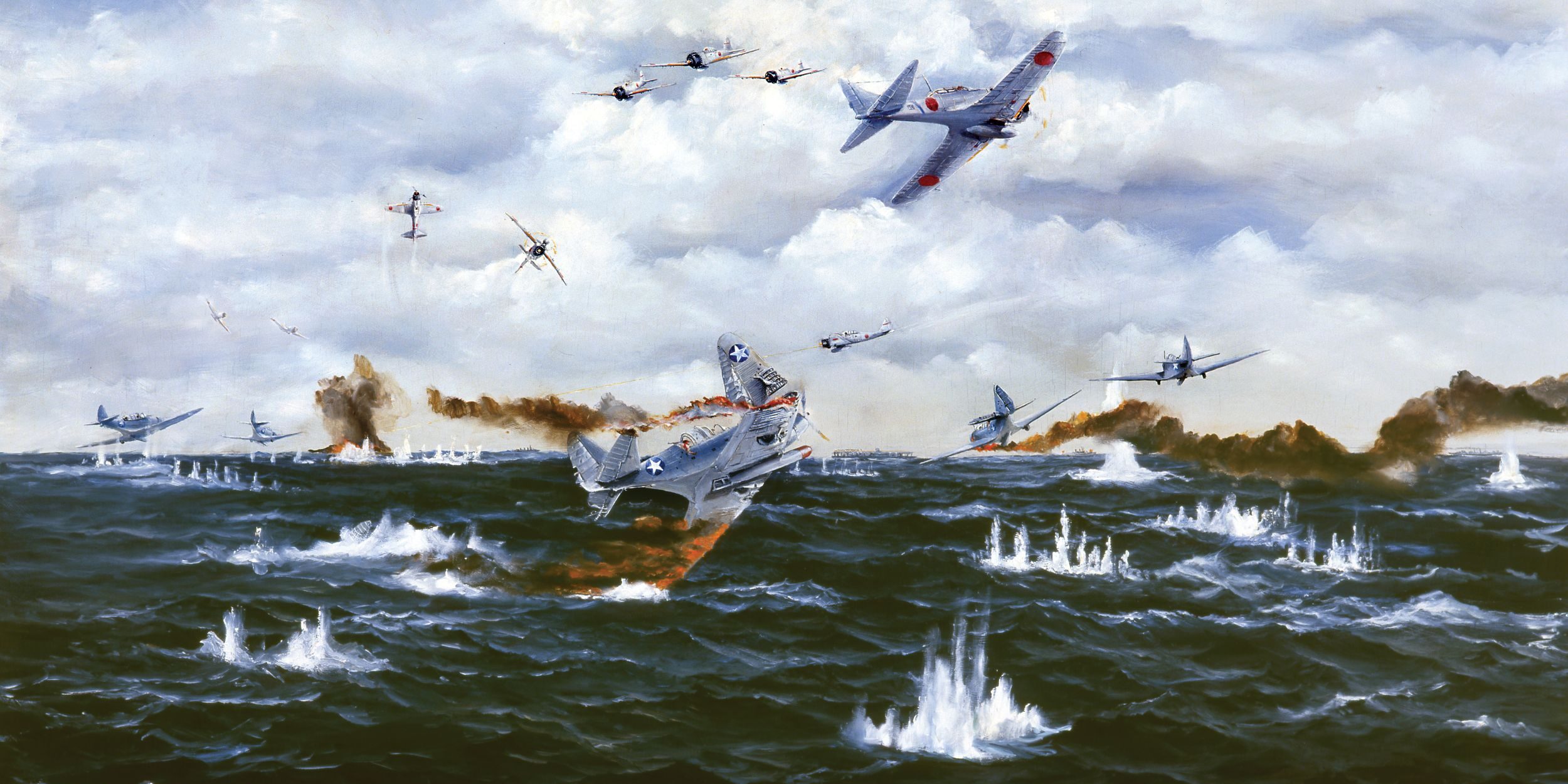
Once again, the Japanese regarded an upcoming naval engagement as the “decisive battle,” but it had been two years since her aircraft carriers and battleships had emerged from their Inland Sea lairs to menace the United States Navy. Read more

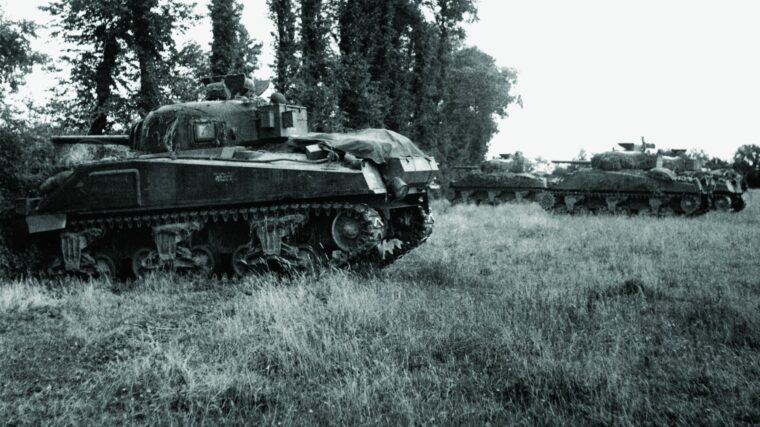
The first U.S. M4 Sherman enters the German city of Aachen through a hole opened in the railroad station entrance by a tank dozer—German defenders had demolished a viaduct on the main avenue into Aachen, slowing the Americans’ progress.

WWII

Smashing in to Germany

By William R. Hogan

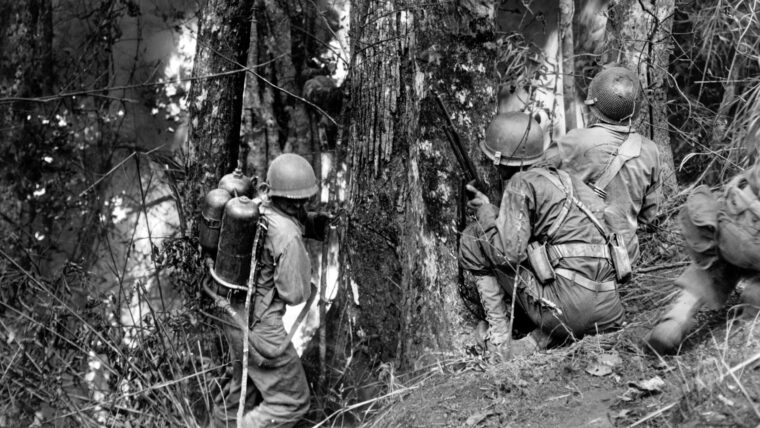
Task force commander Lieutenant Colonel Samuel Hogan, eager to get any advantage over the entrenched enemy of the 12th Infantry Division, requested a section of M2 flamethrowers from the 23rd Engineer Battalion. Read more

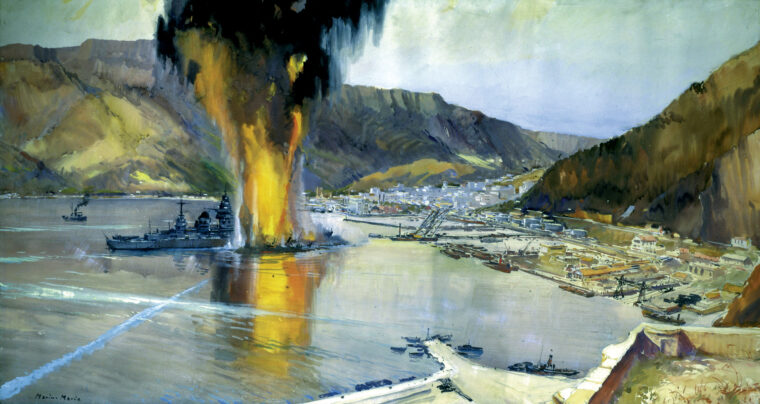
Allied vessels burning after a Luftwaffe raid on the Italian port of Bari on December 2, 1943, sank 27 cargo and transport ships, including the US Liberty ship John Harvey—with a secret cargo of 2,000 M47A1 mustard gas bombs, each holding 60–70 lbs of the chemical agent.

WWII

The SS John Harvey’s Mustard Gas Disaster

By Neil Taylor

Ensign Kay Kopl Vesole, USNR, did not like being a sitting duck. Normally he would have enjoyed the warm Italian sunshine, but as commander of the Navy Armed Guard aboard the John Bascom, a 7,176-ton Liberty ship, he was not permitted to relax while his ship lay moored in crowded Bari harbor, a small though vital port on the heel of Italy. Read more

Standing on what is most likely a PzKpfw. III, a German tank commander scans the desert horizon in North Africa. The battle-hardened forces of Gen. Erwin Rommel’s Afrika Korps would inflict a stinging defeat on the Americans at Tunisia’s Kasserine Pass in February 1943

WWII

Chaos Pass

By David Lippman

The message was sent to a staff officer for Brig. Gen. Paul Robinett to read, and it made very little sense. Read more

An amphibious DUKW landing vehicle burns in the background of this photo as US Marines have taken cover on the landing beach near Asan, Guam. The image was taken by AP photographer Joe Rosenthal, who would take the iconic photo of the flag raising on Iwo Jima six months later.

WWII

Hitting the Beach at Guam

By David Alan Johnson

Sometime during the middle of July 1944, a well-meaning war correspondent asked an officer with the Third Marine Division if his men were ready for the landings on Guam. Read more

In 1940 the R.A.F. was producing 115 trained pilots every two weeks to fly planes such as this Supermarine Spitfire.

WWII

Pilot Officer Percy Prune

By Kerria Seabrooke

After German Chancellor Adolf Hitler had rejected all offers of peace, Prime Minister

Winston Churchill declared in June 1940 that “The Battle of Britain is about to begin.” Read more

During his only visit to Paris, Adolf Hitler pauses on the terrace of the Palais de Chaillot with the Eiffel Tower in the background on June 23, 1940.

WWII

Paris Under the Swastika

By Tim Miller

Once, during the Nazi occupation of Paris, a German officer made his way to the attic of 7 Rue des Grands-Augustins, home and studio of the Spanish artist Pablo Picasso. Read more

WWII

Nine World War II Book Reviews for Fall 2025

By Kevin Seabrooke Full Reviews

Pearl Harbor: Japan’s Greatest Disaster (Mark Stille, Osprey/Bloomsbury Publishing, 368pp., 16-pages b.w photos, appendices, Nov. 4, 2025 $35 HC)

Redemption: MacArthur and the Campaign for the Philippines (Peter R. Read more

WWII

Hurricanes in the Arctic Skies

By Neil Taylor

Nestled among patches of dwarf birch trees on the side of a hill gently rising above the dockyard of the Russian Northern Fleet in Severomorsk (formerly known as Vaenga) lies a nondescript cemetery bearing witness to the savage conflict that engulfed the Soviet Union’s northern frontiers during the latter half of 1941. Read more

WWII

Blitzkrieg Express

By Joseph Luster

Taking a break from intense strategy games, which tend to dominate the World War II gaming landscape, we have something completely different but no less engaging in Blitzkrieg Express. Read more

A Japanese Aichi D3A “Val” dive bomber is captured near Pearl Harbor in this image of the events of December 7, 1941. A flight of Mitsubishi A6M Zero fighters strafed the Ewa Marine Corps Air Station, followed minutes later by a formation of Vals carrying ordnance.

WWII

Embattled Marines At Air Station Ewa

By Joshua Donohue

Lieutenant Commander Shigeru Itaya eased the throttle lever forward in the cockpit of his Mitsubishi A6M2 Zero fighter as it left the deck of the Imperial Japanese Navy (IJN) carrier Akagi just after 6 a.m. Read more

Soldiers of the U.S. Army’s 2nd Division file ashore from Omaha Beach several days after the D-Day landings in Normandy. During the course of World War II, the Army and Marine Corps changed the configuration of their combat divisions to make them more efficient.

WWII

U.S. Divisions of World War II

By Colonel James W. Hammond, Jr. USMC (Ret.)

The definitive combat unit of comparable strength among the forces of the world during the 20th century was the division. Read more

In this painting by war artist Jack Fellows, Grumman F4F Wildcat fighter pilot Henry T. “Hammerin’ Hank” Elrod scans the skies above Wake Island for Japanese aircraft on the morning of December 12, 1941. The defenders of Wake Island were among the first American heroes of World War II.

WWII

Flying Leathernecks

By Robert F. Dorr and Fred L. Borch

Marine aviators of Fighter Squadron 211, or VMF-211, looked up in frustration as Japanese war planes thronged over Pearl Harbor on December 7, 1941. Read more