By Bradley P. Tolppanen
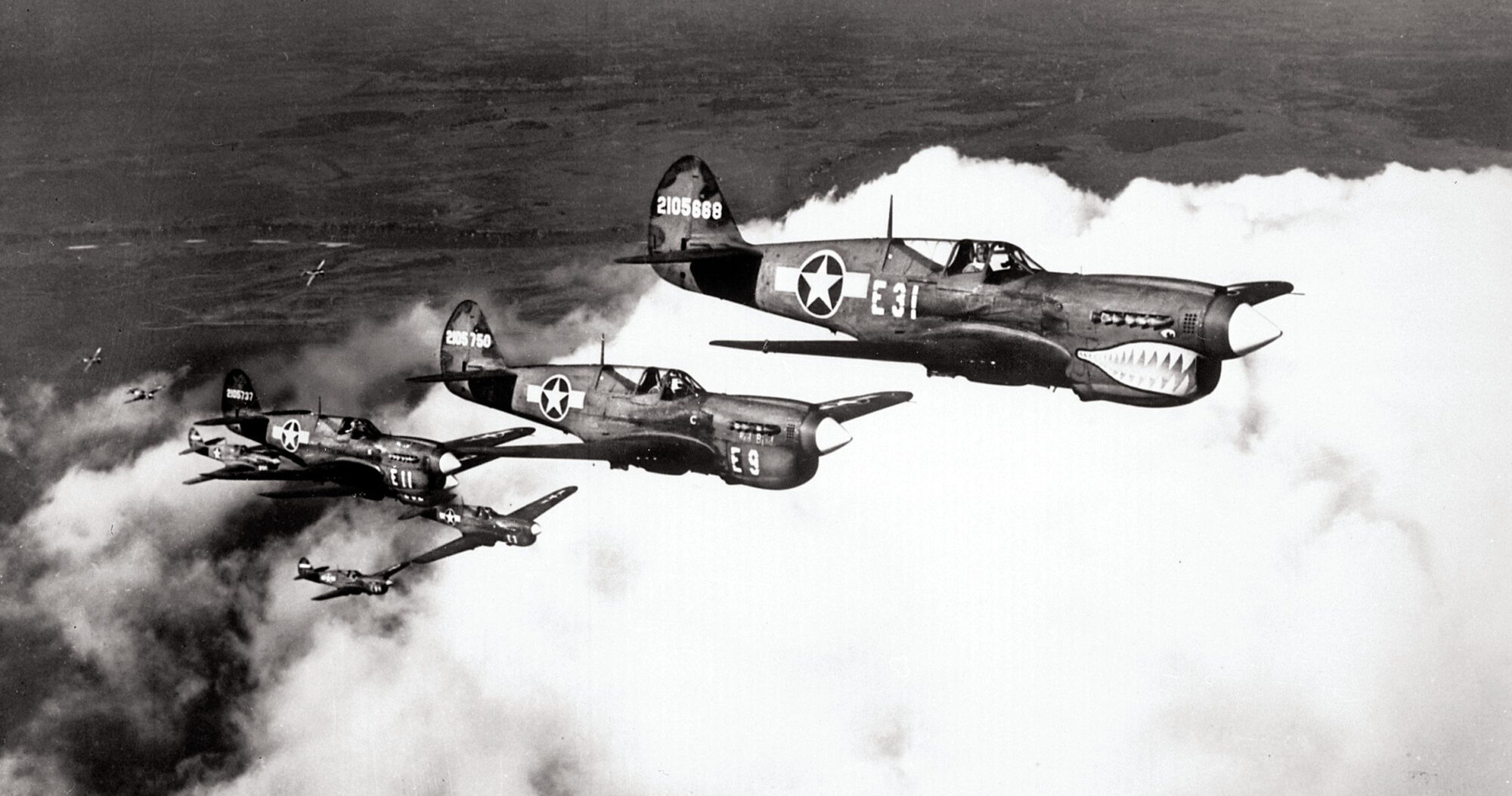
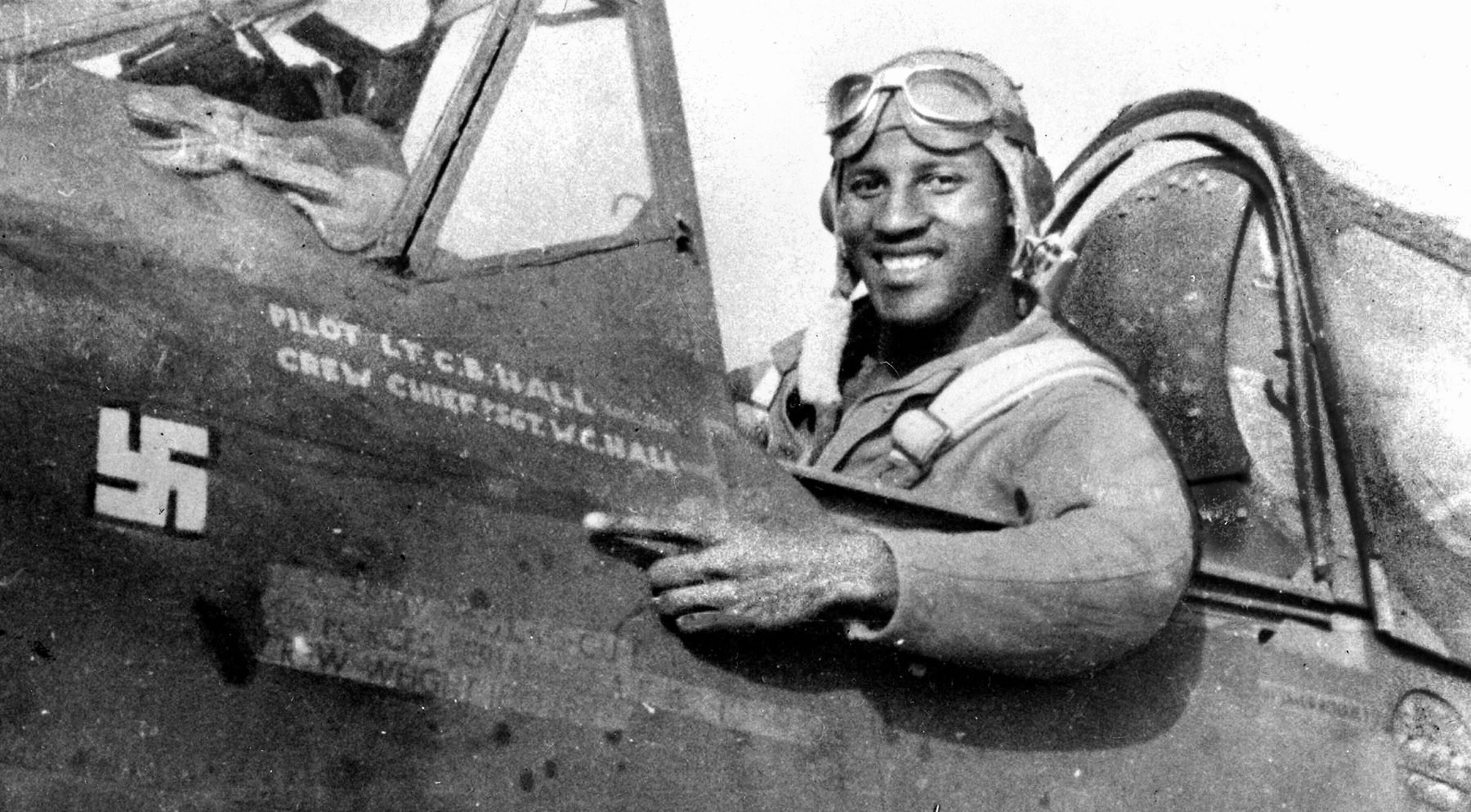
The target of the B-25 Mitchell bombers was the Castelvetrano airfield on Sicily. It was July 2, 1943; the amphibious invasion of the island by the Anglo-American 15th Army Group was seven days away. The formation of 12 medium bombers was escorted by 12 P-40 Warhawks of the 99th Fighter Squadron, the all-African American unit that is known to history as forming part of the Tuskegee Airmen. Among the fighter pilots was First Lieutenant Charles “Buster” Hall, a 22-year-old Hoosier. On one side of his aircraft’s nose cone was painted “Maxine,” the name of his wife, and on the other side “Knobby II,” in tribute to his crew chief Staff Sergeant William Cyrus Hall, no relation. As the American aircraft approached the target the Germans threw up furious resistance. Twenty enemy fighters came out of the heavy haze and tore into the Allied formation, diving on the bombers. Dogfighting ensued, pitting the Warhawks against the Luftwaffe’s Focke-Wulf Fw 190s and Messerschmitt Bf 109s. It was an intense battle as the American flyers kept the Germans out of range of the bombers at the cost of two pilots, Sherman White and James McCullin, being shot down. During the fight, Hall spotted two Focke-Wulfs pursuing the Mitchells after they had dropped their bomb loads. He recounted, “I headed for the space between the fighters and bombers and managed to turn inside the Jerries. I fired a long burst and saw my tracers penetrate the second aircraft. He was turning to the left, but suddenly fell off and headed straight into the ground. I followed him down and saw him crash. He raised a big cloud of dust.” Charles Hall was the first African American to shoot down an enemy aircraft in aerial combat.
Born in 1920, Hall was a native of Brazil, Indiana, where he attended high school, excelling at basketball and track as well as quarterbacking the football team. A fellow student remembered him as quiet but with “the body of Charles Atlas.” He was someone who was giving “110 percent all the time.” Winning a scholarship, Hall attended Eastern Illinois State Teachers College in Charleston, Illinois. He played on the football team as a “flashy” halfback for two winning seasons and won a letter for running indoor and outdoor track.
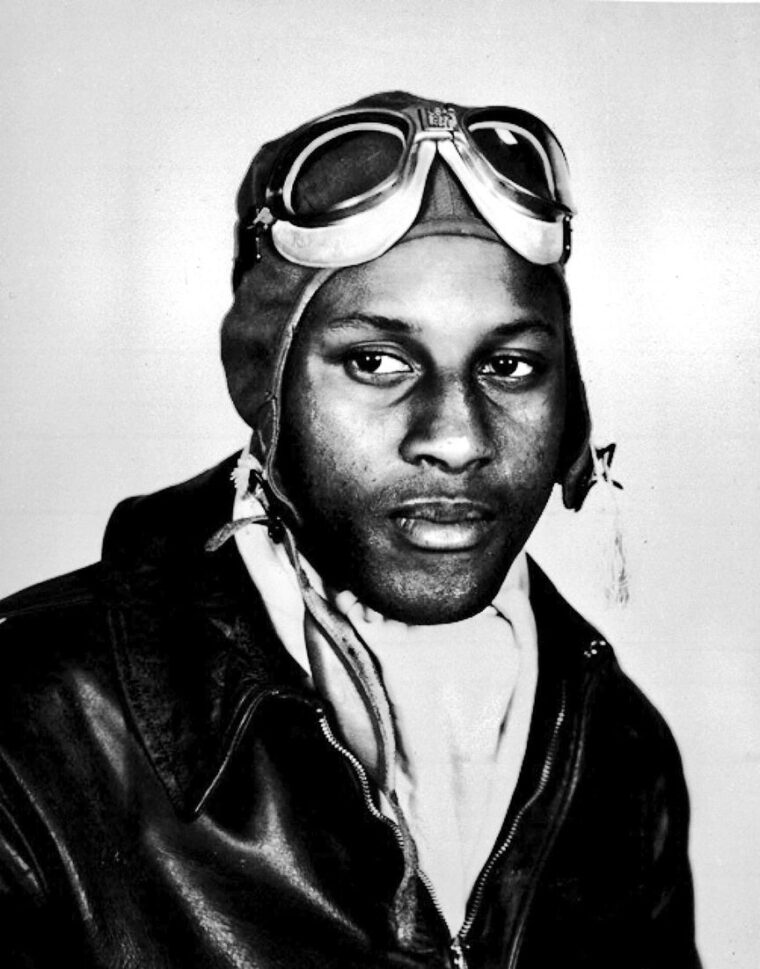
During the spring 1941 semester, Hall left college to enlist in the United States Army. He reported for flight training at Tuskegee, Alabama, on November 15, 1941, three weeks before Pearl Harbor. Preference in the selection of cadets for flight training was given to those with prior experience as a pilot. Hall had never actually flown in an airplane before arriving in Tuskegee. He was, however, a college man.
Until October 1940, African Americans had been barred from serving in the United States Army Air Corps. That month the army, under pressure from the Roosevelt administration, agreed that African Americans would be permitted to serve as pilots, mechanics, and other support personnel in the air corps. The army, however, remained segregated. In January 1941, the army announced that an all-African American fighter squadron was to be formed. Ironically, racism was behind African Americans being trained as fighter pilots, rather than for less glamorous duties such as flying of transport aircraft. The fear in Washington was that as transport pilots for example, African American officers would have to interact with white personnel, especially enlisted men. This was considered unacceptable. As fighter pilots, African American fliers could be trained separately at self-contained bases and, likewise, stationed on separate airfields in a combat zone. It reflected the army’s adherence to “separate but equal.”
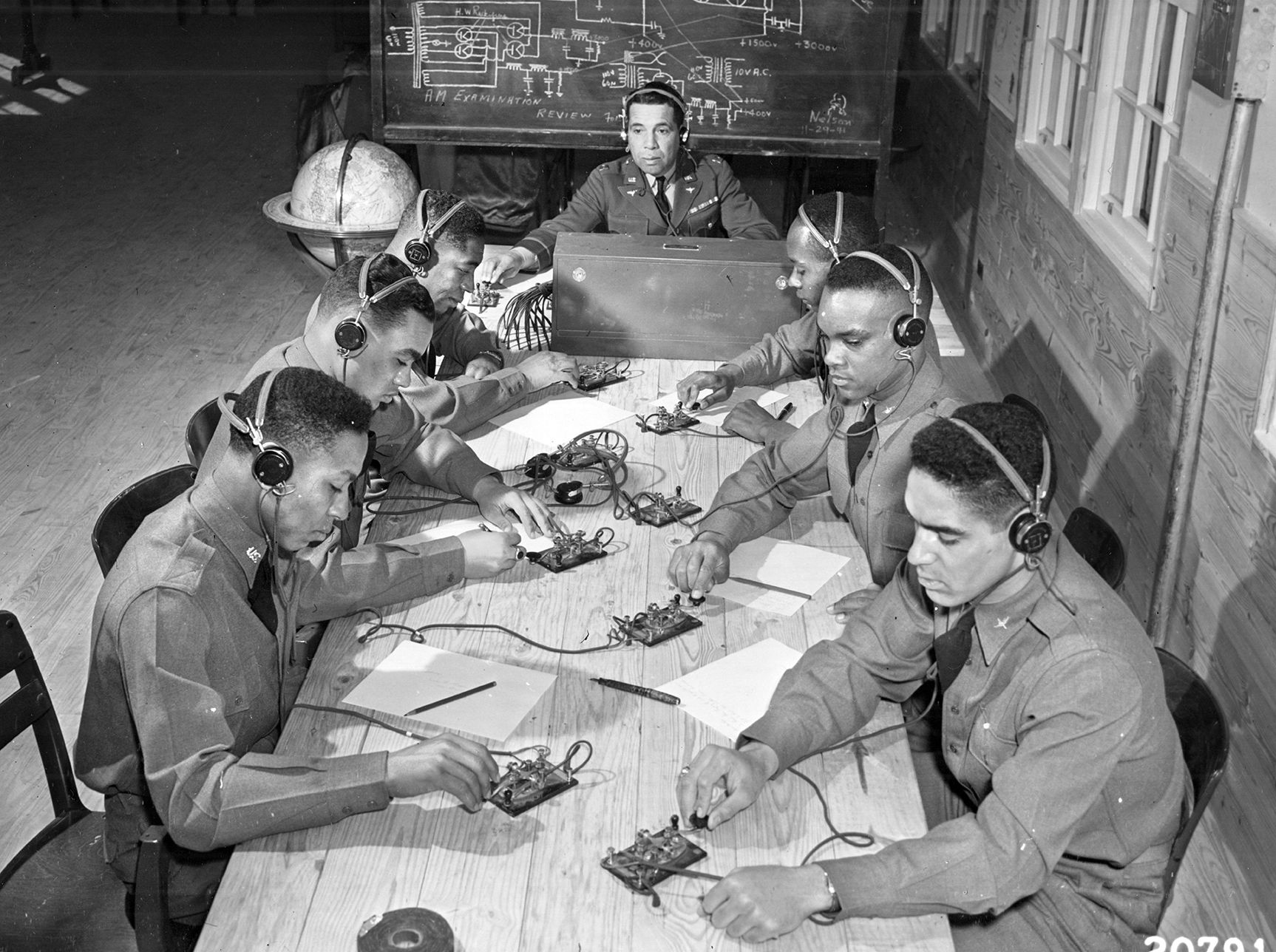
In November 1941, the Tuskegee Army Airfield came into operation with the training of pilots and ground personnel. Tuskegee, home of the Tuskegee Institute, was a center of African American aviation. With Tuskegee located in segregated Alabama, the African Americans assigned there for training encountered hostility and discrimination.
The first pilots graduated in March 1942. On July 3, 1942, Hall received his wings, graduating along with 12 other fliers as part of the school’s fourth class. His graduating class was addressed by Lt. Col. Benjamin Davis, Jr., the 30-year-old commander of the 99th Fighter Squadron and son of the first African American general in the U.S. Army. Despite being “silenced” at West Point, that is not being engaged in conversation by any other cadet for his entire four years, Davis had graduated 35th out of a class of 276 from the academy in 1936. Although his application for service in the Army Air Corps had been rejected six years earlier, in 1941 he was selected for pilot training in the first course at Tuskegee. Upon completion of training, he was promoted and appointed to lead the fighter squadron.
With the graduation of Hall’s class, the 99th Squadron was at full strength. However, the War Department dodged the question of deploying the African American unit to a combat theater. During 1942 three more African American fighter squadrons had been formed and the airfield at Tuskegee was becoming crowded with pilots and ground crews undergoing training. While the army leadership delayed a decision, Hall and the rest of the squadron continued to train. The morale of the unit, however, sagged as they waited to be deployed, being “worn out with combat refresher training.” After different missions and deployments were considered, including sending the formation to China, the army finally, on short notice, ordered the 99th Squadron to proceed overseas. They were being sent to North Africa.
In late April 1943, the 400-man squadron, including 23 pilots, arrived in French Morocco. Fighting in North Africa ended shortly after their arrival with the Axis surrender at Tunis. In Morocco the squadron completed intensive training on combat tactics, including on dive-bombing. Among their instructors was Colonel Philip Cochran, who was nicknamed “Mr. P-40” and on whom was based a character in the action-adventure comic strip Terry and the Pirates. In Morocco the squadron was equipped with 27 new P-40 Warhawks and its pilots “experienced the thrill of flying brand new airplanes.” It was hard training, so much so that Hall’s first aircraft, Knobby I, was worn out after a month. Although the pilots in the squadron now averaged 250 hours flying P-40s, the squadron lacked combat experience.
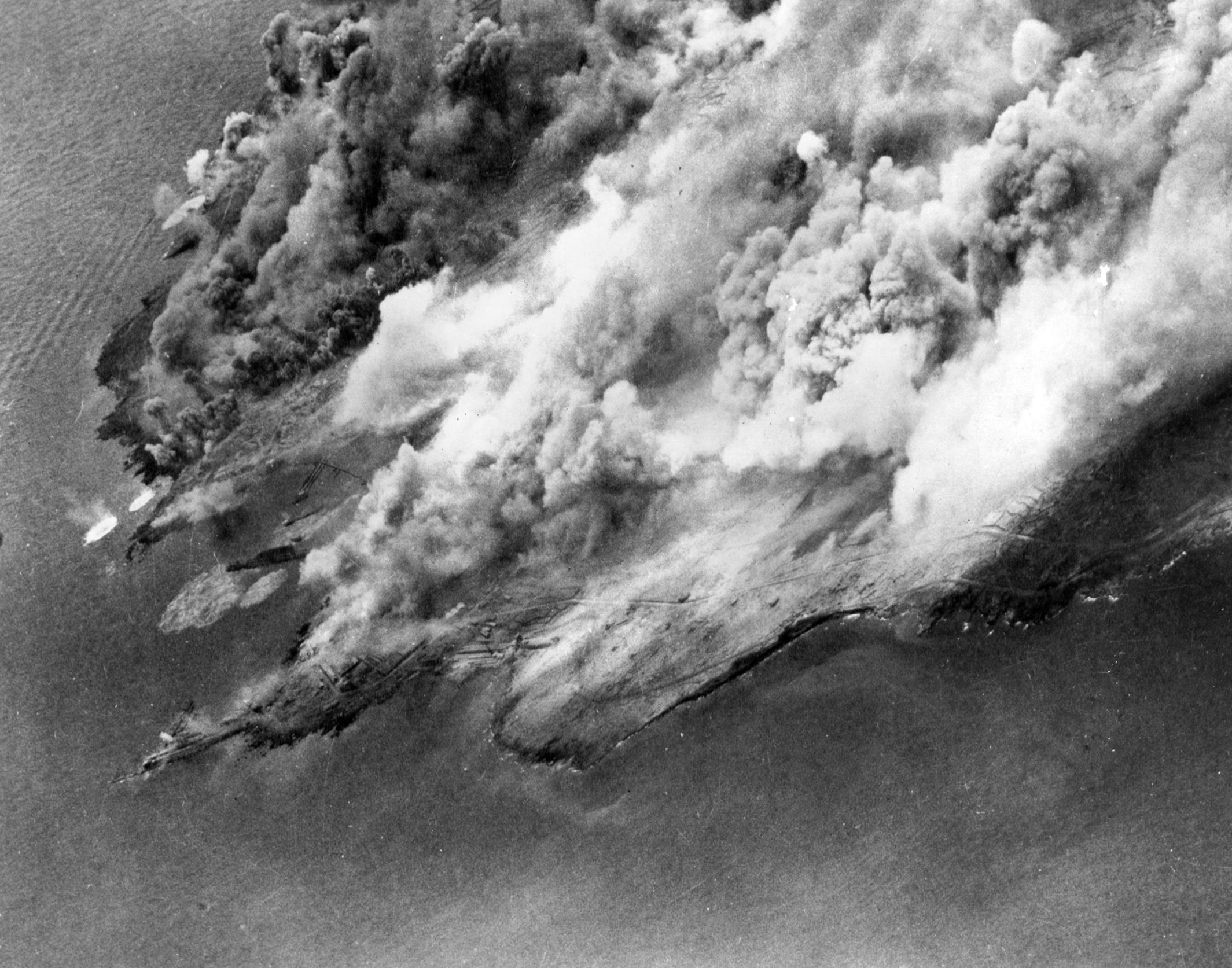
At last, the 99th Fighter Squadron was geared up and considered ready. It was ordered to an airfield at Cape Bon in Tunisia in preparation for a combat assignment. After evicting the Germans and Italians from Africa, the Allies’ next target was Pantelleria, an Italian island located between Tunisia and Sicily. The 99th Squadron was ordered to join the bombardment of the island and Davis selected Hall and 1st Lt. William A. Campbell to be the squadron’s first pilots to go into action. In early June 1943, Hall and Campbell took part in the attack on Pantelleria. Flying their P-40 Warhawks, the pair dropped 500-pound bombs on the target. The bombing of the island continued until it was pounded into submission and surrendered on June 11, 1943, with the 99th having flown two bombing missions a day during the brief campaign.
That same month the squadron was ordered to start flying bomber escort missions. On July 2, 1943, Hall took off in a formation led by Lieutenant Colonel Davis for the raid on Sicily. It was Hall’s eighth mission, but it proved to be the first time he had seen “the enemy close enough to shoot.” In the dogfight, Lieutenant Walter “Ghost” Lawson also shot up and damaged another German fighter, a Bf 109, making what was judged a probable kill. After returning to Cape Bon, Hall was presented with a celebratory bottle of Coca-Cola to mark his shooting down of the Focke-Wulf. Another pilot, Louis Purnell, had obtained the precious bottle in Tunis and stored it in the squadron’s safe for the day when one of their pilots shot down the first enemy plane. An ice block was procured from a town 15 miles away and the Coke was chilled in a one-gallon fruit juice can packed with ice. Amid the olive grove trees by the airfield, Hall enjoyed his reward. The victory in aerial combat was also commemorated, as was the practice, by the painting of a swastika on Knobby II. That the swastika was painted somewhat larger than usual led to a joke that should Hall ever be out flying by himself he would likely be attacked by Allied aircraft thinking he was German due to the large swastika.
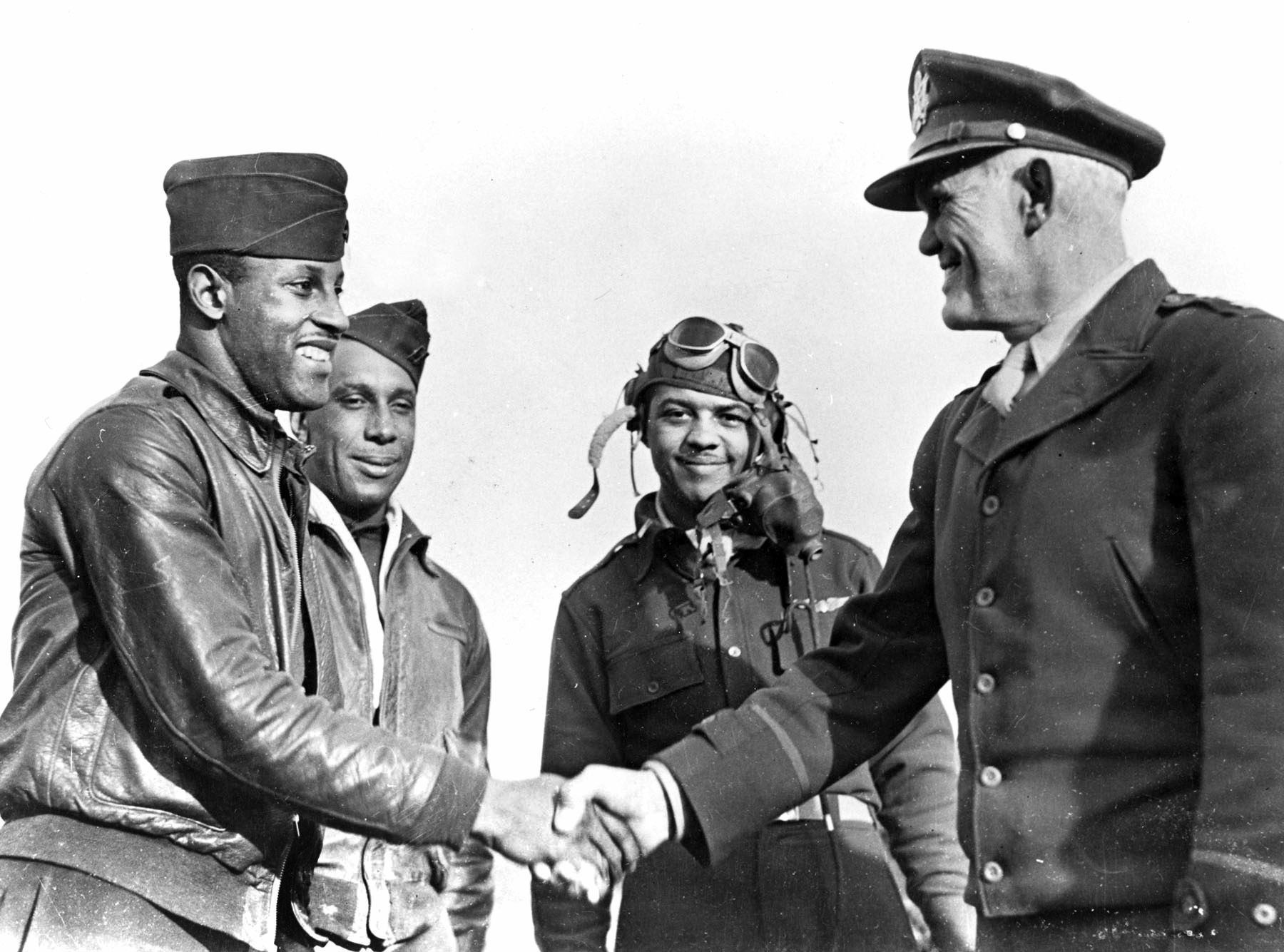
The achievements of the 99th Fighter Squadron brought a visit that same day from Gen. Dwight D. Eisenhower, the theater commander, and other senior generals that included Generals Carl Spaatz, Jimmy Doolittle, and John Cannon. Eisenhower congratulated the airmen and declared, “I would like to meet the pilot who shot down that Jerry!” Hall was thrilled to be presented to the general and other brass. The shooting down of the Focke-Wulf was widely reported with headlines in stateside newspapers.
After the raid on Castelvetrano, the 99th Fighter Squadron was deployed in close air support of the land forces in the Sicilian Campaign and the invasion of Italy that followed. Although it had only 26 pilots, compared to 30 to 35 pilots in other squadrons, on heavy days the squadron still flew three to six missions. For his part, Hall found strafing the enemy to be exhilarating. Coming down from 10,000 feet until the fighter was buzzing the ground with the whole flight of P-40s spread out so as to rake an area of more than 100 yards when the machine guns opened fire, he recalled, was tremendously exciting. There were, however, few chances to engage in dogfights with the enemy. On one mission in December 1943 Hall spotted 30 enemy planes, but they quickly flew off and went home. As the Allies advanced, the squadron moved to an airfield in Sicily in July 1943 and later to Capodichino airfield near Naples.
Hall was always fond of the P-40 fighter. Although he thought it slower than the German fighters, it was more maneuverable, and he found it could certainly take punishment. He was still flying Knobby II even though it had been hit four times, with him returning to base from one mission with over 100 flak holes in the aircraft. The plane was on its third engine and had received a new tail to replace one that had been shot up. Even then the plane flew with seven flak holes. By February 1944 Hall had been running Knobby II for 210 hours.
While in Italy, Hall told a newspaper reporter that being a fighter pilot was “above all, exciting work. I love to fly. There is never a dull moment.” In a letter home Hall wrote that, “we enjoy it over here very much, although we are playing for keeps.” However, he also shared that he had seen men he had grown to know like brothers killed in the war, writing that it hurts, “but we must carry on, and we will. I’ve been lucky; I know that it is through prayer and luck that I have made it so far. I realize more every day that there is unity through strength. Pray for us all.” Hall also reflected on the accomplishments of the Tuskegee Airmen in the advancement of civil rights, observing that “up in the blue it doesn’t make any difference where you come from, what color you are” and noting that if given “a chance to show what we can do in this new work—all kinds of flying, combat and maybe commercial flying, too—I think it will help our people all over the United States.” One of Hall’s greatest experiences, he recalled, was “when I was in charge of three white squadrons plus our own as well as a formation of bombers.”
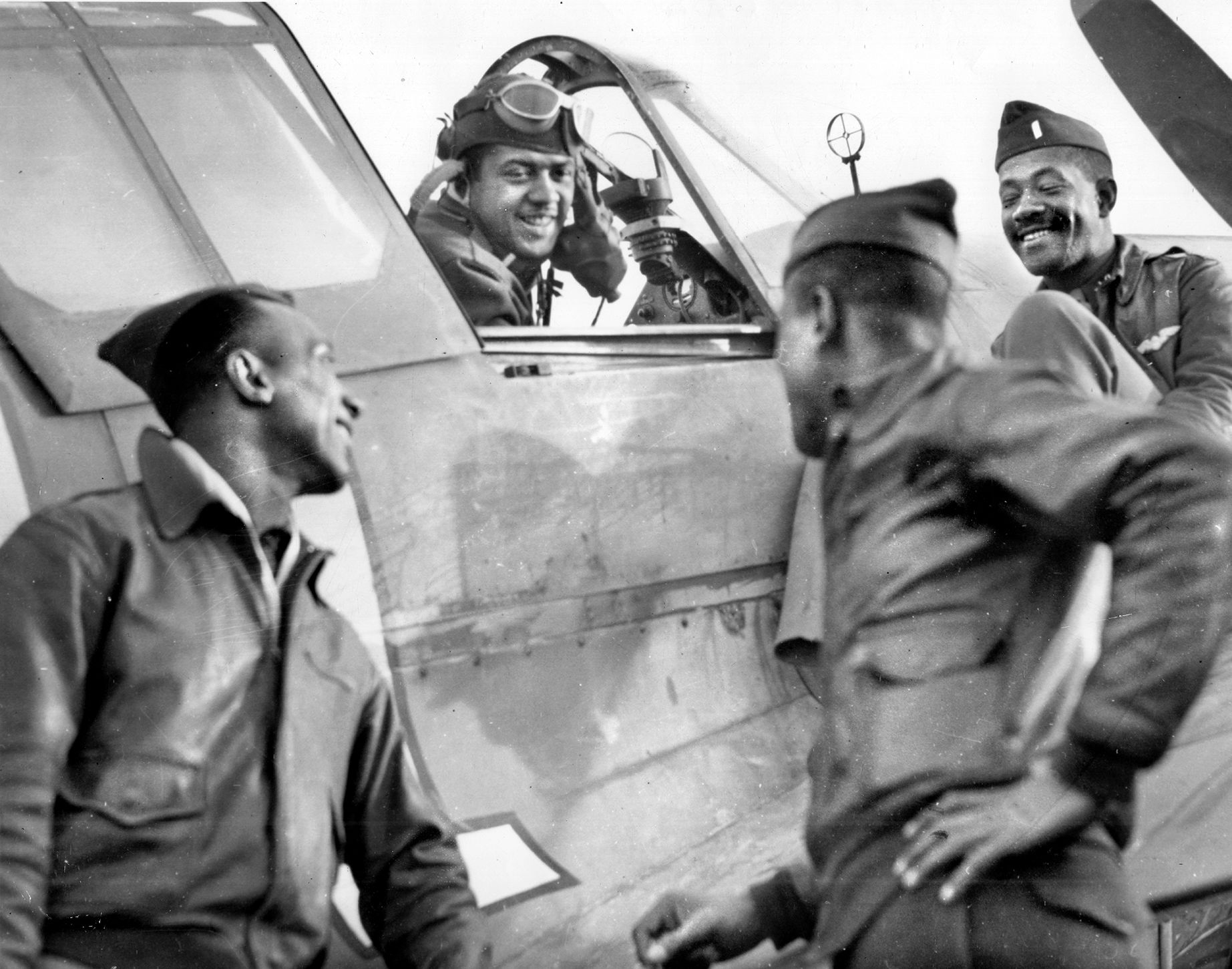
In September 1943 Davis handed over the squadron to Maj. George “Spanky” Roberts and returned to the United States to take command of the all-African American 332nd Fighter Group. The training and deployment of African Americans as pilots had been condescendingly considered by the army to be an “experiment.” This experiment was questioned in fall 1943 with an effort by some leading army officers to pull the 99th Squadron from combat. The squadron had been serving under Colonel William Momyer in the 33rd Fighter Group who criticized the performance of the African American pilots. Complaining about their supposed lack of both aggression and discipline, he pushed for the squadron to be pulled out of combat. His criticism and recommendation were endorsed by Cannon and Spaatz in the Mediterranean Theater and in Washington by Gen. Hap Arnold, commander of the Army Air Forces. It was proposed the 99th Squadron, as well as other African American pilots, be relegated to routine coastal patrol missions and only fly in rear areas.
The criticism was reported in the press and became a public controversy. Davis was furious with the criticism, which had never been raised by Momyer with him personally. By then back in Washington, Davis defended his squadron’s performance in a press conference at the Pentagon and before a War Department committee studying the role of African American soldiers.

Army Chief of Staff General George Marshall declined to support the recommendation of pulling the 99th Squadron from combat. Instead, he ordered an investigation to be made of its combat performance. Hall and his fellow pilots continued to fly in Italy. The squadron was, however, transferred to the 79th Fighter Group. Marshall’s investigation eventually reported that the accusations made against the squadron were baseless and that the 99th had performed at the same level as other P-40 squadrons in the Mediterranean. Davis led the 332nd Group in the Italian Campaign in the final stages of the war. Remaining in the air force after the war, he retired as a Lieutenant General in 1970. Twenty-eight years later, President Clinton advanced Davis to four-star rank in recognition of his service.
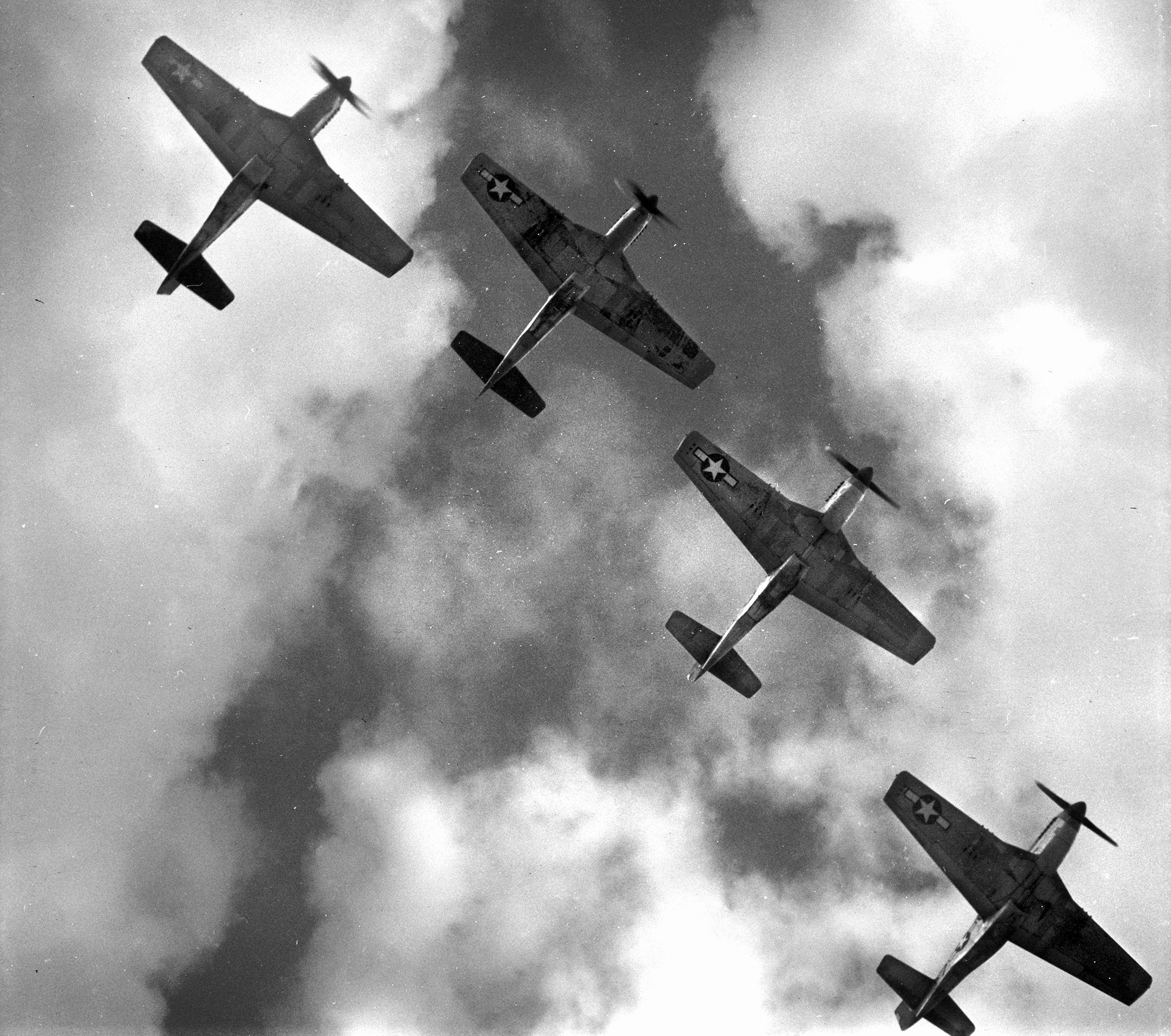
On January 22, 1944, in a bid to break the stalemate in Italy, the Allies made an amphibious landing at Anzio. Six days later Hall led an eight-plane patrol over the beachhead. While flying at about 4,000 feet, eight Fw 190s and Bf 109s were spotted coming down from 12,000 feet to dive bomb the beach and Allied shipping. They were flying from the north and closing at high speed, near 450 mph. The Americans made to intercept the enemy and successfully disrupted their attack, forcing them to jettison their bombs and come out of their dives. The Germans went past the Americans and hit the deck, flying “as near the ground as possible, sometimes actually buzzing the trees, and headed for Rome.”
Hall and his fellow pilots pursued the enemy. Now flying at a higher altitude than the Germans, he picked out one of the Bf 109s and dived at him and fired short bursts with 15-degree deflection shots as he closed in at 300 yards. Flames shot out of the Bf 109 and a moment later it crashed into the ground. On impact, Hall recalled, there was “a great flash followed by black, waxy smoke.” Hall turned over and saw a Focke-Wulf. He dived at him and closing in at 200 yards gave him three bursts, firing dead astern. The Fw 190 went into the ground. During the dogfight, Lieutenant Smith also shot down a Focke-Wulf. All of the American aircraft returned safely from the patrol. Over January 27–28, 1944, the 99th Fighter Squadron recorded 12 kills. By February 10, 1944, a further four Germans were shot down making the squadron’s total 17 kills and 4 probables. The squadron had more than proved their aggressiveness.
Hall’s knocking down of the two aircraft as well as his general outstanding service as a combat pilot was recognized by the army with the awarding of the Distinguished Flying Cross. He was the first African American to receive the decoration. Along with the DFC, Hall received the Air Medal with two oak leaf clusters.
In mid-1944 Hall was rotated back to the United States. During 14 months overseas, he had flown 108 missions, flying in P-47 Thunderbolts, P-51 Mustangs, and, of course, P-40 Warhawks. With three kills, he fell short of the five required to be considered an ace. George Roberts, his squadron commander, was confident Hall could have recorded five kills, saying, “Buster had one problem, if it could be considered as such, he was totally without fear. With the outstanding qualities he possessed as a pilot, he would have become an ace. Though our contact with the enemy was minimal and our aircraft of inferior capabilities, Buster would have found a way.”
On his return to the U.S., Hall along with other servicemen, was sent on a 105-city bond-selling tour across the country, including events in Washington, Chicago, and at Madison Square Garden in New York. In one interview Hall and the other veterans of his squadron assured a reporter that the 99th Fighter Squadron had more than proved its worth. When asked about differences between Black and White pilots, they wittily replied, “a .50-caliber machine gun or a 20-mm cannon [is] a very forceful common denominator.”
One of Hall’s last duties in the army was to serve as a Trial Judge Advocate in the courts-martial of three officers on charges related to the Freeman Field Mutiny held in July 1945. The “mutiny” was an effort by African American officers of the 477th Bombardment Group to integrate the segregated officers’ club at Freeman Field in Indiana. The courts-martial acquitted two of the officers and convicted the other pilot who was sentenced to a fine, reduction in rank, and dishonorable discharge.
In 1946, Hall left the army with the rank of Major. After the war, Hall did not initially find employment in aviation. He sold insurance in Nashville and then owned and managed a drugstore in Oklahoma City. While not employed as a pilot, he reentered the field of aviation in 1949, working in production control at Tinker Air Force Base in Oklahoma. Later in the 1960s he transferred to the Federal Aeronautical Center as an equipment specialist. After a brief illness, Hall died on November 23, 1971, at the age of 51.
Hall characteristically did not boast of his wartime service, but his contributions have been recognized by the naming of a park in his honor at Tinker, a memorial in Oklahoma City, and a statue in Brazil, Indiana. In 1996, although perhaps not the most important recognition, the toy company Hasbro brought out a G.I. Joe action figure depicting Charles Hall to commemorate all of the Tuskegee Airmen.

Join The Conversation
Comments
View All Comments