By Richard Rule
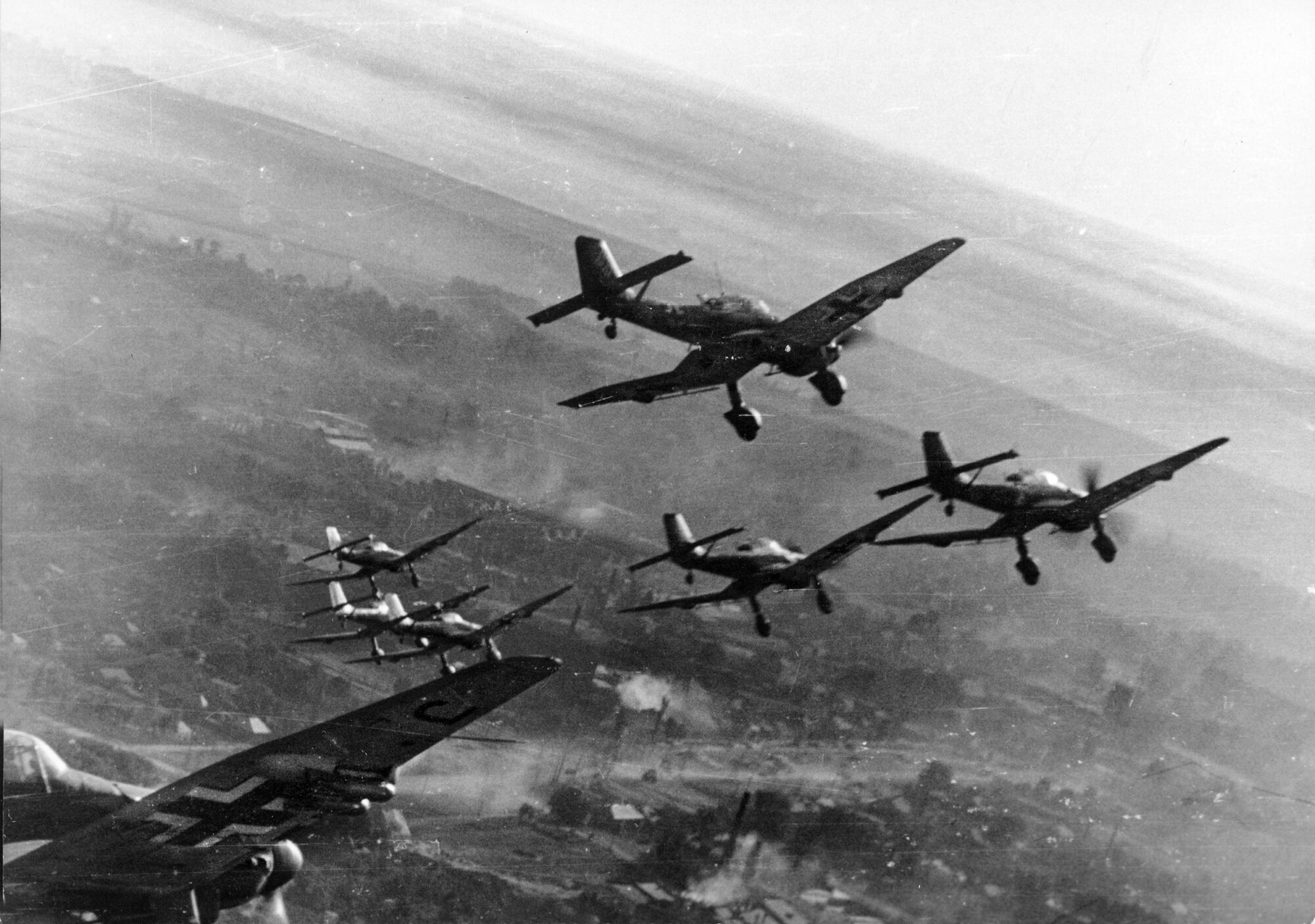
During World War II the exploits of certain aircraft saw them indelibly associated with the battles in which they fought. One such aircraft was undoubtedly the German Junkers Ju-87 dive bomber.
Known as the “Stuka” (an abbreviation of Sturzkampfflugzeug or “dive bomber”), the Ju-87 remains synonymous with the German Blitzkrieg campaigns of 1939-1940 as much for its psychological effect as for the invaluable support it gave to the German armed forces.
With the reemergence of German militarism under Adolf Hitler in the 1930s, the ranks of the Luftwaffe were swelled with aircraft flagged as an integral part of the military’s revolutionary doctrine of Blitzkrieg warfare. During this massive rearmament, the development of a dive bomber that could work in close cooperation with ground forces was passionately championed by the Luftwaffe’s General Ernst Udet. The former World War I fighter ace recognized that pinpoint bombing accuracy could only be successfully achieved with an aircraft that could make its vertical speed vector coincide with the direction of gravity. The dive bomber that could do this, he argued, would in effect deliver its bomb in a straight line directly to the target instead of the inaccurate curve typical in high altitude straight and level bombing.
Udet’s enthusiasm, coupled with his influence among leading military and political figures within the Third Reich, saw the Air Ministry finally issue specifications for the development of a two-seater dive bomber. The demands of an aircraft capable of providing close tactical air support were considerable. Contenders would need to be strong enough to deal with the considerable stresses put on a dive bomber’s airframe, rugged enough to cope with hard service close to the battle front, and robust enough to carry a heavy load.
A number of firms were already well advanced in dive bomber development and soon submitted proposals for the lucrative contract, including Junkers with their Ju-87.
Designed by Herman Pohlmann, the first of the Ju-87 V-series prototypes first flew in 1935 featuring twin-tailfins and, ironically, powered by the imported British Rolls Royce 12-cylinder Kestrel engine.
Progressing through trials, flight testing, and mishaps, later prototypes converted to the more familiar single tail fin assembly, and the powerplant was upgraded with the fitting of a Jumo 210Aa 12-cylinder liquid-cooled engine and a three-bladed variable-pitch propeller. Hydraulically hinged dive brakes were also installed. These appeared as long, rectangular slats under the leading edge of each wing and were designed to rotate perpendicular to the air stream to reduce the terminal dive velocity of the aircraft.
The Ju-87’s method of operations for a dive bombing attack required the pilot to fly until his target was obscured beneath the left wing root. Shutting the engine cooling vents and setting the propeller to coarse pitch, he would then open the airbrakes, nose over to the left, and dive at about an 85-degree angle. Red lines painted on the side of the canopy at 60, 75, and 80 degrees would help determine the bombing angle. The bomb was carried on a swing-down crutch, which slung the projectile clear of the fuselage when released, the timing of which was left to the judgment of the pilot. Many who flew the Stuka described the motion of diving to be very comfortable and lacking the perception that they were falling past the vertical, which was common in other dive bombers.
The aircraft under consideration for the Luftwaffe contract were to undergo a flight evaluation at the test center at Rechlin in 1936. Of the three hopefuls, the Ju-87 with its inverted gull-wings, oversized “trousered” undercarriage, and high-set greenhouse canopy was not only the most distinctive but also the ugliest.

Despite the Stuka’s appearance, its unique diving ability and incredible accuracy contributed to it being selected over its rivals.
Continuing modifications on the V-series ultimately led to the full production variant, the Ju-87A-1, which featured the bigger Jumo 210Ca engine and larger single tail fin, making the aircraft almost spin proof. With excellent handling and very responsive controls, 10 A-1s, each capable of carrying a 250-kilogram (551-pound) bomb, were supplied to the Luftwaffe early in 1937. A further three underwent field testing with the German Kondor Legion flying missions in support of General Francisco Franco’s Nationalist forces during the Spanish Civil War. The aircraft proved very effective against republican shipping, bridges, and other ground targets.
It was a prelude of things to come.
The experience in Spain had served as a very encouraging baptism of fire, and many within the Luftwaffe hierarchy were delighted with the aircraft’s overall performance—in particular its accuracy.
On the eve of World War II, critics of the Stuka remained unenthused by the aircraft’s modest flying attributes. With a maximum speed of only 183 mph at 10,000 feet and a generally unimpressive performance in level flight, many saw the Stuka as already obsolete. Udet ignored the skeptics, predicting the Ju-87 in its role as the “flying artillery” would deliver quicker and better results with less effort than heavy bomber raids. In Poland, Udet’s words would prove prophetic.
The nine Stukagruppen committed to the Polish campaign in September 1939 were equipped with the almost completely redesigned Ju-87B series, with its new fuel-injected engine. Fitted with an autopilot to drag the aircraft out of its power dive and boosted by a more powerful Jumo 211Da engine and constant speed propeller, the B variant was the definitive Stuka of the Luftwaffe’s glory days.
Extensive modifications also saw the bulging maw of a radiator redesigned and the ugly undercarriage trousers replaced by streamlined wheel spats. Now armed with three 7.9mm machine guns, the B model’s bombload was also increased to over 1,500 pounds if the pilot flew solo. Its major drawback was its lack of speed, which was only 242 mph at 13,500 feet.

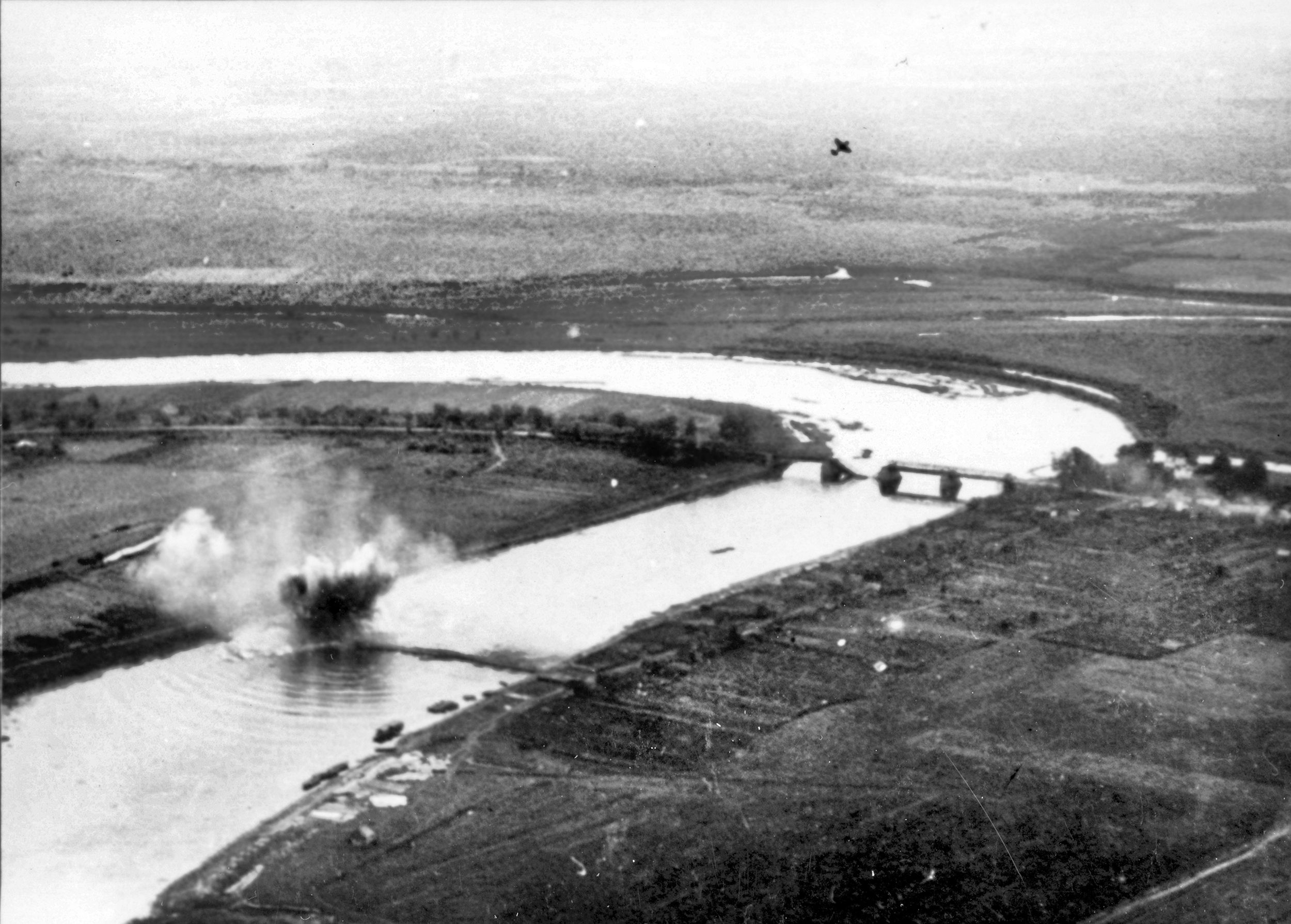
The Stuka dropped the first bombs of World War II when at 0426 on September 1, 1939, three Ju-87 B-1s led by Oberleutenant Bruno Dilley attacked the approaches to the Dirschau bridges over the Vistula River. The bombs fell at 0434, 11 minutes before Germany formally declared war on Poland.
A Stuka Ju-87B piloted by Unteroffizier Frank Neubert shot down the first aircraft of the war that same morning.

Without a serious fighter threat, the more than 320 Ju-87B-1s in the skies over Poland proved perfectly suited to the role of close cooperative dive bombing. They attacked Polish forces in the rear areas and on the field of battle. Transportation hubs were smashed, headquarters destroyed, and troop concentrations constantly broken up by Ju-87s.
This form of airpower rattled Polish commanders, who were already thrown off balance by the rapid German advance. Massed Stuka attacks could occur at any time at any place, yet their already legendary abilities were not confined to smaller targets such as bridges, strongpoints, and rail centers. Operations on a larger scale saw Stukas sink virtually the entire Polish Navy and almost singlehandedly wipe out the 13th Polish Infantry Division at the Piotrkow railway station.
The Ju-87’s notoriety as a Nazi terror bomber probably arose when 240 joined the bombing of the garrison and military facilities in Warsaw. The bombs of the highly visible Stukas not only destroyed large areas of the city but also inflicted heavy civilian casualties. The world was appalled by these seemingly indiscriminate raids against Warsaw, and much of their outrage was directed at the Ju-87. In addition to their bombs, Stukas often dove with loud sirens blaring. From that day forth the image of the diving Stuka came to symbolize Nazi brutality.
The short campaign in Poland had been a great learning experience for the Stuka crews, and not only were they the toast of the nation, but their devastating exploits became the subject of a hugely popular propaganda movie.
Following operations in Scandinavia and Norway, it would be France and the Low Countries’ turn to feel the full fury of Blitzkrieg. On May 10, 1940, Hitler unleashed his long-awaited offensive in the West and the French, having learned nothing from the Polish experience, were soon completely overwhelmed and in full retreat.
Due to monumental incompetence, three quarters of the French Air Force was never committed to battle, leaving the Luftwaffe as masters of the sky. Ju-87’s were once again at the forefront of operations, inflicting brutal punishment on hapless French and later British forces. With the screeching sirens—nicknamed the “Trumpets of Jericho”—attached to the fixed landing gear (apparently the idea of Ernst Udet), and whistles fitted to the bombs, the sounds generated by a cloud of attacking Stukas had an enormous psychological impact on soldiers and civilians alike. Some French generals complained that the banshee wail of a diving Stuka left their men so traumatized that they were often incapable of even firing their antiaircraft weapons.
To keep up with the scorching pace of the German panzer columns, the Stukagruppen often found themselves operating from primitive makeshift airstrips right behind the front lines. Attacking at will, the massed “flying artillery” made up to 10 unchallenged sorties a day delivering lethal cargo whenever and wherever it was needed. Tactical air-to-ground cooperation was the key, and the concept was pioneered by the Germans with the use of Luftwaffe liaison officers vectoring the Stukas onto specific targets by radio—a tactic that is still in use today. Many raids were, in fact, so minutely timed that German troops were able to advance while clods of dirt thrown up by Stuka bombs were still falling to earth around them.
At Dunkirk the Luftwaffe was tasked with destroying the British rescue mission, but struggled to overcome the problem of thick smoke and poor weather obscuring the battle area. The Stukas were, nonetheless, a familiar sight over the beaches, sinking 10 destroyers, five large passenger ships, and countless small craft ferrying troops to England. Stukas accounted for most of the ships that were sunk, but in spite of the savage pounding, some 330,000 Allied servicemen managed to escape.
Stukas had played an enormous role in the eventual fall of France. In the 43-day French campaign they proved that, within the framework of Blitzkrieg, their importance as a tactical weapon ranked second only to the tank.

The spectacular contribution of the Ju-87 in Poland and Western Europe silenced the skeptics, but in some ways it served to mask many of the aircraft’s shortcomings. In the euphoria of victory, plans to phase the Stuka out of production were quickly shelved, and in fact a long-range anti-shipping variant, the Ju-87R, pioneering the use of fuel tanks in the outer wings and two 300-liter external drop tanks, rolled off the production line.
The Stuka’s success early in the war created an aura of invincibility that was exploited by German propaganda. However, myth was ruthlessly debunked during the Battle of Britain in the summer of 1940.
The eager Stuka crews soon found that England was not Poland or France. Facing a determined enemy on equal terms, the Luftwaffe found the going a lot tougher. For the JU-87s that joined the major air assaults against Britain in August, it was a disaster. Within six days, Royal Air Force Supermarine Spitfires and Hawker Hurricanes shot down more than 40 Stukas and severely damaged another 20. Days later, 17 Ju-87s were destroyed in a day. Luftwaffe chief Reichsmarshall Hermann Goering was so appalled he had the shattered Stukagruppen crews withdrawn from the battle.
The Ju-87’s vulnerability to fighter attack had been savagely exposed by the RAF, but the dive bomber’s operational life was far from over. Limited opportunities in Western Europe resulted in the Stukagruppen being transferred to the Mediterranean and North Africa where they were a primary weapon in the interdiction and destruction of British shipping convoys. With only a few Allied fighters in the region, the 150 Stukas of Fliegerkorps X soon demonstrated their anti-shipping capabilities on the Royal Navy.
On January 10, 1941, Stukas flew from Sicily to intercept a Malta-bound convoy steaming through the Sicilian Narrows between Sicily and Cape Bon. Forty-three Ju-87s in a near-vertical dive plummeted toward their targets; 10 peeled away to attack the convoy, while the remaining 33 singled out the British carrier HMS Illustrious. Displaying great airmanship in the face of antiaircraft fire, they split into a clover formation to press home the attack. Six 2,000-pound bombs slammed into the carrier, leaving her badly damaged and out of commission for many months. A few days later, the hard-hitting Stukas sank the cruiser HMS Southampton.
In the spring of 1941, the wail of the “Jericho Trumpets” and the vulture-like silhouette of the Ju-87 played a decisive role in the skies above the Balkans, supporting the ill-conceived Italian invasion of the region. Under the clear blue skies and sun-parched landscape of Greece and Crete, the Stukas were once again unleashed with devastating effect on land and over sea in what ultimately proved to be another Blitzkrieg triumph. Their bombs often landing within 30 yards of their target, the Stukas mercilessly pounded Allied ground forces and shipping in and around Crete, sinking the Royal Navy cruiser HMS Gloucester and three more destroyers.
Campaigns in the Mediterranean and North Africa provided a string of bold successes for the Stuka crews, which, in many ways, wiped away their bitter memories over England the previous August. Morale in the Stuka squadrons was once again high, but while momentous days in the east still awaited, few had yet realized that with Allied air power starting to gain momentum the days of easy victories would soon be over. These young men, feted as heroes, would soon begin paying a heavy price for their successes.
Operation Barbarossa, the German invasion of the Soviet Union in June 1941, was drafted to include massive air support from the Stukas. After initial weather delays, the Stuka squadrons finally entered the fray, and with the Soviet Air Force virtually destroyed on the ground the Stukas were able to attack with impunity. The daring pilots, taking full advantage of their free hand, once again clinically blasted a path for the ground troops and armor during the massive pincer movements of 1941-42. The demoralized Russian forces, like the Poles, French and British before them, were soon to dread the Ju-87 attacks, nicknaming the dive bombers the “musician” or “screecher.”
Campaigning in Russia during those early months was rewarding, but with the onset of winter, freezing conditions and primitive maintenance facilities began to take their toll on the aging Ju-87B models. By mid-1942, the rugged Ju-87D series, equipped with the more powerful Jumo 211J-1 engine and VS-11 broad blade propeller, began to appear over the front. The airframe for the D series had been redesigned. While maintaining the same predatory lines as its predecessors, it not only delivered a greatly enhanced flight performance, but increased the bombload to nearly 4,000 pounds. Among other modifications, the leaner looking D models featured a more aerodynamically designed canopy, which now housed twin belt-fed MG-81 guns for the radio operator and heavier armor for its ever increasing role as a Schlachtflugzeug (close support aircraft).
The heavily produced D series, despite being more powerful and aerodynamically streamlined than earlier models, was still easy prey for fighters. By 1943, the growing emergence of radar directed Soviet airpower coupled with diminishing Luftwaffe air superiority resulted in losses in aircraft and their specialized crews at an alarming rate. With the Soviets now enjoying a numerical superiority of five to one, the Stukas found daytime operations almost impossible and were soon restricted to areas of local or temporary German air superiority.
Even the most diehard supporters of the Ju-87 recognized that the days of the Stuka were over. It was too slow and vulnerable to fighters. However, with no viable replacement on the horizon, production of the hopelessly obsolete Stuka continued unabated.
Of the numerous Stuka variants that appeared during the war, the Ju-87G was perhaps the best. Stripped of its dive brakes and wing guns, the heavily armored G series was the final version of the Stuka. It was fitted with two 37mm flak 18 cannons mounted in streamlined fairings under the wings outboard of the undercarriage. Designed solely for tank busting, the Ju-87G was nicknamed the Kanonvogel (“cannonbird”) or Panzernacker (“tank cracker”), but pilots found that the additional armor and drag of the flak cannons severely affected the plane’s performance, range and handling.
The G series, however, proved very successful at destroying Soviet armor, leading to the formation of a dedicated Panzerjagerstaffel (tank destroyer squadron).
Oberleutnant Hans-Ulrich Rudel was the top tank-busting ace. Rudel flew more than 2,500 missions in his Ju-87G and was credited with destroying over 500 Soviet tanks. He received the highest decoration ever awarded to a German serviceman, the Knights Cross of the Iron Cross with oak leaves, swords, and diamonds, in gold.
By 1944, the role of the Stuka was relegated to second-line duties such as utility transport, anti-partisan attacks, or night operations for which two forward firing 20mm Mg 151/20 cannons, night flying instrumentation, and large flame-dampening exhaust pipes were fitted. Others were fitted out as trainers for the conversion of bomber pilots to fighter bombing duty.
It had been a slow and jolting fall from grace for an aircraft that, in its heyday, had boasted such an outstanding record. It was in service until a successful ground attack variant of the Focke-Wulf Fw-190 fighter was developed and production ceased in October 1944.
Incredibly, of the more than 5,700 Ju-87s that were built, only about 360 were ever in operational service at one time, and as losses outstripped replacements this figure dropped to less than 200 by early 1943. Most of the few hundred that survived the war were destroyed and now, regrettably, only two remain in existence as static museum displays in London and the United States. By today’s technological standards, it is perhaps difficult for casual observers filing through these museums to fathom that over 60 years ago this ungainly, awkward looking dive bomber had once terrorized an entire continent.
Though often deprecated as a Nazi terror weapon, the Ju-87 Stuka was, in reality, an excellent ground support weapon rather than an outstanding aircraft. Its bold design and aerodynamic capabilities revolutionized dive bombing to such an extent that it changed the face of warfare forever, an achievement to which, in the final analysis, precious few combat aircraft can ever lay claim.
Join The Conversation
Comments
View All Comments