
From the Memoirs of Heinrich von Brandt
Translated and with commentary by Jonathan North
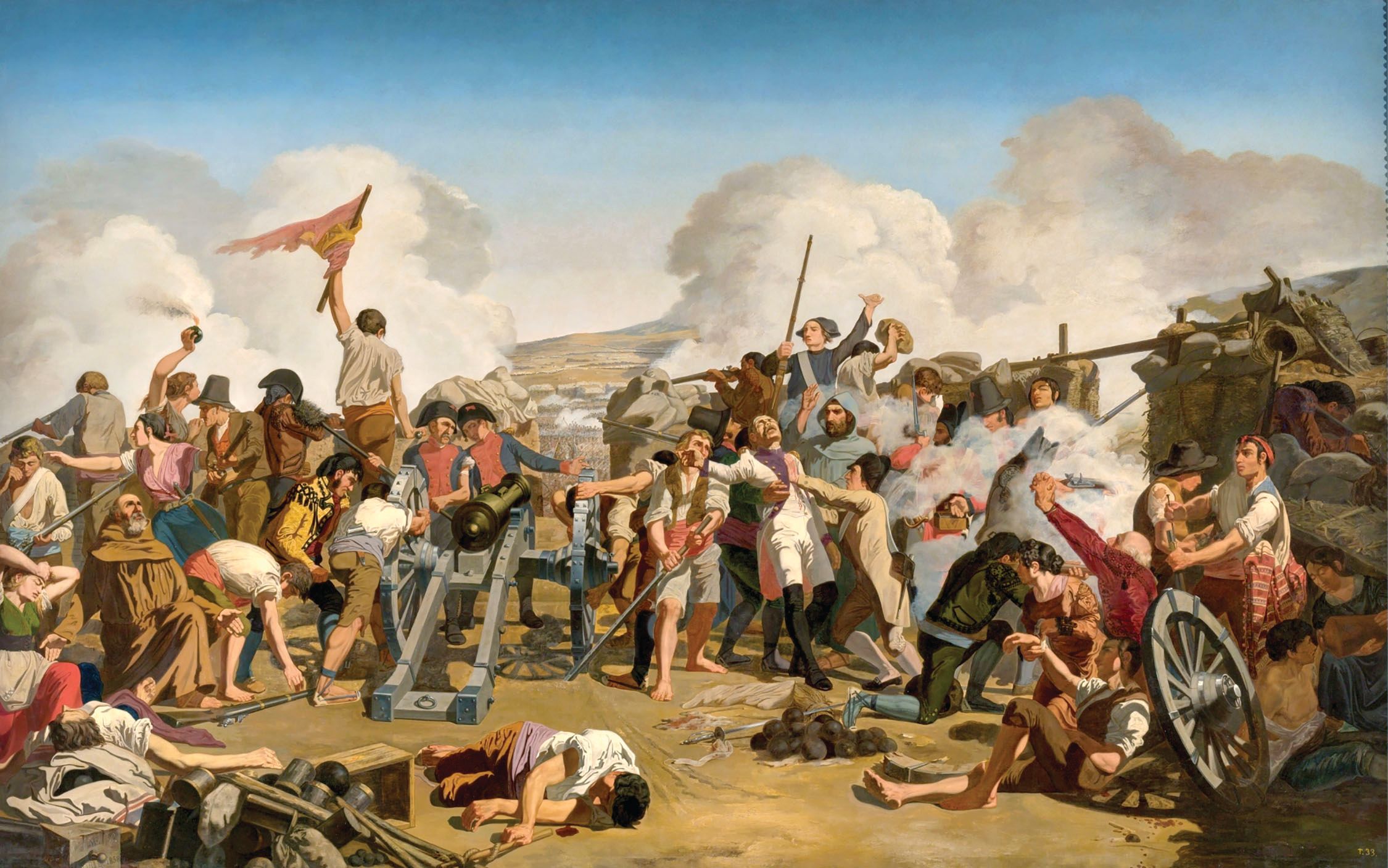
Napoleon’s invasion of Spain and Portugal sparked a cataclysmic conflict that shook Napoleonic Europe to its very core. Of the many examples of ferocity and cruelty committed between the revolt of Madrid in May, 1808, and the battle of Toulouse in April 1814, perhaps one event stands out by virtue of its sheer destructiveness: the second siege of Saragossa.
The Spanish town of Saragossa, the principal town of Aragon, was first besieged unsuccessfully by the French invaders in the summer of 1808 before the French were forced to withdraw after the disaster at Bailen. Saragossa then underwent a second siege from December 1808 as the French attempted to reassert their control over Spain. The defenders of Saragossa, led by General Jose dePalafox, were to put up fanatical resistance. The entire population of the city joined the regular soldiers and militia in defense of their city. Eventually, decimated by disease and the constant French barrage, the city surrendered in February 1809, but not before thousands of Spaniards and 10,000 French had perished in the struggle.
This account of the siege comes from Heinrich von Brandt, a Polish officer serving in the French Army. His testimony bears witness to the nature of the struggle, the bravery of the French, and the tenacity of the besieged. Brandt was a lieutenant in the Vistula Legion (three infantry regiments and one of lancers), which was composed of young Polish and German troops and whose senior officers were Polish veterans who had fought for the French in the 1790s. The Legion was sent to Spain as part of Marshal Moncey’s III Corps in the summer of 1808 and was destined to remain there until 1812.
Present throughout the siege, the Legion was in the front line for three long, cruel winter months. By the end of the siege its strength had diminished by one third, losses unparalleled in the rest of the French force. We first join Brandt’s account as the French, flushed with victory over the Spanish at the battle of Tudela, advance upon Saragossa and encamp around the little town of Alagon, their base during the forthcoming siege.
At Alagon we camped in conditions of absolute squalor. The inhabitants had fled, the weather was atrocious—freezing northerly gales alternated with torrential downpours without respite. The soldiers cut down the olive trees and tore off the doors and windows of the deserted houses in order to feed their bivouac fires. The bread ration was often replaced partly or entirely by rice or beans. As for the meat, one sheep was allocated to every 30 men but the insides of the animal was always missing and the meat reached us in such an advanced state of putrefaction that it was utterly repugnant. The siege artillery finally arrived on December 16 as well as Gazan’s and Suchet’s Divisions of Mortier’s Corps and we marched once more upon Saragossa.
On 21 December our forces mounted an assault on Monte Torrero, which we had taken in the first siege without suffering casualties. While our batteries opened up on a position known as Buena Vista, recently constructed on the heights, Grandjean’s division made a feint attack while part of Habert’s brigade, to which my regiment belonged, turned the position. The main clash occurred in an underground tunnel through which the Tudela canal passes. Our voltigeurs [light infantry] kept up a well-nourished fire and the defenders lost a large number of dead and wounded without really having had the chance to return our fire, and abandoned the position. Master of the place, Habert now debouched onto the left bank of the Huevra between the city and Monte Torrero, which the enemy speedily evacuated to avoid being cut off.
On the next day the city was entirely invested on both banks. Our division was astride the road to Valencia and had advanced posts stretching as far as the Ebro. Immediately before us lay one of the principal and most forward points of defense of the city, the monastery of San Jose. On December 22 and 23 we attempted to flush out the enemy’s light troops from some olive groves, a veritable forest that stood between us and the monastery. Fortunately there were in our regiment young men from Narev—a region renowned for its game and for its hunters. They killed some of the defenders and found that the Spanish troops were evidently refugees from the surrounding districts and still carried their money on their persons. Perhaps for this reason, our men quickly acquired a taste for the little war in the groves, and it was to their great regret when the enemy retreated out of reach.

Having taken Monte Torrero, a position of considerable strategic importance one mile to the south of Saragossa and one which dominated the whole city, Moncey planned to attack the monastery of San Jose while, on the right bank, Gazan’s division of Mortier’s V Corps applied pressure to the Spanish defenses to the north. Moncey, commanding some 45,000 troops, soon began to find that he had insufficient men for the task in hand as winter began to take its toll on the young troops.
On the evening of December 24 the colonel ordered me to proceed to Alagon to collect those soldiers of the Vistula Legion who had straggled due to sickness or exhaustion. With these men I was to form the escort for a convoy of rations and clothes. I managed to round up some 20 men from my regiment. We established ourselves for the night in a deserted house and got a good fire going, fed from beams and floorboards “borrowed” from a neighboring house. In place of straw we lay on some old hemp. We had to leave Alagon the next day, but I almost stayed there permanently.
For some time I had felt not at all well. That night, in the icy cold, I got considerably worse. In the morning I was seized by a violent fever, complicated by dysentery, and had to be carried to a military hospital, which was more like a den of thieves than a place of healing. The hospital was located in a filthy monastery whose monks had fled to Saragossa and were no doubt inflicting the wounds we were coming here to die of.
Typhus was rampant as all the area around had been infected by the stench of the corpses left so long unburied after the battle of Tudela. For the first few days, while I was still conscious, I could follow the details of the burial of the many sick who succumbed. They were thrown from the windows stark naked and they fell, one on top of the other, with a muffled thud just as though they were sacks of corn. Then they were piled onto carts and taken away to the huge pits that were being dug unceasingly only one hundred yards away. The Spanish who had been charged with this duty undertook it with a diabolical glee. They pointed out to me the countless mounds of earth that marked the completed and covered-over graves and made signs that indicated there would be no lack of future work. Such a sight was not of the kind to hasten my recovery.
Consciousness soon began to slip away and I fell into a kind of stupor for some hours. An incredible feeling of cold brought me round one night. I could hear cries and gasping in the shadows all around and smelled a terrible and suffocating smell. In the first light of morning I found myself on a stinking stretcher, not knowing where I was and surrounded by the dead and dying.
Filled with horror I made a determined effort to get up and flee this horrible place but my strength failed me and I passed out once again. I was ill for about a month, until my youth and the strength of my constitution triumphed over the fevers. Yet the hollow thump of corpses falling from the windows of the cursed hospital were to haunt my dreams for many years to come. On January 19, 1809, I returned to my regiment after an absence of 25 days.
Despite a Spanish sortie on December 31 and Moncey’s departure—he was replaced by Junot—the siege had progressed. On January 10 French siege guns opened up on San Jose with intense and concentrated fire. On January 11 the French assault columns moved up and took the position by storm. The French now had in their possession a key to the Spanish position and it was one they would exploit to the full.
During that interval the siege had made considerable progress, particularly in our sector. We had been masters of the San Jose monastery for some eight days now. The superior officers were lodged in the ruins of the country houses and manor houses while the junior officers and men, in order to maintain pressure on the besieged, had dug into the earth and formed oblong pits about four feet deep and covered with branches.

If it rained there was trouble and we would soon be floundering in these bogs of our own creation. Keeping watch, mounting guard, patrolling, scouting, were exhausting and the number of duties increased as the siege progressed.
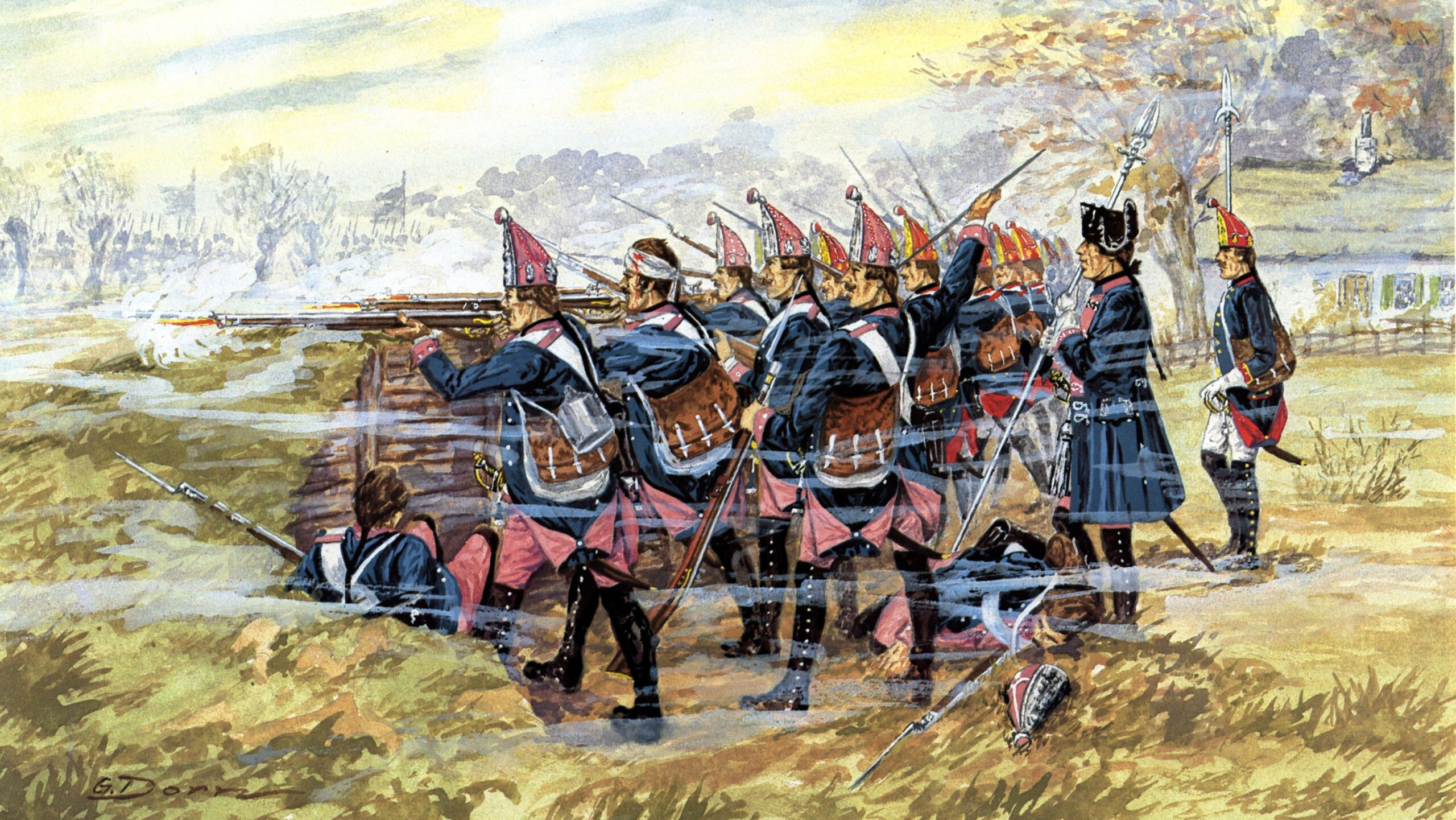
On the night of January 21–22 I had my first experience of guard duty in the trenches in command of 25 men of the battalion. To our right was a section of the 14th Line Regiment, commanded by an experienced sergeant who soon struck up a conversation. He gave me and my men sound advice on how to conduct trench warfare. He showed them how to position the gabions according to different circumstances; how to construct defenses so as to both keep the enemy under surveillance and fire the odd pot shot; how to guard against a surprise attack because this was, he said, potentially the most uncomfortable situation to be in.
On January 23, in the evening, we learned that Lannes, finally recovered, was about to arrive and take over command. This news was met with genuine satisfaction and everyone predicted things would now move forward at a far more energetic pace. That same evening at a particularly exposed point—I was now a connoisseur of trenches—I came across Lacoste, the General of Engineers, in deep conversation with a man in an unadorned green coat and not wearing a sword. The two of them were studying the city through their telescopes without paying the slightest attention to the bullets and roundshot that were raining all around.
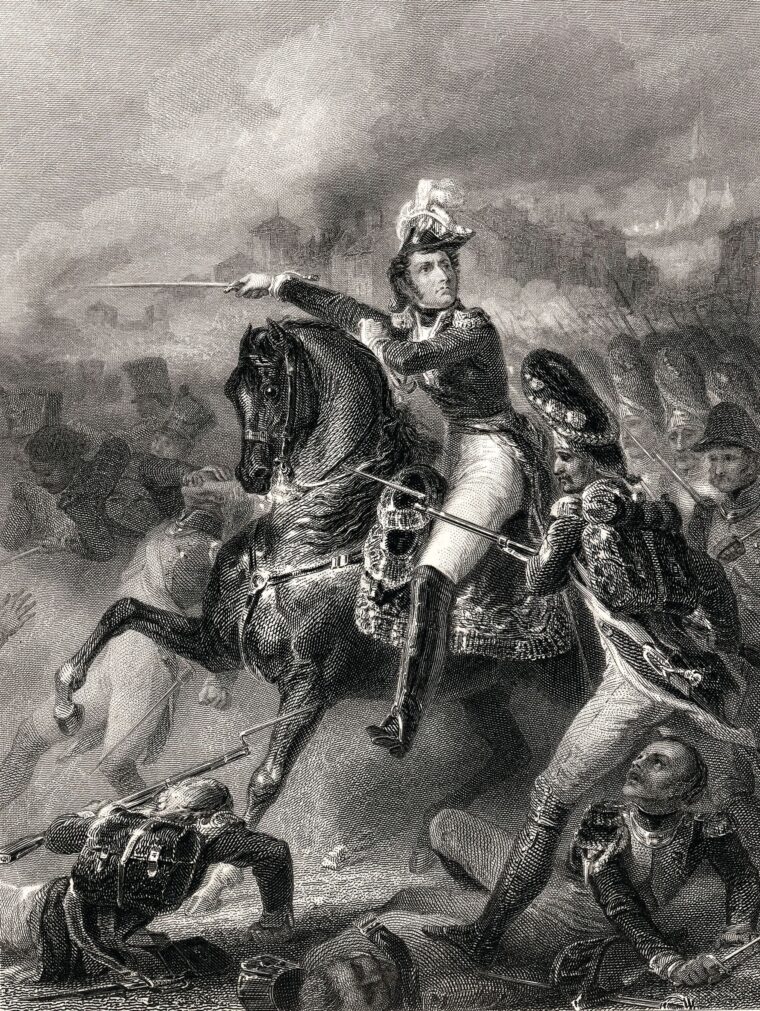
The man with Lacoste was none other than the marshal himself. He eventually seemed to realize the danger they had placed themselves in and said out loud, “They’ve seen us, come on.” Lannes was always confident and had an extraordinary courage that bordered on audacity. I remember when this marshal, after the fall of the Jesuits’ Convent, perched himself on a rooftop and began to follow the movements of the enemy through a telescope. He soon found himself a target for sharpshooters hidden in the ruins of the convent and began to attract their shots. Lannes immediately grabbed a musket and fired back.

To mark the arrival of Lannes on January 22 the Spanish again made a sortie the following day. But this did not delay French preparations for their most ambitious assault to date. Concentrating on the Palafox battery, the French guns hammered the Spanish defenses while at the same time pouring mortar shells onto the city itself. The defenders, ravaged by disease, made ready to meet the inevitable French assault with all the strength they could muster. On the morning of January 26, 50 French guns opened up in a frightful bombardment and, at dawn on the next day, the French assault columns, nervously collecting in the trenches, made ready to assault Saragossa.
The main assault, made on January 27, was one of the bloodiest days of the siege. Since dawn our batteries had concentrated their fire on widening the breaches. At nine o’clock those units designated for the assault moved forward. The column meant to break into the garden of the Santa Monica convent was four hundred men strong and composed of the 14th Line and part of the 2nd Regiment of the Vistula Legion. A second and smaller column had to storm a breach to the left of this and close to one of the principal batteries of the besieged—that which bore the name of their illustrious leader, Palafox. A third column, formed by a battalion, my own, of the 2nd Regiment of the Vistula Legion, was directed to the right of the Santa Monica convent and San Augustin monastery, toward the Casa Gonzales—a stone building jutting out from this last convent toward the Ebro and linked to the defenses by a covered way. These three attacks on the right had to coincide with the assault on the center against the Santa Engracia convent.
Of all the attacks on the right only one achieved even partial success—that on the breach by the Palafox battery. The breach in the wall of the garden of the Santa Monica convent proved higher than first thought and our voltigeurs succeeded only in clambering up the rubble and establishing themselves in the debris below the breach but could move no farther forward.

Next, the assault on the Casa Gonzales, in which I took part, failed completely. We only just managed to get into the building for there, too, the breach was almost impractical, but were met by such a heavy fire coming from the upper story and every corner of the place that we fell back rather quickly. Major Beyer, in command, was seriously wounded and the captain of my company, a certain Matkowski from Krakow, had a leg shattered by a roundshot and fell into enemy hands.
Fortunately the main attack in the center was a complete success led, as it was, by Colonel Chlopicki. Our troops took not only the Santa Engracia convent but the neighboring Capuchin nunnery. The loss of this critical position forced the Spanish to abandon their line and fall back. That same evening we were able to enter the Casa Gonzalez because it, too, had been abandoned. We found the bodies of 11 of our comrades, all horribly mutilated. Matkowski was not there; he had been taken to a hospital where we were to find him after the siege. He was in terrible condition with not long left to live and failed to recognize anyone. The war of the ramparts was now replaced by the far more terrible war in the streets and houses.
The French, having breached the outer defenses, forced the Spanish to relinquish their first line of defense and withdraw into the city. They would, from now until the end of the siege, rely on dogged defense of individual buildings and ruins to hold the French at bay.
On January 28 and 29 we continued to attempt a practicable breach on our side of the Santa Monica convent, in which the enemy was still holding out. On January 30 one company of the 14th Line finally managed to secure a part of the convent’s garden and take the church, maintaining its position in the face of fierce counterattacks. On February 1 the news of the death of General Lacoste caused considerable dismay, even among the ordinary soldiers. His successor was Colonel Rogniat who, although quite capable, was not as highly regarded as Lacoste had been, and indeed there was nothing pleasant about his personality.

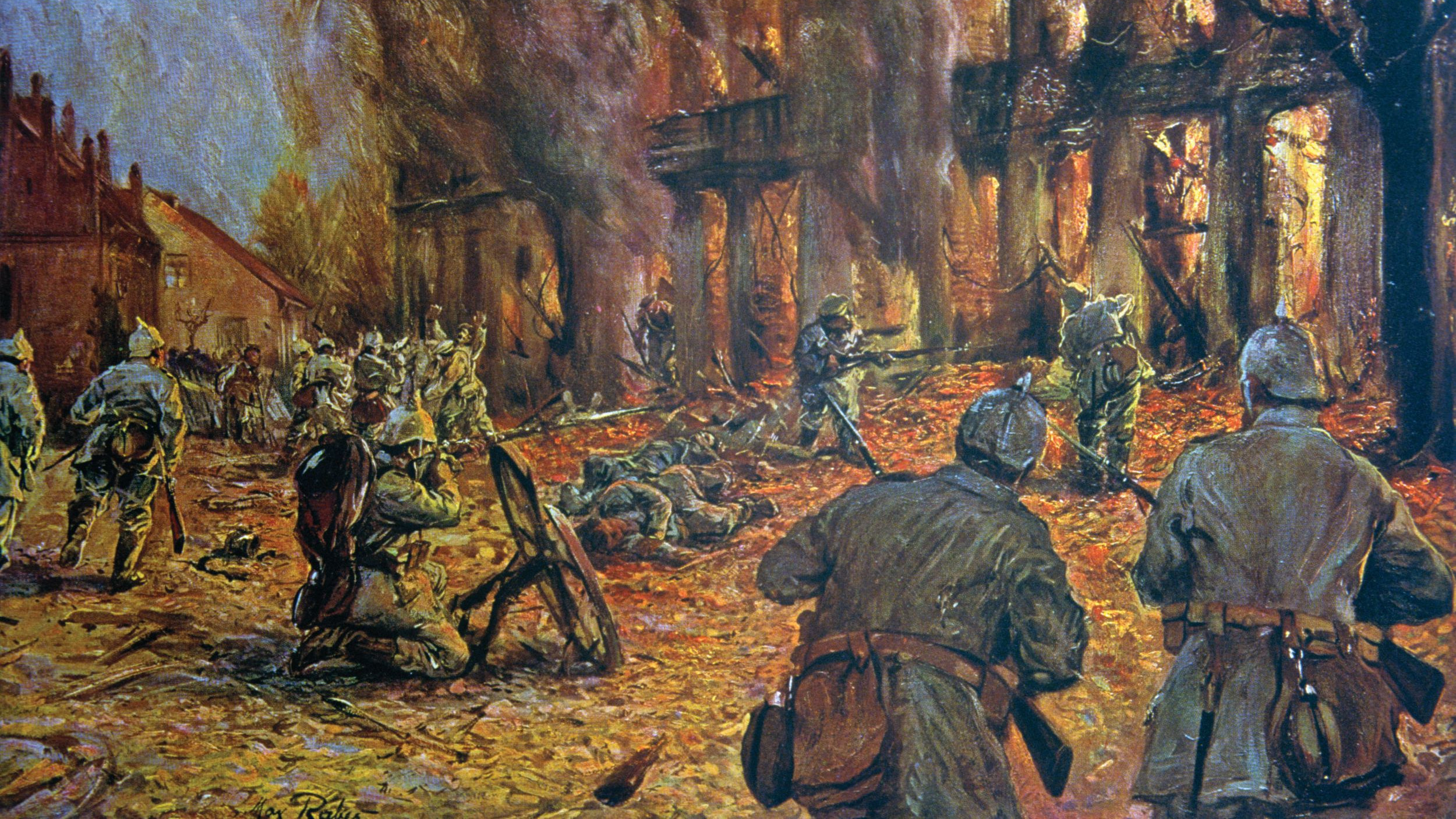
The more we advanced the more dogged resistance became. We knew that in order not to be killed, or to diminish that risk, we would have to take each and every one of these houses converted into redoubts and where death lurked in the cellars, behind doors and shutters—in fact, everywhere. When we broke into a house we had to make an immediate and thorough inspection from the cellar to the rooftop. Experience taught us that sudden and determined resistance could well be a trick. Often as we were securing one floor we would be shot at from point-blank range from the floor above through loopholes in the floorboards. All the nooks and crannies of these old-fashioned houses aided such deadly ambushes.
We also had to maintain a good watch on the rooftops. With their light sandals, the Aragonese could move with the ease of and as silently as a cat and were thus able to make surprise incursions well behind the front line. It was indeed aerial combat. We would be sitting peacefully around a fire, in a house occupied for some days, when suddenly shots would come through some window just as though they had come from the sky itself.
With these latest and most terrible developments our sappers and miners were superb. There were especial difficulties in making progress through the foundations of the great convents and churches and here the stones were seemingly allied to the determined resistance of the besieged. The Spanish stopped at nothing to slow our advance. Even when they were at last forced to abandon a building, they would scatter resin-soaked faggots everywhere and set them alight. The ensuing fires would not destroy the stone buildings but served to give the besieged time to prepare their defenses in neighboring houses.

Even so, Grandjean’s and Musnier’s divisions were making some progress on the right. Their effective strength, however, was now reduced to about ten thousand men—a strength diminishing daily. Not surprising when every day one third of the effectives was employed in the siege, another third was held in reserve and the rest, who should have been recuperating, were guarding the camp and the rear areas; and all this besides the constant alarms and the enemy’s counterattacks. These were especially strong around the asylum, which had been converted into a hospital, and we faced enormous difficulties here. The Spanish commanders knew as well as we the importance of this key position, which commanded the main street in Saragossa—the Coso.
Something horrible happened on February 7. The Spanish had finally abandoned the asylum, laying mines as they went. The attackers burst in, without meeting any resistance, only to be met by a sight sure to dishearten even the bravest of men. The beds and the floorboards were strewn with the dead and the wounded, whom there had been no time to evacuate. There had, however, evidently been enough time to light a fire and the flames were already racing toward us consuming everything in their path! I was in charge of a detachment of 20 men, covering the left of the column, and we were making our way through the adjacent courtyards and corridors off the main building when the sapper sergeant, who was serving as our guide, made a wrong turn and took us right into the heart of the conflagration. We suddenly found ourselves shrouded in thick, choking smoke and inhaled the nauseating smell of burned flesh. There was a moment of panic but fortunately I brushed against a window, obscured by this hellish smoke, broke it, and once more found fresh air and daylight.
The next day our entire division took place in the assault on the Coso. Above the continual bickering of musketry the groans of much larger explosions could be heard—sometimes the booming of cannon and sometimes a mine going off. I was busy in the Coso with a detachment of some 50 men, setting up a barricade. Grenadiers, posted above us in the windows of neighboring houses, covered this work, which was designed to protect a communications trench that ran from one side of the street to the other.
Suddenly our ears were almost shattered by the familiar whistling and roaring noise of an exploding mine. A neighboring house collapsed and unmasked a Spanish battery which blasted us with grape at point blank range. Miraculously, only three men were hit but the rest ran for it as quickly as they could. Those working on the barricade and their guards had fled to the rear leaving myself and the grenadier captain, a man called Boll and a native of Volhynia, quite alone.
He set off, marching as calmly as if on parade, toward the breach through which our men had disappeared. Reaching it he turned to me and said, with considerable sangfroid, “This is an odious duty; however, the officer of highest rank always goes last.” He came through after me and rallied his grenadiers, chastising them for having abandoned their post without orders. Boll, who was a close friend of the colonel, very obligingly commended my steadiness on this occasion to the colonel. The day ended badly for us. The Spanish found a means of bringing up a cannon and flushed us out from around the Coso, with considerable loss. However, this setback did not seriously affect the morale of the soldiers because they were now no longer alone in the struggle as had been the case in the first weeks of the siege.

From a battery set at the mouth of the Huerva the progress of the soldiers of Gazan’s division could be followed. We thought them very lucky to be able to fight in the fresh air while we were condemned to this horrible war of streets, houses, and passageways. Over the following days we took, with some loss, a few positions on the Coso. On February 12 the first attack on the university buildings failed due to the fact that the miners had not been able to place their galleries close enough under the walls. The result was that the explosion failed to make a breach and our columns were exposed to a galling fire from which they fell back with the loss of about 40 men.
Again the casualties fell on the Poles—they were always given the most dangerous missions. One of the last clashes, and one of the most bloody, was that for the Calle de los Arcades; and it was now our turn to put some cannon to use. Here I witnessed one of the most memorable examples of the tenacity of the besieged. One of the houses was shot at from such close quarters that the roundshot passed right through the building and out of the other side. Nevertheless, the defenders simply abandoned one story and took refuge on the next floor up and kept up such a galling fire that we were unable to advance any farther that day.
The 18th was decisive. As Gazan’s division seized the suburbs on the left bank, killing or taking all the defenders, we also made good progress along the Coso and neighboring streets. At around three o’clock a 1,500-pound mine was blown and, as it was better placed than the last, blew a large breach in the wall of the main university building. Three companies of my regiment and two of the 14th Line launched a desperate assault. This time we managed to seize this important position, at the cost of a dozen men. At the same time the house on the corner of the Calle de los Arcades, assaulted for the sixth time, finally surrendered, its resistance exhausted. This time we had made real progress and capitulation now seemed to be a question of hours rather than of days. Even so hostilities continued throughout February 19.

One company of the 3rd Regiment of the Vistula received the order to make its way under a house next to the bridge over the Ebro and thereby cut behind defenses still manned by the defenders. We were still seriously concerned as to the fate of these brave men when we were officially notified of the cessation of hostilities. Many officers believed that these negotiations were another Spanish trick and we therefore spent another night under arms. On the next day, however, all doubts were cast aside. We were indeed masters of the city.
With Gazan master of most of the left bank and the French firmly established within the city and maintaining a rigorous policy of taking each street building by building, Palafox, who was seriously ill, was in dire straits. The defenders had been sapped by disease, their morale had plummeted in the face of the remorseless French advance, and the promised relief armies had never materialized. With only 2,800 infantry fit for duty, Palafox resigned command to a Junta. The Junta, accepting the inevitable, and threatened by Lannes with new hostilities, decided upon capitulation.
It was all over by the evening of February 20 and yet on the morning of the next day the Spanish sentries were still at their posts aiming at the too-curious, and snarling atras! (get back) at them. Finally, at noon, we made our way in full dress over blocked canals and a landscape of olive-tree stumps toward the Puerta del Portillo where the garrison would come to pile their arms.
Each one of us made it a point of honor to eradicate every trace of the hardship we had suffered. Greatcoats burned with powder and torn by bullets were carefully rolled up and strapped on top of knapsacks; muskets carefully polished shone in the sun.

After about an hour the vanguard of the famous defenders of Saragossa began to appear. A certain number of young men, aged between 16 and 18, without uniforms and wearing gray cloaks and red cockades, lined up in front of us nonchalantly smoking cigarettes. Not long after we witnessed the arrival of the rest of the army: a strange collection composed of humanity of all shades and conditions. A few were in uniform but most were dressed like peasants. These people were all smoking and chattering and looked with complete indifference on their imminent captivity. Eventually General Morlot, charged with escorting the prisoners, set his troops in motion and the whole of this garrison, some eight- or ten-thousand men strong, filed passed us. Most of them were of such nonmilitary bearing that our men were saying aloud that we should never have had so much trouble beating such a rabble.
I was told that Palafox was found almost dead in the Casa de los Gigantes. A few days later I saw him as they were taking him to the carriage, drawn by four mules, that was to take him to France.
On the 22nd I was ordered into the city to collect our wine ration. There was such a commotion at the issuing station that I had to wait several hours before receiving the wine. One of my comrades, forced to wait like myself, suggested we explore the neighboring streets and kill some time. We went first to the famous Church of the Pilar, which was quite close by. The square in front of the church was clogged with praying women and children, coffins, and the dead for whom there were no coffins.
Inside the church the priests found that they could not fulfill all of their many tasks. The doleful congestion crowded under the portals and filled the aisles—the floor of the nave had vanished under kneeling figures in black whose sobs intermingled with the psalms. I caught sight, too, of some French soldiers kneeling by the main altar.
Still more sinister was the Calle de Toledo. Here the population had sought refuge from our bombardment. There was a mound of corpses, many stark naked, piled in the middle of the street; here and there fires were burning, around which these poor people were attempting to cook their food. Above all it was the children, thin and with the bright eyes of fever, that were painful to behold.

Shadowy figures, wrapped in their giant cloaks, talked energetically and fell silent when we drew near, pretending not to look at us. This siege shook the world. Political passions rose to an even greater pitch than usual. The resistance shown by the besiegers has been much praised and yet it would be only fair to recognize that for heroic tenacity the victors compare well with the vanquished. This is especially true for the divisions of Morlot and Grandjean which, with less than 13,000 men under arms, endured, alone, three weeks of horrific street fighting against twice as many defenders.
The siege left 54,000 Spanish corpses lying in the ruins of a once-great city. Yet Saragossa quickly became a symbol of Spanish defiance and a rallying cry for all those opposed to Napoleonic ambition. Its effect on French morale was immense. The realization that they were fighting an entire people, and a people determined to fight to the death for their hearth and home, struck deep into every general’s and every conscript’s heart.
As Sir Charles Oman wrote, “The example of Saragossa was invaluable.… The knowledge of it did much to sicken the French soldiery of the whole war, and to make every officer and man who entered Spain march, not with the light heart that he felt in Germany or Italy, but with gloom and disgust and want of confidence.”
Saragossa was to set the tone for the rest of the Peninsular War which, although it never quite reached again the depths of that siege, was the first glimmer of total war in the heart of Europe. Brandt was to spend the next four years in Spain, caught up in fighting the guerrillas, before being dispatched with his unit to take part in the invasion of Russia in 1812 and an ordeal of an altogether different type.
Join The Conversation
Comments
View All Comments