By Kevin Seabrooke
In the pre-Revolutionary War era of the New England colonies, provincial soldiers fought a series of wars against New France and its Native American allies, with mixed results. Provincial troops often lacked supplies, arms and ammunition as well as traditional military training and discipline.
Though they were British subjects, England had little involvement in defense of the colonies, at first. To Britain, the colonial soldier was “ill-disciplined, unprofessional, and incompetent.”
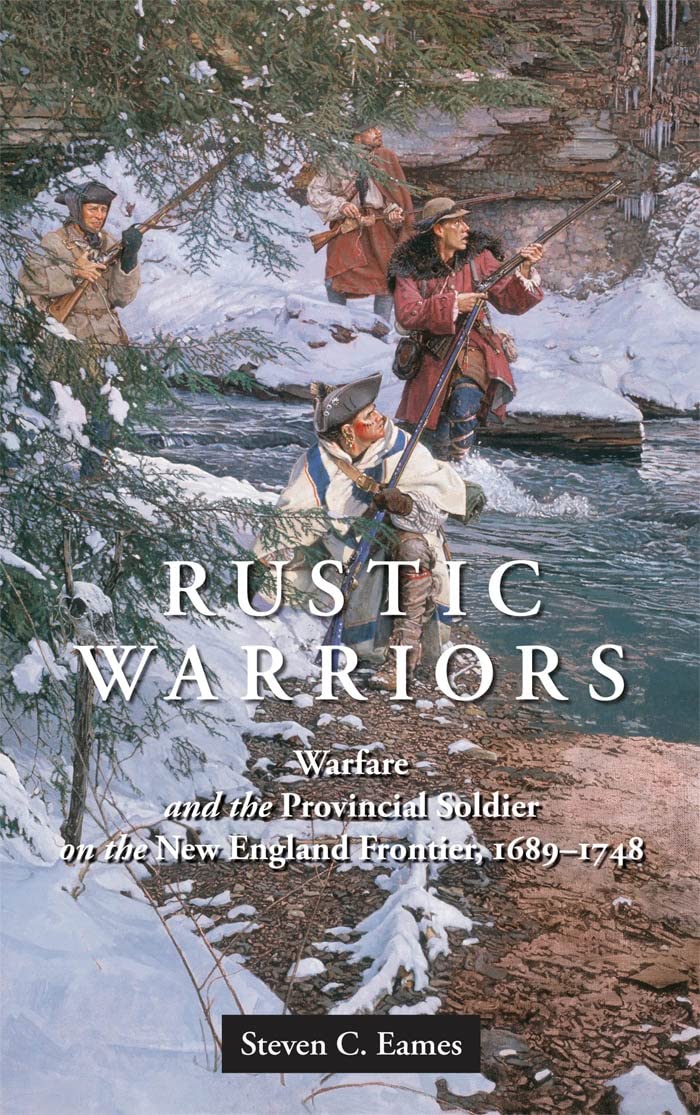 General John Forbes, who led the 1758 Forbes Expedition which occupied the French outpost of Fort Duquesne and renamed it “Pittsburgh,” referred to them as “a gathering from the scum of the worst people … an extream bad collection of broken Innkeepers, Horse Jockeys, and Indian Traders.”
Eames argues that settlers in early New England had, in fact, developed “a unique way of war that selectively blended elements of European military strategy, frontier fighting, and native American warfare.”
In the first part of the book, Eames offers an operational study of offensive and defensive strategies undertaken by the colonies of Massachusetts and New Hampshire. Part II focuses on an extensive analysis of the actual experience of the provincial soldier in great detail in order to present a more balanced view of their place in history.
Rustic Warriors: Warfare and the Provincial Soldier on the New England Frontier, 1689-1748 (Steven C. Eames, NYU Press, New York, NY, 320pp., maps, notes, index, Sept. 9, 2025, $35 SC)


Join The Conversation
Comments
View All Comments