By Kerria Seabrooke
After German Chancellor Adolf Hitler had rejected all offers of peace, Prime Minister
Winston Churchill declared in June 1940 that “The Battle of Britain is about to begin.” France had just surrendered and now the island nation stood alone against Germany’s powerful Luftwaffe and the looming threat of a large-scale amphibious attack by the Wehrmacht as part of Hitler’s ambitious invasion plan—Operation Sea Lion.
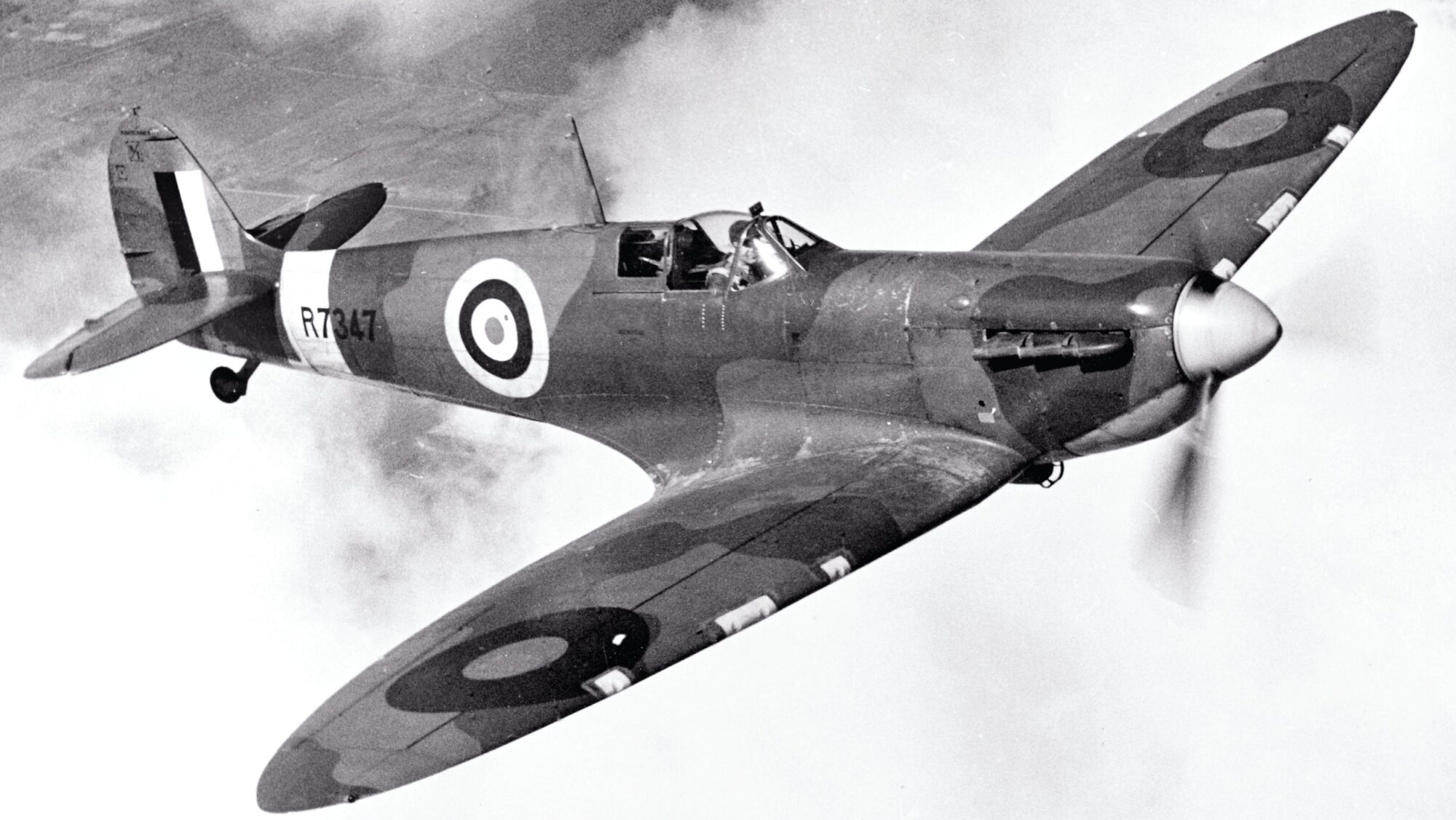
As the main defensive force for Britain, the Royal Air Force (RAF) Fighter Command had a growing number of Spitfires and Hurricanes, but they were outnumbered by the Luftwaffe, which was then the most technologically advanced airforce in the world. As the need for air power increased, the RAF was able to build, buy and lease aircraft to meet its needs. Pilots for those planes, however, was another matter.
For the coming campaign, the RAF realized they had to expand their fighter pilot ranks quickly, calculating they would need to maintain a pool of about 1,400. Spitfires and Hurricanes were excellent planes, but training time for new pilots fell to as little as two weeks, putting them at a disadvantage against the more experienced Luftwaffe fighter pilots in the Messerschmitts Me 109s and 110s. The RAF had recently revamped their Operational Training Units (OTUs) and added three additional fighter OTUs—producing 39 trained pilots every two weeks—for an overall output of 115 trained pilots every two weeks.
Even without enemy fighters and antiaircraft flak, flying is an inherently dangerous activity affected by any number of factors—crew inexperience, fatigue, weather, mechanical failure, type of aircraft and even the mission target. Add to that the fact that almost all of the new aircrew and the more than 200 new pilots produced each month were in their late teens or early twenties. For the RAF in WWII, 51 percent of aircrew were killed on operational flights, while 12 percent were killed or wounded in non-operational accidents.
Undergoing high physical and mental demands for hours on end, bomber crews had to fight the enemy as well as hazards such as lack of oxygen and frostbite in their high-altitude environment. Night operations added layers of complexity to the mission. Bomber crews suffered a high casualty rate—55,573 killed out of a total of 125,000 aircrew (44.4 percent). Some 8,403 men were wounded in action, with 9,838 taken as prisoners of war.
Featuring inexperienced recruits flying older aircraft meant flight instruction was also dangerous. Some 8,000 RAF men were killed in training or other non-operational flying during the war.
The enemy was the enemy, and would do their worst, but the top brass at the RAF needed to reduce the number of non-combat casualties. It was here that Pilot Officer Percy Prune entered the picture.
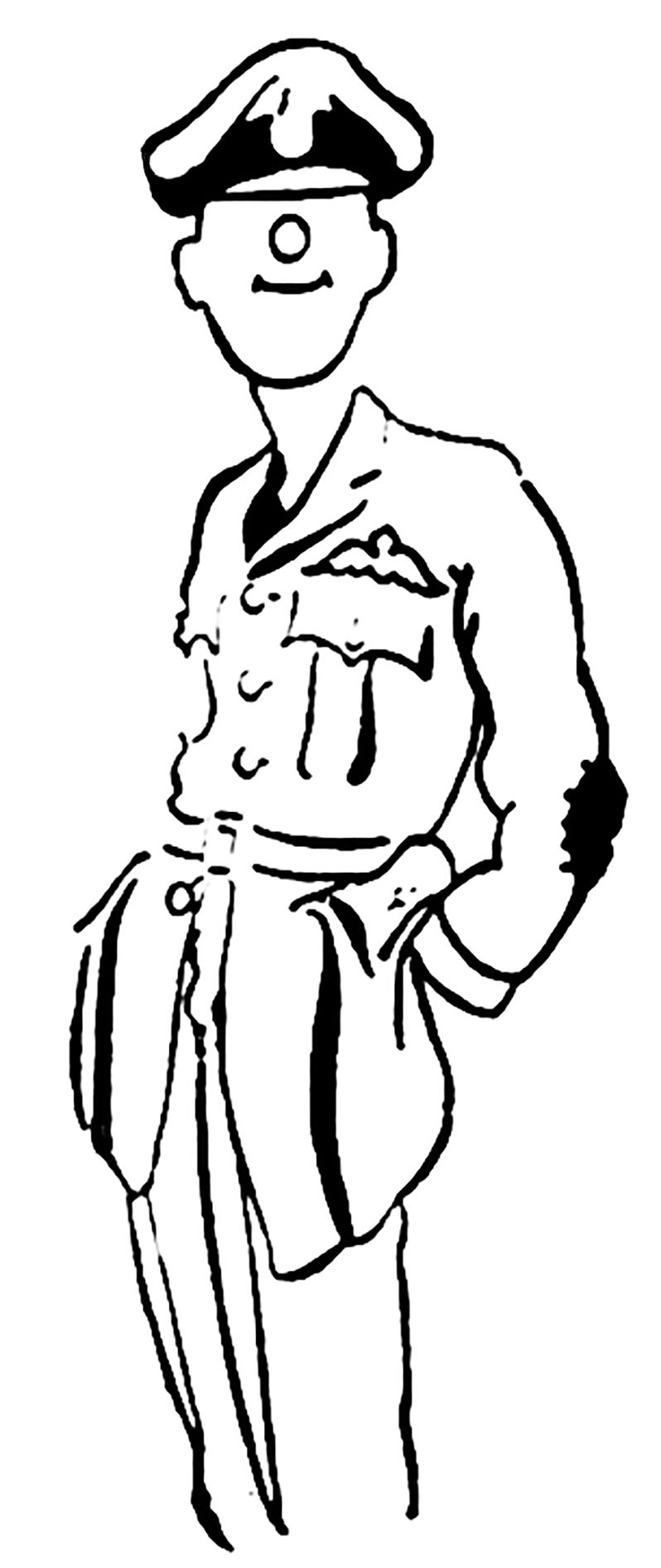
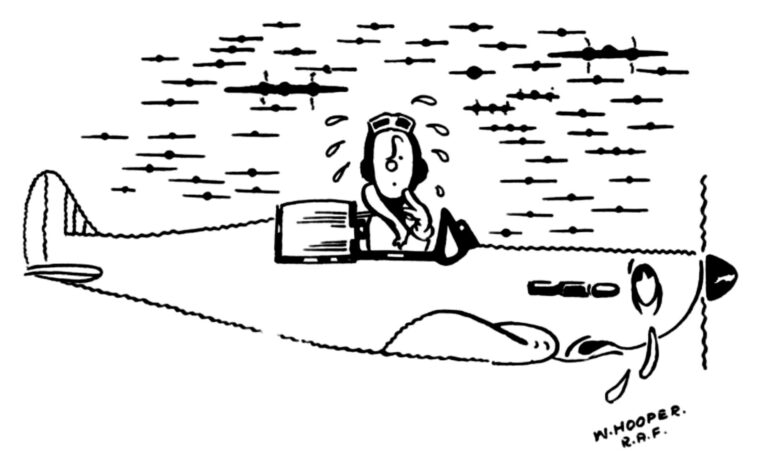
While never a real person, Pilot Prune’s exploits would become known worldwide and leave a lasting legacy on Britain’s Royal Air Force. The creation of William John “Bill” Hooper, Prune would rise to worldwide fame through RAF training manuals where he appeared in cartoons that used wit and humor to bolster aircrew morale and effectively communicate memorable lifesaving training techniques and tips throughout the war.

Hooper was born in Lichfield, Staffordshire, on August 21, 1916, and completed his education at a boarding school in Kent. He went on to study metallurgy at Imperial College, London. However, he left after completing two terms and attempted a series of jobs, including a security guard and a painter in Ireland. When World War II broke out, just nine months before the Battle of Britain began, Hooper applied to become an RAF pilot. Despite the shortage of pilots, he was considered too old. Hooper, who would turn 24 in August, was discouraged to find out that he would have had to apply before his 23rd birthday to get in.
Instead, he was sent to gunnery training as the RAF was also short on experienced aircrews, due to the losses in the Battle of France and Norway. This included the need for air gunners, and Hooper finished gunnery training in June 1940, just at the start of the Battle of Britain.
He was assigned to the 54 Fighter Squadron at Hornchurch, Essex, on the outskirts of London, where, as sometimes happens in the military, they had no need for an air gunner. Soon after, he was transferred to ground staff where, between repairing and maintaining Spitfires, Hooper entertained his peers at the Hornchurch Air Station with satirical drawings from his “doodle diary” where he sketched cartoons depicting many of the pilot gaffes he heard about on a daily basis. From these sketches, the “prune-like” character of Pilot Officer Percy Prune emerged, starring as a bumbling but lovable goof. Hooper shared his sketches with the pilots as they awaited the alert to head to their planes and “scramble” when an enemy plane had been spotted.

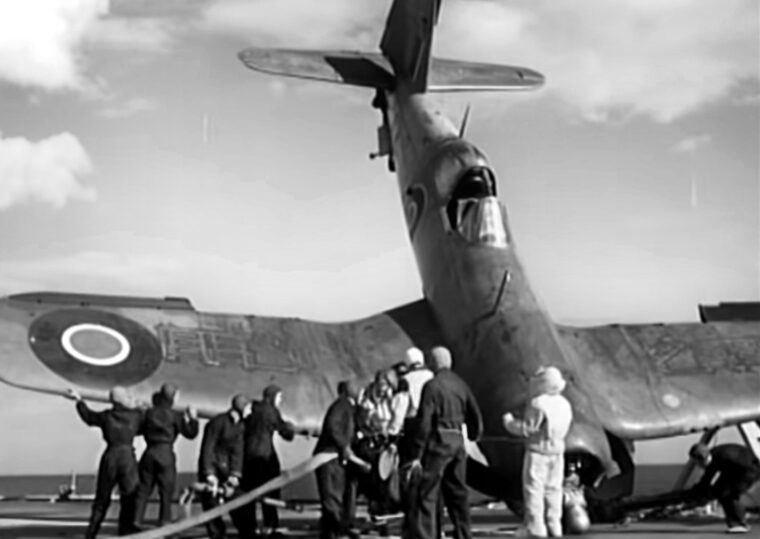
The Air Ministry was alarmed by the growing number of accidents caused by the young pilots who rarely read the notoriously dull standard training manuals. Rookie mistakes were common, including landing with the wheels up, low flying, running out of fuel, releasing a parachute inside the aircraft, and landing in the wrong airfield.
The RAF suffered numerous losses at a time when it was seeking to strengthen its front line. In his book, On War, Carl von Clausewitz observes, “Countless minor incidents- incidents-the kind you can never really foresee-combine to lower the general level of performance, so that one always falls far short of the intended goal. Iron will-power can overcome this friction; it pulverizes every obstacle, but of course, it wears down the machine as well.”
The ministry needed to take action and decided that 40 hours of pilot training before being posted to the front lines was not sufficient and that the solution was to provide the pilots with additional, easily digested information on a regular basis.
In the meantime, Hooper’s cartoons had become popular with the fighter command, which led to his Group HQ asking him to illustrate a pamphlet with life-saving nuggets of advice for novice aircrew. Called “Forget-me-nots for Fighter Pilots,” it used dark cautionary humor and practical advice for novice aircrews who were under pressure before and during the Battle of Britain. In his paper “Entrenched Culture: Soldiers’ Culture in the Aftermath of the First World War,” military historian Dr. Tim Cook argues that “humour is used as a shield” and a coping mechanism in a culture of survival. The antics of Hooper’s Percy Prune were rapidly becoming one more coping mechanism in the pilots’ survival arsenal.

The pamphlet soon came to the attention of Squadron Leader George Anthony Armstrong Willis, who had been tasked with developing a new training manual. Willis, who wrote for the British magazine Punch, under the pseudonyms “Anthony Armstrong” and “AA” had been invalided out of the army reserve and was appointed to contribute to the war effort by setting up and writing the RAF’s new monthly training memorandum, nicknamed “Tee Emm,” short for Training or Technical Memorandum.
Willis was certain that the combination of his strong prose and Hooper’s accident-prone Prune would create a memorable and long-lasting impact on the recruits. The iconic cover design of the manuals was an RAF eagle with pince-nez spectacles and a pen gripped in its talons, and was designed by Punch magazine cartoonist Cyril Kenneth Bird. Air Vice-Marshal R. E. Saul wrote the foreword. Tasked with providing procedural and safety information for the newly recruited pilots, Hooper created visual warnings against rookie mistakes. Prune soon became a legendary part of RAF history, teaching rookie pilots how not to fly with catch phrases such as, “A good landing is one you can walk away from.”
 While always cloaked in humor, the advice was serious. For example, when recommending that pilots wear proper gear for completing jobs aboard high-altitude bombers, they were advised to dress for the temperature, as in the article “Brass Monkeys, and How to Avoid Becoming One,” where they were warned, “You never know when you’ve got to turn out to do a job aft, where the ice-gremlins are inclined to stow away.”
“Gremlins” were the bane of World War II aircraft and were universally accepted as a metaphor for human error and mechanical failure. These mischievous creatures were popularized during the war, which led to Pilot Prune considering himself something of an expert or “Gremlorist” and dispensed advice for dealing with the malicious devils.
Tee Emm debuted on April 1, 1941, and was so successful that Hooper and Armstrong were enlisted to create spin-off books. The Air Ministry, “Minutes of meeting to consider training to improve morale and discipline,” 6 January 1944, AIR 20/4583 wrote of the enduring popularity of Tee Emm as “A training manual which was widely distributed. Its most enduring feature was a cartoon character called Pilot Officer Percy Prune, a creation of cartoonist Bill Hooper. Prune was made to survive disaster after disaster, in a humorous attempt to teach safety lessons and demonstrate mistakes to avoid. So popular did Prune become that there were concerns that airmen needed a role model who was not quite so ludicrous and brainless.” The aircrews disagreed, feeling that Percy Prune was one of them, and they eagerly awaited the monthly additions of Tee Emm, impatient to find out what new havoc Prune had caused.

Willis and Hooper produced 60 issues in 6 volumes from April 1941 to March 1946, with Hooper using the pseudonym “Raff.” The character of Percy Prune was a comical example of what not to do. He became famous for his inability to “pull his finger out of his rear” when necessary. To honor his ineptitude, a spoof military award was created, called the Most Highly Derogatory Order of the Irremovable Finger (MHDOIF), and it was awarded each month to members of the RAF for military incompetence throughout the war. The image of the award was a clenched fist with the index finger fully extended to indicate blame being pointed. The phrase “Pull your finger out!” (meaning—Get your Finger Out of your Rear) became a ubiquitous RAF phrase. Pilot Prune famously held out his “Prunery” finger in the cartoons, and pilots had only to invoke the word “finger” to imply a mix-up, or worse.
Among those who received the award were the crew of a bomber who flew into enemy-occupied territory and got lost. After a dangerous crash landing in a field, the crew set fire to the plane to prevent the enemy from accessing the technology. As they hiked covertly, seeking a safe area, they discovered they were just outside a public house, a mere five miles from their own airfield.
Just before VE Day, Luftwaffe pilot Oberleutnant Armin Faber, landed a Focke-Wulf Fw 190 at an RAF airfield, mistaking it for a German airfield in France. He surrendered his aircraft to the station commander, who infamously yelled, “Tell the pilot of that Mustang to observe proper landing procedure.” The final MHDOIF award of the war was given to the British station commander for mistaking a Focke-Wulf Fw 190 for a Mustang.
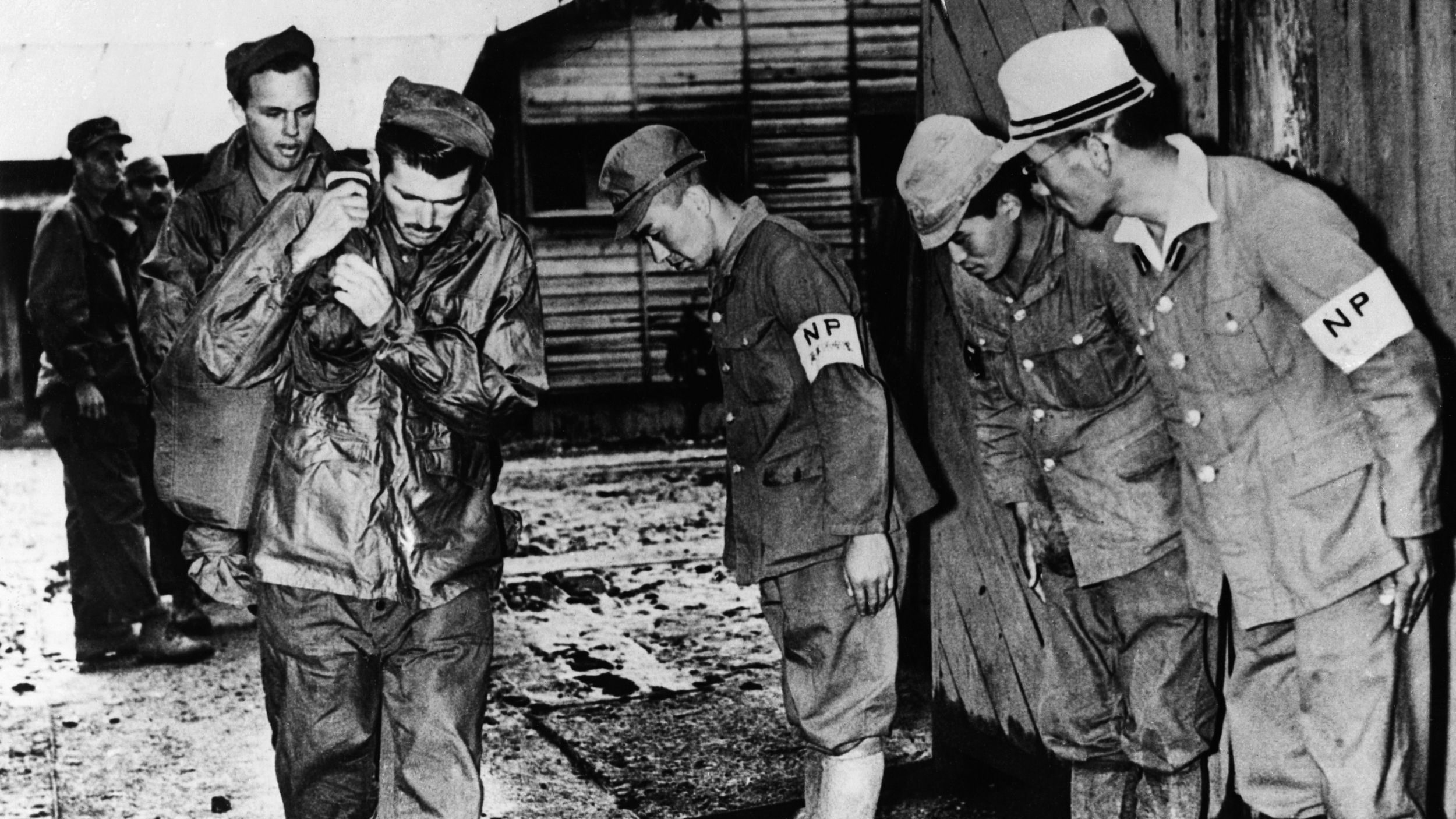
For the duration of the war, Percy Prune retained a cult-like status with the British fliers. His legacy, though considered humorous, was many times life-saving. During a retreat through a jungle in South East Asia, an RAF squadron of Hawker Typhoon aircraft was attacking a Japanese installation. As bombing and strafing raids were carried out on the wood huts, the pilots spied a message on one of the corrugated iron roofs of one of the huts that read POWS JAPS GONE. The commanding officer feared it was a ploy and ordered the pilots to continue the attack the next day. When they flew in for a second strike, the word FINGER was written in whitewash on the roof. The commanding officer immediately recognized the “Prunery Finger” reference and finally convinced the rest of the squadron that the sign could only have been written by an RAF and meant that the Japanese had vacated the area.
The Tee Emm manuals were strictly classified, but copies eventually reached enemy hands. At one point, Hooper was said to have been notified by the German Captured Documents Department in Berlin that he was qualified for the Deutsche Kreuz in Eiserne, the Iron Cross for his mass destruction of Allied Aircraft.
Hooper continued to add “Pruniverse” characters to the Tee Emm training manuals to include the diversity in the ranks and the growing number of women in the RAF, including a New Zealand bombardier, Sergeant Straddle, a Canadian navigator, Flying Officer Freddie Fixe, a Scottish radio operator, Sergeant Backtune, and Sergeant Willy Winde, Royal Australian Air Force mid-upper gunner. Aircraftman Plonk, a mechanic, and “Ernie the Erk,” an armourer, were added to the ground crew along with Binder, Percy’s terrier dog. Eventually, the Percy Prune character married Aircraftwoman 2 WAAF Winsum, modeled after Hooper’s real-life wife, WAAF Noelle Lang.
By the end of the war, Pilot Officer Percy Prune had survived but was quickly retired on May 8, 1945. Prune lives on through the 14 books of cartoons Hooper wrote as he transitioned to a successful career in cartooning and media after retiring from the RAF in 1946. Hooper worked as a political cartoonist for the Sunday Chronicle and later for The Star newspaper. His career highlights include working as an animator and presenter for the series “Willy the Pup” and forming an animation studio for the BBC and ITV television networks. Later, he worked as a columnist for the Sunday Pictorial. Hooper “departed the fix” on October 14, 1996, at the age of 80.
Ah, that British sense of humor! It doesn’t always cross the Atlantic.
I used to write satirical stories about my employers — and nearly got fired.
Anyway, the best piece of advice for pilots that I ever heard: “Try to learn from the mistakes of others. You won’t live long enough to learn from your own.”
(I think I heard that while working at the American Airlines Flight Academy.)
Highly amusing. I’m glad that some sense of humour managed to survive the hard conditions of the war. Not to mention benefit many airmen.