By Eric Niderost
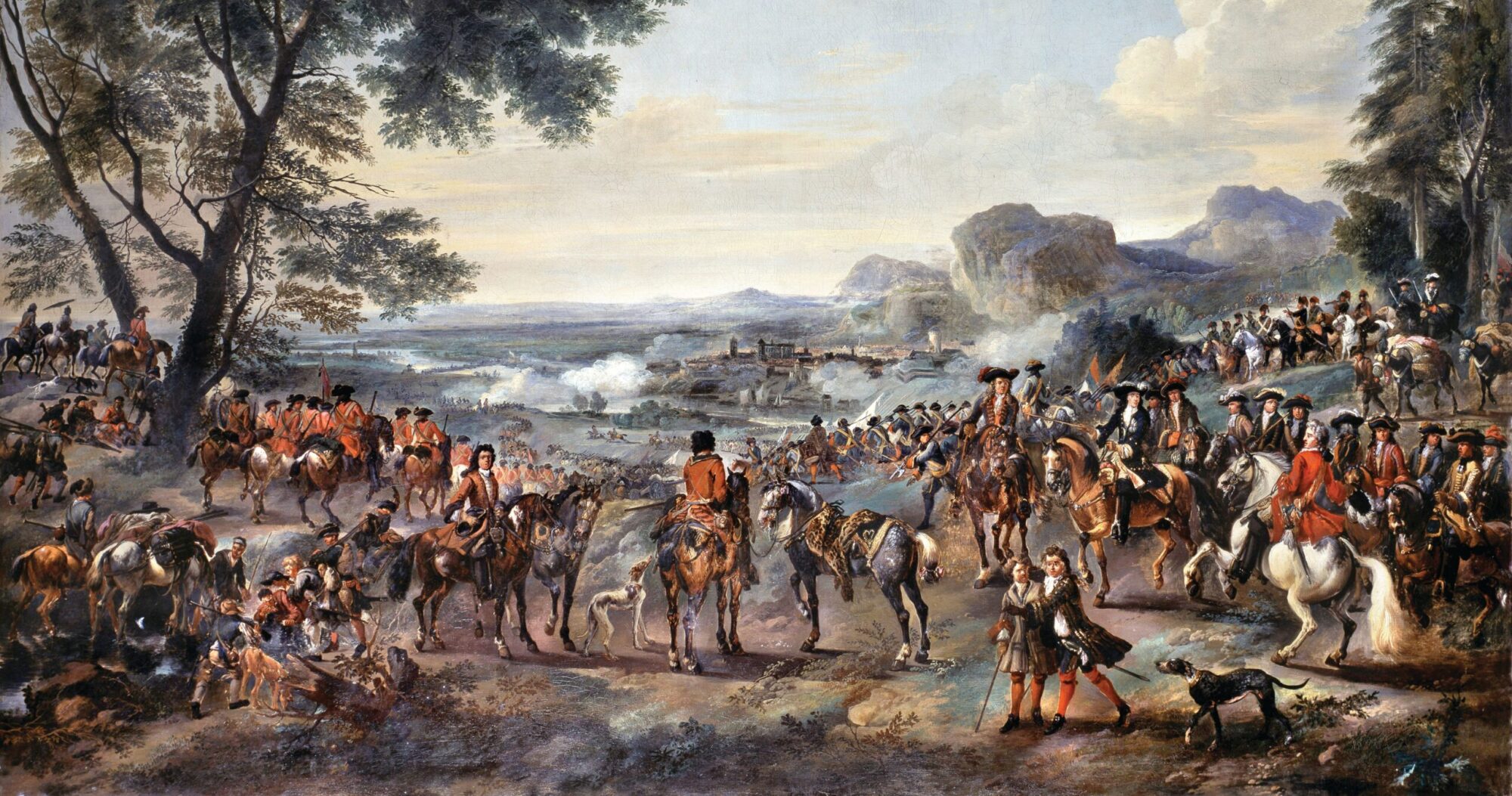
Namur’s fortifications stood out in high relief as the sun dipped further behind the horizon in July of 1695, casting lengthening shadows across the converging Sambre and Meuse rivers.
Europe was in the seventh year of a conflict eventually known to history as the Nine Years’ War. The France of King Louis XIV was fighting the Grand Alliance, consisting of England, the Netherlands, Spain, and the Holy Roman Empire, the latter an anachronistic collection of German states. Namur was in the Spanish Netherlands (now Belgium), where much of the fighting was taking place. The Allies were besieging the French-held fortress, and July 18 was set as the first major assault on its outer perimeter defenses.
As the evening shadows lengthened preparations for the attack shifted into high gear. The English army was going to play a major role, and prepared accordingly. Tree limbs were gathered together and tied into fascines, bundles that would be used to fill a section of an enemy trench, providing a means of quickly crossing over the gaps.
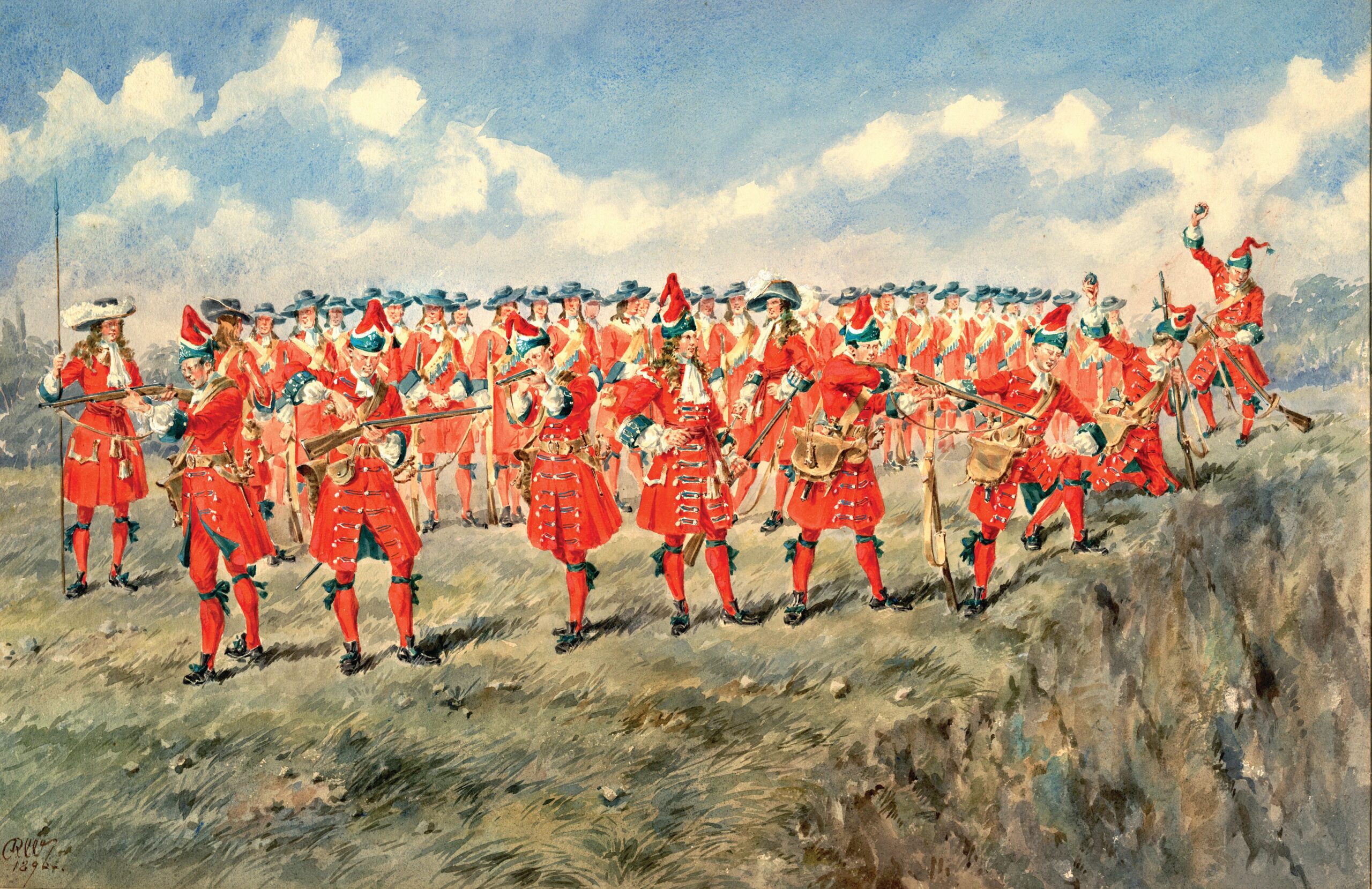
But it was the grenadiers, the soldiers who threw small hand bombs called grenades, who commanded the most attention. The grenadier regiments were new, but even in this embryonic form they were gathering a sterling reputation as elite troops. When in open battle they occupied the right flank of any line and were usually stronger and taller than other soldiers. The generally wide-brimmed felt hats that most soldiers wore impeded a man’s throwing arm, so special caps were substituted. The famous “bearskins” came almost a century later.
But it was the grenade that truly set them apart from the average soldier. The grenades used were gunpowder-filled spheres that weighed about two and a half pounds. Generally each grenadier carried four of these, each ignited by a fuse. A slow-burning match, usually a coil of hemp dipped in saltpeter, was carried in a tube fixed to a grenadier’s belt. Timing was all, especially knowing when to light the fuse just prior to throwing the device. Inexperienced grenadiers did occasionally blow themselves up or kill their companions.
The July attack was going to be the first critical move in the taking of Namur fortress. The advance was scheduled for 7 p.m. In time-honored tradition, ensigns carrying regimental colors would also be part of the advance, each vying for the honor of being the first to plant their flags on the enemy’s works.
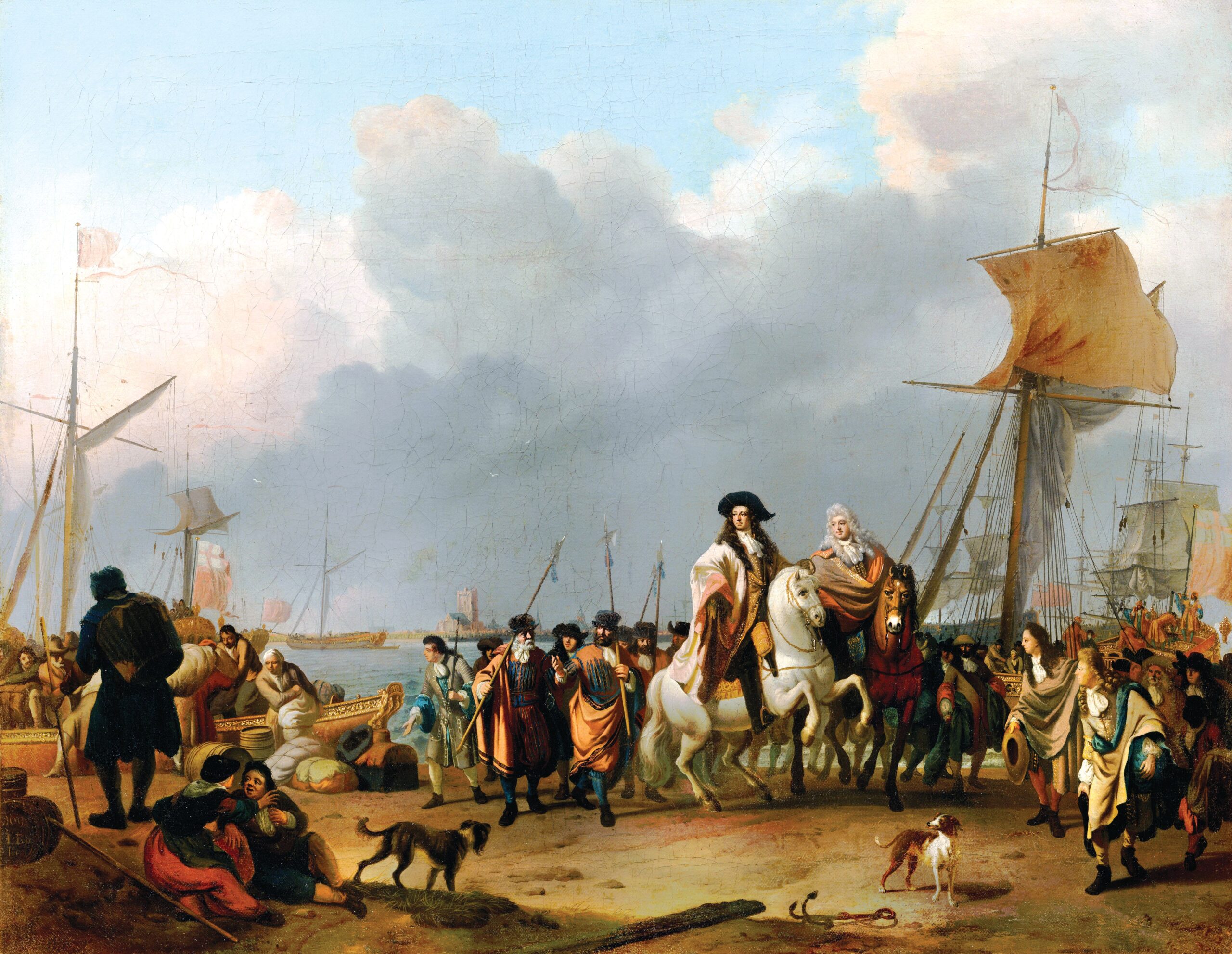
One of the principal architects of the Grand Alliance, King William III of England—also known as William of Orange—was the sovereign Prince of Orange from birth and had served as Stadtholder (chief magistrate) of the Dutch Republic’s core provinces since 1672. Throughout his life, William sought to preserve the independence of the United Provinces and oppose French aggression. Though he had little personal affinity for English culture or domestic politics, he accepted the English crown in the 1688 Glorious Revolution primarily for geopolitical reasons—viewing England’s treasury, army, and Royal Navy as vital resources to bankroll and fight his continental coalition against Louis XIV.
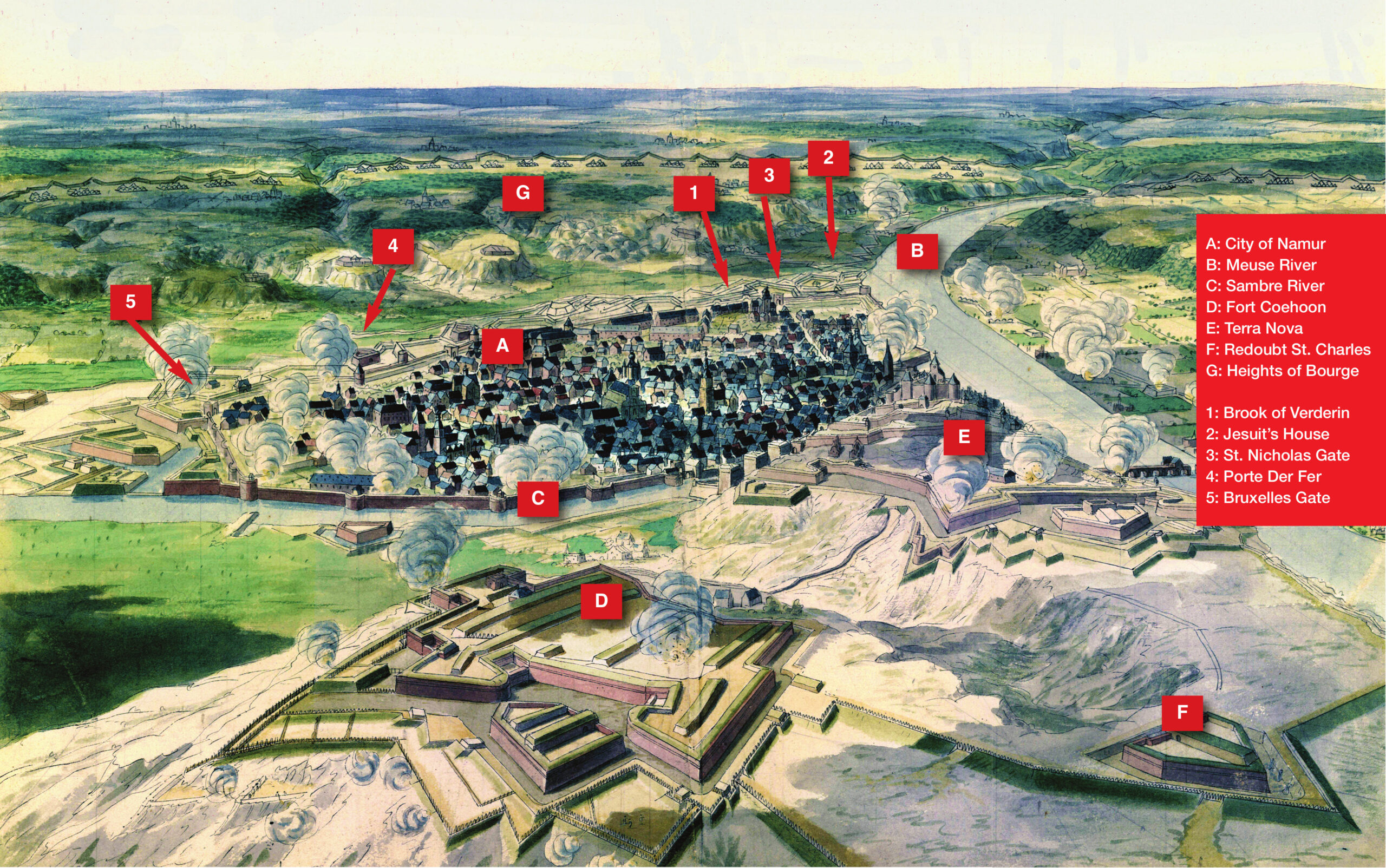
Situated on the confluence of two rivers, where the Sambre flowed into the Meuse, Namur blocked, or at least impeded, invasions from the south. In this period, when roads were poor, water transportation played a key role in supplying field armies. Namur was only one of a chain of fortresses that ultimately protected the Netherlands, but in some respects it was the most important.
In 1695 nature and engineering genius had combined to produce a fortress that most considered impregnable. Namur had two main components: a town, and a fortress sometimes called the citadel. The town proper was protected, one might even say cocooned, by a dazzling array of fortifications of such variety they exhausted the military jargon of the time. There were ravelins, bastions, lunettes (half bastions), hornworks, trenches, and redoubts. Many of these positions enjoyed protective enfilade fire from their neighbors, ensuring that enemies would pay a heavy price for any assault.
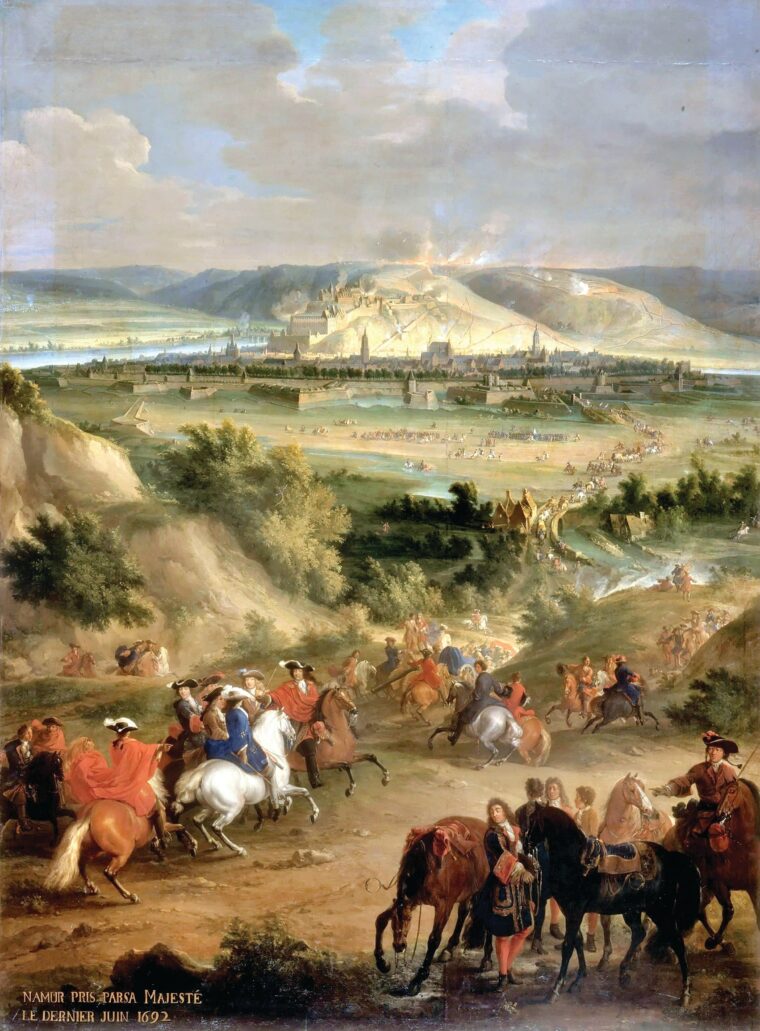
Though it had medieval roots, Namur’s defenses were first modernized by Menno van Coehoorn, a Dutch soldier who became one of Europe’s greatest engineers. But Namur was captured by the French in 1692, a major blow that filled Allied leaders with shock and consternation. Knowing full well that the Allies would attempt to retake the fortress, Louis XIV lost no time in ordering Sébastien Le Prestre de Vauban to make further improvements.
Vauban, who even today is considered one of the greatest engineers who ever lived, supplemented Coehoorn’s designs with his own. Thus, two rival engineers became unintentional collaborators and partners in creating one of the greatest fortresses in the seventeenth century.
Though the town was well fortified, the Citadel was Namur’s heart. It was perched on two great limestone hills, whose highest elevations reached upwards of 300 feet and more. Their most precipitous sides faced the Sambre and Meuse Rivers, themselves “moats” that added to the overall defensive plan. The elevations were gentler on the other side of the hills, but bristled with an array of man-made works.
The hill summits were crowned with two principal works: Fort Coehoorn (sometimes called Fort William or Fort d’Orange) stood on the appropriately named Montagne du Diable (Devil’s Mountain). The second fort, located just to the south, was Fort Terra Nova. A deep ravine divided the two hills, but a nearby saddle ridge connected Coehoorn and Terra Nova by means of a communications trench. Terra Nova was particularly strong, with a triple line of bastions supplemented by ravelins.
The French were supremely confident that any Allied siege attempt would end in failure. The fortress stores had 500,000 pounds of powder, 80,000 grenades, 10,000 spare arms and provisions for six months. The fortress bristled with 120 guns of various calibers, and the garrison numbered around 16,000 troops. Nature also lent a hand in another important aspect: water. The hills were supplied by two springs. Altogether Namur was going to be a very hard nut to crack.
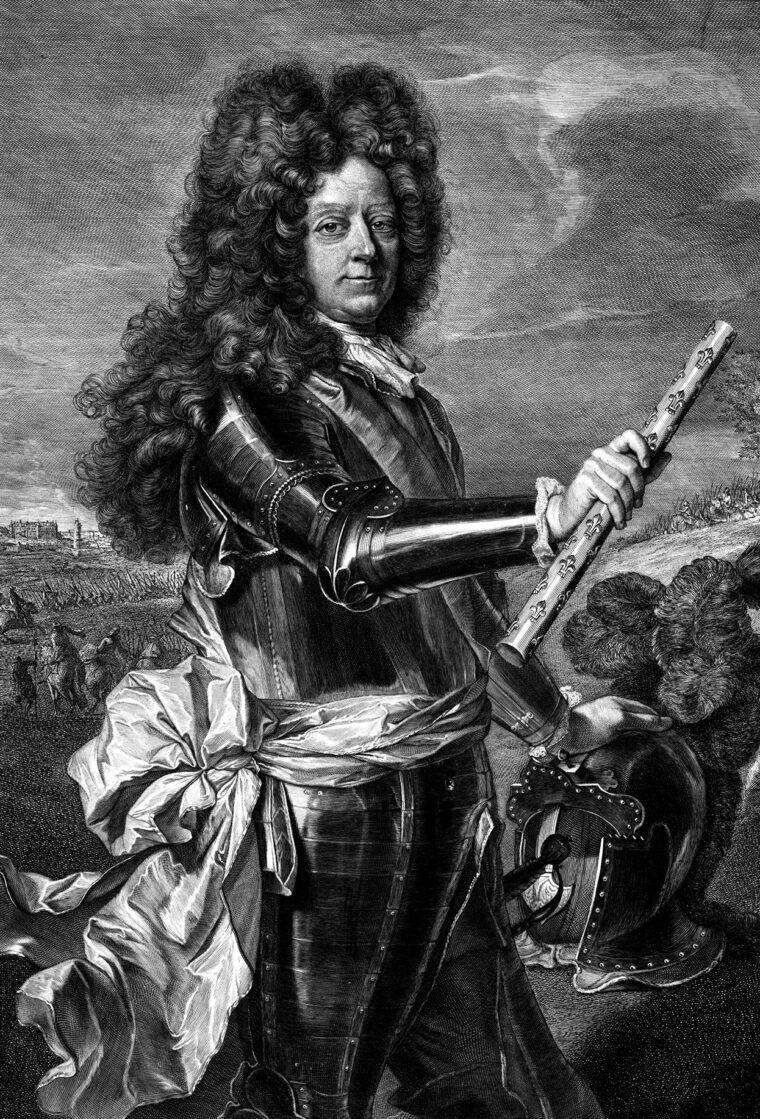
The man who was in charge of Namur’s defense was Louis François de Boufflers, Marshal of France. The idea that a marshal of France would command, and not just an ordinary fortress governor, underscored Namur’s importance. The Allies were uneasy about this, because it was almost an axiom that a Marshal of France never surrendered to the enemy. Boufflers’ presence seemed to presage a very rough road ahead for William and his army.
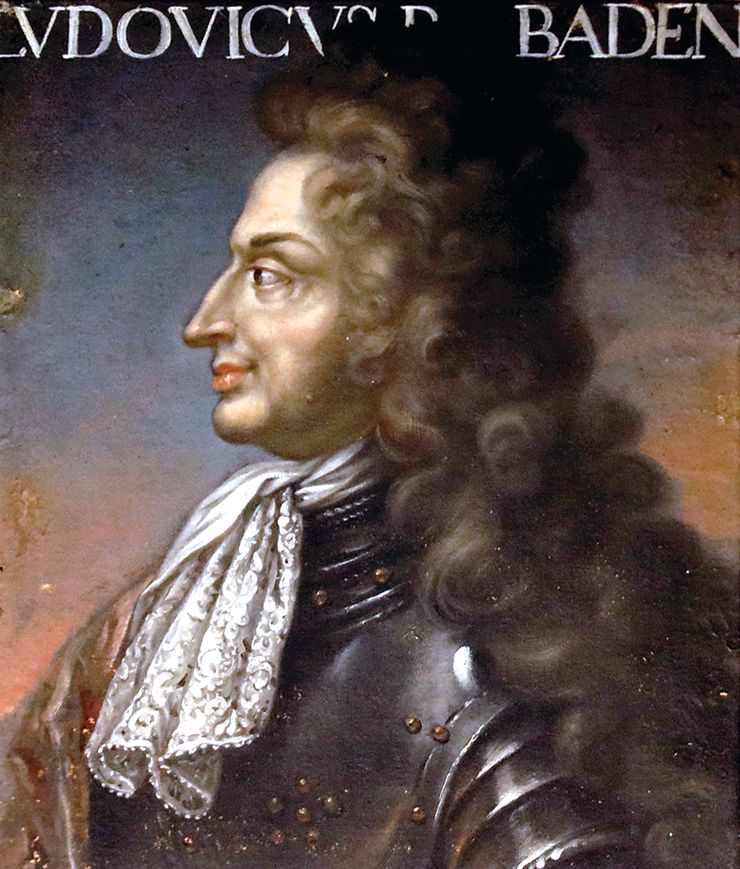
Though William’s focus was Namur, he made sure that a separate covering force of 100,000—initially under the command of Prince Louis William of Baden-Baden, then the Prince of Vaudémont—kept a watchful eye on Marshal François de Neufville Villeroi and on the French field army. Villeroi was a mediocre general who owed his advancement to being a court insider at Versailles. King Louis was fond of him, because as boys the two had been playmates. But the French marshal was unpredictable, and that made him dangerous. He might at any time decide to march to Namur’s relief.
The Allied army besieging Namur numbered around 58,000. It was a multinational, polyglot force, as might be expected from such a broad coalition of nations. A little over half were Dutch, but other countries were also represented. There were Bavarians under Maximilian II Emanuel, Germans who were technically contingents from the Holy Roman Empire. Elector Frederick of Brandenburg-Prussia, who was destined to be the grandfather of Frederick the Great, also was on hand with his men.
The Anglo-Scots were also well represented at Namur. There was the 1st Regiment of English Guards (the ancestor of the Grenadier Guards), the Coldstream Guards, the Scots Foot Guards, the Royal Scots Regiment, and a number of line regiment formations. In those days the regiments were usually named after their colonel. There was for instance Columbine’s (6th Foot), Tidcombe’s (14th Foot) and so on.
The Allied investment of Namur formally began on July 1, 1695, but delays impeded any real progress. Nevertheless King William determined that the first goal would be the reduction of the Heights of Bouge, high ground immediately fronting Namur. Capturing the heights would allow allied guns to bombard the town, compelling a quick surrender. Once Namur town was secured, plans could go forward to tackle the biggest prize of all: the Citadel fortresses.
Dutch troops were given the honor of turning the first spadefuls of earth to create the first parallel trench against the Heights. This was classic siege warfare as perfected by Vauban and copied by virtually all the engineers of Europe. The first parallel was so named because it was parallel to the enemy’s fortifications, often some kind of wall.
After the first parallel was excavated, a second would be dug, and then a third. Each parallel would be closer to the enemy fort, connected by communication trenches called “saps.” While this was going on, siege artillery would be blasting away, silencing the enemy’s guns while knocking breaches in the defenses. By the time there were big enough gaps in the enemy walls, usually the third and closest parallel trench was complete.
If those breaches were large enough for troops to enter the fortifications, they were called “practicable.” The next step was to organize a storming party, and launch those soldiers from the third parallel. Usually a vanguard would be the first out of the parallel trench, the ones who would blaze the trail for the main storming party. Traditionally they were volunteers, because as the first they would expect to have the highest casualties. Most times these advance troops were called the “forlorn hope.”
The Dutch sappers made good progress on the parallel, but the French immediately served notice they were not going to passively watch by launching a surprise sortie from the Heights. Some 1,200 French soldiers made the attack, but were eventually contained and forced back by six battalions of Dutch troops. Though repulsed, the French showed that this siege, still in its early stages, wasn’t going to be a walkover.
The July 18 grand assault went forward at 7 p.m. Major General George Ramsey commanded the right and center, while Dutch General Salisch was responsible for the left. This was largely an Anglo-Dutch affair, with English and Scots troops, both line regiments and Guards units, on the right and center, and the Dutch mainly on the left. The English Guards battalions would lead the way, with the line battalions in support.
Each segment of the attack, whether right, left, or center, was organized in the same pattern. Organized parties of soldiers led the way, carrying the fascines, to be dumped into the enemy trenches, allowing the storming parties to rapidly cross the barrier.
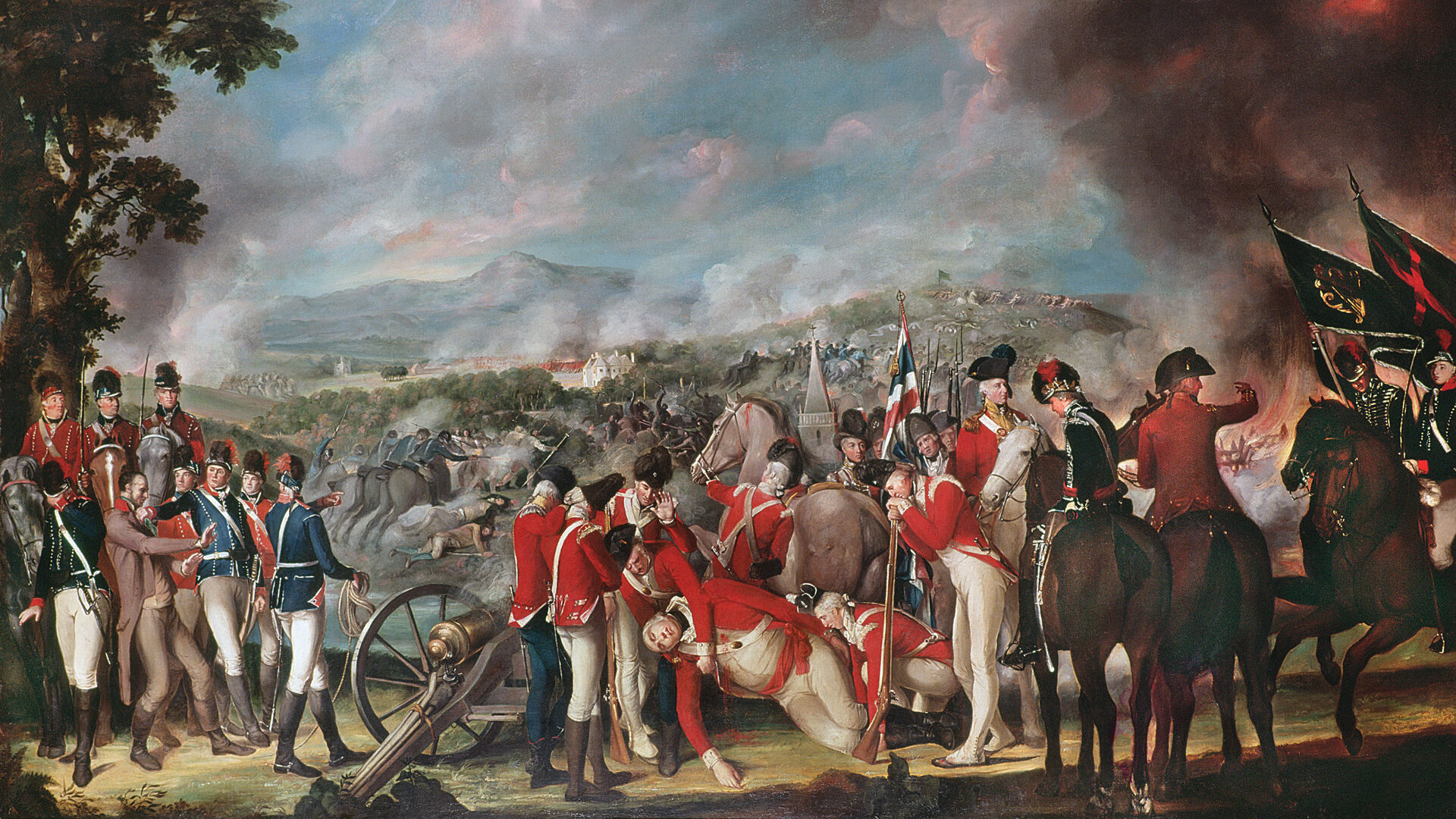
Ensigns advanced with the colors in spite of heavy French fire, and drummers beat a throbbing tattoo that could be heard above the roar of the guns. King William’s brigade of Guards lived up to their growing reputations, the grenadiers lobbing hand grenades into redoubts that were to the immediate right and left of their advance. When these elite redcoats reached the next obstacle, a palisade fronting the main works, they stuck their muskets through the barrier and fired into the French defenders.
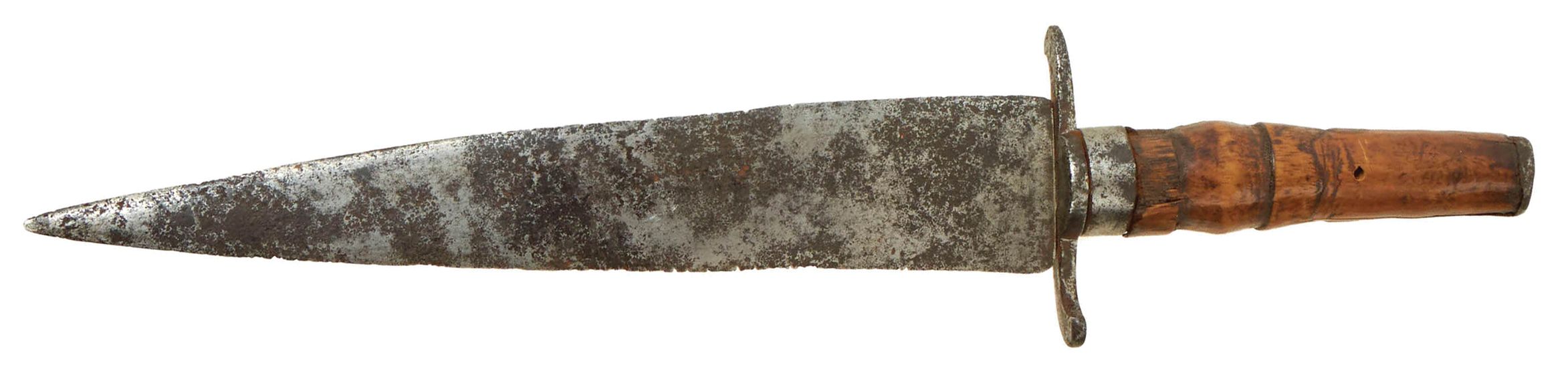
General Ramsey had ordered the Guards to hold their fire until they reached this palisade, a command that was scrupulously obeyed. They already had suffered casualties from French artillery, so they lost no time in finally discharging their weapons. The palisades were torn down with a triumphant shout of victory, and the advance continued. The redcoats now surged forward to a covered way, which was taken by the bayonet. In this period plug bayonets were used, being much like heavy daggers, with their wood grips pushed into the muzzle of the musket, preventing the weapon from being fired.
The English grenadiers were particularly active in this affair, lighting and throwing their grenades with coolness and precision, as bloody chaos erupted all around them. They captured a second covered way in the fort, forcing the French defenders to fall back to the place d’armes on their side of the counterscarp. A few sought refuge in some hillside quarries, but most were rooted out and killed.
The English grenadiers continued to throw their hand “bombs” into the French positions with such a telling effect one observer declared he had never seen anything like it. Gouts of smoke and flame erupted everywhere, until you could “see nothing but flames and mines exploding with clouds of grenades.” King William observed the assault from a forward trench, and when the fighting was at its height he clasped Maximilian II Emanuel, Elector of Bavaria, on the shoulder and exclaimed, “Look at my brave English!”
The French fought bravely but were powerless against such an onslaught. They retreated off the Heights down to the Brook of Verderin. This allied attack was no walkover, with some estimates putting the casualty count at near 2,000 men. But with the Heights in Allied hands, their next task would be to reduce the town itself. While not as formidable as the Citadel, Namur’s defenses featured a number of impressive works, including Saint Nicholas Gate.
The English started digging approach trenches down the heights towards St. Nicholas Gate that would soon be connected with parallel works. The Dutch sappers were also at work, making their way towards the Meuse River. One of their immediate objectives was the so-called “Jesuits House,” originally a monastery of some sort. Once they reached Jesuits House, the Dutch soldiers could establish a battery there that could pound the Meuse Bastion, one of the works that helped defend St. Nicholas Gate on the river side.
Namur town was now a legitimate target of war, and suffered accordingly. Artillery began to open up on its venerable buildings, though King William ordered that damage be kept to an absolute minimum. The idea was to eject the French occupiers, not to destroy one of the ornaments of the Spanish Netherlands.
William continually risked his life by directing operations from the forward trenches. This was not grandstanding, but a simple determination that as a soldier he was doing his duty. He was almost hit several times. In one notorious episode, the king was standing by Michael Godfrey, Deputy Governor of the Bank of England, urging him to leave and go to the rear. Godfrey was reluctant, but the matter was settled when a cannonball killed the banker only a few feet from the king.
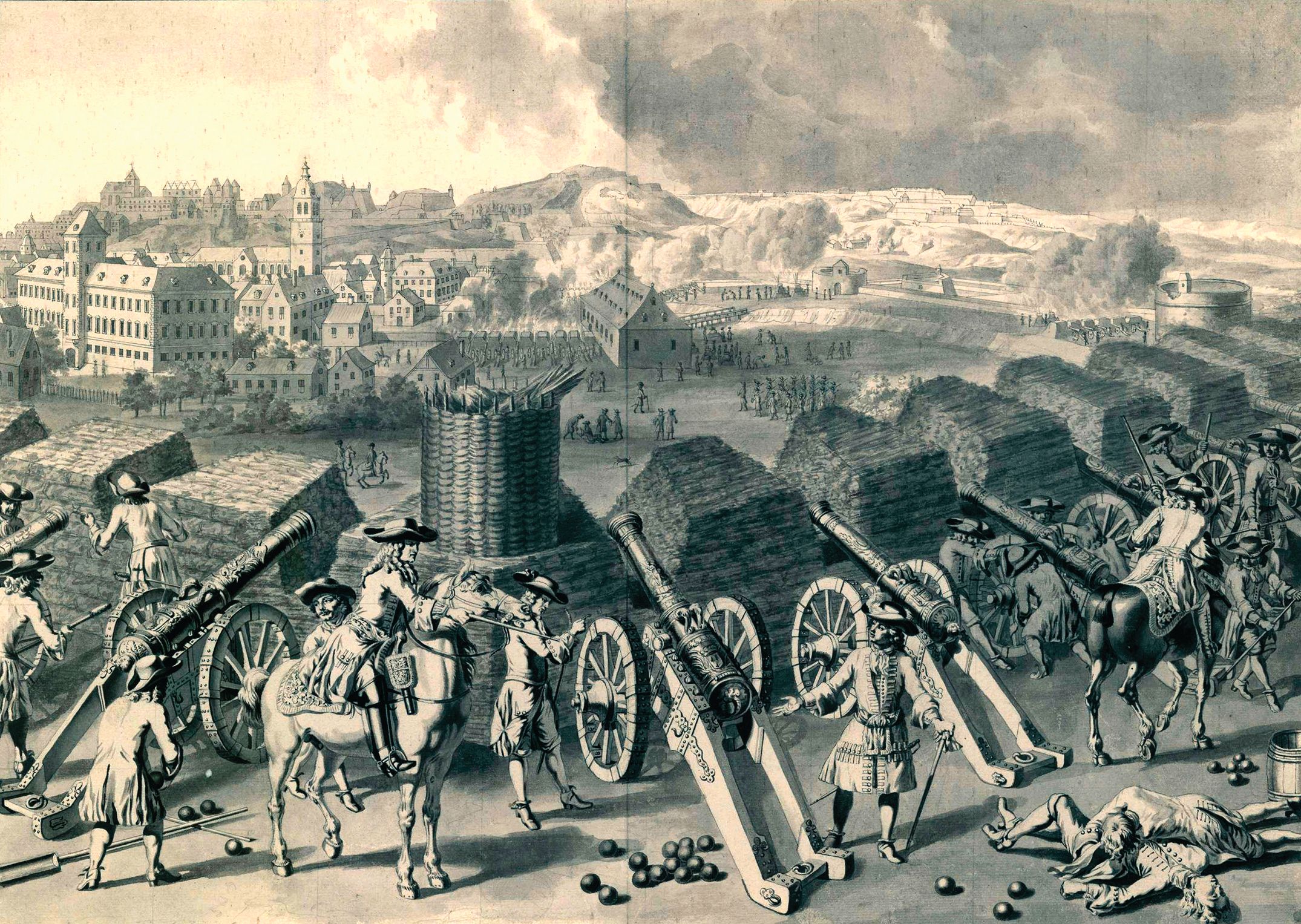
Allied siege guns bombarded the town relentlessly, occasionally directing a shot or two at the distant Citadel. Some sources say there were 30 heavy guns performing this action, including a mortar battery. The mortar batteries must have been particularly terrifying, because with their arcing trajectories they seemed to fall almost magically from the sky
The 1690s were a period of climate change that historians call the “Little Ice Age.” Temperatures plummeted, and with the cold there were widespread crop failures. There were heavy rains, even by northern European standards, and the wet, rotted crops meant starvation. The Namur siege also had its fair share of “little ice age” issues.
On July 14 the heavens opened up, producing a deluge of almost Biblical proportions. Trenches were flooded, and a large quantity of gunpowder rendered useless when it became soaked during the storm. Wet and cold, their spirits literally dampened, the English, German, and Dutch besiegers bailed out the trenches, obtained dry powder, and soldiered on.
The Allies concentrated their fire on St. Nicholas Gate, but didn’t forget to fire on the Bruxelles Gate, which was not far from the Sambre River. The dual bombardments were meant as a way of confusing the French defenders, because targeting the Bruxelles was strictly a diversion. Once firing resumed a detached bastion just in front of St. Nicholas Gate was isolated by the Allies and called upon to surrender.
The French bastion commander of this crescent-shaped outwork—also called a demi-lune—refused, but did request that he and his garrison be permitted to withdraw to the town. The request was denied, and the besiegers decided to mine the bastion if surrender was not forthcoming. In such cases a tunnel would be dug under the enemy fort, and once excavated, would be filled with barrels of gunpowder. If the garrison still proved stubborn, the powder would be ignited and the enemy fort blown sky high.
Ironically the bastion garrison got a preview of their fate when mortar bombs hit a church close to St. Nicholas gate. The church was being used as a powder magazine, and when one of the mortar bombs hit the storage area, the whole building exploded with a roar as huge gouts of smoke and flame rose high into the sky. Probably convinced by this unintended demonstration, the bastion commander surrendered.
The main assault on the town began on July 27. According to some accounts, five battalions of Anglo-Scottish troops took part, but Dutch and Brandenburg-Prussians also had roles in the advance. The attack covered a wide area, between the Bastion de St. Roch and the Porte de Fer, ground that also included St. Nicholas Gate. The Royal Scots took the lead, and performed their duty as “forlorn hope” with great elan. They soon effected a lodgment on the French works by
successfully planting a banner emblazoned with the image of St. Andrew’s cross, patron saint of Scotland.
The Scots moved forward so rapidly that initially there were few casualties, including a Lieutenant Archibald Hamilton and some privates killed. But the Scots and the other Allied units advancing were not going to be so lucky moments later. The ground was cut by a bewildering array of sluices and dikes, which slowed Allied momentum.
The French worked their guns as quickly as possible, creating an enfilade fire from flanking bastions and St. Roch. Scores of Allied soldiers were slaughtered, yet the French could not entirely dislodge them from their hard-won foothold. While this was going on, the Bavarians of Elector Max Emanuel attacked French positions on the bend of the Sambre River north of the Citadel. This part of the operation went well.
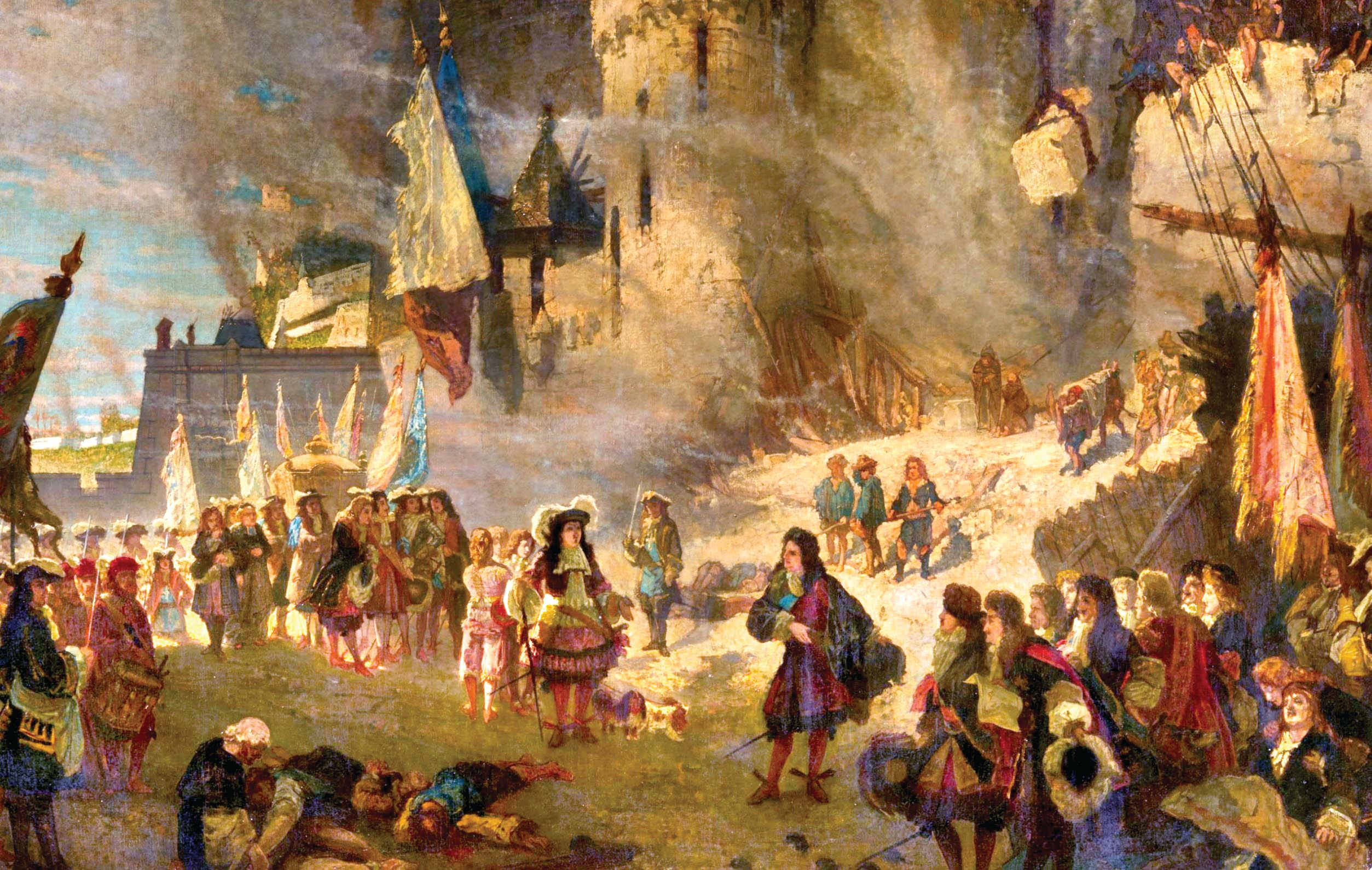
The main attack had not taken the St. Nicholas Gate, and casualties had been heavy, perhaps as many as 800 men. Nevertheless the Allied forces had secure footholds that made the capture of the town all but inevitable. Seeing the handwriting on the wall, the French governor of Namur Count Guiscard, appeared in the battered breach of one of the demi-bastions, white flag in hand.
Guiscard made his initial contacts with General Ramsey, but it was King William who eventually made the decisions. A deal was worked out by which Namur town would be surrendered, but what remained of the battered garrison would be allowed to join Marshal Boufflers at the Citadel. The town surrender document was duly signed, and the French allowed to depart.
Around 7,000 men joined Boufflers at the Citadel. The French lost about 5,000 men in Namur’s defense, but significantly an additional 4,000 had deserted. The surrender of Namur caused great consternation among the French. Its impregnability had been an article of faith for Marshal Villeroi and the French court. Now, suddenly, the Allies seemed on the verge of capturing the prize. Villeroi, who was still more courtier than general, was at his wit’s end, casting about for a solution to the crisis.
In desperation the French marshal marched on Brussels, roughly 35 miles away from Namur, and bombarded the town unmercifully. Much of Brussels was laid waste, but William refused to take the bait and declined to abandon the siege to save the city. Finally realizing this ploy wasn’t working, Villeroi took more direct action by marching to Namur’s relief himself. Ever alert to French movements, the Allied covering army under the Prince of Vaudémont drew nearer to Namur to block the French Marshal. He halted at Mazy Chateau, about six miles from William’s main army, and stood by to wait for Villeroi’s next move.
The Prince of Vaudémont’s covering army was just close enough to William’s besieging force to join it if necessary. In fact, knowing that the two allied armies were so near to each other gave Marshal Villeroi pause. They would outnumber him, making an attempt to relieve Namur both a daunting and in the end unattractive proposal. The Allied forces, still not sure of the Marshal’s intentions, were put on high alert both day and night. Common soldiers kept their muskets close to them, and gunners slept by their guns.
Marshal Villeroi decided not to break through to Namur, and when he moved off the Allies could concentrate on capturing the fortress once and for all. The Earl of Portland, one of William’s Dutch advisors and favorites, had a parley with Marshal Boufflers in a final attempt to persuade the Frenchman to surrender. “It is plain,” explained Portland, “that Villeroi has given up all hope of being able to raise the siege; it is therefore a useless waste of human life to prolong the contest.”
Portland spoke the truth, but other considerations, both political and social, caused Boufflers to reject any notion of capitulation. Namur was too important, and French honor was at stake. Back at Versailles King Louis was watching events with a keen interest, and anyone who sullied French honor would be disgraced. The beleaguered French garrison would fight on.
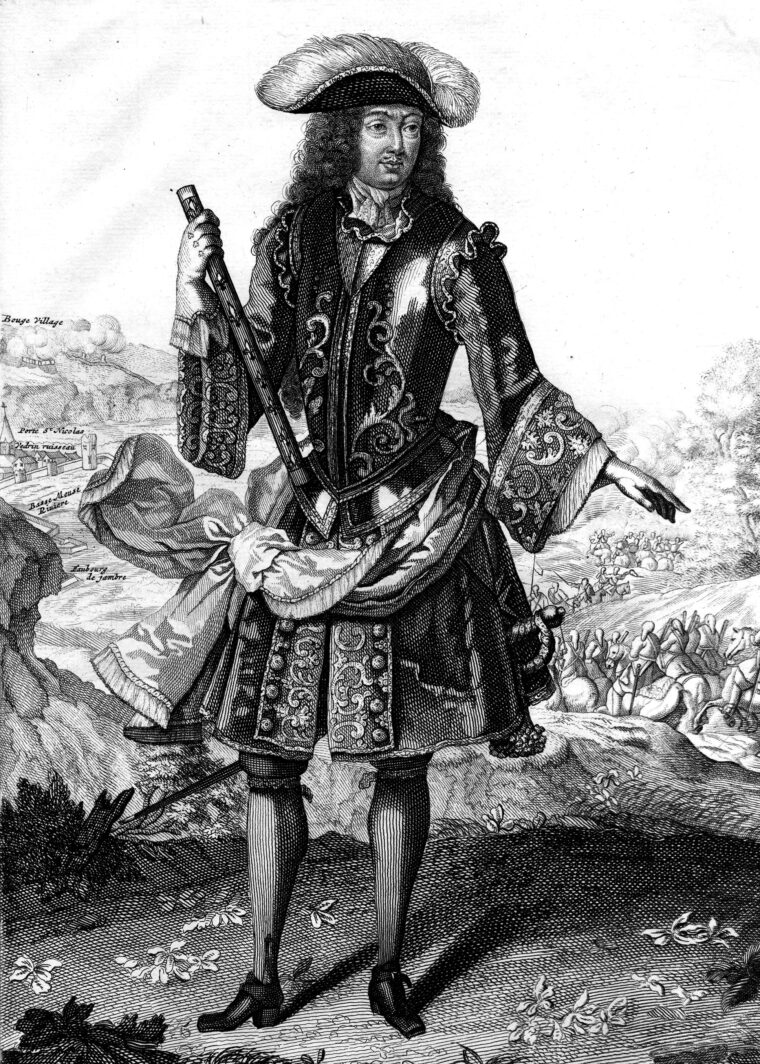
Allied plans for a grand assault on the Citadel were put in hand, and King William took a personal role in the preparations to make sure all was in readiness. This was the age of the Baroque, where even warfare was colorful and flamboyant. The Prince de Vaudémont was assigned to lead the red coated English guards, a position of great honor, so he made sure he contributed to the spectacle. The morning of the grand attack the Prince came in a gilded carriage, and once he alighted, he made sure his flowing wig, cuirass, and leather gauntlets were firmly in place.
The grand attack was scheduled for August 31. Most fortress heavy guns had been dismounted by now, thanks to the heavy Allied bombardment that had gone on for weeks. No less than 136 heavy siege guns and fifty mortars and howitzers had done their job well. Large parts of the Citadel’s principal works, including Terra Nova and Coehoorn, were reduced to rubble, and there were now six practicable breaches in these forts.
Four of these breaches were selected to be attacked. One was to be assaulted by Dutch troops, one by Bavarians, one by Prussians, and one by the Anglo-Scots. A total of some 20,000 men were scheduled to take part in this make-or-break push to victory. The English effort was composed of some 3,000 men, spearheaded by 700 grenadiers. Their assignment was to conduct a frontal assault between the bank of the Sambre River and the Coehoorn Fort. Once they broke through to Terra Nova Fort, they were supposed to secure the communication trench that linked Terra Nova and Coehoorn.
The English Coldstream Guards were led by Col. John Cutts in this attack, during which he would acquire the nickname “Salamander” for his love of being in the hottest battle action. According to legend, the salamander could live in burning places, and yet emerge unscathed. The guards battalions apart, it was said that most of the men of the regular English regiments were green troops unaccustomed to such a major assignment.
Their inexperience was discounted, because it was hoped the attacks by the other Allied units elsewhere would distract the French defenders. Some 3,000 Bavarians were to assault the western side of Fort Coehoorn, while 2,000 Brandenburg-Prussians and Hessians attacked it frontally. Finally, a force of 2,000 additional Germans from the smaller states of the Holy Roman Empire would advance along the bank of the Meuse.
The grand attack was launched sometime between noon and 1 p.m. by the setting off barrels of gunpowder. Perhaps the resulting explosion wasn’t heard in some parts of the field, but the four Allied advances were not properly coordinated, and partly miscarried. The attacks against Fort Coehoorn were delayed, and when the Bavarians did go forward they were bloodily repulsed.
The English found themselves in serious trouble, subjected to a crossfire that was coming at them on three sides, but they did not falter. The English grenadiers waded through a hurricane of shot and shell, yet they managed to cross over 900 paces of open ground as they climbed the Folliette Ravine. The redcoats got to the breach and into the ramparts, only to discover an inner retrenchment the French defenders had cleverly set up. This unexpected barrier proved unassailable, and the attackers had little choice but to reluctantly fall back.
Half of the English grenadiers were dead, and Lord Cutts had sustained a serious head wound that temporarily rendered him insensible. A counterattack by French infantry and dragoons further disordered the English ranks. Cutts regained his senses, had his wound hastily dressed, then went forward to rectify the deteriorating situation. Now was the time for decisive action, and he did not hesitate.
One the Scots-Dutch Brigade, Mackay’s, had not yet been engaged, so Cutts ordered Lieutenant Alexander Cockle to assemble a “forlorn hope” of 200 men to renew the attack. The forlorn was composed of volunteers, and it was said every man in the regiment stepped forward, so the effort could begin at once. Cockle was ordered to advance on Fort Coehoorn, specifically to “attack the salient angle next the breach, sword in hand, without firing a shot.”
It was hoped that if he and his men could master the palisades, he could then lodge himself in the covered way. Once this toehold was established, the fort might soon be captured. Once the 200-man “forlorn” had achieved their objective, the rest of Mackay’s redcoats could come up and exploit the gain. Lord Cutts also personally ordered the regiment specifically to go forward with “the ensigns bearing the colors at their head.”
Cockle and the “forlorn” accomplished their mission in short order; they got up and over the fort palisades, took the covered way, and actually captured some French guns and turned them on their former owners. The ensigns—lowest officer rank in the English army—“boldly planted their colors on the ramparts and so fired were the men with emulation in honor of their battle-worn emblems that the covered way was not only gained, but held.”
Encouraged by the English success, the Bavarians rallied and advanced on Terra Nova fort with renewed vigor. The momentum now seemed to be with the Allies, because the Bavarians did seize part of the fort, and the Dutch and Brandenburg-Prussians efforts were also crowned with success. By 5 p.m., most Allied units had achieved their objectives, but the Citadel core still remained in French hands.
The next morning French drums beat out a request for a parley. Marshal Boufflers asked for a 48-hour truce before he would even contemplate the idea of surrender. It was granted, because supposedly the French wanted to bury the hundreds of dead that littered the battered fortifications in and around Namur. The Marshal knew he had few options, yet he still hesitated, perhaps hoping for a last minute miracle for the French cause.
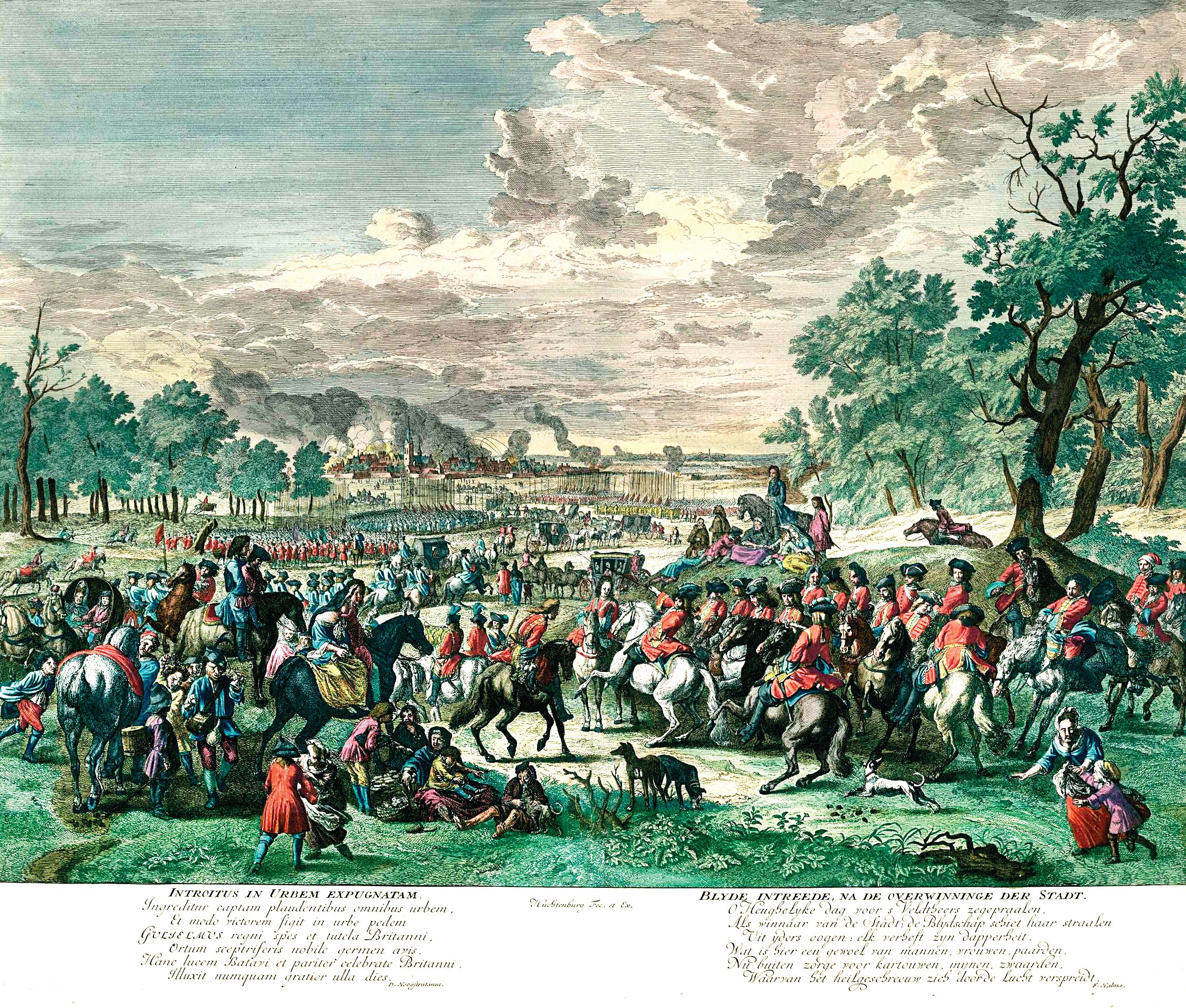
After the stipulated two days were over Boufflers surrendered. Trying to save face, he demanded that he and the surviving garrison be allowed to depart and be granted the honors of war, meaning they would march out fully armed with drums beating and flags flying. They would not become prisoners of war, and would be allowed to return to France. One clause was of particular importance to the touchy French Marshal: there would be no restrictions on their future military service in the months to come.
King William was more than happy to grant these terms; after all he had just achieved the impossible, taking a fortress that had been designed by two of Europe’s greatest engineers and had been considered impregnable. Indeed, the surrender of Fortress Namur sent shock waves throughout Europe. Not only was the fortress taken, but the person who gave it up was no ordinary mortal, but a Marshal of France.
As the French were preparing to leave a deputy from the Dutch Estates General named Dykvelt approached the Marshal and politely told him he was a prisoner of the King of England. Boufflers was outraged and protested vehemently over such treatment. Some French officers nearby gathered around him as a sort of protective barrier, but the gesture was of no avail when Dutch cavalry showed up.
It was explained to the Marshal that two Allied garrisons had earlier been made prisoners in violation of agreements made. King William was only acting in response to what Louis had done. And after all, William was showing Boufflers the highest respect, because he alone was the equivalent of those two Allied garrisons of 5,000 men. Such flattery did nothing to assuage the Marshal’s anger, and he was soon forced to give up his sword in token of surrender.
The capture of Namur fortress was the high point in the Allied campaign of 1695, but it had been achieved at a high cost in human lives. Estimates vary, but the besieging Allied forces lost somewhere between 18,000 and 20,000 men in a contest that lasted more than two months. French losses were fewer, perhaps 8,000 men. Mackay’s Scots Regiment, serving under the Dutch, provides a stark example, losing one captain, one ensign, and 73 rank and file killed outright in that final assault. The wounded tally counted one major, four captains, four lieutenants, six ensigns, and 166 rank and file.
When the surrender was formally concluded, Allied batteries opened fire in a joyous salute of victory. It was said that Marshal Villeroi heard the celebratory gunfire some miles away and despaired. Well he might, because though few realized it at the time, the fall of Namur marked the beginning of the end of French hegemony in Europe. The Nine Years’ War finally ended in 1697, only to be followed by a much larger war a few years later.

Join The Conversation
Comments
View All Comments