By Kelly Bell
By 1119, the Holy City of Jerusalem had been back under Christian control for 20 years. The soldiers of the First Crusade had secured the city and re-opened it as a center for Christian pilgrimage. Devout travellers from Europe streamed southeastward to pay respects to their faith in the city where Jesus Christ had taught, healed, died and arisen. Yet in a situation reminiscent of the parable of the Good Samaritan, this trek had become perilous.
Highwaymen preyed on the plodding, helpless bands of pious wayfarers. Sometimes the robbers were marauding Saracens, supporting themselves by banditry after losing military control of the region. Often the brigands were backslidden Crusaders who had joined Christian armies in hopes of getting rich on captured spoils, only to be bitterly disappointed at the meager pickings provided by this arid, sparsely populated land. Greed now motivated them to victimize their own people, plundering them of their money, valuables and their very persons, herding the healthiest off to the slave markets of Constantinople. Anyone unable to stagger to Asia Minor—the young, old, sick, wounded, disabled or pregnant—was put to the sword.
A Jerusalem-based French nobleman named Hugues de Payen began recruiting European knights from the city’s garrison forces in 1119 to form a bodyguard for the long-suffering worshippers. The first group of pilgrim protectors numbered just nine men. They were commoners from the fields and streets of Europe, wore shabby, donated clothes and were armed with an assortment of swords, bows, daggers, clubs and scythes. Yet they fought the desert bandits eagerly and fiercely, and the grateful people they defended donated lavishly to their military coffers.
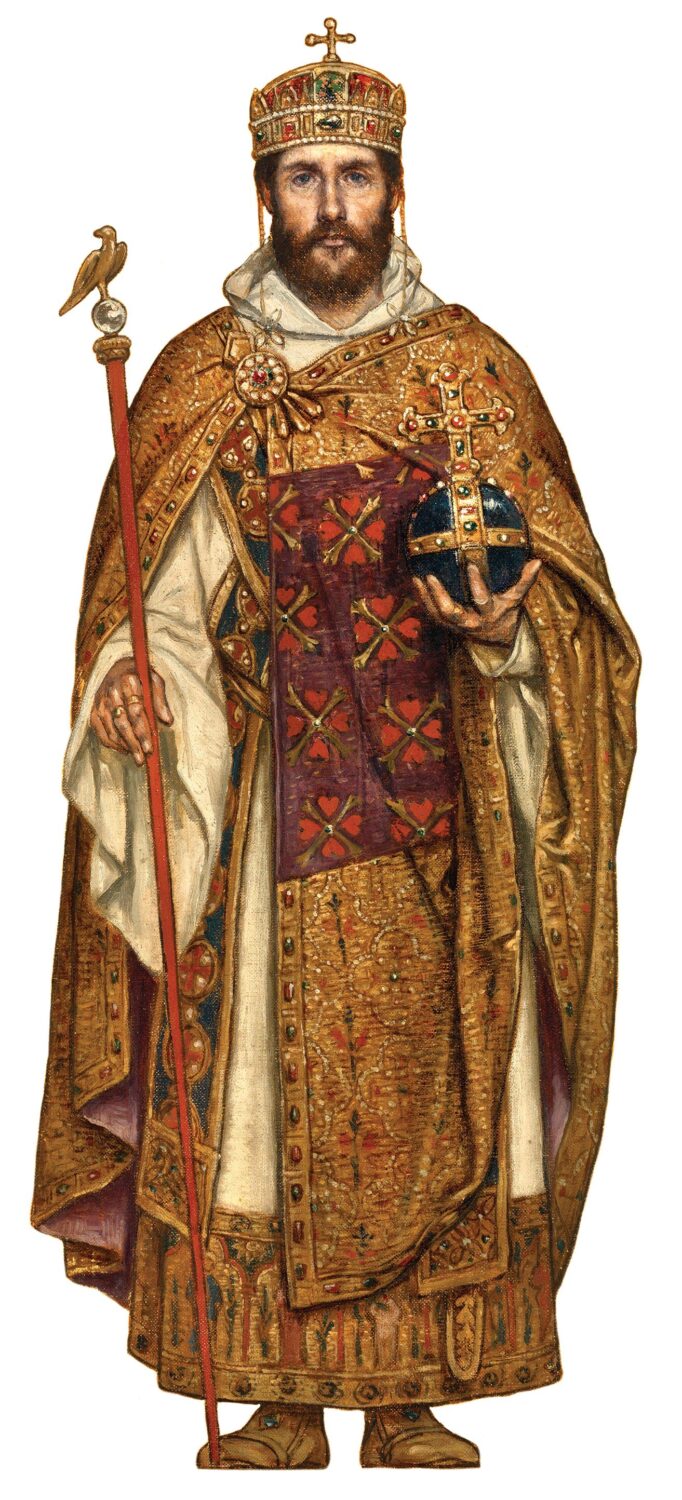
At a grand council of the Roman Catholic hierarchy held in Troyes, France in 1128, the bodyguards were recognized as a new religious order called the Knights Templar. By 1145 a series of Papal Bulls had conferred almost absolute power on the brotherhood and made them answerable solely to the Pope. Despite this authoritative endorsement many churchmen and secular officials viewed the Templars as apostates because traditional church policy prohibited clergymen from bearing arms.
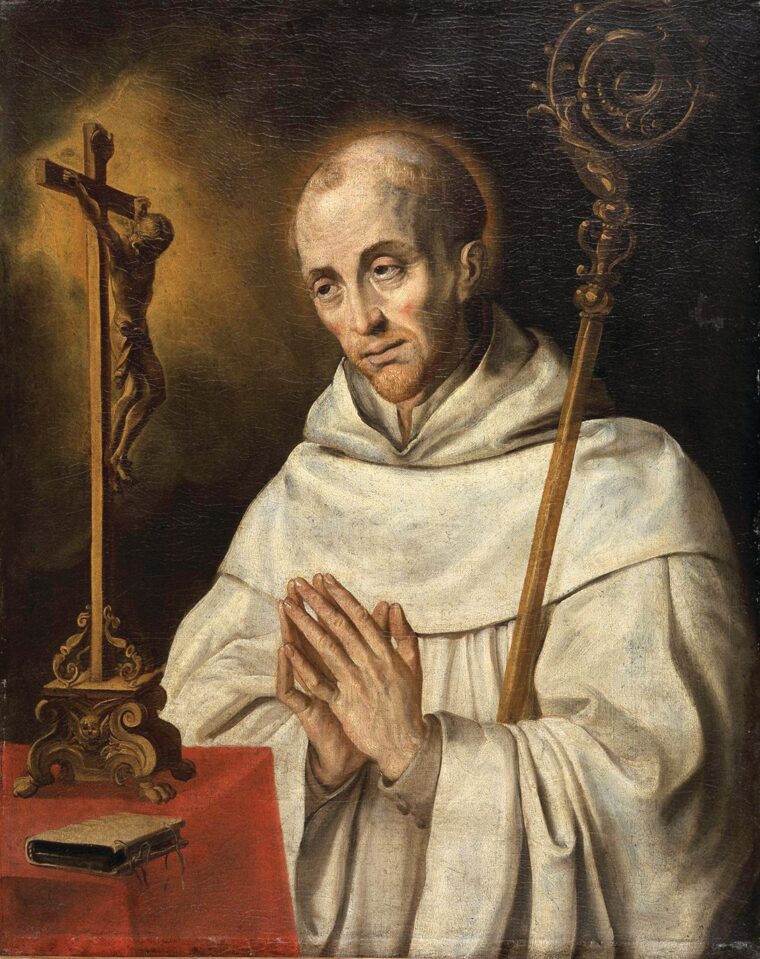
The men recruited were in fact generally of somewhat lawless inclinations, and many had been excommunicated. One of the Knights’ earliest and most useful supporters was a wealthy French nobleman named Bernard of Clairvaux. He specifically enlisted men he described as, “unbelieving scoundrels, sacrilegious plunderers, homicides, perjurers and adulterers” because he hoped to reform such unruly individuals and channel their nefarious but substantial energies and exertions into serving the faith. He absolved them of the sin of killing as long as they slew only enemies of the Christian Church.
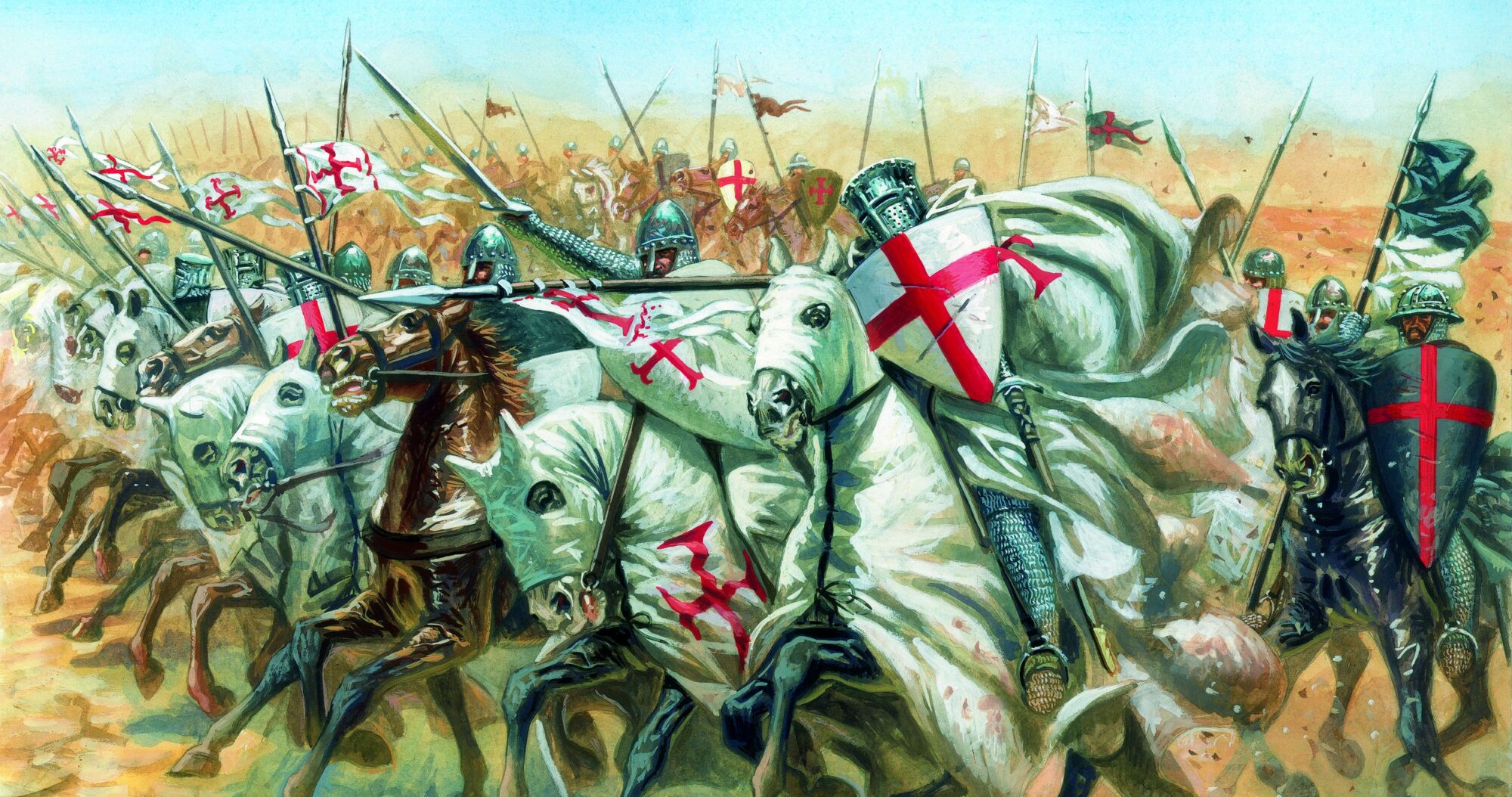
When not participating in military excursions the Templars lived as monks. They took vows of poverty, total obedience and chastity. These men were forbidden to kiss even their mothers, and slept fully clothed in brightly lit dormitories. Talking was discouraged except in prayers, which were recited regularly at specific times. The Knights wore white mantles emblazoned with blood-red Christian crosses, and pledged never to retreat in battle regardless of odds.
The Templar treasury soon bulged with donations from the pious, who rushed to support these heroic new defenders of Christendom. As the order grew richer its leaders were compelled to learn to be financial experts. The vow of poverty became laughable as the brotherhood accumulated vast wealth from gifts and earnings from their estates, which as religious property were exempt from taxation. Kings and princes began to entrust their gold and silver reserves to the order because Templar castles were regarded as the most secure structures in all of Europe.
The Knights participated in the Second Crusade, which got off to an inauspicious start when the German contingent’s commanding King Conrad III impatiently set out ahead of the rest of the Crusader expeditionary force, arrived in the Holy Land far in advance of the main body of Christian troops and was upended at Dorylacum by Seljuk Turks. When later-arriving French crusading forces passed through the Cadmus Mountains in January 1148 Turkish archers decimated them in the narrow passes. Templar Grand Master Everhard des Barres took overall command of the shrunken army and sufficiently stabilized it to reach the Byzantine port of Attalia. Des Barres had rescued the operation militarily. Now he would do it economically.
French King Louis VII had exhausted his treasury in bringing his army this far. While Louis ferried his troops by sea to Asia Minor, des Barres hurried to Acre and commenced raising money. He borrowed from assorted financial institutions by using the Templars’ vast possessions as security, and drawing directly from the order’s preceptory in Acre. His efforts were sufficient to keep the Crusade solvent. The summer of 1149 saw a dramatic Christian-Muslim clash that permanently established the Knights as major participants in the Crusades, albeit as not-always-successful ones.
After the death of Muslim atabeg Zengi in 1146, Christian Prince Raymond of Antioch invaded the province of Aleppo, which was part of the Islamic Seljuk Empire. Zengi’s son Nur ad-Din responded by assaulting Antioch late in 1148, but Raymond managed to drive back the incursion, but Nur ad-Din returned a few months later and attacked Yaghra. Raymond again sent him packing. The following June Nur ad-Din yet again invested Antioch. With about 6,000 troops (mostly cavalry), he besieged the fortress of Inab. Because he had twice defeated Nur ad-Din, Raymond was confident he could again rout him despite being significantly outnumbered. He resolutely set out for Inab with just 1,400 men.
Raymond’s command actually included a Muslim contingent. Ali ibn-Wafa was a leader of the Assassin cult and a sworn personal enemy of Nur al-Din. He gladly joined the relief expedition. His troops, however, were strung out along a lengthy stretch of the main thoroughfare leading to Raymond’s bivouac. A hefty percentage of these soldiers were still en route when the overconfident Raymond impatiently sortied.
When his scouts reported on the small size of the approaching force, Nur al-Din suspected it was merely an advance guard. He raised his siege and withdrew a few miles to a defensible position in anticipation of meeting the main, significant Frankish army. When Raymond and ibn-Wafa camped for the night on the evening of June 28, Nur ad-Din noted that no reinforcements were arriving and perceived the hostiles’ small numbers. During the night he had his men quietly encircle the little band.
On the morning of June 29, he assailed and easily annihilated the Prince of Antioch’s forces. Raymond refused to retreat, and he and ibn-Wafa died in the slaughter. It had been the Crusades’ equivalent of Custer’s last stand, and it left most of the territory of Antioch to Nur ad-Din. He triumphantly rode all the way to the Mediterranean coast and swam in the Great Sea to emphasize his success.
The victory’s momentum carried Nur ad-Din forward as he captured the fortresses of Artah, Harim and Imm, which had defended the approaches to Antioch. Drawing up his steamrolling army outside the city gates of Antioch he demanded its surrender. Raymond’s widow, Constance, paid him off with most of the city’s treasury. Nur ad-Din accepted the bribe, and moved on, leaving a garrison to block Christian reinforcements from entering the conurbation.
He continued to range his army throughout the region, establishing religious schools and mosques and exiling Shiites, whom he considered heretics. By 1154 he had conquered Damascus, weakening the Crusader enclaves to the point of impotence.

The Second Crusade had been a dismal failure. Nevertheless the Templars’ monetary dealings during the operation cemented their reputation as guardians of Europe’s faith and finances. They were just getting started.
During the winter of 1149-1150 Jerusalem’s King Baldwin III placed the Templars in control of the ruined coastal city of Gaza so they could rebuild it to use as a base of operations against nearby Ascalon, the Holy Land’s only coastal city still under Saracen control. A force of Egyptians, guessing the reason for the Templars’ arrival, quickly assailed the garrison, but the Knights resolutely beat off the attack. Without pausing to rest after completing their massive construction job, the Templars attacked Ascalon on January 25, 1153.
The fighting lasted seven grueling months, but by then the Knights had completed a huge siege tower and rolled it to the city walls. A party of Muslims slipped out of the city and set the platform afire, but contrary winds blew the flames back against the ramparts and ignited the wall’s supporting timbers. A section of the palisade collapsed and a unit of Knights commanded by their Grand Master Bernard de Tremelay (who forbade all non-Templar besiegers to accompany them) charged into the city’s interior where he and his men were wiped out.
Most chroniclers of this incident reported de Tremelay intended to secure and sack the city and keep all the spoils for himself, but underestimated the number of defenders. The city fell the following week to an all-out assault, and a permanent reputation for greed affixed itself to the Knights Templar. Nevertheless, the order’s wealth would bankroll many battles fought on behalf of the church. Meanwhile, the Knights would soon meet a new and deadly enemy.
In November 1177 the soon-to-be-legendary Muslim General Saladin commanded his first foray against the Crusades when he led an army against Jerusalem, but the city’s King Baldwin IV, his French Crusaders and a Knights Templar contingent from Gaza intercepted the Saracens at Montgisard on the twenty-fifth.
Saladin commanded 26,000 troops with siege engines, a huge baggage train and his personal unit of crack Mamluk bodyguards. Marching across the Sinai desert from Egypt into southern Palestine, he felt so secure in his numerical and (supposedly) qualitative superiority that he permitted his soldiers to fan out into the countryside and sack the Christian settlements of Ramla, Lydda and Arsuf.
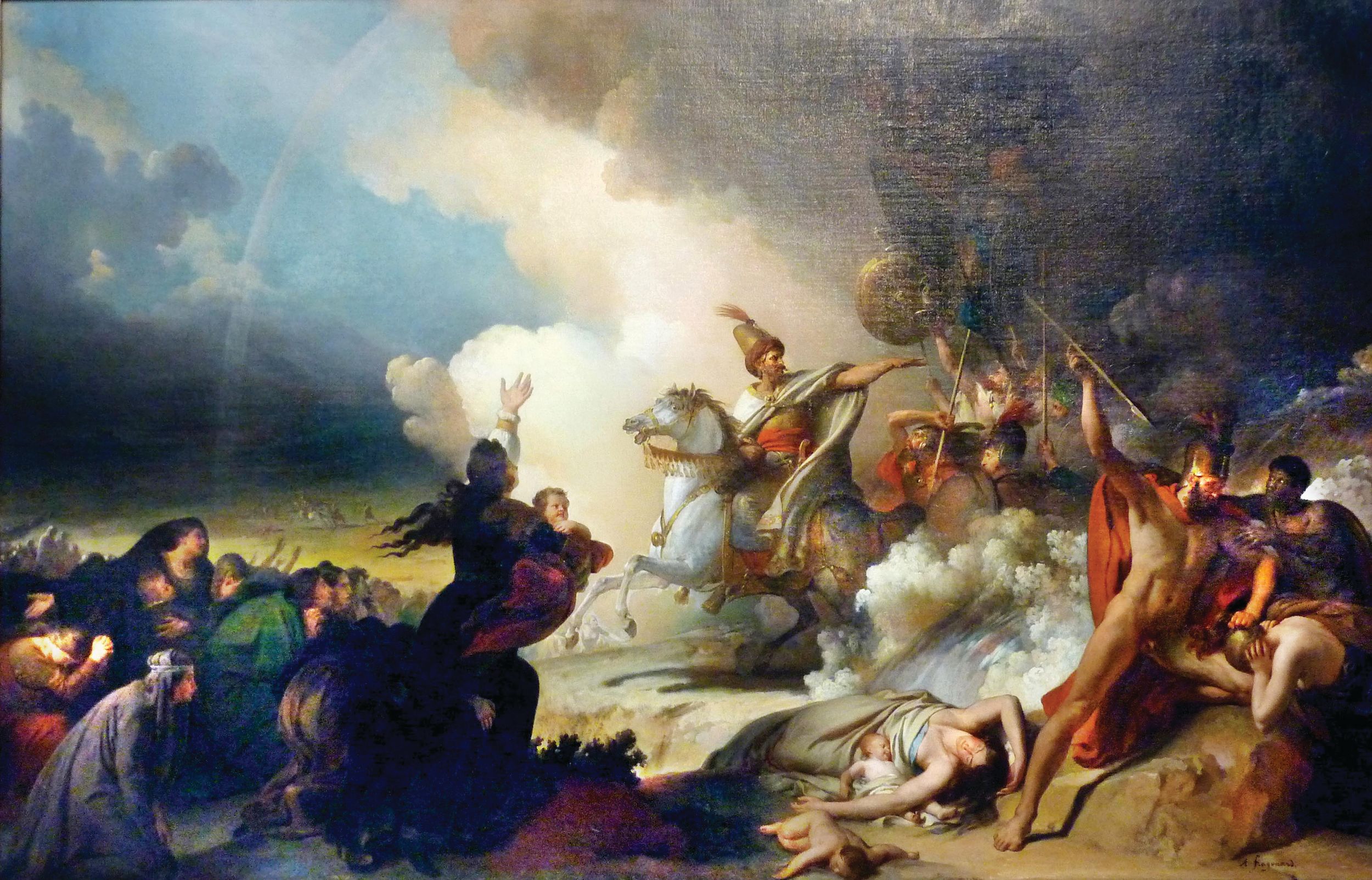
The teenaged Baldwin IV, although suffering miserably from leprosy, made good use of Saladin’s slow, greedy advance and commenced mobilizing what defenses he could muster. He quickly assembled 350 mounted knights and several thousand infantrymen under the command of the fire-eating Christian Prince Raynald of Chatillon. An additional 84 Knights Templar, led by Master Odo de St. Amand, arrived from Gaza at the last minute. Looking out across the teeming host of Saracens, Baldwin assembled all his troops in the city’s fortress.
The soldiers of the Cross were aided by the autumn rains, which turned the approaches to Jerusalem into a knee-deep quagmire. At the head of his columns, Saladin was struggling eastward toward Ibelin. In the sea of clinging mud, the army was strung out in a line several miles long. Slowest of all was the vital supply train, which fell far behind and eventually became stationary just outside the city of Montgisard.
At this point the Muslims were stunned to see a small Crusader force (with Knights Templar in the point) deploying on a nearby promontory. Fatally overconfident, Saladin had not deigned to send out scouts to monitor his foes’ movements, and Baldwin was taking full advantage. The Islamic army was in no condition to fight. Many Saracens were far to the rear with the immobile baggage train. Others were still out freebooting. Virtually all were exhausted from their long trek from Egypt and subsequent raiding for plunder.
Saladin frantically tried to rally his elite personal guard of not quite 1,000 men while his nephew and second-in-command, Taqi ad-Din, did his best to arrange the main body of tired, scattered, booty-laden soldiers into battle lines. Too late, Saladin was attempting to anchor a defense perimeter on an adjacent hilltop when a mass of screaming Christians poured down from their elevation and tore into his shocked ranks.
With little to lose personally, the heavily bandaged Baldwin elected to participate in the battle. Ordering his personal guard to bring along the crosspiece of what was believed to be the original cross on which Christ had died, he rode to the head of his troops, was helped from his horse and dropped to his knees in prayer in front of the ancient wooden beam as his men watched in silence. After a short supplication for victory the adolescent ruler slowly rose to his feet to the deafening cheers of his soldiers. He then led them in a charge.
Odo and his Templar Knights pulverized the Muslim center, disrupting communication and preventing the Saracens from rallying or forming any effective resistance. In this utter confusion the much larger Muslim army was thrown into panic and began to crumble. Many of Saladin’s men had turned and run at first sight of the resolute attack, and those who did try to fight were annihilated. Taqi ad-Din’s son Ahmad and many other high-ranking officers were specifically targeted and killed by the Crusaders, further exacerbating the Arabs’ bewilderment and demoralization
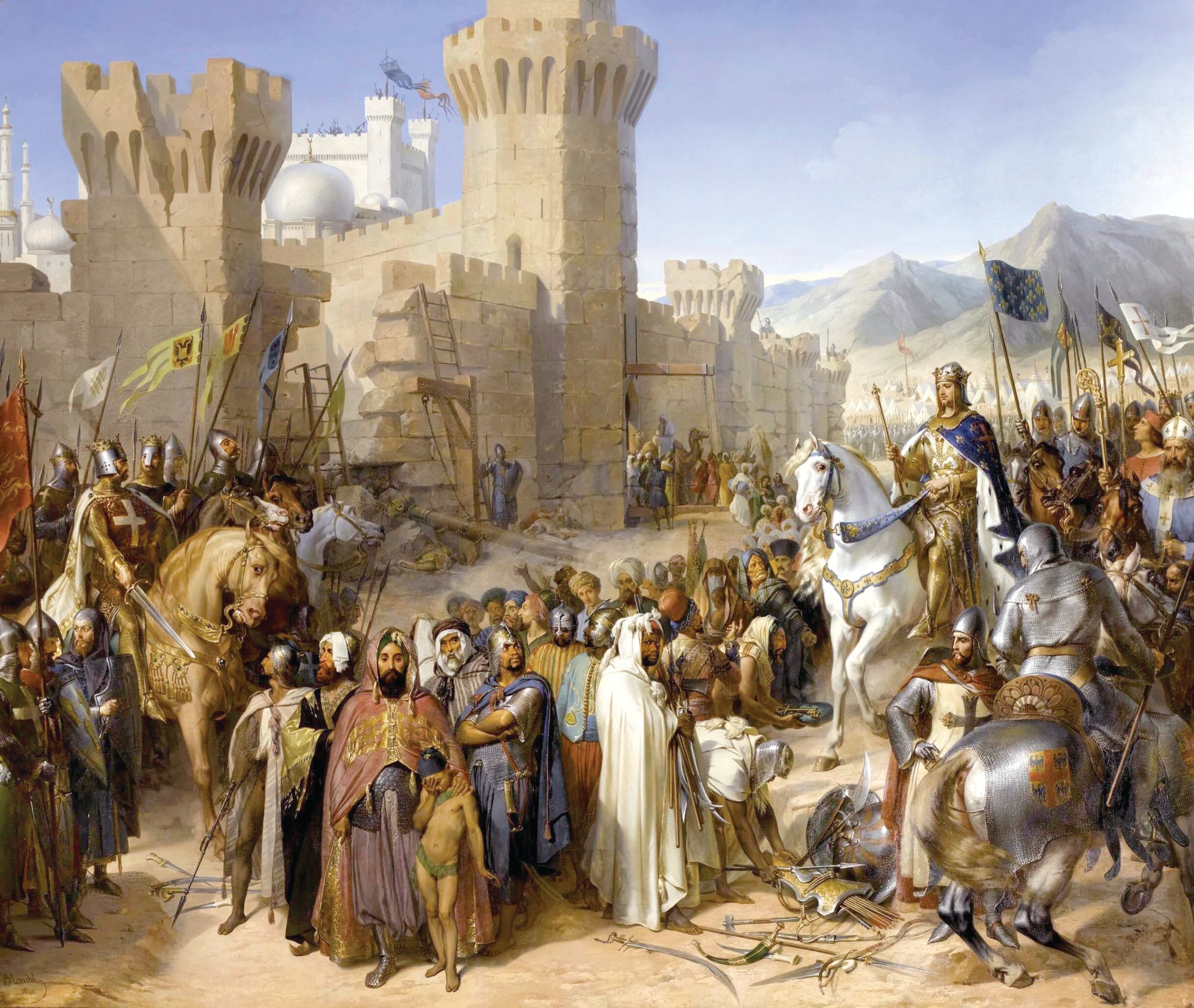
The battle’s last stages saw the Christian knights turn on, and wipe out, the Muslims’ crack Turkish slave/soldier contingent. Mounted on a swift young dromedary, Saladin managed to escape into Egypt. It was a hard lesson he would take to heart.
In one of his last acts before his death, Baldwin decreed that a Benedictine monastery be built on the Montgisard battlefield. It is still there.
Although chastened, Saladin was both brilliant and opportunistic. His spy network told of spreading disunity within the ranks of his Christian enemies. Denominational differences were working to the Saracens’ advantage, and Saladin wisely concentrated on building an irresistible army to launch against his divided foes when the time was right. By this point (1184) Baldwin IV had died at 24 and left no successor, further destabilizing the Crusader coalition. Saladin craftily signed a four-year truce with Christian authorities, giving them a false sense of security while they continued to fragment and weaken.
In the summer of 1187, Saladin led a huge army southward toward the Holy Land, capturing Tiberias in late June. On July 4, he assaulted badly outnumbered Crusader/Templar forces in and around the village of Lubiya, defeating them soundly and quickly. The Saracens took 232 Knights prisoner. All were given the choice of beheading or conversion to Islam. Only one accepted the ultimatum. Eager for Christian martyrdom, the other 231 gladly submitted to execution.
After the battle of Lubiya the cities of Acre, Ascalon and Gaza fell in quick succession to Muslim reconquest. On October 2, 1187, Saladin led his triumphant army into Jerusalem. His men ceremoniously ripped the crucifix from atop the Dome of the Rock. Despite the selfless heroism and devotion of the Knights Templar the Second Crusade was a defeat for Christianity.
Precisely three years after the battle of Lubiya the Third Crusade got underway as France’s King Phillip Augustus and England’s King Richard the Lionheart set out for Palestine. By this time the Templars had established a reputation for being militarily and financially essential to the massive martial incursions into the Holy Land. This invasion would be no different.
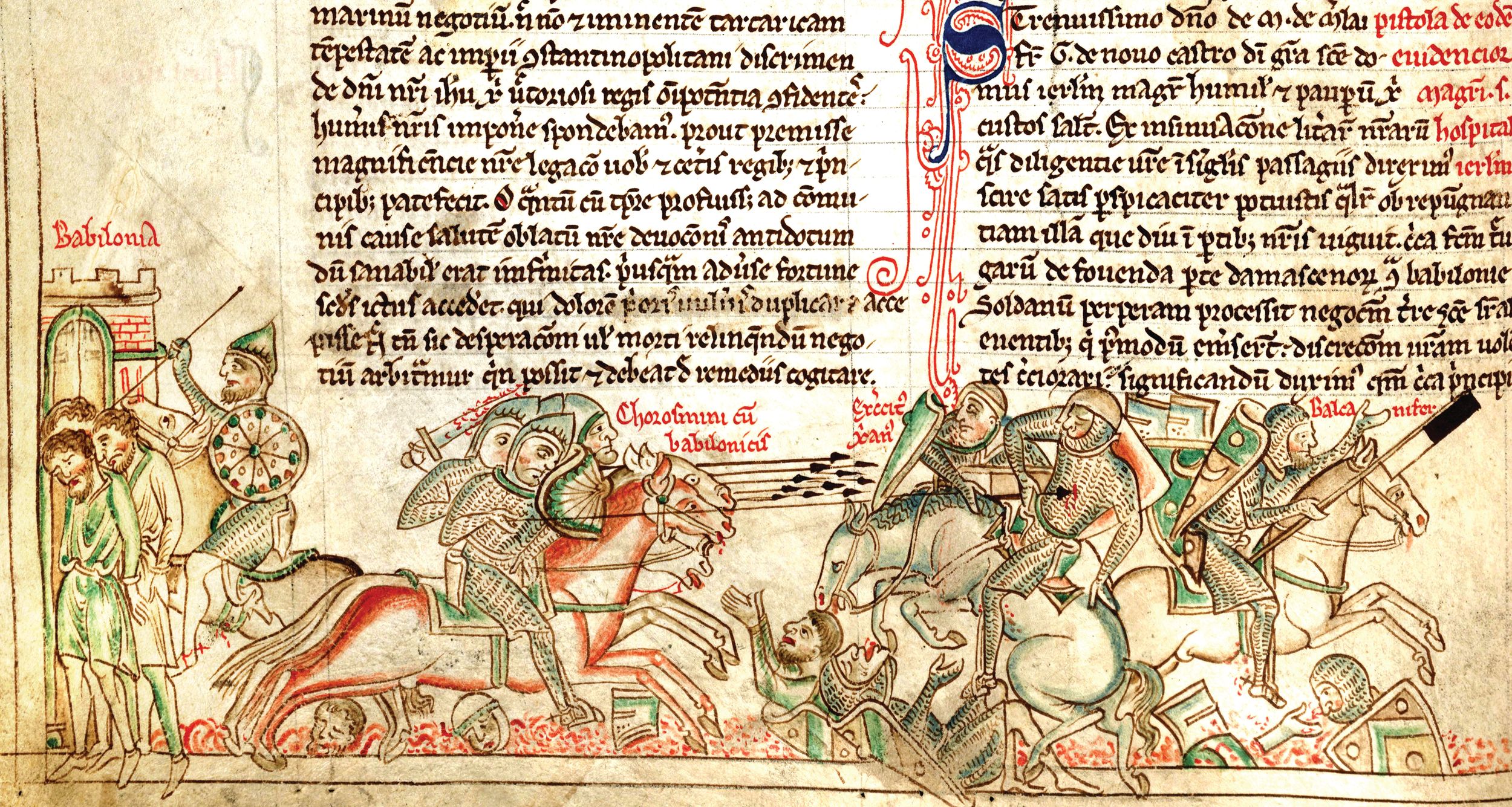
The Knights were in the thick of the action when Richard besieged Acre. The Muslim garrison surrendered July 12, 1191. On September 7, Saladin threw his forces at the Crusader army as it marched southward out of Caesarea. Confident of the discipline and fighting spirit of his Templar contingent, Richard had them meet the attacking Saracens head-on. The Knights fought the Muslims to a standstill, and then sent them packing. This quick battlefield triumph against its ablest enemy raised morale throughout the Christian army. The Knights were once more coming to the fore.
Next there came a series of fruitless peace negotiations between Richard and Saladin. Many of the Crusaders wanted to retake Jerusalem, but senior Templar commanders pointed out that holding the city after the main army had to depart to continue the Crusade would be virtually impossible. Lacking forward defenses between Palestine and Sinai, it would be vulnerable to attacks out of Egypt.
Richard accepted this logic, and instead launched a seaborne assault on the coastal city of Jaffa, which Saladin had just captured. The Crusaders routed the Saracens, running them completely out of Jaffa, but the Third Crusade was winding down as both sides, from the top commanders to the rank and file, were losing interest in continuing the war.
Richard needed to return to England to reign in his increasingly unmanageable younger brother John, who was ruling in his absence. Saladin was having trouble maintaining his army in the field as his troops, many of whom had signed on with visions of rich plunder, grew disillusioned with this unprofitable campaign, and were deserting in droves. Richard and Saladin negotiated a truce. Richard then disguised himself as a Templar and made a lengthy journey, replete with many adventures, back to England. Soon after the inconclusive Third Crusade petered out, Saladin died of natural causes, depriving the Knights Templar of the enemy they most loved to fight.
The last major military endeavor by the Crusader Knights Templar came as a response to the capture of Jerusalem by Khwarazmian forces. These people were culturally Persianate Sunni Muslims of Turkic mamluk ancestry who already ruled large sectors of present-day Central Asia, Afghanistan and Iran after having broken free of Seljuk vassaldom and set themselves up in Egypt late in the Twelfth Century.
Their seizing of the holy city in August 1244 caused great alarm throughout the Holy Land among Christian and Shiite Muslim enclaves, who feared these newcomers would soon sally forth against them. Shiite leaders Al-Mansur, the Emir of Homs, and an-Nasir Dawud, ruler of Kerek, allied themselves with the Templars and smaller contingents of Hospitallers and Teutonic Knights in a novel Christian-Islamic alliance against this common enemy. Under the overall command of Walter IV of Brienne this eclectic army deployed outside the city of Forbie on the morning of October 17. Walter positioned his Christian troops on the right wing, the Emir of Homs and the Damascenes in the center, and the Bedouin contingent to the left.
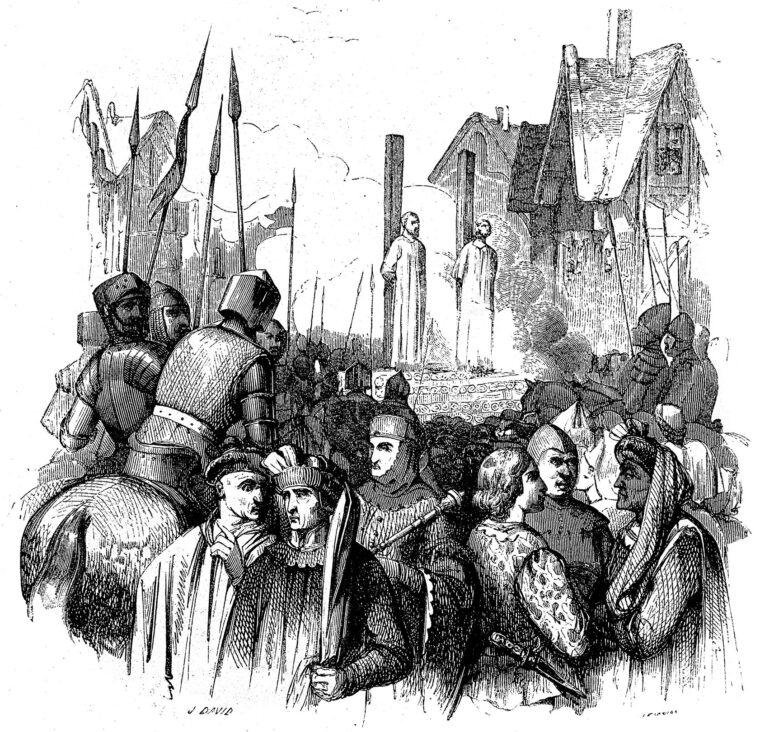
The Christians charged at 8 a.m., engaging the Egyptians along the length of the battle line in a daylong brouhaha as each side tore into the other destructively, but inconclusively. By nightfall the exhausted combatants, depleted but still game, broke off action. The following morning Khwarezmian commander Baybars launched an attack of wild abandon on the center of Walter’s line, pulverizing the Damascene units before turning on and annihilating the Bedouins. Al-Mansur managed to escape, leading his paltry 280 surviving troops from the field.
Walter had gone into the battle with a slight numerical superiority over his foes, and assumed this would be a significant advantage. It turned out to be a false hope. As the situation deteriorated for him he desperately sent his Crusaders against the Mamluks. At first this charge seemed to be working, but soon the attack faltered as Egyptian forces to the Christians’ rear and flanks finished off Al-Mansur’s command, and turned on the Crusaders. The Knights fought doggedly for several hours before being overrun, with only 33 Knights Templar surviving.
The battle of Forbie brought the Sixth Crusade to a dismal, ignominious conclusion. In 1245 Pope Innocent IV called for a Seventh Crusade, but Christian Europe was never again able to muster significant power in the Holy Land. The days of the Knights Templar as Crusaders were over. In fact, their very existence was drawing to a close.
The order had participated only marginally in the Fourth and Fifth Crusades, and by the end of the thirteenth century, its enemies were making plans for its destruction. European kings and princes were casting covetous eyes toward the bulging Templar coffers. The beginning of the end came on Friday, October 13, 1307, when King Louis IV of France (himself deeply in debt to the order) commanded that every Knight Templar in his realm be arrested on charges of heresy.
The secrecy surrounding the order’s initiation rites provided an excuse for accusing the Knights of such crimes as homosexuality, occultism and even being closet Muslims. Starting with the last grand master, Jacques de Molay, the Knights were imprisoned, tortured and killed outright on these trumped-up indictments. Under torture de Molay confessed to the charges and was sentenced to life in prison. Another 36 Knights were tortured to death in Phillip’s dungeons during the first days after the wave of arrests. Throughout Europe the Templars suffered similar persecution and, in 1312, Pope Clement V formally dissolved the order.
In 1314, de Molay recanted his confession, and was sentenced to the burning stake. As flames surrounded him on March 18 he called down a curse on the Pope and the King, predicting both would be dead in less than a year. Pope Clement V died of natural causes on April 20. On November 29, France’s King Louis IV was mauled to death by a wild boar.
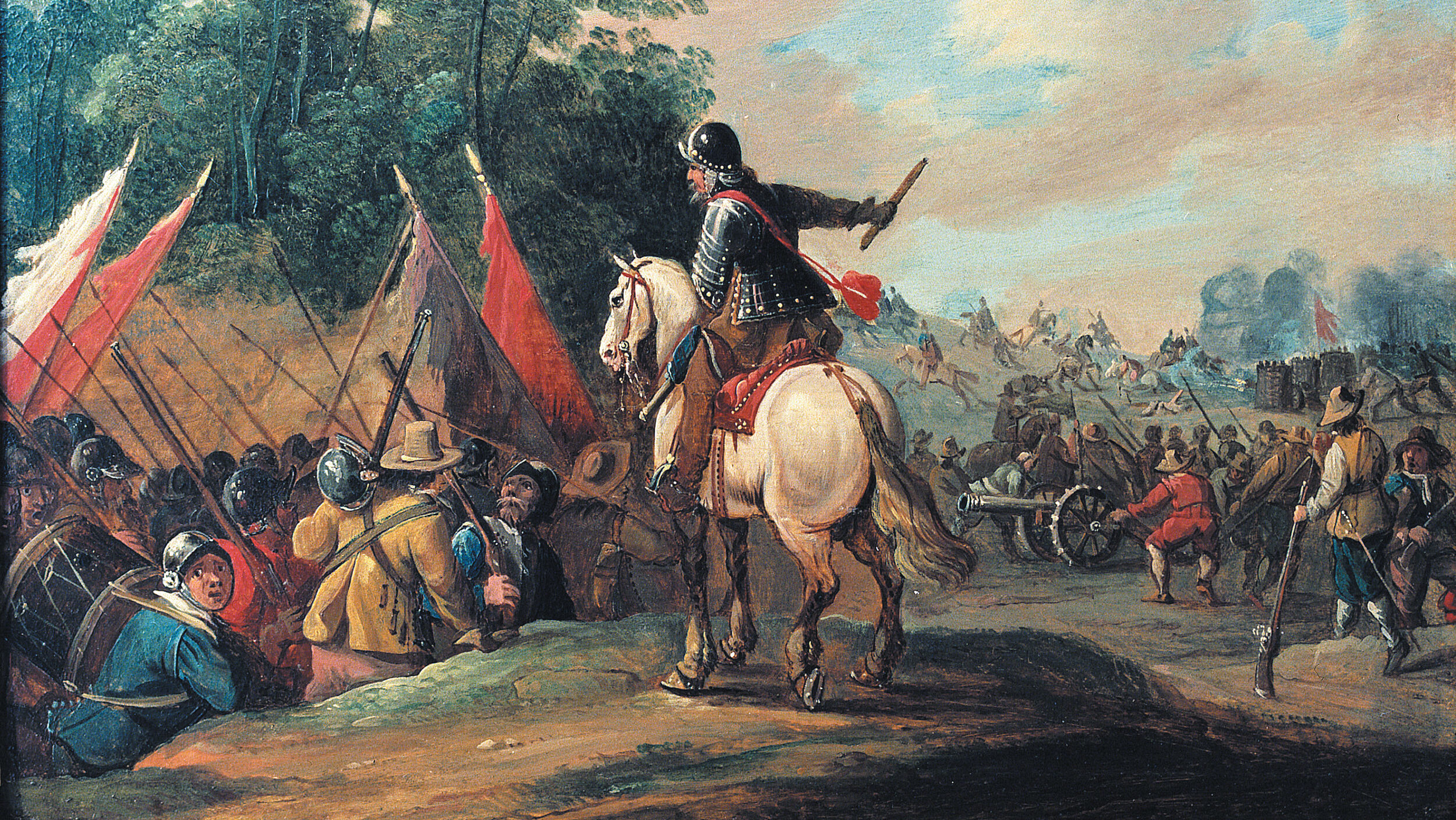
it was King Philip IV not Louis IV that ended the Templars