By Peter Zablocki
The large lamp shone down at him from the top of the ladder, the only light in the room of this bombed-out building. After a nod from the man sitting near him, Julien grasped the microphone stand sitting on the table before him, pressed the button, and said, “President Roosevelt and the people of America, listen to my story. I speak from the besieged city of Warsaw, Poland. My name is Bryan; Julien Bryan, American photographer.” It was now Friday, September 15, 1939—two full weeks after Germany invaded Poland—a time when the true evil of Nazi Germany remained unknown. The American, trapped in Warsaw, would soon ensure that it was known to the entire world.
On the train headed for Warsaw in early September, Bryan had at first thought it odd that the conductor was no longer checking for train tickets. But as he would later write in his 1940 memoir, Siege, “with so many bombs to think about, why bother about railroad tickets?”
In the beginning the train had stopped at every sighting of overhead aircraft and asked the passengers to evacuate, before reboarding and proceeding, but it had since ceased even to mention the German Luftwaffe Stuka bombers whistling above. It had been a week since the German armies crossed the Polish border on September 1, and four days since France and Britain had declared war on Hitler’s Reich—the Second World War had begun.
Just days earlier, Bryan had found himself without an assignment in the Swiss mountains after filming his latest travel documentary about peasant life in Holland. The 40-year-old photojournalist, lean and wiry from years of travel and fieldwork, now headed into the capital of a besieged nation through Romania in hopes of capturing some early war images and moving pictures. While still in Bucharest, Bryan unsuccessfully attempted to reach the American minister or military attaché in Poland. He tried to gauge the level of danger for a potential brief stint in the country, all while simultaneously planning his departure just a few days after arrival. When he finally got through to the American Embassy and the American Consulate in Warsaw, the woman explained to him in perfect Polish-accented English that the staff was away for the week, resting after a whirlwind few days. In retrospect, had he managed to reach the American minister, himself preparing to evacuate with his entire staff, Bryan would likely have been on a train in the opposite direction. Instead, he was traveling through the crater-ridden Polish countryside on a slow train, delayed by frequent attacks from the air.
Europe had been teetering on the brink of catastrophic conflict since the late spring of 1939. While the American freelance journalist was documenting Holland, Hitler’s Germany had already absorbed Austria in March of 1938 and seized the Sudetenland later that same year. Emboldened by the Western powers’ appeasement, Germany’s aggression eastward continued unopposed. Poland, situated between Germany and the Soviet Union, refused Hitler’s demands for territorial concessions and attempted a hurried mobilization in opposition to France and Britain’s wishes to avoid provoking the Nazi leader. Following the signing of the German and Russian Molotov-Ribbentrop non-aggression pact on August 24, 1939—which secretly divided Poland into spheres of influence—the vulnerable Poles saw no other choice but to prepare for the worst. With Polish spy networks reporting German concentration of armored divisions and Luftwaffe units along the Polish border, the sense of inevitability was unmistakable. When he first embarked on his journey into Poland in late August, Julian knew he was likely heading into a war zone, but he never imagined that it would erupt around him just hours after he crossed the country’s border.
The train lurched to a stop around 1 a.m. Bryan looked out the window into complete darkness in every direction—this was no Warsaw. “Last stop! All out for Warsaw!” shouted the conductor. It was September 7, 1939, and Bryan soon learned from the driver of a horse-drawn wagon, whom he had paid five dollars, that the capital’s station lay in ruins from recent bombing. After a quiet ride through the night, Bryan thanked his driver, got his room key from the concierge at the front desk, and made his way through the dark hallways of Hotel Europejski searching for the correct number on the door. With electricity cut off, candles burning within mason jars illuminated the staircases with a lone lit-up candle inside a bottle sitting on the ground, indicating his room. Bryan gave up sleep after an air-raid signal forced him and the remaining guests into the basement for hours, where they heard a crash of a bomb right in the hotel’s courtyard.
After a cold-water bath and a shave, Bryan set off on foot toward the American Embassy building a mile away at 29 Ujazdowska Street, “the Fifth Avenue of Warsaw.” Sandbags covered storefronts, their windows taped over with paper. Soldiers and citizens alike hurried nervously from neither here nor there—waiting for the next air-raid siren. It was a state of existence Bryan would soon know all too well. He pounded on the embassy door at 9 a.m., American passport in hand. Squeezing past refugee Americans standing in the cramped hallway, Bryan made it to the clerk’s desk and asked to see the American Ambassador. The blond woman looked up and informed him that Anthony Biddle and the entire embassy staff had left two days before, along with the Polish President, the government, the entire general staff, most of the foreign diplomats, and the foreign press. The Polish government would go on to represent their nation from exile, first in France and later in Britain.
Bryan learned that only eight consular officers, a commercial attaché, and a doctor from the U.S. Public Health Service remained to help look after American property and assist American refugees. By now, the thought that coming to Warsaw was a mistake had crossed his mind multiple times. Still, the allure of being seemingly the only photographer in a besieged city, where all other correspondents, motion-picture reporters, and press photographers had fled, looked like a perfect opportunity. Although he had his press credentials to show to the Foreign Office, its staff had long left Warsaw. If he were to stay, it would be up to him to secure permission to travel freely throughout the Polish capital. Openly carrying a camera as a foreigner, where most Poles suspected anyone who did not speak their language, would be dangerous enough, and taking pictures or filming was out of the question.

no match for Allied fighters.
Bryan turned to the only authority he could find, Mayor Stefan Starzynskiand, the hero of the besieged city. Overjoyed that there was still a representative of the West in Warsaw who could document the Polish struggle for the outside world to see, the stoic Pole not only granted him a press pass but also saw to it that Bryan had a car and a driver who would serve as his interpreter. “The rest of us must stay, but you—you must finally get out with your pictures,” the heavy-set Starzynski exclaimed. “Your pictures may prove to be of real importance—so that the world may know what has happened here.” As Bryan stood listening to Starzynski, air sirens bellowed outside, followed by distant explosion sounds. Unflinching, the Mayor just kept on talking.
Walking toward the garage to meet his new driver Bryan counted 42 German planes flying in formation overhead. To 31-year-old Thaddeus Pawlowski, an Oxford-educated captain of the Polish Army and son of a well-known Warsaw surgeon, who greeted him from behind the wheel of a German-made car, none of that seemed to matter. Like his boss upstairs, Pawlowski remained calm, resourceful, and presumably fearless. With carte blanche credentials to go anywhere and photograph anything, the two men set off immediately to document a city besieged by a new evil—one whose horrors the world was not yet ready to face.
The German attack on Poland in 1939 was not just the start of a second world war, it was the first strike in a new era of war. Unlike the static trench warfare, artillery barrages, and slow, attritional battles of the Great War, Blitzkrieg (“lightning war”) relied on fast-moving armored divisions, closer air support from the Luftwaffe, and coordinated infantry advances. The mechanized Nazi armies swept through the Polish countryside with overwhelming speed.
Equally crucial to the ultimate victory was the psychological impact of aerial bombardment, one that the world had not yet experienced, but which would become a staple of the conflict. The Luftwaffe dominated the skies over Poland, carrying out intensive bombing raids on major city centers in addition to the traditional military targets and transportation hubs. In Warsaw, the air campaign was especially relentless as its railroads, bridges, and communication centres were ripe for destruction and the cutting off of reinforcements and supplies.
Bryan’s lens witnessed widespread panic, mass evacuations, and the destruction of homes and public buildings. The relentless aerial assaults mentally and physically wore down even the most motivated defenders, scurrying to build improvised defenses. The Poles believed that if Warsaw could hold out, reinforcements would arrive—even as the speed and coordination of the German Blitzkrieg was rapidly making that reality impossible. Still, the people held on to hope.
Bryan and Pawlowski drove past civilians and soldiers as they worked together to block key streets with rubble, carts, furniture, and even vehicles to slow down the inevitable German advance. As they sought out key areas for Bryan to document, Pawlowski was forced to take circuitous routes as they continued to encounter trenches dug up along streets and open areas. The Poles could not know that the bombing of Warsaw and all rail lines and roads leading up to it in just the first week, had already made a prolonged siege unnecessary. Reinforcement, food, and supplies were not coming.
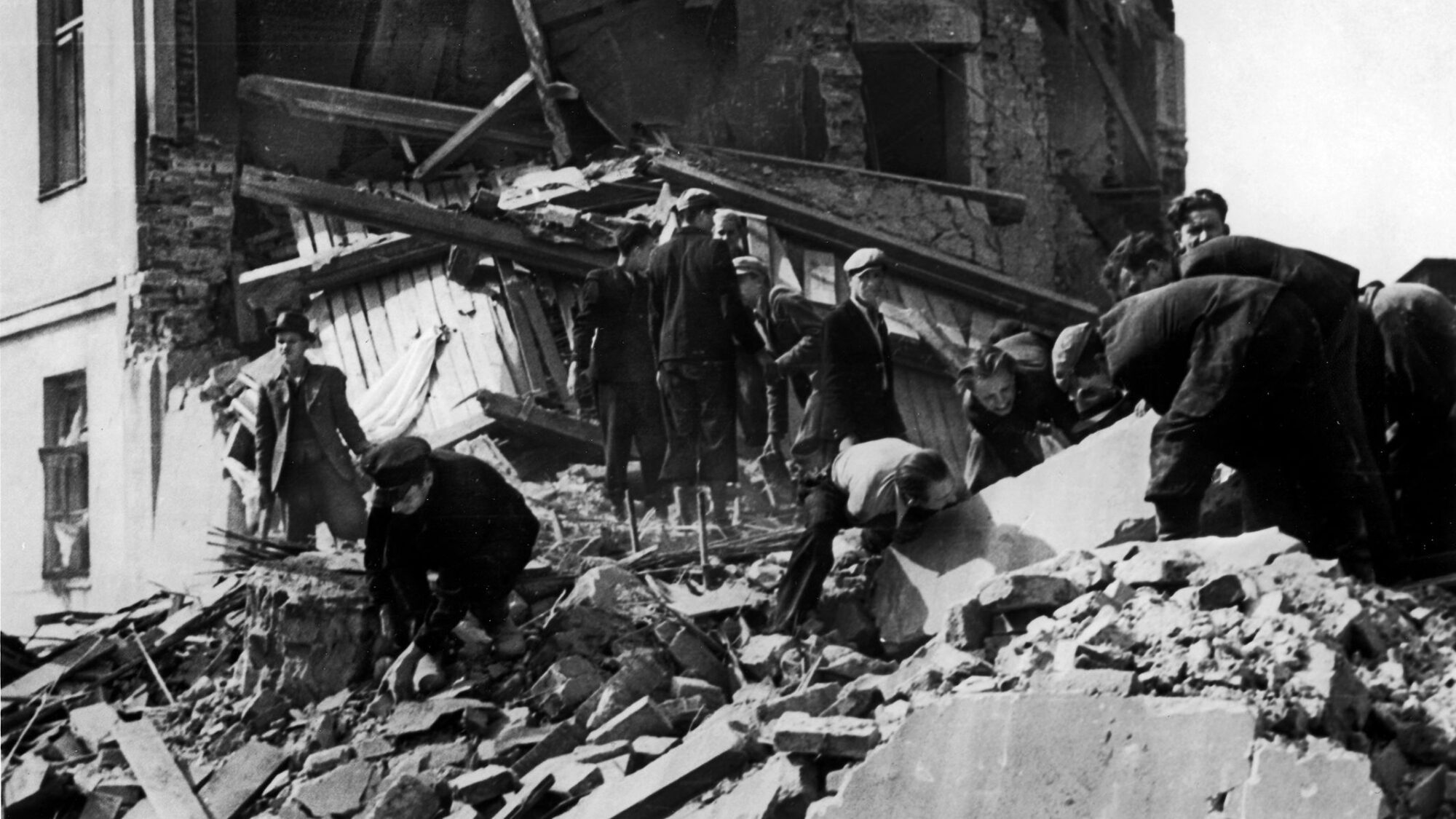
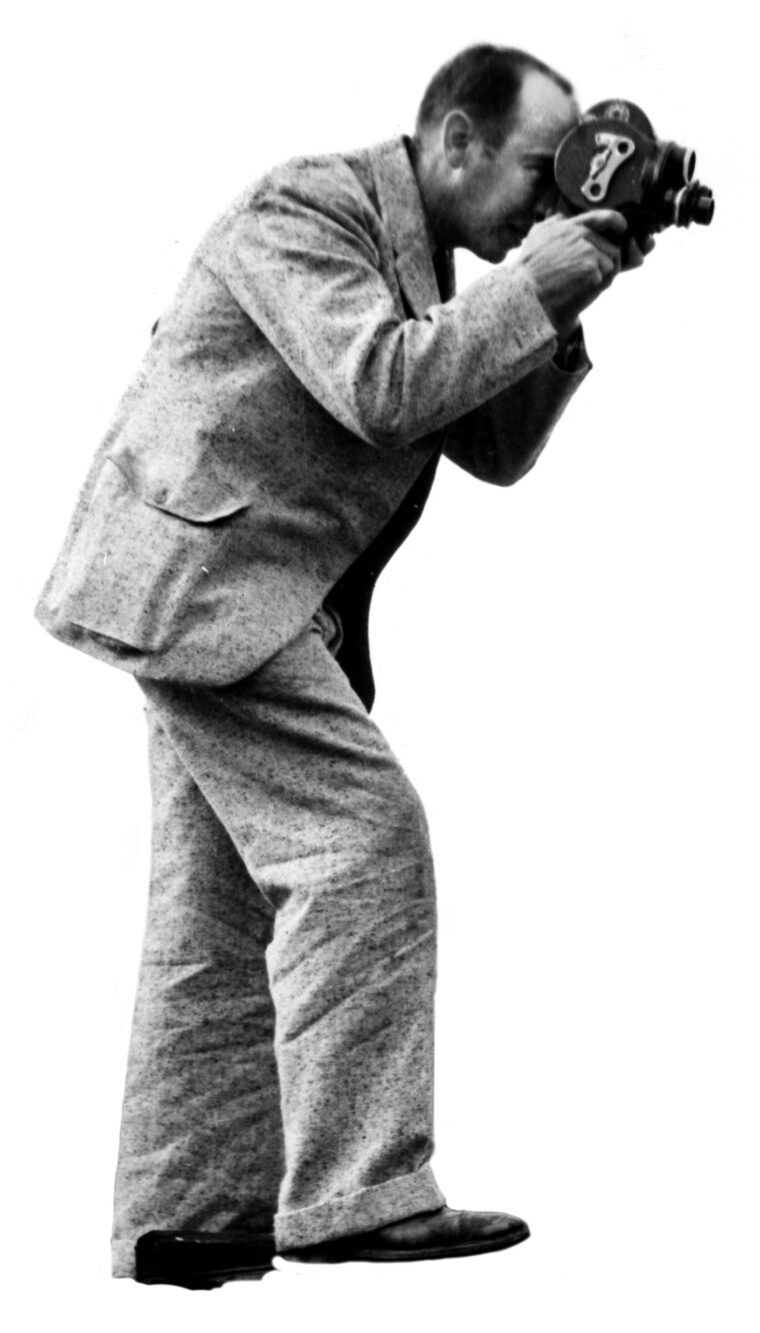
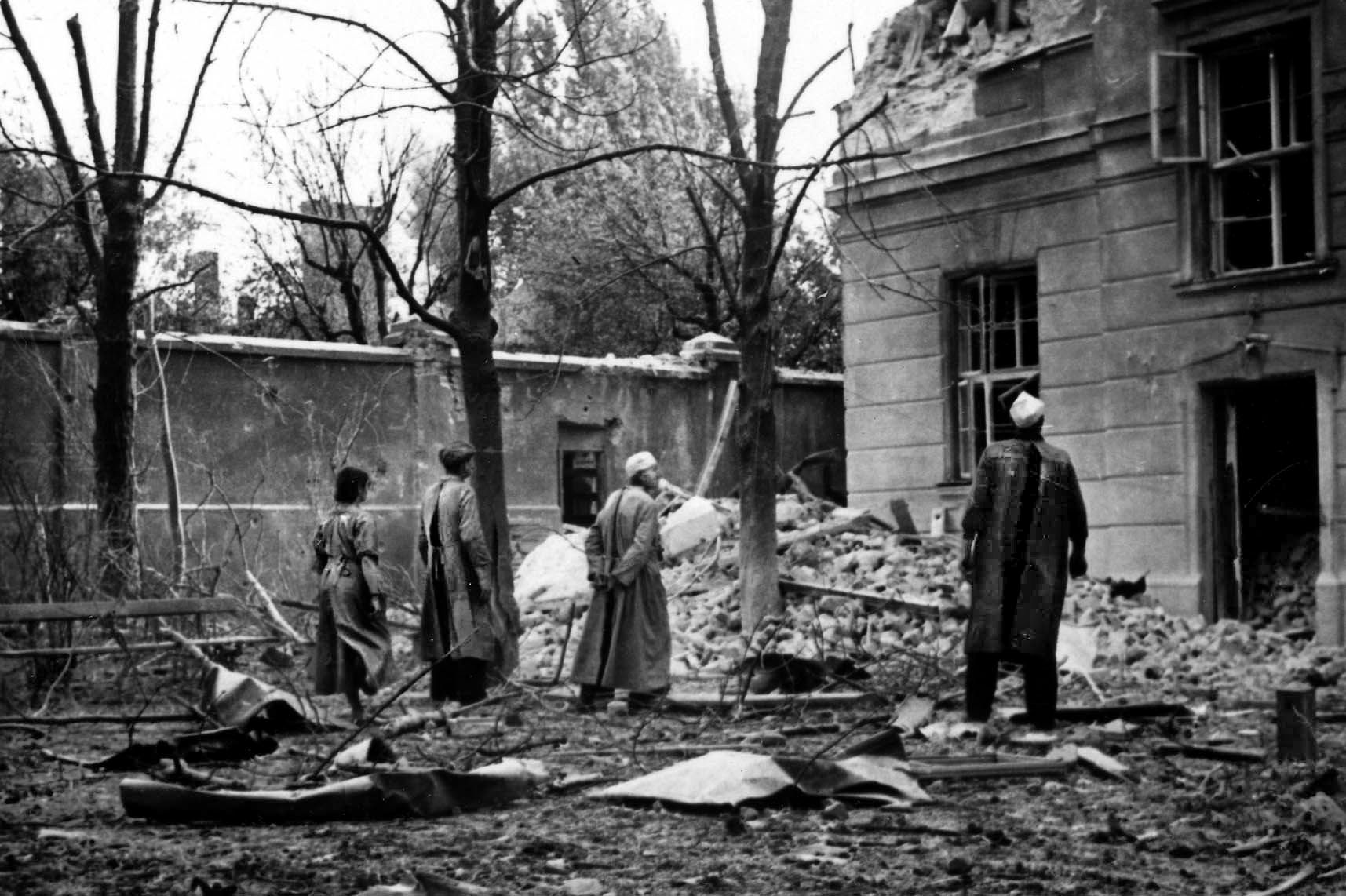
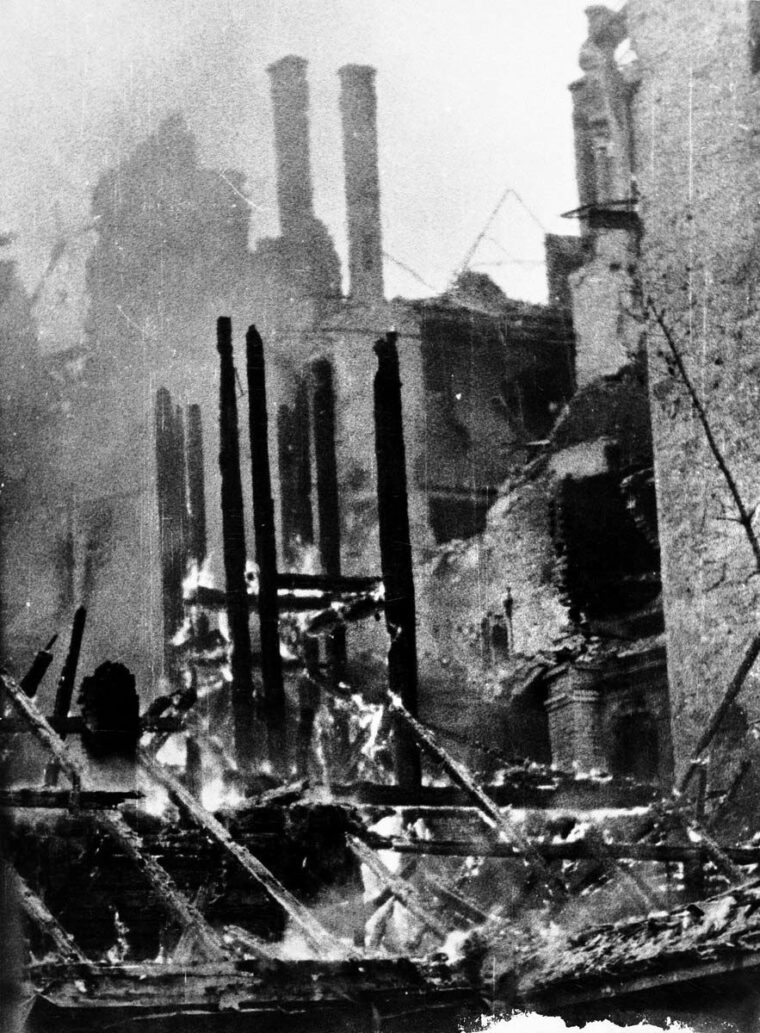
The car stopped across the street from a maternity hospital building, all of its windows broken by a 500-pound bomb that tore into the apartment building directly across it. The blast, like an ice cream scoop, took out a large portion of the residential building before reverberating to the nearby structures. Bodies of men, women, and children lay sprawled on the ground before it, “torn to pieces by bombs and sometimes without heads or arms or legs.” Bryan set up his camera and began recording the carnage. He took no pleasure in his task. “I was in Warsaw, whether I liked it or not, making a historical record on film of what happens in modern war,” he would later write. “People might not believe my story if I told it in words when I return to America, but everyone would believe my pictures.”
The women and newborns, some just days old, already bandaged from shrapnel injuries, were all moved into the hospital’s cellar hallways. After recording the young mothers’ plight and taking pictures, Pawlowski drove Bryan to a Kodak laboratory in town to develop the film. On the way, they passed a cemetery where a bomb had recently left a large crater, scattering bodies, bones, and skulls across the adjacent streets.

From there, Bryan walked to a bombed-out church, but not before he spoke with and recorded a family preparing a meal in the ruins of what had once been a home, now reduced to only four walls, with the sky and clouds serving as its ceiling. A little girl, thinking the American was hungry, offered him her share. Bryan could not help thinking of his wife and infant son safely back home across the ocean and out of harm’s way.
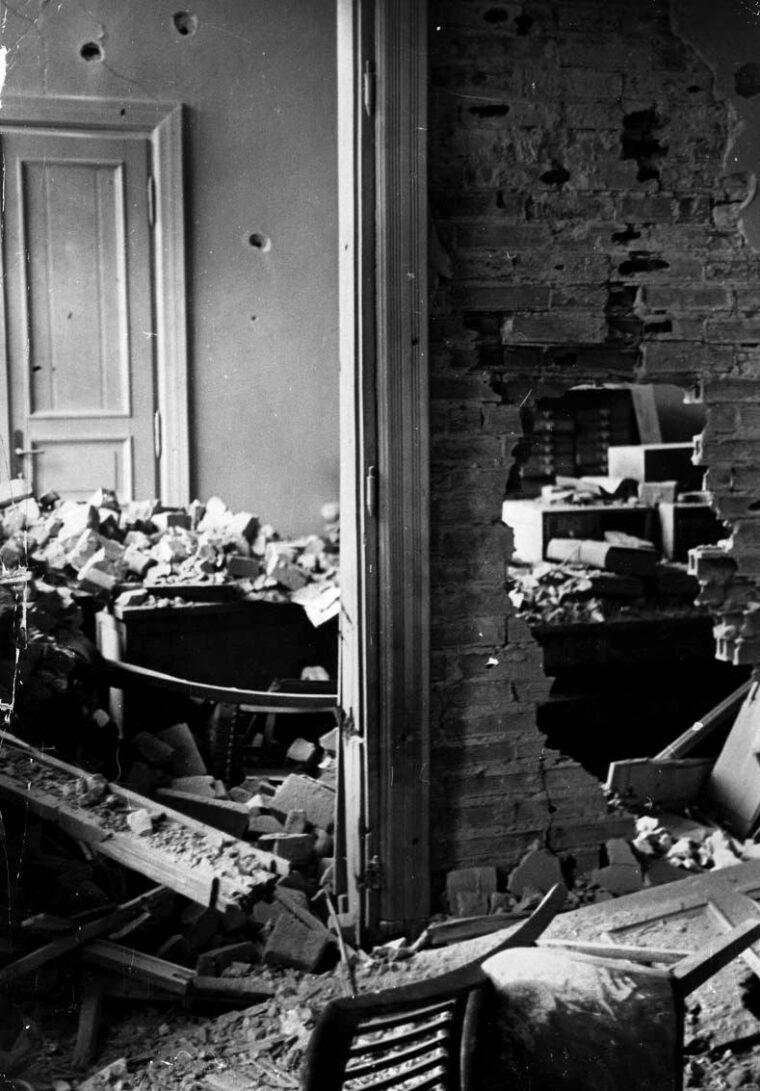
As Bryan and Pawlowski made their way toward their next stop, Bryan noticed bullet holes on the building walls made by strafing German airplanes, hunting from just above treetops. Rubble and blown-out buildings greeted them on every corner. An old woman held two silver spoons and a pair of scissors she managed to dig out of the pile of rubble that had been her home. Countless dead horses lay decaying on the streets; nobody was available to remove them.
The church was an old wooden building, or what was left of it. High above on the tower, the clock’s hands frozen permanently in time, pointed to 11:15 a.m. when the German bomber struck the unsuspecting patrons during Sunday morning mass, killing all inside. “Each night at five-thirty, the Nazis sent over more bombers, and each morning a whole new section of the city was destroyed,” Bryan remembered. The people moved to another part of the city in hopes of family members taking them in. “Poor and rich mixed together, but money no longer had any meaning,” he continued. “Always the goods they tried to save were the same—food and bedclothes… blankets, mattresses, and bread were the most precious possessions.”
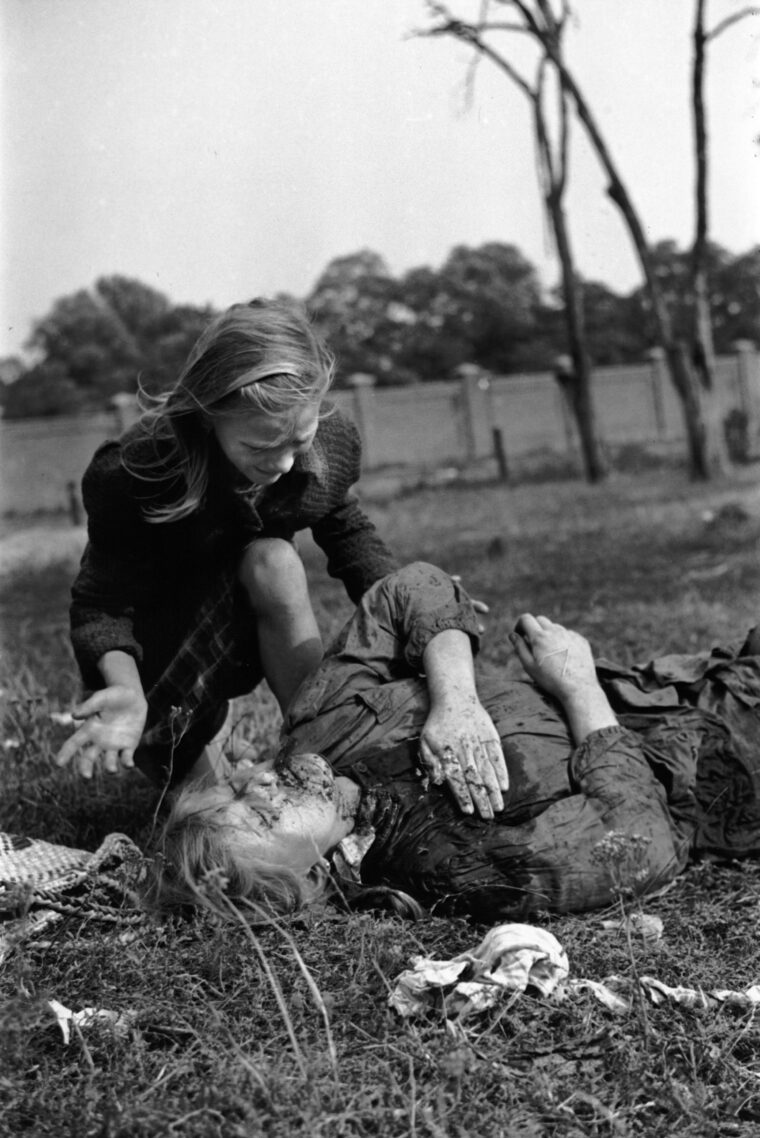
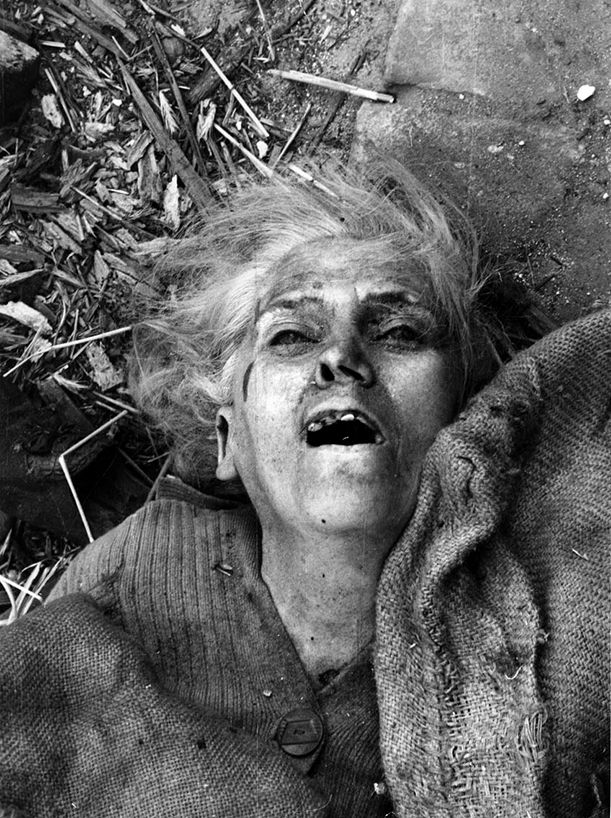
Pawlowski next drove by a small field at the edge of town where they had heard the loud rattle of machine guns, though it was quiet by the time the two men stopped. Seven women had been digging potatoes in the field when two German planes swooped down from the sky and dropped two bombs on a nearby home. Then the Nazi pilots turned around and strafed the field, killing two of the women. While Bryan was photographing the bodies, a blond girl about 10 years old ran up and stood transfixed by one of the dead women that his camera had just immortalized. The body was that of the little girl’s sister, who, having never seen death, could not understand why her sister would not speak to her.

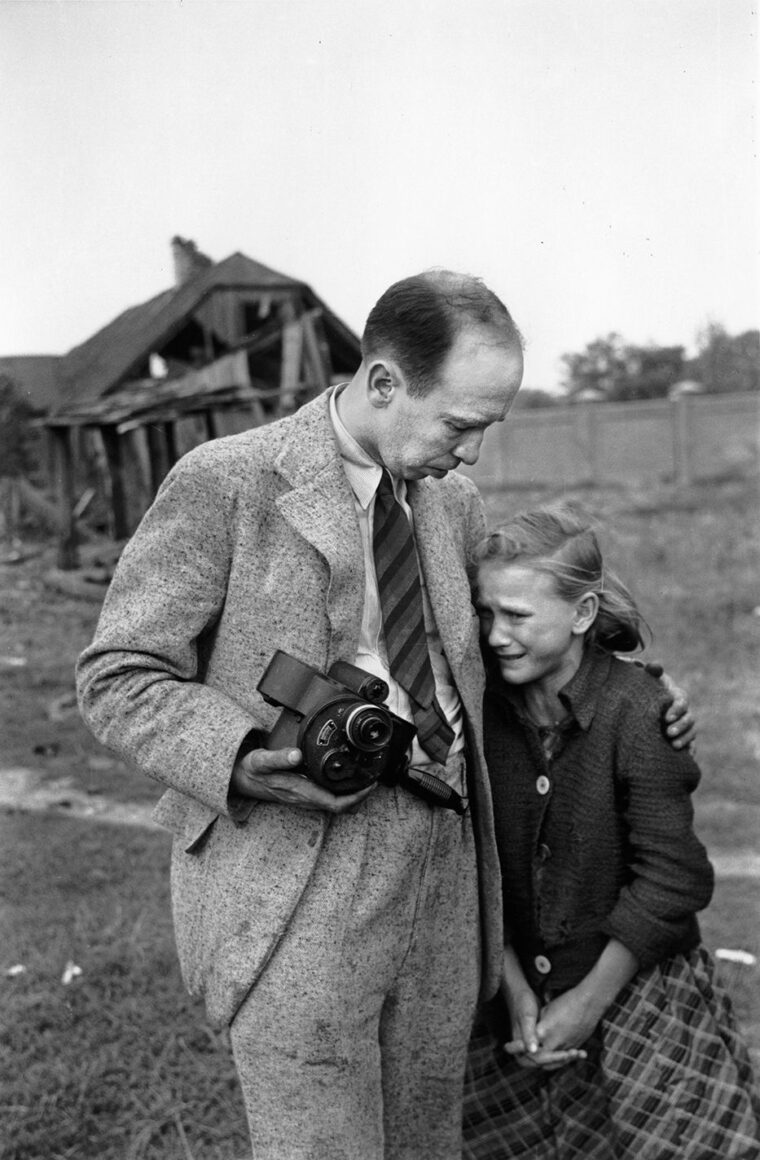
“What happened?” she cried. Then she knelt down and touched her dead sister’s bloody face and drew back in horror. “Oh my beautiful sister,” she screamed through tears. “What have they done to you?!” Bryan stood motionless as he captured a moment that would become one of the most infamous photographs from World War II. The girl continued speaking to the dead body. “Please talk to me! Please, oh, please! What will become of me without you?!” The child finally noticed the American standing close by. She looked at him and the two accompanying Polish officers who had arrived at the scene. “I threw my arm about her and held her tightly, trying to comfort her. She cried. So did I,” Bryan later recalled. “What could we, or anyone else, say to this child?”
By September 13 the German artillery was within range of Warsaw and Bryan’s travel, like that of all the city’s inhabitants, was severely hampered. He had spent nearly a week documenting the destruction. “The idea was apparently not to destroy buildings with artillery, but to kill as many pedestrians as possible,” Bryan later recalled. He’d had a chance on Tuesday, September 12, to escape when the American military attaché, who had been away from the city, snuck back into Warsaw to collect his uniform and U.S. credentials, believing it was no longer safe to travel in Poland without them. The man offered Bryan a space inside the already cramped car full of other dignitaries, but he chose to remain. Within four days, Warsaw would be surrounded and all roads to and from it would be closed. Poland’s temporary capital of Lublin would also be captured, and Bryan’s fate would no longer be in his own hands.
When Bryan moved into the American embassy building from his hotel that same Tuesday, it was already occupied by 50 other refugees, with more arriving each day. The consular staff still numbered 10 men, including the man in charge, John Kerr Davis. The U.S. Foreign Office diplomat who once helped coordinate the evacuation of American staff and personnel during the 1927 Nationalist Revolution in China had transferred to Warsaw during the early summer, unaware that just a couple of months later, he would be tasked with performing the same miracle for the American citizens of Poland. Bryan highlighted Davis’ bravery and that of the other consul members. “While all others hurried away to safety, these men stayed behind to protect American lives,” he wrote, “they would have liked to have left Warsaw, but they stayed.”
Because the American embassy was never meant to be used as a hotel, Bryan and the initial refugees slept on the basement floor as all new stragglers were directed to the dugout shelter out back. Consular staff member Douglas Jenkins Jr., became the commissary of food, which mainly consisted of canned fruit, flour, rice, and butter—not much, but more than the Poles outside the building’s walls could hope to secure. “Bacon and eggs and orange juice we had to do without,” recalled Bryan. “But, hot coffee and a thin slice of bread apiece made a breakfast that saved the day.”
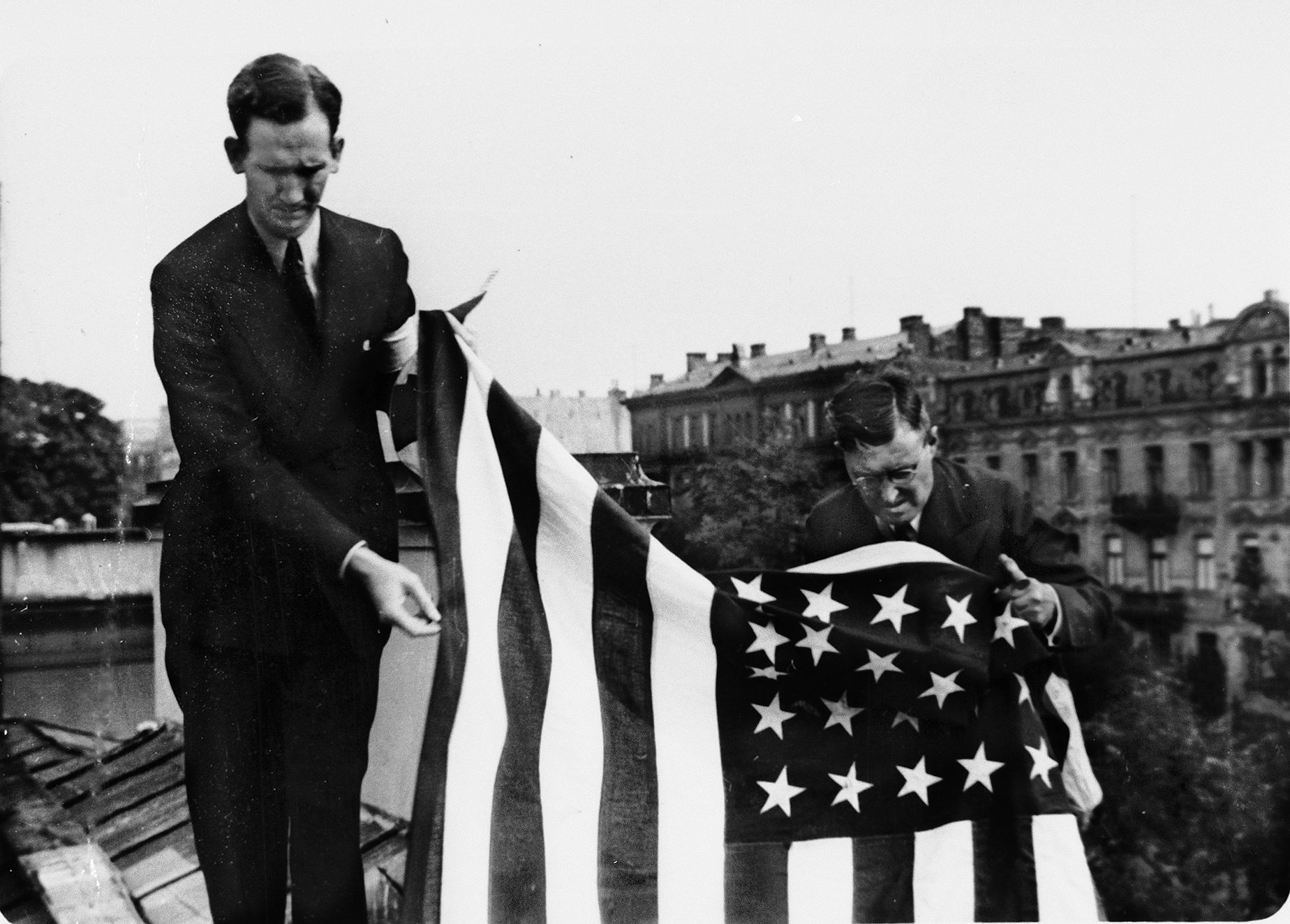
When it became evident that Germans would soon be entering the city, Bryan assisted the other staff in burning classified documents and blank passport booklets. The latter were especially difficult to burn, so the men had to labor at mutilating and tearing them to pieces before throwing them in the fire. Then came the news of the first German troops entering the city’s outskirts. The men within the embassy building collected all available American flags, the largest of which was 10 by 15 feet, and hung them around the outside of the building from the windows, with the biggest stretched out on the roof to warn off German pilots acting as artillery spotters. Volunteers, Bryan included, spent hours digging large trenches in the backyard, not for protection, but to fill sandbags to barricade the 20 or so basement windows.
The Americans were not the only people who called the embassy home. “The bravest women I knew in Warsaw were five Polish girl secretaries who had worked for the American consular officials,” Bryan recalled. The refugee Americans called them the “Five Generals.” They were always the last ones to leave their posts during the air raids and the first ones back at their desk, near the miraculously working telephone, and transcribing radio reports. The five also volunteered to go outside the embassy gates each day to barter for food, vegetables, and much-needed supplies. Bryan never forgot the day he and the others hung up flags all over the building, with the help of the “Five Generals,” who uttered not a word. “They knew our flags were signals to the Germans, asking for special privileges, for which they as Poles could not or would not ask.”
during the September 1939 Siege of Poland.
As hours stretched into days, the food rations declined, and so did the supply of drinkable water, the last of which now filled wash tubs and buckets, mostly locked behind a door and distributed accordingly. The shelling continued day and night, with the latter being especially frightening to the young children huddled in the embassy’s pitch-dark cellar. During his last seven days in Warsaw, Bryan never bathed, nor did he undress, for that matter. Luckily, the radio transmitter still worked, and the Americans could follow the BBC’s reports of German movements.
Other information came from Bryan himself, who continued to go out with Pawlowski to photograph and capture moving images of war-torn Warsaw. During one of these forays into the city center, Bryan came across a husband and wife with their two children who happened to own a cow. Although the American would much rather bring the family with the endless supply of milk into the embassy compound, diplomat Davis refused to allow them in. Bryan had to settle for purchasing milk and bringing it back with him to the embassy building to share with others.
On September 15, Mayor Starzynski asked Bryan to broadcast on the Warsaw station and try to get word of the situation directly to the President of the United States. When given the opportunity, Bryan made sure his 10-minute talk mentioned the names of the 10 American officials so that if the State Department heard his transmission, they could notify their families of their relative safety. Throughout the entirety of the recording, the broadcasting building shook from nearby artillery shelling, with one finally finding its mark. The American barely made it out of the crumbling building, cutting his transmission short. Outside of Poland, nobody had heard the broadcast. Still, it made Bryan a celebrity in Warsaw. For the remaining six days in the capital, he was known and often greeted by all who saw him with his camera as “the American in Warsaw.”

During these last days, taking pictures was the only thing that kept Bryan’s mind occupied and away from the dread of the inevitable capture or death at the hands of the Germans. The streets of Warsaw became less frightening than sitting idly in a dark basement of the embassy. The city by now was a fortress, ready for the Nazis’ last push into its center. Nobody deluded themselves that reinforcements were coming, especially after the news of the Soviet invasion of Poland from the east on September 17. Warsaw had become one of the last bastions of free Poland, but time was running out.
Bryan had a chance to photograph and speak with 20 German military prisoners whose tanks and cars had plunged blindly into the Polish capital, having heard that it had already fallen, only to find themselves taken into custody. There were no longer defined battlelines. When asked why they were in Poland, the young Germans, all between 19 and 24, answered, “Wir Mussen (Because we must).” One German, who towered over the American, just looked at him, burst out crying, and said, “I want only to go home.”
Mayor Starzynski kept up the city’s morale with his daily radio broadcast. His words were always calm and brave, the message the same: Warsaw would not surrender. Because he implored the bakers, farmers, and store owners to keep their operations going for the people. Not until the city’s water supply was utterly destroyed and electric power and telephones disabled, was there any official talk of surrender. Yet, even Starzynski knew that with most of Poland in Nazi and Soviet hands, his city stood no chance of survival.
Bryan was not surprised to receive a summons from Warsaw’s mayor on Thursday, September 19. An exhausted-looking Starzynski told him, “It’s time for you to get out. It is tremendously important that you escape with these films and let the world know what the Nazis did to Warsaw.”
Bryan knew he should leave Warsaw, but the problem lay in the fact that nobody really knew how. He had spent the last couple of days laboring to carry all the camera equipment with Pawlowski, after an artillery shell had destroyed their car one evening. But that was not the only thing that made his task more difficult. The streets were becoming too dangerous, especially later in the day. Night sniping from spies, Nazi sympathizers, or Wehrmacht snipers made travel impossible. The shellfire had become so intense that it was difficult to find a building in Warsaw with its windows intact.
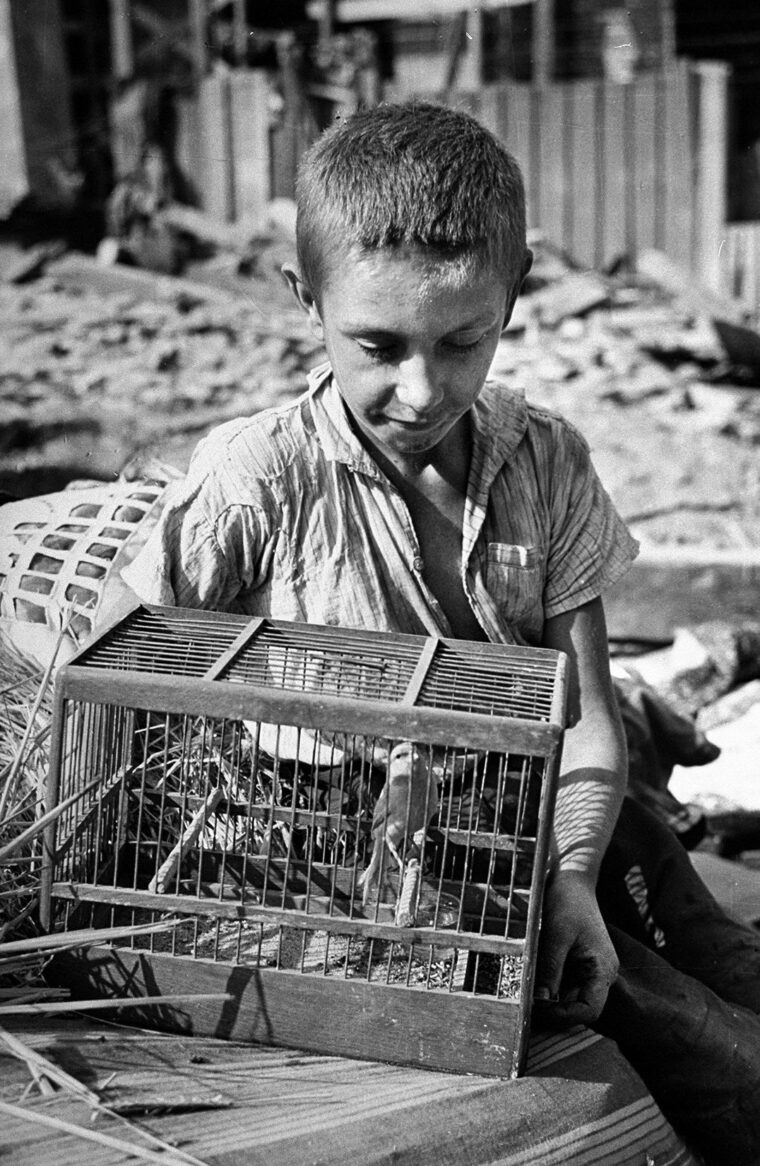
Now, another day and a gloomy morning, a tired Bryan forged on behind Pawlowski through one of Warsaw’s neighborhoods, both men weighted down by the cameras and tripods. A boy walked dazedly back and forth on top of a pile of rubble that had come off his apartment building, exposing three full floors. While the adults around him were busy pulling out dead bodies from among the bricks, he held on dearly to the one possession he was able to save—a canary in its cage.

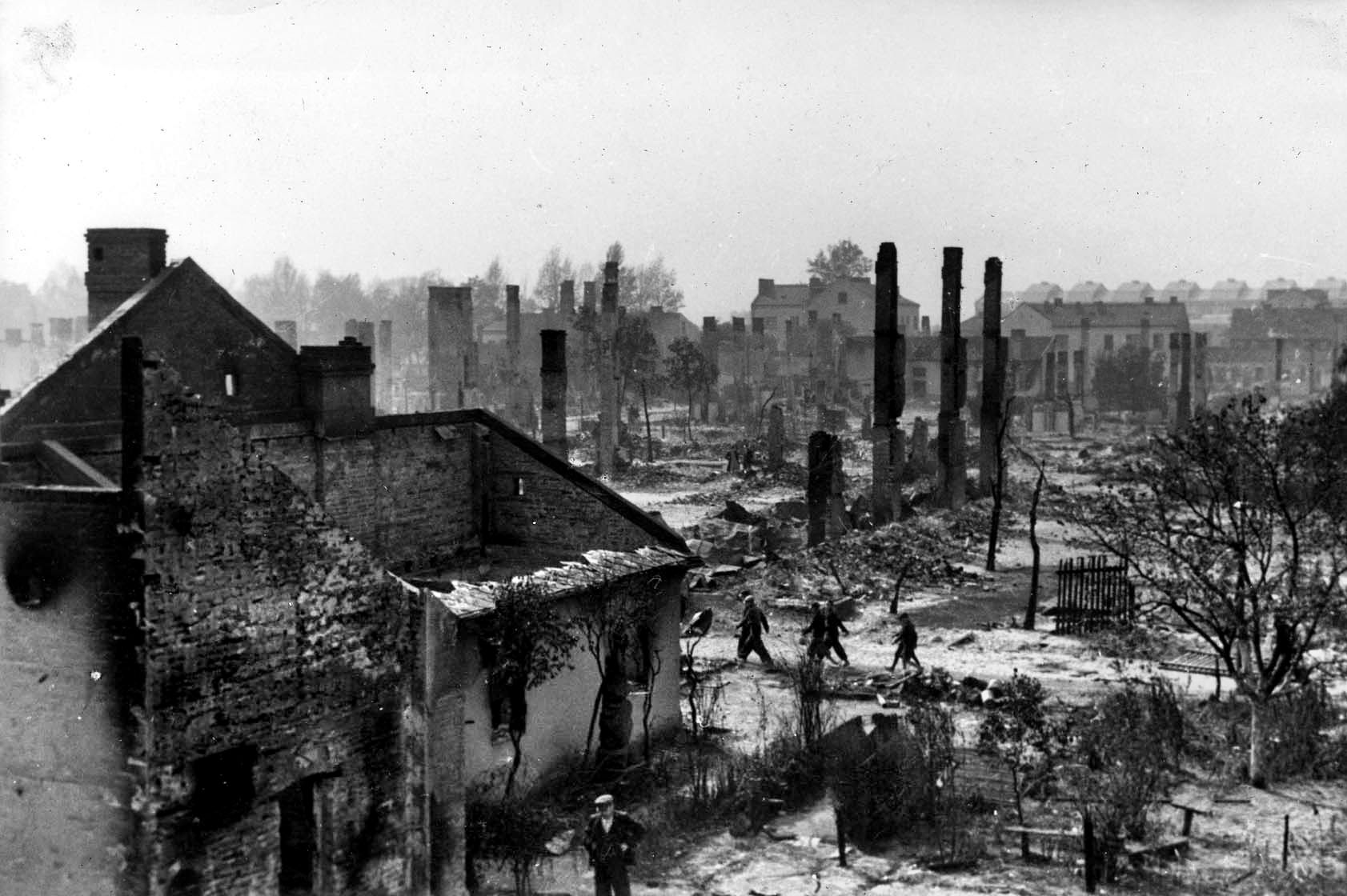
They passed near the charred buildings of the Jewish quarter of the city. The Germans had dropped incendiary bombs on the district the evening of September 16, the Jewish New Year. The Nazi pilots’ precision resulted in razing 20 city blocks and leaving thousands of Jews homeless. Bryan came across a young woman sitting and staring blankly at the black remains of what had been a three-family home. There was no trace of her apartment, nor of the eight members of her family. Bryan looked at the woman, lifting the camera to his eye. It was an action that weighed on him more and more, but he felt compelled to continue. He felt a raindrop and then saw one slide down his lens. The rain would have been a blessing had it come a few days sooner.
With the Poles unwilling to surrender Warsaw, the Americans holed up in the embassy knew that it meant the destruction of the city. Bryan carried a typewriter from one of the embassy offices to the cellar, where he sat down and typed out a farewell letter to his family—it seemed silly to apologize for getting killed, and yet, his fingers kept hitting the keys.
At 1:30 in the afternoon of September 21, came the word over the local radio—the German army would cease all hostilities for three hours, 2 p.m. to 5 p.m., during which all foreigners with passports from neutral countries would be evacuated. Bryan, who was luckily still at the embassy when the news came through, now watched as the Five Generals frantically made more than 100 phone calls to get the word out to every American still in Warsaw not sheltering in their building. The women rounded up and helped everyone organize though they, as Poles, could not go.

While some of the embassy workers chose to remain behind, Bryan, with three small rolls of film tucked away in his small briefcase, made his way among more than 100 other Americans toward the designated meeting point in front of Hotel Bristol. He left all of his cameras and equipment behind to draw less attention to himself. If caught, all of his work would have been for nothing. Above him, German planes dropped leaflets instead of bombs. Picking one up, he read “Poles, give up. Your government has deserted you. Surrender your arms. If you do not do this at once, we will be obliged to bomb you from the air and to shell you with our artillery.” It all seemed like a moot point.
By the time Polish army trucks arrived to transport the foreigners toward the German lines, the group numbered more than 1,000 from some 30 nations, including Americans, Swiss, Italians, French, and as well as individuals from various other nationalities.
Seeing a woman struggling to get onto the back of the truck with her baby, Bryan set his suitcase down to help her. To his dismay, when he looked down again, his briefcase was missing. Without drawing attention to the misplaced bag, lest anyone become suspicious of what it contained, he reluctantly found a seat on the truck. They reached the German lines just as the clock struck 5 p.m., marking the end of the temporary truce. Bryan did not need to look at his watch; he could hear the artillery shells whistling in the distance. The German soldiers, on the other hand, helped hold babies, transfer women from the Polish trucks to their own motor pool, which would bring them all to a nearby train station. They picked up suitcases, offered their coats to women who appeared cold, and showed courtesy and chivalry to all. “Having shelled and bombed us for weeks, now they carried our grips and patted babies,” Bryan thought to himself. The Nazi press stood off to the side, joyfully recording the benevolent Germans for all the world to see.
At the train station, Bryan searched for his suitcase, all the while worrying that the German authorities, checking passports and separating the men and women into their respective nationalities, would recognize his name from the broadcast he had given days before. The anxiety was not without warrant. When Bryan preemptively asked another American to hold on to a note he had written to his wife, stating that the Germans might detain him in Warsaw, and to mail it once the man arrived in the States, he refused. “I can’t do it,” he said. “You’re a marked man and will doubtless be sent to a camp. It’s too big a risk. If they find a letter from you on me, they might suspect me.” Everything seemed lost. Not only had he no pictures and film to show for all his efforts, but he might never make it back to his wife.
Luckily, the German authorities did not flag his passport. Instead, they let him proceed toward the city of Königsberg, in East Prussia, where a meal and a hotel awaited the foreigners. The refugees would stay in their respective quarters and await extradition by their governments, with the Italians receiving preferential and fast-tracked treatment due their alliance with Germany.
The American designated hotel was across the street from a motion-picture theatre, and Bryan could not stop himself from going in. All the city businesses were open, all the street lamps on—it was as if the war with Poland was already over. He got his ticket and sat down to watch a newsreel. It depicted the devastation of Poland, but was careful to show no human cost, as if the Germans were proud of leveling buildings and blowing up bridges. Bryan noted that throughout the entire 30-minute film, and even at its end, which showed Hitler fraternizing with soldiers, there was not once a sound of applause. Nobody would convince him that the ordinary Germans wanted this war.

After sending his wife a cable that he was “Safe and well,” the American returned to his hotel and to a lobby full of bags and suitcases that had arrived a day late from the train station. To his surprise and suppressed joy, his briefcase was right among the others.
With news that there would be room on the Swedish delegation’s designed train to neutral Lithuania, early the next day, Bryan once more tried his luck in soliciting help. This time, he turned to a couple of refugees he knew well from their time at the embassy. One of them, an older man who had managed to get his hands on a gas mask that he was bringing back to the United States as a souvenir, agreed to lend it to a young teenage girl, who would claim it as her own keepsake while hiding inside it the three rolls of film. Bryan would meet her six weeks later in New York, where, smiling and finally safe from danger, the American youth handed him the work that would make him famous.
Despite Bryan’s worries, the rest of the trip Stateside proved uneventful. From Lithuania, he and others traveled to Latvia. Using his connections at the American Embassy in Riga, Bryan managed to secure a place on a plane to Stockholm and then a Norwegian boat sailing from Oslo to New York. But not before the American consulate in Latvia provided him with an English-speaking stenographer who, for eight hours, took down the notes of the photojournalist’s experiences in Warsaw. His press dispatches were sent and would arrive stateside before their author, who would spend another week on a ship bound to America.
When the ship finally docked in New York on October 7, 1939, a business associate, with whom Bryan had given lectures on his travels at schools, universities, and civic organizations before the war, was waiting with his family members. While Bryan’s wife hugged him with tears in her eyes, relieved to have him home, the business partner, with a stern and serious face, remarked, “Do you realize that you’re five days late for your lecture?” Bryan looked at him, dumbfounded. “I was back in America,” he thought to himself.
The world first saw Julien Bryan’s monumental work through the full-page spreads of American newspapers, with headlines similar to those of The Bangor Daily News of Maine, which proudly proclaimed, “News Presents FIRST UNCENSORED Pictures of Doomed Warsaw.” LIFE magazine soon published a multi-page feature in late 1939 for the national and international audience.
Because of strict controls placed on foreign journalists in occupied Poland, his 6,000 feet of 16mm films and 500 images were the only ones worldwide to show the human cost of modern warfare. By the time the Hollywood production company, RKO Pictures, agreed to distribute his documentary film, Siege, in early 1940, Bryan had already become known as the man who provided the world with the first visual proof of Nazi atrocities, many of which had previously been shielded from the reality of European conflict.
Bryan’s contributions transcended popularity in the press, leading the photojournalist to travel the country on speaking tours, sharing his story and that of the brave Polish people of Warsaw to packed halls and auditoriums. The most important of these talks, however, took place in a more intimate setting, just weeks after his return to the U.S., in the Oval Office of the White House. It was not a formal visit, nor did the press report on it. President Franklin D. Roosevelt listened attentively as Bryan narrated his film and described his pictures. Roosevelt asked a lot of questions about the plight of the Poles, expressing his admiration for the young reporter. Bryan finally felt he had completed the mission assigned to him, months earlier, in a bombed-out office of the Warsaw Mayor—he had told the world what the Nazis had done to Poland, and if not stopped, would continue doing to all free people of the world.

After weeks of fighting, and total casualties reaching 30,000 within the city, the Polish command in Warsaw finally surrendered to the Nazis on September 27, 1939. By the end of that month, with Soviet Armies occupying its eastern lands, and the Germans taking the west, Poland had been completely overrun and no longer existed as an independent state. In total, the September campaign had cost nearly 130,000 Polish lives. By the time of the war’s end, the nation would suffer six million deaths, including three million Polish Jews.
Bryan thanked Roosevelt, collected his materials, and walked out into the brisk early winter air of Washington, D.C. He thought back to the windowless buildings in Warsaw and the scarcity of coal, electricity, and food… and to his friend, Mayor Stefan Starzynski, whom he would dedicate his book, also titled Siege, the following year. Viewed as a symbol of national resilience and a potential rallying point for resistance, the Gestapo detained Starzynski the day of Warsaw’s capitulation when Bryan was still awaiting transport from Oslo to New York. The exact circumstances of his death are unknown, but he is believed to have been killed when the Nazis carried out mass executions of Polish intelligentsia, officials, and resistance figures in late 1939 and early 1940.
Undoubtedly, the question on his mind that early winter of 1939 as he walked toward his automobile parked in the shadow of the White House, the nearby Capitol building, and the towering Washington Monument, was whether the world was ready for what was coming, and when it was all said and done, whether freedom and liberty would prevail.
Peter Zablocki is the host of the History Shorts podcast. He is currently working on writing a book about Poland during World War II, which, among others, tells the story of Julien Bryan.
Powerful story. Thanks!