By Kelly Bell
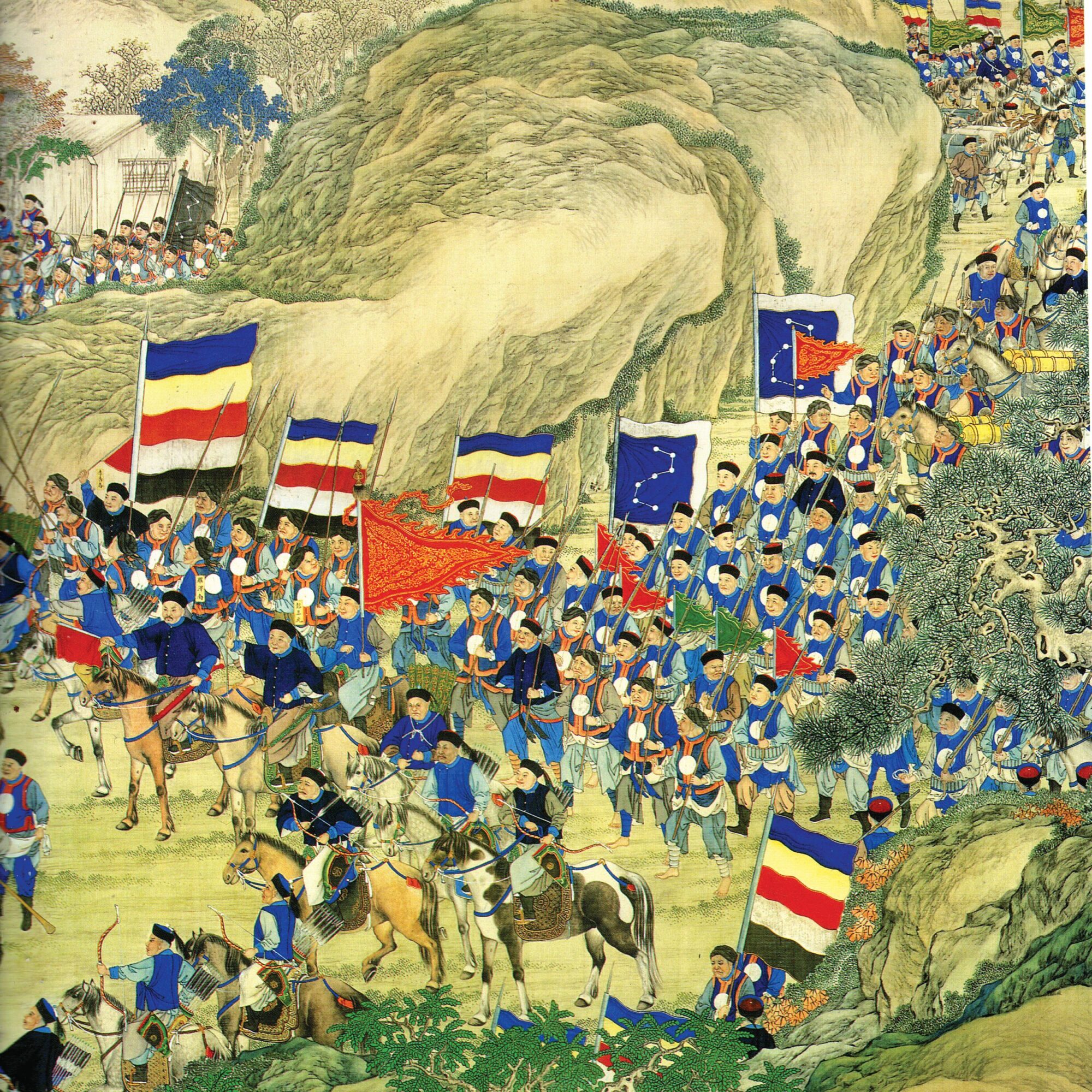
After more than 10 years of the costliest civil war in history, China was writhing in the spring of 1860, the sprawling nation gutted by the fratricidal holocaust history would call the Taiping Rebellion. The 200-year-old Manchu Dynasty was struggling to hold itself together in the face of a vast host of rebels calling themselves the Taipings. The insurrectionists worshipped a deity they called Shang-Ti (Supreme Lord) and his eldest son Jesus. Their leader assumed the title T’ien Wang (Divine King) and based his authority on revelations he received from ethereal beings who appeared to him during his frequent epileptic seizures. He believed himself the second begotten son of Shang-Ti, and convinced his followers that he was indeed the younger brother of Jesus Christ.
T’ien Wang’s best military commander was a 37-year-old general known as Chung Wang (Faithful King.) He was entrusted with a crucial spring offensive to conquer the wealthy province of Kiangsu and its coveted port of Shanghai. His force of 105,000 fanatical men and women marched unopposed into the provincial capital of Soochow on June 2. If Shanghai fell the Peking government, already near-bankrupt from the war, would likely collapse. Desperately needing a hero, The emperor, in desperate need of a hero, would turn to a supremely unlikely candidate.
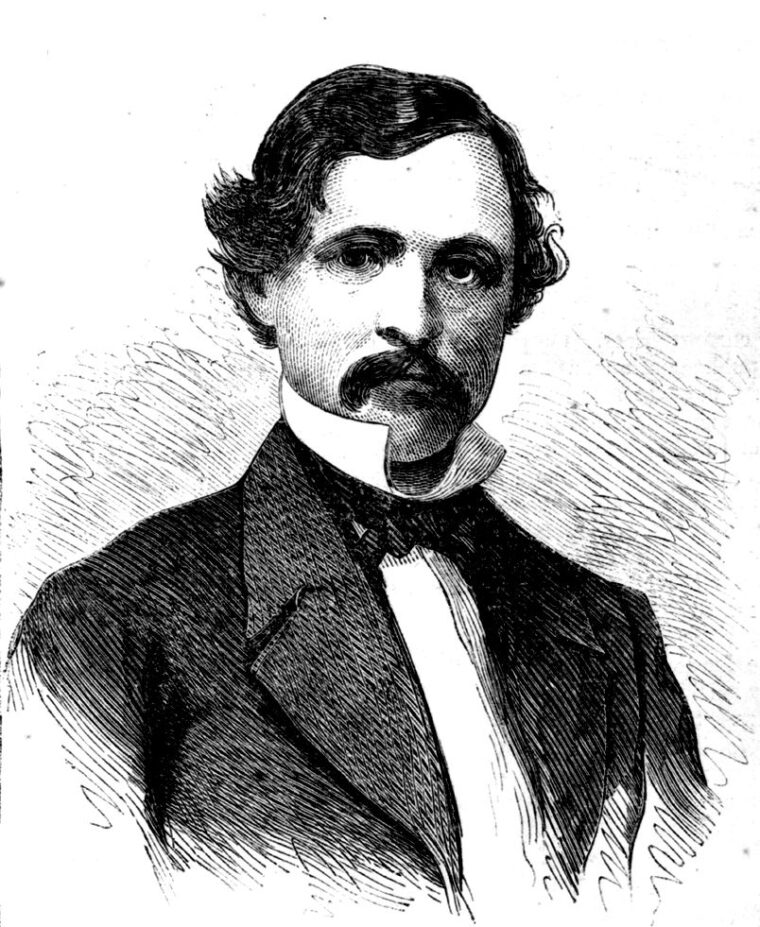
His name was Frederick Townsend Ward, a 28-year-old adventurer from Salem, Massachusetts, who had recently arrived in Shanghai’s American enclave. He was just 5’7”, but strong as a plow mule, and with a dusky mane that fell to his muscular shoulders. He had already served alongside federal forces in Mexico, fighting sundry revolutionaries. He had also been a Texas Ranger, making a name for himself by, via single strokes, decapitating Comanches with the Russian sabre he had brought back from his service with the French in the Crimean War. Most recently, he had worked as first officer of the armed steamer Confucius as it plied the Yangtze River in search of pirates. It was in this capacity that he first clashed with the Taipings.
Ward saw them for what they were increasingly becoming—unscrupulous freebooters using a religious war as cover for their pillaging and mayhem. Hired by the Chinese Pirate Suppression Bureau to set up outposts to warn of approaching buccaneers, Ward soon caught the eye of local Imperial political boss Wu Hsu. When Wu offered him the job of raising, equipping, training and leading an army to fight the Taipings the young American was quick to nod.
Ward’s prior military experience had taught him much about weaponry and tactics then in vogue in western armies. He had come to appreciate the value of modern siege techniques and the new use of units of riflemen as independent, free-moving skirmishers rather than in their traditional role of conspicuous, over-controlled columns of slow-moving infantry. For the Manchu Dynasty, Ward’s arrival came just in time.
Although Chinese ruling families were traditionally contemptuous of pale-fleshed foreigners, they were no longer in a position to indulge their arrogance. In fact, it was government officials from Peking who had approached Wu on the subject of who would be a suitable commander to lead a force of “western barbarians” against the Taipings. There was no doubt in the old man’s mind that Budda had sent the fiery little fighting cock from New England for the specific purpose of saving China from her own rabble.
Wu expertly handled the finances, keeping the swelling mercenary army paid well—and punctually—ensuring the troops were loyal and dependable. Ward concentrated on obtaining up-to-date weapons for his men. With invaluable assistance from his French second-in-command Henri Andrea Burgevine, Ward used Wu’s vast expense account to purchase sizable stocks of Colt revolvers, .52-caliber Sharps repeating carbines and older (but still effective) British Tower muskets. Recruiting mainly from waterfront dives, Ward swiftly but thoroughly drilled his first hired command and he felt his troops were ready by July 1860.
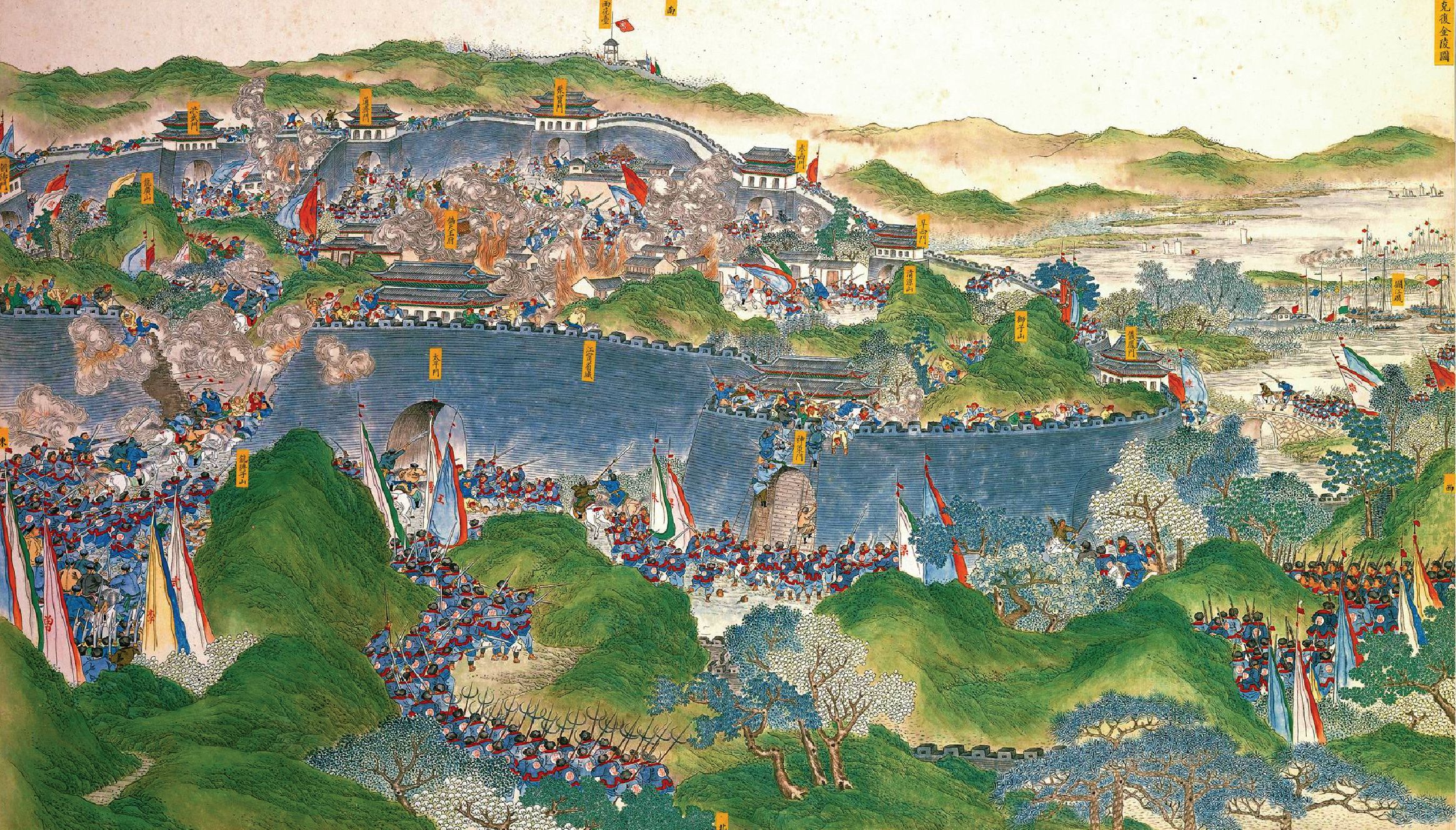
The mercenaries assaulted the rebel stronghold city of Sung-Chiang on July 16. Since his command was seriously outnumbered, Ward was careful to attack at night. Using their brand-new artillery the attackers blasted an opening in the city’s encircling wall. Pouring into the bastion’s teeming interior, they bled the Taipings fearsomely. In the poor light the rebels could not see how small the attacking force was, but could certainly tell it was well armed and trained. The raid was over by 6 a.m., with Ward losing just 62 men while killing literally thousands of the Chung Wang’s seasoned campaigners. Sung-Chiang would serve as Ward’s base of operations for the next two years.
He set aside just two weeks to recuperate from a bullet through his left shoulder, and then invested the Taiping garrison at Ch’ing-p’u. Forewarned by spies, the fort’s commander—an Englishman appropriately named Savage—sent a seriously decimated army of loyalists reeling back to Sung-Chiang. With five more wounds, a half-dead Ward had to be carried in a sedan chair.
On August 12, the rebels surrounded Shanghai, where Ward was convalescing. However when Chung Wang threatened to exterminate all the city’s inhabitants, Ward crawled from his sickbed, armed himself with an Enfield repeating rifle and joined the defenders on the wall. The Taipings were ignorant of the strength of the defenses facing them. They did not know the numerous British on the ramparts were armed with the newly developed Enfields, or that both the British and their Indian auxiliaries’ cannons were loaded with canister. These oversized shotguns were the ultimate in grisly effectiveness against massed attackers. For a week the besiegers were gruesomely repulsed on every storming attempt. On August 24, a sobered Chung Wang and his decimated army left Shanghai and headed for the rebellion’s western theater of operations.
Following this action Ward, gravely ill from his improperly treated wounds, dropped from sight and did not reappear in China until early 1861. He is believed to have sailed to Paris for medical attention. While he was gone Wu stopped paying the soldiers of fortune, and by mid-September they had all drifted away.
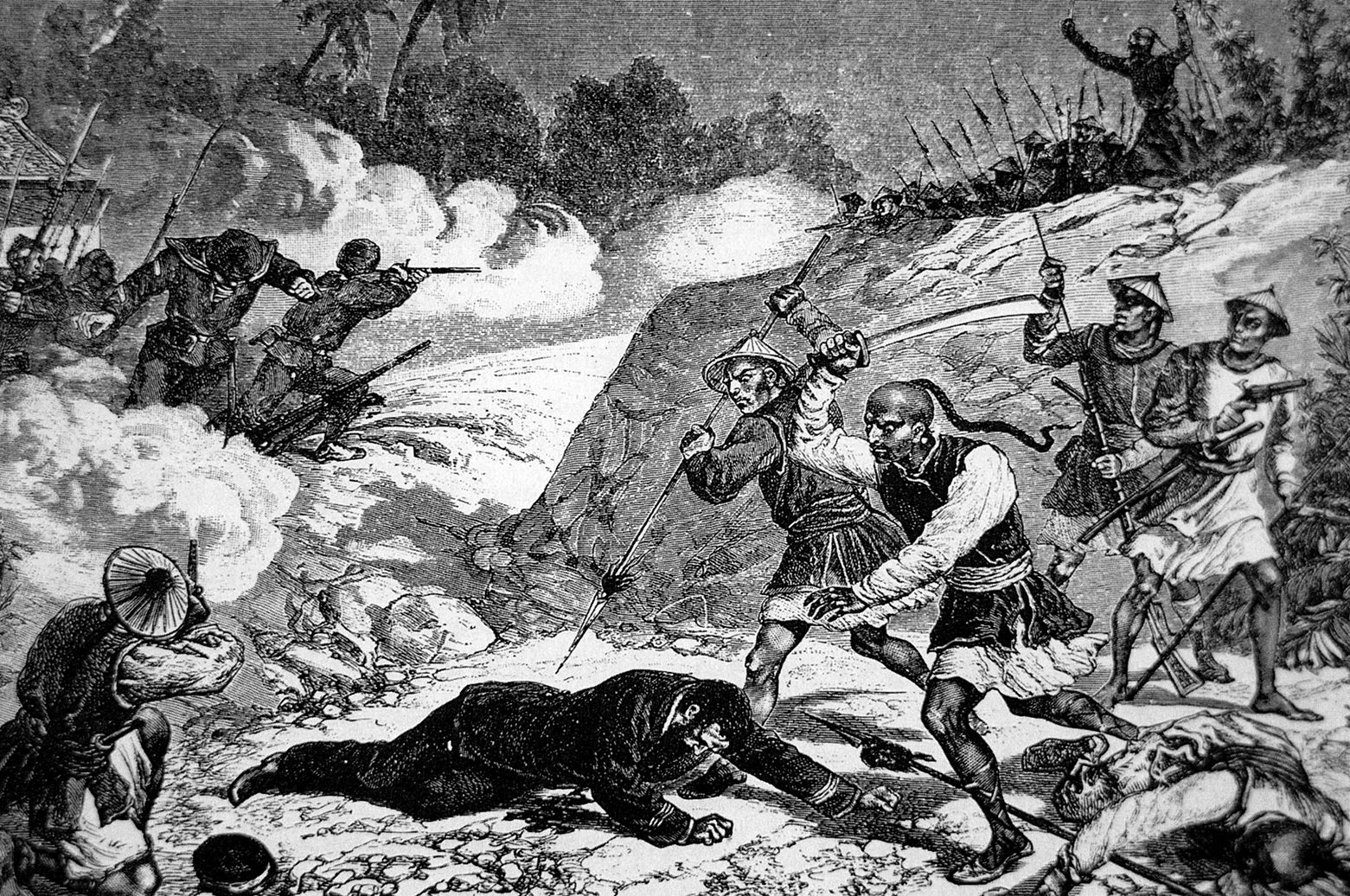
Ward realized the war was far from finished and, although it had nearly killed him, it still offered promise for an opportunistic young man looking to make his fortune as a professional soldier. So after the New Year, he slipped back into Shanghai and commenced recruiting.
With rumors abounding of a renewed Taiping offensive he had little difficulty convincing Wu to resume his monetary backing. The two maintained airtight secrecy as the reborn outfit began drilling in Sung-Chiang. Working with his younger brother Harry and their father Frederick Gamaliel Ward (both were New England shipping agents,) Ward bought large stores of newly manufactured arms as well as the 81-ton river steamer Cricket. It was a formidable array and, thanks to Wu’s expertly imposed concealment, none of this was known to the rebels.
By this time Imperial generals Tseng Kuo-fan and Li Hung-chang had recruited, armed and trained two massive armies of their own, and on September 5, 1861, these forces captured the rebel stronghold city of Anking. Such military setbacks, combined with the T’ien Wang’s deteriorating mental condition, were to beset the revolutionary cause with battlefield reverses and internal decay.

Except for its officers and drillmasters, Ward’s new command was almost exclusively Chinese. He had devised a genre of fighting well-suited to his situation. In almost every engagement his loyalists would be sorely outnumbered, so Ward had his troops carry out meticulously prepared nocturnal attacks on slumbering armies complacent in their numerical superiority.
A week after the capture of Anking, a 20,000-man Taiping force bivouacked for the night in the town of Kuang-fu-lin. They were en route to Shanghai, but were set upon in the middle of the night by a lethal unit they did not know existed. Darkness was again the attackers’ ally as the rebels could not see it was just 500 resolute warriors tearing into them. Led by sabre-swinging European and American officers, these splendid warriors, clad in western-style uniforms that added to the Taipings’ confusion, utterly routed the dumbfounded, demoralized insurgents. Ward was still gaining momentum.
He continued to collect acclaim, recruits and wounds as he and his soldiers hurled the rebels from the cities of Ying-ch’i-pin and T’ien-ma-shan on the first and fifth of February. At this point the loyalists returned to Sung-Chiang so they and their half-dead commander could rest. On the 14th, 20,000 revolutionaries assailed the post, only to be caught in murderous crossfires from concealed cannon emplacements. The Taipings had never encountered Asian gunners so well-trained in the use of modern artillery, and when the shelling stopped, masses of infantry attacked the dazed survivors. More than 3,000 of the revolution’s finest were killed or captured, and when dispirited survivors made it back to their main force they spread defeatism. The rebels were terrified of what they were calling the “Ever Victorious Army.”
At daybreak on the 21st, approximately 1,000 of Ward’s men, accompanied by a like number of British and French regulars, destroyed the garrison guarding Che-lin, and then rushed back to Shanghai and intercepted the Chung-Wang’s latest attempt to snatch this prize. Between May 30 and June 6, the Imperialists not only scattered the Taipings, but re-captured their jumping-off point of Kuang-fu-lin, which Ward had been forced to abandon when he rushed all his available forces to meet the latest threat to Shanghai.
On May 18, General Li’s regulars crushed a powerful rebel army just southwest of the port city. Ward and the Imperial generals now paused to take stock of their situation, consolidate their gains and devise future strategy. Ward’s army kept getting larger, and on July 16, 1,000 of his bolstered, rested and refitted troops secured federal supply lines by routing an enemy column on the Pootung Peninsula. That evening the Ever Victorious Army linked up with one of Li’s divisions, and in a night assault supported by typically telling shellfire quickly took the rebel-controlled town of Chin-shan-wei.

By this time the Imperialists had their eyes on the Taiping capital of Nanking, and the next step in this direction was made when the Ward/Li force grabbed the river port of Liu-ho. The T’ien Wang had no thoughts of merely holding onto his seat of power, however, he remained intent on seizing Shanghai, and made this threateningly clear to his Chung Wang. Still, the flustered, fearful rebel general was unable to subdue the stout federal defenders and their swelling contingent of western reinforcements. By Labor Day, Ward and Li had again cleared the Taipings from the Shanghai sector.
The new Imperial strategy was to secure control of the Yangtze River and shut off shipments of rice downstream, employing famine as a weapon. The first move was to seize the town of Tz’-u-ch’-i (also Cixi or Tzeki), which commanded the riverine approaches to the agricultural region.
On the morning of September 21, 1862, Ward was leading his men over the city’s walls when he took a musket ball in his midsection. This 16th wound would prove fatal. Although the Ever Victorious Army swiftly swept the enemy from the objective, its chief did not live to savor this latest triumph. He died early the next morning. After hearing of his death his brokenhearted young Chinese widow quickly sickened and passed away herself.
It took Ward’s paid militia and its federal allies two more years to finally crush the Taiping Rebellion, but their resolution to win for their beloved leader made final victory inevitable. By war’s end somewhere between 10 and 20 million were dead from this bloodiest-ever civil war. Ward had ended it. If only he could have come sooner.
Join The Conversation
Comments
View All Comments