By Eric Niderost
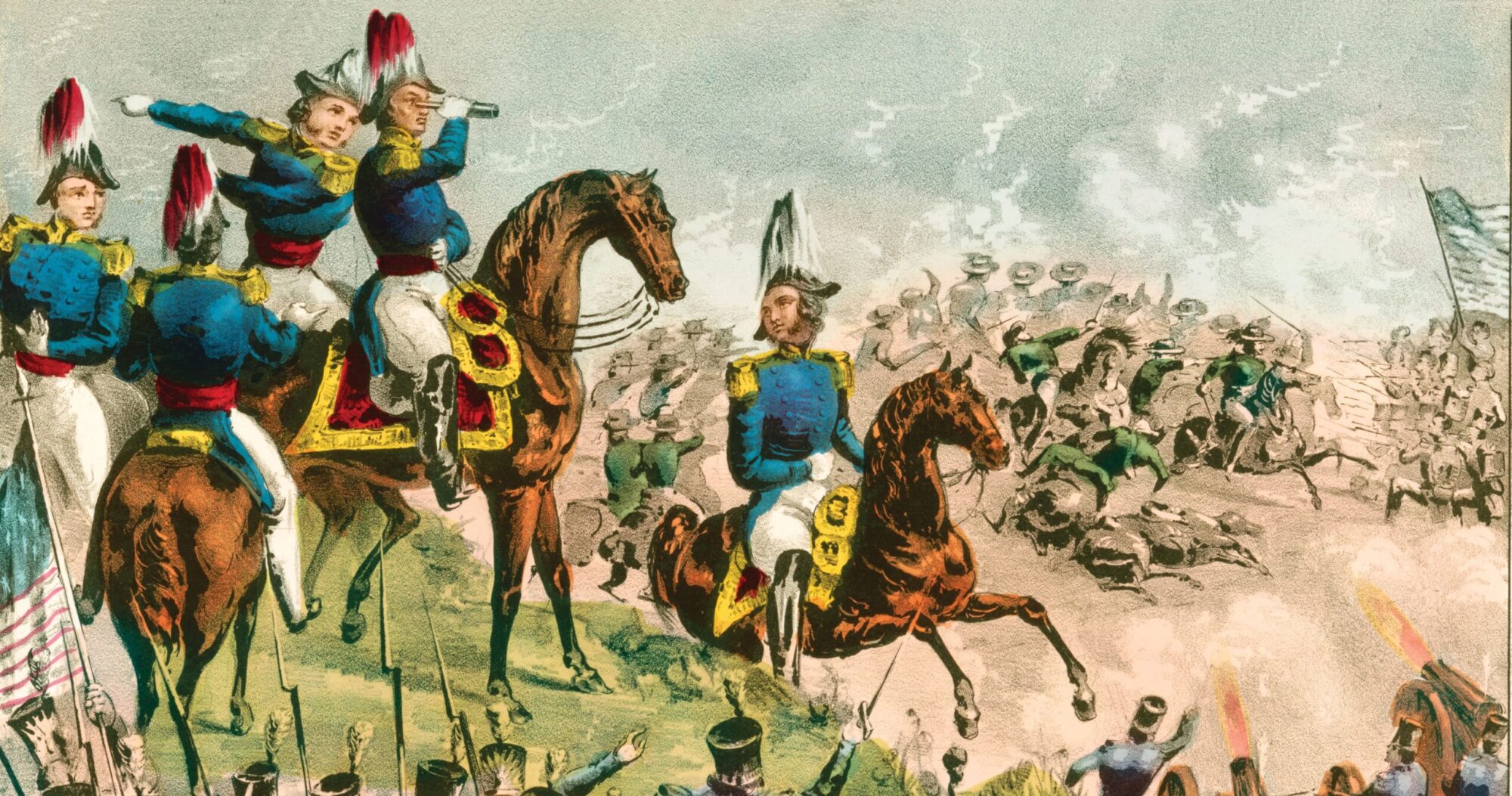
On the chilly afternoon of February 21, 1847, Maj. Gen. Zachary Taylor issued orders for an officers’ council to be held immediately. Taylor’s Army of Occupation, about 5,000 men in all, was lodged in a sprawling encampment at Agua Nueva hacienda, a ranch in Northern Mexico. Mexico and the United States were at war, a conflict brought about by Pres. James K. Polk’s expansionist policies. Taylor’s assignment was to secure northern Mexico; once that was accomplished, an expeditionary force led by Maj. Gen. Winfield Scott would land at the port of Vera Cruz, then march inland to take the country’s capital, Mexico City.
But Taylor had just received word that a Mexican army of about 20,000 was marching north and was at Encarnación, only 35 miles away. The Mexican host was led by the infamous general from the Battle of the Alamo, Antonio López de Santa Anna, who had recently returned to power. A fight was in the offing, but given the disparity in numbers, where should the Americans make their stand?
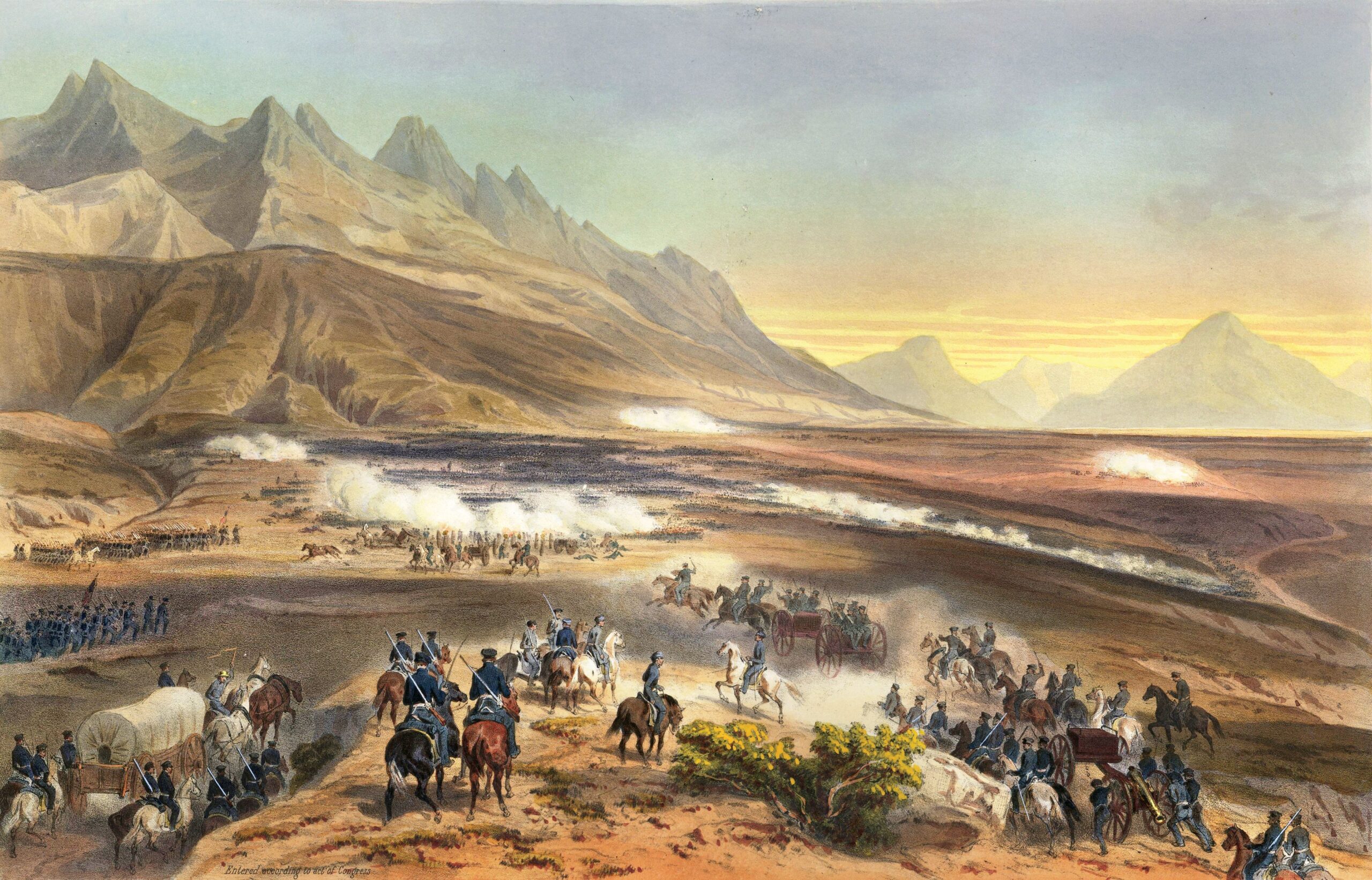
Taylor initially intended to stand and fight on the flat, desiccated plains of Agua Nueva, believing it perfect for easy maneuvering. The matter seemed settled; after all, Taylor was the commander of this army. But Brig. Gen. John E. Wool refused to stay silent. As Taylor’s second in command, Wool firmly reminded the general that their recent reconnaissance proved the Agua Nueva position could be easily flanked on both sides—a flaw Santa Anna would undoubtedly exploit. Instead, Wool strongly advocated falling back 12 miles to La Angostura (“the narrows”), a restrictive mountain pass near the Hacienda San Juan de Buena Vista where deep ravines and rugged arroyos would bottleneck the Mexican numbers and give American artillery a lethal advantage.
The two generals were a study of contrasts. Taylor, beloved as “Rough and Ready,” was informal to the point of wearing a nondescript civilian coat and an old straw hat. Wool, by contrast, was every inch the rigid professional, immaculate in his regulation frock coat. But the most striking thing about Wool was his height—just five feet, two inches tall. Yet the bantam brigadier was not about to be intimidated by the heavy-set Taylor’s physical presence. In a heated council of war, eyes flashing, Wool forcefully argued against sacrificing the army to a tactical blunder.
Faced with the undeniable logic of Wool’s reconnaissance and the imminent arrival of the Mexican forces, the legendarily stubborn Taylor relented, authorizing the strategic withdrawal. At noon on February 21, the army broke camp and fell back to the narrow pass. Recognizing his subordinate’s grasp of the terrain, Wool was left in immediate tactical command of the frontline positions while Taylor rode north to Saltillo to secure the army’s vital rear supply depots.
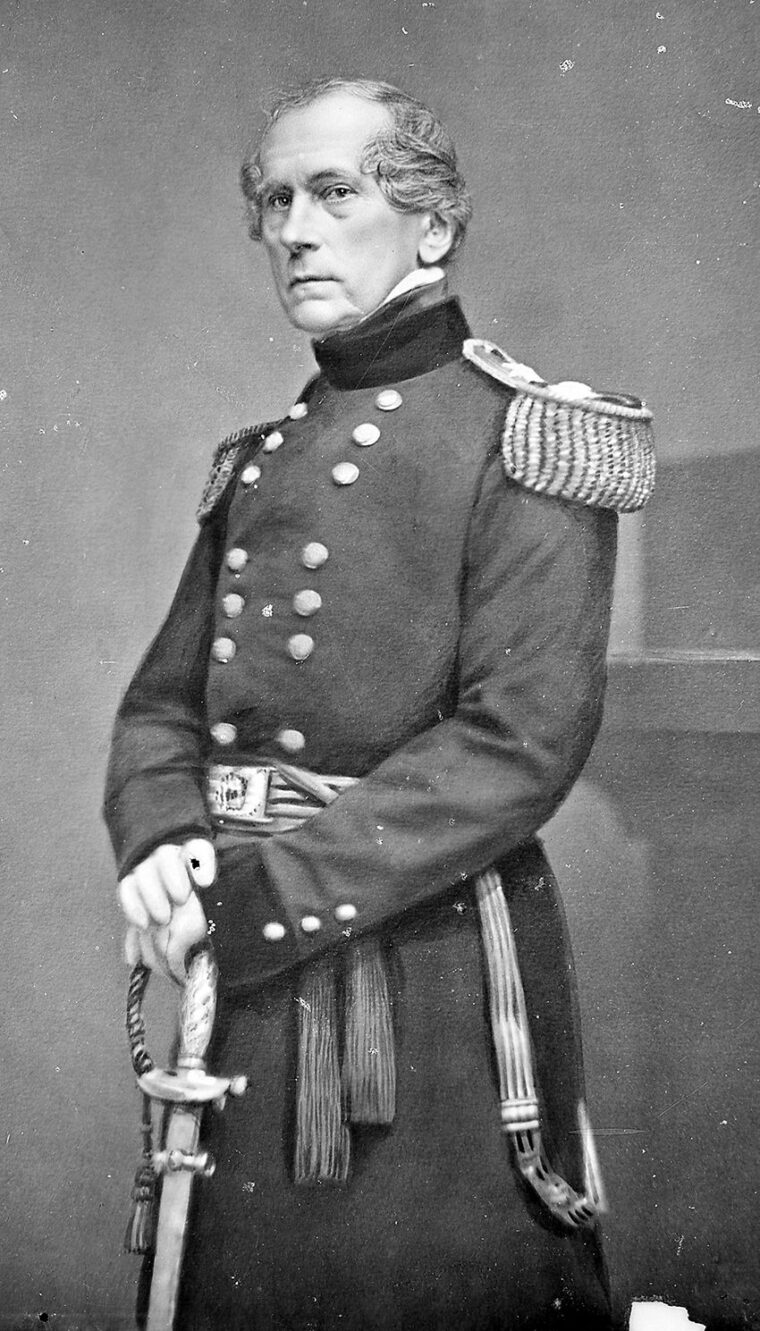
John Ellis Wool was born in Newburgh, New York, on February 20, 1784. The family had Swedish roots, and the original family name was “Woll” before it was Anglicized to “Wool” in the early 18th century. Wool was six years old when his father died in 1790 and he was sent to live with his grandfather. At 12, he was apprenticed to a businessman in Troy, New York, a new community of about 500.
Wool worked hard, and his efforts were rewarded when he raised enough capital to open his own dry goods store in 1803. The business thrived, and Wool became a respected citizen of the fledgling town. He married Sarah Moulton in 1809, and joined the “Troy Invincibles,” a local militia that same year. Wool showed no interest in a military career at this point; militia membership underscored his rising status in the community, but little more.
But in 1810 fate intervened when a fire destroyed his store and all its contents. It was a total loss, so Wool decided to pursue a career in the law. As was often the custom in those days, he clerked for a local Troy lawyer, who in return provided tutoring in the fine points of the profession. But once again fate intervened, this time on a national scale.
Britain was locked in a titanic struggle with Napoleonic France, and paid scarce attention to America’s rights as a neutral nation. In January 1812 efforts were made by the U.S. government to increase the size of the nation’s military establishment. New regular army regiments were authorized, and Congress authorized President James Madison to accept 30,000 volunteers.
Wool responded with alacrity, requesting a commission in one of the regiments in the regular U.S. Army. His request was granted, and he was commissioned a captain in the newly formed 13th U.S. Infantry Regiment. Wool immediately had a uniform made, with a splendid blue coat that had red facings and a large epaulette on the right shoulder.
The uniform coat still exists to this day, a very rare example of an American uniform of the Napoleonic period. It is very small, and is tangible proof of Wool’s diminutive size. But the curious thing was that the newly minted Captain was without a company to command. Wool was required to recruit 100 men in his local area to fill the ranks with candidates of good health between the ages of eighteen and forty-five.
Wool rode through the New York countryside in his splendid uniform, posting recruiting handbills along the way and personally signing up men when he could. He was successful in his efforts, and had his full complement of 100 soldiers by August of 1812. The young captain didn’t have to wait for action, because he was soon ordered to join American forces assembling under Maj. Gen. Stephen Van Rensselaer along the Niagara frontier in upstate New York.
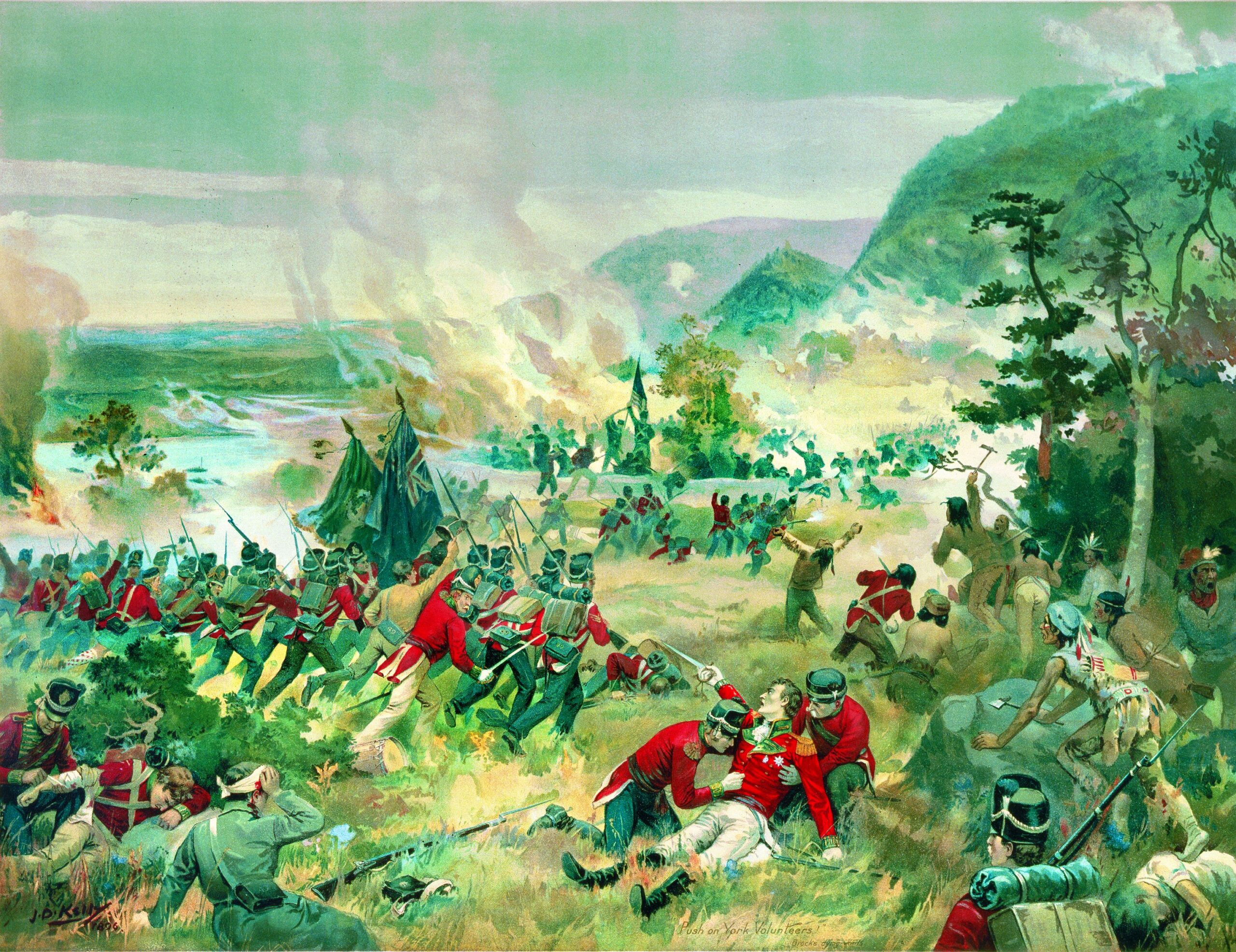
The Niagara River not only produced the magnificent falls that took its name, but also was an international boundary between the United States and British Upper Canada (now Ontario). The plan was for Van Rensselaer to cross the river and take Queenston on its western shore. After an abortive attempt, Wool crossed at about 3 a.m. with the first wave in the damp, bone-chilling cold of October 13, 1812.
The river was about 600 feet across and full of treacherous eddies nearly impossible to navigate in the pitch darkness. Ordinary conversation was drowned out by the incessant roar of the Niagara Falls just a few miles away. The Americans successfully reached the Canadian side, but a lone British 18-pounder tried to repel the invaders, its muzzle flashes lighting the night. It came from a V-shaped redan that had been built halfway up nearby Queenston Heights and commanded the slopes.
That 18-pounder had to be silenced if the attack were to succeed. Col. Stephen van Rensselaer—a relative of the general—sent an aide to ask who was the senior officer present. “I am,” said Wool, stepping forward in the mist. “Storm the heights!” came the order, which meant capturing that troublesome redan. But before anything could be done the Americans were hit by a volley from nearby red-coated British infantry.
The Americans suffered heavy losses, 55 casualties among the rank and file. Van Rensselaer himself was badly wounded, and Wool received a wound in the thigh or buttocks—accounts vary. Wool asked Van Rensselaer what was to be done, and when the colonel seemed indecisive, Wool offered to take the redan. At first Van Rensselaer refused; this short little officer, pants soaked in blood from his wound, lacked experience in battle.
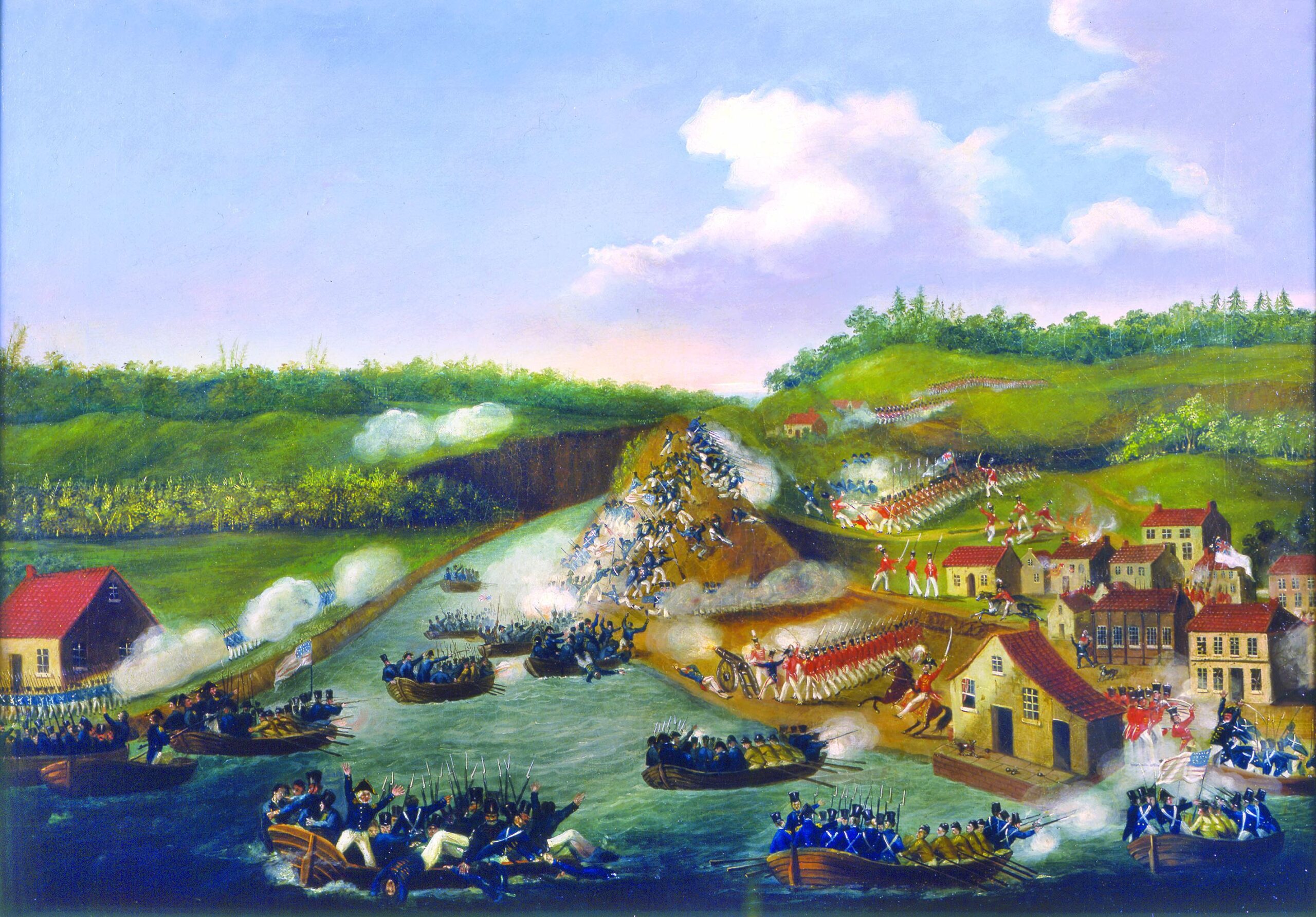
But Wool insisted, and the Colonel gave his consent. There was a little-known fisherman’s trail that led to the top of the heights. The path was steep, narrow, and treacherous, but it was the only way to scale the 230-foot heights without detection. Soldiers grabbed anything that might help their ascent, including the bushes that clung precariously to the rocks.
Once they reached the summit Wool quickly formed his men into a skirmish line and moved forward. The area was heavily forested, which partly concealed the advancing Americans from the British in the redan. By chance Maj. Gen. Sir Isaac Brock, commander of all British forces in Upper Canada, had been using the redan as a command observation post at the time of the American attack. The redcoats, glancing to the rear, were taken by surprise by the sudden appearance of their “Yankee” foes at their backs.
The American advance was so rapid the British had no viable options to mount a defense. They spiked the 18-pounder and retreated, running down the slopes as fast as their legs could carry them. Wool and his men entered the abandoned redan moments later, cheering and waving their hats in triumph. But the situation was still fluid, as Wool well knew, and the British attempted to stage a comeback.
It was 7 a.m. when the redcoats formed and began to climb Queenston Heights, threatening Wool’s right. The Captain, seeing the danger, dispatched 50 regulars to deal with them, but the regulars were forced back. An American officer, probably panicking, tied a white handkerchief around his sword, but Wool rushed over and knocked down their token of surrender. “Fire until all your powder is gone,” Wool shouted to his men, “then charge with the bayonet!” Waving his sword above his head, Wool ignored his wound and led a fierce counterattack that drove the redcoats back. Once the situation stabilized, Wool, exhausted and stained with his own blood, limped back to the redan. Ultimately the Americans lost the Battle of Queenston Heights, but Wool’s part in the contest was praiseworthy. He had no prior experience as a soldier, yet was brave, resourceful, and cool headed in times of crisis.
Wool also distinguished himself at the Battle of Plattsburgh, but when the war ended with the Treaty of Ghent in 1814 he found himself at a crossroads. Should he go back to civilian life, and resume his studies to be a lawyer, or should he make the Army his career? The decision was apparently an easy one: he’d stay in the military. He apparently liked the uniforms, the discipline, and the sense of order that the Army could provide. Serving his country was a higher calling, and much better than endlessly scrambling for clients to represent.
In 1816 he was appointed Inspector General for the United States Army. It was a position he would occupy until 1841. The job made him a colonel, but there was more to it than just simple promotion. Wool was a born administrator, disciplined and conscientious, whose reports would showcase his meticulous attention to details. That’s why one of his army nicknames came to be “Old Fussy.”
The job of Inspector General was no desk- bound office sinecure, but a peripatetic position that required hundreds, even thousands, of miles of travel each year. The War Department required semi-annual reports on the state of the nation’s land forces, its preparedness, and the health of its members. Topics included discipline, officer performance, food rations, forage for animals, hospital supplies, court martial proceedings, equipment, arms and ammunition.
In 1826 Wool began an extensive inspection tour of forts and installations in the south. He was accompanied by a German aristocrat, Karl Bernhard, Duke of Saxe-Weimar Eisenach, for a portion of his journey. It was fashionable in the first half of the nineteenth century for European travelers, especially from upper classes, to come to America to see the “wild” and “exotic” land they had heard so much about. Bernard was a keen observer and a very descriptive writer, and through his eyes we catch a glimpse of the adventures Wool experienced while acting as Inspector General.
The pair were on a steamer bound for New Orleans when a storm hit the vessel with an almost apocalyptic fury. Skylights were shattered, deck furniture tossed about, and booming thunder claps were accompanied by fingers of lighting that illuminated the sky and added to the terror. Passengers were fearful, but Wool was calm, even nonchalant. The steamer ran aground several times but finally anchored well short of New Orleans.
Wool and the Duke tried to hire a carriage, but none was available, so they decided to walk to the great Crescent City. They spent hours walking along a muddy canal, a six mile trek that finally ended when they could see the twin spires of St. Louis Cathedral in the distance. The intrepid pair found lodging at a boarding house along the Rue de Chartres. The establishment was near a large slave market; the Duke was appalled, but Wool was indifferent.
For the next several years these kinds of adventures were commonplace for the diminutive colonel. Sometimes, when travelling to some remote army post, Wool might find himself sleeping in a barn that was little better than a shack. Yet he was tough and adaptable, blessed with a sturdy constitution, and his personality was well suited to the task. By the 1830s probably no officer in the service knew more than Wool about the U.S. military establishment.
And more interesting times were coming. Wool considered artillery the most important branch in any army, and he soon saw that the U.S. ordnance was not only antiquated in many cases, but also poorly maintained. But a kind of “last straw” occurred when Wool witnessed a gun explode, mangling the hands of two gunners during artillery practice on Governors Island at Fort Columbus (built as Fort Jay in 1794, renamed in 1803, it reverted to its original name in 1904).
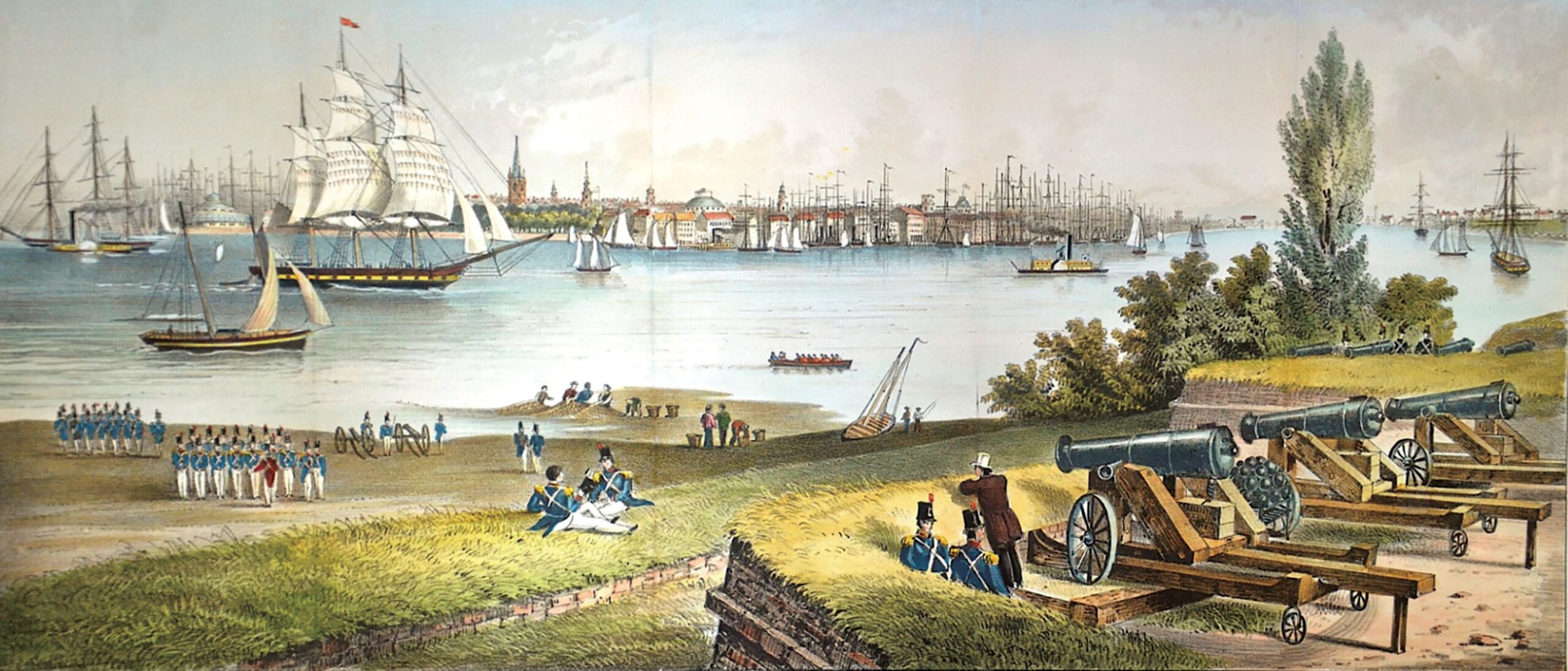
Inspecting the remains of the shattered cannon, Wool could see it had been poorly cast. The Colonel expressed his ordnance concerns to Secretary of War Lewis Cass, who responded favorably by establishing an ordnance board that would review the situation and come up with the proper remedies. Cass appointed Wool to be on his board, which assured that the problems would get a thorough examination.
The fledgling board dispatched Wool to Europe to inspect the latest French and English cannon and, if possible, purchase examples for the American artillery. Wool departed New York in the summer of 1832, arriving in the French port of Le Havre after a 27-day voyage. The French were cordial and the French King, Louis Philippe, particularly friendly. The king spoke fluent English, and had even spent three years in the United States while in exile during the French Revolution.
The King’s fluency was a relief to Wool, who knew almost no French, making him feel like a fish out of water in many events. Nevertheless Wool loved it when he donned his dress uniform and showed up for a royal levee at the Palace of Saint-Cloud. The Inspector General from America toured foundries, visited arsenals, observed military reviews and maneuvers.
In spite of the King’s genuine good will, French military circles blocked actual sale of artillery to “foreign powers.” Nevertheless Wool did get military manuals, service handbooks, engravings, and anything else he felt could be useful. He also visited England, where he collected as much ordnance information as he could.
In a dinner party hosted by famed American writer James Fenimore Cooper, Wool got to meet the legendary Marquis de Lafayette, one of the last notables of the American Revolution still alive. Later, when he met Lafayette once more before returning to America, the Frenchman embraced him, kissed him on both cheeks, and asked him to be remembered to all his American friends. Once home, Wool resumed his inspection tours, but the subject of American artillery was seldom far from his mind.
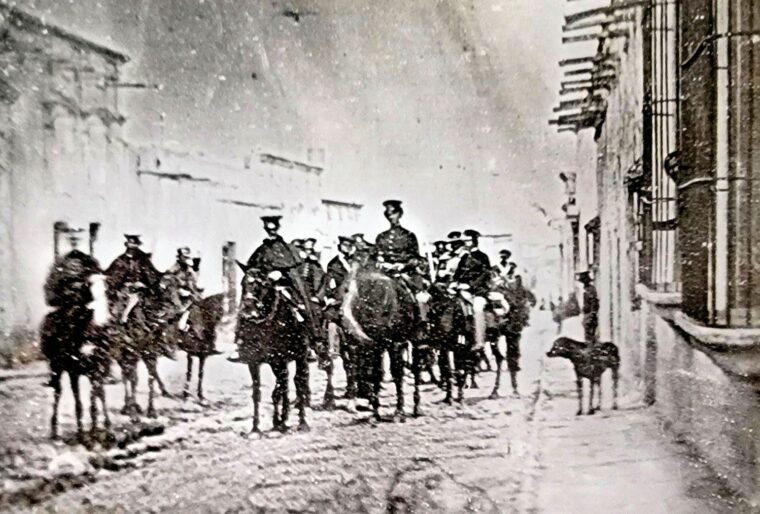
In the 1830s Wool was ordered to supervise the forced expulsion of native tribes in the Southeast, the tragic episode now known as the Trail of Tears. He had some sympathy for the natives, especially the Cherokee, and tried to protect them from white depredations. But in the end he was disliked by whites and Cherokee alike, and no one man could prevent the vast tragedy that would soon claim the lives of over 4,000 innocent Native Americans.
In 1841 the diminutive dynamo finally earned his star, becoming a brigadier general after almost 30 years of service. Probably his proudest moment to this point was his single-minded dedication to making the United States artillery equal to anything in Europe.
When the Mexican War broke out Wool was initially assigned to muster, train, and organize the volunteers that were supposed to bulk up the small regular U.S. Army. He assembled some 10,000 recruits from Ohio, Indiana, Illinois, Kentucky, Tennessee, and Mississippi. The volunteers, eager for a fight, yet hating the regimentation of military life, became the bane of Wool’s existence.
Wool brought his volunteers to San Antonio in August 1846. The original plan was for Wool to cross the Rio Grande and capture Chihuahua, but that scheme was abandoned when it was decided that Taylor’s Army of Occupation needed reinforcements instead. It was a wise decision, because Santa Anna was preparing an offensive and Taylor needed all the help he could get.
The general knew that discipline and proper training was the key to producing an effective military. Wool may not have been a West Point graduate, but he instinctively knew what needed to be done. Yet every time he tried to impose discipline on the volunteers, they resisted him at every turn. The volunteers were an unruly lot, and the American tendency to stubborn individualism didn’t help. If the enemy was near, or battle was in the offing, they might accept a minimal dose of discipline. But once the fight was over, obeying orders seemed to be strictly optional.
When his troops were in camp Wool had the habit of visiting the guard posts on horseback. On one occasion Wool saw a sentry sitting on the ground happily eating beans and tortillas with a young woman. As the general approached, the sentry made no effort to stand or salute, but did manage a friendly “Good day, General, hot riding I reckon.” Furious, Wool called for the officer of the guard. The officer was very casually dressed, with no belt or sword, his coat unbuttoned, and a Mexican straw hat perched on his head.
Wool’s sharp tongue lacerated the officer’s ego, and the public dressing down prompted him to turn on the private. “Jake Stout,” the officer bellowed, “you ain’t worth shucks. If you don’t git [sic] up and salute the general, I’ll drive your gal away, doggone if I don’t.”
Unfazed, and perhaps a little amused, the sentry private continued to eat his beans and tortillas. The sentry finally said, “If the general wanted saluting, the lieutenant might do it; he wasn’t going to do anything of the kind.” Disgusted, and realizing this was a losing battle, Wool spurred his horse and moved on.
In many respects the Battle of Buena Vista was a high point in Wool’s military career. Taylor won the most praise, and the victory helped propel him to the White House, but it was Wool who laid the foundations of the triumph by choosing the ground to fight on.
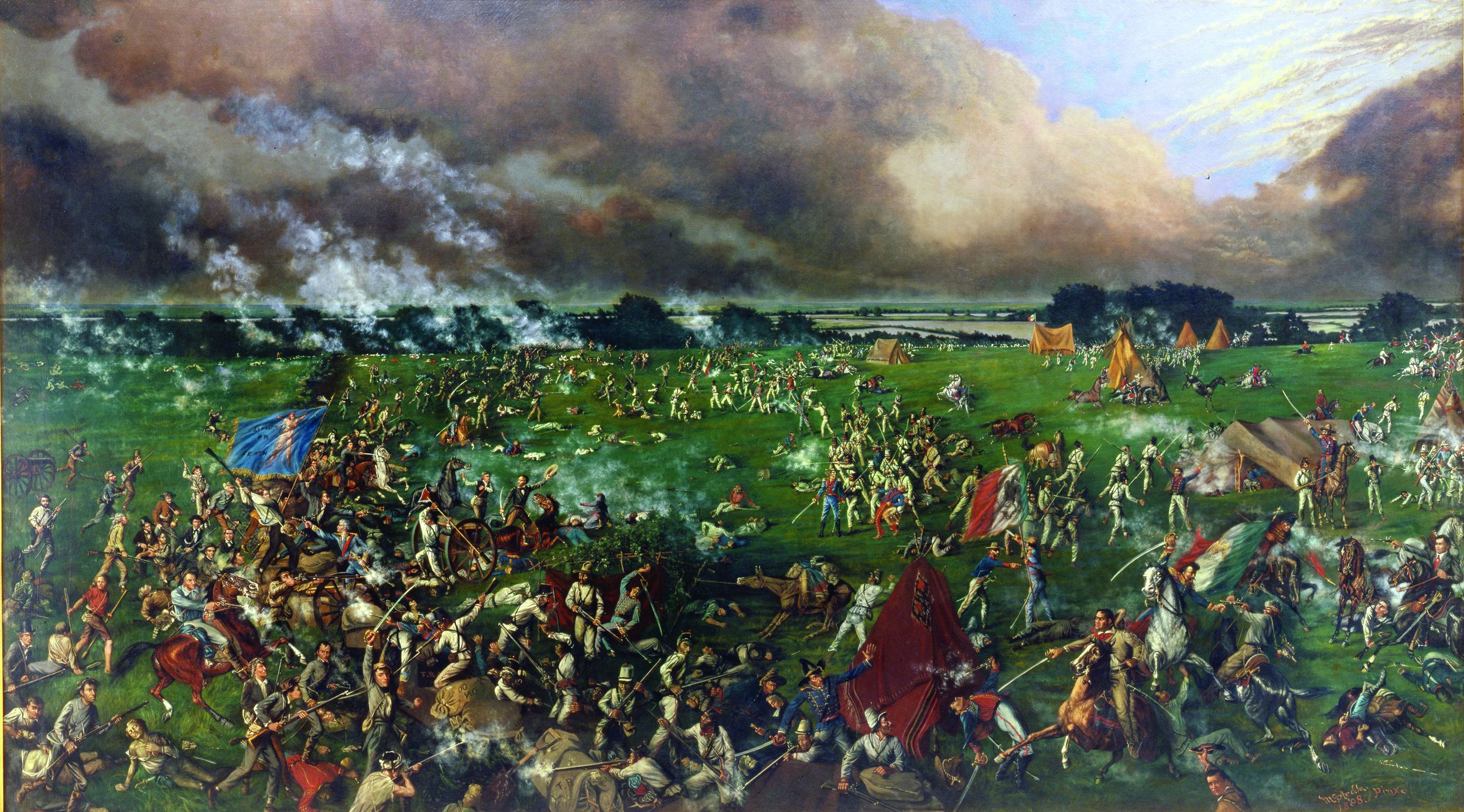
The Battle of Buena Vista was a two-day affair, fought February 22–23, 1847. Both sides displayed exceptional valor, but Wool’s eye for defensive terrain and his nurturing of America’s fledgling artillery arm is what turned a potential defeat into a hard-fought victory. On the second day came Santa Anna’s grand assault on the American line, some 5,000 infantry led by lancer cavalry. The Mexican leader hoped to crack the American line and roll up Taylor’s left, and for a few breathless moments it looked as if he might succeed.
Some of the American volunteer infantry were shaken by the long and grueling two day fight, and this Mexican grand assault was the last straw. Attacked in front and flank, most of the First Illinois took to their heels, followed by Kentuckians and part of the Second Illinois. The fugitives tried to shelter in a deep ravine, but they were found by the Mexican lancers. At least 200 soldiers were cut down.
It was the American artillery that saved the day. Perhaps the most notable action was by an artillery unit commanded by Capt. Braxton Bragg, whose three 6-pounders went into action first, and were soon joined by other American guns. Double canister ripped bloody holes into the Mexican ranks; they wavered, but still came on. Captain Thomas Sherman’s guns provided additional support, spraying even more canister into the Mexican ranks.
Wool galloped about the battlefield, always making sure he was where the fighting was the hottest, or where a crisis might need his immediate attention. The little general encouraged and inspired his men, exhorting them in a voice that could even be heard over the sounds of battle. This grand Mexican assault, Wool later recalled, was “the hottest, as well as the most critical of the action.”
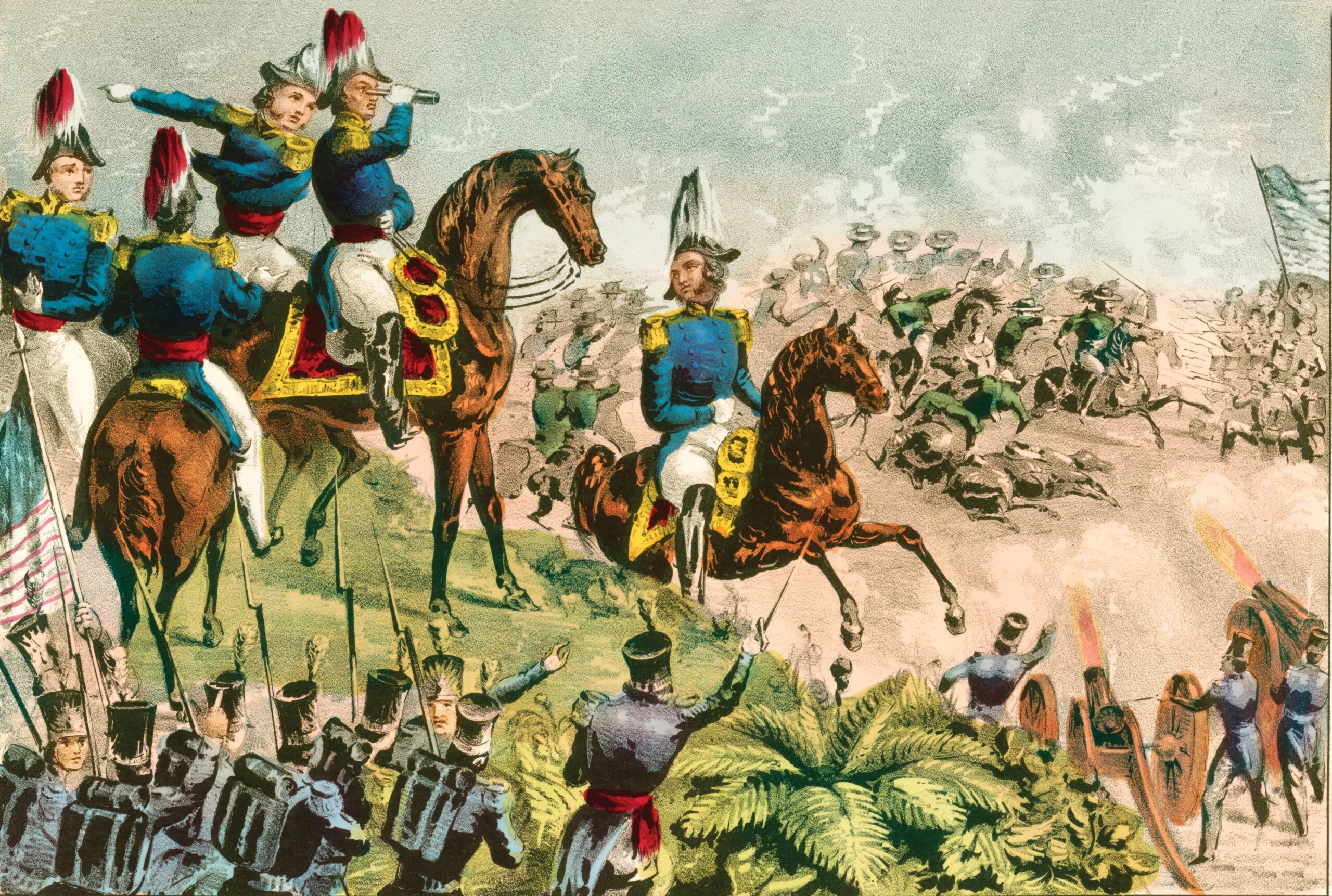
Wool rode up, bringing Mississippians and Indianans with him to support the artillery. Once in formation, these volunteer infantrymen poured a steady fire into the Mexicans, finally breaking their forward momentum. The Mexican ranks crumpled, and those that could fell back.
The tide had turned, but as night fell the Americans were sure there would be an exhausting third day of battle to come. In the distance, hundreds of Mexican campfires blazed defiantly, visible proof the enemy was still there.
Wool did not sleep that night, steeling himself for the battle to come. Night finally ended, a pale pink smear over the mountains announcing the coming of dawn, and the silver-haired officer felt he could wait no more. Accompanied only by an aide, Wool rode to the top of a hill that overlooked the battlefield to see what was going on. Sweeping the horizon with his telescope, Wool realized the Mexican camp was empty.
Santa Anna had retreated during the night. Wool, overcome with emotion, raised himself on his stirrups and repeatedly shouted, “Victory! Victory! The enemy has fled!” Nearby soldiers heard him and took up his cry, until there was a swelling chorus of hundreds of voices repeating the joyous refrain. Men cheered as tears of happiness streaked their powder-smudged faces.
Taylor got the lion’s share of the glory. Wool was honored, and even given a ceremonial dress sword, but it was Taylor who became such a national hero that he soon occupied the White House as president of the United States. Winfield Scott took Mexico City, but there still remained months of occupation duty while diplomats hammered out a final peace. Wool found himself in charge of a large portion of Northern Mexico.
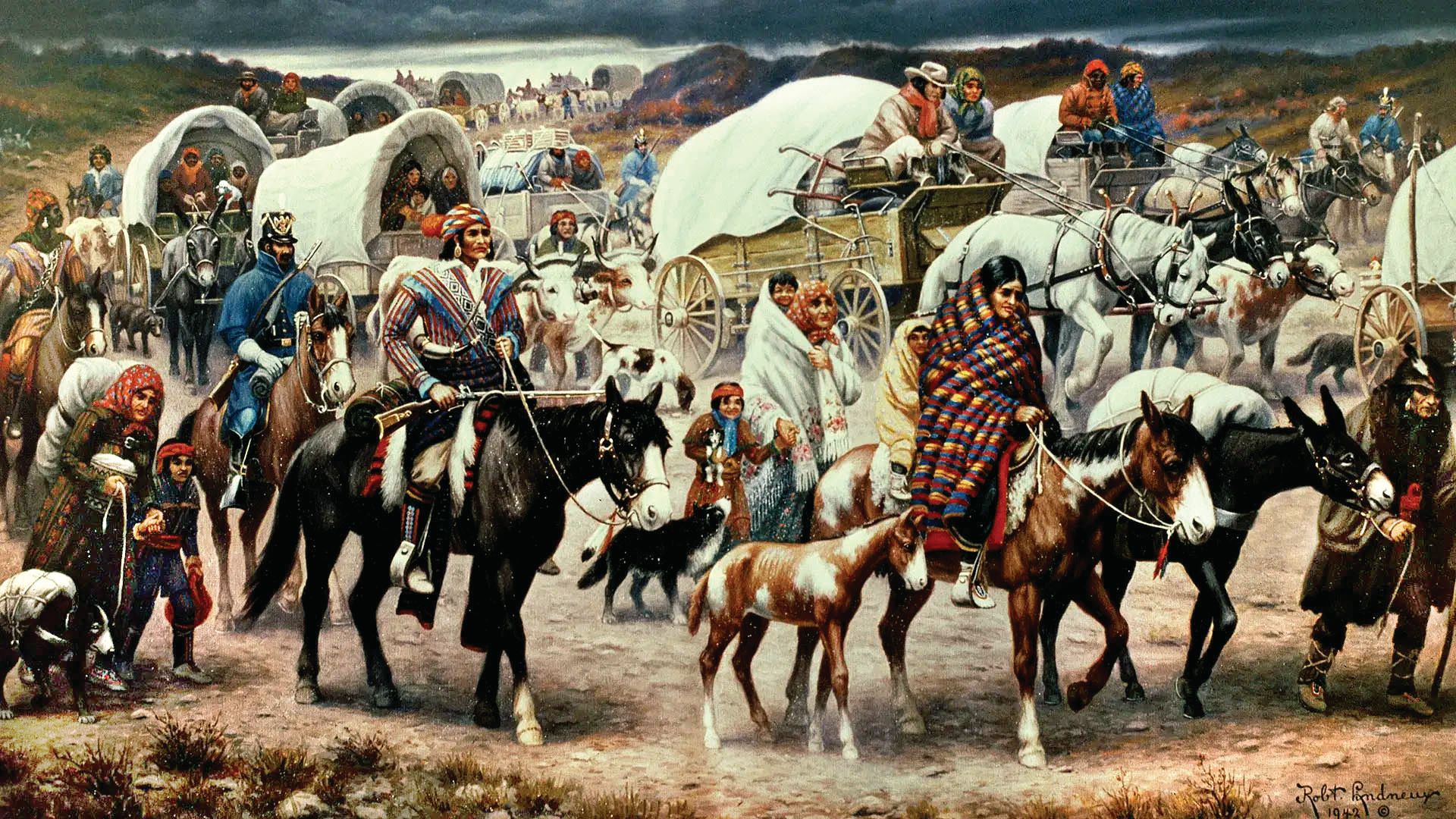
Sometime in 1847, when Wool was doing occupation duty, an unknown photographer took a picture of the general and his staff riding down the Calle Real in Saltillo. The photo is a daguerreotype, one of the very first methods of capturing real images. It is one of the earliest surviving photographs of troops on an active campaign and is remarkable in its detail. Behind Wool and his cluster of officers ordinary troopers can be seen, and even a dog is in the picture.
After the Mexican War Wool was given command of the Department of the Pacific, initially headquartered in San Francisco. It was a sprawling jurisdiction, encompassing Gold Rush California and much of the Pacific Northwest. One of Wool’s chief headaches were the filibusters, plotters who endlessly schemed to carve out their own private fiefdoms from lands seized from countries in Latin America.
Wool successfully curbed most filibustering activities and a kind of climax was reached when the general arrested Guillaume Patrice Dillon, French Consul in San Francisco, for his involvement in filibuster expeditions. A San Francisco grand jury found him guilty, but the arrest of a representative of a foreign government threatened to spark an international crisis.
White and Native American relations in the Pacific Northwest also gave Wool nothing but headaches in this period. Native tribes desperately tried to hold on to ancestral homelands, while rapacious whites did all they could to expel or exterminate them. Once again generally sympathetic to the Indians, Wool tried to keep the peace with relatively few troops and ever fewer resources.
The general’s solution was to prohibit white settlements in the interior, east of the Cascade Mountains. He argued that the exclusion area was hilly and unsuitable for white farms. This policy got him into trouble with the governors of Oregon and Washington Territories. Eventually Wool was relieved from command for political reasons.
Wool was frustrated when South Carolina and other southern states began to secede after the election of Abraham Lincoln. In his view quick and decisive military action could nip secession in the bud, but outgoing President James Buchanan did nothing to stop this national calamity. The silver-haired general urged that the ring of forts around Charleston, including Fort Sumter, be heavily reinforced. His proposals fell on deaf ears.
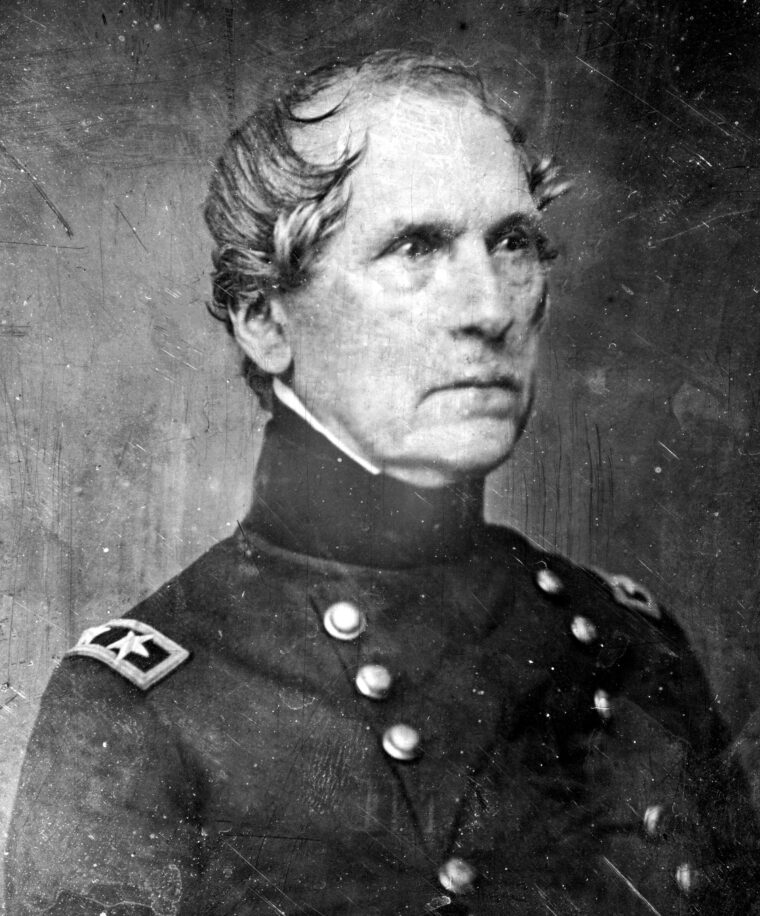
Wool was now 77, but was generally fit and healthy, a man who did not smoke and drank in moderation. This is in sharp contrast to Winfield Scott, whose brain was still good but whose body was overweight and tortured by gout and other ailments. Wool was appointed to head the Department of Virginia, with his headquarters at Fort Monroe.
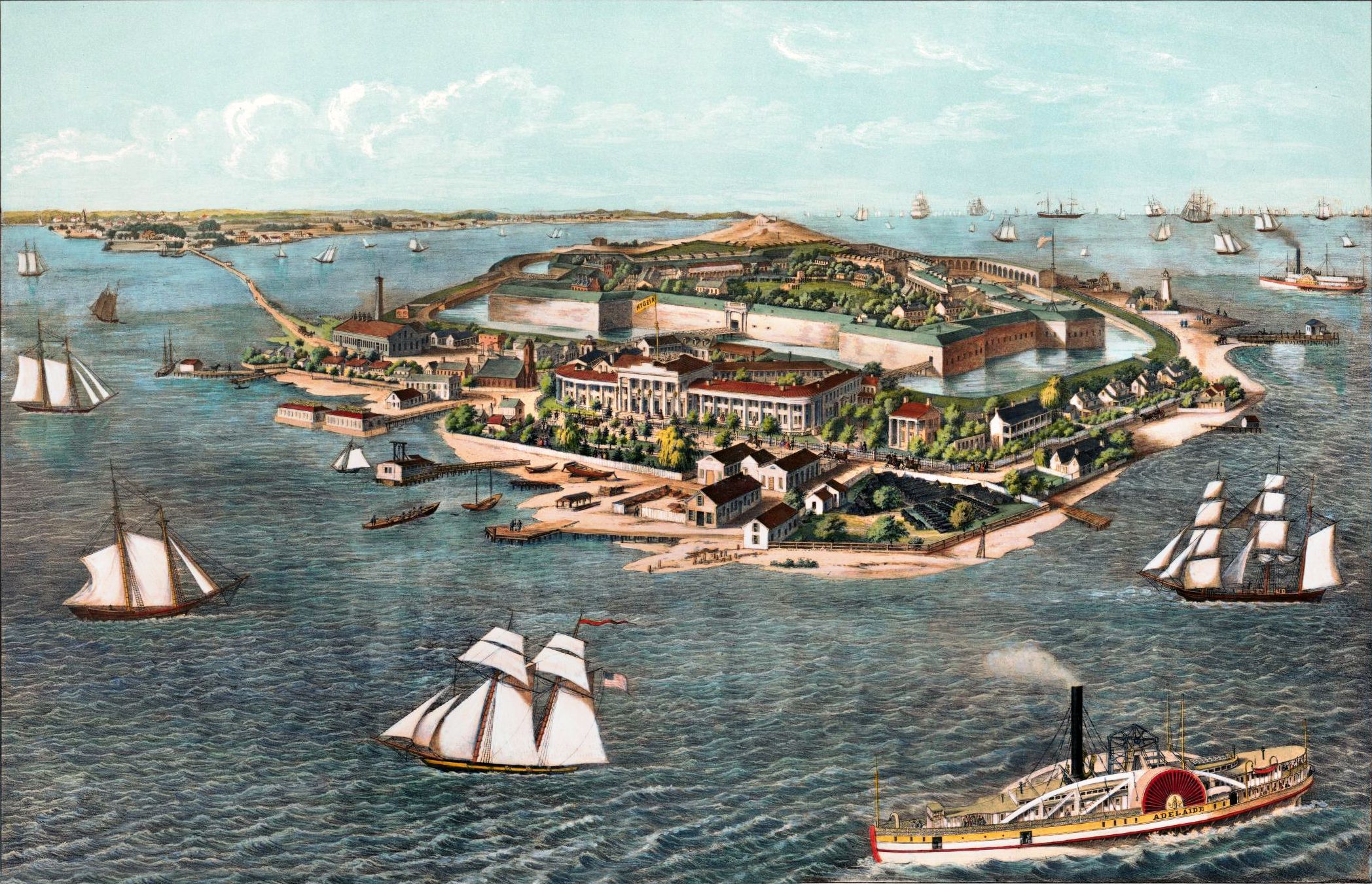
Fort Monroe was the largest coastal installation in the country, strategically placed on the southern tip of the Virginia Peninsula. A very strategic location, the fort would be a major base for General George B. McClellan’s push up the peninsula to take Richmond. Wool showed he still had the ability to take an active command by capturing Norfolk.
Lincoln and several members of his cabinet just happened to be visiting while the Norfolk expedition was underway. It was midnight when an exuberant Wool burst into Lincoln’s room—the president was still up, reading—to announce “Norfolk is ours!” Secretary of War Edwin Stanton, clad in his nightshirt, rushed in and gave Wool a hug. As a reward Wool was promoted to major general.
Wool witnessed the clash of the ironclads, the Monitor and the Virginia, off Hampton Roads in 1862. A man who fought in the War of 1812 fifty years earlier, who had known Lafayette, Wool was able to see the birth of modern naval warfare. But the feisty little general never had an active field command, and ended his career in 1863.
The so-called Draft Riots in New York City were the worst civic disturbances in American history, and until recently Wool, as commander of the Department of the East, was largely blamed for the tragedy. Modern research shows he did what he could, handicapped as he was by misinformation and uncooperative state and city officials. Wool only had some 550 troops under his command, so in the emergency he stripped the harbor forts of their garrisons and even called upon able-bodied “walking wounded” who happened to be convalescing in the city.
When the rioting was finally quelled official records confirmed 119 to 120 dead, though contemporary sensationalist press reports claimed over a thousand. At 79, Wool was a convenient scapegoat, critics claiming he was “too old” and “too infirm” for active command. He was officially retired not long after the riots ended. He protested but to no avail.
Wool died at his home in Troy, New York, on November 10, 1869. His remarkable half-century career had paralleled the evolution of the U.S. military—he had scaled the heights of Queenston with a flintlock musket in the age of Napoleon, perfected the republic’s field artillery in the deserts of Mexico, and stood on the ramparts of Fort Monroe to witness the dawn of the industrial ironclad. History favors charismatic commanders such as Taylor or brilliant strategists like Scott, but it was the meticulous preparation, administrative discipline, and stubborn tactical foresight of “Old Fussy” that quietly built the structural backbone of a modern army. In bridging the gap between the raw, chaotic militia system of the early republic and the brutal realities of the Civil War, Wool proved that the triumphs of armies depend as much on the uncompromising dedication of their administrators as they do on the glory of their battlefields.
Join The Conversation
Comments
View All Comments