By Michael E. Haskew
A single prisoner was bound and blindfolded in the courtyard of a French country house near the village of Ste-Marie-aux-Mines at 10:04 a.m. on January 31, 1945. A detail from the 109th Infantry Regiment, 28th Division, fired a volley, carrying out the death sentence.
He was not a spy, nor a saboteur, but a conscripted former petty criminal from Michigan—a replacement for the ranks of the 28th Division, which had suffered heavy casualties during the fighting in Western Europe in the summer and autumn of 1944.
He was the first American soldier executed for desertion under fire since the Civil War.
Why Slovik? Why then?
Slovik was first classified 4-F due to his prison record, but as the need for men grew his status changed to 1-A and he was drafted in January 1944. By August, he was headed to the front. When the convoy carrying Slovik and other replacements came under German fire, he and another soldier got separated from their company. Eventually, the pair happened upon the camp of the Canadian 13th Provost Corps, where they stayed until October.
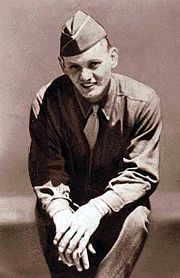 The deserter did in fact rejoin his unit, but only briefly. A day after finding Company G of the 109th Regiment, Slovik walked away again. After another day, he turned himself in and penned and signed a confession that would play an important part in his undoing. The tribunal that convicted him voted unanimously three separate times for the death sentence.
General Dwight D. Eisenhower, the supreme Allied commander in Europe, was obliged to review Slovik’s case because of the sentence. He concurred.
In his landmark 2002 biography Eisenhower: A Soldier’s Life, acclaimed historian Carlo D’Este notes that during the campaign in Europe in 1944-1945 no less than 49 U.S. soldiers were arrested, tried, convicted, and sentenced to death for desertion. Slovik apparently refused at least one offer from the 28th Division judge advocate to return to his unit in exchange for dropping the charges against him. He also wrote a personal letter to Eisenhower asking for mercy.
D’Este wrote, “In the Slovik case, however, the death penalty was imposed on a soldier who had committed no violent act and whose intent to desert was questionable. Eddie Slovik became a cause celebre when journalist William Bradford Huie published The Execution of Private Slovik in 1954. When Eisenhower was interviewed in 1963 by historian Bruce Catton, his recollection of the event bore the hallmarks of a faulty memory. Claiming he had sent his judge advocate general to offer Slovik an olive branch if he would express remorse and return to his unit, Eisenhower described Slovik as ‘one of those guardhouse lawyers who refused to believe that he’d ever be executed. ’
“Slovik had actually written Eisenhower a heartfelt personal plea to spare his life, and would willingly have complied with an offer to return to duty. It has not been established if Eisenhower ever saw Slovik’s letter, but what is clear is that no one from SHAEF was ever sent to the 28th Division before Slovik’s execution.”
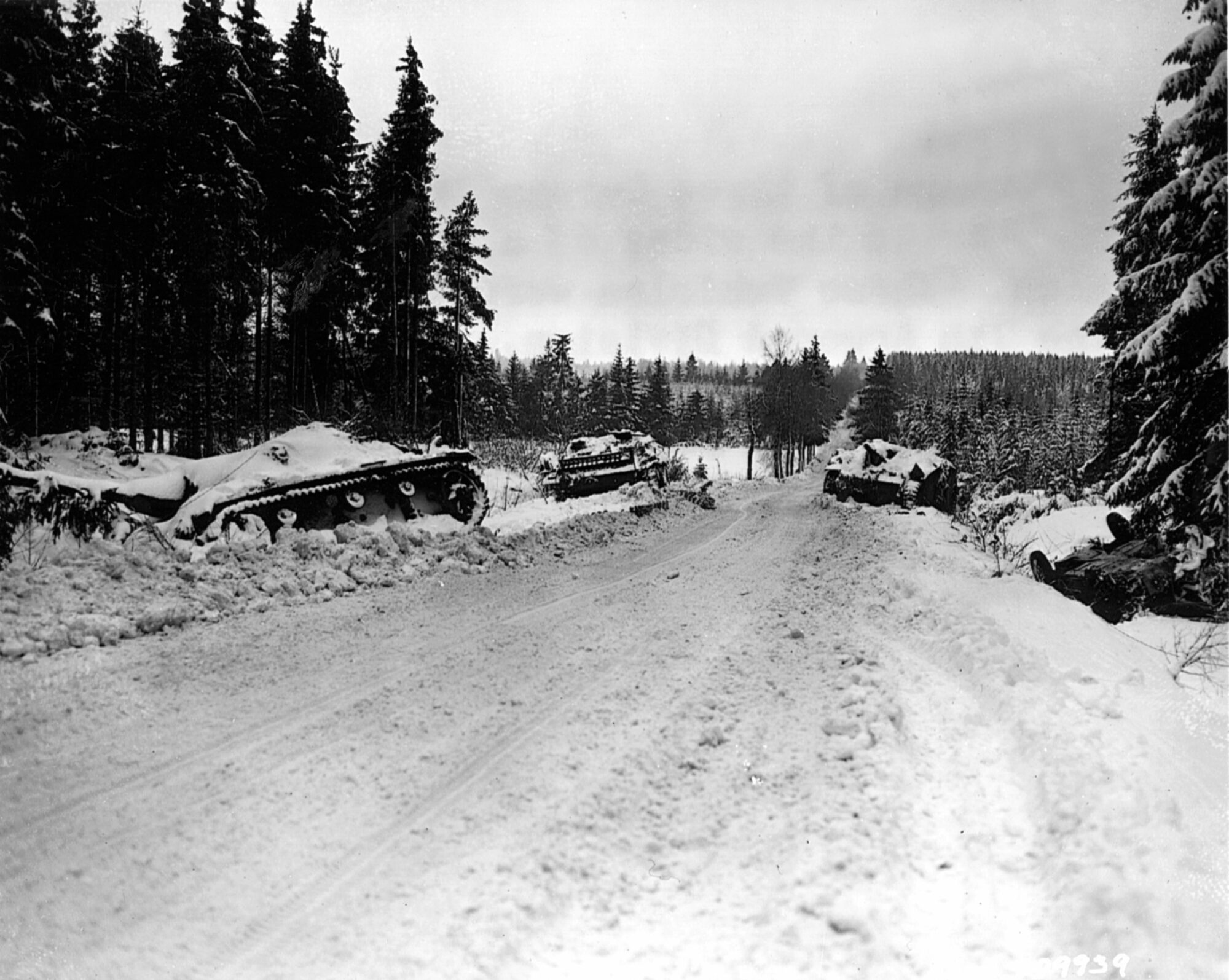
Incidences of desertion and self-inflicted wounds had reached alarming levels in the ranks and Eisenhower may well have felt compelled to offer Slovik as an example. The fact that the largest single fight in the history of the U.S. Army, the Battle of the Bulge, was at its height during a critical period in the disposition of Slovik’s case cannot be discounted either.
Slovik was buried in the Oise-Aisne Cemetery at Fere-en-Tardenois, France, with 94 Americans executed for the crimes of rape and murder. In 1987, more than 40 years after his death, Slovik’s body was exhumed and reburied in Michigan beside his wife.

I once worked with the son of Major John Woods, who was Slovik’s JAG-appointed defense counsel. Woods was a surveyor, not an attorney. By his son’s account, Major Woods always felt the desertion case was a complete sham and he spent the rest of his life trying to have Slovik posthumously exonerated, to no avail. Eisenhower, despite his lionization by history for leading the fight to liberate Europe from Nazi tyranny, had his faults, and this case was one of them.