By Eric Niderost
Abraham Lincoln peered out of a west-facing window of the White House, scanning the distant Potomac River with his telescope. He anxiously focused on Washington’s Sixth Street wharves, where lead elements of the Sixth Corps, Army of the Potomac, were due to arrive to rescue the imperiled city.
The day had dawned hot and humid, with a sultry promise of higher temperatures to come. The city was no stranger to such heat, but on July 11, 1864, it felt even more oppressive under the threat of imminent attack. Confederate Lt. Gen. Jubal Early’s Army of the Valley had reached Silver Spring, Maryland, a scant seven miles from the capitol dome. Though the garrison defending Washington numbered some 31,000 on paper, the actual force was only about 9,600 according to Grant’s chief engineer, Gen. John G. Barnard. The disparate collection of men—new recruits, raw reserves, wounded, worn-out veterans and even armed civilians—had been scraped together to mount a defense. Could they hold off 10,000 to 15,000 Confederates?
As if an answer to a prayer, the steamers appeared on the river, loaded with troops ready to disembark. Unable to contain his joy, Lincoln dashed into a waiting carriage and went down to the docks to personally greet the soldiers. Lincoln was not alone. Crowds of Washingtonians gathered, filling the air with joyful cheers. “The danger is past! The Old Sixth Corps is here!”
In the distance, along the city’s northern perimeter, the booming of artillery could be distinctly heard. The blue-coated veterans, surprised at a welcome that seemed almost a triumphal procession, marched from the docks up the Seventh Street Pike (now Georgia Ave NW) to the front. Their ultimate destination was Fort Stevens, where the rebels threatened to mount a major attack. But these were only the leading elements of the Sixth Corps. More were on their way, but would these be enough?

The spring of 1864 marked a dramatic new phase in the Civil War. Lincoln had chosen Lt. Gen. Ulysses S. Grant to be the overall commander-in-chief of the Union war effort. Grant’s responsibilities included directing and coordinating several Federal armies, making them act in concert towards a common goal: the defeat and destruction of the Southern Confederacy. Thanks to such relatively new inventions as the railroad and the telegraph, Grant’s reach extended to half a continent, and he could have easily stayed in a Washington office far behind the lines.
Preferring to be in the field, Grant broke with tradition and crossed the Rapidan River with the Army of the Potomac (115,000-119,000 men) at the start of his Overland Campaign on May 4. Like Gen. George B. McClellan in 1862, his goal was to capture the Confederate capital of Richmond. But, unlike McClellan, Grant intended to pursue and destroy Gen. Robert E. Lee’s Army of Northern Virginia.
The hard-fighting and long-suffering Army of the Potomac had suffered a series of humiliating defeats at Lee’s hands, and even though it bested Lee at Gettysburg, an aura of invincibility still clung to the white-bearded Virginian. Grant was determined to exorcise the demon of Lee’s invincibility from the minds of Yankee troops, showing them the Southerner was far from superhuman.
Union armies often found themselves trapped in a vicious cycle—advance on the enemy, sustain a major defeat, then retire to lick their wounds for weeks or months. Once recovered, they would advance again, only to repeat the melancholy process once more. Grant refused to continue this “game”—even if momentarily checked, he simply maneuvered to another position and attacked again immediately.
As spring turned to summer Lee and Grant became locked in an intense game of sanguinary chess, with Grant ever probing, looking for weakness, and Lee doing his best to block any Union moves towards Richmond. Both sides sustained heavy casualties, but in this battle of attrition the South’s smaller population meant the Union Army could handle such losses, but the south could not. The Union army had suffered some 50,000 casualties in the campaign thus far, but Lee’s army had proportionally suffered even more. The Army of Northern Virginia lost 32,000 men, about 46 percent of its total force.

More significantly, the Southern losses could not be replaced. The offensively minded Lee chafed at being forced into a purely defensive role. A strategic opportunist by nature, the Virginian was always looking for ways to turn the tables on his enemy, and in so doing alter the course of the war. But Lee had defensive success with entrenchments at Cold Harbor, just 10 miles northeast of Richmond. From May 31 to June 12, the Union suffered nearly 13,000 casualties—3,000-7,000 on June 3 alone. Confederate casualties numbered about 5,000. It was after this battle that Grant crossed the James River and turned his focus on the rail hub of Petersburg, a main supply base and depot for the Confederate army, 23 miles south of Richmond. Grant knew that Lee would have to defend it at all costs.
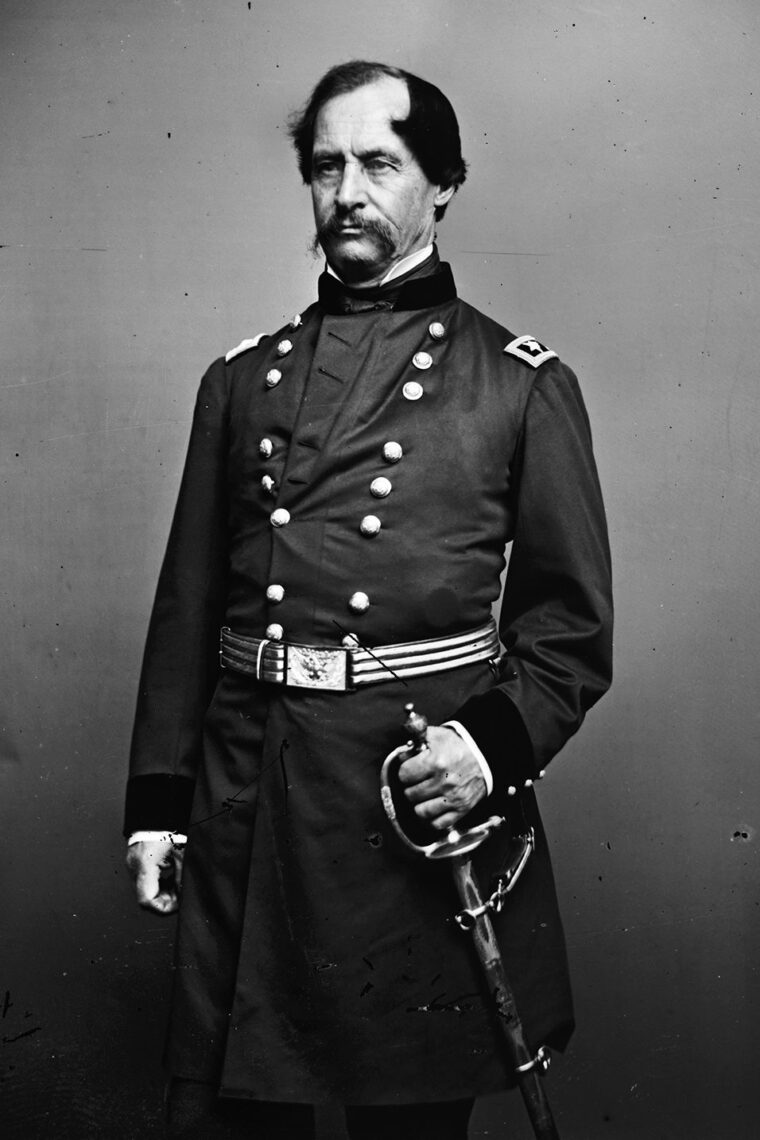
But Lee had other concerns as well, such as protecting the 140-mile-long Shenandoah Valley. Grant had ordered Maj. Gen. David Hunter to enter the fertile valley, known as the “breadbasket” of the Confederacy and destroy war production facilities and storehouses even, if circumstances warranted, civilian property as well.
Hunter’s army rampaged its way through the verdant valley, destroying anything deemed crucial to the Confederate effort, with the ultimate aim of capturing Lynchburg, an important manufacturing and railroad center. Lee began to consider a plan to address this threat—one that was multifaceted, daring, and typical of the risks he was willing to take to reverse the Confederacy’s fading fortunes.
The South no longer had the men or resources for a full-scale invasion after the defeat at Gettysburg. But a major raid was feasible, and could accomplish wonders if executed in the way Lee envisioned. The raid would have several tasks, each vitally important. The first step was marching to the Shenandoah Valley to save Lynchburg and expel Hunter and his marauding Yankees
Once the “breadbasket” was secure from Federal depredations, the raid would cross the Potomac and threaten Washington. Lee was no fool, he knew that the Union capital was heavily fortified, but he hoped an attack on Washington would force Grant to relieve pressure on Petersburg and Richmond by sending troops north to save the capital.
But war is unpredictable, and there was always a chance—to Lee, an excellent chance—that the raiders would find Washington vulnerable, its defenses not so formidable after all. Lee was a hard-headed realist, but the capture and possible destruction of the Union capital was a heady proposition, and one not easily dismissed. It was an election year, after all, and the rapidly mounting casualties Grant’s offensives were taking a toll on public opinion in the war-weary North.
While Lee mulled over possible ways to counter Grant, the Union general had his own set of difficulties. The Army of the Potomac had been hit, and hit hard, during the weeks of bloody fighting. Some of the corps had been decimated, and if Grant had any hope of maintaining pressure on Lee, he needed replacements.
And then, inspiration—or at least what must have seemed like inspiration at the time. Why not siphon off portions of the garrison that defended Washington? The capital had been vulnerable in 1861, but in the last three years it had been transformed into one of the most fortified cities in the world. The statistics were impressive: more than 800 field, siege and seacoast guns had been placed in more than 100 earthen forts and batteries. Far from haphazard works, they had been constructed by competent engineers who knew what they were doing.
In 1863, a War Department Commission led by Barnard had concluded that Washington needed a garrison of 25,000 infantrymen and 9,000 trained artillerists, along with cavalry and a 25,000-man maneuver force. In practice, that number may have reached a total of 45,000 at some point, but it was constantly changing. True, there had been a few minor Confederate raids in the region, but nothing of consequence. For the most part, the troops manning the forts sat in idleness, their chief enemy boredom, not bullets. They would be an excellent replacement pool, and they weren’t too far away to summon.
Grant did make it very clear to his chief of staff, Maj. Gen. Henry Halleck, that he didn’t want a wholesale withdrawal that might imperil the safety of the capital as Washington garrison units began moving south. The experience of the 2nd Pennsylvania Heavy Artillery Regiment offers one example of this process. Transferred to Washington in January 1862, the regiment had grown to 3,300 men by April of 1864. With Special Orders No. 153, a provisional regiment of the 2nd Pennsylvania Heavy Artillery was formed on April 20. Made up of primarily new recruits, this second regiment was sent to the front lines as part of IX Corps. The original regiment was assigned to XVIII Corps in late May and arrived at Cold Harbor on June 4, but didn’t participate in the battle.

Though no reliable totals remain in the record, by early June more than 30,000 replacements had been sent to support the Overland Campaign. Secretary of War Edwin Stanton approved the measures, feeling that the forts and batteries could be manned by formations like the limited duty Veteran Corps, “walking wounded” convalescents, and 100-day limited service volunteers.
But questions arose, questions that Stanton and others chose to ignore. First, how many of these replacements were artillerymen, or had any experience in manning heavy fortress guns? Secondly, could these men stand up to a determined full-scale Confederate attack? On paper the Washington garrisons were comfortably whittled down to about 33,000 men, more than adequate for the capital’s defense.
Barnard, who had designed the Washington defense system, protested that the real number of troops manning the forts and batteries was less than a third of that figure. Nevertheless the exigencies of the moment—Grant’s desperate need for more troops—overrode any other consideration and his concerns were ignored.
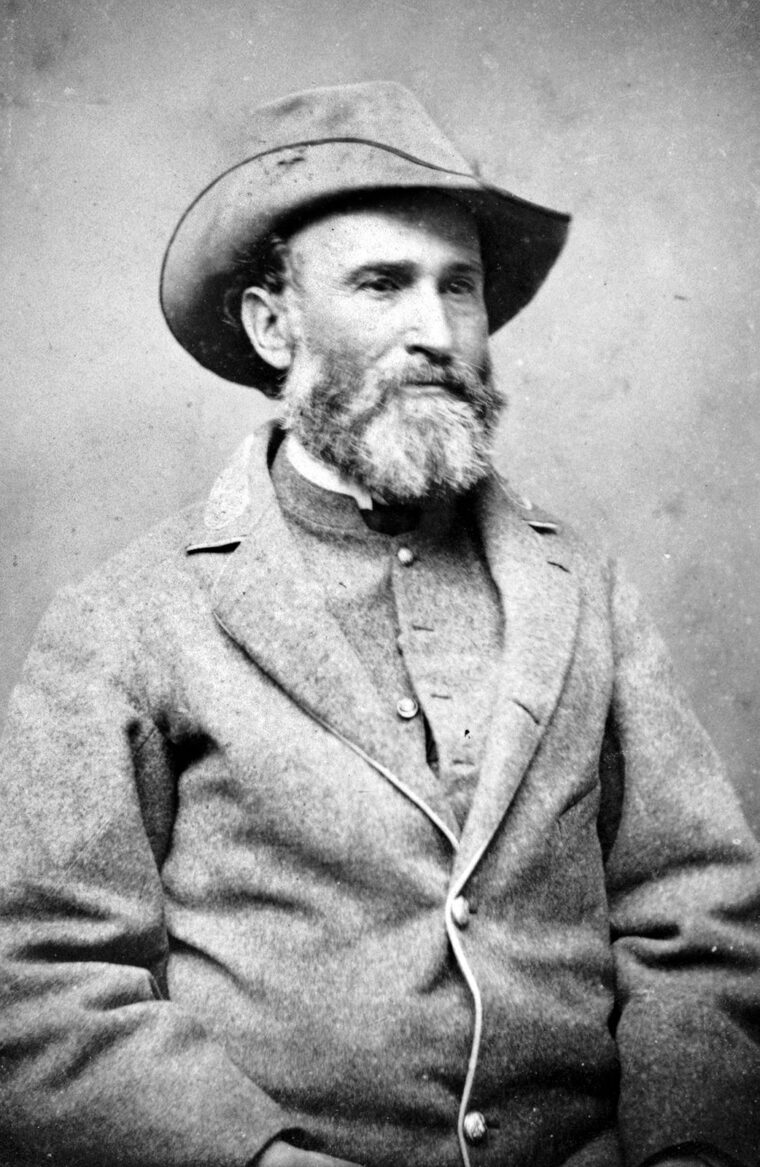
In the meantime, Lee forged ahead with what would later be called the “Raid on Washington.” Lt. Gen. Jubal A. Early and his Second Corps of the Army of Northern Virginia was chosen for the task. Early was a West Pointer, with past experience in the Seminole and Mexican Wars. Bushy bearded, proud and a bit profane, Early was often irascible and sometimes too independent-minded in military terms for his own good. While he was no Napoleon, he was experienced and competent, a man who Lee affectionately dubbed “bad old man.”
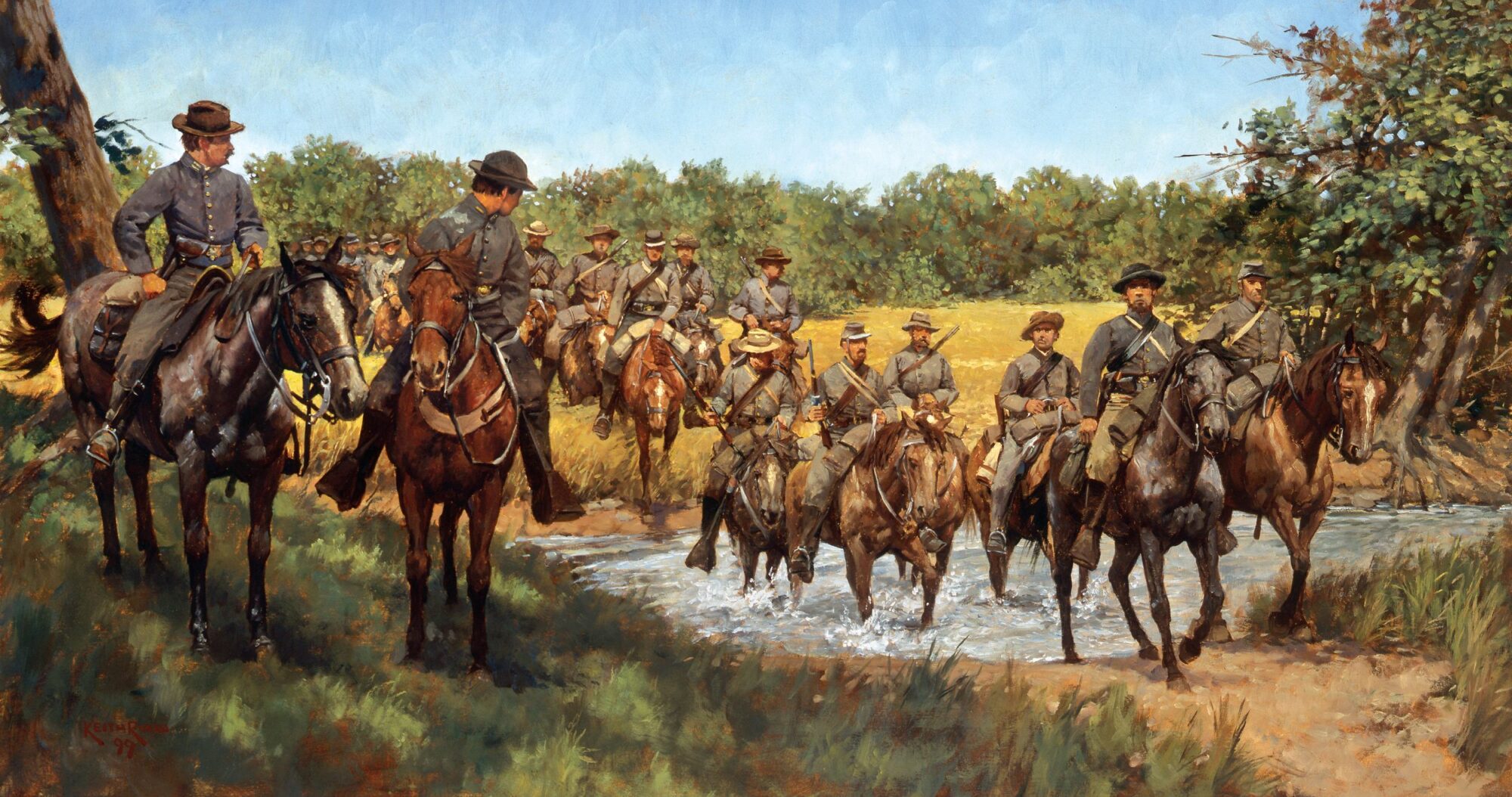
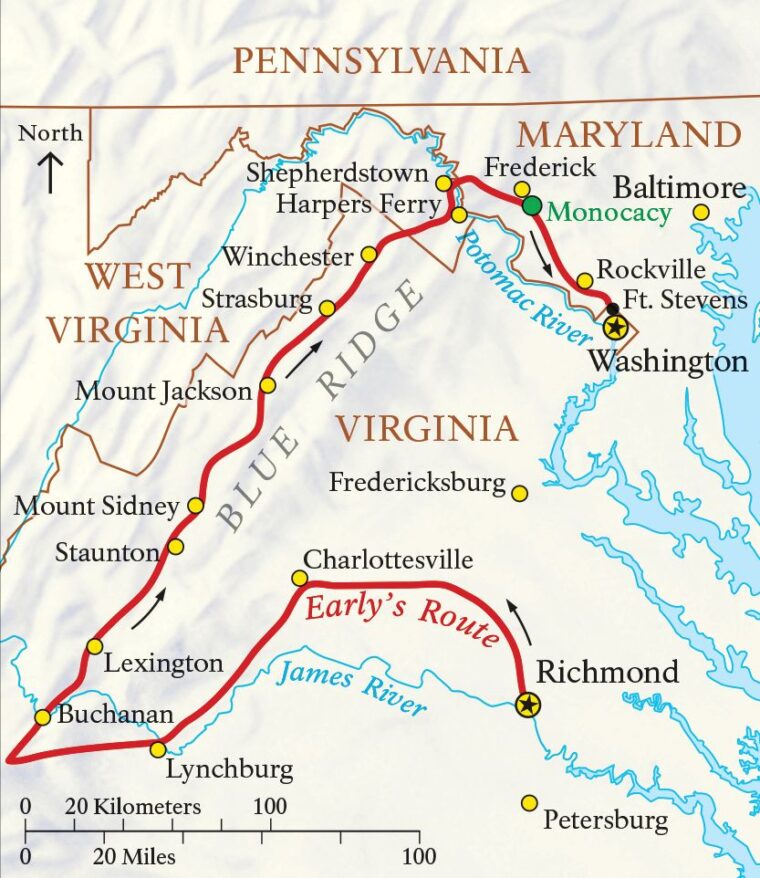
“Old Jube,”as he was also called, would command about 10,000 infantry and 4,000 cavalry for the raid. He was ordered to proceed to Lynchburg in the Shenandoah valley, his immediate goal not merely to defeat Hunter, but destroy him. The local Confederate commander in the area, Maj. Gen. John C. Breckinridge, would extend his full cooperation on this task. The next step would be to cross the Potomac River, possibly at Harper’s Ferry, and threaten and/or take “Washington City.”

From June 12-16, 1864, the Second Corps marched to Charlottesville. From there, they took a train to Lynchburg, arriving at the city’s trench defensive line the next day—just in time for a battle with the Federal troops under Hunter coming up in force. After some periodically heavy fighting, Hunter ordered a retreat and marched into the newly minted state of West Virginia, eventually reaching Parkersburg on the Ohio River.
Early allowed a half-hearted pursuit of the fleeing Yankees, and some bluecoats were captured, along with some supplies and artillery. But Hunter’s main force was now ensconced in the West Virginia mountains, and it would have taken too much time and effort to dislodge them. Early pressed on, after giving his men a few days to rest and replenish supplies. The Early expedition, now dubbed the Army of the Valley, crossed the James River on June 23 and reached Staunton on the 26th.
At Staunton there was another reorganization. One of Early’s priorities was to cut down on the cumbersome supply and baggage train that bedeviled every army of the period. The number of wagons permitted was reduced, and officers were ordered to leave behind all men, horses or equipment not fit for the upcoming march.
The Army of the Valley left Staunton on July 28. Early’s troop strength is disputed, and with formations coming and going, or assigned different duties, the precise figures may never be known. Most commentaries put his army at around 14,000, with about 50 artillery pieces, and 60 wagons. Though the July heat was becoming stifling, Early’s troops were in an overall good mood. The valley was breathtakingly beautiful, and local farmers supplied food, happy to see gray uniforms instead of the usual blue.
Lee sent occasional messengers to update Early’s orders, though the original plan was still in force. Lee wanted the Army of the Valley to disrupt and destroy the Chesapeake and Ohio Canal as well as the important Baltimore and Ohio Railway. Early’s progress was slow, but steady: Harrisburg was passed on the 29th, and New Market on the 30th. The raiders continued pushing north until they reached Winchester on July 2, and Early received word from Lee to stay in the Lower Valley until he was fully prepared to cross the Potomac River. During that time he should also do what he could to disrupt the B&O Railroad and the Chesapeake and Ohio Canal.
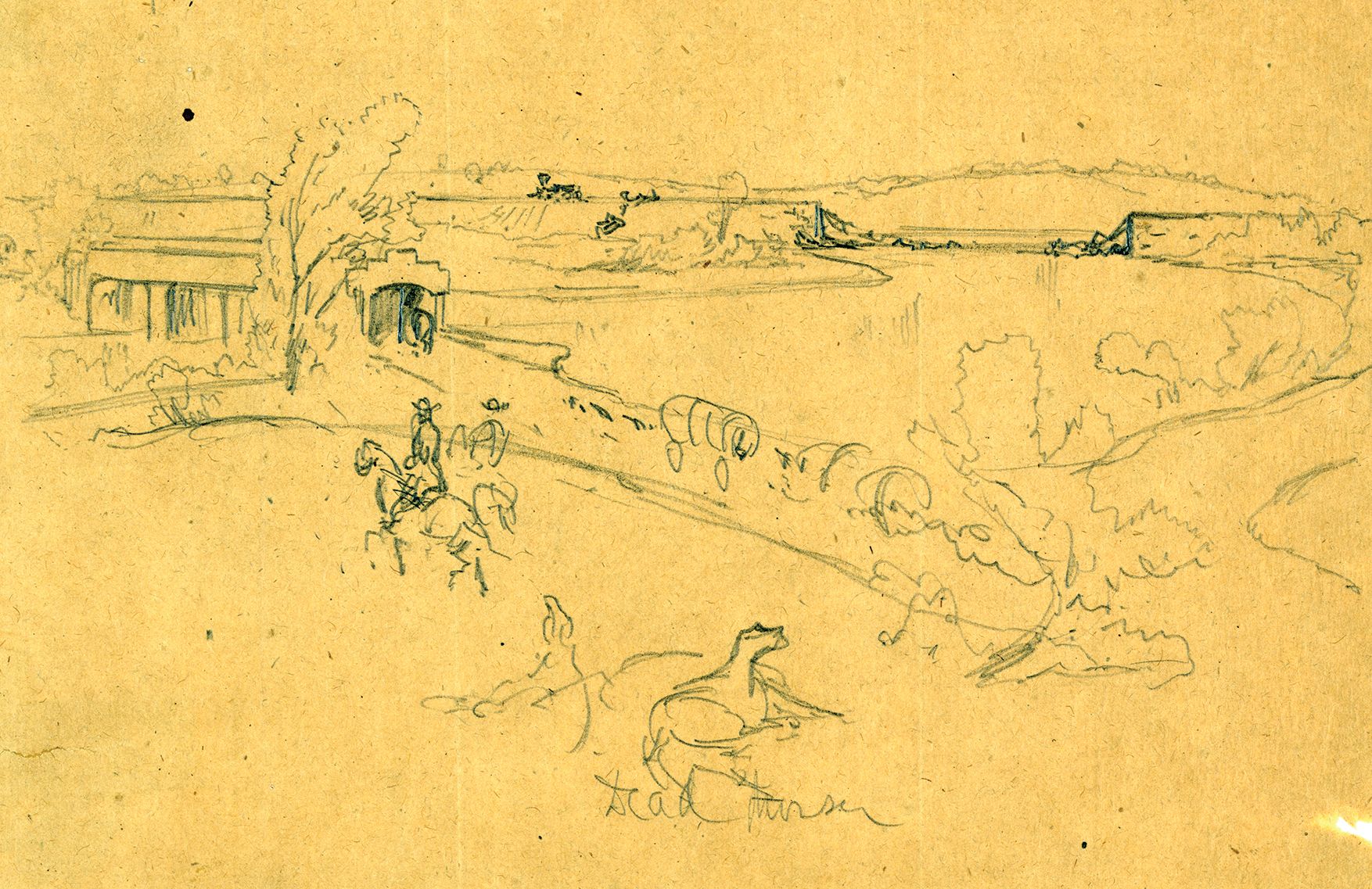
On July 3, Early sent infantry under Breckinridge from Winchester to Martinsburg, hoping to capture supplies held there. Cavalry under McCausland was sent to burn the Back Creek railroad bridge near Hedgesville, then move to Hainesville on the Martinsburg-Williamsport Road, hoping to prevent a Union retreat toward Maryland. Brig. Gen. Bradley T. Johnson’s cavalry was to pursue a line southeast of Martinsburg, through Middleway and Leetown to Kearneysville.
At Martinsburg, Union Major General Franz Sigel was protecting storehouses full of supplies as well as the B&O line with only 5,000-6,000 rear-echelon supply depot and railroad troops. As soon as pickets sent word of the Confederate presence, Sigel did all he could to empty Union supply warehouses and ship them to safety before Early’s men arrived. He was aided by B&O railroad company president John Garrett and, by dint of hard work, the task was largely accomplished. Satisfied he had done all he could, Sigel ordered a retreat to Shepherdstown to cross the Potomac. From there, he would continue south to Maryland Heights above Harpers Ferry.
Finding the Federals and most of the supplies gone from Martinsburg, some of the men of Maj. Gen. John B. Gordon’s division drank from stocks of liquor they found in the city. The men began looting, celebrating their good fortune by consuming “fruit, preserves, sardines, oysters, wines, liquors, and meat.”
Early also turned towards Harpers Ferry, famous for abolitionist John Brown’s raid on the Federal arsenal there in 1859. As the Confederates approached the little town at the confluence of the Potomac and Shenandoah rivers on July 4, Federal Brigadier Gen. Max Weber destroyed the B&O railroad bridge over the Potomac to Maryland and abandoned the town.
Troops under Gordon and Major General Stephen D. Ramseur reportedly looted the town from top to bottom and, since it was the Fourth of July, some jokingly justified their depredations as holiday celebrations. Knowing it would take too long to dislodge Weber’s forces—joined by Sigel—from the fortifications on the Maryland Heights overlooking the town, Early marched 12 miles north to cross the Potomac River at Shepherdstown July 5-7. Once in Maryland, Early sent men to destroy the Chesapeake and Ohio Canal aqueduct over Antietam Creek. They also scuttled canal boats they found there and damaged the locks. The detour to Harpers Ferry slowed Early by four days. It was around this time that Stanton, Halleck, Grant and Lincoln finally awakened to the fact that Washington might be in danger.
Maryland was a border state, where slavery was legal, but its population was divided between pro-Confederate secessionists and loyal Unionists. Early and his subordinates hoped for secessionist help, which they did get on occasion, but they didn’t go out of their way to look for it.
In fact, Early and his army could be positively harsh on the Maryland cities in their path. In Frederick, for example, the rebels demanded a $200,000 ransom, a high price now, astronomical in the 1860s. If city officials refused, gray soldiers stood ready to put Frederick to the torch.
Grant knew that Early’s Second Corps had been moving down the Shenandoah Valley and recognized it as an effort by Lee to distract from the Siege of Richmond. That meant that the Confederates were mounting a major effort. He stood ready to send veteran troops to the capital’s aid, if need be. Grant told Halleck “We want now to crush out and destroy any force the enemy dares to send north.” But solid information was lacking; where was Early going? Would he march on Washington—or swing north to take Baltimore? Grant would not act until he knew the rebel intentions.
Meanwhile, Early received a visit from Captain Robert E. Lee, son and namesake of the Confederate general. The younger Lee was carrying orders for Early to dispatch Johnson and his cavalry brigade to free the estimated 15,000-20,000 Confederate POWs being held at Point Lookout, Maryland, near where the Potomac empties into Chesapeake Bay.
Johnson was a Marylander, knew the country, and it was hoped that he would be given food and support by Confederate sympathizers along the way. Supposedly, the Point Lookout prison was poorly guarded by Black Union troops—white southerners always had an ill-disguised contempt for black soldiers. Once liberated, the freed prisoners would live off the land until they joined Early, by then already besieging Washington.
Prison conditions on both sides were abysmal, with captured soldiers suffering from starvation, disease, and brutality. The “prison liberation” raid was pure fantasy, though in war anything can happen. But the idea that 20,000 unarmed men, ragged, diseased, and ill-fed, could somehow organize themselves into an ad hoc “army” and march back to Virginia is a fantasy created by Lee’s desperate need for additional soldiers.
Early probably didn’t much appreciate this scheme, but he went through the motions of obeying it. As events unfolded, the prison raid never took place and his focus was now on Washington City.
Confusion reigned both in the Union’s military and political spheres. Accurate information compounded the problem, and even Lincoln found he was in the dark like all the rest. Where was Early? How many men did he actually have? Was he headed for Baltimore or Washington? Grant stood ready to send relief forces to the capital’s aid, but understandably wasn’t about to run around in a wild goose chase. He needed concrete information.
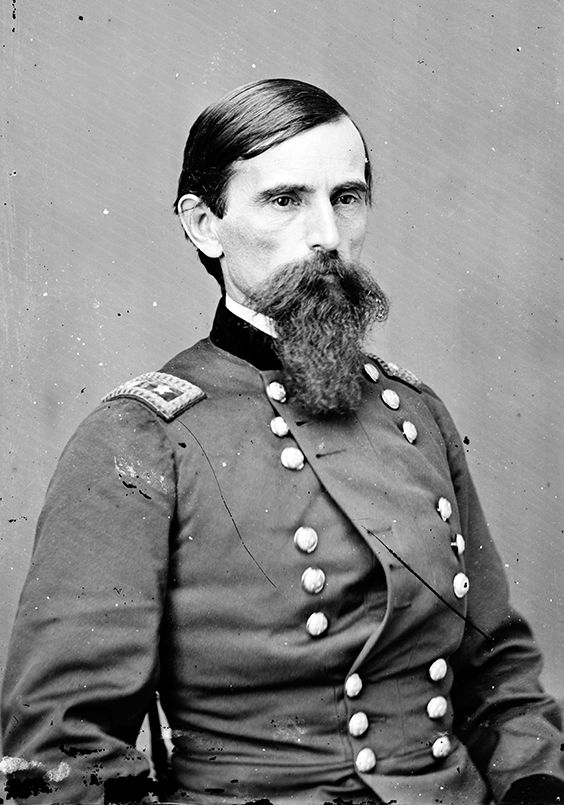
General Lew Wallace commanded the Baltimore-based 8th Corps, a relative backwater, where he was serving out a kind of “penance” for past mistakes, real and imagined. The Indiana-born Wallace was a pariah because his troops had arrived late for the Battle of Shiloh two years earlier. His tardiness was mostly due to bad roads, but Grant relieved Wallace of his command.
Wallace reasoned that Early had come to Monocacy Junction, a “vital crossroads where the National Pike (road) led to Baltimore and the Georgetown Pike to Washington,” no matter which city was his objective. Wallace hopped aboard a train for a midnight trip to Monocacy to get a firsthand look at the river crossing he was sure had a part in Confederate plans.
At the junction, Wallace surveyed the plain through which the Monocacy River meandered. There were three bridges in the vicinity as well as several fords. Northernmost was a stone bridge for the Baltimore Pike (National Road). Two miles downriver was the Georgetown Pike, leading to Washington, with a B&O railroad bridge just half a mile upstream. In all, Wallace would have to cover a front of at least six miles. Only three miles away, he could see some of Frederick’s towering church spires in the distance.
Wallace immediately telegraphed Grant’s City Point headquarters requesting reinforcements and scraped together as many men as he could to mount a defense of the Junction. He later admitted he could only find 2,300 men for the effort, many of them “raw and untrained.” Even though not much was known about Early’s command, “everything known, and everything surmisable,” indicated that he was going to be vastly outnumbered by the gray raiders.
All seemed lost, yet Wallace felt he had to make the effort. He may not have known the details, but he knew Grant was poised to send relief forces sooner or later. If he could delay Early, gaining time for Grant, it was worth the possible sacrifice. Washington had to be saved, or the whole course of the war might change.
Then, at seemingly the eleventh hour, a glimmer of hope: B&O President J.W. Garrett told him that “a large force of veterans” sent by Grant had just arrived in Baltimore and would be sent on to Wallace, as soon as possible. But would they arrive in time?
Wallace went to bed the evening of July 7, but anxiety over the situation made sleep fitful at best. Then, in the early morning hours of July 9, when it was still dark, Wallace was awakened by a visitor, a slightly overweight man “quick and bluff in manner and speech, Celtic (Irish) in features.” It was Col. James B. Ricketts of the Sixth Corps, announcing he had arrived with two brigades, some 3,350 veteran soldiers in all.
A relieved Wallace welcomed Ricketts and the two officers briefly discussed the overall situation. Wallace now had something close to 6,000 men, and was still outnumbered by the Confederates, but with Ricketts’ veterans in the mix, the coming battle was not going to be an easy walkover for the gray tide. After a brief discussion, Wallace returned to his bed “and never slept more soundly.”
After breakfast Wallace strolled along the bluff by the railroad bridge, making last minute inspections and possible corrections to his system of defenses. Black buzzards flew in lazy circles in the sky above, a sight that might have seemed to many an ill omen, and a forecast of the deaths to come, but Wallace was still confident. The Indiana general later gained fame as the author of Ben Hur, and he did have a way with words.
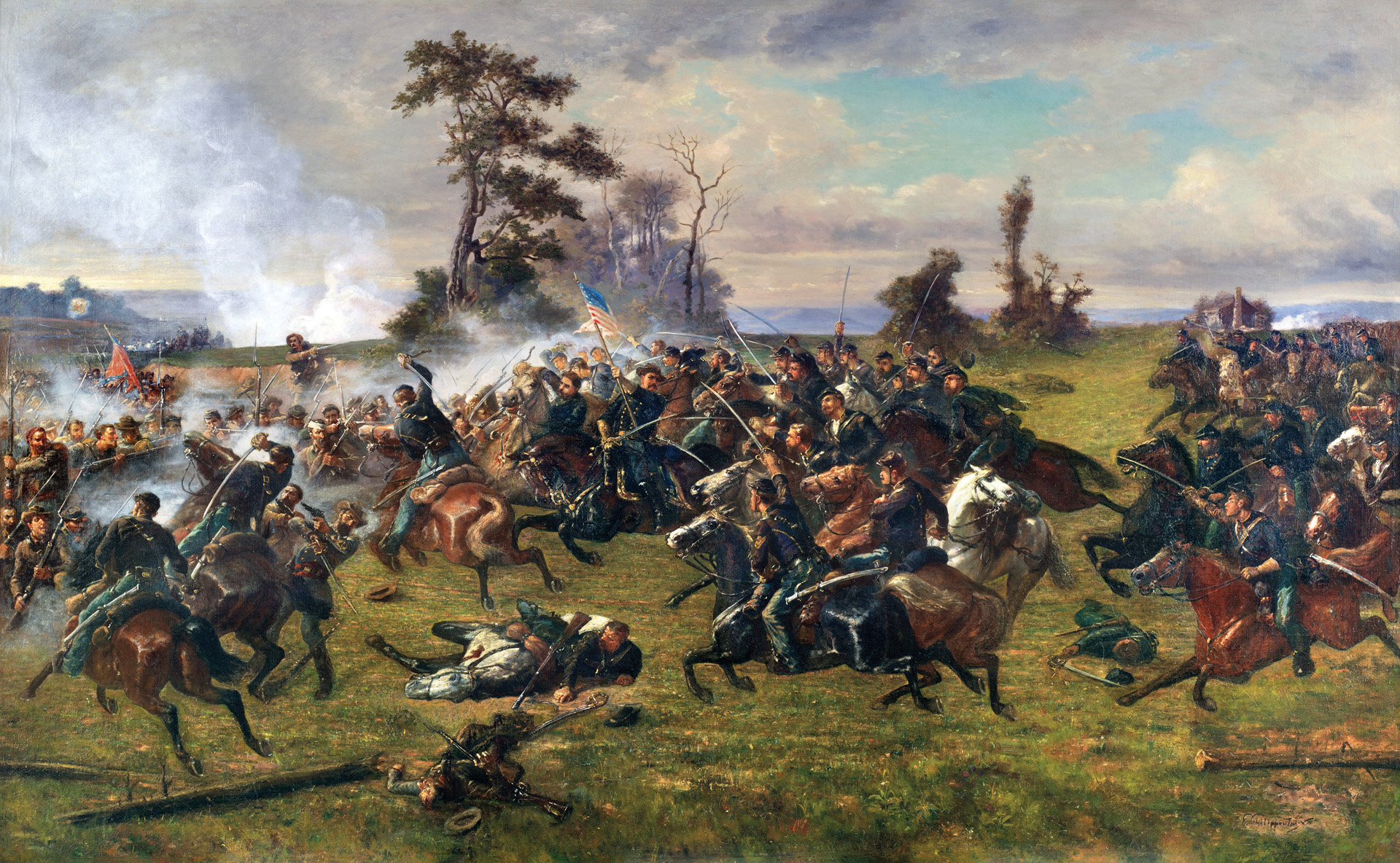
Wallace described a future battlefield where “there was not a speck in the sky…and the departing night had left a coolness in the air delicious and refreshing.” But this almost poetic idyll was rudely interrupted when Confederate cavalry under Gen. John McCausland crossed the Monocacy River. Dismounting, the gray cavalry proceeded through a farmer’s fields, in a skirmish line. Suddenly a line of Union infantry arose from behind a fence, and, resting their rifle-muskets on that fence, opened up a “murderous volley” on the surprised rebels.
A local farm boy witnessed the scene from afar, and later remembered that, “watched from a distance the whole rebel line disappeared as if swallowed up by the earth.” The survivors fell back in disarray, but launched a second attack a few hours later. This was also met with failure, but more of Early’s troops arrived as the day wore on, and the Federals started taking casualties, too.

The battle seesawed back and forth, degrading into a bloody quagmire where both sides performed bravely, but could not gain the upper hand. Finally rebel numbers began to make themselves felt, and Wallace was forced to retreat. Early had scored a victory, but his momentum had been slowed, and his forces bloodied. “A sense of relief came over me,” Wallace later wrote, because “ if the day was lost to me, General Early might not profit from it.”
Indeed, Wallace’s clash with Early, though a defeat, fully redeemed the semi-disgraced Union general. His stand at Monocacy Junction gained valuable time, enabling Grant to send veteran reinforcements to Washington. It didn’t seem so beneficial at the time, because panic spread as the gray juggernaut approached the nation’s capital. By some estimates the city’s forts and batteries were manned by a formidable force, though in reality it was closer to 9,600 troops, including those ill-trained and unfamiliar with the guns they were supposed to use against the enemy
Times of crisis can bring out both the best and the worst in people. Some lost their heads in unreasoning panic, ready to flee at a moment’s notice. Others rose to the occasion, finding in themselves reserves of unexpected courage and resolution. Every able bodied man capable of shouldering a rifle was called upon to join in the city’s defense. Federal workers, scribblers fresh from government offices, discovered that in these times the sword is mightier than the pen.
Once his forces approached the outskirts of Washington, Early went forward with his telescope to have a distant look at the capital’s defenses. According to some sources, Early rode up a hill, and could see the then-unfinished capitol dome in the distance, perhaps four miles away. So near, and yet so far. But Early’s immediate concern was the Federal defense system, with its forts with their interlocking fields of fire, and trenches for infantry support.
A local secessionist farmer told him these forts were basically a sham, “just earthworks.” Early’s professional eye told him otherwise. Still, he could also see they were not adequately manned. Maybe, just maybe, the Confederates could take Washington. But there was a problem. His men were exhausted from long marches under a blazing sun. Some didn’t have shoes, and others were down with sunstroke in the 95-degree heat.
Early decided to wait until the next day, the morning of July 12, 1864, to launch a full-scale attack. In the meantime, gray sharpshooters would go forward, harassing the enemy, softening him up, probing and possibly discovering weaknesses not obvious to the naked eye.

As events unfolded, Fort Stevens became the focal point of the Confederate attack and the keystone of the Union defense. It was a “large enclosed work situated on high ground.” Called a fort, engineers would have classified it as a “lunette.” It boasted the usual array of artillery, including four 24-pounder seacoast cannon firing in a barbette, six 24-pounder siege guns firing from an embrasure, and two 8-inch howitzers.
The Union command structure in Washington’s defense was confused, with overlapping levels of authority. However, Maj. Gen. Alexander McCook took care of Fort Stevens and its immediate environs. His command was a mixed bag of the experienced and inexperienced, the able bodied and “walking wounded,” the regular military and the volunteers.
The celebrated incident of Lincoln coming under enemy fire is true; the sources are clear and firm. However, there is confusion and vagueness about the details, and how many times he visited. Lincoln was present on Monday, July 11, and witnessed the skirmishing that was taking place at that time. He stood in plain sight on the top of a parapet, and with his 6-foot-4 frame and celebrated top hat, must have attracted the attention of the many Confederate sharpshooters in the area. Bullets whizzed by him, and he only stepped down when repeatedly urged to do so.
It was at this time that, as bullets flew perilously close, a soldier yelled at Lincoln “Get down, you damned fool!” Several names have been put forward as the soldier who rudely ordered his commander in chief. Probably the most famous candidate is Capt. Oliver Wendell Holmes Jr, later a Justice of the Supreme Court. In any case Lincoln, more amused than offended, obeyed.
There apparently was a second visit the next day. Some of his official entourage were present, including Secretary of State William H. Seward, Secretary of the Navy Gideon Welles, and First Lady Mary Todd Lincoln. After Mrs. Lincoln returned to their carriage, the president insisted on viewing the skirmishing from the top of the parapet. Once again, Confederate bullets whizzed past him like a swarm of angry bees.
Major General Horatio Wright, commander of the Sixth Corps, was also with him on the parapet, as well as C.V.A. Crawford, Assistant Surgeon of the 102nd Pennsylvania. As Lincoln and Wright were talking, Crawford was hit in the leg by a bullet while standing not three feet away. It was said that Wright pleaded with Lincoln to take cover, and finally the President complied.

In another twist of historical irony, when Lincoln visited Fort Stevens, Confederate Gen. John C Breckinridge was about a mile away with the rebel forces. Breckinridge was the presidential candidate for the Southern Democrats in the election of 1860. For the first and only time in American history, two men who had been presidential contenders faced each other across opposing battle lines.
Much of the action was skirmishing, but if a battle is the “purposeful movement of troops against an enemy,” the “Battle of Fort Stevens” did occur at this time. Initially the Union troops fell back, abandoning their picket lines and manning the rifle pits that were protected by Fort Stevens’ powerful guns. When it became apparent that Confederate moves were not the beginning of a major attack, McCook ordered his dismounted cavalry to reclaim their forward posts, which was “done smartly” by 1:30 p.m.
Undaunted, the Confederates probed other locations, including nearby Fort DeRussy, west of Rock Creek. This was a job for the Veteran Brigade, and by all accounts they performed well. Without hesitation they “formed a line and advanced, firing rapidly, and, under heavy fire, driving the enemy’s right flank back, occupying their ground.”
Night fell, and both sides prepared themselves for a major battle the next day. But when morning dawned, Early looked once again at the works in front of him and didn’t like what he saw. Fort Stevens and the other works were now filled with men in faded blue uniforms, and the flags told him they were men of the veteran Sixth Corps.
Discretion is the better part of valor, and Early had sense enough to understand the opportunity to take Washington had passed. He decided to withdraw, no doubt to the relief of at least some of his men, who could see storming the forts would now be near suicidal. Casualties were still fairly heavy as various sources list between 500 and 600 dead for the Confederates and more than 300 for the Union.
Early continued to campaign in the Shenandoah until the end of the war, but with decreasing effectiveness. A new commander, Gen. Phil Sheridan, took command of Union forces in the area. Sheridan, unlike his predecessors, proved to be effective and even charismatic. But that was in the future. In the immediate aftermath of the Washington raid, Early took comfort that though he didn’t take the capital, he “scared Lincoln like hell.”
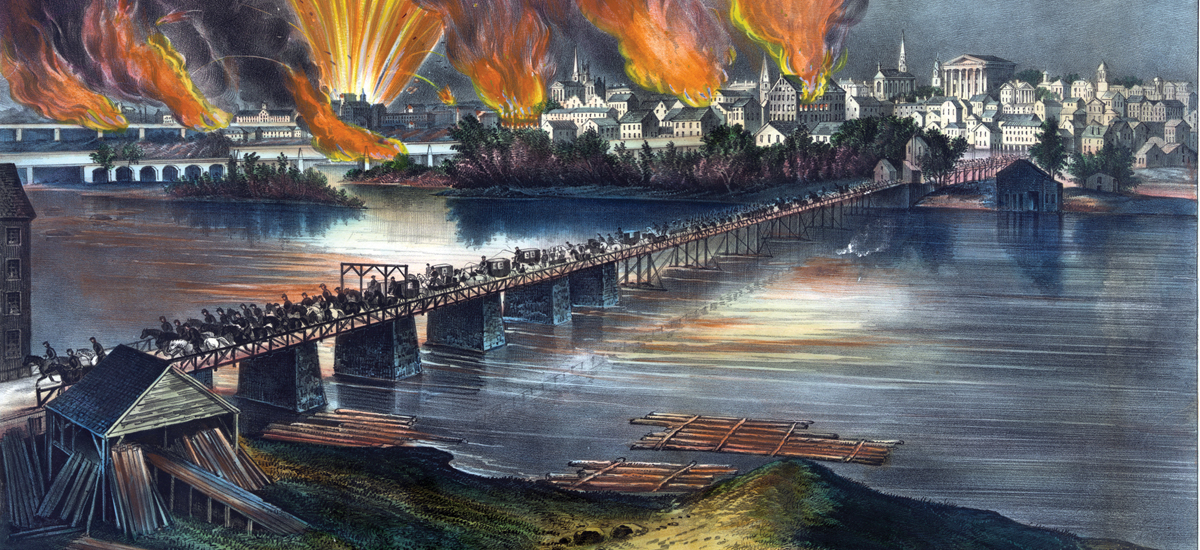

Considering the proximity of the two Capitols, it is a wonder more assaults on each were not attempted during the war. Neither was particularly well defended as most troops in the field were at more strategically significant locations as determined at the time.
The best chance to have taken Washington, D.C. was right after 1st Manassas. Jackson should have been given the authority to commandeer horses, wagon, buggies, and grabbed any troops (there were troops who had not been engaged) available and made for D.C. ASAP. All those civilians from the city who came to watch the battle were running away. Grab their vehicles and go. There was so much fear, chaos and confusion on the Union side there was the chance that a determined move could have resulted in the city being captured. There was too much caution on the Confederate side that resulted in a lost opportunity. Audacity wins the day.