By Michael D. Greaney
Though the Western Roman Empire had fallen with the deposition of Romulus Augustulus at Rome in 476, elements of the Empire remained, in fact and influence, for centuries to come. Justinian I, whose rule of the Byzantine, or Eastern Roman Empire, from Constantinople began a half century later was successful in reconquering North Africa, Italy, and parts of Spain.
But after the death of Justinian I “the Great” in 565, the Roman Empire fell on hard times as unpopular or incompetent emperors plagued the Res Publica. Then came Phocas, who in 602 deposed the unacceptable Maurice.
Physically hideous, Phocas was a depraved, sadistic monster who delighted in torture and the sight of blood. He dragged the former emperor from sanctuary, forced him to watch the execution of his family, had him put to death, then murdered all Maurice’s suspected supporters.
Unfortunately for Phocas, Maurice had not only concluded peace with the Persians, but had made a friend of their ruler, Great King Chosroes II. Soon after Phocas usurped the throne, Chosroes resumed war with Byzantium, using Phocas’s treatment of Maurice as his pretext.
Phocas further worsened his situation by burning to death Narses, his most effective general for refusing to recognize the legitimacy of his rule. Narses had rebelled, but had been given a safe-conduct to discuss returning to his allegiance in the face of the Persian threat. Of his two most able remaining commanders, Phocas imprisoned one while the other died of wounds received in battle. Within four years the Persians overran much of the Empire in the east and had reached the outskirts of Constantinople, while Slavs and Avars poured into Greece.

Phocas then ordered the persecution and forcible conversion of all the Jews in the Empire. Christian and Jewish fanatics massacred and tortured indiscriminately. Ordinary Jews and Christians, blamed for the excesses of extremists, sought refuge in Persian-controlled territory.
Plots against Phocas multiplied beyond number as did the assassinations and judicial murders of anyone suspected of complicity. People of every sect, faith, and philosophy rioted throughout the Empire. They slaughtered each other as Phocas sank deeper into blood-soaked paranoia and the Empire dissolved into anarchy.
In Carthage, Heraclius and Gregorius, two brothers who had been generals under Maurice, raised an army and assembled a fleet of warships. Nicetas, son of Gregorius, commanded the army, while Heraclius, named after his father, was given the fleet. Nicetas set out for Egypt where he eventually captured Alexandria and then began making his way overland to Constantinople.
Heraclius did not rush headlong into anything or launch initiatives without considering their effectiveness or having a reasonable expectation of success. Instead, he acted with meticulous care, in a composed manner some mistook for lethargy or despair.
In 609, Heraclius set sail for Thessaloniki in Central Macedonia. Enthusiastic crowds greeted him at every port of call. On reaching Thessaloniki, he spent months collecting more ships and organizing with those opposed to Phocas’s rule. He also opened secret negotiations with Priscus, Phocas’s son-in-law in Constantinople. Priscus was another of Maurice’s generals so far fortunate to have escaped the purges. He seems to have assured Heraclius of the support of the Greens, one of the four original chariot racing factions of the empire and a powerful religious-political force, should it be necessary.
Finally, in the summer of 610, Heraclius embarked for Constantinople. Proceeding with deliberation, he stopped at virtually every port along the way, adding more ships and large numbers of recruits. In early October, he anchored at the entrance of the Golden Horn, the inlet dividing the European side of Constantinople from the Asian side, forming a natural harbor.
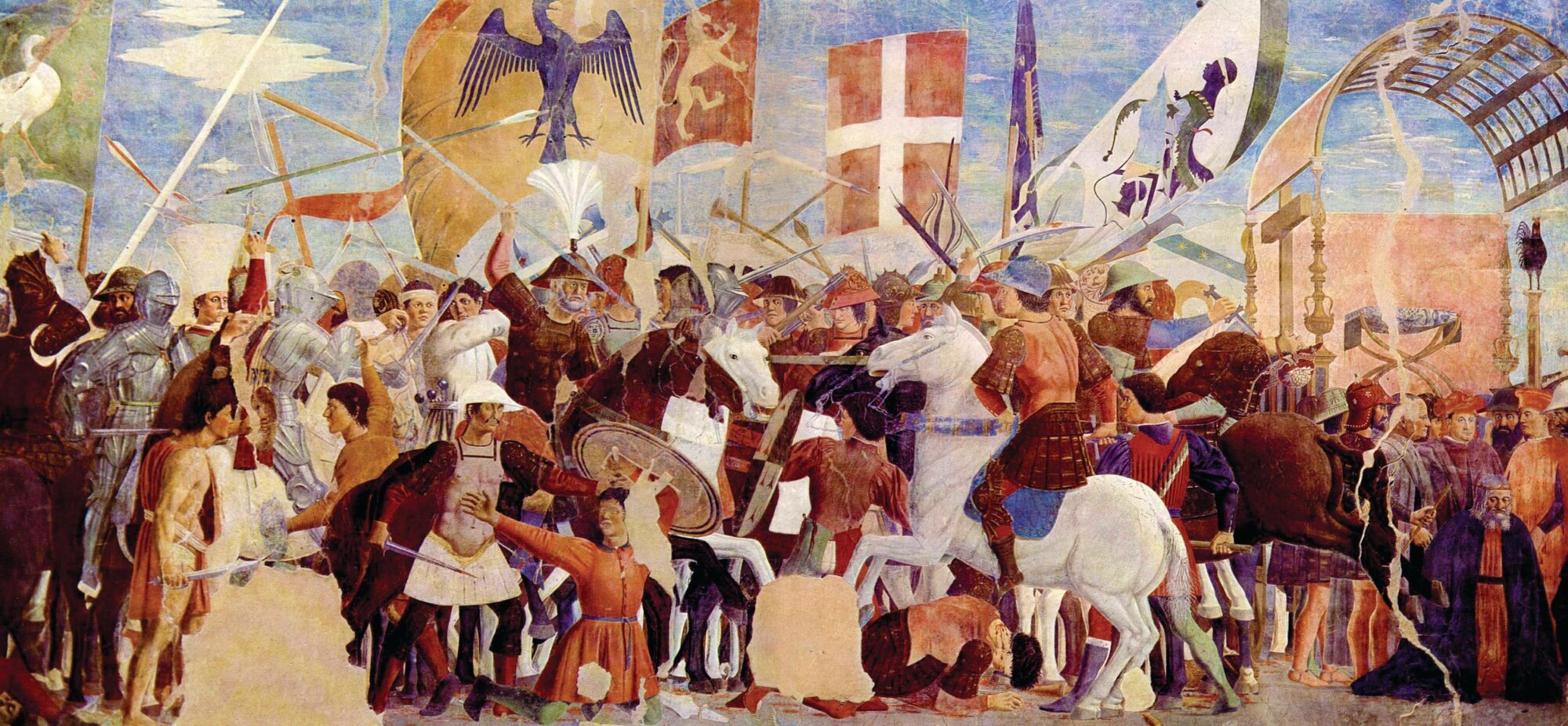
After a virtually bloodless coup, Heraclius received the captive Phocas on his flagship around October 5. Following a brief interview, he summarily executed Phocas and his chief supporters. Accounts differ as to specifics of the victims’ terminations but all agree as to their grisliness. Heraclius then went ashore, married his fiancée, and was crowned emperor, all within the space of hours.
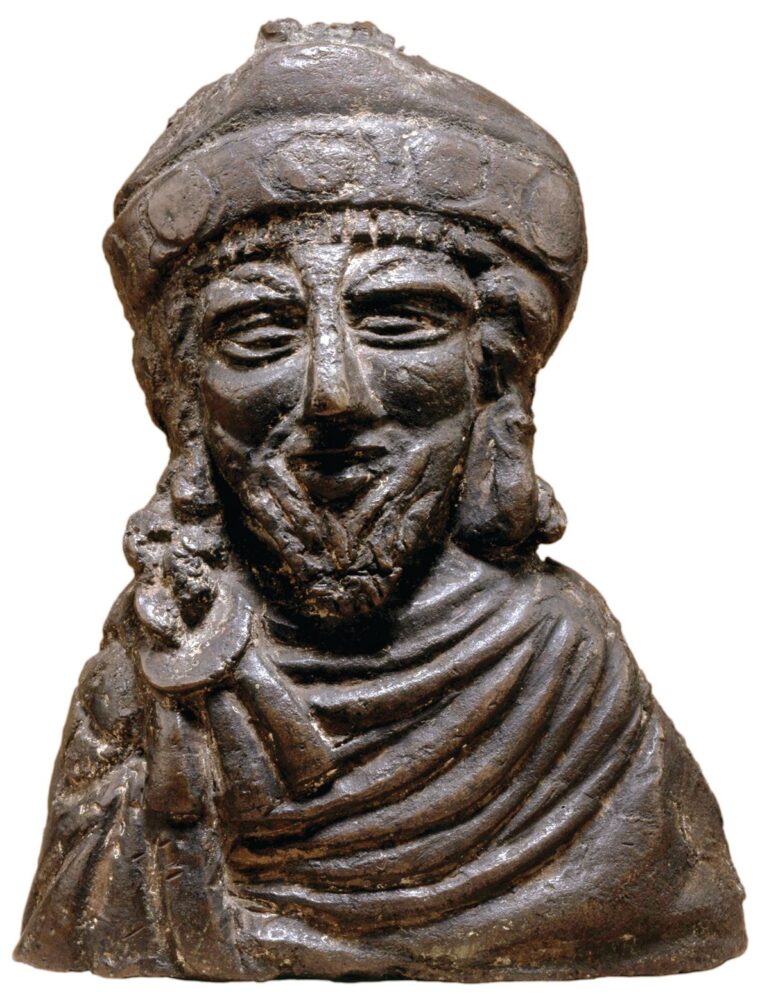
Contemporary sources are virtually silent about Heraclius’s military activities over the next dozen years. Modern historians have wondered why he waited so long to act as the Empire continued to fall apart. As historian John Julius Norwich pointed out, however, Heraclius took over an empire in disarray. It was out of money, the military was demoralized and the civil government was corrupt and incompetent.
“Confronted as he was by two such formidable enemies [Avars and Slavs in the west, Persians in the east], there could be no question of victory until he had subjected the whole state to a thorough reorganization, moulding it once again into an efficient fighting machine,” Norwich writes.
The heavily fortified city of Constantinople and the Bosphorus would keep Heraclius safe while he undertook this formidable task, and took his time doing it.
“To march against [his enemies] without adequate preparation would be to risk not only the defeat of the Roman army but . . . of Heraclius himself,” Norwich continues, “And that, almost certainly, would be the end of the Empire.”
Without exaggeration, the situation could be described as desperate. The Slavs controlled virtually the whole of the Balkans. Enthusiastically aided by Jews alienated by Phocas’s persecutions, the Persian general Shahr-Baraz took Antioch sometime between 611 and 613. In 613 he added Damascus, strategic key to the Holy Land, and in 614 Jerusalem fell easily into his hands—too easily. Accepting equitable terms, the citizens admitted a Persian garrison, while Shahr-Baraz continued his campaign.
A month later the Christians rebelled and killed every Jew and Persian they could find. Shahr-Baraz turned back and besieged Jerusalem. The short siege ended, and the long massacre of the Christians began after the Persians mined the walls and took the city by storm. Led by Jews who had survived the earlier bloodbath, the carnage lasted three days, at the end of which hardly a building remained standing. The victors carried off what was claimed to be the “True Cross” (which, according to Christian tradition, is the actual wooden cross used to crucify Jesus of Nazareth) and other holy relics to Persia.
Long before these events, however, Heraclius had set to work. His first step had been to reorganize the territories remaining to him along military lines. He divided the land into Themes, a term previously used for a division of troops. In place of the former centralization, he devolved power. Each Theme was semi-autonomous under a Strategos, who served as both civil governor and military commander.
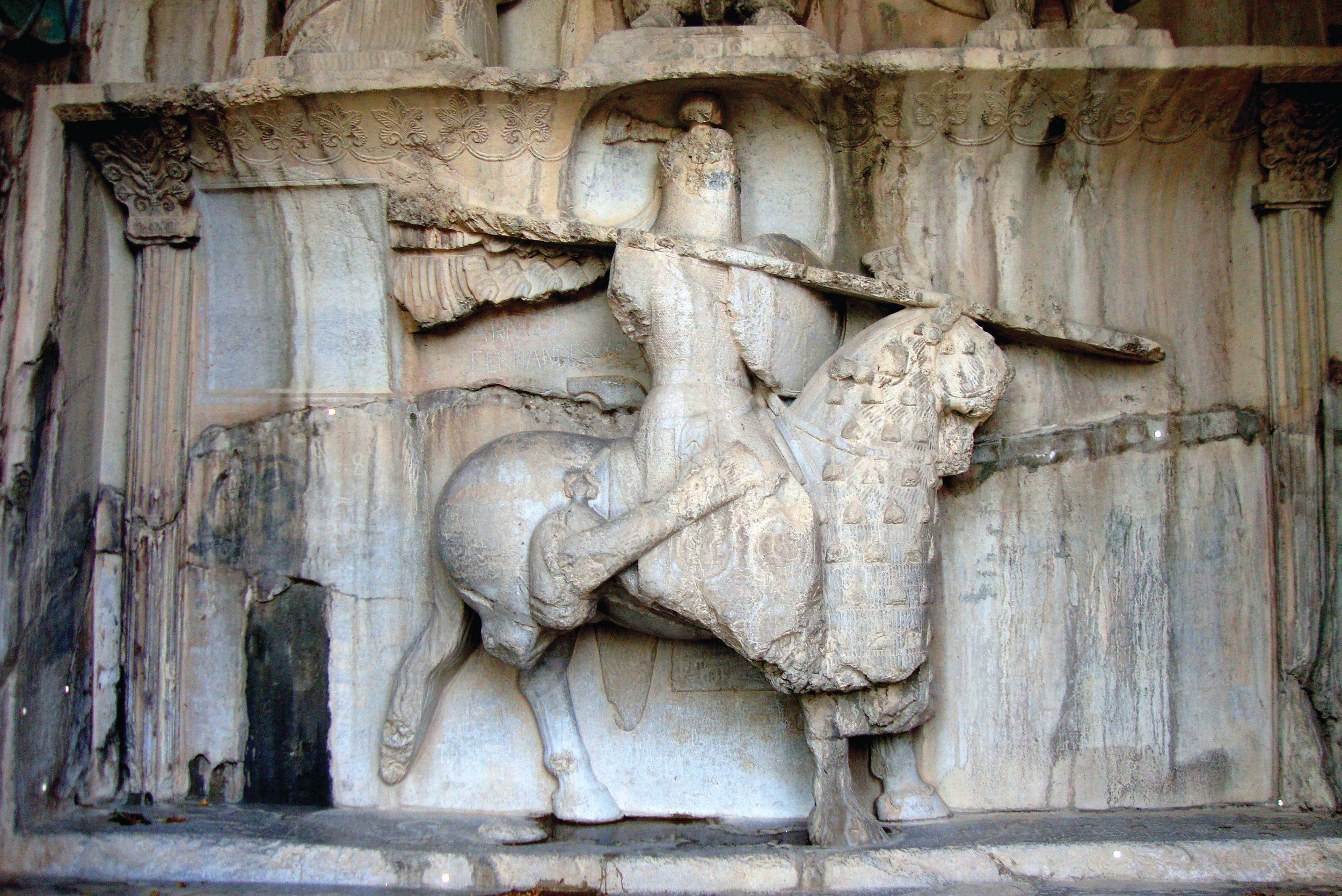
Many new villages were established, colonized by soldiers and potential soldiers. All beneficiaries were given what amounted to freehold grants of land. This was subject only to hereditary military service by the landowner or his eldest son. Each received a small stipend. This helped defray the cost of arms, armor, and the horses and mules every man was expected to maintain.
At one stroke, Heraclius created a national army of native, land-owning, battle-ready reservists who could be called up at a moment’s notice. This replaced the haphazard use of conscripts and mercenaries, notoriously uncertain in number, unreliable in battle, and untrained in organized warfare. Simultaneously he repopulated abandoned districts and began a restoration of the tax base.
Although the settlement program was of immense military importance, economic benefits of widespread ownership were not immediately realized. Heraclius still had to reorganize the exchequer and raise cash to finance the coming war. Increased taxes, forced loans, advances from rich relatives and friends, and heavy fines on corrupt bureaucrats provided some funding.
Perhaps not surprisingly, however, considering the desire to recover the True Cross, the Orthodox Church was the primary source of money. Patriarch Sergius considered the conflict a holy war, the final conflict between the Roman armies of Christ and the fire-worshipping Zoroastrian dualists of Persia.
Sergius overlooked irregularities in Heraclius’s private life, notably marrying his own niece after his first wife died. His All-Holiness put the financial resources of the entire Church, from the smallest parish up to the largest monastery and archdiocese, at Heraclius’s disposal.
After 12 years, Heraclius was ready and carefully selected as a training ground in an area only a few stadia from where Alexander the Great had landed in his campaign against the Persians.
There Heraclius spent the entire summer of 622 engaged in intensive training and morale building—repeatedly telling his soldiers they were “God’s Chosen Instruments against the Forces of Antichrist” and that “The Lord of Hosts would Himself ensure their victory.”

Though modern skeptics might scoff, the appeal to faith and patriotism was apparently effective. Heraclius succeeded, although the following war was long and difficult. After reaching a truce with the Avars by unknown means, he moved against the Persians in the autumn of 622.
Heraclius was the first Roman emperor in centuries to lead his troops personally into battle. Although now using the old Greek title of baselios (βασιλιάς) or king instead of imperator (“commander”), he met the Persians in what was probably the Cappadocian highlands. He routed them completely, then rushed back to Constantinople. Possibly encouraged by Heraclius’s absence, the Avars had broken the truce. His army went into winter quarters in the field.
Over the next few years Heraclius made steady if unspectacular progress against both the Avars and the Persians, winning as often by negotiation, diplomacy, and cunning, as by force of arms. Increasingly unstable and descending into paranoia, Chosroes began giving impossible commands to his generals to stop Heraclius at all costs; to die in battle or suffer at the hands of the Great King’s torturers—or both.
According to Norwich, after the Persian general Shahin died in battle against Heraclius’s brother Theodore, Chosroes had the body preserved in salt and brought to him to be scourged and flayed in his presence. This raised serious doubts about the Great King’s sanity. Another authority, however, suggested the story may be a garbled report of Zoroastrian burial rites. In any event, although Chosroes’s fears of the danger Heraclius represented were warranted, his methods of attempting to achieve victory virtually ensured he would be unable to do so.
Early in 627, Heraclius decided to move directly against Chosroes. He began plans to mount a campaign to take the royal palace at Dastagird, 20 or so miles north of the Persian capital of Ctesiphon. The prolonged siege of Tiflis (modern Tbilisi, capital of Georgia), however, which he had undertaken in alliance with the Kök Turks, delayed him for months. Finally, in mid-September he moved out, leaving his Turkish allies to continue the siege of Tiflis, possibly supported by a token Roman contingent.
This left the Persian general Shahr-Baraz and his army still at large in Chalcedon on his flank, yet Heraclius did not treat him as a threat. Heraclius had negotiated the Persian and Avar withdrawal from a siege of Constantinople a short time before. The possibly apocryphal story is he gained the neutrality of Shahr-Baraz in return for promises of Roman support for a possible coup in which Shahr-Baraz would overthrow Chosroes. Heraclius allegedly did this with the aid of a few judicious beheadings and an intercepted letter from Chosroes ordering Shahr-Baraz’s death, creatively edited by Shahr-Baraz to include all senior officers, thereby retaining their loyalty.
Tiflis had held out against the siege after the citizens received word of a Persian relief force headed north under the command of Sarablangas (the Greek form of his name; Shahraplakan in Armenian). Prudently, however, Sarablangas’ inferior force never relieved Tiflis and later failed to engage Heraclius during the latter’s advance into Persia. Tiflis fell to the Kök Turks in a subsequent campaign, taken by storm after a two-month siege, with reportedly no survivors.
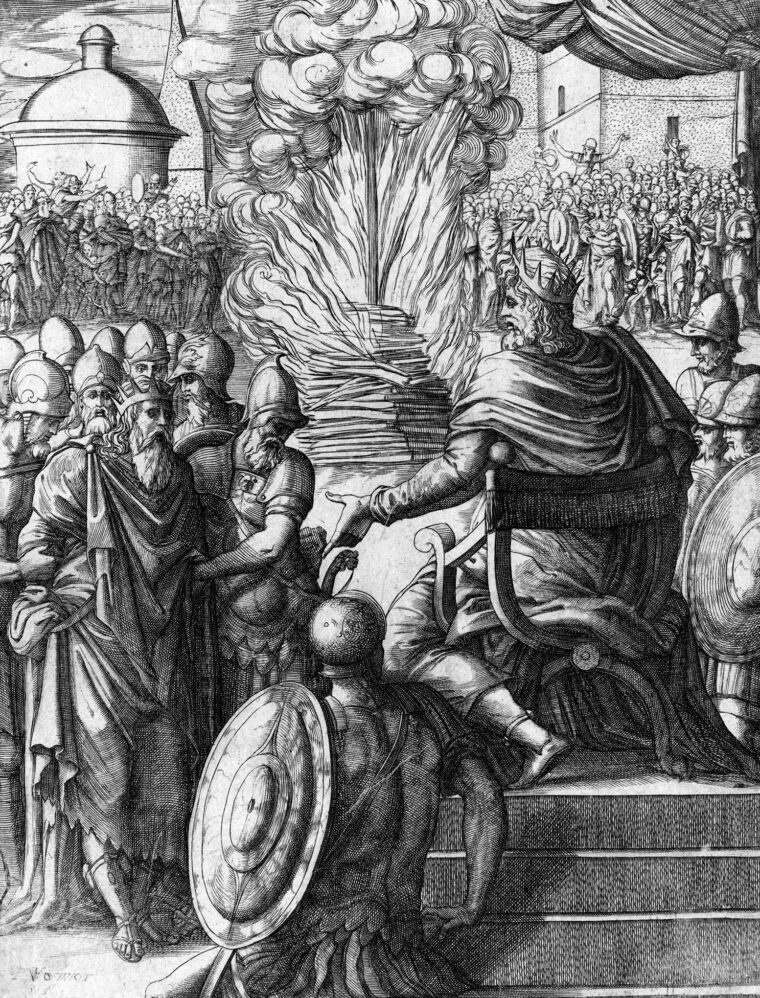
Chosroes is said to have expressed surprise when word reached him that Heraclius appeared to have begun a winter campaign. This is a little ironic, as he himself seems already to have ordered a third newly appointed general, the inexperienced Armenian Rhazates (the Greek form of his name; Roch Vehan in Armenian) to attack Heraclius as soon as the Baselios and his army were settled into winter quarters.
In any event, both Sarablangas and Rhazates were caught off-guard by Heraclius’ abandoning the siege of Tiflis, his invasion of Persia, and by his overall strategy. This too is ironic if not baffling. Centuries-old Roman memoranda, likely based on the success of Alexander the Great, dictated the proper way to invade Persia was to make a direct, swift strike into the heart of the country.
Sarablangas and Rhazates therefore should have done everything in their power to delay Heraclius. They should have harried his columns while at the same time turning the Roman’s own Fabian tactics against him and avoiding a set battle.
Instead, probably greatly assisted by Rhazates’ understandable caution as a new commander, Heraclius eluded and outran both Persian armies. Sarablangas seems to have given up the chase, while Rhazates was left trying to catch up with the Roman army. Possibly reinforcing the Roman army were as many as 40,000 Kök Turks, although this figure is almost certainly greatly exaggerated.
Although evidently relying heavily on more experienced advisors, Rhazates failed to appreciate what Heraclius intended. With the summer campaigning season over, the Persian general had expected Heraclius to withdraw to the west after the failed siege of Tiflis.
Rhazates clearly expected Heraclius would take up winter quarters on the shores of Lake Van in Anatolia. This is what the Roman commander had done a few years before. The Persian general and his advisors doubtless believed they would be able to take the Romans by surprise as soon as they were settled in and off their guard.
Instead, Heraclius turned his army south. He followed a line of march roughly along what is today the border of Turkey and Iran. It is not clear at what point Rhazates realized the Romans had not merely evaded his trap but were invading the Persian homeland. The delay, however, was long enough for Heraclius to have time to rest his troops in the Camaetha region for a week after a forced march from Dvin (near Yerevan in modern Armenia) to Her (Khoy, Iran) and along the western side of Lake Urmia.

Once he grasped what Heraclius had in mind, Rhazates set out in pursuit. Probably wary of being caught in an ambush or following advice and showing caution, he went by the eastern side of Lake Urmia. Reaching Ganzak (today’s Takht-I Suleiman in Azerbaijan) on the south side of the lake, he picked up Heraclius’s trail in Camaetha. After breaking camp, the Baselios had headed in the direction of the Greater or Upper Zab River, part of the Tigris-Euphrates River system.
Rhazates found Heraclius had stripped the country of provisions. The Persian general had serious difficulty in supplying his army. Failure to secure adequate fodder harmed the livestock on which the mobility and effectiveness of his army depended. This greatly slowed his progress and, although Heraclius seemed to be proceeding at an unhurried pace, he could not catch up to him.
If the Romans’ slow advance did not alarm Rhazates and make him and his advisors suspicious, it should have. In contrast to the speed with which the Roman army had made its way to Camaetha, it took nearly a month and a half for it to reach the banks of the Greater Zab. The much longer distance from Tiflis to Camaetha had been covered in about four weeks. Uncharacteristically for someone who preferred to rely on negotiation and diplomacy, Heraclius was almost certainly attempting to force a battle with the Persians, and on ground of his own choosing.
Coming out of the mountains, Heraclius went south, then west, crossing the Greater Zab around December 1, 627, onto the rocky Nineveh Plateau on the east bank of the Tigris River (near modern Mosul, Iraq). There they camped near the ruins of the ancient Assyrian city of Nineveh, sacked in 612 BCE by a coalition of Babylonians, Medes, and Persians.
Due to wide fluctuations in water levels and volatile rates of flow making fording dangerous at times, local people during the Middle Ages believed demons infested both the Lesser and the Greater Zab Rivers. It is not clear, therefore, how long it took Heraclius to get his army to the other side of the Greater Zab. Some authorities report it took a single day, but this is unlikely. By crossing the Greater Zab and taking up the position he did, however, Heraclius seems to have convinced the Persians he might be trying to withdraw without engaging.
The size of the Persian host is open to question. Norwich described Rhazates’s command as “immense.” There is a significant dispute about this, however. Two other authorities claim the Romans outnumbered the Persians by at least three to one.
This does not appear to be credible. Even the inexperienced Rhazates would have known it would be foolhardy for him to go anywhere near the Romans if outnumbered. In any event, Heraclius’s tactics and the fact the Persians were on their home ground favors the likelihood the Persians were numerically superior, although probably not by a wide margin.
Whatever the size of the Persian army, Heraclius’ maneuver would allow him to make his way back to the west by crossing the Tigris River. He could then take a better watered and provisioned route than the one by which he had come and which he had virtually denuded of foodstuffs.
Heraclius’ goal was indeed to put the Romans in an excellent position to withdraw in orderly fashion—once he brought the Persians to battle. Naturally, they were more likely to come to grips with the Romans if they thought the Romans were retreating. Further, careful as ever in his planning, the Baselios knew he had the best chance of defeating the Persian forces after tiring them out with the long chase and crossing a treacherous river in pursuit of him.
When at last he caught up with Heraclius, Rhazates found an alternative crossing, likely about three miles or so upriver. Heraclius sent out a probing mission with hand-picked soldiers under the command of Baanes, his stratelates, or senior officer, of the Eastern Army. They engaged a Persian unit, killed the officer in charge, and took 27 prisoners.
Among these was Rhazates’ spatharios, or sword-bearer. Under interrogation, the spatharios revealed Rhazates was anxious to engage the Romans. The Persian general was, however, awaiting 3,000 fresh troops from Chosroes before risking it. Rhazates’ enthusiasm for battle is another argument in favor of Persian superiority in numbers, although by how much it is difficult to know.
Some authorities claim Heraclius’ army numbered nearly 350,000, a number that seems highly unlikely. A more reasonable figure would be 25-30,000. Reinforcements of 3,000 could determine the outcome of the battle, assuming the Persians already outnumbered the Romans.
Heraclius immediately sent his baggage train north as if making for the Tigris River. To Rhazates, it would have appeared the Romans were withdrawing. In a tactical retreat, Heraclius would naturally send the slow-moving baggage train ahead to be covered by the rest of the army as they crossed the Tigris and made good their escape.
To prevent Heraclius from getting away and incurring Chosroes’ increasingly psychotic wrath for letting the Romans slip through the noose, Rhazates did exactly what Heraclius hoped he would do. Early in the morning on Saturday, December 12, 627, he attacked.
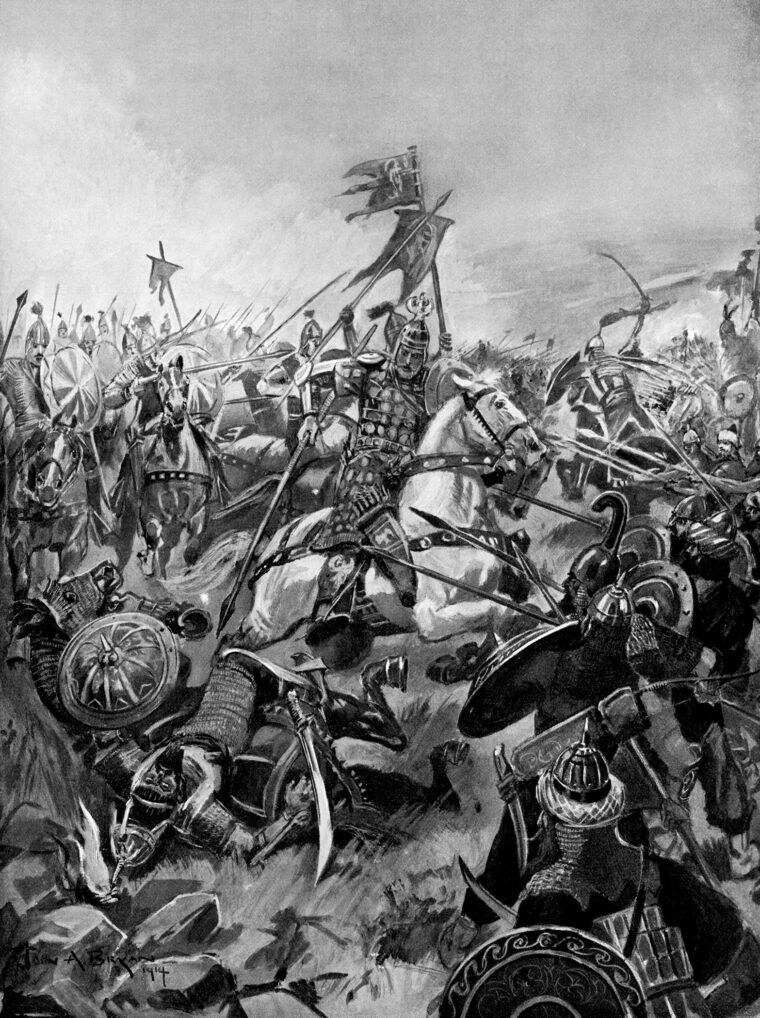
Precisely where the ensuing battle occurred is open to question, although from the chronicles the general location can be identified. It must have taken place somewhere on the broad plain east of the ruins of Nineveh. Whether this was at Karamlays (probable) or around nearby Bartallah (less probable), however, cannot be determined.
Consistent with wanting to give the appearance of a retreat, Heraclius likely removed the guards from the ford of the Greater Zab. He also probably pulled back all the troops in the area, leaving it open to the Persians. Meanwhile, he deployed the main body of his army on the open plain in close order. This gave the Romans the advantage owing to their skill in hand-to-hand fighting.
Further, the Roman close formations made defensive measures much more effective against the massive volleys of arrows on which Persian assaults typically relied. By raising shields, Roman soldiers could cover both themselves and each other with a protective roof—a variation on the testudo, or turtle, formation.
Finally, although the level ground allowed both Persian and Roman cavalry to maneuver freely, it is suicidal to throw cavalry against formed infantry. Of course, once the infantry of both armies came to grips and were engaged hand-to-hand, neither archery nor cavalry could be used to good effect against an opponent without endangering one’s own troops.
Thus, by careful planning, capitalizing on Roman strengths in a way which would cancel out those of the Persians, and by having the weather as an unexpected ally, Heraclius was in the best possible position. He also had the advantage of pursuing limited objectives: throw the Persians out of the Roman Empire and recover the True Cross.
Rhazates on the other hand was charged with the nearly impossible task of annihilating the invaders instead of simply getting rid of them. In the latter case, the objective could have been accomplished by standing down and allowing the Romans to retreat—which Heraclius would have been forced to do had Rhazates refused to attack. It also would have made Heraclius look foolish to his subjects for having undertaken an expensive and dangerous military operation which accomplished nothing.
Great King Chosroes’ orders (and concern for himself), however, compelled Rhazates to violate a fundamental principle of war—always leave the enemy a way out. Fighting an enemy who has nothing to lose is costly and often self-defeating.

Fortunately for Heraclius, the morning of December 12 was foggy, making it difficult for Rhazates to know how the Roman formations were positioned, or even where they were, with any degree of accuracy. It also nullified the Persians’ superiority in archery—it is hard to hit what cannot be seen.
According to the somewhat sketchy reports, Rhazates formed his army into three groups. Evidence suggests the Persians were organized into a vanguard, main body, and rearguard instead of the main body and left and right wing with reserves bringing up the rear. This was prudent if Rhazates could not see the Roman formations and did not know from which direction they would attack, although bunching his forces ultimately proved to be the wrong decision.
For his part, Heraclius seems to have done what the Athenians did when outnumbered by the Persians at Marathon a thousand years before—and was equally successful. He deployed his forces with a weak center and strong flanks. The idea is for the center to give way to the enemy’s early assault, lure him further on, then close in with the flanks. Surrounded, the opponents must then either surrender or die.
Some authorities claim the Romans surprised the Persians. This is hardly likely considering the fact both sides were in combat formation and marching into battle. Any surprise would have been momentary. Instead, an initial attack by the Romans, a false retreat to lure the Persians in, and then turning about to attack again as the Roman flanks closed in on the Persian main body seems to fit the very loose descriptions of events.
The battle lasted for 11 hours straight, according to Norwich. This was not as long a period as it might seem. In ancient times, in contrast to the modern system of dividing the day into 24 hours of equal length, day and night were each divided into 12 hours of varying lengths depending on the time of year. Thus, by ancient reckoning, the battle of Nineveh began a short winter hour after sunrise and lasted until an early sunset.
Both commanders put themselves on the front lines. This was rash but good for morale. At the height of the fighting, Rhazates is said to have challenged Heraclius to single combat to decide the issue. Although the story is probably more legendary than factual, he might have done so in desperation if, as seems evident, the fighting was going against the Persians. If he lost and survived the battle, Chosroes would likely have him tortured to death. He would have had nothing to lose and everything to gain.
What Chosroes would have done to Rhazates is moot. He and two other senior Persian commanders were killed in the battle, either by Heraclius personally as reported (unlikely) or simply the misfortunes of war.
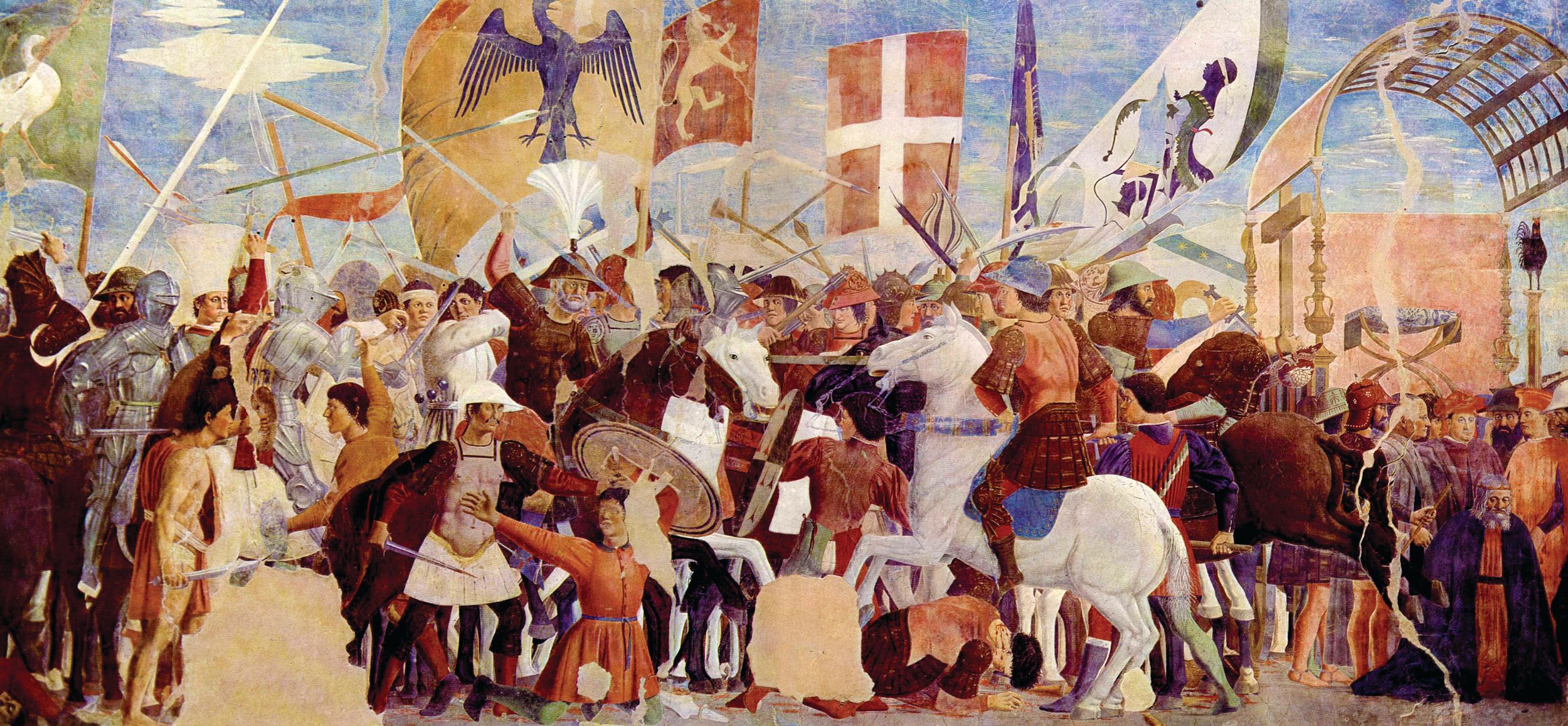
The battle itself was not the rout it would have been had Heraclius’ forces outnumbered the Persians as some authorities believe. At the close of the day, although exhausted by the fighting and having lost their general, the Persians managed to withdraw in good order across a stream and camped within sight of the Romans.
Equally fatigued, the Romans remained in possession of the field, thereby technically becoming the victors. They had, however, neither the strength nor the will to follow up their success.
Instead, each side kept a wary eye on the other, the Roman cavalry watering their horses “two arrow-shots” from where the Persian horsemen kept watch over their dead. An hour or so after midnight the Persian army decamped, taking their baggage but leaving their dead behind. In the morning the Romans looted the Persian dead. Heraclius claimed the shield of Rhazates, set with 120 pieces of gold.
Although the Battle of Nineveh was indecisive, the Persian withdrawal gave the Romans free rein. After resting a few days, they turned south to Dastagird, the royal palace, the primary objective all along. Chosroes fled as the Romans approached, and they arrived to find the palace deserted. A brief search failed to locate the True Cross and other relics. Despite its magnificence, Heraclius ordered the palace destroyed. A few weeks later the Romans began the long journey back to Constantinople.
Word of Chosroes’ downfall reached Heraclius on April 3, 628, at Tauris (modern Tabriz in northwestern Iran). In the eventual peace treaty signed at Hierapolis in the summer of 629, the Persians agreed to vacate all the conquered territory, release all prisoners of war, and restore the True Cross and the other relics.
Exact circumstances surrounding the return of the True Cross are hazy; the important thing as far as people then were concerned was its return, not the specific details. Ultimately, it was restored to the Church of the Holy Sepulcher in Jerusalem “to great ceremony” on March 21, 630.
Though Heraclius prevailed and Roman territories had been returned, both sides were diminished militarily, economically, and politically, leaving the Byzantine and Sasanian empires vulnerable to the new and rising power of Islam and the Arab Caliphates.

Join The Conversation
Comments
View All Comments