By Victor Kamenir
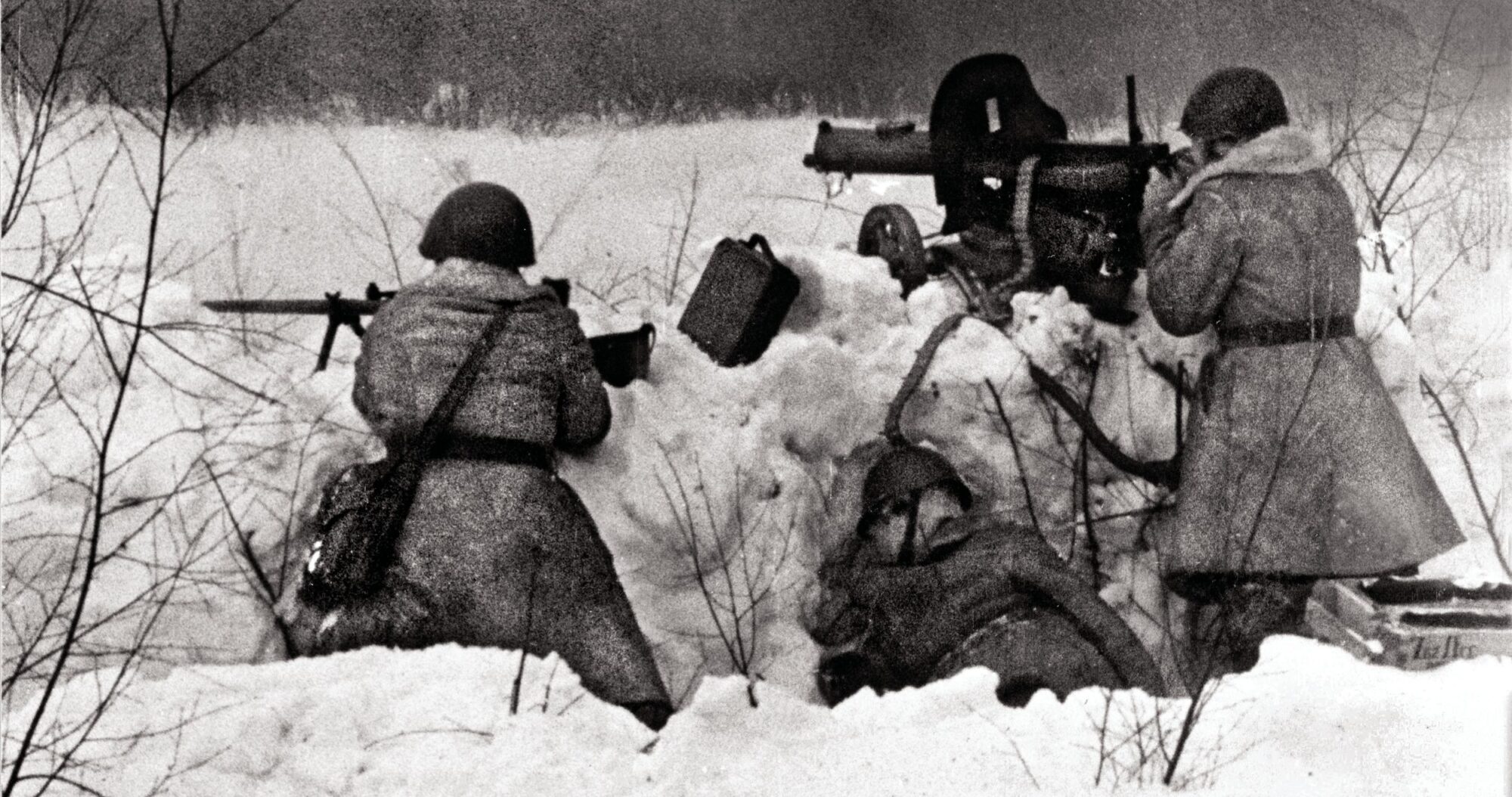
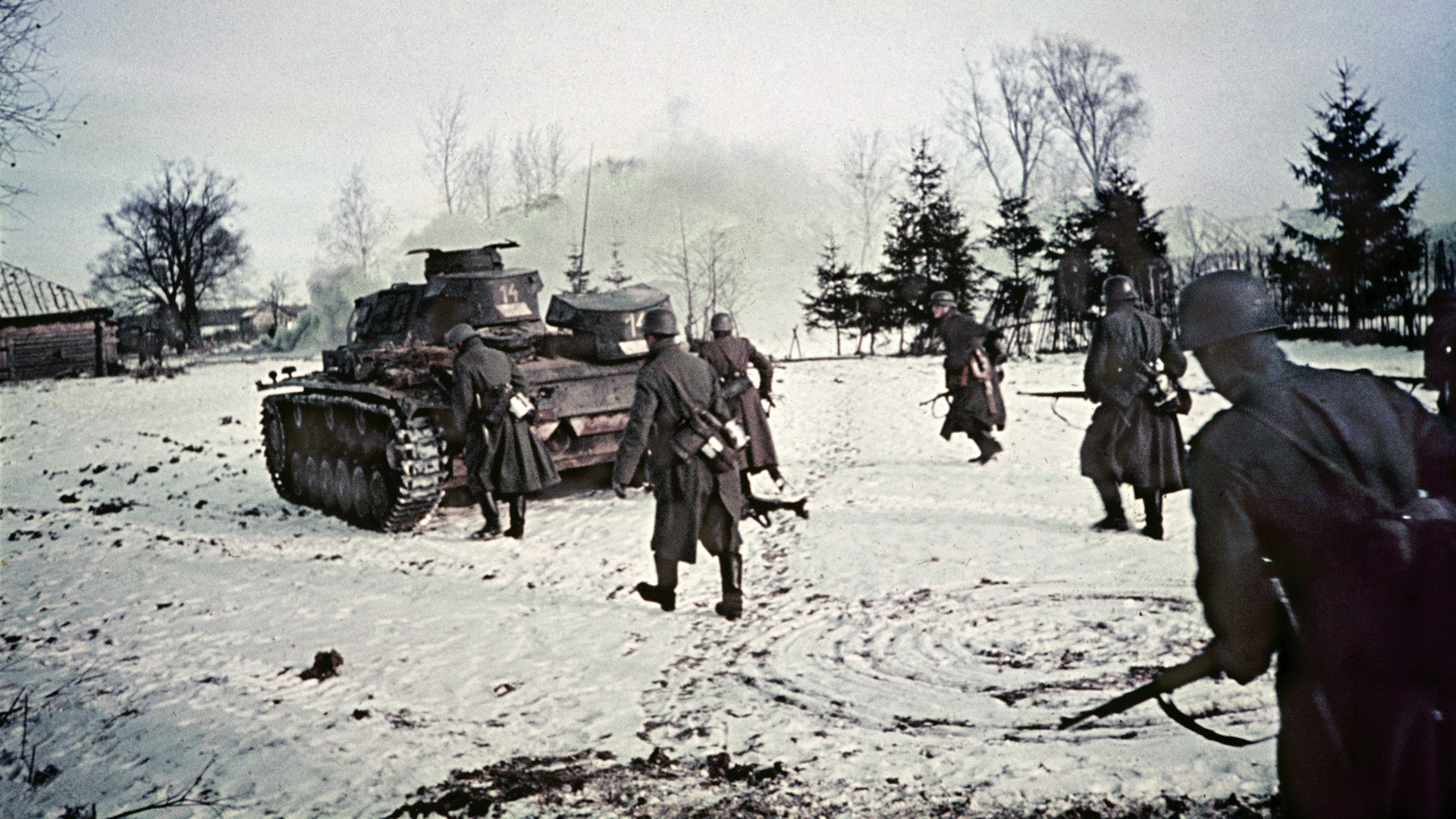
Operation Typhoon, Germany’s final effort to capture Moscow, ground to a halt within sight of the Soviet capital as the temperatures hovered between -30ºF and -40ºF in early December 1941. Judging the timing just right, the Soviet Supreme Command launched a massive counteroffensive on December 5 with painstakingly gathered reserves. By the 28th, when Führer and Reich Chancellor Adolf Hitler issued a categoric “no retreat” order, the Red Army pushed the German Army Group Center up to 200 miles from Moscow.
Despite the counterattack faltering in the face of significant casualties and hampered by heavy snowfall, poor roads, and overextended supply lines, Soviet Premier Joseph Stalin wanted the offensive to continue. “Now is the most opportune moment to launch a general offensive,” Gen. Georgy Zhukov recalled Stalin’s words at the January 5, 1942, meeting in the Kremlin, “The enemy expects to delay our offensive until spring, so that in the spring, having gathered forces, he will again begin active operations. Our task is not to give the Germans this respite, to push them westward without stopping, to force them to use up their reserves before spring.”
However, after stabilizing the situation in the north and south, the German High Command rushed men and materiel to reinforce the Army Group Center. The Germans established formidable defenses on approaches to Rzhev and Vyazma with company and battalion-sized defensive sectors at population centers and road junctions up to five miles in depth. Artillery and machine guns covered areas not directly occupied by troops. Overlapping flanking sectors of fire kept the unoccupied spaces under control.
At Stalin’s insistence, the Soviet General Staff rapidly developed a plan for a general offensive to encircle and destroy the Army Group Center. Two Soviet army groups, the Western and Kalinin Front, would attack from the north, east, and southeast to close the pincers west of Vyazma and Rzhev to finish the operation in 18 days. The Western Front, the primary Soviet strike force, numbered nine armies and one cavalry corps task force, and the Kalinin Front included four armies and one cavalry corps. Two airborne corps from the Supreme Command Reserves were available to support as needed.
The Red Army held a slight numerical superiority, with 723,000 troops and 528 tanks facing 624,000 Germans with 354 tanks, while the artillery was at parity at almost 11,000 pieces per side. Operationally, a Soviet army was numerically roughly equivalent to one–and–a–half German corps, while a German field army was comparable to half or a full Soviet front.
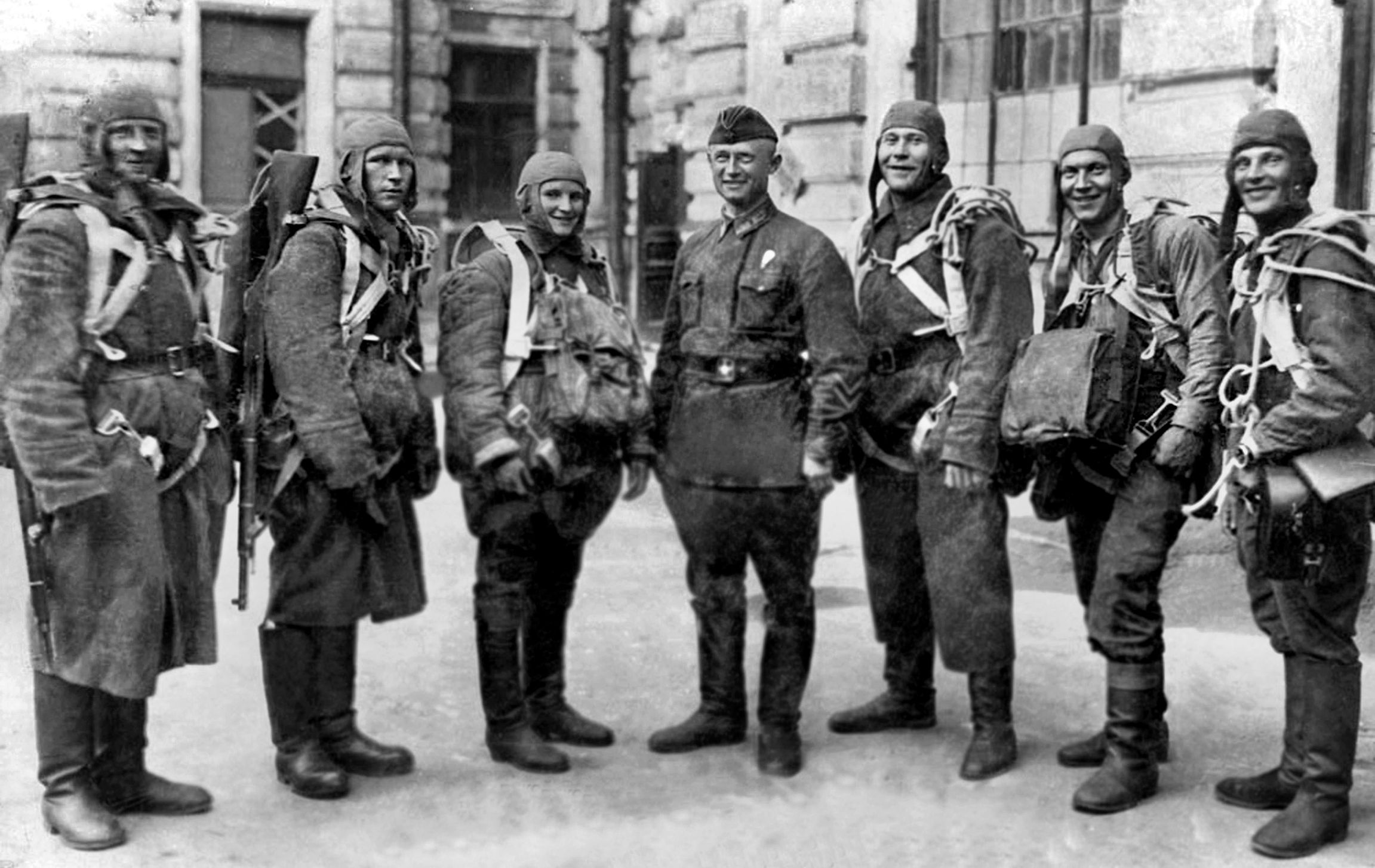
The Kalinin Front under General Ivan Konev went on the offensive with the 29th and 39th Armies on January 8 from the north with explicit orders to take Rzhev no later than January 12. The attack breached the German lines, permitting the 22nd Army and the 11th Cavalry Corps to enter the gap. By the end of the week, the cavalry corps had advanced up to 60 miles to the south to reach the vicinity of Sychevka, creating a critical situation on the left flank of the German 9th Field Army. However, despite the best efforts of the 29th Army, Konev’s forces could not capture Rzhev.
“Leading enemy units conducting an enveloping operation reached the area northwest of Vyazma,” recorded Gen. Kurt von Tippelskirch, Chief of Staff of the German 4th Army, “The 9th Field and 4th Tank Armies were almost surrounded. They were supplied by the Smolensk-Vyazma-Rzhev-Olenino railway, which was also threatened by the enemy from the south. If this railway had been cut between Smolensk and Vyazma, then the fate of both armies would have been decided.”
Zhukov’s Western Front went into action on January 10 with its main efforts on the left wing. Its armies received the mission of destroying the Ykhnov-Medyn German group of forces and continuing northwest to link up with the Kalinin Front southwest of Vyazma, a crucial railroad and highway nexus tying the Army Group Center with the rear. The plans called for all-arms armies to create a breach in German lines to allow Lt.Gen. Pavel Belov’s maneuver group to exploit the breakthrough and conduct a deep raid northwest, trapping the bulk of Army Group Center.
In addition to the five cavalry divisions of his 1st Guards Cavalry Corps, Belov received two rifle divisions, a tank brigade, and five ski battalions. With less than 20 armored vehicles, the tank brigade was a brigade in name only. Nonetheless, the total strength under Belov’s command numbered 20,000 soldiers.
The lack of tanks and artillery ammunition reduced Soviet efforts on the Western Front to bloody frontal attacks through deep snow that produced only minor gaps in the German defenses. Zhukov, a former Czarist NCO who was not above punching an offender in the face, relentlessly drove his forces forward regardless of casualties.
The Soviet Supreme Command decided to conduct two airborne landings behind German lines to assist the ground forces. Zhukov tasked one airborne task force to insert on January 18 near Znamenka-Zhelanya, roughly half-way between Vyazma and the Warsaw Highway (modern A-130 Highway). The airborne force would then break into two groups, with one element assisting Belov in breaching the German lines along the Warsaw Highway to break into operational maneuver space northwest toward Vyazma. The second element would help the 33rd Army under Lt. Gen. Mikhail Yefremov, attacking frontally from the east, to encircle and destroy German forces around Yukhnov.
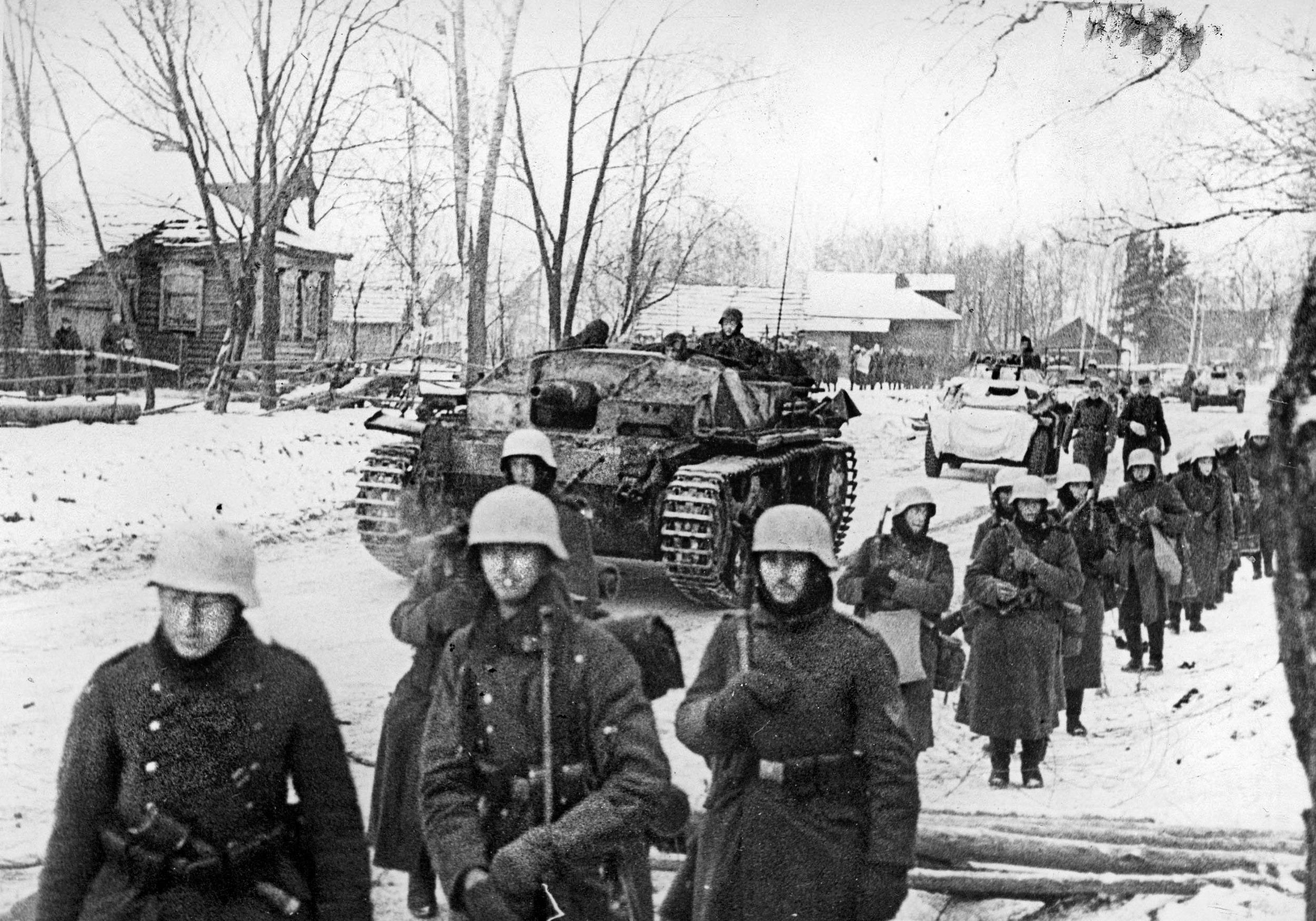
The Headquarters of the Western Front Air Force and the Headquarters of the Airborne Forces developed a three-stage operation at Znamenka-Zhelanya. In the first stage, a parachute landing force would seize an airfield at Znamenka, followed two-and-half hours later by a command-and-control group to prepare the airfield to receive the airmobile force in the third stage. Twenty-one PS-84 civilian aircraft, an American Douglas DC-3 produced under license in the Soviet Union, and three Tupolev TB-3 heavy bombers hurriedly modified to transport 45-mm antitank guns staged at the Vnukovo Airport near Moscow.
Two battalions from the 201st Airborne Brigade and the 250th Airmobile Regiment, both from the 5th Airborne Corps, received the mission. From the beginning of the invasion, German airborne units had mainly fought as regular infantry, suffering heavy casualties. The 201st Airborne Brigade was a veteran unit but severely understrength due to losses, and many of its replacements had limited or no airborne training. The 250th Airmobile Regiment, referred to in various documents as an airborne or a rifle regiment, was a recently converted regular rifle unit and not airborne-qualified.
A lack of aircraft was a limiting factor. The planned parachute group numbered 452 soldiers armed with 38 machine guns, 11 mortars, and 6 antitank rifles. The 250th Airmobile Regiment numbered over 1,200 troops armed with 68 machine guns and two 45-mm antitank guns. Each TB-3 could accommodate 30-35 fully armed and equipped soldiers, while a PS-84 could carry 20. It would require nearly 100 flights to deliver the full allocated force, along with its equipment and supplies.
At 3:30 a.m. on January 18, the first flights began taking off from the Vnukovo Airport. As they neared the designated drop zones, heavy antiaircraft fire forced the pilots to gain altitude before giving the green light to drop. High altitude and strong winds scattered the paratroopers from Capt. Ivan Surzhik’s 1st Battalion and Capt. Nikolai Kalashnikov’s 2nd Battalion over a wide area. Those soldiers who reached their designated rally points often found no one there to direct them further. As groups formed, they moved off in different directions without coordination.
By the morning of January 19, fewer than half of the men from the two battalions had assembled at the drop zone near Znamenka. Captain Surzhik assumed command of both units and made contact with local partisans, who attempted to find and bring in scattered paratroopers.
Without waiting for all his men to gather, Surzhik attacked the Znamenka airfield, but failed to take it in the face of heavy German resistance.

As the attack on Znamenka faltered, Surzhik was informed by partisans of an inactive airstrip nearby. Assisted by partisans and local residents, the paratroopers cleared the snow from the runway, and on the evening of January 19, four PS-84 aircraft landed with 65 men from the airfield command-and-control element. Without snow skis, however, all four aircraft became stuck in the deep snow and were destroyed by German air attacks the next day. Under continued German pressure, the command-and-control element abandoned the airstrip and linked up with Surzhik’s main force.
Again with the help of partisans and local residents, the paratroopers prepared a makeshift airstrip two miles west of Zhelanya. Within hours, aircraft carrying the men from Maj. Nikolai Soldatov’s 250th Airmobile Regiment began to arrive. Despite sporadic German shelling and air attacks, by the end of January 22, some 1,011 men with two 45-mm antitank guns, 24 mortars, 71 machine guns, and six antitank rifles had been delivered.
Soldatov, as the senior officer present, assumed command of both the airborne and airmobile elements. Before Soldatov’s command was fully assembled, he received orders by radio on January 20 from Zhukov to send a detachment to Liudkovo, 20 miles southwest of Ukhnov, to help Belov’s task force break through the Warsaw Highway.
Instead of sending Belov into an existing gap to exploit operational maneuver space, Zhukov committed Belov’s formation to the front lines to create a breach of his own. With no ammunition for heavier artillery and his few tanks unable to maneuver in deep snow, Belov was forced to commit his infantry and dismounted cavalrymen to frontal attacks. To ensure success, Zhukov sent his deputy, Lt. Gen. Georgy Zakharov, who promptly executed five battalion and regimental commanders who failed to achieve their objectives.
With no assistance from Surzhik, who halted eight miles north of Liudkovo, Belov achieved the first breakthrough across the Warsaw Highway on January 26. Every time a sizable cavalry force made it across, the Germans attacked with tanks along the highway, closing the gap. On January 30, the Germans closed the gap permanently, cutting off Belov’s rear echelons, heavy artillery, the tank brigade, and the two rifle divisions. Belov went into the raid with only five depleted cavalry divisions and five ski battalions, barely numbering 7,000 men, few mortars, and 76-mm regimental guns with limited ammunition.
The cavalry reconnaissance patrols found Surzhik on January 28. Guided by Surzhik’s men, Belov finally linked up with Soldatov on January 31 and assumed command of both the airborne and cavalry elements.
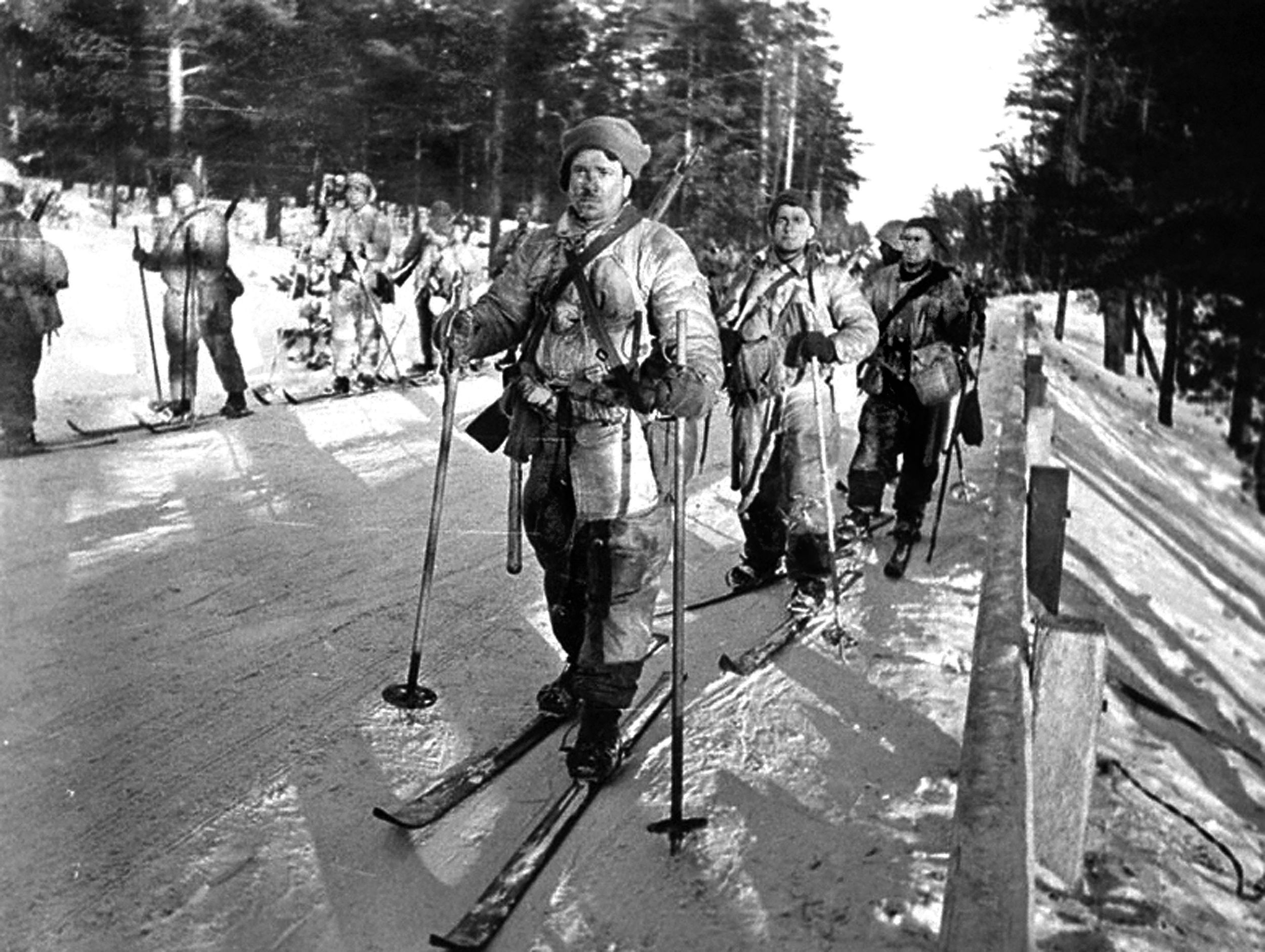
In the meantime, Soldatov continued hit-and-run attacks against smaller German garrisons and sabotaging railways and roads, causing severe disruptions in German resupply efforts. Heavy snowfall frequently prevented trucks from moving on the roads, and the Germans increasingly relied on horse-drawn transport. “Only two days and the army will start starving to death,” recorded commander of the 4th Field Army Gen. Gotthard Heinrici in his diary.
The second airborne task force, Major General Aleksei Levashov’s 4th Airborne Corps would drop in the area of Ozerechnya, 25 miles southwest of Vyazma, with the mission of cutting the Vyazma-Smolensk railway and highway and assisting in the capture of Vyazma. On January 17, Levashov, who had been promoted to major-general and corps command just two months prior, received orders to move his corps to three airfields near Kaluga for deployment on January 21.
As the trains carrying paratroopers reached the town of Aleksin 30 miles east of Kaluga on the Oka River, Levashov discovered the bridge over the river destroyed. Levashov’s men and equipment had to disembark on the east side of the river, cross to the west bank over ice, and re-board the trains for the trip’s final leg. The delay postponed the operation until January 27.
As the 33rd Army’s renewed offensive on Vyzama began on January 26, aircraft allocated for deployment of the 4th Airborne Corps staged at three airfields near Kaluga. The aircraft group numbered 22 TB-3s, 39 PS-84s, and 19 fighters. Insufficient shelter to accommodate all the men and equipment forced the paratroopers to pack their parachutes and equipment containers on the snow in the open air.
The increased activity did not go unnoticed by German air reconnaissance, which had operated from Kaluga airfields just a month before. In the late afternoon of January 26, German aircraft conducted three attacks on one of the airfields, destroying nine TB-3s and two fighters and damaging five more TB-3s.
In the afternoon of January 27, seven reconnaissance groups of 20-30 men parachuted two hours before the first flights carrying the leading elements of the 8th Airborne Brigade.
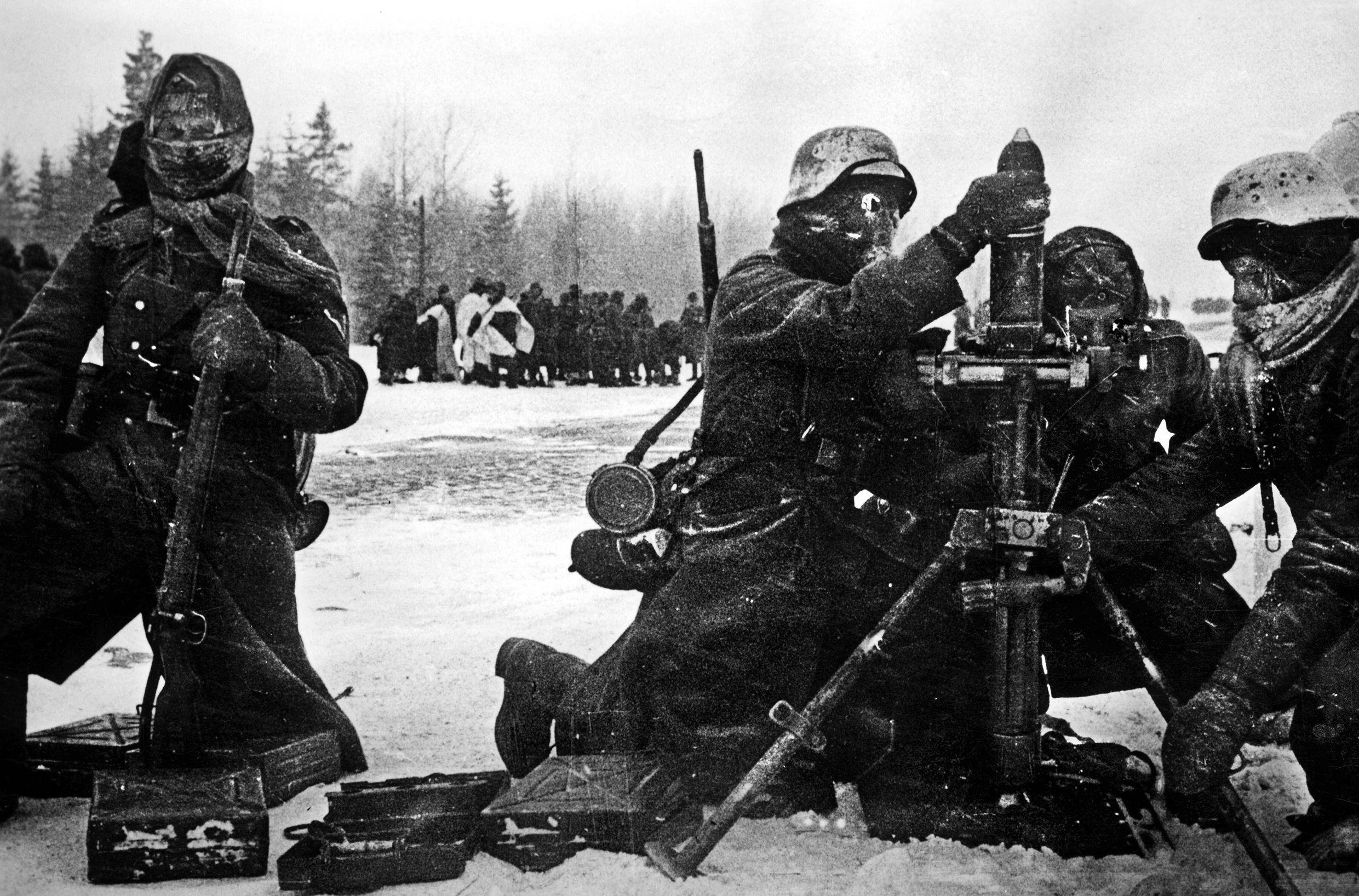
The 2nd Battalion under Captain Mikhail Karnaukhov dropped first to prepare a landing zone for the rest of the brigade. Many aircraft crews lost direction and the battalion dropped near the Tabory village, 10 miles south of Ozerechnya. High winds scattered paratroopers over a wide area. Karnaukhov, the sixth man to leave his aircraft, landed in a deep snow bank. After freeing himself from his parachute, the captain fired a red flare, signaling his men to rally on him.
By the morning of January 28, Karnaukhov had gathered almost 300 men from the 648 who dropped with him and set off toward Ozerechnya. As the men struggled through the deep snow, sounds of more plane engines and antiaircraft fire sounded from the direction of the village. In the second echelon, leading elements of the 3rd Battalion under Major Kobetz descended directly over German-occupied Ozerechnya, and many paratroopers were shot in the air or immediately upon hitting the ground. Several men who landed in the Ozerechnya were hung by the Germans using the men’s parachute suspension lines. Searching for paratroopers, the Germans burned down several villages to deny them shelter and evicted the hapless civilians out in the snow.
Nadezhda Ilina, from the Panasye village three miles east of Ozerechnya, was 14 at the time. “There was a cemetery next to Panasye,” she remembered, “In this cemetery, there were centuries-old fir trees—huge ones. A German sniper was sitting in these trees… The paratroopers—I don’t know how, on skis or on foot … one by one, they climbed the hill, and so the sniper mowed them all down. Twelve people. We saw them later; they lay in the snow as they walked—in a row.”
High winds and navigation errors scattered the majority of the 3rd Battalion paratroopers much farther to the west, to be either wiped out or join the partisans. After gathering around 300 of his men, Kobetz linked up with Karnaukhov. The combined detachment located a suitable drop zone for the follow-on echelons and lit signal fires in a pre-arranged pattern. While more paratroopers dropped over the following day, many aircraft returned without delivering their loads, unable to spot signal fires due to bad weather.
Radioman Private Vasiliy Gramma, carrying a shortwave radio station “Sever” (North), found Karnaukhov several hours after landing. However, Gramma’s signal platoon commander Lt. Vlasov—who carried the code books—was missing. “Karnaukhov ordered the immediate establishment of contact with the [corps headquarters],” Gramma remembered, “We explained that we did not have all the codes, that we only knew the frequency and call sign. However, we tried to establish contact and received a response. However, we could not provide authentication when [corps headquarters] requested it. We continued trying for the next two days, but the [corps headquarters] stopped answering. Only on the third day, when Lieutenant Vlasov, who landed the farthest, arrived, it was possible to establish contact.” Communications improved further when the brigade command group headed by Col. Aleksandr Onufriev dropped on January 31.
Constant German attacks against Kaluga airfields and technical difficulties left only two TB-3s and 10 PS-84s still operational, further delaying the deployment of paratroopers. Of the 3,062 men from three of the four battalions from the 8th Airborne Brigade who dropped behind German lines, only 2,323 soldiers gathered around Karnaukhov and Kobetz.
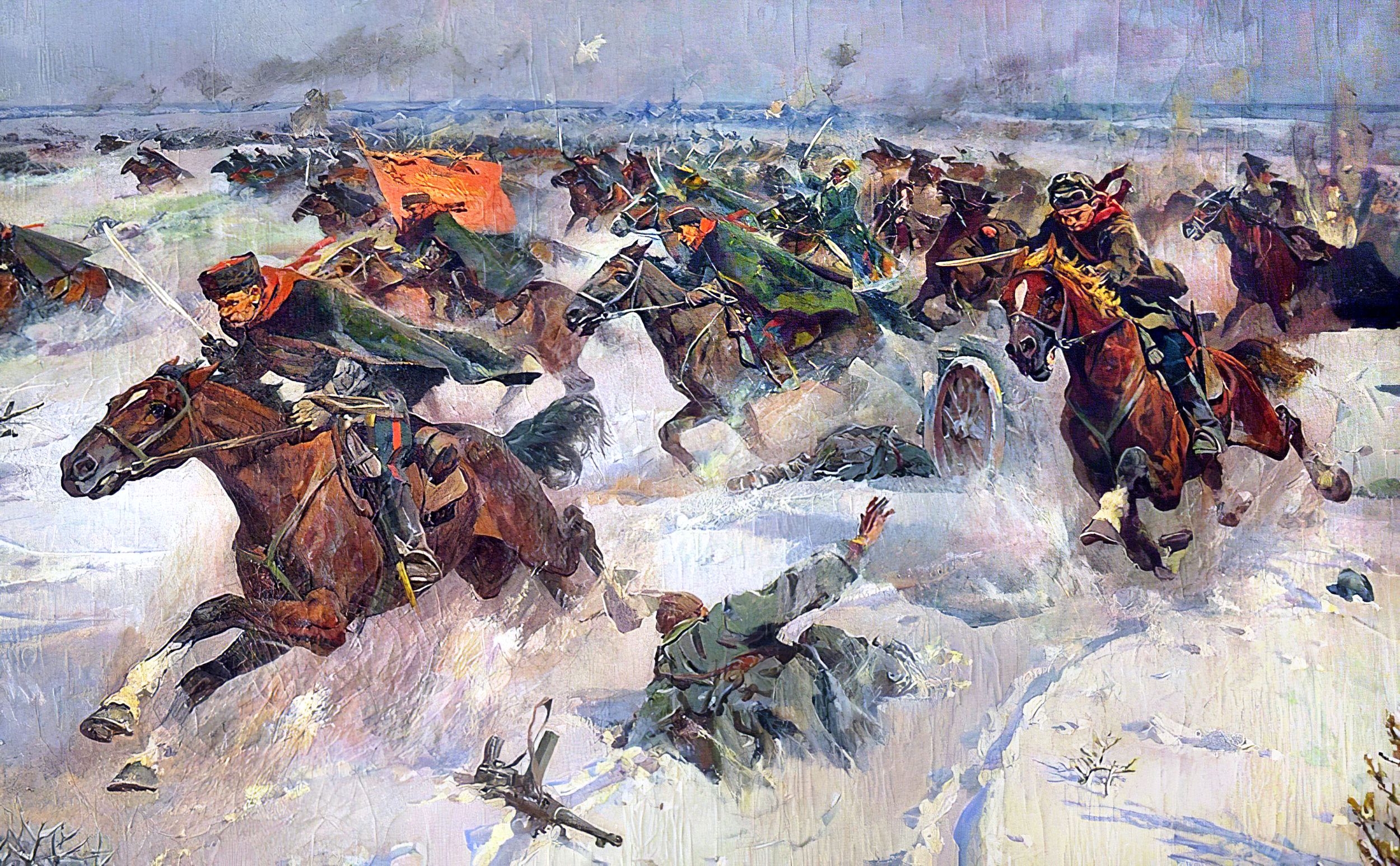
Likewise, of more than 34 tons of equipment, including 500 pairs of skis, 400 sleds, 8,000 mortar bombs, 21,000 hand grenades, and 300,000 rounds of ammunition dropped, only a small portion was recovered. It was vital for lightly armed paratroopers to find their air-dropped supply containers with equipment and ammunition. However, the Germans also actively hunted for them and, in some instances, set up ambushes near discovered containers, inflicting heavy casualties on paratroopers attempting to retrieve them.
Between February 1 and 3, the 11th Cavalry Corps, the 33rd Army, and Task Force Belov made uncoordinated and unsupported attacks on Vyazma, failing to come closer than eight miles to the city. Soviet armies, having exhausted all their offensive capabilities, went on the defensive. Zhukov, now in command of the Western Direction, composed of Kalinin, Western, and Bryansk Fronts, retaining personal control of the Western Front, canceled further deployment of the 4th Airborne Corps.
The German 9th Army’s successful counterattacks closed the breech west of Rzhev, trapping the bulk of Kalinin Front’s 29th and 39th Armies and the 11th Cavalry Corps. A similar counterattack by the 4th Panzer Army cut off and encircled four leading divisions of the 33rd Army in two pockets, with three divisions trapped with the army commander Yefremov and one division, the 329th Rifle, with the Army’s Chief-of-Staff General Aleksei Kondratyev.
Slackening pressure from the front permitted the German command to concentrate on destroying Soviet forces cut off in the rear of the Army Group Center. The situation of the surrounded Soviet forces was desperate, with food and ammunition running out and the number of wounded increasing. During the heavy fighting in the fall of 1941, destroyed Red Army units abandoned large numbers of weapons and equipment in the fields and surrounded woods, and trapped units searched for serviceable weapons and ammunition.
Zhukov maintained close radio contact with trapped units, issuing minute directions without knowing the situation on the ground. On one occasion, after advising Zhukov post-fact about a routine relocation of his headquarters, Belov received a sharp rebuke: “Who gave you the authority to make independent decisions?”
On February 6, Zukhov subordinated the 8th Airborne Brigade to Belov, but a strong German presence between the two forces did not permit the link-up until February 15. Two hundred paratroopers, which Belov gathered as his task force moved behind the enemy lines, significantly bolstered the airborne brigade, which was down to 380 men by this time. Belov and Yefremov, commander of the 33rd Army, maintained close radio contact, but Zhukov did not permit them to link up, considering it unnecessary.
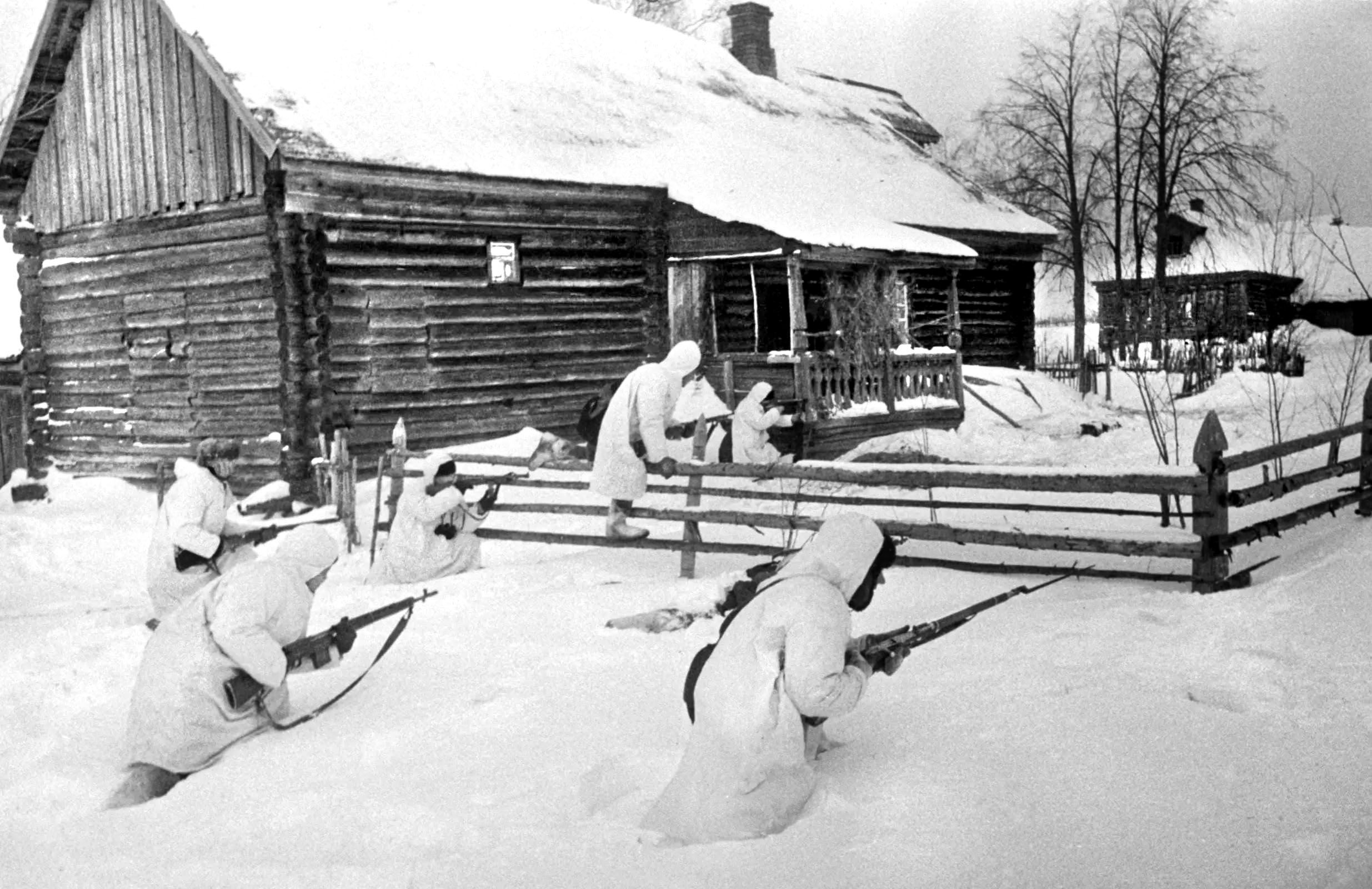
Often in conjunction with partisans, the paratroopers and the cavalrymen attacked German infrastructure and small units and carried out ambushes and acts of sabotage. Movement was possible mainly at night, hiding in forests during the day from German aviation. When the situation permitted, a rough landing strip would be laid out in the woods, allowing light U-2 aircraft to land in the occupied territory, bringing in meager supplies and instructions and taking out small numbers of wounded.
On February 12, Belov requested and received permission to recruit locally, and soon, his command gathered 2,417 local residents and soldiers from previously destroyed units hiding among the locals. However, there were barely enough weapons to arm half of them.
The Germans, steadily breaking up and eliminating small Red Army units, burned local villages to deny the soldiers provisions and support. In one such action on February 11, the Germans surrounded and wiped out a detachment under the 8th Airborne Brigade’s chief of staff, Lt. Col. Nikolai Sagaidachyi, in the village of Kurdyumovo. After the paratroopers lay dead, the Germans gathered and shot most of the villagers and burned the village to the ground. It was never rebuilt.
During another fight, Lieutenant Vladimir Shaulin fell wounded, and one of his men dragged him into nearby bushes. “Sometime later I woke up—silence,” remembered Shaulin, “Only sporadic, ‘bang, bang.’ I see the Germans walking across the field, finishing off our seriously wounded. The 2nd Battalion, one and a half kilometers away, was in trouble, our battalion went to their aid, but the wounded were left behind… while you carry away one wounded man, dozens will die…”
Even with the local recruits, the five cavalry divisions of Belov’s corps by mid-February numbered less than 6,000 men and he consolidated the corps into two divisions. In the 8th Airborne Brigade, in contact with Belov and under his nominal command, barely 1,300 remained under arms.
Between February 17-23, the Soviet Supreme Command launched an operation to rescue the surrounded forces. The 43rd Army attempted and failed to breach the German lines to reach the dying 33rd Army. The remnants of the 250th Airmobile Regiment, whittled down to less than 150 effectives, merged with the 329th Rifle Division.
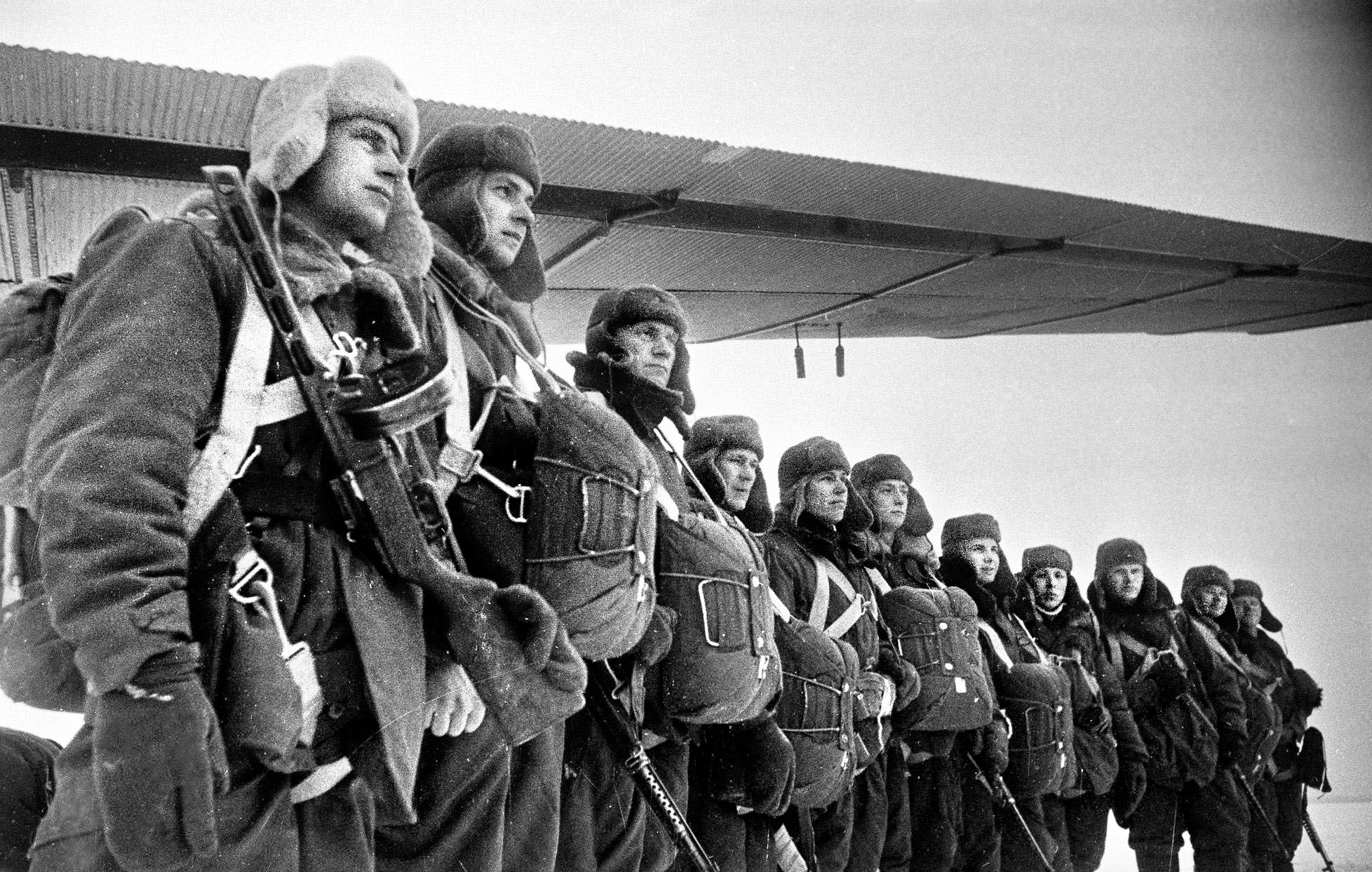
The remainder of the 4th Airborne Corps, the 9th and 214th Airborne Brigades, and the fourth battalion of the 8th Airborne Brigade parachuted in the area of Zhelanye, east of Ugra railroad station. During the night of February 17, the first group of 20 TB-3s carried a battalion from the 214th Airborne Brigade. Nineteen aircraft could not find the drop zone and returned. One plane dropped its stick of paratroopers, but the men never linked up with the battalion and were never heard from again.
On February 23, a German fighter strafed the PS-84 carrying the 4th Airborne Corps command element, killing Maj. Gen. Levashov. The corps’ Chief-of-Staff, Col. Aleksandr Kazankin, assumed command. By the end of the day some 7,373 men had dropped, along with 1,524 containers of equipment. As earlier, less than half of them rallied at the drop zones, with the rest scattered over a wide area. Dozens of women in each airborne brigade, mainly doctors, nurses, and radio operators, jumped into combat alongside the men and shared all the dangers with them.
“On February 25, the Hitlerites launched a determined offensive,” remembered Belov, “Their tanks and infantry dealt strong blows to the right and left flanks of our troops… I had no free reserves.” A German attack cut off the 41st Cavalry Division from the 11th Cavalry Corps, and the bulk of the 8th Airborne Brigade and Belov issued orders to their commanders to break out on their own.
On February 27, Belov’s leading battalions captured the Kyuchi village 10 kilometers north of the Warsaw highway and reached the area designated to link up with the 50th Army the next day. However, the attack of the 50th Army had stalled several miles south of the highway.
By mid-March, 400 survivors from the 329th Rifle Division and the 250th Airmobile Regiment broke out of the encirclement. The division’s commander, Col. Kornei Andrusenko, unjustly accused of “division’s inactivity,” was sentenced to a firing squad. However, the sentence was reduced to 10 years of imprisonment with a reduction in rank to major and return to active duty. By the end of the war, Andrusenko regained the rank of a colonel, never having to serve his sentence, but his career was ruined. Major Soldatov received command of the reconstituted 329th Rifle Division. He retired in 1964 with the rank of Lieutenant-General.
As the Army Group Center launched Operation Hanover to eliminate the threat to its rear areas, the situation of the surrounded troops continued deteriorating through April and May. Starving soldiers would rush under fire toward fallen Germans, hoping to find food in their backpacks or pockets. Without fodder, cavalry horses turned into skin-covered skeletons. When soldiers butchered a dying horse, they frequently were forced to eat the meat raw because cooking fires would bring German artillery and mortars.
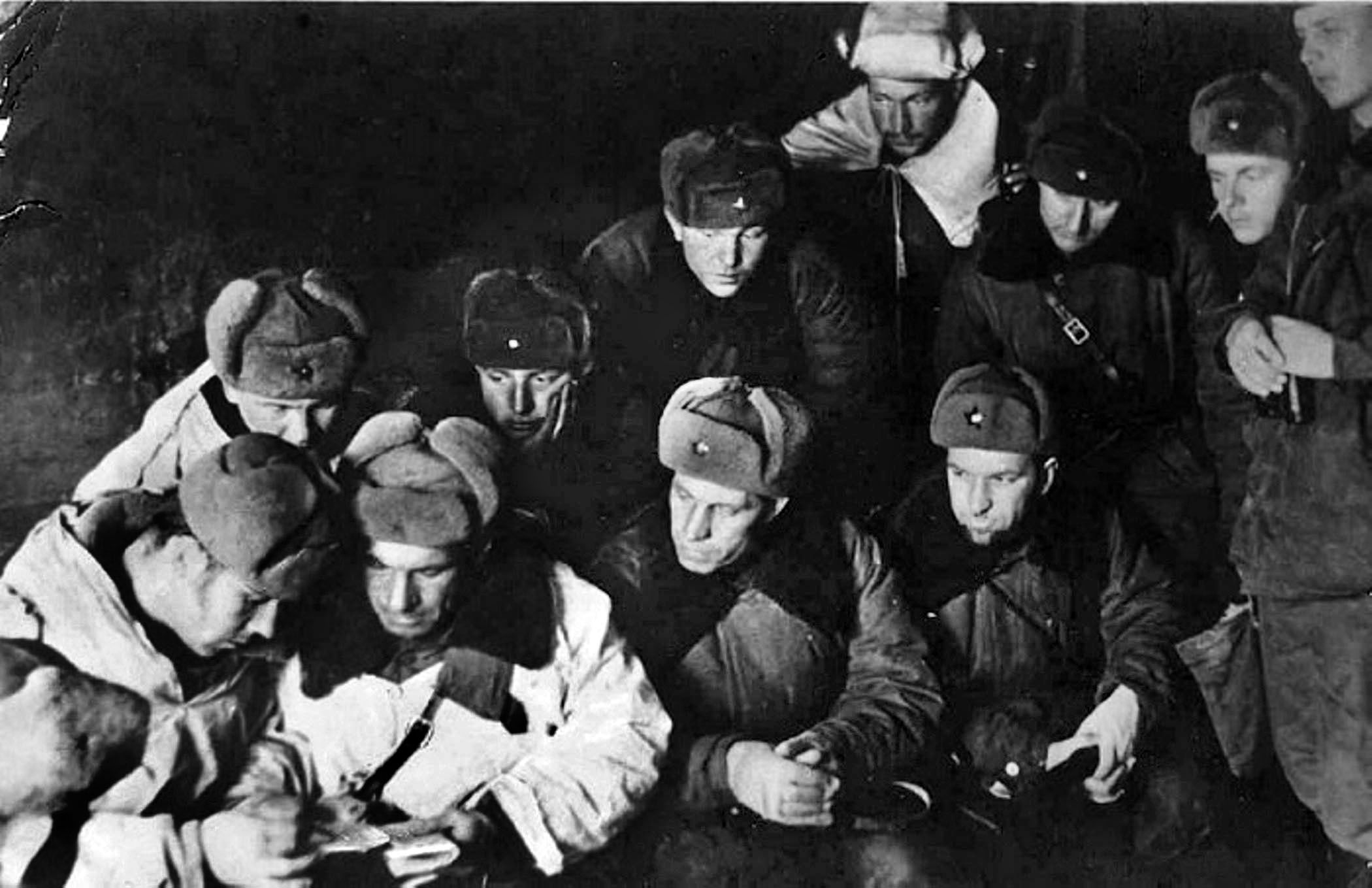
The trapped divisions of the 33rd Army ceased to exist as an organized force. Caught in an ambush on April 19, the division’s commander, Lt. Gen. Mikhail Yefremov, was seriously wounded and committed suicide rather than being taken prisoner. The Germans recovered the general’s body and buried him with full honors. Fewer than 900 survivors from the four surrounded divisions of the 33rd Army made it back to their own lines.
Nonetheless, the Soviet troops caused major disruptions behind the enemy lines. “The only transportation route is under imminent threat by the enemy on a width of 20 km. Airborne troops, skiing battalions and masses of partisans are in the Army’s rear… enemy airplanes are flying every night over our houses and reinforce their Army in our rear…,” Heinrici wrote to his wife on March 9, “…With difficulties our vehicles secure the villages that are between the enemy and our transportation routes. This is no longer just a little nuisance but a new army composed of airborne officers, partisans, former prisoners, and commissars from the population.”
By the end of May, when Zhukov subordinated the 4th Airborne Corps to Belov, of the 2,000 remaining paratroopers, only slightly more than 1,500 were combat-capable, and the strength of the 1st Guards Cavalry Corps was roughly the same. As the weather improved, the tempo of German efforts to eliminate the surrounded forces increased.
The Soviet Supreme Command made another attempt to assist the breakout, and between May 29 and June 3, more than 4,000 men from the 23rd and 211th Airborne Brigades from the 5th Airborne Corps parachuted behind German lines.
The paratroopers descended into hell. “We didn’t even have time to collect parachutes when machine guns opened fire on us from every side, and the paratroopers standing next to me fell, struck by bullets,” remembered Lt. Mikhail Bogatskiy, “We dropped our parachutes and rushed into the nearest forest, and at that time mortar shelling also began at our drop zone… We had only walked about half a kilometer when we were ambushed; cannons and mortars fired at us, and machine guns hit us from a distance of some 100 meters. We entered into a firefight and, with losses, retreated into the forest.”
With the weather improving, German spotter aircraft searched for groups of paratroopers to call in artillery fire and vector on ground forces. Groups large enough to defend themselves couldn’t be hidden. Smaller groups could hide, but lacked the numbers to fight effectively. Units lost all the cohesion, and the Germans methodically pursued and finished off isolated groups. Like drops of mercury, groups would merge, wander the forests, and shatter again under German attacks, “…there was always someone being killed nearby.” When Bogatsky ran out of ammunition for his PPSh submachine gun, he picked up a rifle on a battlefield. He continued carrying the empty PPSh for fear that if and when he reached their own lines, he would be shot for losing his assigned weapon.
In early June, Belov gathered some 2,500 survivors in the woods north of the Warsaw Highway. Paratroopers from the 5th Airborne Corps, the last to deploy, spearheaded the breakout on June 14. “We were fired upon from all sides, we shot at the Germans point-blank with our last rounds of ammunition, stabbed them with bayonets, we could hear screams and swearing all around us,” remembered Bogatskiy, “A comrade was running next to me, a bullet hit him in the chest, he only managed to say: ‘Mama’… and fell dead to the ground… And we continued forward, without stopping, without picking up the seriously wounded, everyone was shouting, swearing, and shooting, until we realized that we had broken through.”
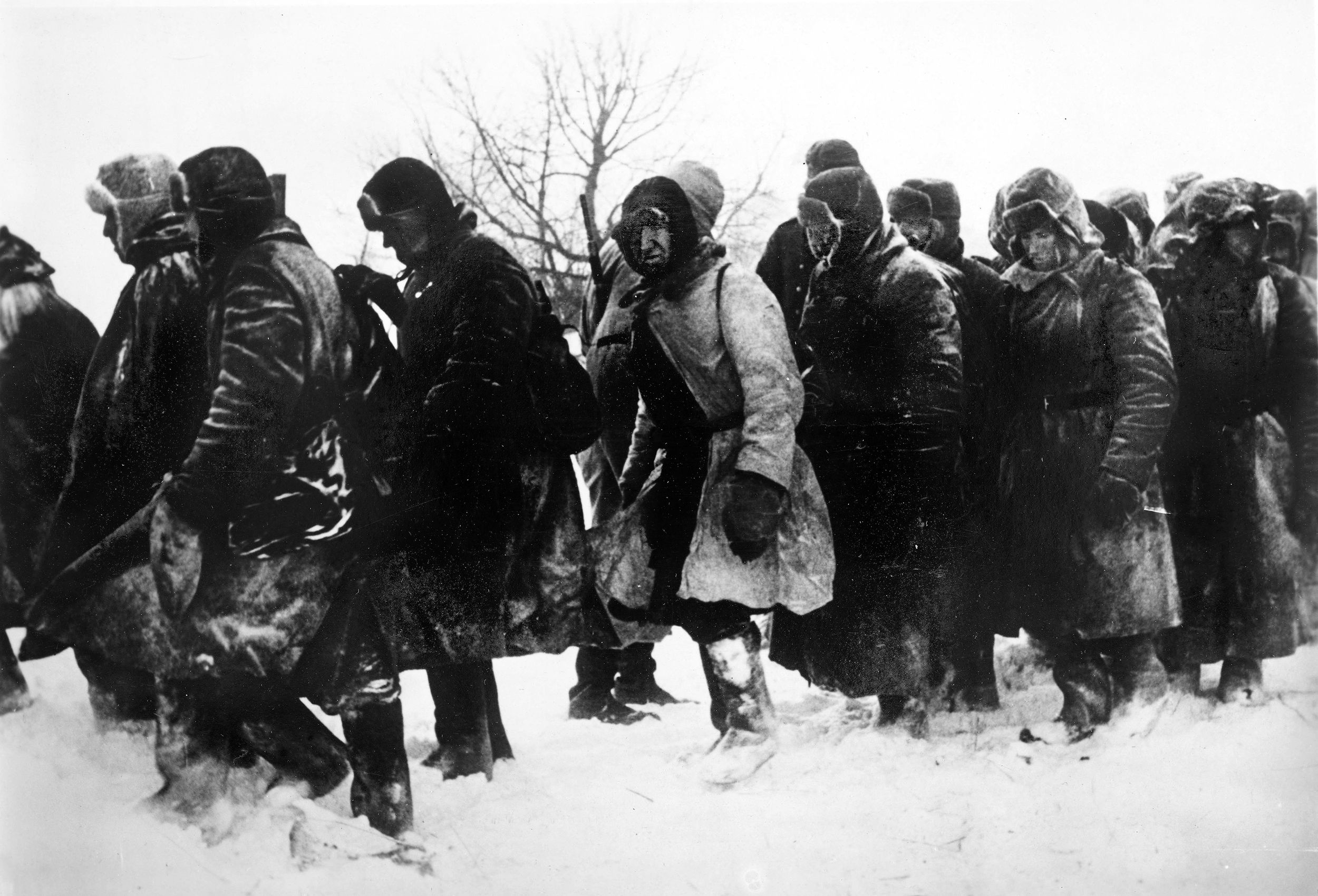
Small groups and in ones and twos, the survivors continued straggling into the Soviet lines until the end of June. Belov was promoted to command the 61st Army while the 1st Guard Cavalry Corps was reconstituted from survivors, rear echelons which did not participate in the raid, and three cavalry divisions assigned while the corps operated behind the German lines. The qualified surviving parachutists of the 4th Airborne Corps were reassigned to other airborne formations while the corps itself was reconstituted as the 38th Guards Rifle Division.
With the nuisance of the paratroopers and Belov’s cavalry eliminated, on July 2, the 9th Field Army launched Operation Seydlitz to liquidate the salient held by the forces of the Kalinin Front. By July 5, all of the 39th Army and the 11th Cavalry Corps, as well as parts of five divisions and one tank brigade from the 22nd and 41st Armies, were surrounded and largely destroyed southwest of Rzhev in Operation Hanover II. As the result of Operations Hanover and Hanover II, partisan detachments in the areas of Rzhev-Vyazma were decimated and their activities had minimal impact behind the German lines until the next spring.
Defensive lines along the Rzhev-Vyazma salient stabilized and largely remained static until the spring of 1943, when the Germans withdrew to avoid being surrounded after Rzhev was liberated on March 5 and Vyazma on March 12.
The hurriedly conceived and poorly executed ground-airborne offensive failed for multiple reasons. The Soviet General Staff and Stalin, the driving force behind the operation, underestimated the enemy’s capabilities. Despite numerous partisan and reconnaissance detachments operating behind the German lines, Soviet planners did not have a clear picture of the situation on the ground and enemy dispositions. Instead of concentrating an overwhelming force in one sector, Zhukov attacked along three separate axes. Insufficient armor and artillery assets prevented concentration of strength at key locations, forcing infantry formations into costly frontal attacks in deep snow.
Lack of dedicated transport aviation and inexperience of air crews greatly delayed the deployment of the airborne units. Thus, the planned rapid massive parachute landing did not happen, losing the element of surprise. The PS-84 passenger aviation crews, the military bomber crews and the paratroopers all used different radio frequencies and protocols, hampering coordination and cooperation.
Despite failing to destroy the Army Group Center, the Red Army advanced up to 150 miles and completely liberated the Moscow and Tula regions and parts of the Smolensk and Kalinin regions. The operation was one of the bloodiest battles of World War II, with the Red Army suffering (according to official numbers, which hid the true scale of the disaster) 776,889 casualties, including 272,320 killed or injured seriously enough to be unable to serve. The German casualties were significantly lower at almost 200,000 soldiers. The true events of the Rzhev-Vyazma operation were taboo in Soviet military history until the dissolution of the Soviet Union. Zhukov, one of the architects of the disaster, failed to mention the airborne operation in his memoirs.
Victor Kamenir is the author of The Bloody Triangle: The Defeat of Soviet Armor in the Ukraine and a frequent contributor to WWII History and Military Heritage magazines.

Join The Conversation
Comments
View All Comments