
By Daniel R. Champagne
On the morning of October 3, 1944, an all-out assault was launched to drive the enemy from Cleurie Quarry in northeast France. At dawn, two tank destroyers and two tanks mounting 105 mm assault guns moved into position, across the valley from the quarry, and blasted the German stronghold with 500 rounds of high explosives. When the barrage lifted, patrols of the 1st Battalion, 15th Regiment searched the quarry for enemy resistance. Several small pockets of resistance remained and fighting was intense throughout the day as both sides played a dangerous game of “cat and mouse” amongst the maze of granite. The battle for Cleurie Quarry raged in the first week of October and at one point pitted the opposing forces as close as seventy five yards apart. The 3rd Division was totally committed to the fight at Cleurie—characterized as one of the toughest battles of the war.
When Vesoul, France fell on September 12, 1944, the 3rd Division was on the western foothills of the Vosges. These mountains rise steeply from the plains of Alsace, and lie northeast to southwest, blocking easy entrance into the Rhine Valley from the west. They consist of low, generally rounded mountains, arranged in parallel ridges that vary from 1,000 to 4,000 feet in elevation. The forested southern chain, which lies along the Franco-German border, consists of relatively gentle slopes, providing excellent long range fields of observation and fire in all directions. Winters in the Vosges, especially in the higher elevations, are long and brutal, “with drastic and sudden changes in temperature.” The Vosges, like the Italian Apennines from the previous year, were ideal for delaying, defensive operations, “the type of warfare in which the Germans were most proficient.”
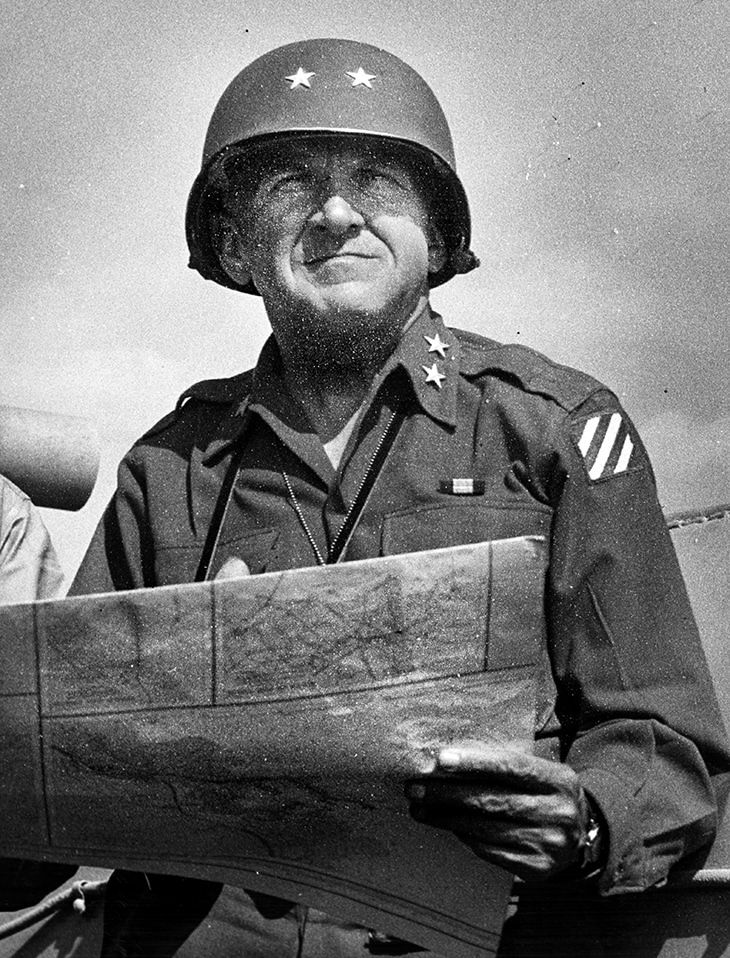
The 3rd Infantry Division, commanded by Major General John “Iron Mike” O’Daniel, was the only American division to fight the Axis forces on all European fronts: French Morocco, Sicily, Naples, Rome, Southern France, and Germany. The “Rock of the Marne” Division hailed from Ft. Lewis, Washington and consisted of the 7th, 15th and 30th Infantry Regiments. Although personnel of its “subordinate combat units” had been replaced prior to the invasion of Southern France, the 3rd Division’s “command structure was highly experienced in combat, especially fighting in mountainous terrain.”
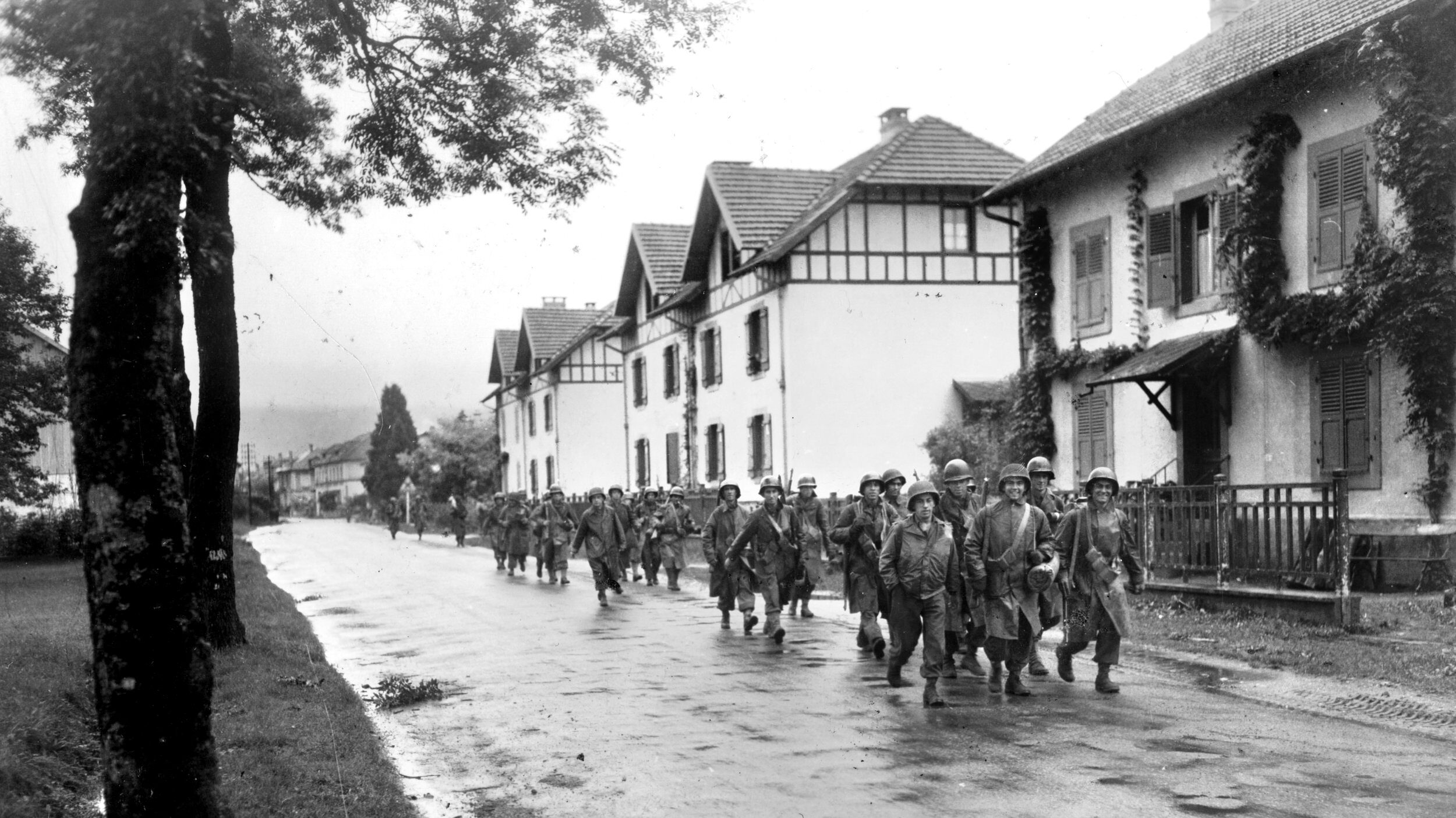
At 0600 on September 27, the 15th Regiment, 3rd Infantry Division moved out of its positions near the town of Remiremont and attacked northeast along highway 417 toward the town of Cleurie. With the 3rd Battalion on the left, the 2nd Battalion on the right, and the 1st Battalion in reserve, the regiment advanced against scattered mortar and artillery fire. That evening, the Germans counter attacked, “taxing the 15th Regiment’s strength to the utmost.” Early the following day, the 15th Regiment continued the attack along Highway 417 against stiff enemy resistance. According to 3rd Division historian Don Taggart, “the fight for Cleurie was in the mold and by dawn on September 28 the entire effective strength of the 15th Regiment was committed.”

On September 29, the 30th Regiment joined in the attack, moving into position along the 15th Regiment’s left flank, while the 7th Regiment was ordered to protect the right flank by attacking German positions between the Moselle and Mosellette Rivers. Early the next morning, 1st Battalion, 30th Regiment encountered heavy machine gun, mortar, and small arms fire. B Company, under the command of 1st Lt. Lysle Standish, attempted to maneuver in order to flank the enemy positions but was met with stiff resistance, which brought the advance to a standstill.
The 3rd Division was “embroiled in heavy fighting,” Taggart wrote. “Enemy counterattacks were characterized by a ferocity hitherto encountered only in Italy the previous winter. Increased artillery fire from 75s, 88s and 105s was evidence that the Germans had received reinforcements in this all important arm of service.” The stage was now set for the battle of Cleurie Quarry—one of the greatest battles fought in the Vosges Campaign.
The quarry at Cleurie was a “thorn in the 3rd Division’s side” and had to be taken at all costs. The giant rock configuration controlled the Remiremont—Le Tholy-Gerardmer road, the main route of advance through the Vosges Mountains. Tactically, the quarry resembled a miniature Mt. Cassino. Located high atop a rocky wooded, almost perpendicular slope, the quarry was the “anchor point of the enemy main line defending the important St. Ame hill mass.” The quarry controlled the entire region—a distance of some 20 miles. The only approaches to it were up the steep, almost cliff like sides of the mountain. The steep cliffs on the north and south sides of the quarry were covered with numerous machine guns. The east and west entrances were blocked by “huge stonewall roadblocks.” To complicate matters, the quarry was “honeycombed with passageways and tunnels,” protecting the defenders from mortar and artillery fire. B Company, 15th Regiment SSG Audie Murphy wrote: “Every approach was covered by machine guns set up for crossfire. Enemy cannon and mortars have the slopes zeroed in. And a large detachment of sharp shooters with telescopic sights on their rifles have been added for extra insurance.” In addition, employing American artillery would prove to be a challenge because as troops closed in on the quarry, tree bursts would often rain down on the infantry.
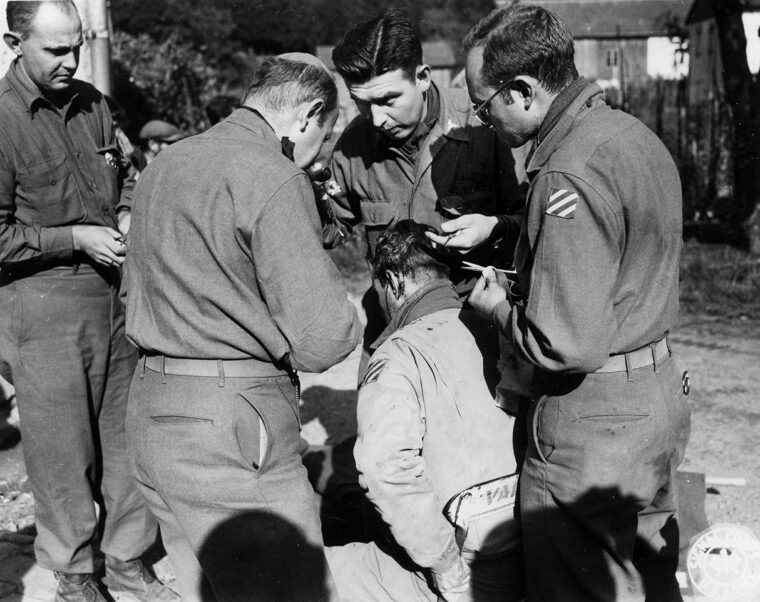
The German defenders had been ordered to fight to the death in defense of this most important position. Pfc. Clarence Goekler, who had joined Murphy’s B Company in Remiremont, vividly recalled his first day on the front lines: “I started off as an ammo bearer and I can remember it was my first day of combat. My sergeant was killed right in front of me. I had to jump up and furnish the ammo for the machine gun and a sniper got him. As soon as the medic got there, the sniper killed him too. It happened four feet in front of me.”
The 15th Regiment was eventually sent in to take the quarry by the only means possible —a direct assault. On the evening of September 29, forward elements of the 1st Battalion, reached the outskirts of the town where it was met with heavy German resistance. B Company, one of the first units hit, recovered and pushed the attack over rain soaked earth. Capt. Paul G. Harris, B Company commander, led his weary men as they groped their way toward the top of the “Great Rock.” Under the cover of a heavy artillery barrage, the enemy felt their way through the thick night fog like “blind men” and approached to within 50 yards. Blazing away with machine pistols, the determined enemy hit B Company’s right flank at midnight and pressed the attack for five hours.
Murphy summed up the struggle: “The German command, knowing the importance of the position, had ordered it to be held as long as one man could pull a trigger. We had received counter orders to take it. Several times we tried to drive head on up the slope but were driven back with heavy losses by a hellish storm of enemy fire.” Although the battered right flank of B Company had been forced to pull back, the bulk of the company was still holding firm. For the next four days, B Company remained dug in, attacking and resisting several enemy counterattacks.
During this phase, combat patrols probed the area for soft spots in the German defenses. A wooded hill between B Company and the enemy was the target for many of these patrols. According to Murphy, the company command post was located in a house at the base of a small knoll, concealed from the big German guns in the quarry area. Midway between the command post hill and the enemy held hill was a second knoll. This hill and the approaches to it constituted “no-man’s land,” a target for patrols on both sides.” Murphy continued: “In the darkness, units of the enemy slip down the slope to establish forward positions. Often less than a hundred yards separate us from their lines. We hear them talking back and forth and their bloody excursions into our own positions are nightly occurrences.”

In his combat diary, PFC Vert Enis recorded a similar incident, confirming the potential danger of no-man’s land: “I was looking through a pair of field glasses and spotted some Krauts in a roll of hedge running vertical up the hill. I told Captain Harris about it and he set up a light machine gun, then told the machine gun crew to watch the hedge. I stayed and directed fire. One Kraut stepped out and shook his blanket and then went back in the hedge. The next time we saw that Kraut he was crawling on his hands and knees. I pointed him out again and the gunner made one long burst; that was it, all is kaput.”
On October 1, Captain Paul Harris briefed his platoon leaders on the operations for the following day. Just as the mist was settling, a group of Germans slipped through the lines and hit the B Company command post with automatic weapons fire. “Streams of white tracer bullets crisscrossed the area, striking violently against the house walls. I grabbed a carbine and a full case of grenades,” Murphy recalled. “The light of the gasoline lantern was put out and we dove through the door.” Murphy, partially veiled by the mist, crawled along the ground and closed in on the Germans. Once he reached the crest of the knoll, he met up with one of the outpost guards. Tossing the grenades as fast as they could pull the pins, Murphy and the guard killed and wounded several of the enemy. Surprised and demoralized by the attacking force, the German patrol fell back.
Robert Miller, a non-commissioned officer in Company B, wrote: “Murphy grabbed a case of hand grenades and fought off that attack practically by himself. The next morning, we found German helmets, blood, and equipment they left when they withdrew. He added: “Murph did a marvelous job all by himself.”

Meanwhile, the 30th Regiment continued an unrelenting pressure toward the northeast. The 1st and 3rd Battalions resumed their attack on October 1, while the 2nd Battalion patrolled into the valley, “encountering and charting minefields.” Despite enemy artillery concentrations and counterattacks, the 30th Regiment continued to advance. From October 1-8, the three battalions of the 30th Regiment continued unrelenting pressure toward the northeast.
By daybreak on October 2, a virtual stalemate existed in the 15th Regiment sector. In some places, the front lines were barely seventy five yards apart. The fighting resembled jungle warfare, with “thick nests of enemy snipers and infiltrating German parties.” At the mouth of the quarry, the enemy was covering the blocked entrances with deadly machine gun fire from positions in the brush and rock piles.

B Company had been fighting at the quarry for two days trying without much success to crack the stubborn German defenses. 1st Battalion, 15th Regiment commander Lt. Col. Michael Paulick wanted to see with his own eyes what was blocking the advance. Paulick was a twenty nine year old “square chinned son of a Hungarian immigrant.” A graduate of West Point, he worked as a coal miner in Pennsylvania before the war. By the time the war ended, Paulick had earned every award for valor except the Medal of Honor. Accompanied by his executive officer Lt. Col. Keith Ware, Captain Harris, and four enlisted men, Paulick led a reconnaissance patrol to probe the enemy positions. Paulick’s objective was to arrive at an “observation point located above a shear drop of about fifty feet into Cleurie Quarry.”
Much to Murphy’s disappointment, he wasn’t asked to join the patrol. Nevertheless, he had been studying the situation for two days and warned Paulick and his men to “stay off the hill” directly above the front lines.” He believed that the wood covered cliff at the north end of the quarry was loaded with snipers and machine gun nests, “arranged to provide interlocking fire over the whole immediate area.” Unbeknownst to Paulick, Murphy picked up his carbine and several grenades before following the patrol up the hill. Murphy recalled his audacious decision: “I figured those gentlemen are going to run into some trouble. So, I tagged, about twenty five yards to their rear, to watch the stampede.”
Fellow B Company member Albert Pyle remembered Murphy’s extraordinary instincts: “Murphy grew up practically living outdoors. Growing up in a rural area, gave him an eye for terrain features. He hunted as a young boy and knew the likely places for a rabbit or a quail to hide. For example, he knew that a squirrel was more likely to climb a hickory tree rather than a sycamore tree. Being raised under those conditions gave him the foresight that other people just didn’t have.” Pyle went on: “He was the type of person who always watched for terrain features like trees, ditches, or breaches—places where a German might be hiding or a machine gun might be placed. He was an exceptional combat soldier.”
As Paulick’s patrol advanced toward a wooded area—approximately 50 yards from the observation point—a machine gun suddenly opened up, raking the area with deadly fire. The patrol immediately hit the ground and scrambled for cover in a nearby ditch. Apparently, Paulick and his men had passed the German outpost guard undetected but were now pinned down by machine gun fire a few yards away.

Once he determined the origin of the machine gun fire, Murphy quickly made his way to the German position, which was located behind an enormous boulder. Not expecting a trailing element, the Germans were not aware of Murphy’s presence until he warned the besieged patrol to stay down until help came. Lt. Col. Paulick recalled years later: “I heard a familiar voice over the noise of battle. One by one he called every man in the patrol, waiting for an answer. It was Audie. I realized then that he must have some sort of plan in mind and our position had something to do with it.”
Grasping the carbine in my left hand and a grenade in my right, Murphy wrote, “I stepped suddenly from behind the rock. The Germans spotted me instantly. The gunner spun the tip of his weapon toward me but the barrel caught a limb and the burst whizzed to my right.” Murphy took advantage of this fatal mistake. After tossing the grenade into the enemy position, he opened fire with his carbine, shooting two Germans through the stomach. He then quickly hurled two more grenades into the position before the dust finally settled.
Of the eight men in the German position, four had been killed, and three had been wounded. The eighth soldier was cut down by Murphy’s carbine, as he was trying to escape. The patrol was pinned down at a distance of about thirty yards and would have been decimated had it not been for Murphy’s “immediate grasp of the situation, his precise thinking, and his uncanny coolness in action.” In a 1964 interview, Kieth Ware, then a brigadier general, said: “Audie Murphy was without a doubt the finest soldier I have ever known in my entire military career.” For his heroic action at Cleurie Quarry, Murphy was awarded the Silver Star.
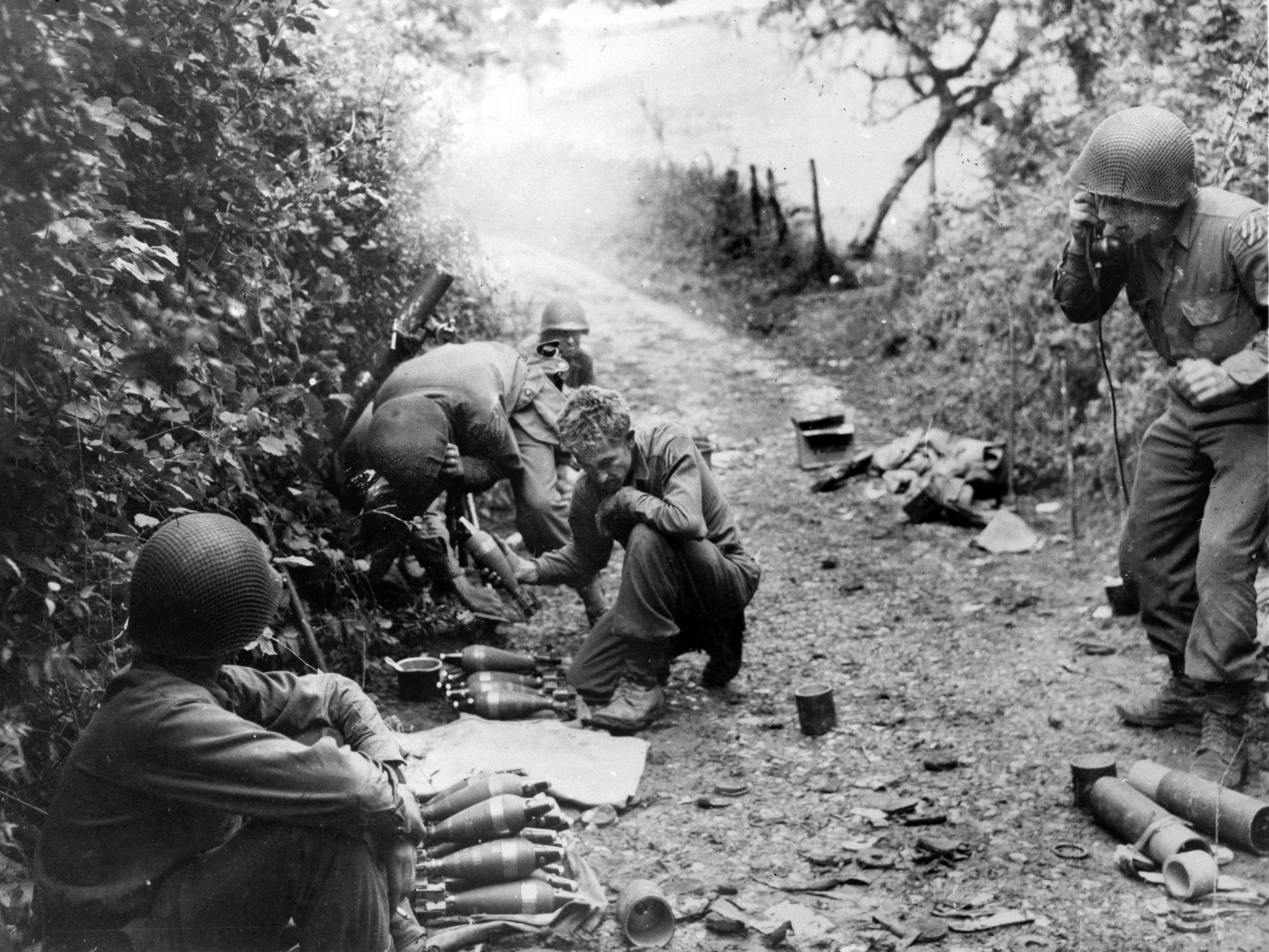
The following day, October 3, two tanks mounted with 105mm assault guns were moved into position across the valley from the quarry. From this position, the tanks pumped 500 rounds of high explosives into the quarry tunnels. At the same time, 1st Battalion, 15th Regiment fired mortars in a “terrific concentration.” When the mortar fire ceased, all three rifle companies of the 1st Battalion spread out to probe the quarry for pockets of enemy resistance. Opposition still remained, however, and stiff fighting continued throughout the day. B Company patrols were hit by enemy machine gun fire immediately in front of the quarry, and from the slope a German sniper shot and killed two men from the heavy weapons platoon. German prisoners would later reveal that an elite company of sharpshooters with telescopic rifles had been ordered to hold the position. One squad of marksmen was attached to each rifle platoon of the 601st Schnelle Battalion—the German unit charged with defense of the quarry.
Mindful that the sniper posed an immediate threat to his men, Murphy asked Capt. Harris for permission to personally stalk, locate and kill the enemy sharpshooter. He was granted permission on the condition that he took three men with him. For this dangerous assignment, Murphy selected three of his most experienced men—T/S Daniel R. Finnegan, Pfc. Dominick Trepasso, and Sgt. Tom “Guy” Rocco.
“As we slowly advanced up the knoll of the hill,” recalled Rocco, “Murphy suddenly jumped behind a big rock and dropped to his knees. After firing twice, Murph shouted, ‘Krauts take off.’ Well, you didn’t have to say that twice to me, so the three of us scampered back down the hill as fast as our legs could carry us. When I looked back, I noticed that Murph wasn’t coming so I went back up the hill to check it out. Finnegan and Trepasso followed because they didn’t want to leave me alone. Soon, the three of us rejoined Murph behind a big boulder. We were so concerned about each other.”

Rocco continued: “After sizing up the situation, Murphy sent Finnegan back down the hill for more men. From behind the boulder, the remaining three of us made our own little artillery barrage, tossing hand grenades in the area where the Jerry patrol had been spotted. When Finnegan returned with more men, we formed a skirmish line and slowly sprayed the area with small arms fire. After advancing about thirty yards, Murph called me over and pointed to a spot in the brush, ‘still warm Roc.’ I looked with my own eyes and saw the biggest Kraut I had ever seen. Blood was coming from his mouth and from between his eyes, where two holes remained from Murph’s bullets. By the look of the rifle, we knew Murph had killed the sniper. The gun was a new make with a large telescopic sight, so large that it seemed impossible to miss a target with it.
One year later, in a letter to Rocco, Murphy reminisced about that day at Cleurie Quarry: “I often think about those little patrols we used to take together. Also, how old Finnegan used to cuss and say he was crazy for going but he always went. I still have the snipers rifle we got that day by the quarry. I have been offered a couple of hundred dollars for it but naturally I wouldn’t sell it.”
Contact with the enemy, in and around the quarry, continued throughout the day and night of October 4. While the 3rd Battalion, 15th Regiment executed a flanking movement around the mountain stronghold, the 1st Battalion drove directly on the quarry. Three battalions of artillery were brought up to the front to support the infantry, while tanks and the 10th Engineer Battalion blasted away the enemy stonewall roadblocks west of the quarry.

The next morning, the 1st Battalion moved up to knock out the remaining German positions, as mortar fire opened up on the mountain and quarry. “Under a creeping barrage,” wrote Murphy, “we scrambled up the hill, bypassed the quarry proper and went over the crest.” Combat patrols from all three companies of the 1st Battalion overran and destroyed the remaining enemy positions. After a grueling six day battle, the quarry had finally fallen.
That afternoon, the 3rd Division advanced along Highway 417 northeast toward Le Tholy, with the 15th Regiment in the center, the 30th Regiment on the left, and the 7th Regiment on the right. The “Marne Men” had been in combat since August 15 without a rest. The struggle for the quarry was over but the Germans, although bloodied, were still determined to stop the allied advance at all cost.
Retired history teacher Daniel R. Champagne is the author of Dogface Soldiers: The Story of B Company, 15th Regiment, 3rd Infantry Division. He lives in Salem, New Hampshire.
I enjoy reading about our GREATEST GENERATION! I was a senior NCO, during my years in The USAF. Im sure the men & women of that, my, term in the military wouldve been up to their, 2nd WW troops/ personnel ability. I hope i couldve messured uo too.