By Mark Carlson
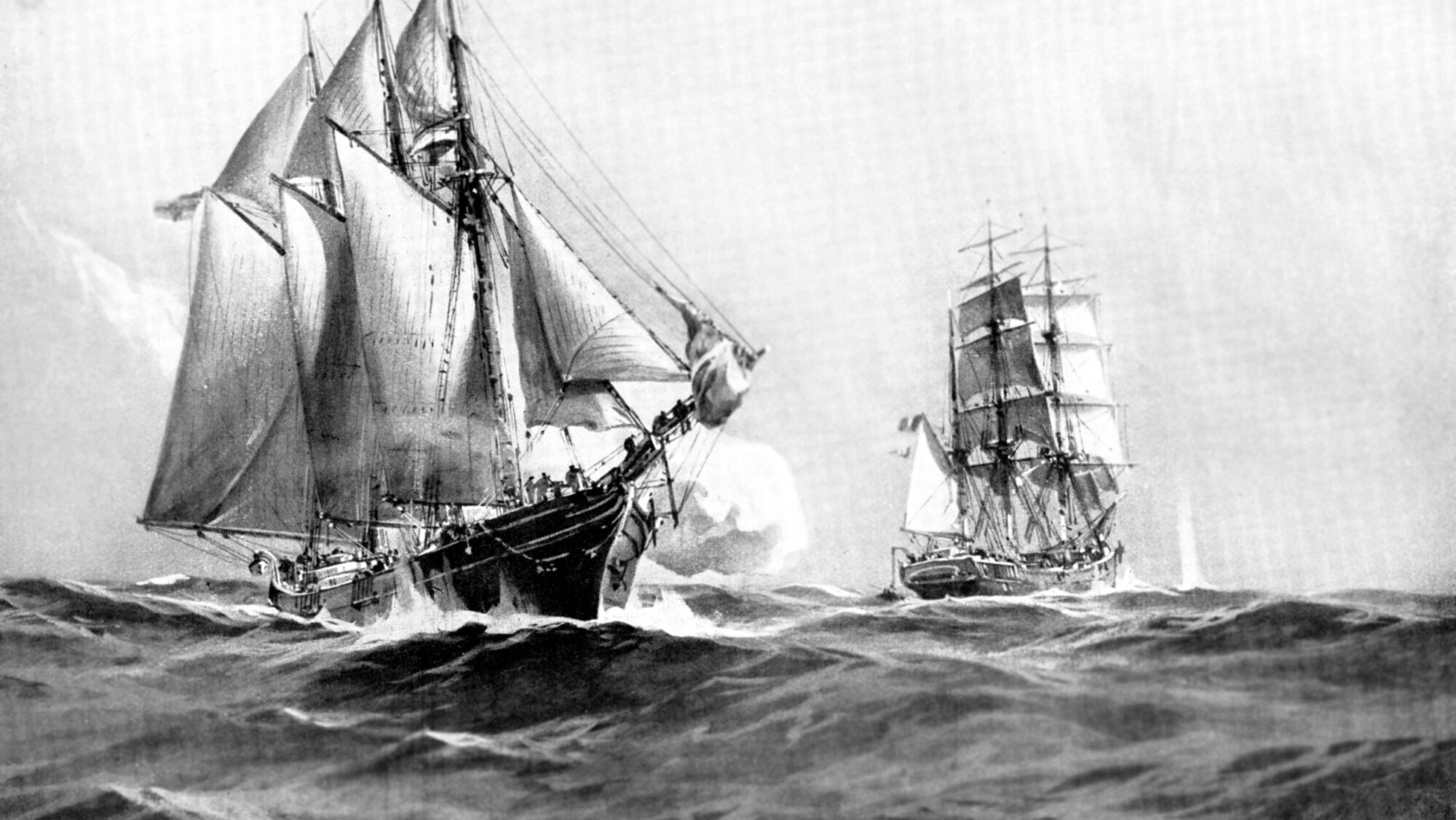
For more than three centuries, from 1520 in the reign of King Henry the Eighth up until the advent of steam-powered ironclads in the American Civil War, ships under sail ruled the world’s oceans. Even during the years of the Great War, a majestic windjammer under clouds of canvas, the last vestiges of the romantic age of sail, was not an uncommon sight. One such ship, however, was not at all what it appeared to be. Rather than a harmless sail-powered merchant ship crossing the seas, it was in fact a deadly predator, a shark among the minnows. Her name was SMS Seeadler, the very last vessel of a 300-year legacy of fighting sail.
By the fall of 1916 the Great War had been raging for more than two years and Imperial Germany was blockaded by the Royal Navy. Even as the Kaiser’s armies were driving hard to take Paris, the nation, heavily dependent on foreign wheat and fertilizer, was forced to live off its hump. With the mighty High Seas Fleet bottled up in Kiel and Wilhelmshaven, the only ray of hope came from the U-boat and the commerce raider. Submarines, yet to truly make their mark, were too few in number, with limited range and speed. But a few commerce raiders, armed liners and merchant ships, had slipped past the Royal Navy early in the war to prowl among vulnerable Allied shipping lanes.
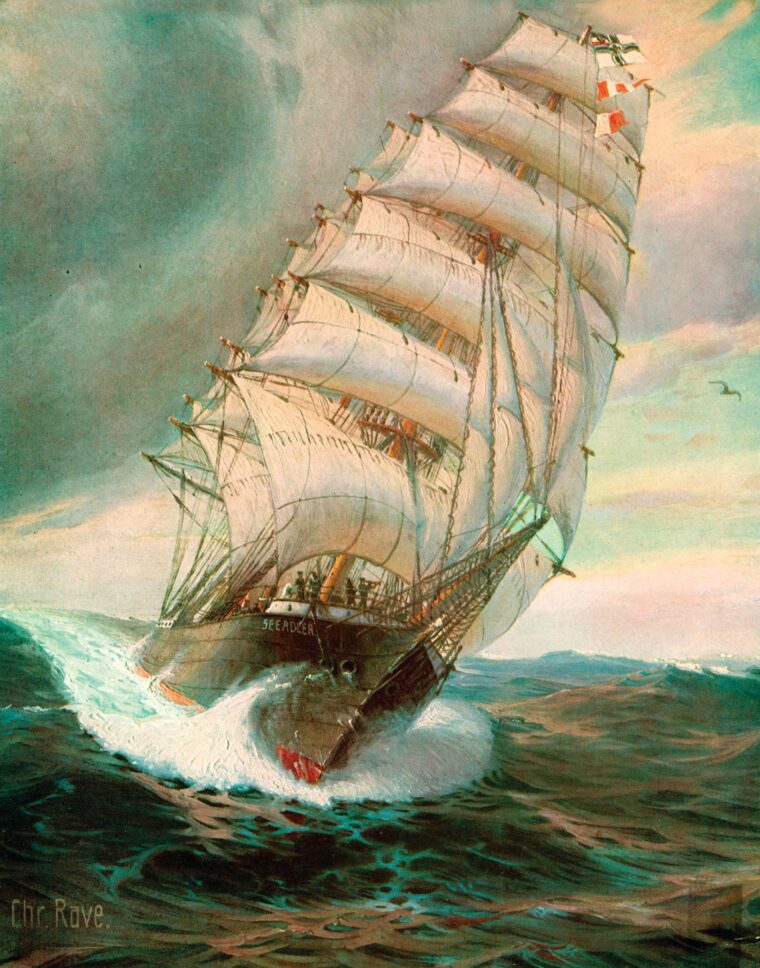
In 1916 Count Felix von Luckner, a tall, powerful Prussian aristocrat and member of the German high command proposed to Kaiser Wilhelm II that a large sailing ship, properly armed and disguised, could slip past the British blockade and raid the shipping lanes. As unthinkable, even ludicrous as the scheme sounded, such a ship would have a few very compelling advantages. Most raiders were seriously limited by their need for coal. Germany had few colonies around the world, and consequently almost no coaling stations. German raiders had to either capture British colliers or have German ones meet them in isolated areas of the ocean. Therefore any vessel that could remain at sea for long periods without fueling had an advantage. Windjammers were the ultimate sailing ships. Far larger than the sleek clippers that preceded them, the huge square-rigged barks had three, four and even five masts to carry acres of canvas. Often built of iron and steel, they could sail under the most difficult weather conditions—the pinnacle of the age of sail.
Luckner was sure a large sailing ship wouldn’t be suspicous. “Your Majesty, if our Admiralty says it’s impossible and ridiculous, then I’m sure it can be done,” he told the Kaiser, “The British Admiralty will think it impossible also.”

Born in Dresden in 1881, to a Prussian cavalry officer, Luckner went to sea in 1894 under the name Phelax Luedige. He became an experienced sailor, fluent in English and Norwegian. He developed a love for the four-masted bark Pinmore, built in 1882. Still under the name Phelax Luedige, he returned to Germany and studied navigation, then joined the merchant marine as a petty officer aboard the small liner Petropolis. A year later he joined the German Naval Reserve as a lieutenant and was promoted to Captain on February 3, 1912, while Germany and Great Britain were building dreadnoughts of ever-increasing power and speed. His skill and bravery—he twice saved sailors from drowning—came to the attention of Kaiser Wilhelm II.
He commanded light cruisers at the battles of Heligoland Bight in 1915 and Jutland the following year. When he heard of the German Navy was to convert an old square-rigger into armed commerce raider, he threw himself into the project. He spoke perfect Norwegian, so the vessel would be disguised as a harmless, neutral Norwegian bark.
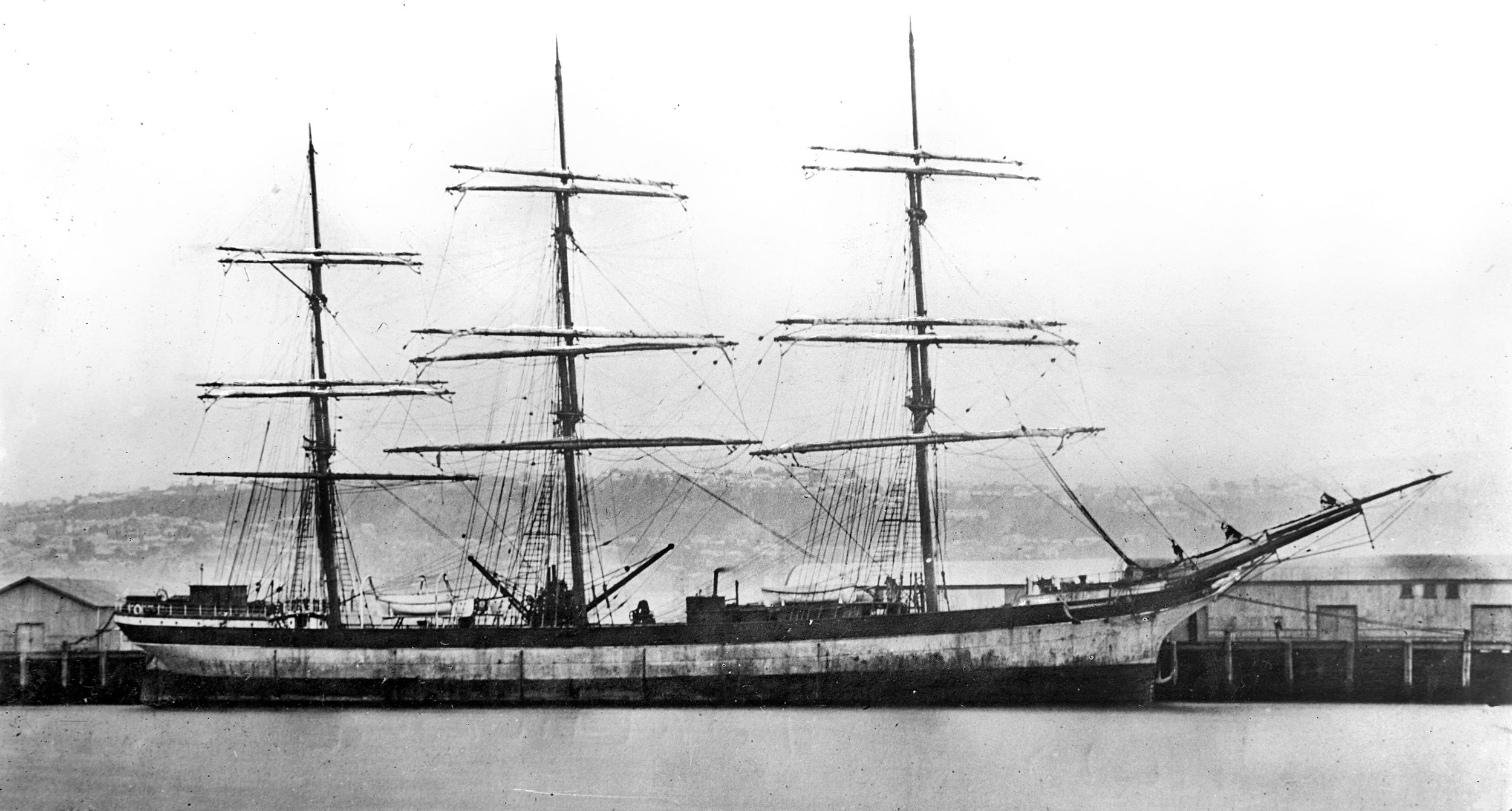
With that was born the SMS Seeadler, or “Sea Eagle.” She had been launched in Scotland in 1888 as the Pass of Balmaha. She was known to be fast and easy to handle. How the German Navy acquired her was a sea story in itself. While sailing to Arkhangel in Russia with a cargo of American cotton she was stopped in the North Sea by a Royal Navy cruiser. Even though America was still neutral in 1916, the ship was seized and a British crew put aboard to sail her to Scapa Flow. But fate intervened in the form of a German U-boat. The tables were turned and the Germans took the Pass of Balmaha to the North Sea port of Bremerhaven.
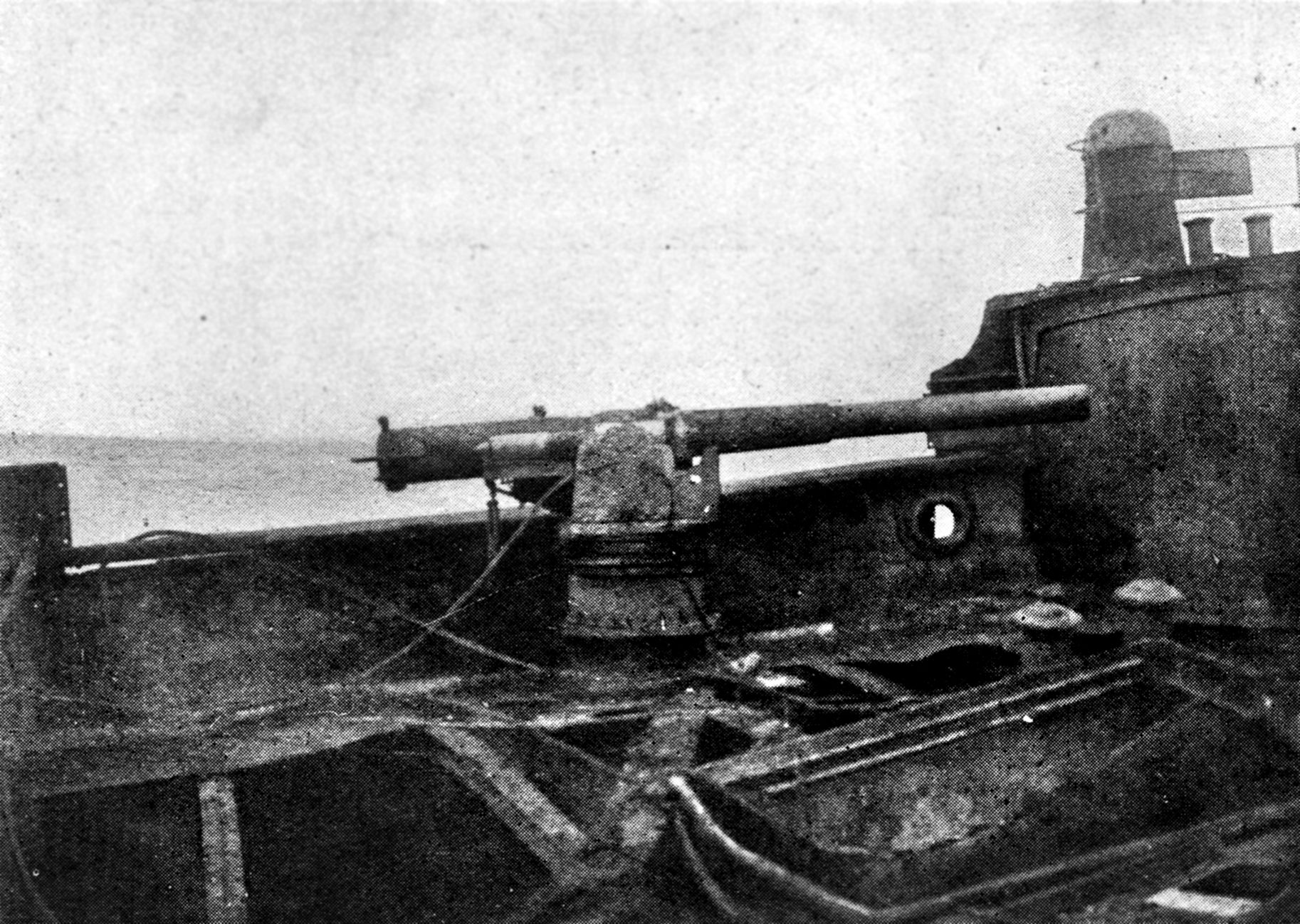
At 4,500 tons and a length of just over 250 feet, the ship was large enough for German purposes. She was extensively converted, beginning with a 950-horsepower auxiliary diesel engine and propeller shaft fitted just ahead of the rudder. This would provide propulsion even when the winds were slack. Her instruments and gear were well-used, weather-beaten and Norwegian-made. Two 4.2-inch guns were concealed behind false stacks of lumber at the port and starboard bows. The gunners were trained to load, aim and fire at specific targets on enemy ships.
But that was only the beginning of her makeover. The bark would be disguised as a harmless square-rigger with a crew of slovenly, ill-disciplined sailors.
As Luckner put it, the Pass of Balmaha became “a mystery ship of trick panels and trick doors. In addition to quarters for her sixty-four officers and crew, she could carry up to four hundred prisoners, that is, the crews from ships Luckner captured. The “cells” were cunningly hidden behind false panels in the hold that appeared to be stacks of crates and cargo. They were carefully constructed to be invisible to a British navy boarding party.
Luckner was adamant that the accommodations have plenty of bunks, toilets and even games and reading material. “I wanted them to feel as though they were my guests.” This was more than his streak of gentlemanly chivalry. His “guests” would be more likely to behave and not sound the alarm when Seeadler was approaching another victim.
The crew were all German Navy volunteers, chosen for their sailing experience. Several spoke fluent Norwegian. One man, a slender, smooth-cheeked youth named Schmidt, was chosen to play the role of the captain’s Norwegian wife, complete with wig, dress and makeup. Every man had worked out his “identity” as a Norwegian sailor or officer, right down to fake family letters, keepsakes and photos, clothing and personal idiosyncrasies. They chewed tobacco and learned the words to ribald Norwegian drinking songs. Luckner himself learned to chew tobacco, saying that it helped when asked an embarrassing question, to chew the plug, think for a long moment, then spit elegantly.

In early November 1916 the ship was ready, fully loaded and manned. Now all she needed to pass through the blockade was a false identity. The bark Maleta, which was similar to Seeadler, was loading in Copenhagen. Luckner traveled to the port and, using his former identity of Phelax Luedige signed on as a longshoreman. He crept aboard and stole the ship’s logbook. The Seeadler would have a bona fide identity. But the German high command delayed her sailing until after the real Maleta sailed, throwing off the timetable. Luckner changed the name on the log and all ship’s papers to the Hero, a bark of dubious registry. But there was a catch. The erasures and alterations to the papers were too obvious. Luckner had a daring idea. He called the ship’s carpenter and told him to use an axe to smash all the portholes, railings, furniture, bunks and make sure to cover everything in seawater. When the job was done, it appeared the Hero had been through a violent gale. And of course, her papers, sodden and stained, were hard to read clearly. This innovation and nerve was the Luckner touch.
As Seeadler left Bremerhaven two days before Christmas, the first trial was to get past a huge minefield. A real storm came to Luckner’s aid by forcing the bark to sail heeled far over on her beam-ends, which allowed her to ride safely over the submerged mines. Then a British cruiser, HMS Avenger, steamed close and ordered the bark to heave to for boarding and inspection. The Royal Navy officer saw a loaded lumber ship that had recently been battered by Baltic storms and a crew of smelly, undisciplined Norwegians who showed little respect for his rank or duty. The captain, a tall brute of a man named Knudsen, with a plug of tobacco wedged in his cheek showed him the ship’s papers, which were water-stained and nearly unreadable. Knudsen, in his thick Norwegian accent complimented the officer on his warm camel’s hair duffel coat. He then introduced his wife Josephine, who was lying on the damp cabin settee with a painful toothache. The Royal Navy officer saw no further reason to detain the obviously innocent Norwegian bark and returned to his ship. As HMS Avenger steamed away, the signal flags read “Bon Voyage.”
Luckner and Seeadler had passed their first test. As they cleared the British Isles and headed out to sea they shed the disguise. The cargo of lumber was cast overboard to reveal the two guns. But some traces of the camouflage remained to lure unsuspecting prey into the Sea Eagle’s claws. Thus prepared, Luckner set out in search of prey into the broad North Atlantic, where he would soon earn the name “Sea Devil.”
His orders limited him to attacking only other sailing ships. The idea of an old bark being able to capture a steamship was ridiculous, but to Luckner, the challenge was too good to pass up. He had his first chance on January 9, 1917, when the lookout saw smoke on the horizon. It was the 3,200-ton British steamer Gladys Royale, bound for Buenos Aires. After running up the Norwegian flag, Luckner used what would be his signature ploy, a request for a chronometer reading. This was common for sailing vessels, which needed accurate time for navigation. The Gladys Royale hove to under Seeadler’s port bow, then Luckner ordered the German Navy ensign raised and a shot fired across the steamer’s bow. Three more shots forced the British captain to stop his engines and row over to the German ship. “You bloody well fooled me,” he fumed at the grinning German captain.
The steamer’s crew was brought on board the Seeadler and given quarters below while an explosive charge was placed in the steamer’s hull. That night Luckner’s first victim went to the bottom. The next day, flushed with victory, Seeadler found another victim, the 3,100-ton British steamer Lundy Island. But this captain didn’t fall for the innocent chronometer reading request and tried to run for it. Luckner raised the German flag and fired two shots into the ship’s funnel and hull. Beaten, the steamer surrendered and the crew was taken aboard. In two days Luckner had taken and sunk two British ships without a single life lost.
The British captains played checkers and the crews had the run of the Seeadler, albeit under guard. But there were no problems, due to Luckner’s courtly treatment of his prisoners. Remarkably, the so-called prisoners were paid their regular wages while on board and participated in shipboard maintenance. Even more astonishingly, after Luckner stated that the first man to sight a ship would receive the equivalent of 50 marks and a bottle of champagne, almost every prisoner and even the two British captains lined the railings to spot the Seeadler’s next target. “Never,” recalled Luckner, “had a ship such a lookout.”
On January 21, the French bark Charles Gounod was seen and also fell for the chronometer reading ruse. This ship was easily taken, and along with the crew, several cases of good French wine were brought on board. Over the next three weeks, a windjammer from Canada and one from Italy fell to Seeadler without any resistance and the hold was soon packed with more than 100 prisoners. Still with no loss of life.

On February 3, 1917, the French square-rigger Antonin, a fast and well-handled ship, made a run for it. Luckner chose not to use his engine but engaged in a chase under full sail. At last he caught up and fired his machine guns at the French ship. They surrendered with the French captains swearing so loudly it could be heard over the span of water between the two ships.
In less than a month Seeadler had sunk six ships. And still the wily Sea Devil pressed on towards the South Atlantic. On February 19, Luckner was confronted with his past. The bark Pinmore, on which he had sailed as the young runaway Phelax Luedige was captured. With a sense of nostalgia, Luckner rowed alone over to the old windjammer and walked the decks of his youth. He even found where he had carved his name, into the stern rail. Then pragmatism intervened. He chose to put some of his crew on board the Pinmore and sail to Rio de Janeiro to load some needed supplies. With his usual flair for innovation, Luckner got away with this daring venture and rendezvoused with the Seeadler a few days later. But he then had to give the hardest order of his naval career. With a heavy heart he ordered the Pinmore sunk.
While in Rio, he met a Royal Navy officer from HMS Glasgow, a light cruiser, who told him that his ship and HMS Amethyst were preparing to head out to find and sink a German raider working off the Brazilian coast. With this unintentional warning Luckner bent on full sail to head south towards Cape Horn at the tip of South America. Along the way he sank three more windjammers.
The 3,600-ton steamer Horngarth was spotted on March 11. The ship not only had wireless, but a five-inch deck gun. Luckner had to put the wireless out of action before the British could raise the alarm. When the standard request for a chronometer reading went unanswered, he started a small fire on the main deckhouse and raised a distress flag, something no ship could ignore. At last Horngarth came close. Then Luckner had his “wife” Josephine, in reality “that rascal Schmidt,” parade demurely along the deck to distract the British sailors. Then he raised the German ensign and fired a shot directly into the wireless room. When Horngarth’s crew attempted to return fire, Luchner had selected men with megaphones to yell out in English, “torpedoes are clear!” That made the British captain back down and surrender.
But Luckner’s perfect record had been broken with the death of a British officer, who had died from wounds during the battle. He was buried with full military honors by the Germans and British. Now Seeadler had more than 275 prisoners. This prompted Luckner to make use of his next prize, the French bark Cambronne. Her captain was relieved to find that his ship would not be sunk but was to take the Seeadler prisoners to Rio. The bark’s topmasts were cut down to slow her. Luckner sailed north, still within sight of the French ship. After dark he turned south and headed for the Horn. But unlike the other ruses, this did not work. The Royal Navy soon realized Seeadler was headed for the Pacific and sent Glasgow and Amethyst to find and sink her.
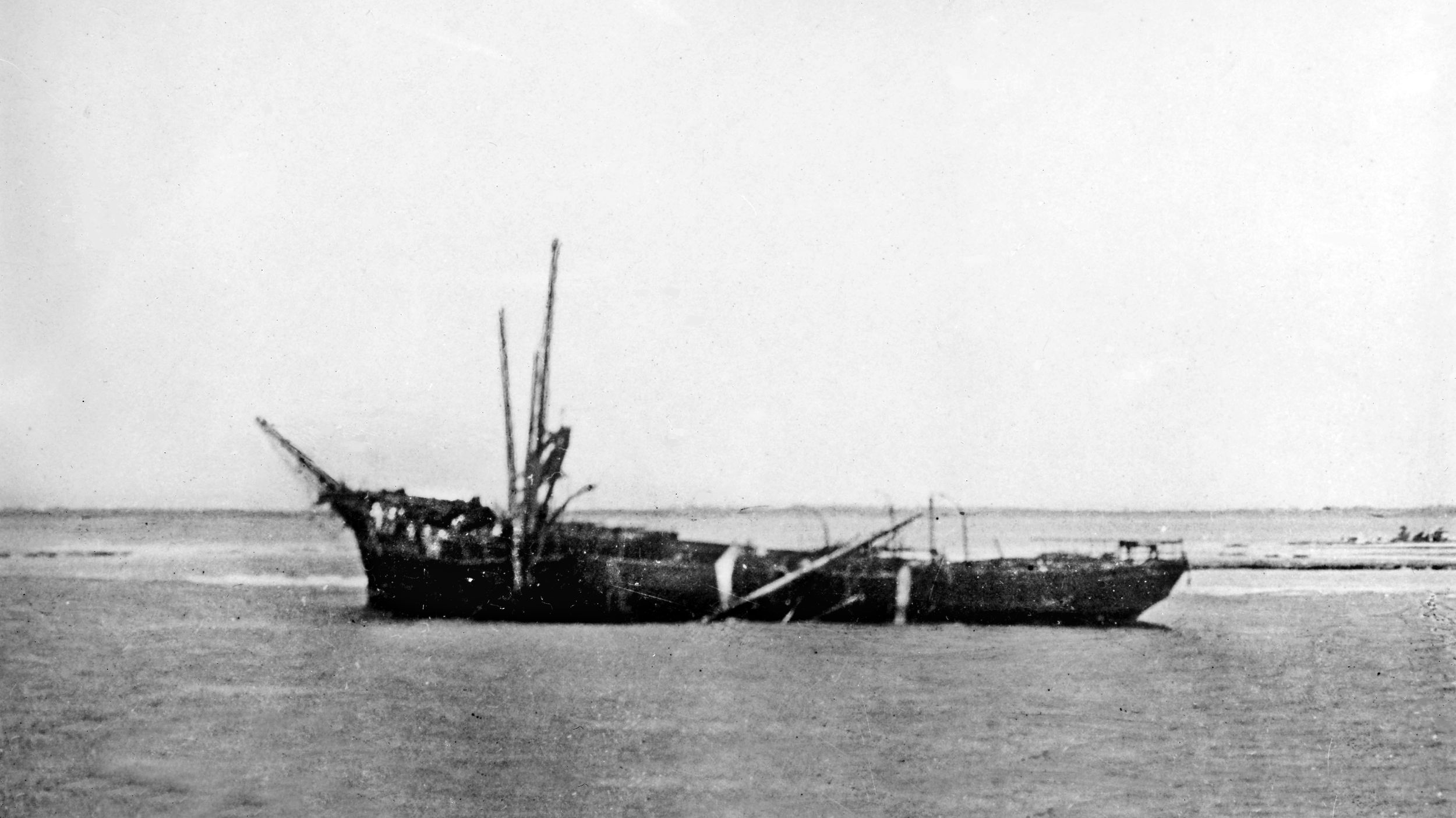
By this time the United States had declared war on Germany. From June 15 to July 5, 1917, Luckner captured and sank three small American schooners, the A. B. Johnson, the R. C. Slade and the Manila. These were slim pickings compared to what he had found in the Atlantic, but he had other concerns. The British were hunting for him and he was low on provisions. On the last day of July, the German raider anchored in the calm lagoon of Mopelia atoll in the Society Islands. The crew and prisoners went ashore to feast on turtle soup, lobster, eggs and fruit. But disaster struck on August 2, 1917 when a strong current caused Seeadler’s anchor to drag, and she was driven onto a submerged reef. Despite desperate efforts by the crew her keel was broken in five places. Luckner knew it was the end of the voyage. He ordered everything salvageable taken off and the ship burned. A village of sorts was constructed of ship’s timbers and sail cloth on the beach.
But the audacious Luckner was not done. He selected five volunteers, outfitted a launch with sails, provisions and weapons, to try and capture the first island trading ship they came across. But after a 28-day journey to Fiji they had no luck. Then they were confronted by a British officer and armed soldiers. Knowing that to resist would only result in needless death, Luckner surrendered. His 224-day odyssey had ended. But in his wake were 14 ships sunk, including three steamers, and more than $25 million in damages to the Allies. It was the last hurrah of fighting sail. For the rest of his life Felix von Luckner was respected and revered for his daring, cunning and chivalry to his enemies. He may have been the Sea Devil, but he was truly the last of his kind.



Amazing, and eco-friendly!