By Kelly Bell
When little John Shirley Wood was delivered on January 11, 1888, in Monticello, Arkansas, one of the Free World’s greatest defenders greeted his first dawn as eagerly as everything else he confronted and overcame in a lifetime of soldiering. He graduated from the University of Arkansas and worked for a couple years before he was admitted to, and fell eternally in love with, the U.S. Military Academy at West Point. As a plebe he refused to submit to the traditional hazing from upperclassmen—firmly and respectfully refusing commands to perform like a circus animal—and was never censured.
When his extreme myopia threatened to end his West Point tenure before it began, he was saved by the chief medical officer, a rabid football fan who knew of Wood’s gridiron exploits as an Arkansas Razorback. The Point needed a quarterback and Woods, who was several years older than his fellow cadets, was bigger, stronger, and faster. Classmates such as Dwight David Eisenhower, Omar Bradley, Carl Spaatz, and George S. Patton Jr. held him in highest esteem. While serving in Europe with these same men 30 years later they treated him (for the most part, as it turned out) with deferential respect, despite their higher rank.
In fact, the moniker “Tiger Jack” was bestowed upon Wood because of his extremely rare refusal to be intimidated by Patton. As an aide later recalled, when Blood ’n Guts “roared at Wood, Wood roared right back” at his close friend. It was this utter fearlessness, coupled with his constant, restless pacing led to the frightful-sounding nickname—which caught on quickly even with the Germans. This son of a circuit-riding judge would perform incomparably on the battlefield while following the example of the only soldier who ever struck him as worthy of emulation—Gen. Robert E. Lee.
Wood never felt any obligation to convention. While the Western Allies construed their victory in World War I as vindication of trenches, border fortifications, barbed wire and strictly defensive tactics, he recognized the tragic weaknesses of static trench warfare in the 1930s. But aside from Wood and an obscure French colonel named Charles de Gaulle, this belief in rapid, profitable movement was unrecognized outside Germany, where an incubating Wehrmacht was feverishly assimilating the concept into its overall way of thinking. The fast-moving armored columns Wood later used to such devastating effect in western Europe did not exist in the Army of depression-era America.
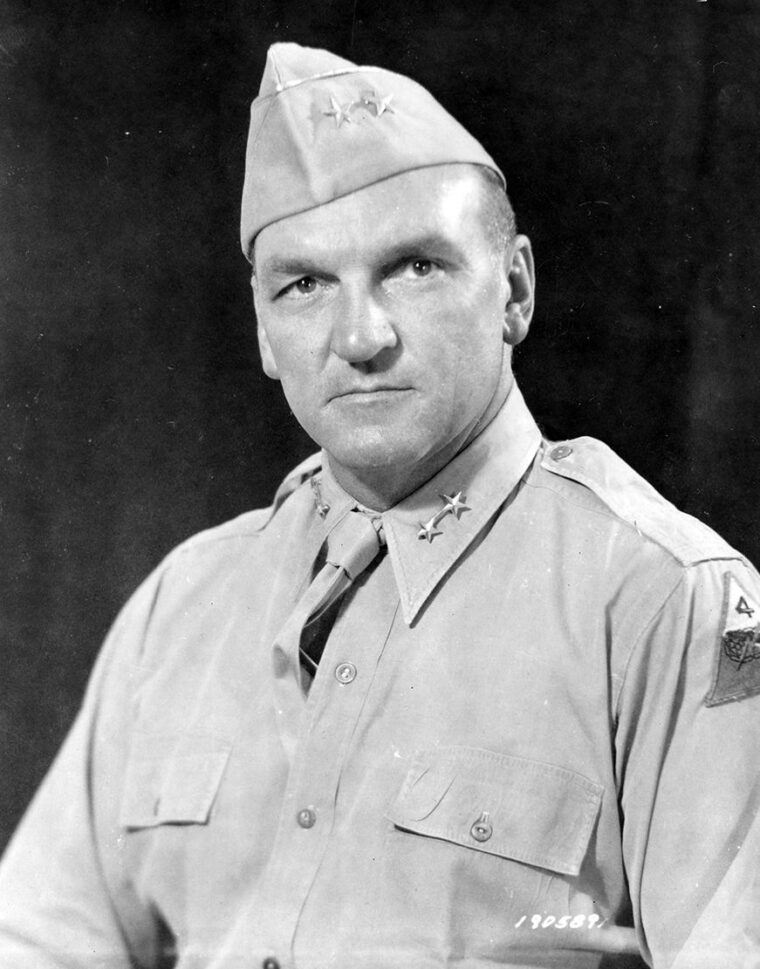
Dismissing the accepted doctrine that infantry would forever rule the battlefield, Lt. Col. Wood tirelessly espoused from his teaching positions at various stateside postings that mobility via close co-operation between aerial and armored forces was the critical, irresistible trend of the future. His beliefs received as little respect in isolationist America as de Gaulle’s did in defense-minded France, which was busy constructing the already-outmoded Maginot Line. It would take the new concept’s soul-killing vindication early in the Second World War to force the Allied military establishment to recognize the far-sighted brilliance of these two previously overlooked tacticians. Realization came almost too late as the Nazi colossus quickly overran continental Europe. In still-neutral America, Wood worriedly saw the arrival of the future and commenced planning to counter it when his chance came.
Wood was a brigadier-general by the time the Japanese attack on Pearl Harbor goaded the United States into the war. Immediately after the declaration of war he arrived in California to serve in an armored division. In May 1942 he was given command of the 3rd Army’s newly formed 4th Armored Division, and promoted to major-general on June 21.
Although Wood and his troops were eager for action they realized the Wehrmacht already had years of experience in armored warfare. When they were shipped overseas in January 1944 they readily accepted the continued training in England, knowing it was necessary—to be endured and absorbed, religiously. For the Germans who would eventually face this division it seemed they were fighting men born into and for combat. To their immense displeasure, Wood’s tankers were held back from participating in the initial Normandy landings as other units hit the blood-splattered beaches. It was July 12 before the chafing 4th Armored Division was ferried across the English Channel.
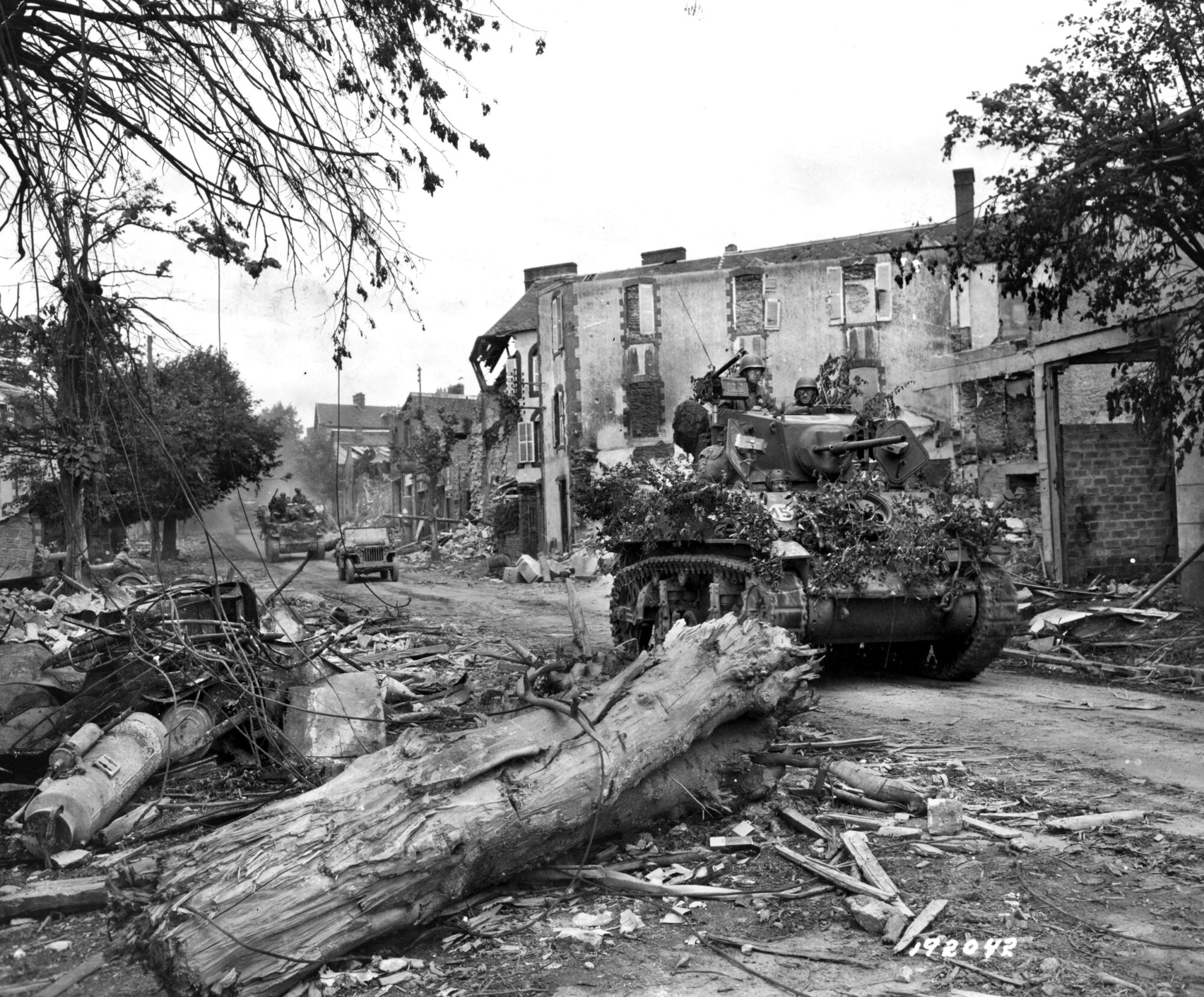
At 9:45 a.m. on July 28 the 4th swept through a ragged wound the 3rd Army had chewed in the German perimeter, outdistancing a couple of infantry divisions, and set off eastward. Smashing through roadblocks, rear guards and bypassing minefields they rumbled 18 miles to the town of Coutances. Behind them overrun Nazi forces were left confused and demoralized by the 4th’s irresistible onslaught. Mop-up units dealt with the aftermath as Wood’s columns sought out the enemy and engaged without hesitation. Their general was in the vanguard.
Using any thoroughfares it could find, the 4th resolutely pressed forward. Their arrival in Avranches on July 30 was so sudden that Gen. Paul Hausser, commander of the German 7th Army, had to flee on foot. As the communications hub and central headquarters for defending Wehrmacht forces in the area, Avranches was a lucrative catch. Now the path was clear for Patton’s 3rd Army to charge headlong into the wide-open expanses of central France, but the 4th did not hang around to see the sights.

The next day it took Pontaubault and secured a bridgehead over the Selune River. By now they had more than 3,000 prisoners who could hardly comprehend their victimization by the very blitzkrieg tactics they had arrogantly assumed they alone understood.
This rampaging American tank pack had furthermore destroyed three infantry divisions, a paratroop division and part of the 2nd SS Panzer Division. As Wood and his warriors momentarily slowed on the evening of July 31, the Germans they had violently rolled through over the past two weeks were wandering in small groups around them.
“They’ve got us surrounded again, the poor bastards,” Sergeant C.A. Klinga of the 4th’s 8th Tank Battalion said.
It was true enough. Since the unleashing of Wood’s soldiers, the German tactical situation in France had deteriorated into a veritable panic flight to the east. U.S. forces had completely cleared the Cotentin Peninsula of its Wehrmacht defenders, securing the final natural defense line west of Brittany.
On August 12 the division, guided through minefields by French resistance operatives, quickly expelled its enemy from Nantes, but had pulled so far ahead of the front it had to wait three days for additional 3rd Army units to arrive and garrison the city. The 4th was then relieved of its holding duties and re-assigned to XII Corps, commencing a great eastward wheeling movement in tandem with Operation Dragoon, the U.S. landings on France’s Mediterranean coast. Coordinating their movements with the newly arrived southern invaders, Wood’s tanks set off after retreating Axis forces, trapping them against the Swiss border. Fleeing the numerically superior Allies and their air armadas these German units retreated directly across the path of the onrushing 4th.
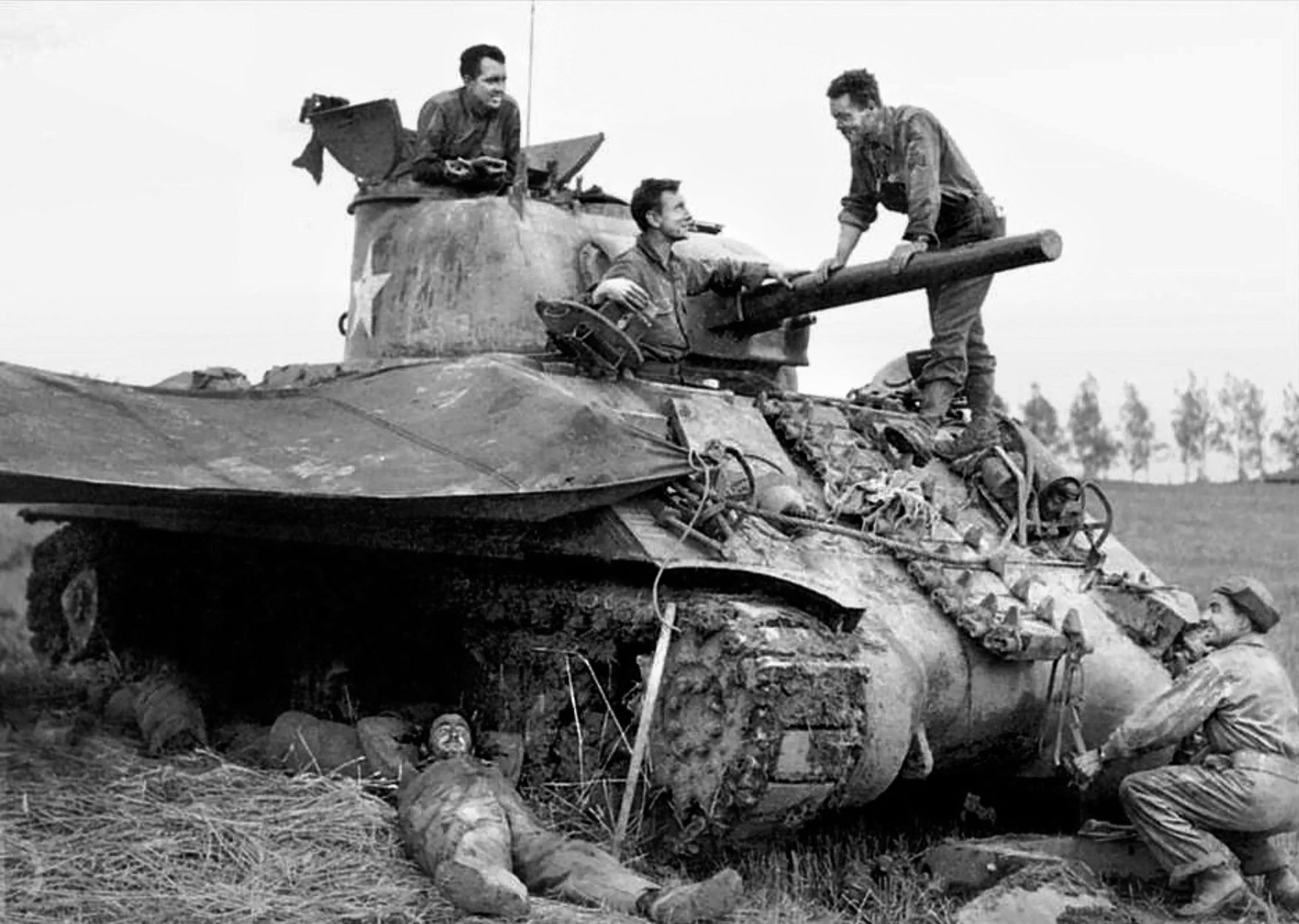
Wood quickly convinced Patton to give him free rein to overtake the fleeing Germans before they reached the bristling Siegfried Line on the Franco-German border. Wood’s Combat Command A and Combat Command B churned out of Nantes and bore down on Orleans via different routes. Guided by Wood overhead in an observation plane, they chased the enemy from Orleans and threw a pontoon bridge across the Meuse River on August 31. Though they were impatient to continue on to the Moselle River, the U.S. armored cavalrymen were bedevilled by a fuel shortage.
So fast was their advance that Wood’s command had lost track of the towns they had liberated and the number of Nazi formations they had destroyed. In many cases the 4th’s officers would disarm demoralized Germans and simply order them to the rear unescorted. The major cities these Americans had so far liberated were Nantes, Orleans, Loire, St. Calais, Sens and Troyes.

At Troyes they gave a clinic on modern armored warfare. With air support and forward reconnaissance, the tankers charged the city across a broad plain that sloped gently downward to defenses manned by 2,000-3,000, including the entire 51st SS Brigade. Fanning out at full throttle, the 800 Americans drove in unpredictable patterns that frustrated the German artillerymen as they ate up the 3.5 miles of open ground.
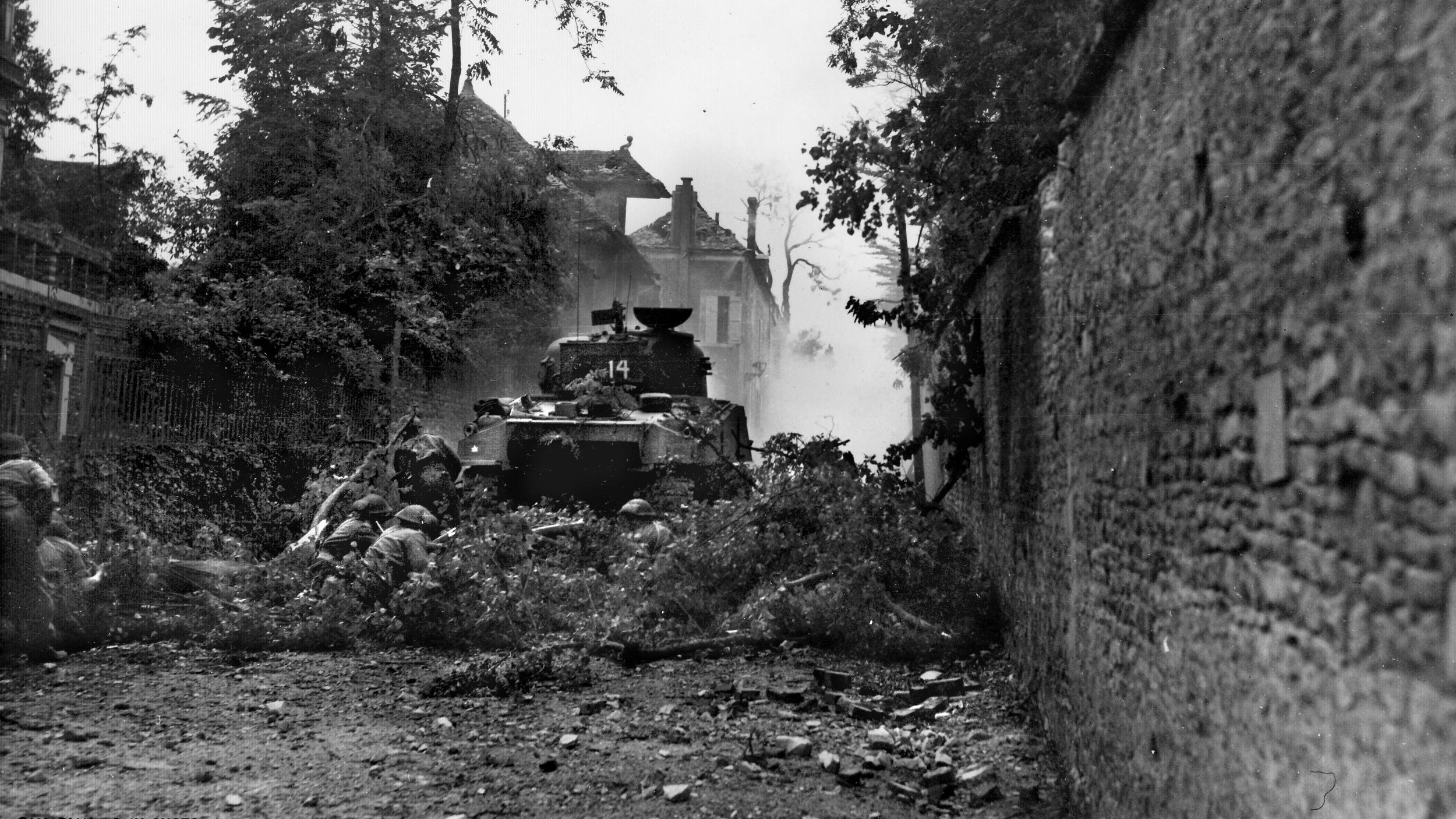
Carrying clusters of armored infantrymen, the Shermans flew over a seven-foot antitank ditch with their main guns blazing, collapsing it on German troops in enfilading positions. After penetrating outer defenses the infantry dismounted and shielded their armor from German anti-tank infantry. Rumbling through Troyes’ streets the Americans used white phosphorus and high explosives to knock out artillery positions and other pockets of resistance. At dawn on August 26, they destroyed an ammunition convoy trying to escape the city, and the armored infantry savaged another column that was attempting to relieve the defenders. This brought the engagement to a close.
Troyes had been garrisoned with experienced, well-trained troops and was heavily fortified. It easily could have become a major headache for the Allies, but instead fell quickly to these fearless, onrushing assailants who killed 533 Germans and captured 557. In fact, virtually all these locations that had been contested so bloodily in the First World War were quickly taken by this new generation of American fighting men whose hurtling advance was now temporarily ended by a lack of gasoline.

Before the week was out the division did scrounge enough fuel to enable some units to ford the Moselle River and its tributaries after the retreating enemy blew the bridges. Wood had his men break down the high river banks by pounding them with 75mm shells. They then heaved logs into the muddy canal beds in order to provide enough support for the tanks to cross without having to wait for engineers to construct pontoon bridges. The city of Nancy was quickly encircled and secured, but not all resistance was coming from the Nazis.
Wood’s command had crossed the Moselle on September 15, and he was anxious to push on along the Marne-Rhine channels and take Sarrebourg. He realized the German 1st Army facing him had no reserves and would be unable to withstand his thrust, but XII Corps commander Gen. Manton Eddy ordered Wood to send his tanks to the rear to help the 35th Division “tidy up the battlefield.” The ripe chance to immediately take Sarrebourg was lost as the 4th Armored Division’s advance was reined in at Arracourt.
By this time Adolf Hitler himself had heard of the rampaging U.S. armored posse slicing through his western defenses, and he personally ordered Gen. Hasso von Manteuffel’s 5th Panzer Army to counterattack and “retake Luneville and wipe out the American bridgeheads across the Moselle.”
On September 19 von Manteuffel’s Panthers rumbled into combat against the smaller and more thinly armored Shermans, expecting to pulverize the audacious Americans. But Wood’s well-trained men attacked the tracks and thinner side armor of the Nazi behemoths, while armored infantrymen trained their field pieces on these same spots. There was also ongoing firepower from above as P-47 Thunderbolts dive-bombed and strafed Wehrmacht formations. By September 22, 150 Panzers were destroyed.
All along the front, action was dwindling due to exhaustion, attrition and sundry shortages. On Columbus Day Wood’s command, after 87 days in the vanguard, moved to the rear for rest and recuperation.
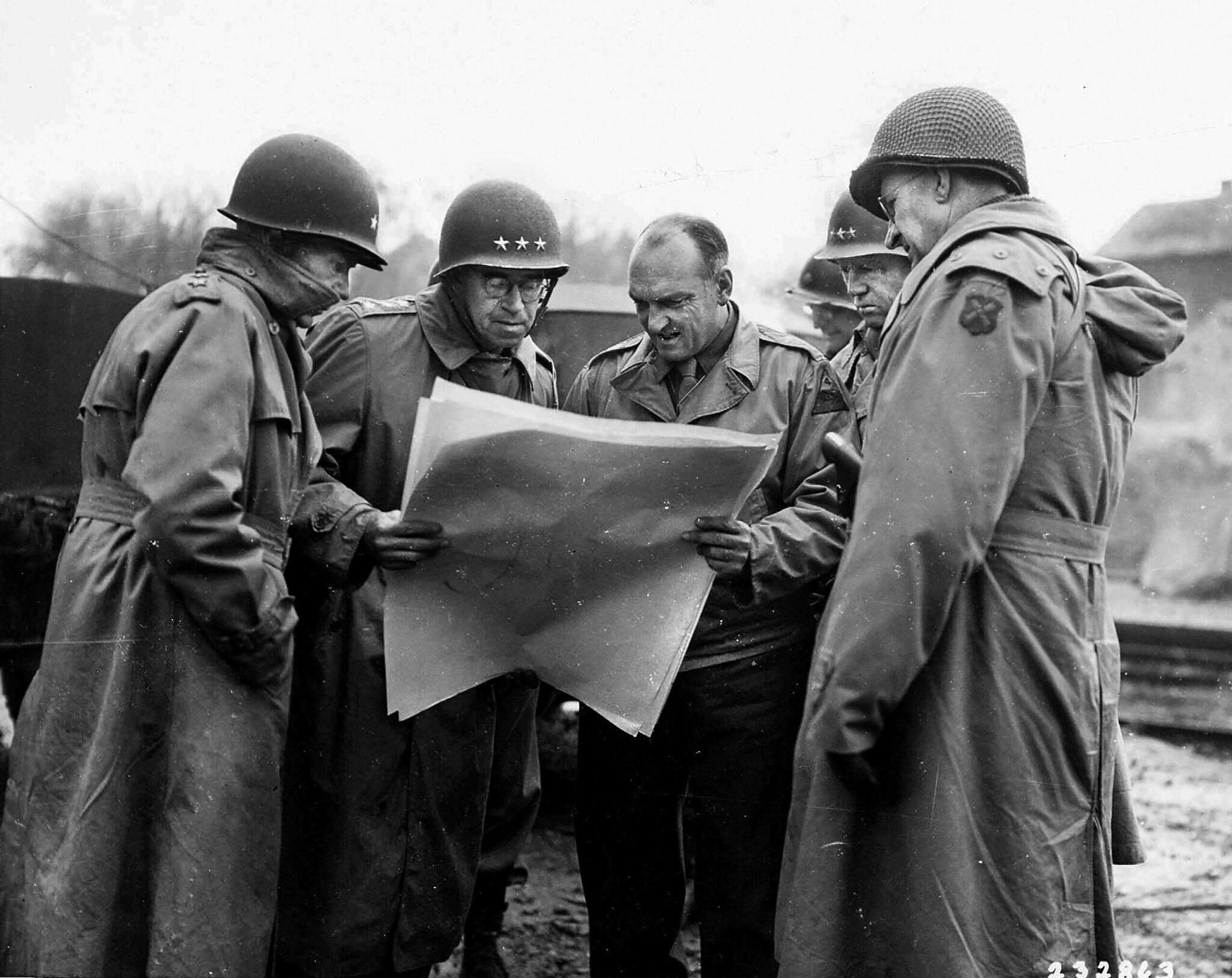
Wood had been recommending that the Siegfried Line be assaulted by the end of September before it could be fully manned, but the supply crisis stalled this plan. When the offensive finally did resume on Veterans Day, the weather favored the Wehrmacht as a chill rain fell steadily for three weeks, turning the meadows and pastures of Alsace-Lorraine into frigid, impassable swamps while rivers spread far beyond their banks.
With the weather restricting them to paved roads and depriving them of air support, Wood’s tanks were picked off with heartbreaking regularity by veteran German artillerymen firing the dread 88mm flak gun. The downpour precluded the rapid bypassing and encircling maneuvers so brilliantly executed by the 4th Armored Division throughout the summer. These indomitable tankers nevertheless pulverized the left flank of the German 48th Infantry Division and splashed all the way to Viviers, Hannecourt, Chateau-Salins and Rodalbe on the first day of the attack. The next day they rooted the Nazis from Foteny in grisly street fighting, and on November 14, ignoring withering artillery fire, secured Gubling before pushing on to Morhange, taking it two days later. For the series of speedy victories Wood was awarded a Bronze Star, which he never wore.
The division surged eastward again on November 19 into the mine-infested sector of Fenetrange, liberating it on Thanksgiving Day. Blasting a passage through to the Saar River, most of the division had crossed by the 25th. By then the 4th Armored had fought its way beyond XII Corps’ boundaries into a different sector, a move that would save the day for XV Corps.
On November 25 the Panzer Lehr Armored Division moved to strike XV Corps’ long, exposed flank and retake the vital Sarrebourg-Saverna road. As the Germans commenced their attack the just-arrived 4th Armored Division slammed into them unexpectedly from their position east of the Saar. Forced from offense to defense, Panzer Lehr was stopped cold and driven back to its jumping-off point east of Sarre-Union by November 27.
By December 3, the division had established U.S. control of the region around Domfesel and was preparing to resume its eastward movement when Wood was abruptly relieved of his command and sent back to the States on orders from Allied Supreme Commander General Dwight Eisenhower, who explained he wanted his priceless tank commander to have a break from constant combat. Both Eisenhower and Patton assured Wood he would return and lead his men to final victory, but the call never came. America’s premier armored leader would spend the rest of the war languishing behind a desk.

Many suspected the real reason for Wood’s removal was the well-known animosity between him and Eddy. There had been a sharp exchange between the two in a railroad station outside the town of Macwiler on December 1 in which Eddy had absurdly charged that the 4th AD was not fighting as hard as it should and was not achieving its potential. Eddy even accused the outfit that had outdistanced every Allied division in Europe of moving too slowly.
Furthermore, Eddy was incensed at how Wood had kept his command so long in the 7th Army’s zone during the fighting with Panzer Lehr. Leaving a battle before it was finished was incomprehensible to Wood, so he lingered long enough to complete the total rout of this crack outfit. Eddy and Wood had never worked well together, and the blow-up might have been worse had Wood not walked out in the middle of it. One of his officers, Brig.-Gen. Hal C. Pattison, believed Eisenhower and Patton caved to Eddy’s pressure and essentially fired Wood.
The 4th Armored Division’s new boss was former 3rd Army chief-of-staff Maj.-Gen. Hugh H. Gaffey. Wood was assigned to a clerical position in Fort Knox. Had Wood had been there, he might have been able to stem the avalanche of German troops and armor stampeding out of the frigid, fog-shrouded Ardennes Forest on December 16. He might have ended the Battle of the Bulge almost as soon as it started by hamstringing the Nazi counter-thrust with his own brand of blitzkrieg into its flanks—but by the time this sprawling engagement started, Tiger Jack was an ocean away.
General John Shirley Wood’s postwar years were quiet and anticlimactic. He died July 2, 1966, in an era when the honoring of American war heroes was not in vogue. The burial at his cherished West Point was accordingly muted.
In four fleeting months of crucial combat he had demonstrated how to fight in a rapid, total fashion that might have ended the war in Europe markedly sooner had he been given an earlier start and leave to finish the job. Instead he was spirited away when (as it turned out) he was most needed, and never given the chance to lead the crushing of the bestial Nazi state, perhaps by year’s end.

Join The Conversation
Comments
View All Comments