By Mark Carlson
With the quaint vernacular of governmental praise, President Nixon honored one of the Distinguished Flying Cross Society’s newest members, Air Force Captain John Calamos. But the citation that accompanied the medal only provided the basic, dry elements of a heroic act that begs to be better understood.
Admittedly, I did not fully understand what a Forward Air Controller (FAC) did during the Vietnam War, nor did I have any idea how dangerous it was. To find out, I went to the best source there is—John Calamos, himself.
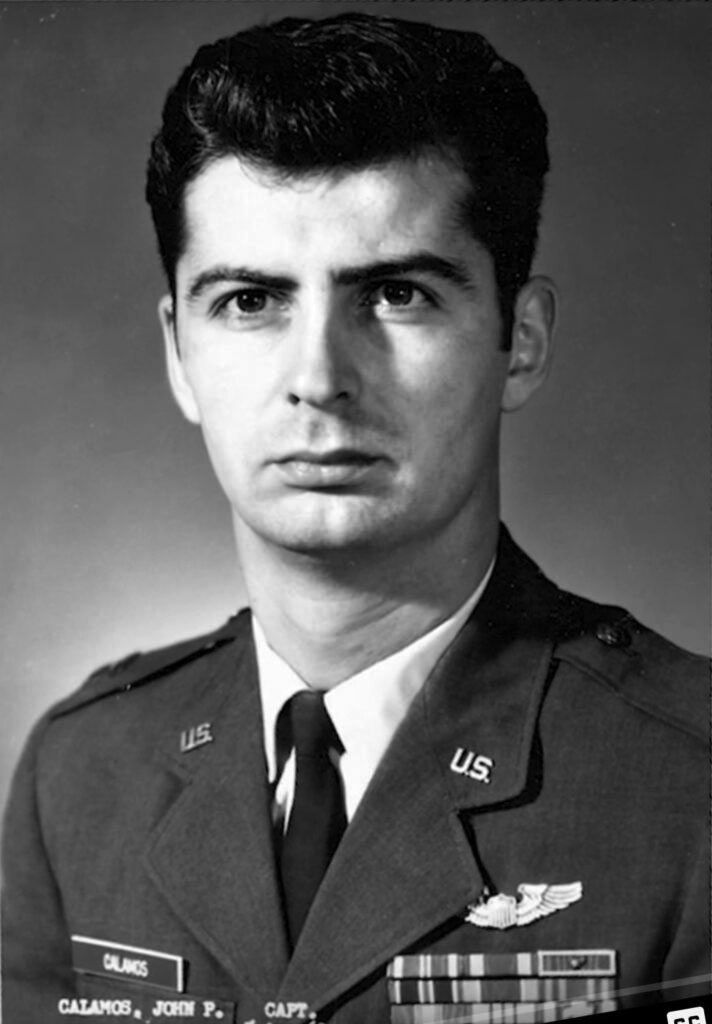
I called his office in Naperville, Illinois, where he still runs Calamos Investments, the firm he founded in 1977. After talking about his life and Air Force career, we got down to the details of the night he earned that Distinguished Flying Cross (DFC). It was a very revealing interview, even for someone who has been writing military aviation articles for more than a decade. I came away with a whole new opinion on the Air Force’s Forward Air Controllers.
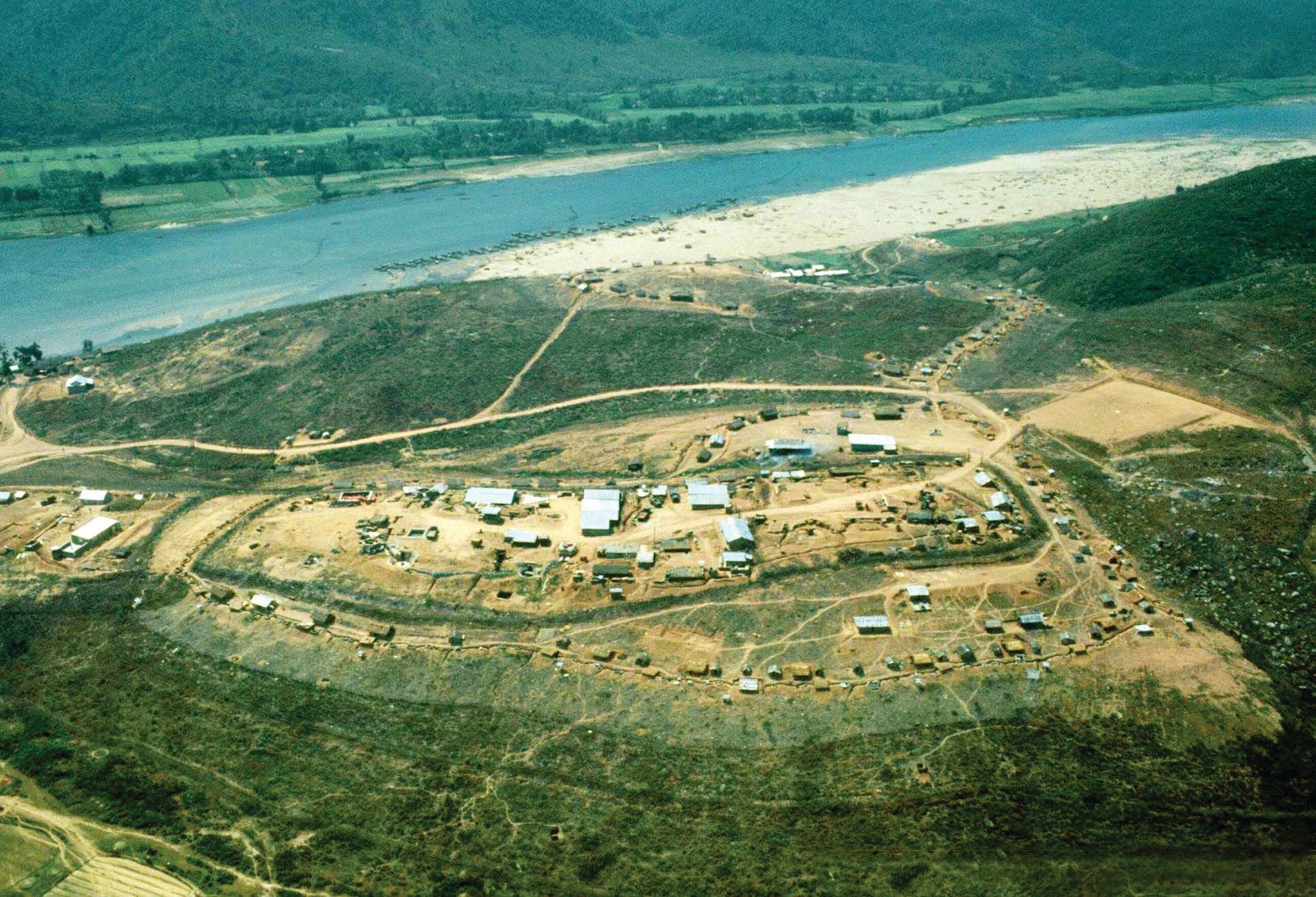
During the interview, I marveled not just at the fact that Calamos was trying to recall the details of one particular mission out of 400 that happened more than 50 years ago, but the fact that he was doing it. He came across as easygoing, casual, even humble, rare qualities in a pilot. The story of how Calamos earned the DFC began in 1965 when the Military Assistance Command Vietnam (MACV) began establishing Special Forces camps in South Vietnam near the Laotian border. They were manned by Special Forces A-Teams and paramilitary Montagnard tribesmen, called camp strikers. Camp A-109 at Thuong Duc was located on a 200-meter hill overlooking a river valley about 40 kilometers southwest of Da Nang, inland from the populated coastal plains. The valley was a patchwork of fishing villages, rice paddies, cow pastures and dirt roads. To the west loomed a mountain range that put the valley in shadow in the late afternoon.
The Fifth Special Forces Group monitored North Vietnamese Army (NVA) activity in the region, occupying Camp Thuong Duc from 1965 to 1970. Naturally, the Special Forces camps were prime targets for the NVA. The Camp A-109 was actually on one of the most important NVA infiltration routes and the North Vietnamese were determined to attack and eliminate it no matter the cost. The American Special Forces occupied the inner compound, connected by communication lines and trenches to the outer ring of Montagnard and South Vietnamese Army listening posts. A complex web of fire from machine guns, mortars and booby traps presented a deadly snare to attacking infantry.
Even with their superb organization and carefully sighted mortars and artillery, the Special Forces camps relied heavily on what is now known as “close air support.” Back then, they sometimes referred to it as “calling in the whole world.” It was the job of the Forward Air Controllers to identify the enemy and bring in whatever air assets were needed.
Like many other young men of his generation, Calamos, the son of Greek immigrants, started out wanting to be in a fighter jet.
“When I was growing up in Chicago,” he said, “I had only flown once or twice. The idea of someday flying jets in formation seemed like a pretty good accomplishment. I went through Air Force ROTC in college, earning my commission in 1963. I went on active duty in 1965 and entered pilot training in Texas.”
Instead of fighter pilot training, however, Calamos was assigned to fly a B-52 Stratofortress at Beale AFB in California. But his career as a bomber pilot would not last long.
“I was ordered to go to Vietnam as a Forward Air Controller,” he said. “After going through FAC training in Florida, I arrived in Vietnam in May of 1968, being sent to Da Nang Air Base. It was quite a shock to go from the biggest bomber in the Air Force to the little Cessna O-2.”
Da Nang Air Base was first occupied by the United States Air Force in 1962 to support MAC-V and Army of the Republic of Vietnam (ARVN) operations in the region. Originally a base for troop carrier squadrons, by 1965 it had expanded into one of the largest combined air bases in the Far East. Dozens of Air Force, Army and Marine transport, tactical bomber, reconnaissance, attack, and tactical fighter units sprawled across its vast concrete horizons.
Calamos arrived in Vietnam three months after the huge Tet Offensive at the end of January 1968, which meant that he and his fellow pilots of the 20th Tactical Air Support Squadron at Da Nang would see no shortage of action.
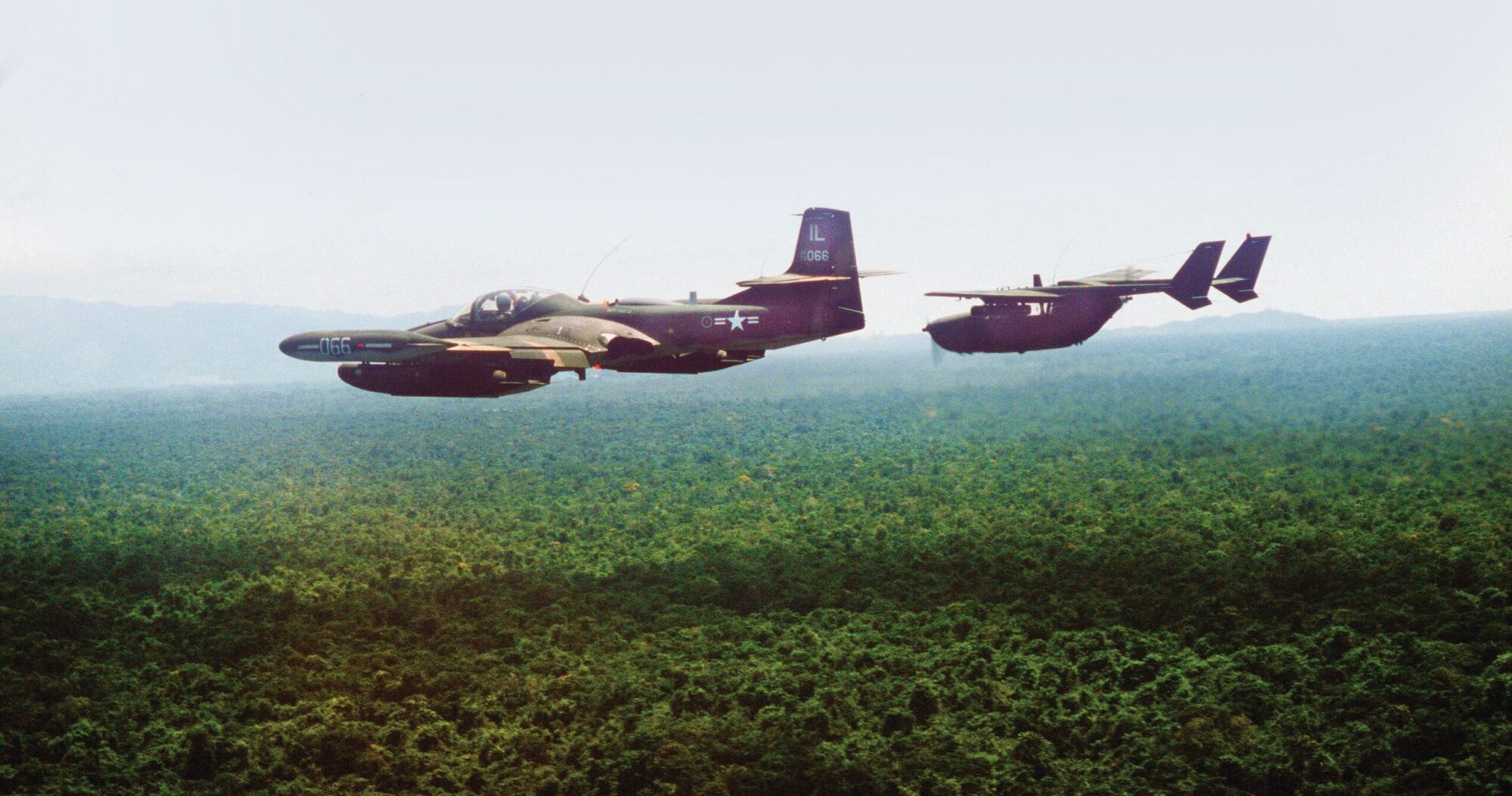
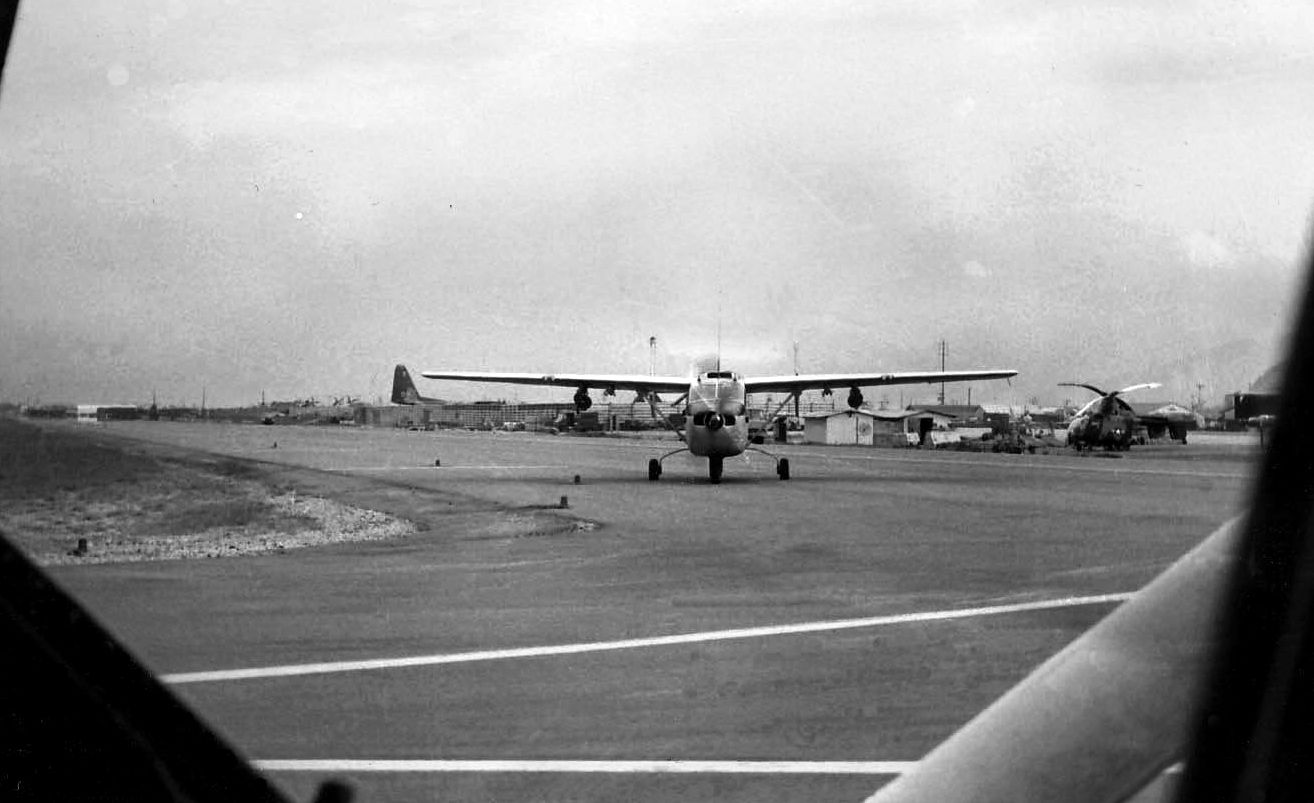
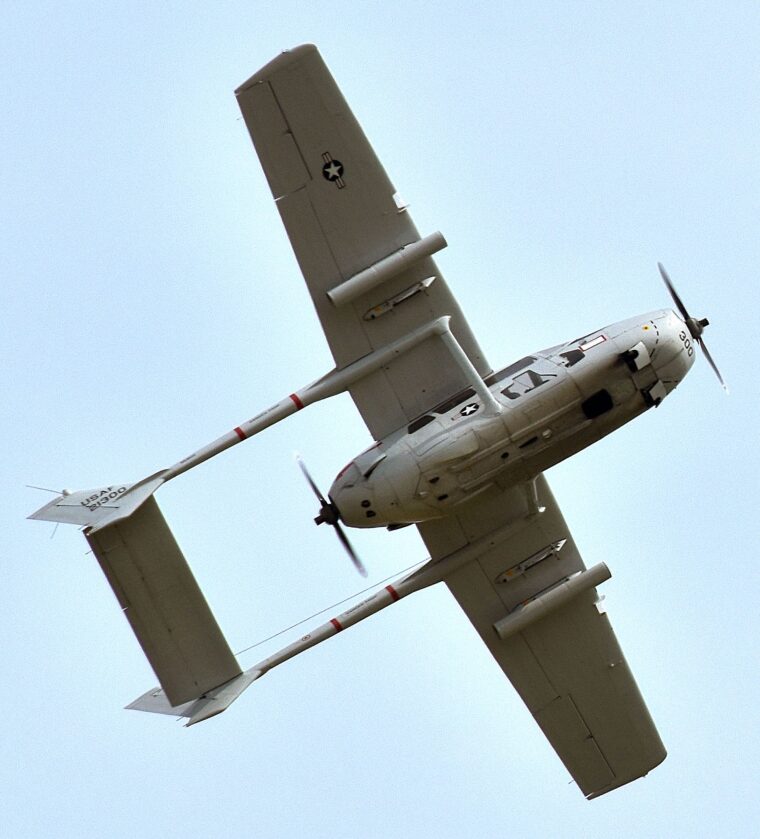
Prior to 1968, most of the tactical air support squadrons had been flying the smaller Cessna O-1 “Bird Dog,” whose origins went back to 1947. By the time Calamos arrived at Da Nang, the 20th TASS was flying the more capable Cessna O-2, a military variant of the Cessna 337. Nicknamed the “Oscar Deuce,” the O-2 had twin engines in a pusher-tractor configuration under a high wing between twin tail booms. With its large slanted windows to provide excellent visibility, the O-2 was perfect for the role, but provided little in the way of protection for the pilot.
But the O-2’s most valuable ability was its excellent range. At a cruising speed of 120 to 140 knots, the Cessna could fly over a thousand miles. “There were about six of us at Da Nang,” Calamos explained. “We were assigned sectors around Quang Nam, which included the Thuong Duc camp.” This meant that the O-2s could remain over a battlefield for several hours.
The FACs of the Air Force, Army, Marines, and Navy have become one of the great unsung stories of the Vietnam War. With origins extending as far back as the Great War, FACs had been operating in Vietnam since 1962. By 1968 more than 600 USAF FACs were conducting vital air support roles far beyond their original mandate. FAC pilots, almost always alone, performed varied duties such as collecting intelligence on NVA movements, weapons and strength, acting as a communications link between ground and air units, and most satisfyingly, coordinating combat search and rescue operations. But their primary role evolved into a specialized link between friendly ground units and the “fast movers,” the tactical air fighters from the air bases. If a Special Forces, Marine or Army unit needed help from air assets, it was the Forward Air Controller who climbed into his little Cessna O-2 Skymaster and headed into “Indian Country.”
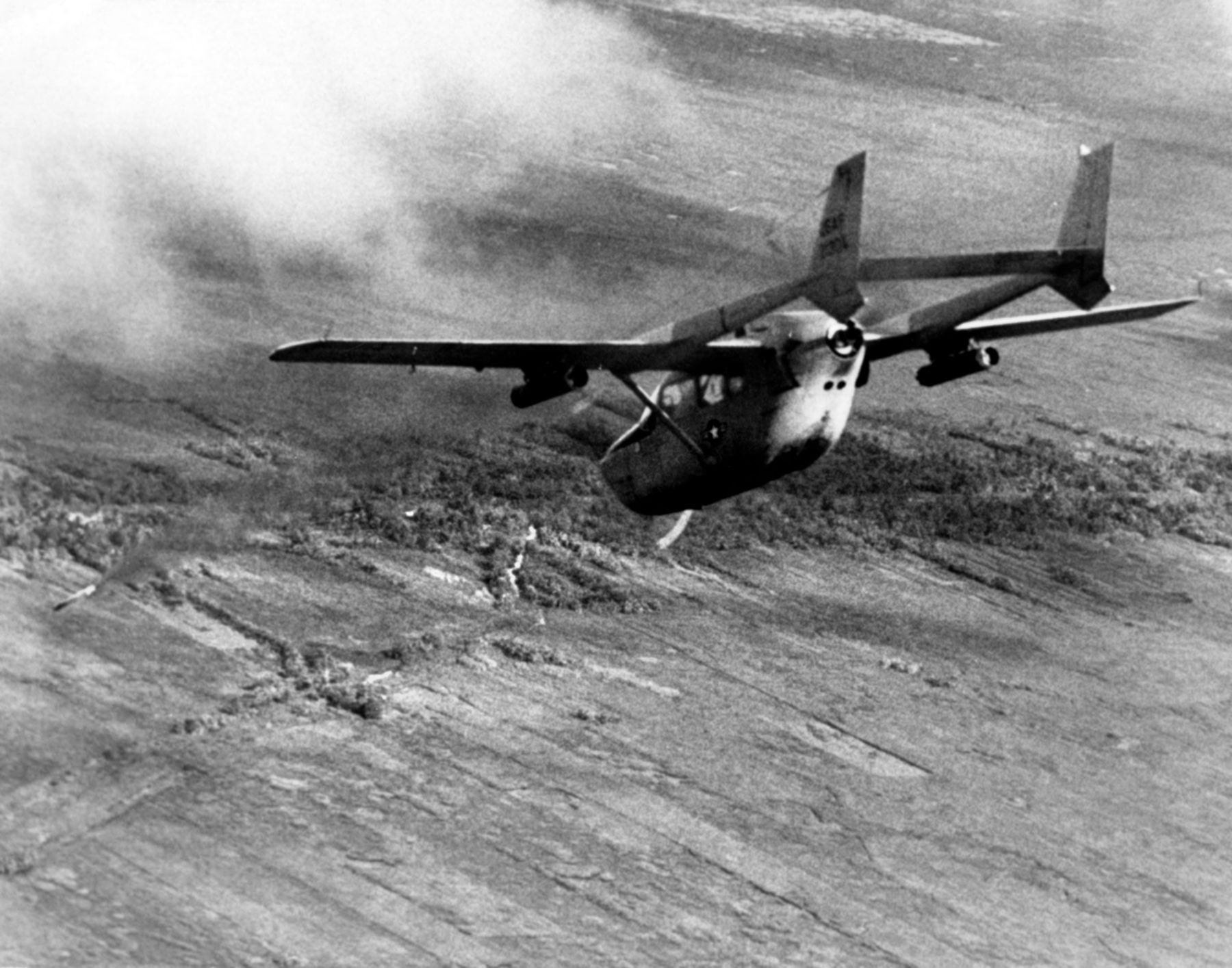
As he drew closer, the pilot established radio communication with the ground unit to learn where the enemy was and more importantly, where the friendlies were. Keen eyes, a steady hand on the controls and a quick mind were essential to assessing an evolving situation. The FAC had no real weapons, other than his sidearm, but his most important tools were his radios and a load of ten white phosphorus rockets. The three radios, which were set to communicate with the air base, strike aircraft and ground forces, could only be used one at a time. It took fast reactions to flip from one radio to another while calling in air strikes and keeping both the air base and ground units informed.
A FAC had the authority to request air strikes on enemy positions, and in the case of ground units in danger of being overrun by NVA attack, even diverting air assets involved in other operations. They were on call at any time and place. Needless to say, the FACs in their small and unarmored O-2s were eager to avoid capture.
“We tried to stay clear of ground fire, remaining above fifteen hundred feet and not flying straight and level for too long,” Calamos said. “There was often a lot of ground fire, even small arms stuff. When we fired the rockets we had to descend to make sure we hit our target, but right after that it was back to fifteen hundred feet again.”
With the ability to cruise at low speeds, the O-2 could “loiter” over and around active combat. This ability was the key to staying abreast of what was happening on the ground. The McDonnell F-4 Phantoms and North American F-100 Super Sabres moved far too fast for accurate bombing when there was less than a few hundred yards between enemy and friendly forces. Pinpoint precision was paramount in protecting American and Allied lives.
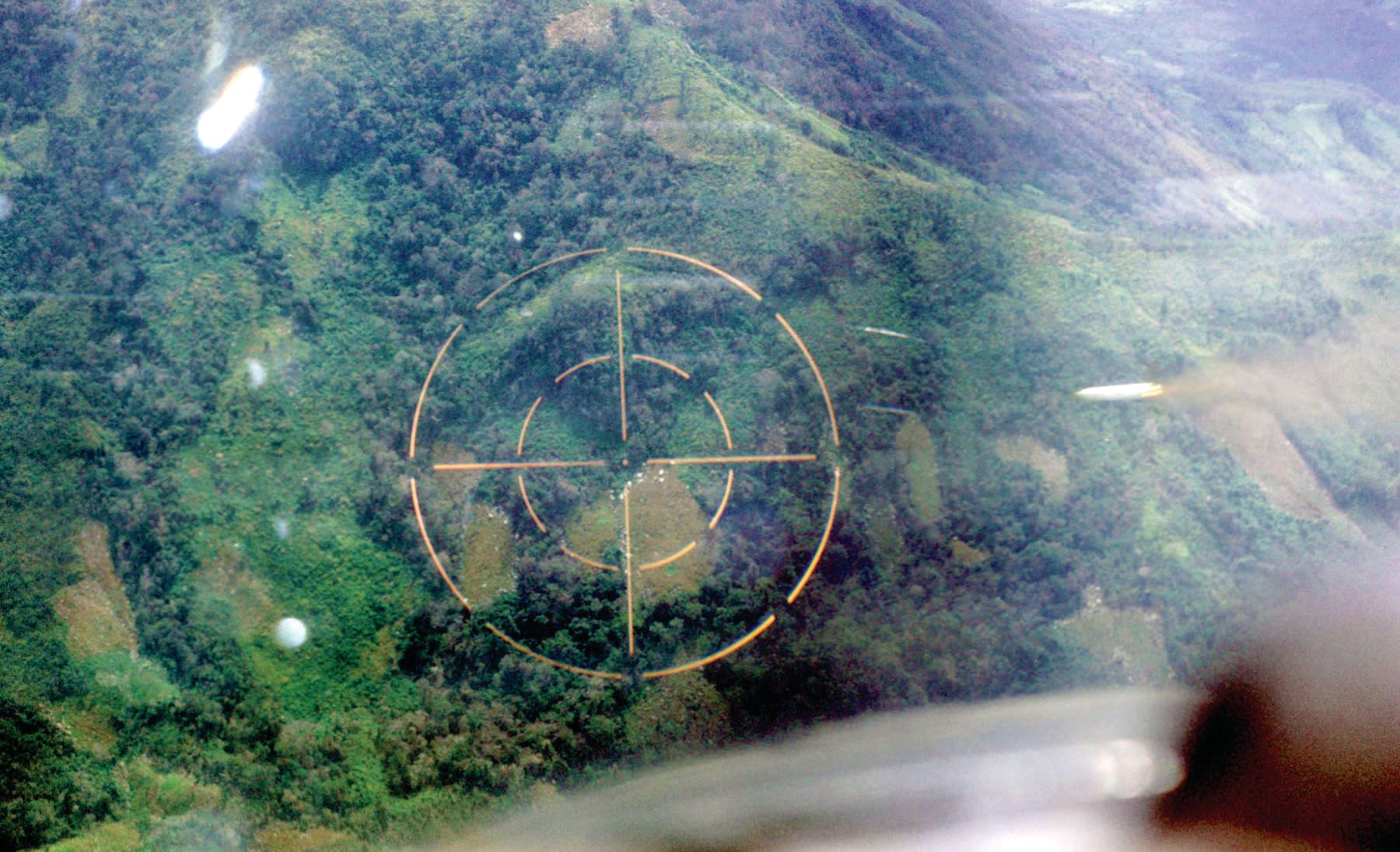
“The FACs orbited the area, controlling the air strikes by firing white phosphorus rockets to mark the target,” Calamos said. “We knew where the friendly and enemy ground units were. That’s what the rockets were for. The jet fighters could not drop unless we told them that they were ‘cleared in hot.’ We told them from what direction to approach and what the target was.”
The FAC orbited within sight of the target while the jets moved in and dropped their ordnance. One at a time the bombs went off, obliterating the FAC’s view of the impact zone, but when the smoke cleared, he had the decision of calling for another bomb run. Considering the NVA’s reputation for tenacity, it often took many bomb runs to finish the job.
The events of September 28 began earlier that month when the NVA forces were preparing a major assault on Da Nang. First on their hit list was the Camp at Thuong Duc, which was a stronghold on the river valley the NVA used for troop movements south. With practiced stealth, two regiments of NVA infantry, about 3,000 troops in all, moved mortars and artillery to surround the camp and its outposts on three sides. The assault began at 0200 hours on September 28 when elements of the NVA 21st and 141st Regiments attacked and overran Outposts Alpha and Bravo, located 600 yards from the camp perimeter.
The Green Berets and Camp Strikers led successful but bloody counterattacks to retake the vital outposts. Throughout the day the enemy forces increased the pressure with mortar and artillery attacks on the many local villages to bring in concentrated fire on the camp. The Special Forces and Montagnards continued to repel the attacks, but as night fell, the battle was far from over. That was when Calamos, call sign “Lopez 58,” was sent in to relieve the FAC who had directed air strikes during the day.
“The camp was on a hill overlooking a river valley with many villages and rice paddies,” Calamos said. “The NVA was moving towards the camp under supporting fire and artillery.”
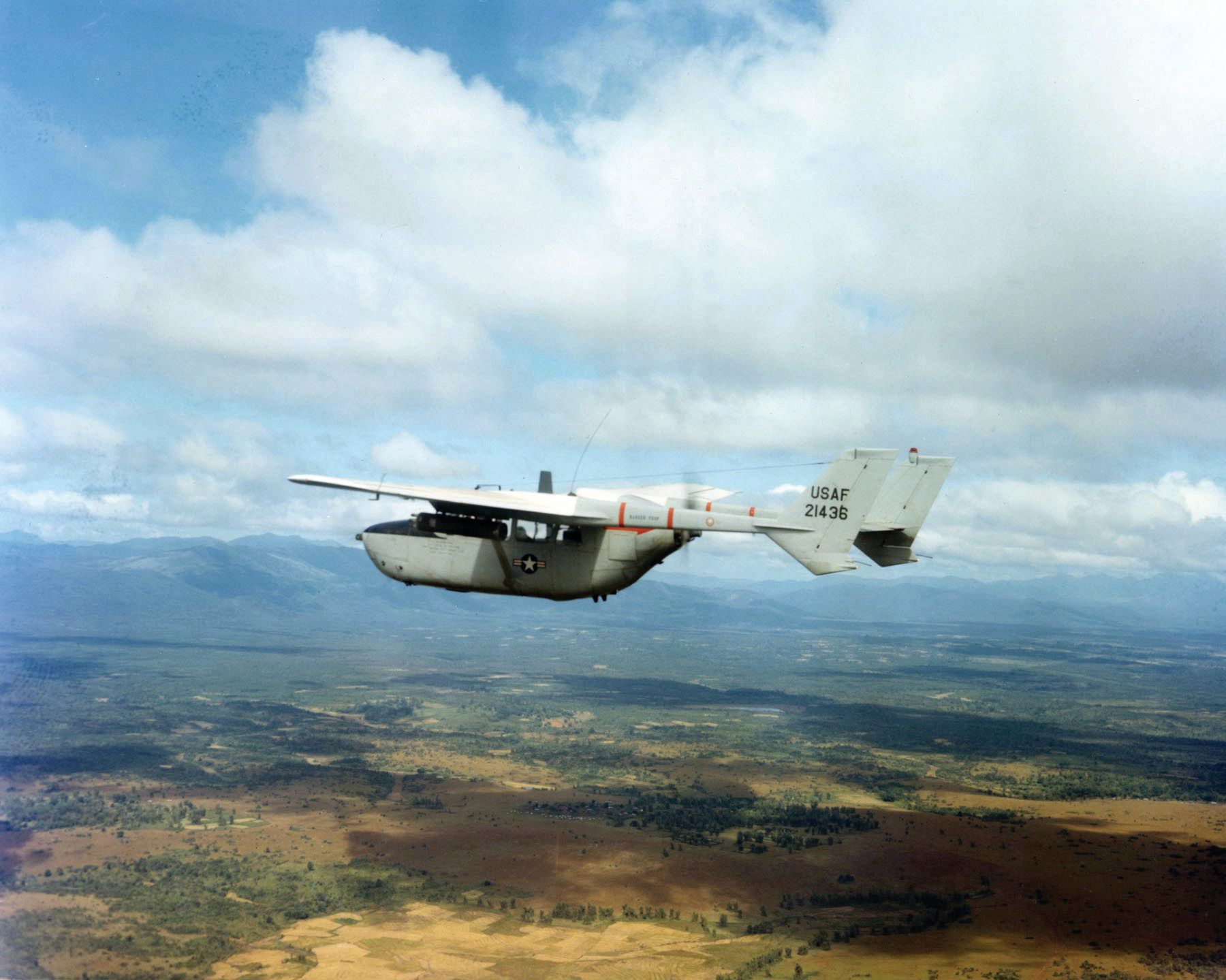
By this time the enemy had lost the element of surprise and the initiative. The night was both a blessing and a curse. For Calamos, in his little Oscar Deuce, it meant he had to watch the ground for the flashes of gunfire, tracers and explosions. “I had tracers coming up at me,” he said. “I could not see the enemy troops but I knew where they were from the ground fire.”
His main source of information was the team of Green Berets. The opposing forces were, according to Calamos, only 200 feet apart. “The bad guys were too close for the jets to hit with any precision.”
More light was needed, so he called in flare planes, which kept up a steady stream of parachute flares to illuminate the battlefield in an eerie stark white light.
Da Nang had been sending in air strikes during the day. Upon receiving Calamos’ requests, the base sent more jets loaded with anti-personnel ordnance. Phantoms and Super Sabres streaked in low and disgorged cluster munitions and general-purpose bombs even as Calamos attempted to assess the damage and effectiveness of each strike.
The bombs detonated in bright yellow and white flashes that left spots in the pilot’s eyes. Small fires flared up, adding to the macabre night landscape and revealing terrain littered with bodies and shattered weapons. The two North Vietnamese Army regiments refused to give up, continually pushing to find a weak spot in the American and Montagnard perimeter—in fact, the broader Battle of Thuong Duc would rage on until November. On this night, however, their probing attacks were often spotted by the keen-eyed Calamos. More white rockets streaked down and the call of “Cleared in hot!” came over the radio frequencies. Calamos had to call for a second full strike on the determined enemy.
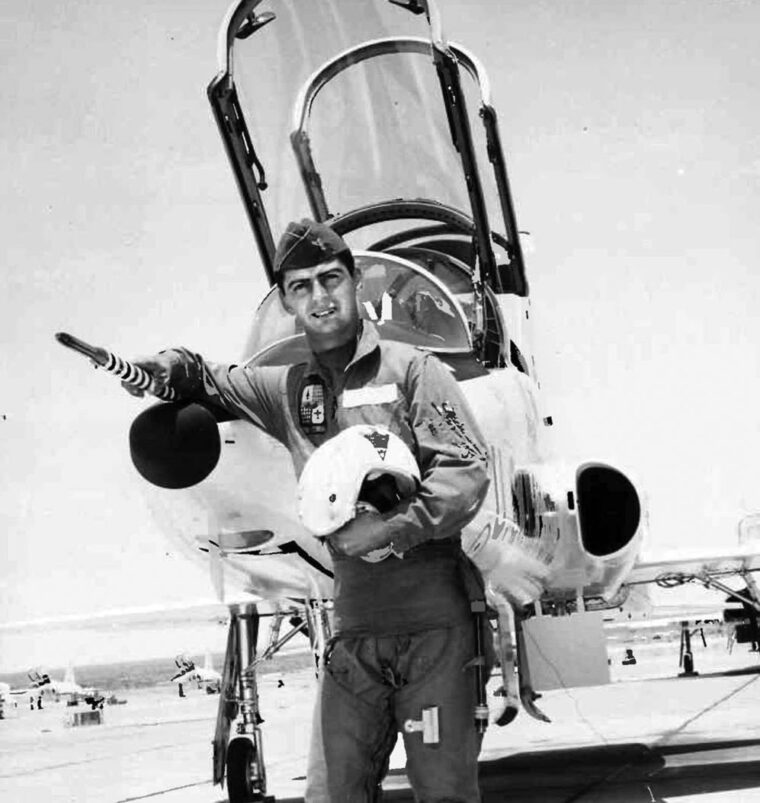
“The weather was poor and it sometimes interfered with my being able to see what was happening,” Calamos said. “The second strike came in and hit right where I had put my rockets.”
In addition to the jets, Calamos’ call brought in one of the truly remarkable aircraft of the Vietnam War. Sometimes called “Spooky” and “Puff the Magic Dragon,” the AC-47 was the ultimate gunship up to that time. These converted C-47 transports carried three 7.62-mm General Electric rotary miniguns mounted in the left-side cargo door and two windows. Each gun had six rotating barrels like a Gatling gun, and was able to fire between 2,000–6,000 rounds per minute from a 5,000-round belt. They often carried a combat load of 24,000 rounds.
The pilot controlled the guns as he peered through crosshairs on his left-side window. The plane circled in what is known as a counter-clockwise “pylon turn” in which the pilot was able to keep the stream of hot lead aimed in a cone of fire at an area about the size of a football field. Ground fire and mortar explosions gave the pilot a clear aiming point. At night the tracers looked like orange laser beams, facilitating the pilot’s aim. The steady stream of bullets literally tore through the foliage, leaving death and carnage wherever it touched. With such concentrated firepower, it is no wonder that the NVA troops suffered heavy casualties on the night of September 28.
“I was in the air over the fight for about four hours,” Calamos said. “Near the end of the mission, a lot of tracers came right at me, so I knew enemy forces still remained. I climbed for the low clouds until I could descend for another look.”
After those four hours of orbiting over the fight and calling in every air asset that could be of help, Calamos was relieved and flew back to Da Nang. His night’s effort was not in vain. The camp was secured later that day when two battalions of the 7th Marines came in and drove the NVA back. It had been a long and bloody fight. At least 68 NVA were killed in direct assaults on the camp, while hundreds more were killed in the air strikes. The FACs and Air Force had played a major role in protecting the camp and the sector from being overrun. Calamos’ night on the front line was not unusual for a FAC, but it had been enough to earn him the DFC.
Calamos related another flight that stood out in his memory. “I was flying and got a call from an infantry unit under attack from the NVA. They were in deep forest as I flew over. I was on the radio with the jets and the guys on the ground. I needed to know where they were and the guy says, ‘I’ll send up some red smoke,’ so suddenly there were two red smokes coming up from the woods. That meant the enemy was listening in. So then the guy says, ‘I’ll send up green smoke!’ Again, two green smokes.”
While this was happening the jets were orbiting nearby, waiting for their cue. “Then the guy says, ‘Sending up yellow smoke!’ And only one yellow smoke comes up. ‘I don’t have yellow smoke! Get them!’ So I radio, ‘Cleared in hot! Target is the yellow smoke!’”
Just another day at the office for a Forward Air Controller in Vietnam.
“I flew over one thousand hours during my tour in Vietnam; 833 of those hours were in combat,” he said. “I made four hundred flights, but I don’t know if each flight could be called a ‘mission,’ that’s up to the Air Force.”
Surprisingly, after rotating back to the States in May 1969, Calamos went back to flying B-52s out of Minot AFB in North Dakota. He spent five years on active duty and twelve in the reserves flying A-37 jet fighters. One can’t help but wonder what the Air Force had in mind taking him from B-52s to making him an FAC, then putting him back in the Stratofortress. But as for his year in the O2, there are some Green Berets who are very glad it worked out that way.


Join The Conversation
Comments
View All Comments