
By Richard Danila
Infectious diseases have shaped history and often determined the fate of wars. In an article for infectious disease physicians, Drs. Theodore Woodward and Stephen Dumler said, “Of all infectious diseases that the world has experienced, only a few have truly altered the history of mankind. Taking its place with smallpox, plague, tuberculosis, and HIV, epidemic typhus has arguably determined the outcome of more wars than any soldier or general.” The effects of epidemic typhus on WWII were feared, so the Allies and Germans were as determined to control the disease rather than let it control them.
Epidemic typhus, or just typhus for short, has been found in humans for thousands of years. It is caused by a small intracellular bacterium, Rickettsia prowazekii. Named in part after Dr. Stanislaus von Prowazek, the brilliant investigator who died from typhus in 1915 while studying the disease among Russian prisoners of war during World War I. Prior to the discovery of antibiotics, up to 70 percent of infected individuals die from typhus. Even today, the mortality rate is 10 to 15 percent.
Two to fourteen days after the bacteria enter the body, a patient develops a very high fever, fatigue, a severe headache, a distinct rash on the trunk and limbs, muscle aches, nausea, chills, and a hacking cough. The rickettsiae target endothelial cells, causing vasculitis—a widespread leaking of the blood vessels. Four-fifths of patients go on to develop central nervous system manifestations, including seizures, drowsiness, coma, hearing loss, and acute psychosis. The name typhus is derived from the Greek tuphos, meaning smoke or stupor, referring to the profound delirium that grips its victims.
Humans are the primary reservoir for this pathogen. However, researchers have discovered that southern flying squirrels also carry the typhus bacterium, causing sporadic, isolated human cases in North America when the animals nest in homes. Outside of a living host, the bacteria cannot survive on their own. The bacteria do not survive elsewhere on their own.
Typhus is transmitted to humans via the body louse. The vector spreads the bacteria through dried feces scratched into the skin or inadvertently inhaled. Humans can develop a latent form of the infection, Brill-Zinsser disease, which can reactivate decades later, causing a milder bout of illness and making the patient a renewed reservoir for future louse-borne outbreaks.
Body lice (Pediculus humanus corporis) are biologically distinct from head lice. They do not dwell on human skin or hair, but in the seams of clothing. Wearing the same garments, poor sanitation, and crowded conditions—baseline realities for frontline soldiers—allows typhus to spread like wildfire.
Typhus is often confused with typhoid fever, a different disease from a different bacteria, Salmonella typhi. The two diseases share clinical characteristics, but typhoid fever is spread by consuming food or water contaminated with human feces. There are also other forms of typhus such as mite-borne scrub typhus (present in Pacific islands) and flea-borne murine typhus. These are different Rickettsiae bacteria, causing different symptoms, and they are spread by fleas or mites in warm climates. While American troops in the Pacific were at significant risk for scrub typhus, its environmental management differed entirely from the delousing campaigns required to halt epidemic typhus.
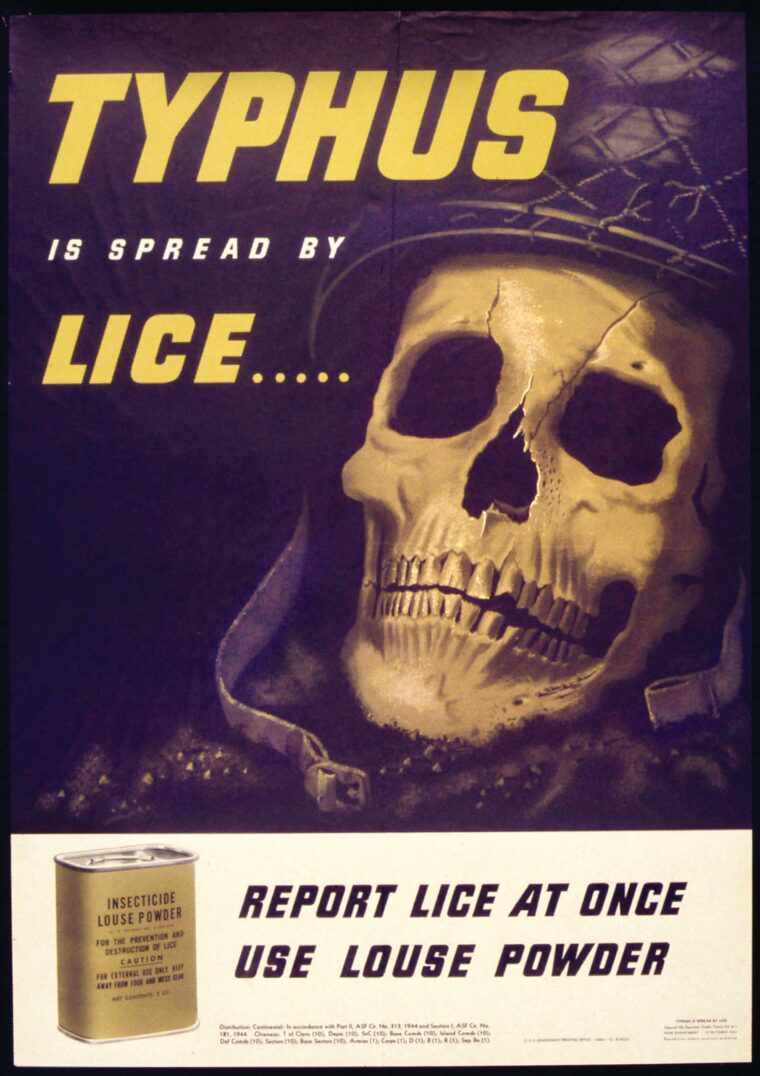
Feeding on their human host five times a day, body lice live one to three months. Without a blood meal, they die within five days. The best control is to isolate contaminated clothing for a week, starving the lice.
If infected with Rickettsiae, body lice themselves succumb to the bacteria from intestinal obstruction after one week. Thus, humans are needed to continue the life cycle of the bacteria. Transmission from louse to human is not from the bite. Lice defecate as they suck feed. Proteins in their saliva cause intense itching; as the host scratches, they rub infected feces or crushed lice directly into the bite wounds or micro-abrasions. Furthermore, the bacteria can remain viable in dried louse feces for up to five years. Crucially, when an infected patient develops a high fever or dies, the drop or spike in body temperature prompts the lice to abandon the host in search of a new, cooler victim
Interestingly, body lice appear to have diverged from head lice as a separate species 80,000 to 170,000 years ago as determined by lice DNA modeling—roughly overlapping when humans started to wear clothing.
When Napoleon retreated from Moscow in October 1812, nearly all 700,000 of his soldiers died, often from the cold and starvation. But typhus likely killed one-fifth of his army, based on writings and descriptions of events. In 2001, a mass grave of 717 of his retreating soldiers was found in Vilnius, Lithuania. Soldiers’ teeth and five lice bodies were exhumed and tested. Rickettsia prowazekii DNA was found in seven teeth and three lice, demonstrating the presence of typhus.
In 1776, during the American Revolution, Maj. Gen. Nathanael Greene, commander of Continental Army forces under Gen. George Washington, was sidelined with what almost certainly was typhus. Consequently, he was unable to participate in the battle of Long Island in August where American forces were routed and forced to retreat to Manhattan. Scholars have long speculated that had Greene participated, the battle would have been won, perhaps ending the Revolutionary War years earlier.
During WWI, there were 30 million cases of typhus, with 3 million deaths of Russians on the Eastern Front, with the epidemic extending into the Russian Revolution. The Russians withdrew from the war in part because of the terrible effect of typhus. German soldiers then transferred to the Western Front, possibly prolonging the war. Once again, typhus had altered the course of war. With this experience in mind, American and German military planned in earnest to prevent a recurrence in WWII. The Germans’ fear of typhus was particularly strong. Americans knew that their troops would soon move into areas endemic with typhus. And effective antibiotics to treat patients had yet to be developed or produced.
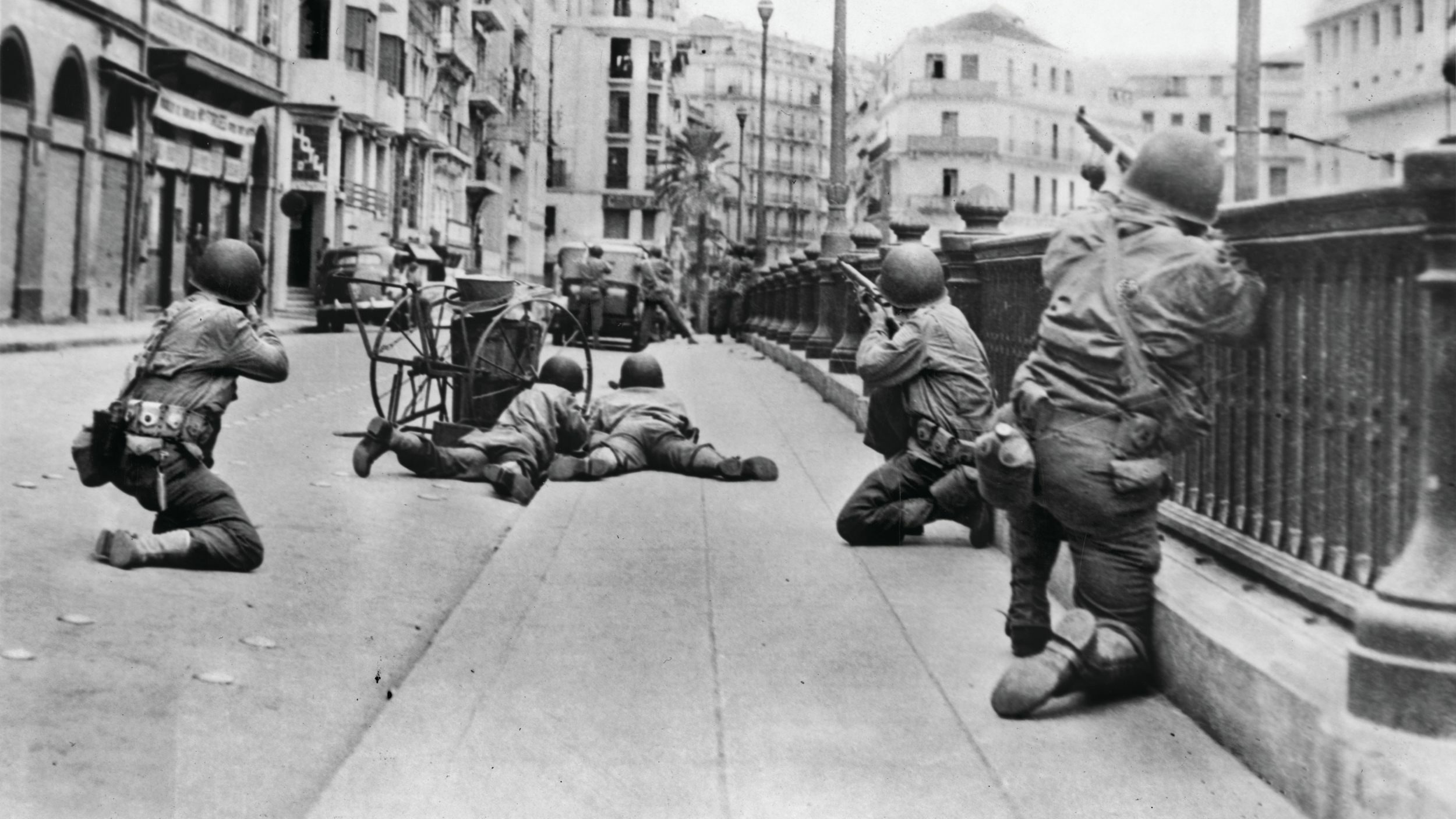
By presidential directive, on December 24, 1942, the U.S. Armed Forces created the U.S.A. Typhus Commission (USATC) to “formulate and effectuate a program for the study of typhus fever and the control thereof…”. The USATC was an interdepartmental group with personnel from the Army, Navy, and U.S. Public Health Service. In anticipation of the Allied invasion of North Africa, concern was high because there was known to be a typhus epidemic among the civilian population there. Large outbreaks were occurring in Morocco, Algeria, Tunisia, and Egypt. Dr. Fred Soper, an expert in the control of two mosquito-borne diseases, yellow fever and malaria, was appointed as the USATC head. He later called this “my lousy adventure.”
In WWI, the Americans and British controlled typhus by steam sterilization of clothing to delouse them, since a high temperature is needed to kill the lice. While their clothes were being treated, the soldiers bathed. This was both resource and time intensive and required the careful separation of those infested soldiers from those waiting for their treated clothing. Reinfestation was common. Clothing deteriorated from the high temperature. It was during this time that the British coined the word “cootie” for body lice. Less intensive methods of control were obviously needed in WWII.

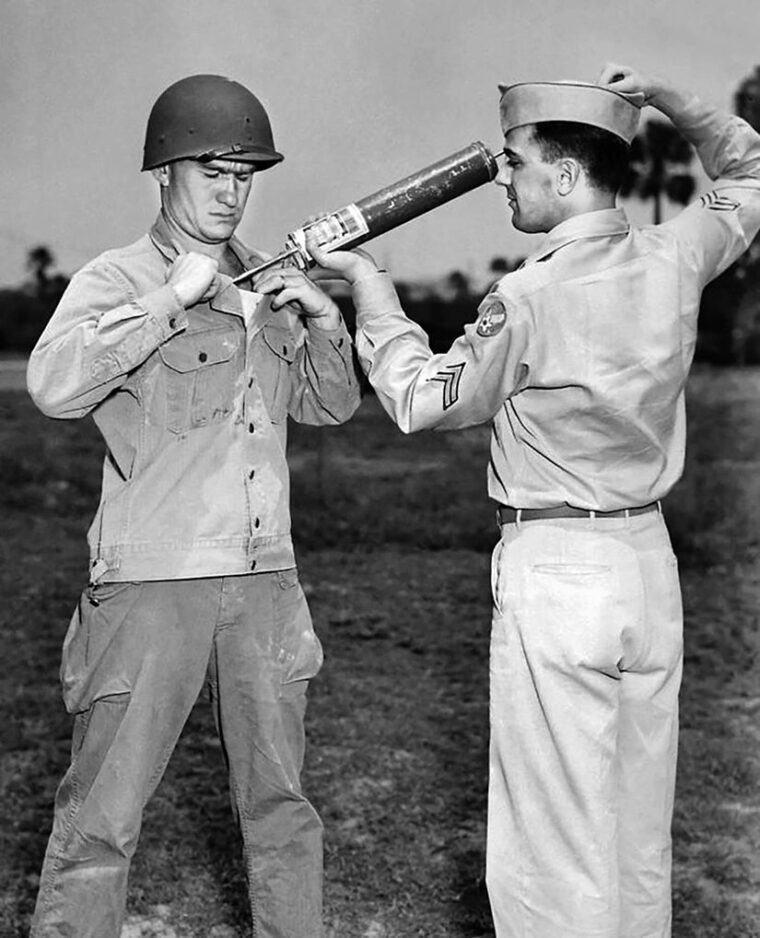
The USATC began field trials in Egypt, Mexico, and North Africa of the Army’s standard louse powder, MYL. Its active ingredient is pyrethrins, chemical compounds extracted from chrysanthemum flowers that attack the nervous system of the lice. MYL had mixed success because pyrethrins break down quickly. Soper developed typhus during this time. The USATC teamed with the Rockefeller Foundation Typhus Team. Much better results were found with the newly discovered chemical DDT (dichloro-diphenyl-trichloethane).
In the late 1930s, Paul Muller worked for the J.R. Geigy Company in Switzerland, developed DDT. In 1942, he sent approximately 500 pounds to its New York office. In turn, it was sent to the U.S. Department of Agriculture test facility in Orlando, Florida. DDT was found to be extremely effective at killing agricultural pest insects, mosquitoes in outdoor applications, and lice. It remained persistent in clothing—and the environment—for weeks, negating the chance of reinfestation. It was that persistence and its effect on wildlife, especially birds, as described in Rachel Carsons’ classic book, Silent Spring, that led to its ban in the U.S. in 1972.
DDT field trials on body lice were also done on Quaker Conscientious Objector volunteers in a New Hampshire forestry camp with excellent results. The volunteers were deliberately infested with body lice, and after treatment they had to count and record remaining body lice on themselves and in their clothing.
Soper used a regular hand garden dust sprayer, readily available and easy to use, to administer DDT. In North Africa, modest Muslim women could be sprayed through the neck of their garments with binding at their wrists and ankles. This method worked for GIs as well.
In North Africa, known for its massive fly infestations, it was found that DDT also killed the flies. Indeed, because DDT can be sprayed on an interior wall and be effective and persistent for months, it found its way to the civilian black market within two weeks of its arrival in North Africa. Civilians said it was the first time in their life they slept through the night since body lice weren’t biting.
Naples had a massive typhus outbreak prior to the American invasion in September 1943. The Army sprayed 50,000 civilians per day with DDT, with 1.3 million treated. Eisenhower recognized the value to his troops, directly or indirectly, in treating civilians with DDT. On December 5, 1943, he sent a secret radiogram to Washington stating “seventeen tons (of DDT) concentrate are total requirements for this theater for Civilian and Military (authorities).”
At the same time, Dr. Herald Cox of the U.S. National Institutes of Health was developing a typhus vaccine. The bacteria require living cells to grow. By 1942, Cox used chick embryo yolk sacs to grow the bacteria and to produce an effective vaccine. Field trials in Egypt proved it worked and millions of doses were produced. The drawbacks were that a three-dose series was needed and needed to be given at least twenty-one days before exposure. Nevertheless, Allied troops began receiving the vaccine in 1942.
Germany did not know about DDT or the Cox vaccine—even if they did, they could ill afford the use of eggs for its production.
Starting in 1926, Polish and Jewish physician Rudolf Weigl used human lice feeders to produce a vaccine. Lice were injected intrarectally, then after five days were dissected and the intestines were harvested. These were then ground in phenol to produce an effective vaccine. After the Nazis invaded Poland, Weigl and his team were imprisoned to manufacture vaccine. A good worker could inject 2,000 lice per hour, and a good dissector could dissect 1,600 lice guts in 8 hours. The vaccine was difficult to produce and standardize. Weigl misled his Nazis on the effectiveness of his vaccine, often using a placebo for Germans while keeping good vaccines for fellow Jews, including in the Lwów and Warsaw ghettos.
Weigl’s student was Polish Jewish physician Ludwig Fleck, who was transferred to Auschwitz and later Buchenwald, where he tried to produce a vaccine from infected rabbit lungs. His Nazi lab staff were incompetent, so Fleck made a fake vaccine. Camp inmates received good vaccines and useless vials of rabbit-lung extracts were delivered to the Nazis.
The Nazis wrongly equated typhus with Jewishness, using it as a pretext for killing Jews. Ironically, concentrating Jews in ghettos facilitated the spread of typhus. Nazi Jost Waldbaum, Chief Health Officer of the General Government of Occupied Poland, said that there were two ways to stop the spread of typhus, either “we sentence the Jews in the ghetto to death by hunger or we shoot them…We have one and only one responsibility, that the German people are not infected and endangered by these parasites.”
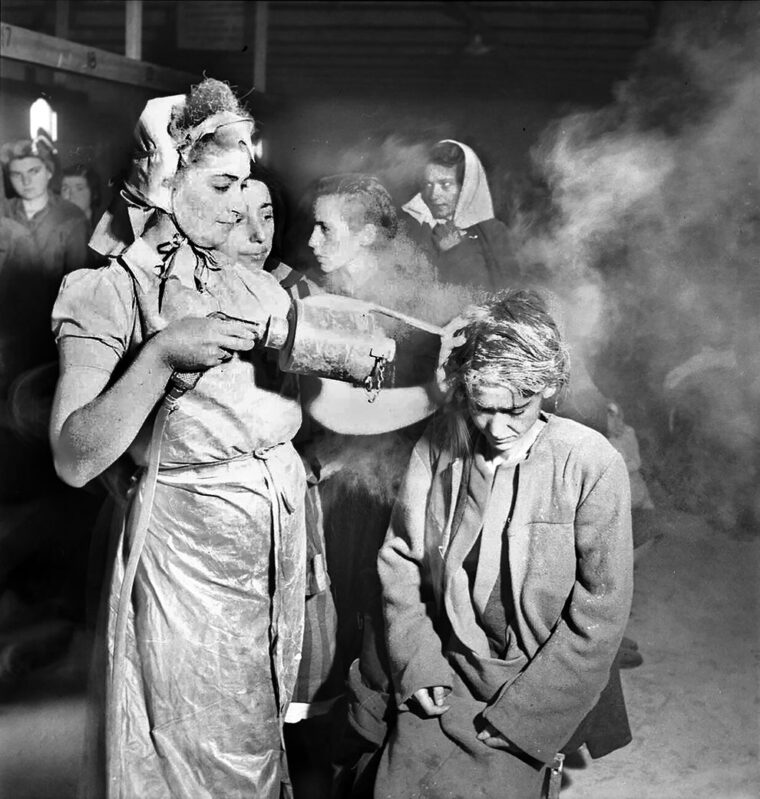
Crowded unsanitary conditions in concentration camps led to massive typhus outbreaks. Malnutrition increased the typhus fatality rate to 50 percent. Writings from the camps detail horrendous nightly itching, as well as picking body lice off each other. Head shaving of prisoners on arrival was said to be for typhus control, but since it is spread by body lice and not head lice, it had no effect. Inmates were lied to and told to undress, and shower in the actual gas chambers, in order to de-louse to control typhus.
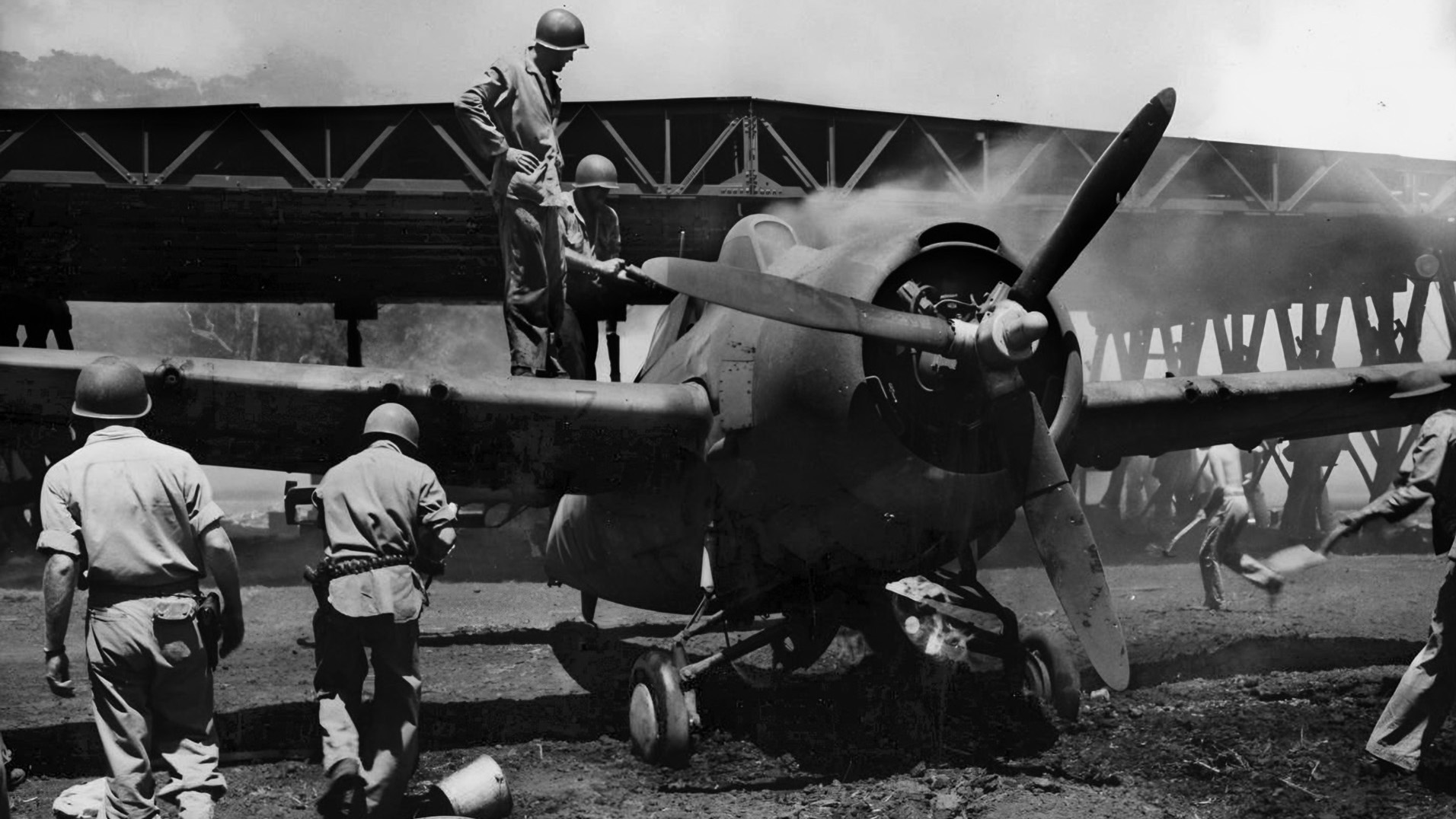
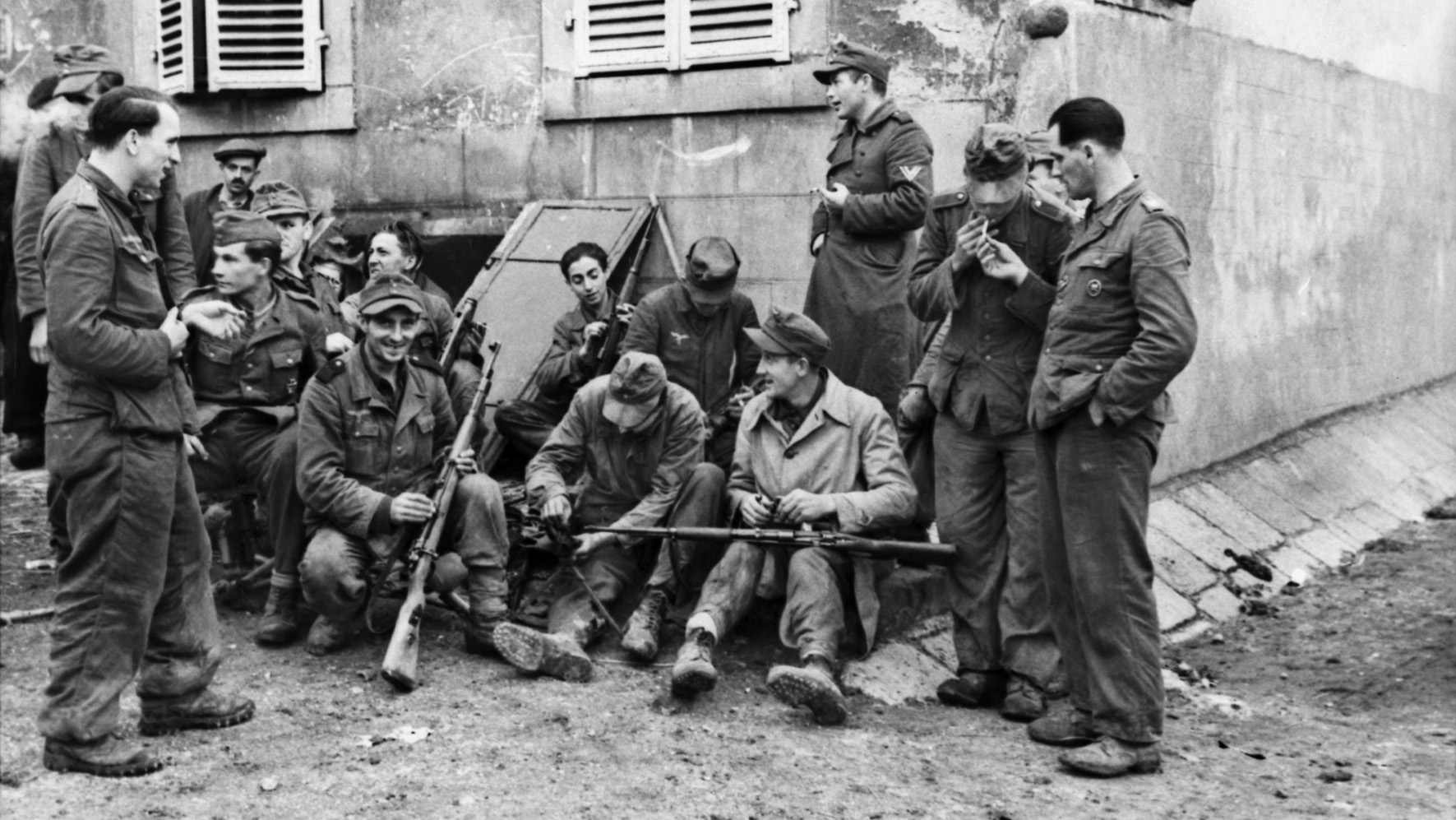
Near the end of the war, the Allies faced the dilemma of preventing the spread of typhus from the millions of concentration camp survivors and displaced persons to Western Europe. They set up a 10 multi-head DDT power duster, akin to a modern day car wash, on the east banks of the Rhine River pontoon bridges, so that persons potentially infested with body lice had to walk through before heading west. Typhus did not spread.
It’s difficult to know how many typhus cases occurred in Germany outside of the concentration camps, but its spread undoubtedly did occur both in troops and civilians. At least 20,000 cases were reported, but that likely is a large undercount. Russia has never provided any information on typhus during the war.
The U.S. Army reported 81 cases, with no deaths, in Europe, North Africa, and the Middle East during the war. There have been periodic outbreaks since then. Burundi had 100,000 cases in 1997, with a 15-percent fatality rate. A smaller outbreak occurred in Rwanda refugee camps in 2012.
In his classic 1935 book on the history of typhus, Rats, Lice, and History, Hans Zinsser prophesied, “Typhus is not dead. It will live on for centuries, and it will continue to break into the open whenever human stupidity and brutality give it a chance, as most likely they occasionally will. But its freedom of action is being restricted, and more and more it will be confined, like other savage creatures, in the zoological gardens of controlled diseases.”

Join The Conversation
Comments
View All Comments