By Mark Carlson
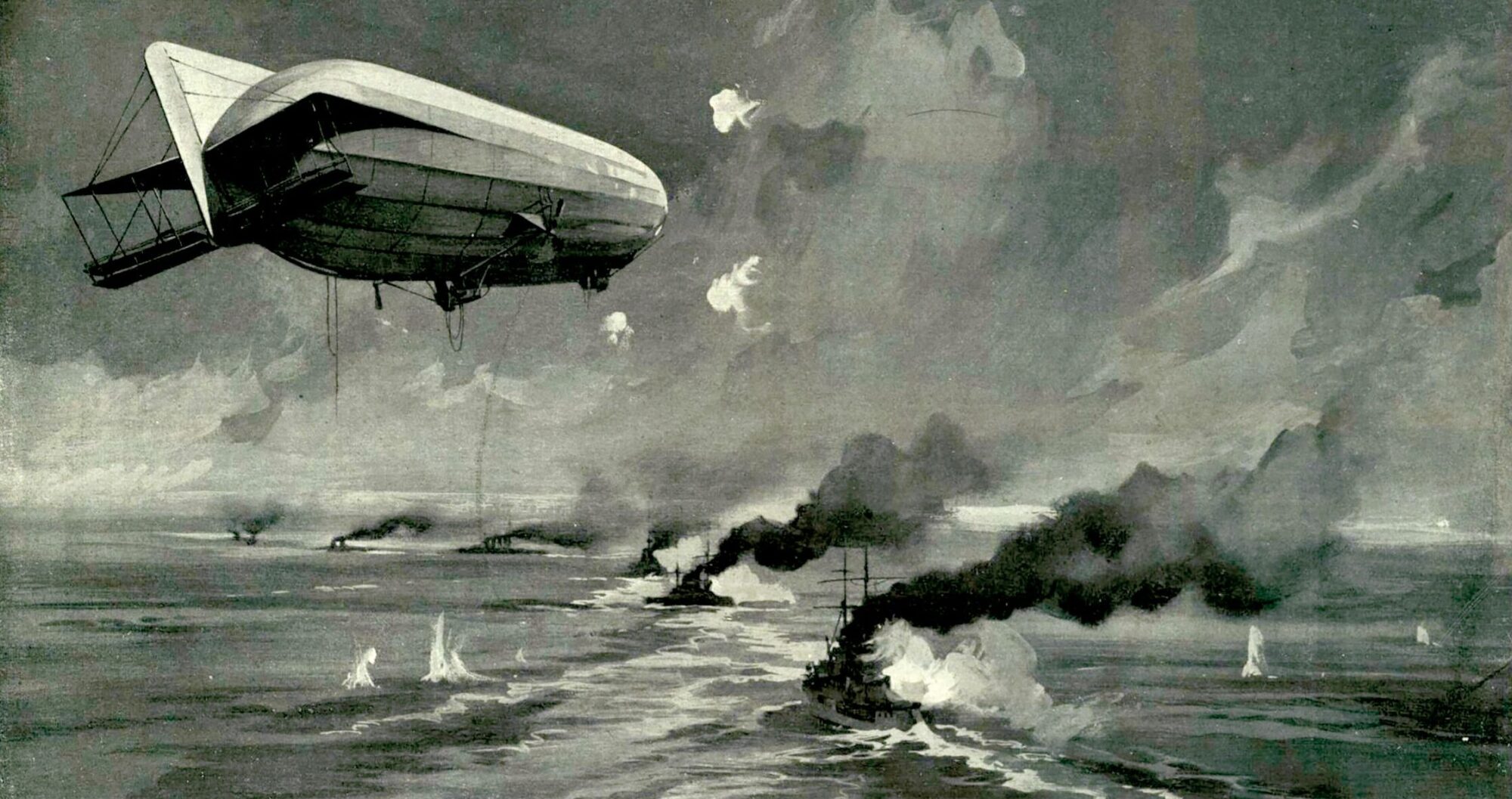
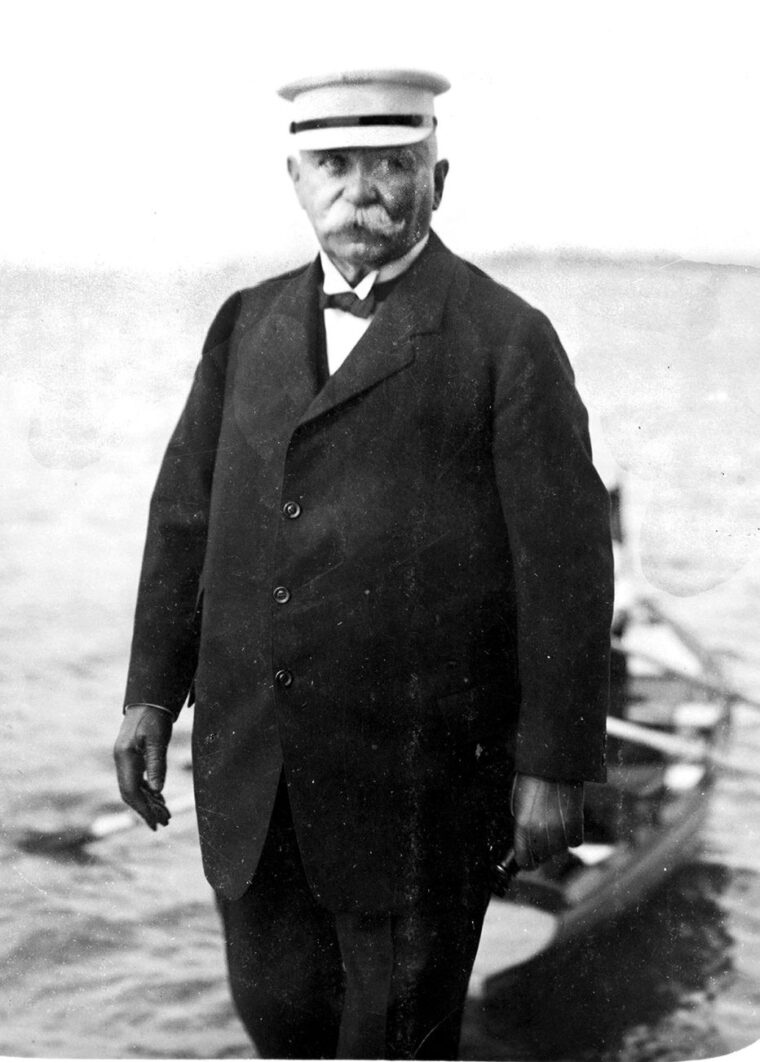
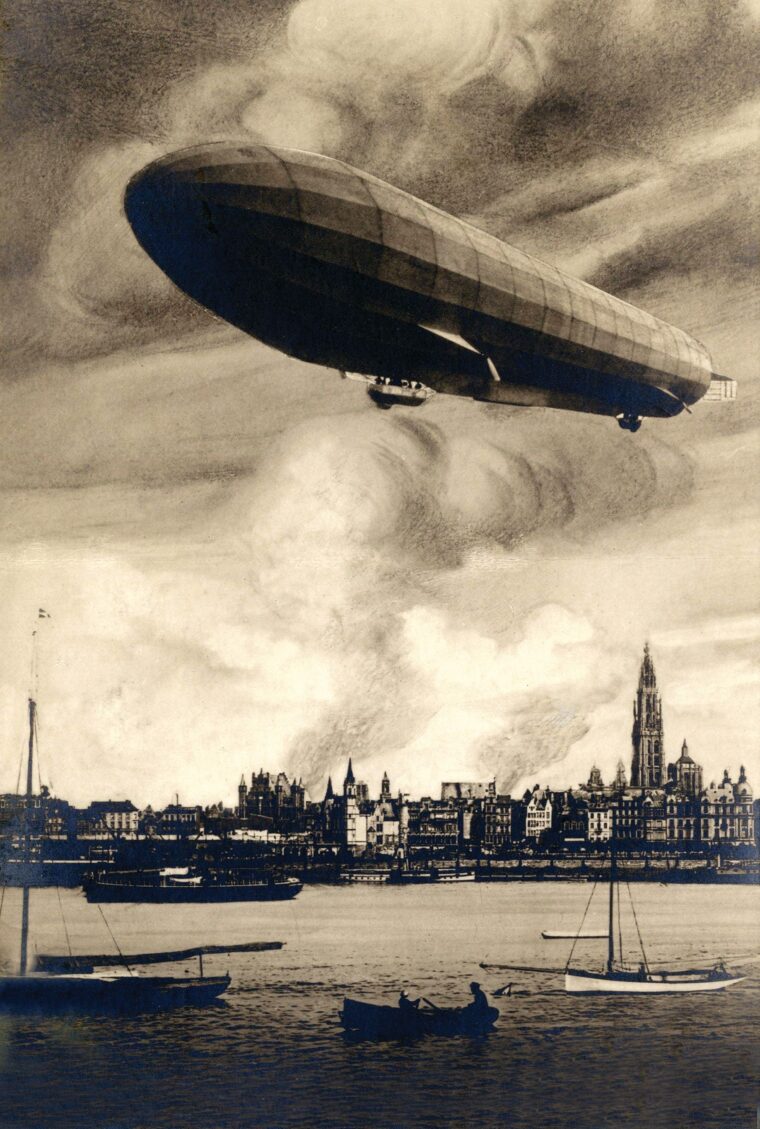
A quarter of a century before the epic Battle of Britain during World War II, England’s capital city was threatened from the air for the first time. In late 1914, only 11 years after the dawn of heavier-than-air flight, fixed-wing airplanes weren’t capable of flying long distances with heavy bomb loads—that was a task only the great German Zeppelin airships could manage. These huge, sleek rigid airships pioneered by Count Ferdinand von Zeppelin in 1900 were more than capable of carrying bombs as far as London. They were also useful as long-range air reconnaissance over the North Sea, keeping an eye on the movements of the Royal Navy’s Grand Fleet. There was little doubt that Zeppelins, as First Lord of the Admiralty Winston Churchill believed, were a serious threat to Great Britain.
Even as early as 1912, German Zeppelins had made dozens of flights over the British Isles, evoking awe and fear. In the days after England declared war on Germany on August 4, 1914, a German Zeppelin bombed Antwerp, Belgium. It was obvious that London and England itself was in danger of air attack. With only 50 Royal Naval Air Service (RNAS) aircraft available for coastal defense, Minister of War Lord Kitchener was concerned whether they would be able to protect Britain’s shores from air attack. Churchill, always an overzealous advocate of the navy, claimed they could. However, this was only part of his overall plan first proposed in early September 1914. The RNAS would protect London, while home-based Royal Flying Corps (RFC) squadrons were tasked with the defense of Britain itself, much as the RAF would do in 1940. Zeppelin air raid warning would be provided by RNAS planes based in Flanders, particularly Dunkirk. These squadrons would aggressively attack the Zeppelins as they approached and overflew the channel.
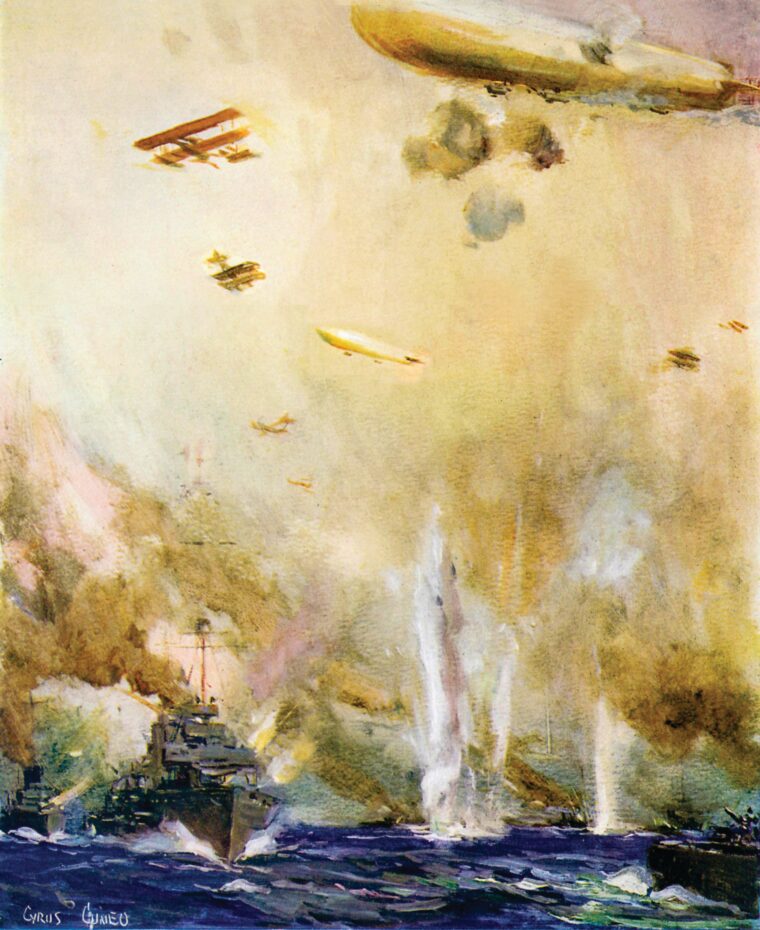
But the self-proclaimed defender of Britain had no anti-aircraft guns, no searchlights, and no fighters that could reach the lofty Zeppelins. In any event a British fighter could do little more with lead bullets than poke holes in the airship’s skin and gas cells, which could easily be repaired by their skilled crewmen. Only incendiary ammunition could ignite an instant conflagration in the explosive hydrogen and incinerate the Zeppelin and its crew in seconds. Yet in 1914 no British fighter could reach the Zeppelins. They would have to be attacked in the only place they were vulnerable—on the ground.
In the first British air raid of the war, four land-based RNAS Sopwith Tabloid biplanes took off at dawn from Antwerp on September 22, 1914, to target Zeppelins in their hangars in Dusseldorf and Cologne on the Rhine about 100 miles away. Using a compass to guide him through the clouds and thick mist covering the Rhine Valley that morning, only Lt. Charles Collet was able to make it to his target, the Army Zeppelin Z.IX shed at Golzheim, just north of Düsseldorf. At 6,000 feet, Collet cut his engine and glided down to 400 feet to drop his three bombs. Though they did not detonate, only breaking some windows, the raid was a psychological victory, proving that the German Zeppelins were not invincible.

Two Sopwith Tabloids flew a second raid on October 8, leaving about 1:30 p.m. Flight Lt. Reginald Marix, who was forced to turn back by weather on the first raid, managed a direct hit that destroyed Zeppelin Z.IX and its shed near Düsseldorf. Marix reported flames 500 feet high and German machine guns put 30 holes in his airplane No. 168. Pilot Lt.-Com. Spenser Grey, who was unable to find his target in Cologne, dropped his bombs on a train station.
For their daring efforts on what were among the world’s first strategic bombing missions, both Collet and Marix were awarded the Distinguished Service Order (DSO).
The Germans greatly increased air defenses around these sheds after the attacks. The large Zeppelin sheds in Cuxhaven and Hamburg, however, were well out of range of land-based aircraft. The only way to reach them was by airplanes transported by ships. In 1914 there was no means of landing a wheeled plane on a ship, therefore they had to be equipped with floats to land in the water and be recovered by a ship’s crane. Even this had severe limitations. The North Sea’s often capricious weather could make a sea landing extremely hazardous, if not impossible. Already slow and unwieldy, floatplanes were also underpowered, prone to breakdowns, and hampered by limited range.
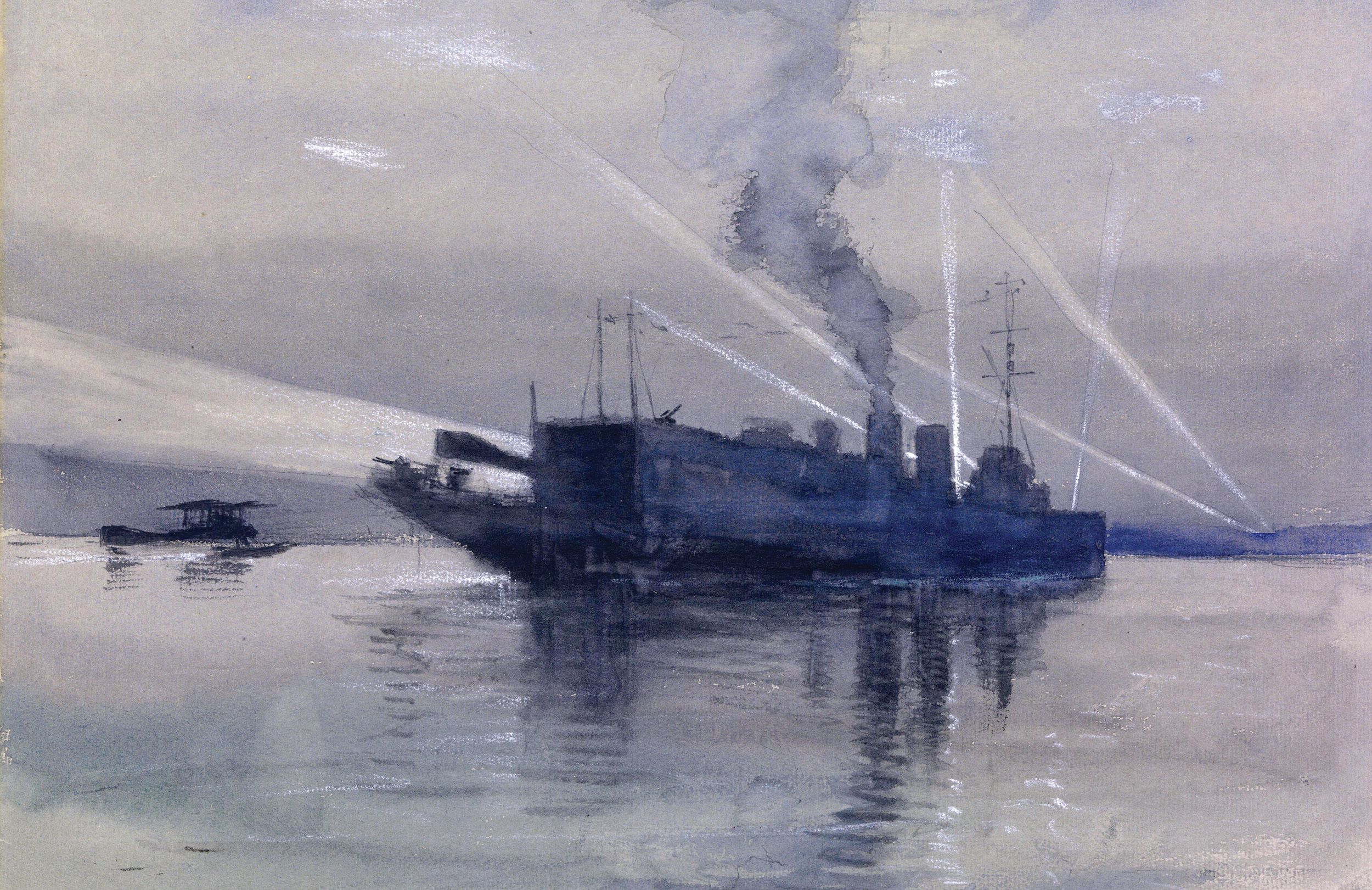
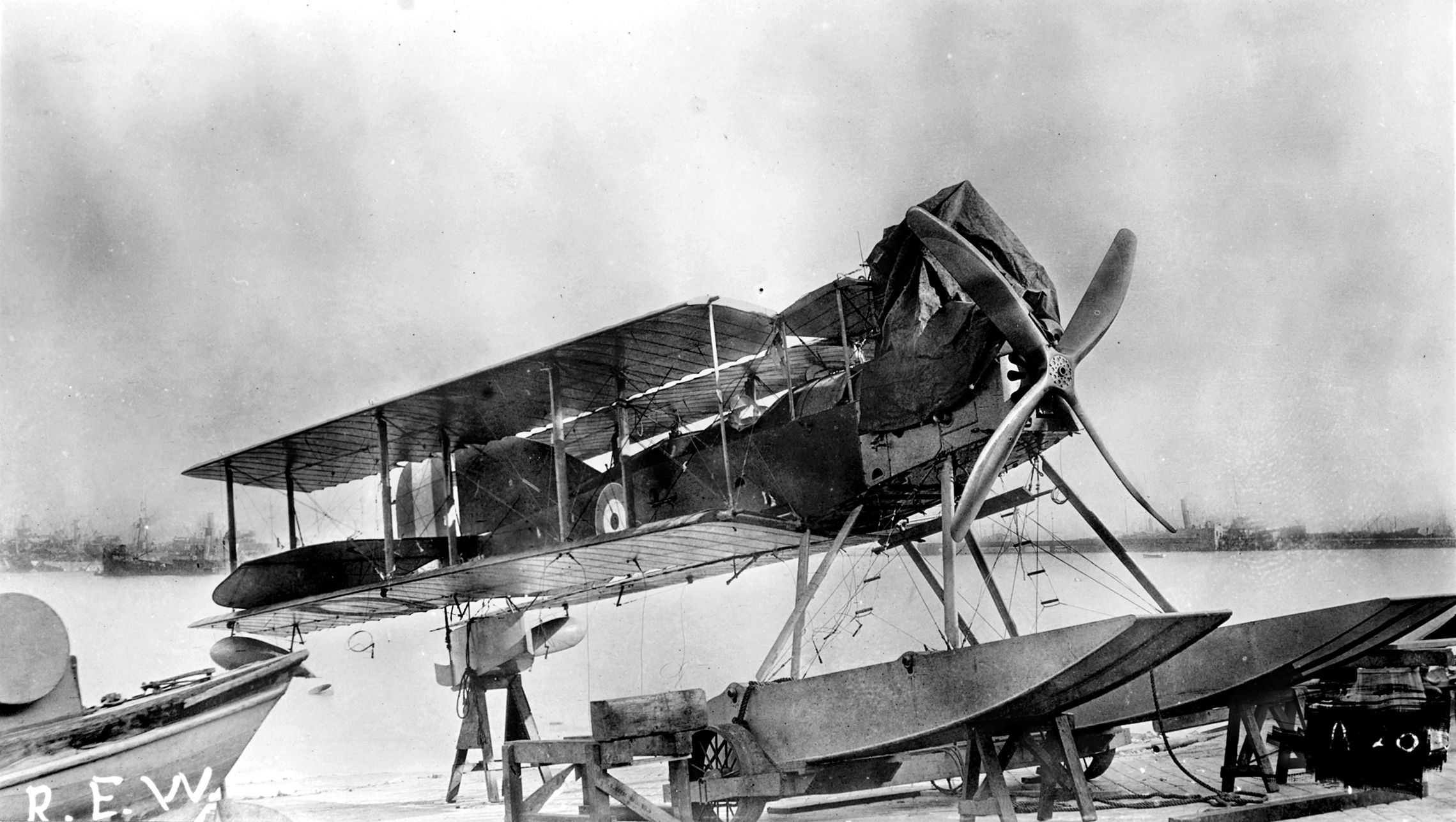
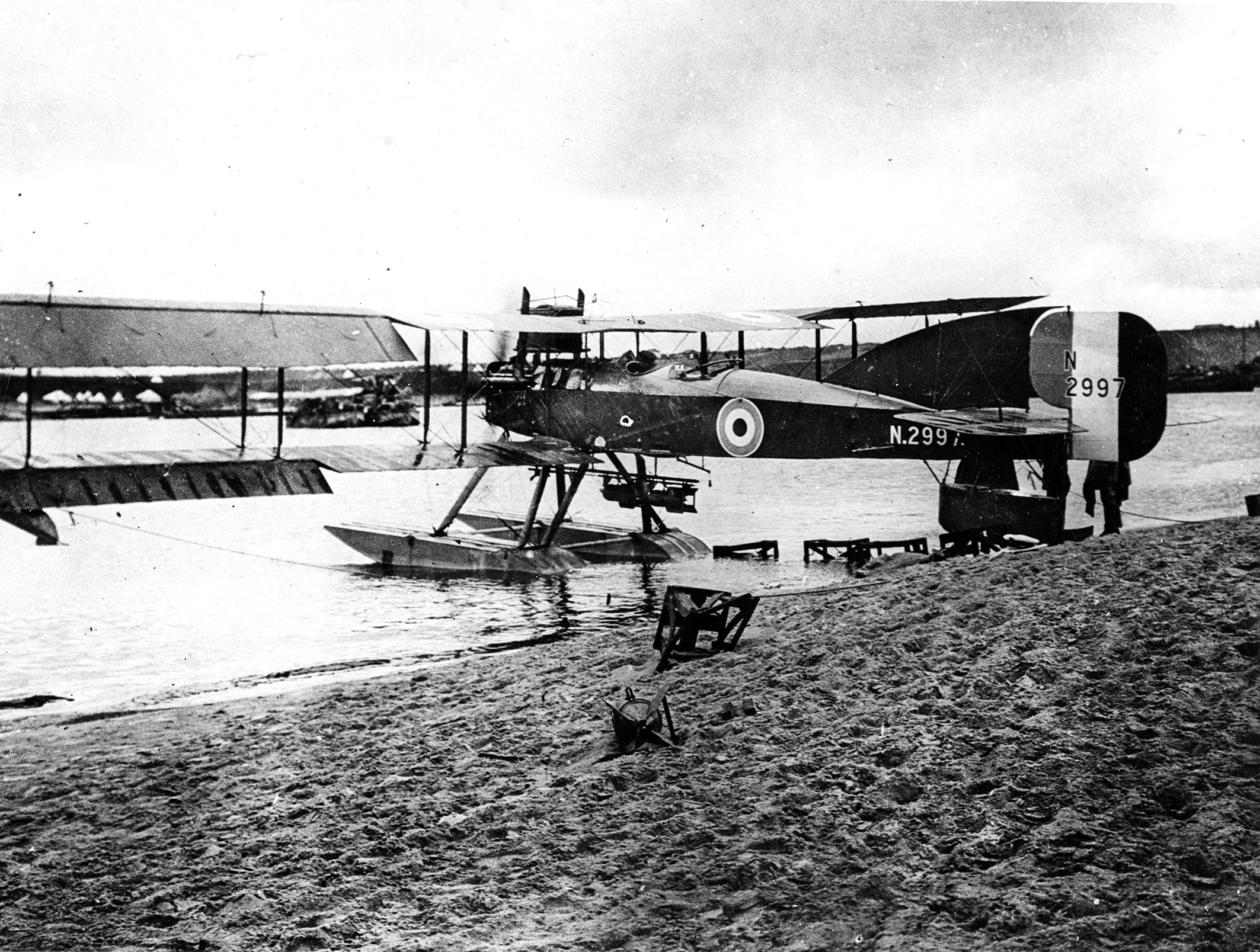
The fervently eager Churchill was undeterred. He commandeered four cross-channel passenger ferries—HMS Engadine, HMS Empress, HMS Campania, and HMS Riviera—to be converted into seaplane carriers with deckhouse hangars and cranes to carry three floatplanes each, one forward and two aft. The biplanes, all built by Short Brothers, were of Type 74 Admiralty Folders, Type 81 Folders, and Type 135 Improved Folders. They had folding wings and carried a pilot and gunner and three 20-lb. bombs. Their maximum speed was 70 miles an hour, with a range of about 350 miles. Slung between the floats, the bombs were released by a wire pulled from the cockpit. The hope was that a bomb, exploding through the thin roof of a Zeppelin hangar would detonate the 800,000 cubic feet of hydrogen gas in the airships.
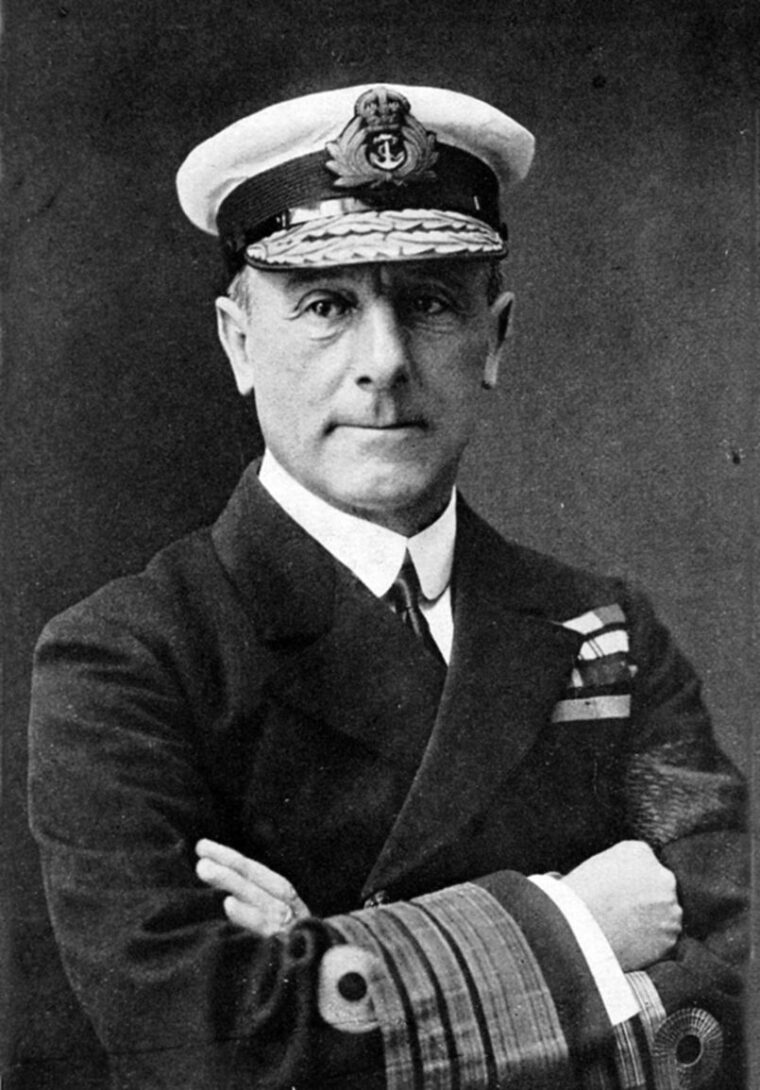
After being commissioned, the newly converted, but decidedly experimental carriers were assigned to the Harwich Force of destroyers and cruisers in the North Sea port of Harwich. Due to Churchill’s eagerness, the very first time they would see action was to send their slow and vulnerable biplanes to bomb the Zeppelin sheds at Cuxhaven. But the carriers themselves, which were neither armored nor armed, needed to be escorted by Royal Navy warships to the German coast.
The plan was put together in late October by Commodore Reginald Tyrwhitt, who commanded the destroyer and light cruiser squadrons that scouted and screened the giant dreadnoughts of the Grand Fleet. Tyrwhitt’s ships would play significant roles in the battles of the Dogger Bank and Jutland over the next two years. The raid was planned for October 25, when forecasts were for clear weather over the southern North Sea. But that morning high winds and rains hampered the carriers as they lowered their planes into the water near Heligoland Island. Only two managed to take off. One flew 12 miles but had to return with engine trouble, and the other was forced to come back when it was obvious that bad weather would make it impossible to find its target. Tyrwhitt was disappointed, but Churchill urged him to try again. Escorted by destroyers, two carriers went out again on November 23. The mighty Grand Fleet sortied from Scapa Flow in case the German High Seas Fleet emerged to attack the Harwich Force. But even before the planes had been lowered into the water, the Admiralty canceled the operation. No solid reason was given, but Churchill was not ready to give up.
By now Tyrwhitt, along with Admiral Roger Keyes, commanding the Royal Navy submarines had expanded the operation to three carriers and included submarines to assist in rescuing downed flyers. Engadine, Empress and Riviera would be escorted by the light cruisers Arethusa, Aurora, and Undaunted, along with eight destroyers to the Heligoland Bight on the morning of December 25. The surface force was small because Tyrwhitt believed that a smaller force would have more success in approaching the German coast undetected. The launch point was 15 miles north of Heligoland Island, well within German territorial waters. The area was heavily mined and close to Germany’s largest naval base at Wilhelmshaven, home of the High Seas Fleet
Keyes ordered 11 of the newest British submarines to the area. Some were to stay close to the carriers; others were to wait at the recovery point, while more would wait to ambush any German ships that came out of the Jade Estuary to attack the surface force.
Each submarine bore a red and white checkerboard stripe around the conning tower to make it easier for the flyers to find and identify them if they were forced to land or ditch short of their carriers. All in all, nearly 50 Royal Navy ships were employed to deliver to Germany exactly 81 pounds of explosives, the combined weight of the 27 bombs carried by the planes.
Departing Harwich at 5 a.m. on December 24, Tyrwhitt and the carriers arrived off Heligoland at 4:30 the following morning. It was Christmas Day, 1914, coincidentally the very day of the famous Christmas Truce on the Western Front. When four small German patrol boats were spotted 40 miles short of the launch point, Tyrwhitt considered withdrawing. Even with the cruisers and destroyers close by, the carriers would be vulnerable. But unwilling to turn back after having come so far, he ordered the force to continue despite the risk. Half an hour before dawn the carriers stopped and began to lower the nine floatplanes into the calm dark water. It was bitterly cold and a stiff breeze from the east caused the crews’ breath to condense in misty clouds as they worked feverishly to fuel, arm and launch the planes. Each plane carried three bombs and enough fuel for three hours of flight. To the east the dawn rose to reveal clear skies. At almost exactly the same moment, the German Navy Zeppelin L6 slid out of its huge shed at Nordholz and rose majestically into the clear morning sky and turned north to begin its patrol of the North Sea.
On board his flagship Arethusa, Tyrwhitt raised the signal flags to commence the operation at 6:59 a.m. Things immediately began to go wrong. Two planes were unable to take off due to engine trouble. The other seven floatplanes clawed their way into the cool morning air and headed south to the German coast and Cuxhaven. As soon as the last plane disappeared over the horizon, the ships turned west towards the recovery point near the island of Norderney. Two of Keyes’ subs remained on station. The planes carried no radios so there was no communication or coordination between the aircraft.
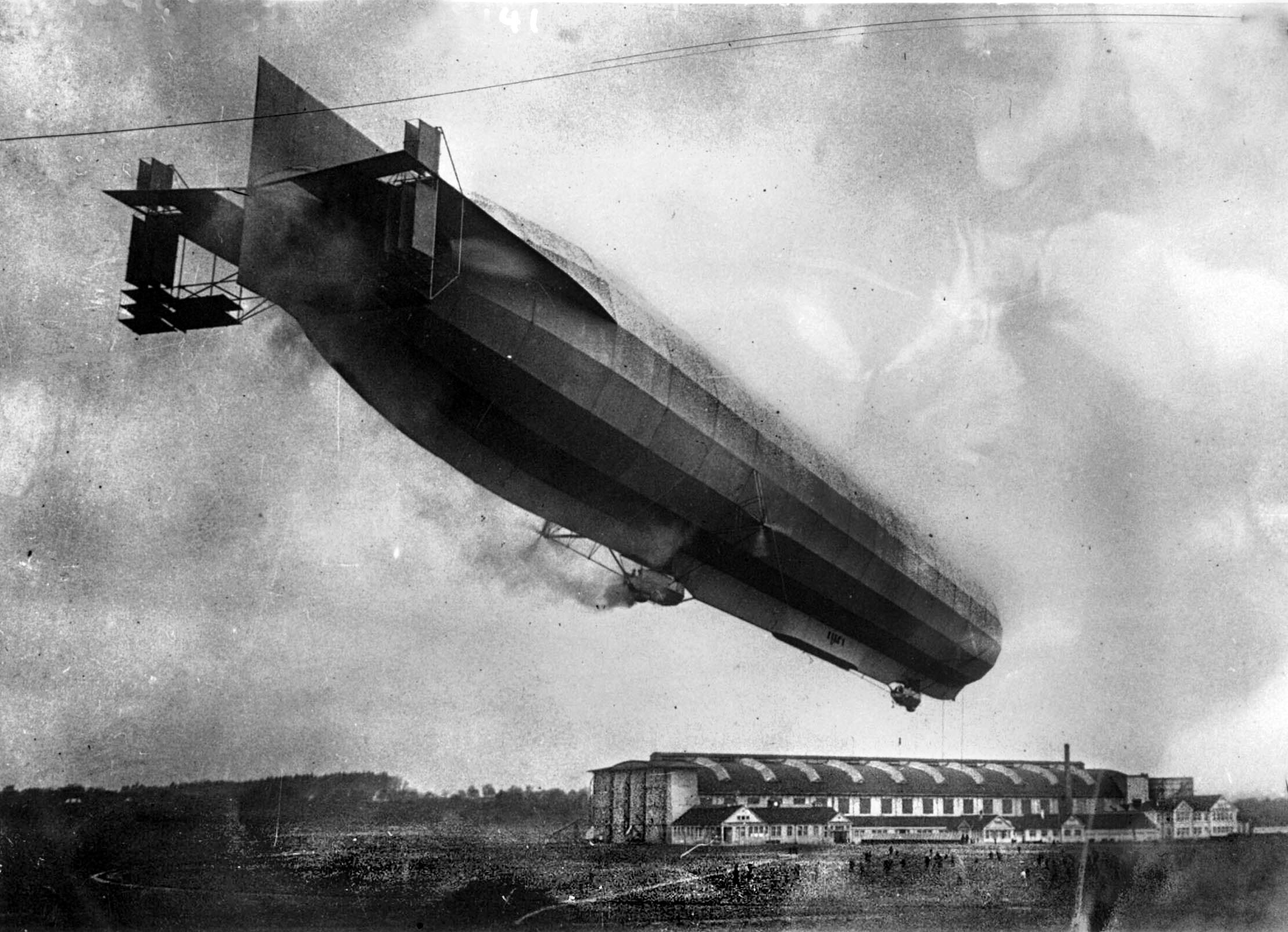
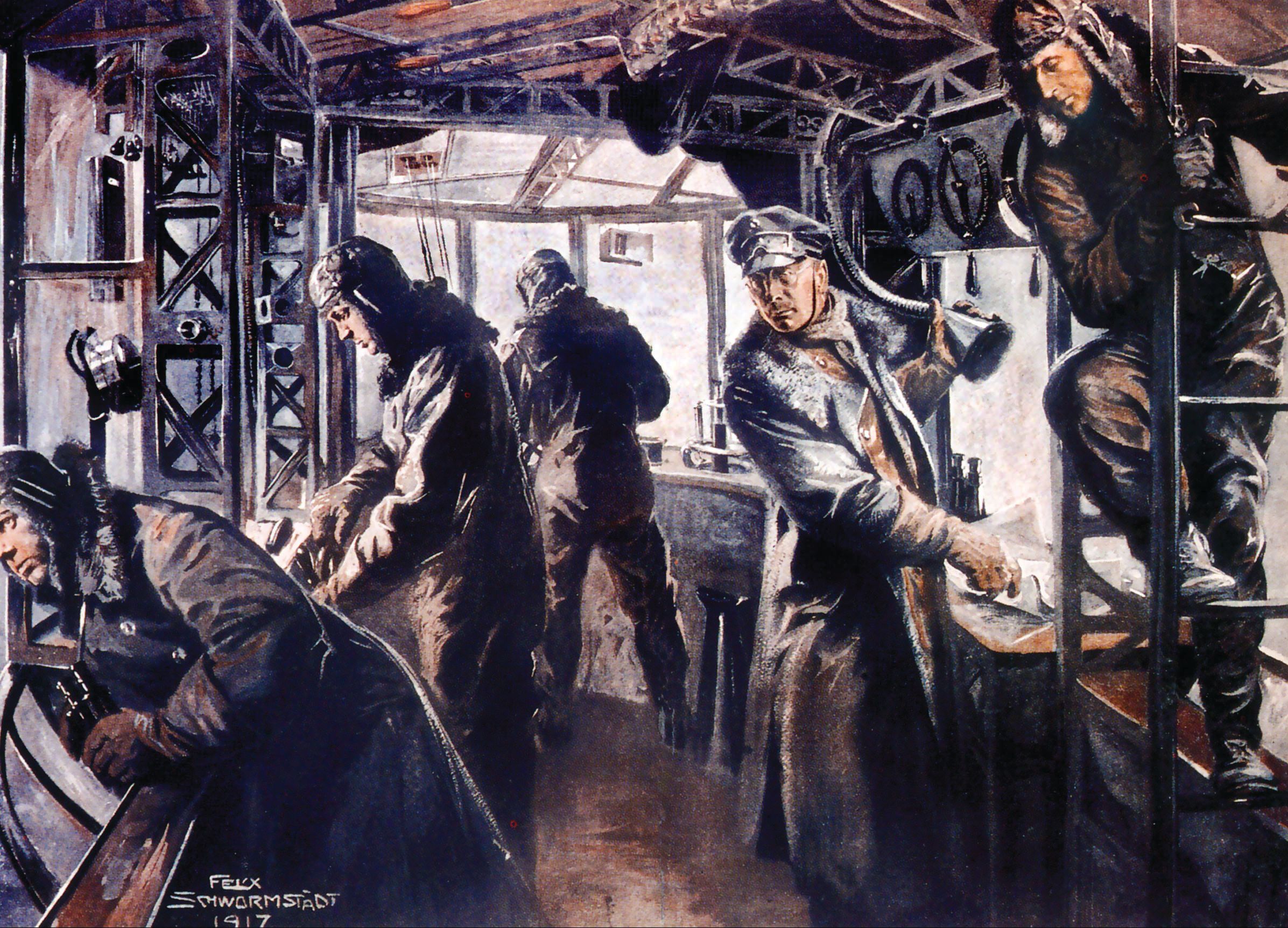
The targets were two German Navy Zeppelins, nestled in their massive shed at Nordholz eight miles south of the harbor of Cuxhaven. The gently rolling terrain around the sheds was mostly fruit orchards and farming land. The colossal building was mounted on a massive turntable, allowing it to be turned into the prevailing winds for takeoff and landing. Two more Zeppelins were in a similar hangar near Hamburg. These four comprised the total German Navy Zeppelin force in December 1914, although more were under construction. While only a third the size of the gargantuan Hindenburg 22 years later, the airships were nearly 600 feet long and filled with 800,000 cubic feet of hydrogen gas. Powered by three Daimler engines, they could carry nearly a ton of bombs at 60 mph for 1,000 miles. But even with their size and sophistication, the four great ships were as helpless as infants in their sheds. One small bomb could turn each Zeppelin into flaming pyres of smoking, twisted duralumin in moments.
An hour after takeoff the seven planes and their crews crossed the German coast. But then the weather, so clear over the North Sea, turned against them. A thick mantle of gray fog obscured the rolling pastures and roads beneath them. Ensnared in the thick fog, the airmen never saw nor heard the dreadnought-sized Zeppelin L6 passing them headed north. Under ideal conditions, the pilots could easily have spotted their targets looming in the distance. But as they passed Cuxhaven they could not see the giant sheds at all. Descending to 150 feet, they still could not see the ground. One pilot spotted railroad tracks and followed them. To his surprise he found himself over the Jade Estuary and the outer harbor of Wilhelmshaven, home of the German fleet. Below his plane he saw seven light cruisers and a massive battle cruiser, all of which began firing at his plane without scoring any hits. Not wanting to waste his bombs, he dropped them on two German light cruisers but failed to hit them.
Another pilot, also far off course, dropped his three bombs on what he hoped was a seaplane hangar. It turned out to be fish-drying sheds. British luck did not improve. Of the seven floatplanes that took off that morning, only one managed to reach the Nordholz Zeppelin base. But in the thick fog and because they had been given inaccurate information, the crew failed to recognize the Zeppelin sheds. The pilot contented himself with dropping his bombs on an antiaircraft battery.
In fact, the only British RNAS plane that performed any useful service had an observer named Lt. Erskine Childers in the back seat. Childers was an expert on the German coastline and harbors. When he saw that the plane was over Schillig Roads near Wilhelmshaven, he spotted seven German battleships and three battle cruisers. He made note of their locations and other important details. This improvised reconnaissance constituted the first real aerial survey of an enemy naval base in history.
On the ground, there was no alarm. German townspeople and farmers had no idea an air raid was in progress. Some may have heard the rattle of an airplane engine passing overhead in the fog, and others might have noted the dull rumble of gunfire from the naval base. But despite all efforts, there was no massive fireball erupting from a burning Zeppelin that Christmas Day. Ten bombs had been dropped in water, fields, sheds and sand. Not a single German life had been lost. Three Zeppelins were unharmed, and one was now over the Heligoland Bight, patrolling and looking for the Royal Navy ships that had attacked the Fatherland. The hunted had become the hunter. But bad luck also cheated the Germans of an easy victory. The German Admiralty was sure the Royal Navy was planning a raid on the Bight, but navy intelligence estimated that it would be a seaborne attempt to sink several old merchant ships in the Jade Estuary, thereby blocking Wilhelmshaven for months. This raid, which was never contemplated, was to be escorted by the battleships of the Grand Fleet. Kaiser Wilhelm II, determined that the weaker German fleet not be risked, would only allow Zeppelins and submarines to confront the British. That is why L6 was hunting the Harwich Force. The Zeppelin spotted the westward-bound cruises, destroyers and carriers at 7:35 a.m. and reported the size and course of the enemy force to its headquarters.
At just before 9 a.m., HMS Empress had engine trouble and began to fall back. Alerted by the L6, two German seaplanes, each carrying 10-lb. and 22-lb. bombs, moved in to conduct history’s first air-sea battle. The Germans had no better luck in hitting their targets than the British. The first plane, with seven 10-lb. bombs, missed by 200 yards. The second plane, attacking from a higher altitude, managed to drop its bombs only 40 feet from Empress. None of the crew were injured as they fired rifles at the German seaplanes. Then the L6 approached to drop its own bombs on the ship. But the Empress’ captain realized the huge Zeppelin could not maneuver as nimbly as his ship. He easily avoided the three 110-lb. bombs dropped from 5,000 feet. Out of bombs, L6 turned and headed for Nordholz.
Seventy miles west of the launch point, the Harwich force slowed and waited for their airmen to return. It was shortly before 10 a.m. Without radio communication, there was no way to know if the planes had successfully completed their mission. Six of the seven planes, with fuel dangerously low, tried to reach the recovery area 30 miles off the coast. For several interminable minutes the sky remained empty of British planes. Then at last two of the floatplanes came in for landings next to the Riviera. One of these carried Childers with the information on the German fleet at Wilhelmshaven. At nearly the same moment another floatplane landed near the destroyer HMS Lurcher. The plane was taken in tow. Meanwhile Tyrwhitt’s cruisers were attacked by two more seaplanes, which dropped seven bombs, all of which missed. This convinced Tyrwhitt that given sufficient sea room, ships had little to fear from aerial attack either from planes or Zeppelins. He later wrote, “Zeppelins are not to be thought of as regards to ships. Stupid great things, but very beautiful. It seems a pity to shoot at them.”
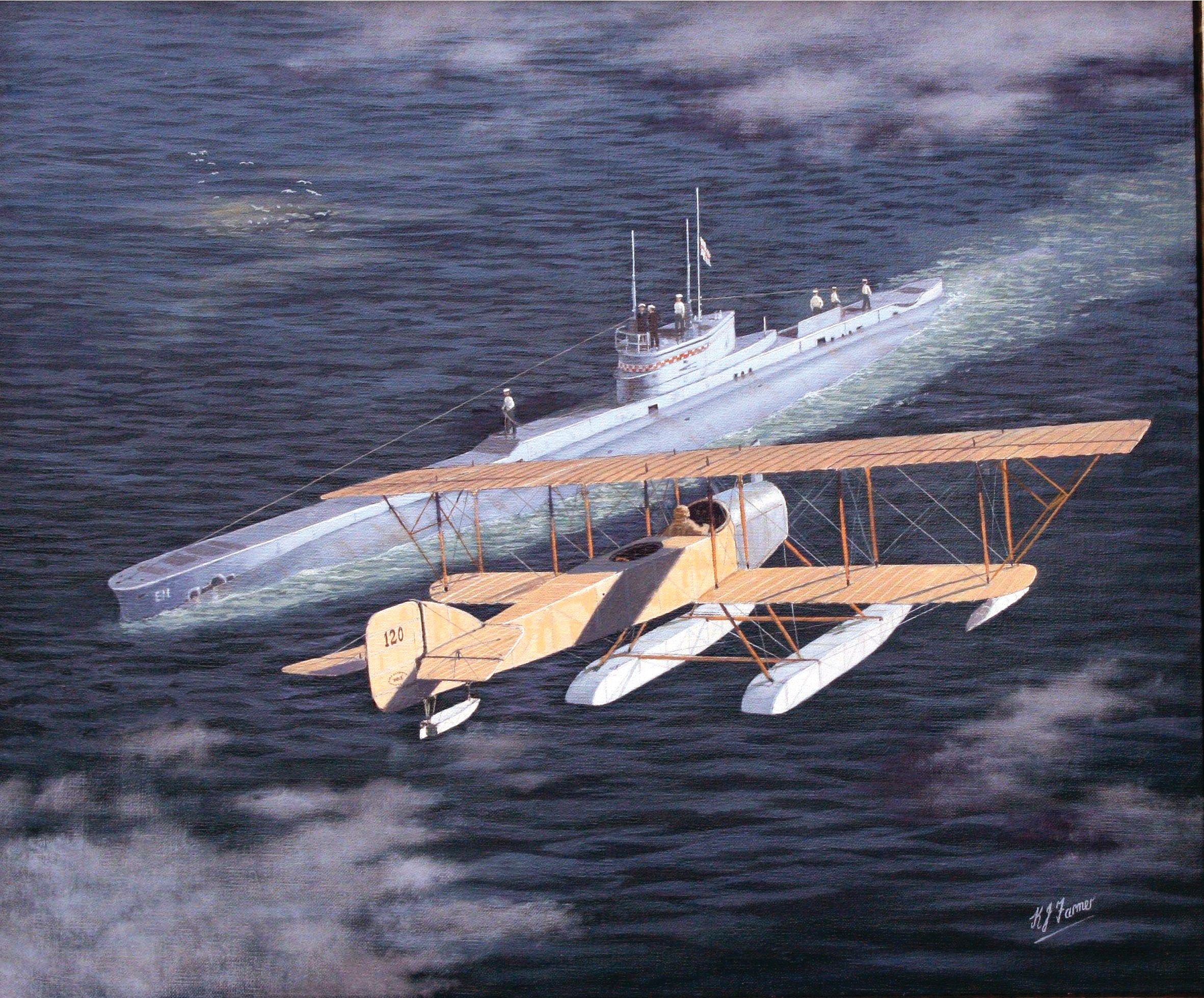
Four of the floatplanes had yet to return. Knowing they had to be out of fuel by now, Tyrwhitt turned his force for home. However, three of the missing planes had almost reached the recovery area. Running submerged nearby was the submarine E11, commanded by Capt. Martin Naismith. He spotted one floatplane in his periscope and surfaced. When the airmen saw the vivid red and white checkerboard on the conning tower, they landed and taxied closer. With the plane in tow E11 headed north. Then everything happened at once. First the Zeppelin L5 appeared and moved in. Then another British sub, the E6, which was not part of the Cuxhaven operation, surfaced and came over. Naismith feared the sub might be German. The E6’s commander spotted the Zeppelin and dived, which further cemented Naismith’s belief that the other sub was German and preparing to attack. But then two other planes arrived, desperately low on fuel. He cut off the tow and came so close to the planes that their crews were almost able to step onto the sub’s deck. The L5 was only a mile away when Naismith used his machine guns to destroy the planes to keep them out of German hands. The Zeppelin dropped bombs on both subs without success. The seventh floatplane ditched near Norderney and was picked up by a Dutch fishing trawler.
The Cuxhaven Raid was over. Not a single life was lost on either side. As for the Zeppelin menace, they did conduct many bombing raids on Britain, killing more than 1,100 people. But soon the technology of war made them obsolete. The year 1915 saw the destruction of the LZ38 when two RNAS Henry Farmans caught it in its shed, on the night of June 6-7, destroying it with bombs. That same night saw the first true air-to-air Zeppelin kill of the war when Flight Sub-Lt. Reginald Warneford caught the LZ37 on her return from a raid and bombed it into a flaming meteor. On September 3, 1916, the airship SL11 was shot down in flames by Flight Lt. William Robinson. He used incendiary ammunition.
Strictly speaking the Cuxhaven Raid was not the very first time a ship-based plane attacked a naval base. That happened in August when a Farman floatplane from the auxiliary seaplane carrier Wakamiya Maru flew over and bombed Tsingtao in China. Ironically, it was a Japanese navy plane attacking a German naval base.
Interestingly, HMS Engadine played a small role in the opening hours of the Battle of Jutland 17 months later when Flight Lt. Frederick Rutland spotted the leading elements of Adm. Franz von Hipper’s battle cruisers in the North Sea. She turned up in the Philippines in 1941 after being reconverted back to a channel ferry. Named the Corregidor, she was carrying 1,200 refugees from the Japanese attack on Manila when she struck a mine. Engadine was the last vessel of the Cuxhaven raid to be sunk, 27 years later.



Join The Conversation
Comments
View All Comments