
By Patrick J. Chaisson
Lieutenant Gus Connery and the crew of Juarez Whistle, a Consolidated B-24D Liberator heavy bomber, first spotted their target around midnight. Called Pandansari, this oil refinery complex was located outside the port city of Balikpapan on Borneo’s eastern coast. Connery’s airmen had flown 1,350 miles to attack it.
In the nose of the plane, bombardier Lieutenant. Jim Wright could not believe the scene unfolding below him. To his amazement, the sprawling Pandansari facility was as brightly lit as if it were peacetime. The Japanese troops responsible for defending this key installation clearly believed it stood beyond the range of American bombers.
For that error in judgement, Connery and his crew were about to deliver an expensive lesson in preparedness. Climbing to 5,000 feet, the Liberator shuddered as six 500-lb. demolition bombs fell from their shackles. Wright had done his job well—other American aviators later reported “exploding oil tanks and huge fires raging” all across Pandansari.
The crew of Juarez Whistle now readied themselves for a harrowing 8.5-hour flight back to their base in Australia. While most of the men on board kept alert for enemy interceptors, Connery and his flight engineer, Technical Sergeant Telly Koumarelos, constantly monitored the B-24’s fuel gauges. Would they have enough to reach the runway at Darwin?
No one knew, because the U.S. Army Air Forces (USAAF) had never flown a combat mission this far into enemy territory. Aboard the Juarez Whistle, about all the men could do was cross their fingers and pray the fuel held out.
Connelly’s bomber was one of nine Liberators on the successful Balikpapan raid the night of August 13-14, 1943. Another group of B-24s would return four nights later to strike the freighters and oil tankers at anchor there, causing significant damage despite encountering a now-awakened Japanese defensive presence.

The Balikpapan missions stand out as examples of ingenuity, courage and airmanship during a period in World War II when American bomber crewmen struggled to deliver even small-scale blows to the enemy’s warmaking infrastructure. The success of the raids was the culmination of nine months’ preparation, beginning with the formation of the 380th Bombardment Group (BG) on October 28, 1942, at Davis-Monthan Field near Tucson, Arizona. Cadres from the 39th BG formed the unit’s nucleus, while Maj. William A. Miller, a former commercial airline pilot, took over as the 380th’s first commanding officer.
The outfit’s time in Tucson was short. By December the 380th BG had moved on to Biggs Army Airfield outside El Paso, Texas, where it continued to fill its ranks with men—several hundred newly-trained flight crewmen and ground support technicians from training bases all across the country reported for duty that month. It was the job of freshly-promoted Lieutenant Colonel Miller to prepare these recruits for air combat.
The 380th consisted of four sub-units, the 528th, 529th, 530th, and 531st Bombardment Squadrons (BS). Supervising their operations was a group headquarters that also handled intelligence, air weather, supply, and personnel matters. In addition, the 380th BG had a robust maintenance section to keep its bombers in airworthy condition.
Equipping the flying squadrons were 38 factory-new B-24D Liberators built by Consolidated Aircraft in San Diego. With a wingspan of 110 feet, overall length of 66 feet, four inches, and a height of 18 feet, the D-model was powered by four Pratt & Whitney R-1830-43 engines, each rated at 1,200 horsepower. The bomber’s empty weight was 32,505 pounds, with a maximum loaded weight of 60,000 pounds.
Capable of reaching 301 mph at top speed and boasting a service ceiling of 32,000 feet, the Liberator had a maximum range of 2,850 miles. It rarely flew with its 8,000-lb. maximum bomb payload in order to carry the additional fuel needed to reach distant targets.
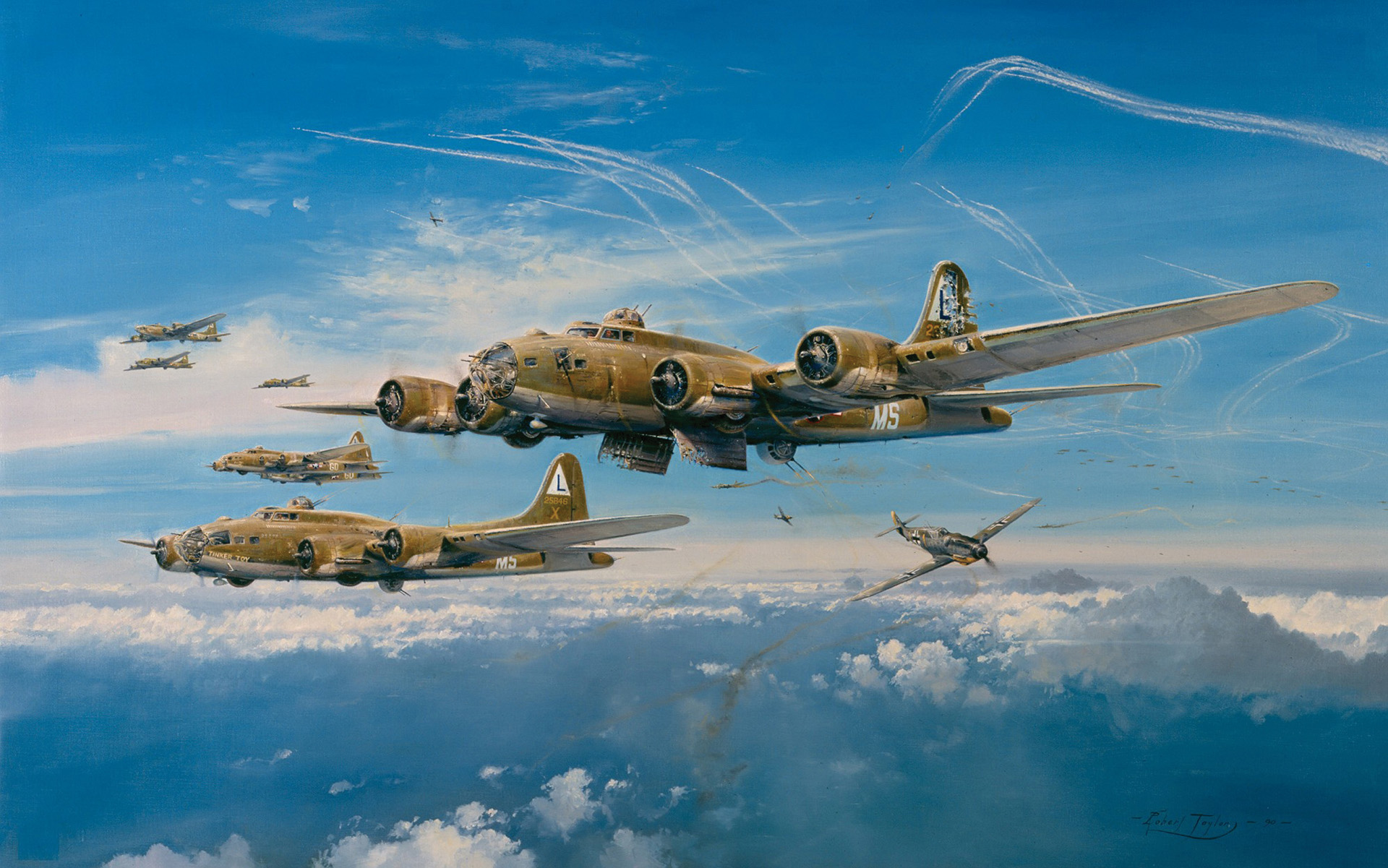
Each B-24 was manned by a crew of 10: pilot, copilot, navigator, bombardier, flight engineer, radio operator, and four gunners. For self-defense, the D-model carried 10 or 11 Browning .50-caliber machine guns. Electrically-operated top, ball, and tail turrets sported two guns each, while a single flexible weapon was mounted in both the right and left waist positions. The “greenhouse” nose section contained three flexible .50-caliber machine guns— one mounted in a socket above the bombsight and two more in cheek positions.
Later, all 380th BG aircraft were modified to remove the ball turret in an attempt to save weight. This apparatus was replaced by a pair of machine guns mounted on a Scarff ring in the same location. Some bombers also received a modification in which part of the glazed nose was replaced by a Consolidated A6A power turret that contained two Brownings.
Now that the 380th had warplanes and crews with which to fly them, training began in earnest. A unit historian described how, under Miller’s tutelage at Biggs Field during the winter of 1942-1943, novice airmen underwent both basic and advanced phases of air combat training on “tough, grueling flights in all types of weather, night and day.”

First, crews needed to learn their aircraft and function flawlessly as a team—no easy task as the Liberator was regarded by most as a difficult plane to master. Then, as their skills improved, airmen went on to practice more complicated training requirements such as formation flying and long-distance navigation. Inevitably, a combination of inexperienced pilots and “hot” aircraft resulted in accidents. In February, two separate crashes killed several 380th BG aircrewmen. Though tragic, these fatalities were but a taste of what the unit would later experience.
On February 28, 1943, Miller received orders to move his command to Lowry Army Airfield near Denver, Colorado. Now entering its third and final phase of pre-deployment training, the 380th, started conducting operational patrols along the West Coast. On these missions, all bombers were fully loaded with fuel, ammunition, and special anti-submarine munitions.

In April, evaluators from Second Air Force certified the unit as ready for combat duty. During a parade held at Lowry Field, Brig. Gen. Eugene L. Eubank (Air Corps Director of Bombardment) inspected the crews prior to their departure for the war zone. Busy with other tasks, the 380th’s airmen had little time to rehearse their role in this function. Nevertheless, upon Eubank’s arrival, a sergeant called his honor guard to attention and then commanded them to “open ranks…march.”
“The guard was baffled by the order but used their own judgement…and scattered from hell to breakfast,” according to the unit history recorded. Eubank, shaking his head in disgust, remarked, “My God, it’s a flying circus.” Henceforth the 380th BG became known as the “Flying Circus.”
Putting their poor ceremonial performance behind them, the men of Miller’s outfit began making preparations for overseas movement. Splitting into an air and a ground echelon, the Flying Circus completed a multitude of tasks designed to ready its men and aircraft for deployment into the combat zone. But which one? Rumors abounded regarding the 380th’s destination, which was finally confirmed on April 14 when the unit received orders assigning it to V Bomber Command, Fifth Air Force. They were headed for Australia.
The unit’s air echelon started out a day later when one by one its B-24s left the continental U.S. on an epic 9,300-mile flight. Their route took them to California, Hawaii, Christmas Island, the Fiji Islands, New Caledonia, and finally to Amberly Field, Queensland, Australia. One bomber, commanded by Lt. Clarence Corpening, went missing somewhere between Hawaii and Christmas Island.
Meanwhile, the unit’s ground echelon and its organizational equipment moved by train from Denver to Camp Stoneman, a staging base near San Francisco in the East Bay region. On May 5 they boarded the S.S. Mt. Vernon, a converted luxury liner serving as a troopship, for the two-week voyage to Sydney.
In Australia, Miller learned from officials at V Bomber Command that his outfit was to receive a special assignment. The Royal Australian Air Force (RAAF) had long been advocating for U.S. heavy bombers to operate out of that nation’s remote Northern Territory; stationing a Liberator group near Darwin (the territorial capital) would, RAAF commanders believed, serve to threaten Japanese shipping and shore facilities all across Southeast Asia.

The Flying Circus, Miller discovered, was to be detached from Fifth Air Force and put under the RAAF’s operational control. This meant the 380th BG now took orders from Air Vice Marshal Adrian Cole, Air Officer Commanding RAAF North-Western Area Command. As Darwin was 1,000 miles from the nearest railhead (and twice that from any American supply bases), logistical support would be shared between Cole’s Australians and the USAAF.
While the 380th’s ground echelon made its way by Liberty Ship to Darwin, the air echelon kept busy preparing for combat. Upon arrival in Australia, all of the unit’s B-24s went in for field modification at a USAAF air depot in Chartres Towers. This was where the Liberators’ ball turrets were removed and some planes fitted with electrically-operated nose turrets. A number of smaller updates were also made to reduce the bombers’ weight and increase their range.
To gain combat experience, 14 crews from the 530th BS and 531st BS flew up to Jackson Field at Port Moresby, New Guinea, in late April of 1943. Flying with the battle-wise 43rd and 90th BGs, they conducted 35 combat missions—mostly over the Japanese stronghold at Rabaul—with the loss of one bomber (Lt. Theron A. Dreier’s The Leila Belle) shot down. The detachment redeployed to Australia in late June.
In the meantime, Miller led a small two-plane strike on June 3 against what Intelligence said was a large merchant vessel moored in the harbor at Lautem, Timor. Bombing at 10,000 feet, Miller and his wingman, Capt. Zed Smith of the 528th BS, were ambushed by four experienced, eager enemy pilots who—at the cost of one Mitsubishi Zero—riddled both B-24s. No casualties were reported, but “Zedro” Smith had to crash-land at RAAF Darwin after he discovered his main landing gear had been shredded by Japanese bullets.
The Flying Circus’ first large-scale mission took place on June 11 when 15 unescorted Liberators struck the port at Koepang, Timor. The foe met them with heavy anti-aircraft fire and as many as 12 fighter-interceptors that brought down Careless, a bomber flown by Capt. Jimmy Dienelt of the 531st BS. The Americans claimed three “Zeke” fighters in return.
In late June, with its New Guinea detachment returned and the ground echelon finally disembarked at Darwin, the Flying Circus entered a new phase of operations. As the RAAF base there was both dangerously overcrowded and exposed to Japanese air attack, the 380th needed to relocate. Group HQ, together with the 528th and 530th BSs, took up residence at Fenton, 100 miles south of the city along a dirt track optimistically called the “North-South Road.” The 529th and 531st BSs were based at Manbulloo, another 100 miles south.
Conditions in this part of Australia were extreme. The unit history describes it as “The Never-Never,” a land of furnace-like heat, 12-foot-tall anthills, wallabies, snakes, lizards, and several million insects. Another member of the Flying Circus described the Outback as “an unpeopled mass of trees and bush,” that would receive no rain for eight months and then get “more than 100 inches…during the brief tropical ‘wet.’”
The men of the 380th were not in Australia to admire the scenery, however, and quickly set up operations. They established maintenance areas, workshops, ordnance dumps, and, when time permitted, clubhouses for officers, NCOs, and junior enlisted soldiers. The Aussies provided regular rations of beer, whiskey, and that most precious commodity of all—ice.

The Flying Circus continued with combat missions even as it changed bases. On June 15, eight B-24s departed Fenton on a night raid over Kendari airdrome in the Celebes. A week later, 14 380th BG bombers (accompanied by several Liberators from the 319th BS) made the 1,000-mile flight from Darwin to pummel harbor facilities at Makassar on the Celebes’ west coast. Capt. Willard Nichols, the group’s lead bombardier, reportedly put one 2,000-lb. warhead directly on top of a Japanese cruiser docked there.
As June gave way to July, these long-distance missions became almost routine occurrences. Flying unescorted against experienced, aggressive enemy interceptors, the “young crews were learning in a hard school,” one airman remembered, “where people played for keeps.”
The weather could also be a deadly foe. The Americans’ area of operations included a region known as the Inter-Tropical Convergence Zone, where equatorial heat and wind currents often spawned massive thunderstorms. Capt. Jim Planck of the 530th BS claimed these conditions were the worst he’d encountered in 30 years of flying.
“We were headed north, moving toward a very dark, ominous horizon … [and] the dark clouds engulfed us,” Planck recalled. “We were flying at 8,000 feet at the time, and no sooner made our penetration when a strong updraft caught our heavily loaded bomber. Up and up we went in huge, buffeting surges….The water on our canopy could not have been any heavier if you had taken a fire hose to it. Ice and hail intermittently pounded our plane while brilliant flashes of lightning moved across the sky. The noise was incredible, frequently drowning the sound of our engines.”
Planck said his bomber burst out of the storm at 20,000 feet “into a beautiful South Pacific scene. Blue skies, white fluffy clouds, smooth air and a crystalline sea greeted us. The experience staggered the mind.”
At least five aircraft from the 380th BG were lost due to weather during its time in the Southwest Pacific Area of Operations.
That summer, the men of the Flying Circus devised a number of stratagems designed to keep their adversary on his toes. Japanese “Zeke” and “Oscar” interceptors performed poorly at night; therefore, nocturnal strikes became the norm. To increase its bombering range, the 380th BG also started staging from a forward airstrip called Corunna Downs, located 800 miles closer than Darwin to the petroleum refineries at Soerabaja, Java.
On July 20th, Miller led six B-24s from the 528th and 530th BSs on their first visit to Corunna Downs. Located deep in the great Australian desert, this lonely outpost was, according to one G.I., “chiefly inhabited by flies.” Flight crews labored alongside ground personnel to refuel and ready the bombers for their 2,400-mile round-trip visit to Soerabaja that next evening. All six planes struck port facilities and the Wonokromo Oil Refinery with excellent results, suffering no losses.

The 380th’s flight crews had demonstrated that they could, by staging out of forward bases, fly well over a 1,000 miles through treacherous tropical weather to find and attack strategic targets under the cover of darkness. In August, the Flying Circus turned its sights on the oil refineries and harbor complex of Balikpapan, Borneo.
The group intelligence section struggled to collect updated information on this lucrative, but mysterious target. Dutch technicians who escaped the Japanese invasion of January 1942 provided some information—that Pandansari, the Standard Oil Company refining center at Balikpapan, was the largest such facility in the Netherlands East Indies and the second largest in all of Southeast Asia. As such, the petroleum production sites there were likely to be heavily defended by anti-aircraft guns and fighter-interceptors.
Balikpapan’s port complex also required careful study. The oil refined at Pandansari was of no use to Japanese forces unless it could be transported elsewhere by ship. Taking out the harbor’s storage facilities or, better yet, some of Japan’s vulnerable oil tankers could cripple the enemy’s war effort in a meaningful way.
The risky mission called for 12 bombers to stage at Darwin, then depart in late afternoon on a 17-hour overnight flight to Balikpapan and back. Each Liberator was to carry six 500-lb. demolition bombs and 3,500 gal of aviation fuel—a load that at 66,000 lbs. grossly exceeded the aircraft’s maximum weight allowance.
The round-trip mileage totaled 2,700 miles, a distance that no USAAF aircraft had ever attempted in combat. Other factors such as bad weather, enemy interceptors, or unfavorable winds could very well result in total disaster.
Yet both Miller at Fenton and his superior officer, Cole in Darwin, felt it could be done. Accordingly, mission orders were drawn up assigning aircraft from all four squadrons to participate in the raid, now set for Friday, the 13th day of August, 1943.
The strike package of 12 B-24s moved forward that afternoon to RAAF Darwin, where flight crews received a final briefing while hard-working ground crews topped off their fuel tanks and loaded the bombs. At 1700, the heavily-laden Liberators began taking off at five-minute intervals from Darwin’s main runway.
As it had smashed its tail skid on landing, the 528th BS’s Beautiful Betsy (commanded by Lt. Joseph P. Roth) did not join the raid. Two other aircraft (She’asta and 80 Days Major) turned back due to weather, leaving nine bombers to plow through a series of vicious storm fronts en route to Balikpapan.

Sooper Drooper, a 531st BS plane with Squadron CO Captain Forrest L. Brissey in the aircraft commander’s seat, opened the attack sometime around midnight. His bombardier, 2nd Lt. Jack Gearhart, dropped their bombs from medium altitude on a large merchant vessel anchored in the bay; post-strike photos showed a direct hit.
Flying at mast-level, the 528th’s CO Captain “Zedro” Smith brought The Golden Goose into a skip-bombing approach against a 10,000-ton freighter Katori Maru, which was also confirmed as destroyed.
Starting with Connery’s Juarez Whistle, six more bomber crews turned their attention to the Pandansari complex. When Miller, at the controls of a 530th BS Liberator named Little Joe, arrived over Balikpapan, the intense heat and flame caused by previous raiders forced him to bomb from an altitude of 7,000 feet.
The strike resulted in significant damage to oil refining facilities at Pandansari as well as to several cargo ships moored in Balikpapan Bay. There was no Japanese response until later when, on its way home, a 528th BS ship named Shady Lady came under attack by Zeros over Timor. No one on board was injured in this running gun-battle, but aircraft commander Lt. Doug Craig elected to force-land his B-24 along a strip of sand near Drysdale Mission, Australia, when it became clear he lacked the fuel to reach Darwin.
Post-mission crew debriefs convinced Allied leadership that the Balikpapan mission achieved near-total surprise, yet photographs were needed to properly assess the damage and plan follow-on attacks. Unfortunately for the Flying Circus, their Liberators were the only aircraft on hand capable of completing such a mission. And this “recce” job had to be flown in broad daylight.
Accordingly, at 0200 on August 15 two camera-equipped B-24s, each of which was loaded with 3,700 gal of fuel and three 500-lb. bombs, lifted off from RAAF Darwin and set a course for their target. At the controls of Miss Giving, a 528th BS bird, was 1st Lt. Jack R. Banks. His wingman, 1st Lt. Howard G. Hahn of the 531st BS, took She’asta up on the long, dangerous journey.
The enemy was waiting for Banks and Hahn as they started their photo runs high over Balikpapan Bay. Heavy anti-aircraft fire and a swarm of Zeros tormented the two bombers. Japanese records show these Mitsubishi A6M2 fighters as belonging to 202 Kōkūtai (202 Air Group) of the Imperial Japanese Navy (IJN). Lt. Com. Minoru Suzuki, 202 Ku’s commanding officer, flew one of the seven Zeros to see action that morning. Suzuki’s men claimed both bombers shot down for the loss of one IJN pilot.
The Americans told a different version of this story. After successfully hitting a freighter with their three bombs, the crew of Miss Giving endured as many as 15 separate attacks by Suzuki’s relentless interceptors. Enemy gunfire put the bomber’s Number 4 engine out of commission, but somehow Miss Giving made its escape. Banks’ gunners claimed four Zeros, but in truth downed just one, a fighter flown by NAP1/C Takeshi Takahashi.

She’asta also came under attack by 202 Ku’s Zeros, but emerged with only minor damage. Both Liberators then limped home to Fenton, having successfully photographed the Balikpapan region. The images they brought back provided evidence of substantial destruction at Pandansari, as well as the wreckage of two vessels sunk during August 13th’s raid. Significantly, Allied photo interpreters also detected a pair of large transports and eight smaller freighters riding at anchor in Balikpapan Bay, choice targets for another anti-shipping raid.
Group Headquarters generated a field order on August 16 that called for “all available aircraft” to attack Balikpapan one night later. Enemy cargo vessels were the preferred target, and bomb runs would be conducted at masthead height. On this mission, the bombers were to stage from Fenton.
The Flying Circus managed to put 11 B-24s in the air on the night of August 17-18. One plane, Gus’s Bus (flown by the 531st BS’s Capt. Richard M. Craig), turned back with a fuel leak, while Lt. Marvin E. Baker in The Golden Goose (528th BS) chose to bomb an alternate target at Makassar. Nine Liberators continued on through stormy skies to their primary objective.
Captain Bob Horn’s SNAFU (529th BS) emerged from the cloudbank first, dropping down to attack a big cargo vessel spotted by the bombardier, Lt. Armond T. Ferrante.
“Suddenly the bay lighted up with a terrific cross fire of light antiaircraft [shells],” the unit history records, “a pyrotechnic gauntlet through which the B-24 lumbered.” One bullet shattered the cockpit canopy, missing co-pilot Lt. Andy Wagner by inches. In the nose Ferrante hollered “Bombs Away,” and the freighter was destroyed.
The 529th BS crew flying Pug had just put three 500-pounders into a merchantman when acrid smoke began to fill the bomb bay. Aircraft Commander Lt. Jim Soderberg coolly ordered his navigator and a gunner to put out the flames using portable extinguishers. Upon their return to Fenton, the Americans saw how lucky they had been—what they thought was a bomb bay fire actually started in a bullet-riddled fuel tank.
Not every flight crew enjoyed such good fortune. Lieutenant Elvin Mellinger Jr., the bombardier in Lt. Bob Fleming’s 531st BS ship Prince Valiant, was wounded by 20-mm shell fragments as his Liberator bore down on a tanker. Maintaining focus despite his injuries, Mellinger dropped all six warheads on top of the fat target and set it afire.
But Prince Valiant had been badly hit in the attack and on the long ride home, an engine lost oil pressure and had to be shut down. Aircrewmen trained in first aid treated Mellinger with sulfa powder and morphine while Fleming and his co-pilot, 2nd Lt. Donald E. Winters, kept their battered bomber aloft to safely reach Australia.
Dauntless Dottie, a 528th BS ship commanded by Lt. Bill Shek, came home with three wounded crew members, all of whom survived to fly again. Notably, every Liberator that participated in this second Balikpapan raid suffered some damage from the intense antiaircraft fire put up by Japanese gunners. It would take mechanics several days to patch the planes and make them ready again for combat service.
Intelligence later confirmed that the 380th had knocked Pandansari’s oil refineries out of commission for at least two weeks. The Americans also sank seven freighters and tankers, further crippling the enemy’s war effort in Southeast Asia. And several Japanese front-line fighter squadrons would be pulled back to protect Balikpapan’s vulnerable petroleum processing plants and harbor facilities, a measure that prevented their use elsewhere in the region.
General Douglas MacArthur, who commanded the Southwest Pacific Area, expressed his pleasure upon learning of the Flying Circus’s success by calling it “A Magnificent Performance.” Additional recognition came in the form of a Presidential Unit Citation—the first of two earned by the 380th BG during World War II—that recognized the valor of all those who flew the Balikpapan raids. This citation also credited the technical skill and devotion shown by the outfit’s ground personnel who tirelessly maintained their aircraft.
Pundits immediately characterized these operations as “The Ploesti of the Pacific” in reference to another long-distance mission flown that August by USAAF bombers halfway across the globe over Romania. On the surface, both actions seemed similar. Ploesti and Balikpapan each involved B-24 Liberators flying thousands of miles to strike enemy oil refineries at low level.
But the similarities end there. Ploesti was a much bigger mission, utilizing 178 bombers and 1,751 crew members. Casualties over Ploesti were greater, too, with 53 aircraft and 500 airmen lost on that bloody day. Only 18 bombers reached Balikpapan during the August raids, but all of them returned safely, some with wounded men on board.
The 380th BG protected MacArthur’s southern flank from air bases near Darwin, Australia, until February of 1945. The Flying Circus then picked up its tents and moved to Mindoro, the Philippines, where it joined other Far East Air Force units on long-distance strikes across Formosa, French Indochina, and Hong Kong. The unit was inactivated at Clark Field, Luzon, on February 20, 1946.
Today, the 380th Bombardment Group’s raids to Balikpapan in August of 1943 stand on record as the longest distance operational missions flown by USAAF B-24 Liberators during World War II. The aviators who participated in them also set personal records for courage and determination—qualities the United States and its Allies would rely upon until final victory over Japan was won in 1945.
Author Patrick J. Chaisson is a retired U.S. Army officer who writes on a variety of historical topics from Scotia, New York.
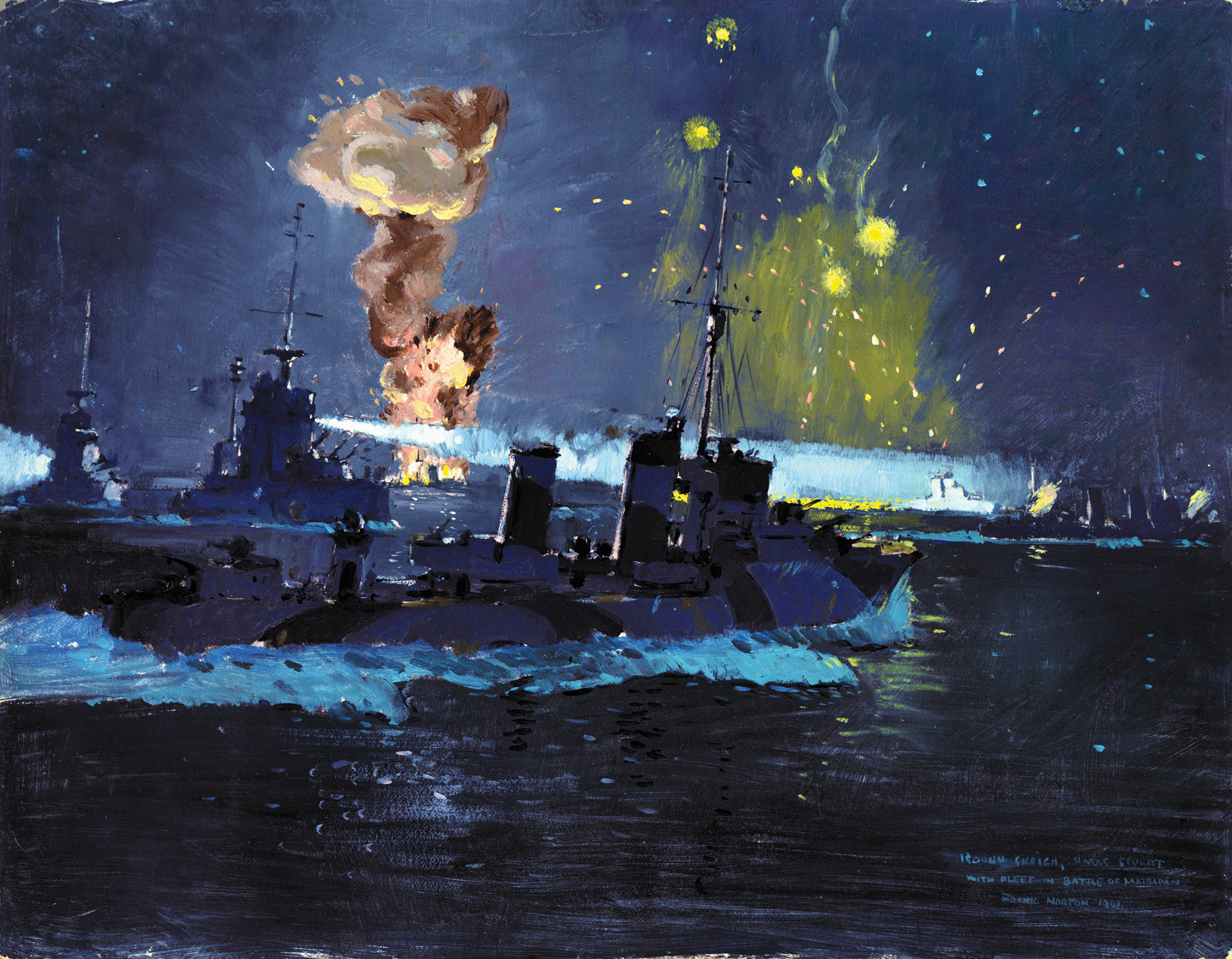
Always concerned about fuel supplies and operating refineries, the Japanese were in a tight spot by mid 1944. It became apparent to them that, without assured supplies, it would be difficult to mount offensive naval operations with any chance of success. Operations against Borneo and American submarine actions against Japanese tankers did much reduce Japanese ability to fight and maneuver in the area and respond to the eventual landing at Leyte.