By Joshua Donohue
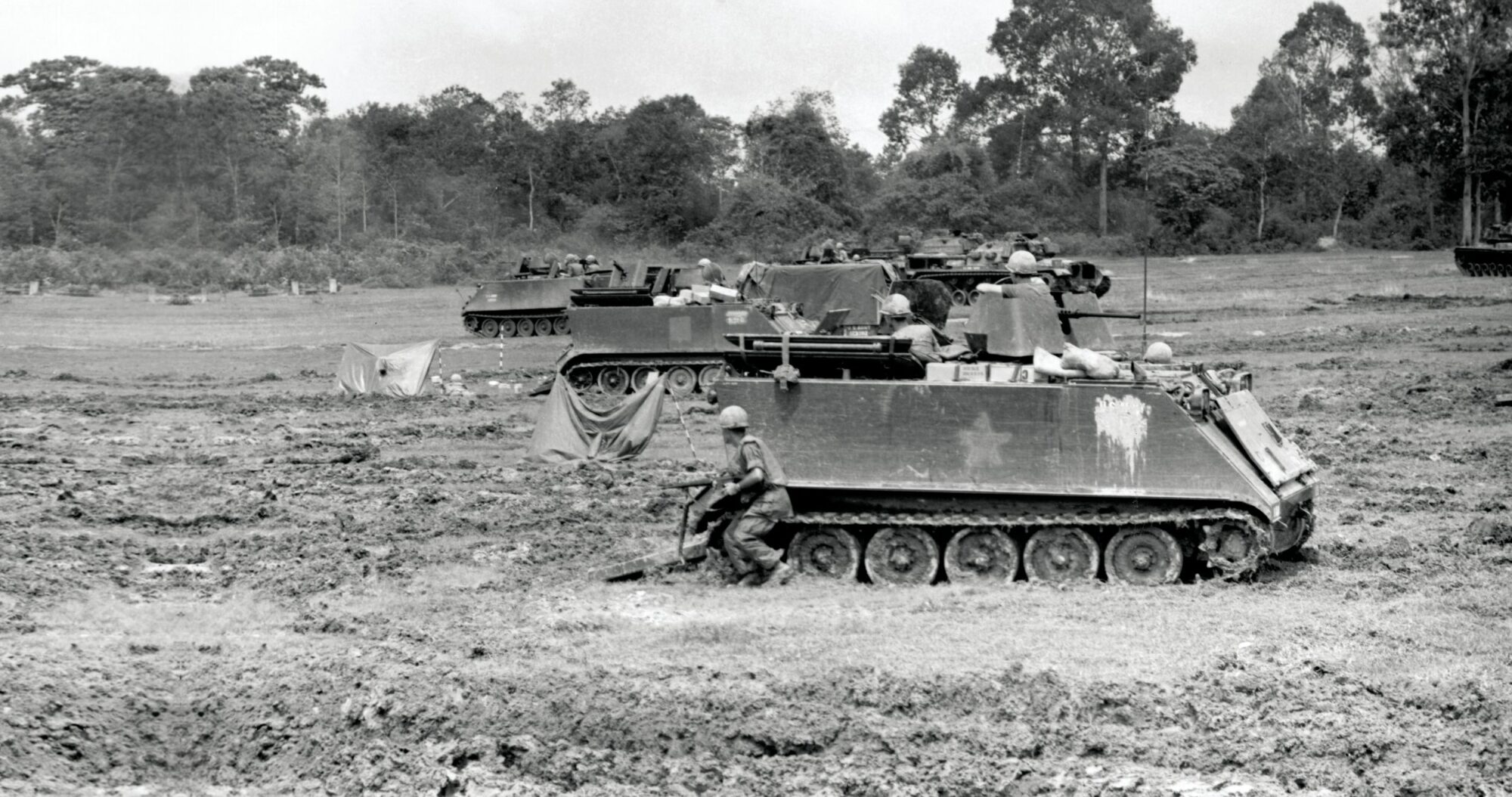
On a humid October day in 1968, U.S. Army Spc. 4th Class Kenneth “Mim” Crowell Jr. walked along a line of M113 armored personnel carriers (APCs) at Landing Zone (LZ) Bayonet in Chu Lai, South Vietnam. Assigned to drive one of these vehicles for H Troop, 17th Cavalry Regiment (Armored), 198th Light Infantry Brigade, 23rd Infantry Division (Americal), Crowell had arrived in Vietnam in August and was still adjusting to an environment that seemingly couldn’t be more different from the small Pennsylvania town where he grew up. Life “in-country” was filled with overwhelming—and often disturbing—sights and sounds, the relentless heat, and persistent, acrid odors. As close friend and fellow H Troop Spc. 4th Class Billie Davis put it, “the smell was always there, but you got used to it.”
Walking along that line of combat vehicles, Crowell was returning from mail call with his first care package from home. His mother, Mary, was known for her cooking, especially her homemade cookies, and the package served as a powerful reminder of home and provided a brief escape from the uncertainty of combat life. Crowell and his fellow soldiers formed a close-knit unit and often shared the contents of care packages, giving the men a brief but much-needed boost to morale.
“I always shared my cornbread, beans, and onions with my buddies from H Troop, 17th Cavalry,” Spc. 4th Class David Broome recalled.“My buddy from New York would always get whiskey and we all had to beg him for a little drink…Most times he would.”
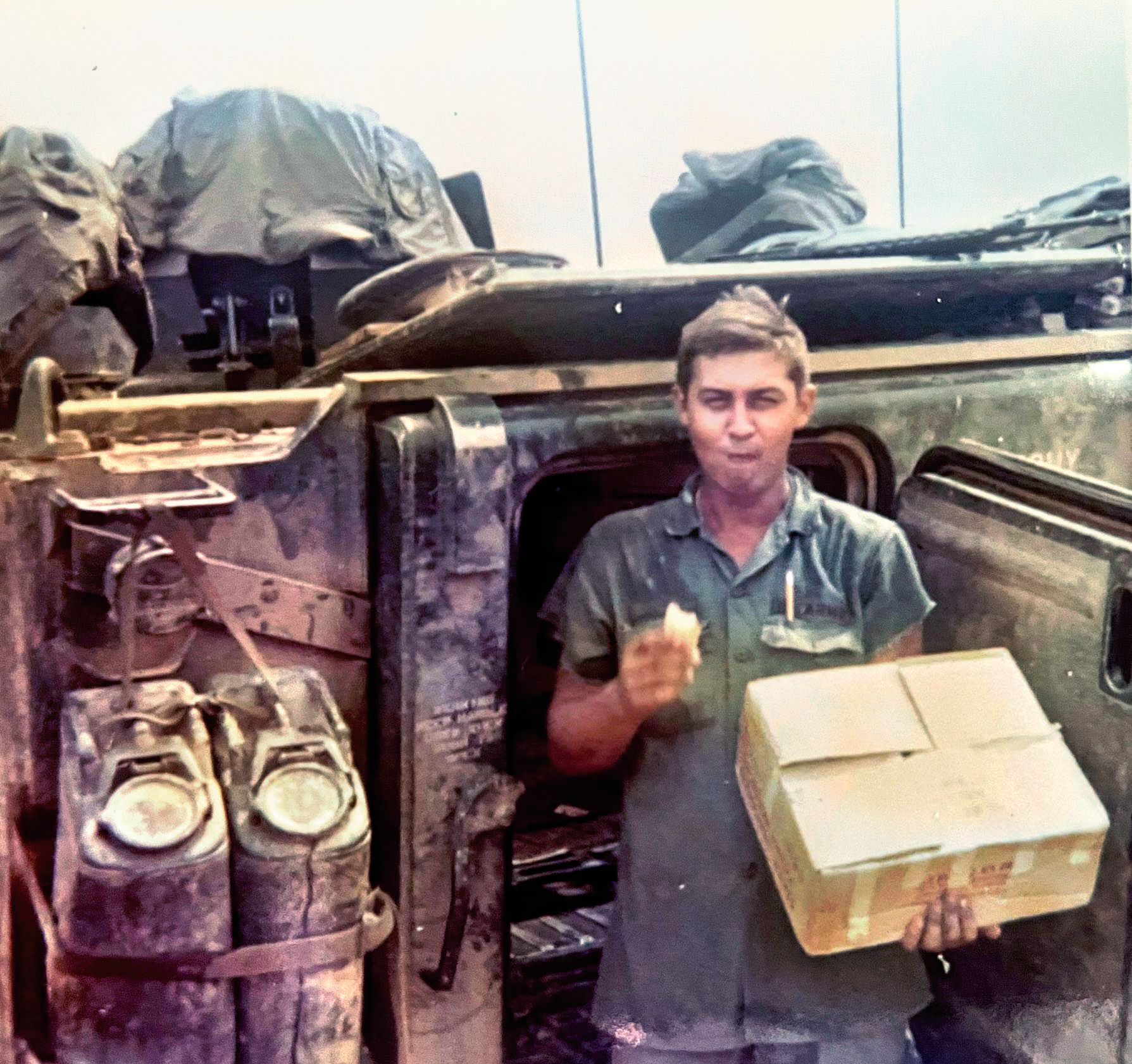
At 25, Crowell was among the older members of H Troop and well respected by his peers. He was born on March 16, 1943, to Kenneth and Mary Crowell and was raised about an hour north of Philadelphia, in the small borough of Northampton, Pennsylvania—home to The Atlas Portland Cement Company, the largest cement producer in the world for much of the 20th century. From 1904 to 1914, it produced nearly eight million barrels of cement for the construction of the Panama Canal.

After leaving high school, he married Elaine Reenock in December 1963. Crowell was drafted into the U.S. Army in 1967 and began basic training at Fort Hood, Texas. During training, he learned to operate the M113 APC and received instruction on a wide range of weapons, including the Browning M2 .50-caliber machine gun (by late 1968, the M113 would also have an M60 machine gun mounted on each side).
At the same time, Broome and Billie Davis were completing their training as APC driver-operators at Fort Knox, Kentucky. When basic training was over, Crowell, Broome, and Davis deployed together to Vietnam in August 1968.
“We got off the plane and started to walk a little until we saw a little sign that read ‘WELCOME TO VIETNAM,’” Broome remembered of their landing in Cam Ranh Bay, Vietnam. “A little farther down the road, there was another sign that read ‘CAUTION—VIETNAM MAY BE HAZARDOUS TO YOUR HEALTH.’”
At LZ Bayonet, there was a headquarters platoon, plus three additional line platoons, each with 10 APCs. In late 1969, three APCs were exchanged for three new M551 Sheridan tanks. Introduced as a reconnaissance vehicle, the M551 had superior speed and canister rounds for anti-infantry defense, but lacked traditional armor. The new men quickly organized their gear and integrated with experienced ACAV (Armored Cavalry Assault Vehicle) crews at the motor pool, who were preparing their vehicles for upcoming operations. These missions included intelligence gathering on enemy positions, conducting long-range patrols, and securing key infrastructure such as bridges in support of the 198th Infantry Brigade at Chu Lai.
The 198th Infantry Brigade was established on June 24, 1921, from the Organized Reserves in Erie County, Pennsylvania. During World War II, the 99th Cavalry Reconnaissance Group fought with the 99th Infantry Division and received campaign credit for operations in the Rhineland Ardennes-Alsace and Central Europe.
On August 1, 1962, the 3rd Platoon of the 99th Cavalry Reconnaissance Group was redesignated as Headquarters and Headquarters Company, 198th Brigade, and attached to the Regular Army. On May 10, 1967, the Department of Defense announced that the unit would commence training at Fort Hood, Texas, and would deploy to Southeast Asia by the fall of 1967.
H Troop was created from elements of the 1st and 2nd Armored Divisions. Personnel from the “Old Ironsides” and “Hell on Wheels” units were consolidated into what eventually became Troop H, 17th Cavalry. Specialized training techniques were implemented, including jungle warfare and air mobility operations, to better prepare new recruits for the conditions in Vietnam.
The 198th Infantry Brigade deployed from Oakland, California, to Vietnam in October 1967. Arriving at Da Nang, South Vietnam, on October 22, the 198th Brigade consisted of the 1st Battalion, 52nd Infantry; the 1st Battalion, 6th Infantry; the 5th Battalion, 46th Infantry; and H Troop, 17th Cavalry. The brigade was assigned to the central area of operations of the 23rd Infantry Division (Americal) with its headquarters in Chu Lai. The “Brave and Bold” settled into their new base of operations at LZ Bayonet on the north side of the Chu Lai air base, just west of Highway One. Built to support the 198th, it was completed between August and September of 1967 and was “a dustbowl,” according to Spc. 4th Class Dan Marino.
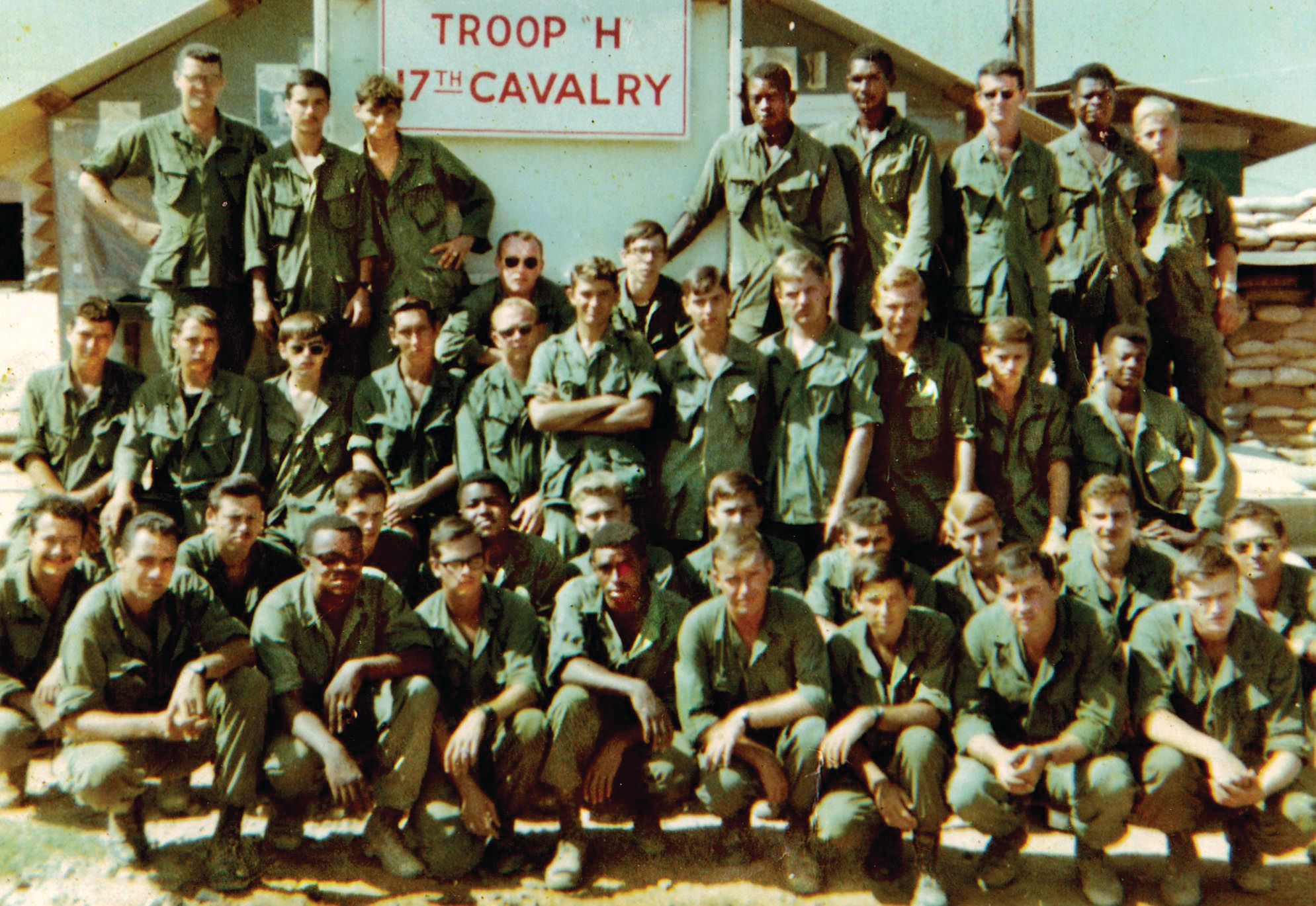
The soldiers of H Troop, 17th Cavalry, called LZ Bayonet their home during their entire deployment in Vietnam and life fell into a daily routine. “Usually, it was always downtime,” Davis recalled. “When you come in with that many tanks, Mim pulled first echelon—checked wheels, tracks, guns, etc. All had to be cleaned and put away, but the .50 caliber stayed mounted after cleaning.”
Preparing, operating, and maintaining the APCs became a matter of routine as the men gained experience in the field. Armored cavalry was still a relatively new concept in warfare, and M113 crews continuously sought ways to maximize the effectiveness of their vehicles.
The concept of transporting soldiers closer to the front lines using armored vehicles as “battle taxis” became a priority when the United States entered World War II. By the end of the war, the first tracked armored personnel carrier was developed in the form of the M44 (T16). However, the Army considered the M44 too large, so only a limited number entered service before the program was ultimately canceled.
During the mid-1950s, the Army issued specifications for a new armored personnel carrier to be constructed of aluminum, making it significantly lighter than a steel vehicle. After several modifications to the original design, the Army awarded a production contract for the M113.
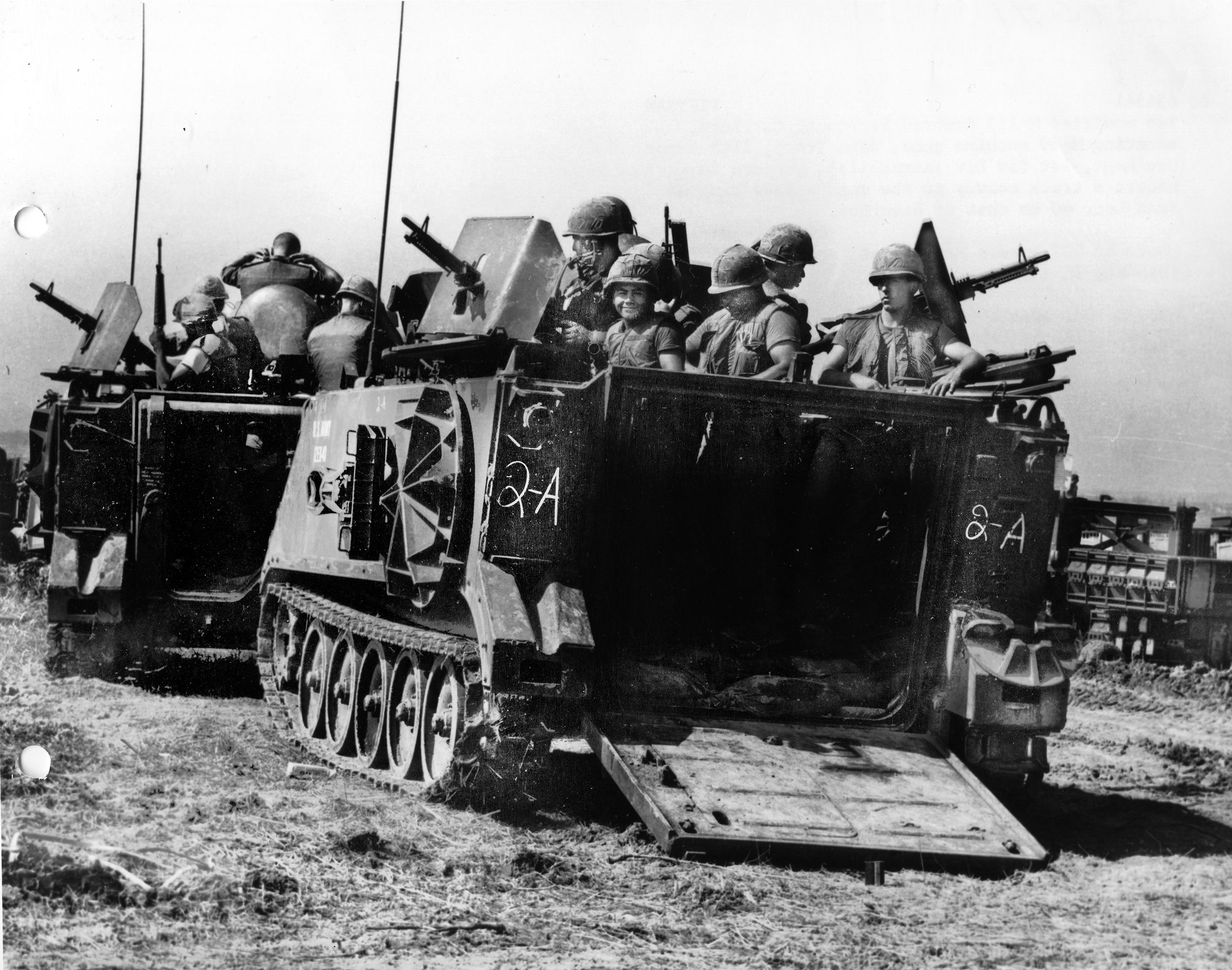
Designed to improve accessibility for both crew and passenger, the M113 had hatches on top to allow for easier loading and unloading of cargo on longer missions. A large ramp in the rear of the vehicle enabled troops to enter and exit quickly. After the development of the initial prototype in 1957, early production models of the M113 began rolling off assembly lines in 1960. Despite its strengths, the Army identified a significant concern—the gasoline engine and fuel system posed a major fire hazard if the vehicle was struck by enemy fire.
As a result, an improved version of the M113 equipped with a General Motors 215-hp 6V53 Detroit Diesel engine was introduced. This new engine was not only safer, but it also increased the vehicle’s operational range by 100 miles. Designated as the M113A1, it entered service in 1964 and quickly proved to be successful. The M113A1 was soon issued to mechanized infantry and selected airborne units in the U.S. and Western Europe.
H Troop and other units that employed the M113 experienced high numbers of casualties due to mines between November 1967 and March 1970. The lightweight aluminum armor was also vulnerable to heavy enemy fire, which caused catastrophic hull breaches, internal spalling, and fuel fires. Many soldiers chose to ride on top of the “Aluminum Coffin” rather than inside it. Midway through the war, in response to mounting losses, the M113A1 belly armor modification kit was tested and declared standard issue. These kits were designed to improve mine protection by providing a steel belly-armor plate and, in many cases, rerouting fuel lines above the floor to prevent fires.
The men of H Troop were already combat-seasoned when the Tet Offensive began at 0400 hours on January 31, 1968. Chu Lai came under heavy rocket and mortar attacks, causing extensive damage to living areas, hangars, and aircraft. During the barrage, an ammunition dump on a nearby hill across from LZ Bayonet was struck by a 122mm rocket.
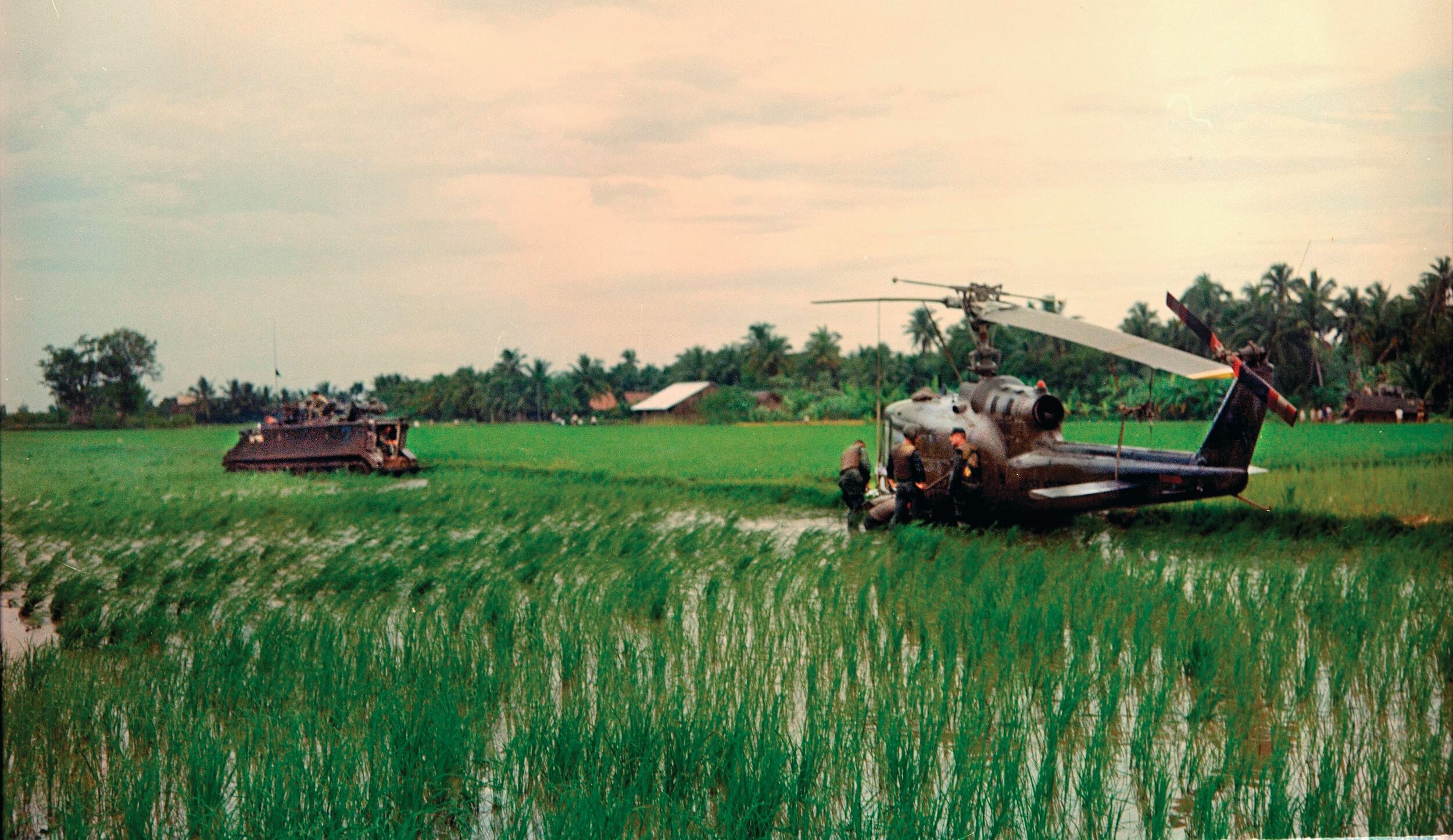
“I was at LZ Bayonet, on the Reaction Force (about 20 of us), as rockets sailed overhead toward airbase—a few short ones fell on Bayonet,” H Troop veteran Len Corsetti recalled. “The Reaction Force proceeded to the top of the rise along Highway One, out in the open. Then a rocket hit the bomb dump on the other side of Highway One and it blew.” Corsetti estimated that they were about 4,000 feet away. “The shockwave hit us and people went flying,” Corsetti said. “Down the hill behind us hooches had the contents moved from one side to the other. Some double 2×4 door frames were split apart by the force.”
North Vietnamese Army (NVA) and Viet Cong forces frequently used rockets supplied by the Soviets and the Chinese, particularly the 122mm and 107mm variants, to conduct standoff attacks against U.S. airbases and fire support positions. Their portability and destructive capability made them highly effective for hit-and-run strikes against critical infrastructure with minimal exposure to counterattack (especially at night). The increasing use of rocket and mortar attacks during the Tet Offensive underscored the evolving nature of conflict in Vietnam. The PAVN and Viet Cong demonstrated an ability to strike strategically significant targets simultaneously, forcing both the Americans and South Vietnamese to adapt both tactically and defensively.
During September 1968, personnel assigned to H Troop, 17th Cavalry were engaged in sustained operational activity, primarily focused on the security of three strategically significant bridges in the vicinity of LZ Bayonet—An Tan, Binh Son, and Tam Ky. These bridges were critical infrastructure points, the control of which was essential for maintaining access to the Chu Lai air base. Consequently, they were frequent targets of coordinated attacks by the NVA and Viet Cong. According to a communique from September 14, 1968, elements of the Americal Division reported the elimination of approximately 141 enemy combatants during operations. H Troop, 17th Cavalry contributed to these engagements by coordinating artillery support in conjunction with units of the 196th Light Infantry Brigade. One such artillery strike, conducted approximately 16 miles northwest of Tam Ky, resulted in the confirmed deaths of three Viet Cong fighters.
Davis remembered several skirmishes with enemy forces while he and Crowell were guarding the bridges, many times at night. During one instance at the bridge at Binh Son, Davis recalled a mortar barrage in which “several of our men were hit and we had to call in artillery to eliminate them.” In addition to static defensive operations, H Troop armored elements were routinely deployed to reinforce nearby landing zones, including LZ Dottie and LZ Gator.
Davis and Crowell were reinforcing LZ Dottie when “we were hit in the middle of the night,” Davis remembered. “They blasted holes through the wall, and we were shooting them as they came through.” Without hesitation, Crowell jumped into the driver’s seat and had his M113 moving in short order. Over time, it became a matter of routine as H Troop units were often subjected to sudden and prolonged ambushes by the enemy. It wasn’t long before Crowell developed a reputation among his comrades for being cool under fire. “We were on the same APC for most of the missions during my time there,” Davis said, “We were in plenty of firefights, but “Mim” was always there when you needed him.”
Logistical operations also played a critical role in sustaining combat effectiveness. The CH-47 Chinook helicopter was commonly used to transport fuel cells or “blivets,” to forward operating bases via sling-load delivery. However, in one notable deviation from standard procedure, Crowell and Davis decided to take the blivets back to LZ Bayonet when they were returning from the field. “The Chinook never returned to pick up the fuel blivets,” Davis recalled, “I was told to get it back to LZ Bayonet, so ‘Mim’ and I hooked a chain to it and we must have pulled it for 20 miles!” Since the process of securing and transiting the bulky fuel cells was often laborious and time-consuming, Crowell and Davis decided to have a bit of fun at a certain officer’s expense. “There was nothing left of it when we got back to the motor pool at the LZ,” Davis said, “but we got a lot of laughs from everyone.”
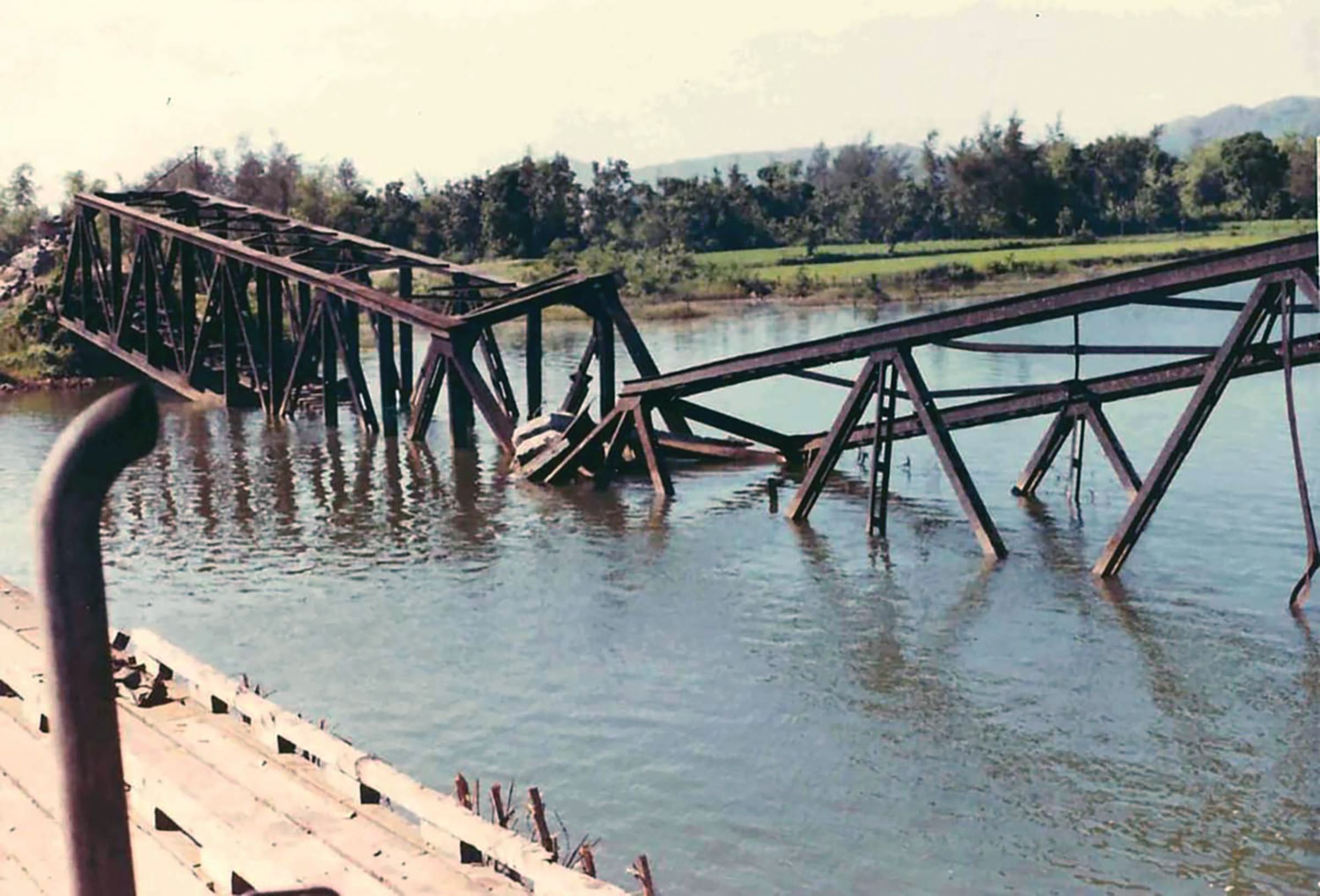
Broome recalled another amusing incident at the Tam Ky bridge below Chu Lai in November 1968. In this instance, a lieutenant was attempting to cross the bridge with an M-48 Patton tank towing a disabled M-48. “When the driver got to the bridge, we stopped him like we did everybody else,” Broome said. “We told him that the bridge had a 50-ton load limit, and he would have to disconnect the tow bars and take one to the other side. He would then hook a long cable to the one that was not operable and drag it across the bridge, so he would not break the bridge down. But he was a lieutenant with more rank than us. He told us just to get out of the way and let him go on his way. So we did what he ordered us to do. We just moved out of the way and watched him. Sure enough, about the time he got to the middle of the bridge, it broke in two. Both tanks fell into the river…We looked down at him, and his tank was pointed up one side with the other pointed up on the other side of the bridge.”
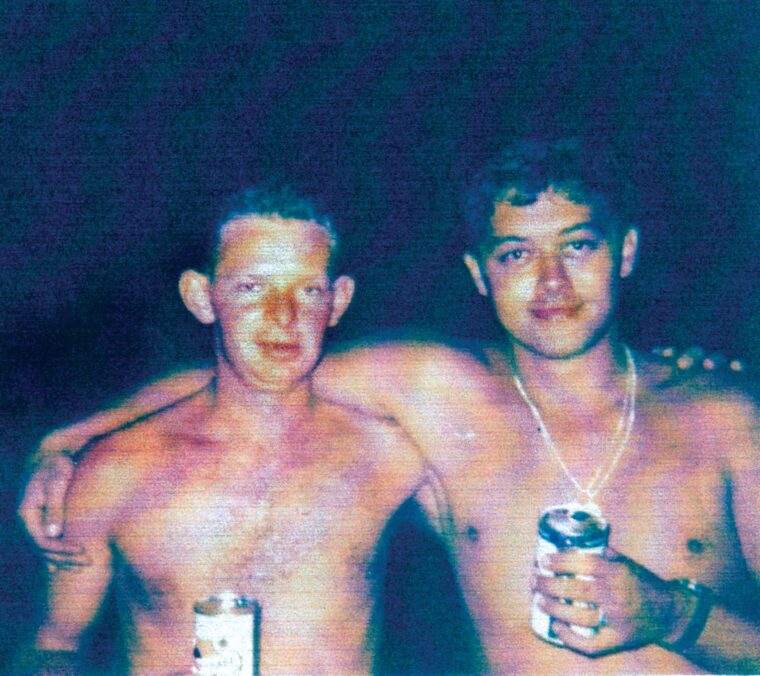
Specialist Fourth Class Jerry Lew Ewing, a 21-year-old from Madera County, California, was well-liked by his comrades. Ewing and Crowell developed a friendship that was typical of many men of H Troop, especially since many of the soldiers were away from home for the first time in their young lives. In early May of 1969, Crowell, Ewing and others from H Troop were enjoying a few beers during a typical humid evening at LZ Bayonet. A number of the men from 2nd Platoon had a good reason to celebrate since the end of their time in Vietnam was fast approaching—but their celebration was short-lived.
On May 17, 1969, at Phuong Dinh (14 km SW of Binh Son) near Quang Ngai province, Ewing was driving his M113 when they were suddenly ambushed by enemy small-arms and mortar fire. “We were about three tracks in front of them when we were attacked,” a member of H Troop recalled. “There were three mortar rounds fired, the first went long and the second round was a direct hit.” Sadly, Ewing was killed in the attack along with Spc. 4th Class Dale Frazier Brown of Ashland City, Tennessee.
“My first day in combat, the APC just in front of me ran over a 300-pound land mine,” Spc. 5th Class Wayne Meyer (H Troop) recalled. “They were all killed. I was told to leave my APC and help, but there was little life in the APC. Everyone loved the Lieutenant who died that day.”
Out on a long reconnaissance mission, 2nd Platoon “had been in the bush for several days,” Davis recalled. “We’d be out in the field away from LZ Bayonet for 30 to 40 days at times.” One evening, the APCs had to stop along the way and set up a perimeter camp and circle up in a defensive position for the night. Broome remembered, “We all had ‘chow,’ C-Rations, or anything we could find to eat. Then a few of us got our ‘cots’ or sleeping beds out to sit on and started a good game of playing cards. About four of us I think, Randy Little, Mike Dow, and “Mim” Crowell. We were telling jokes and having a good time. Then out of nowhere, we started getting some sniper fire from the wood line in front of us. We all dove for cover and our weapons.”
Broome then pushed Dow to the ground, and he began to yell, “I am hurt!” to which Broome replied, “Stay low until we find and shoot the sniper.” After the gunfire stopped, Broome discovered that Dow had been shot in the foot. He ended up losing a toe in what Broome described as “a million-dollar wound.”
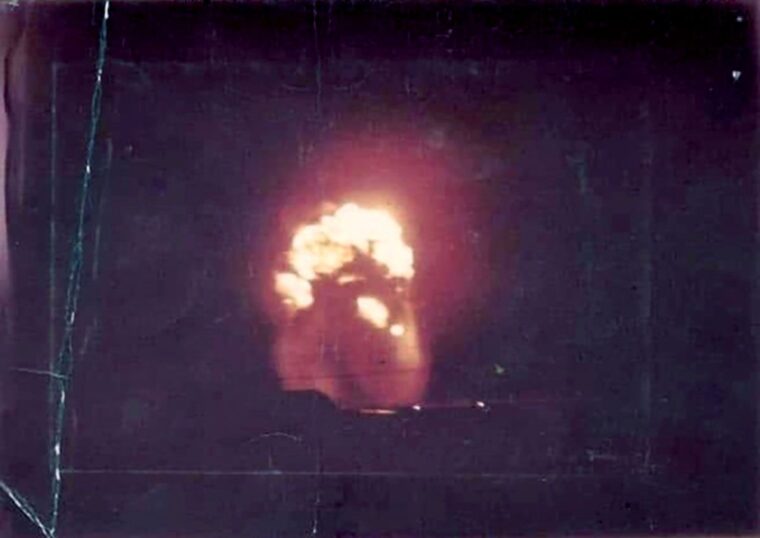
Dow would be evacuated and sent home following a brief stay in the hospital. He was only 17 when he joined the Army. Crowell also suffered a mishap during his time in Vietnam as an APC driver when an unsecured hatch on his M113 suddenly swung down as it went over a rice paddy and struck him while his head was still exposed. “It was awful,” recalled Davis. “You couldn’t see his eyes because his face was swollen so badly.”
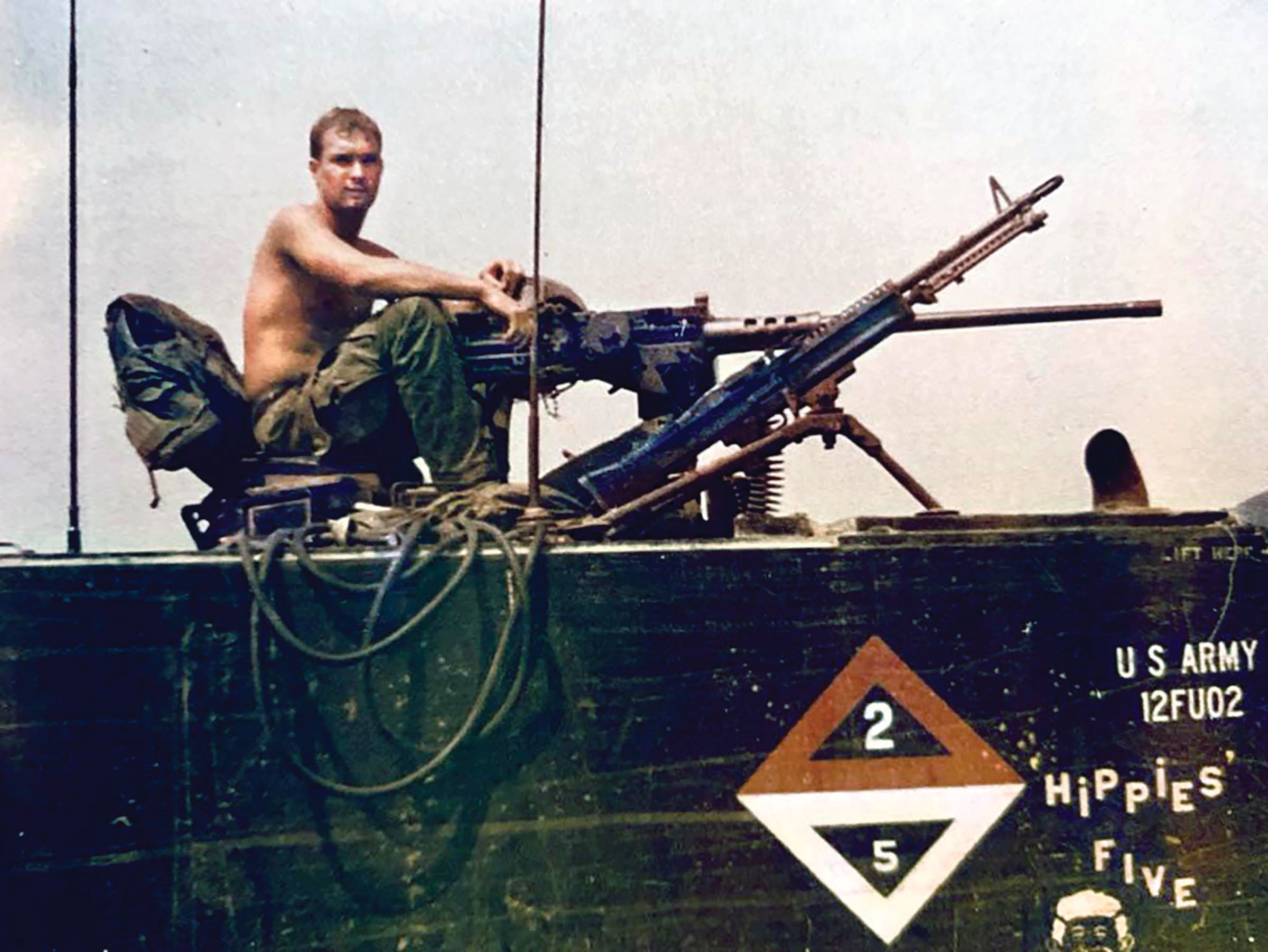
By August of 1969, Crowell had finished his tour in Vietnam and began the process of rotating back to the United States. “Mim left two weeks before I did,” Davis remembered. “He had come out of the field to get ready to go home.” Since Davis had only three days left in Vietnam, he had just given up his post as track commander. “We got hit that night and as track commander you normally go through the back door and get on the .50 caliber machine gun. Realizing that this was no longer my job, I got on the M-60. Sergeant Jack Geisler, who came to Vietnam out of NCO School, got on the .50 just as an RPG went through our ACAV. I remember Geisler falling out of the turret and onto the ground in front of track.”
Both Geisler and Davis were seriously wounded in the attack. “I was put in for a Bronze Star,” Davis recalled, “but two days later, a Platoon Sergeant lost it and shot the mail clerk in the head. The order was never turned in!” From October 22, 1967, to October 1, 1971, H Troop, 17th Cavalry lost 54 men killed in action. Wayne Meyer recalled making E-5 after only a month in Vietnam. “That tells you something,” he said.
The stand-down of the 23rd Infantry Division was not completed until the final days of September 1971, when the division was deactivated and its colors were retired to Fort Lewis, Washington. This marked the conclusion of a large-scale redeployment effort that had begun earlier with the stand-down of the 3rd Battalion, 18th Artillery, and the 71st Assault Helicopter Company on September 8, 1971. Planning for this transition had been underway well in advance under the supervision of the Keystone Operations Center, which coordinated and scheduled all stand-down activities.
A personnel out-processing center was established adjacent to the Chu Lai Airfield. Despite a temporary setback when Typhoon Hester damaged the facility for a day, the center processed an average of 200 personnel per day, either for reassignment in-country or return to the U.S. for further duty or ETS (Expiration of Term of Service). On September 17, H Troop, 17th Cavalry began its stand-down, and by October, most maneuver elements of the division also initiated their stand-down operations. In only four short years, men of H Troop and other armored cavalry units proved that mechanized warfare was a valuable application on the battlefield. It took adaptation, innovation, and improvisation to achieve the level of success as they had during their missions.
Like many returning Vietnam veterans, the men of H Troop did not receive a hero’s welcome upon returning home from war. Crowell and Davis both witnessed and personally experienced the anti-war sentiment that had deeply divided the United States by the end of the 1960s. However, Davis recalled a particularly poignant moment while attempting to return home to Fredericksburg, Virginia, after his service in Vietnam. “I flew from Chicago into Washington, D.C., as I was trying to get to Fredericksburg,” Davis remembered. “It was getting late and starting to get dark, and I was dressed in full military uniform. The first bus pulled up and it was loaded full in a matter of a minute. I was so far back in line [that] I watched six buses driving up, and on the seventh bus, I was getting close to the door when an elderly black woman stopped the line and said, ‘Please let this soldier get on this bus.’ I never forgot that and I probably never will.”
Following his tour in Vietnam, Crowell returned home to Northampton, where he and Elaine raised their daughter, Kelly. He worked at Bethlehem Steel until he retired after 25 years. A lifetime resident of Northampton, he enjoyed spending time with his daughter and two grandchildren who lived close by. He remained active in his community, coaching a boys’ basketball team at a local Catholic school for several years. He also maintained close connections with his fellow H Troop veterans, frequently attending reunions with the men he served alongside in Vietnam. Like thousands of Vietnam veterans, he and others from H Troop often visited the Vietnam Veterans Memorial in Washington, D.C., to honor their fallen comrades. Crowell died on June 11, 2015, at the age of 72 following a brave battle with cancer.
For his service in Vietnam, Crowell received the National Defense Service Medal, Republic of Vietnam Campaign Medal, Vietnam Service Medal with three Bronze Service Stars, Combat Infantryman Badge, and the Sharpshooter with Rifle Bar.


An aluminum body and a gasoline engine! The originators of this death trap should have been executed for incompetence and the Army generals in charge of the program imprisoned for life. Quite sure the dead GIs on the wall at the Washington mall would all applaud (posthumously).