By Justin D. Lyons
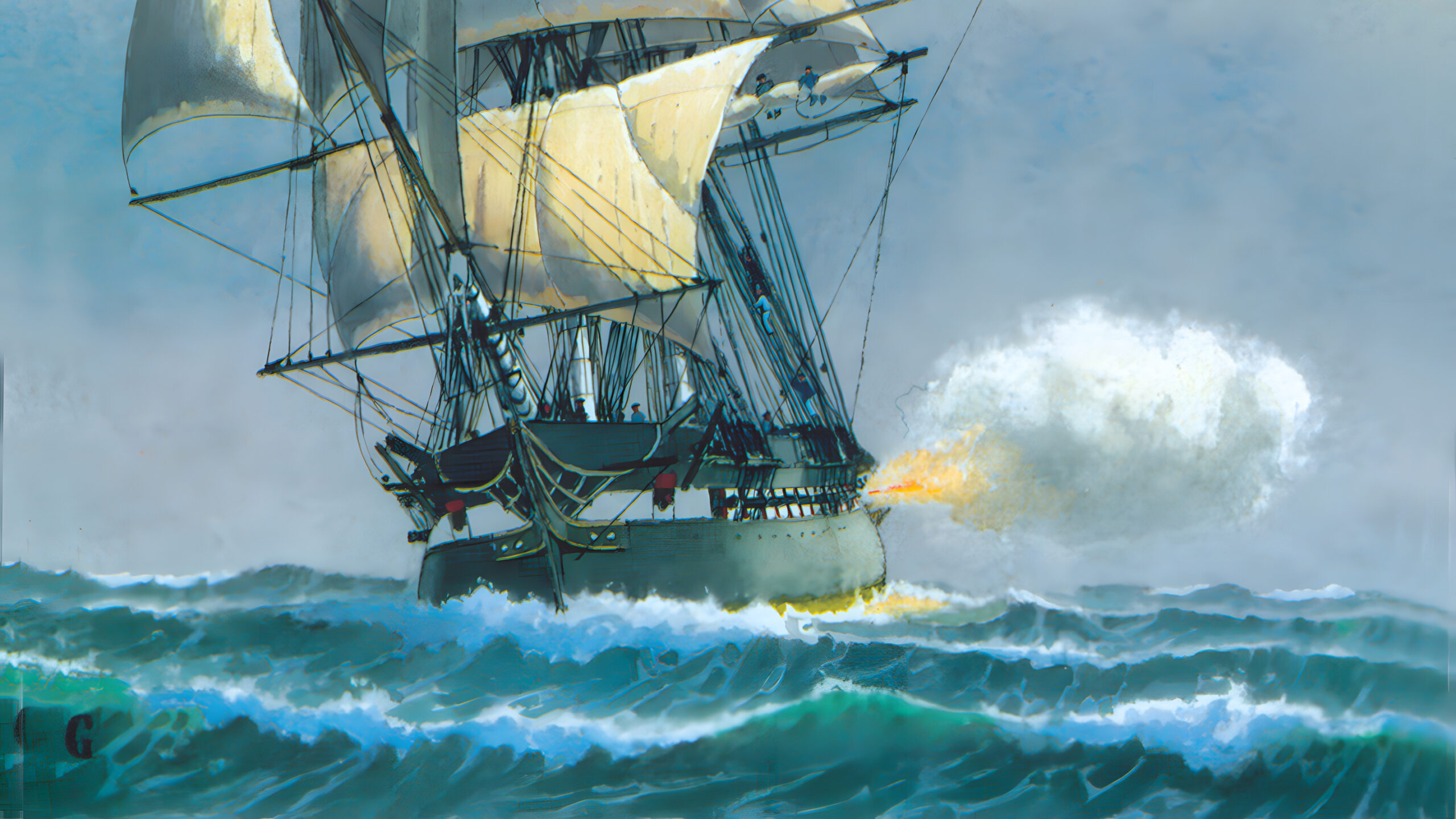
Following the trade route between Alexandria and Istanbul, the heavily-laden merchantman hoped to run the straits between the islands dotting the sea off the coast of Anatolia. All eyes onboard scanned the horizon for approaching galleys—these waters were the hunting grounds of the dreaded Knights of St. John, Christian corsairs who preyed on Muslim shipping from their base on the island of Rhodes. A cry rang out as one of these dreaded hunters was sighted far off the stern. Making good speed under a fair wind, the prospects of outdistancing this pursuer seemed likely, until a second galley rounded an island headland to bar their course.
Informed by lookout points watching the channels, the corsairs had stalked and trapped their quarry. The spoils from this capture would include wheat, barley, spices, timber, iron, silk, or gold, for their fortified outpost in the Ottoman Mediterranean. Sleek and swift, the galleys closed in as archers and crossbowmen raked the decks, grapnels secured the ship, and a boarding party of knights and men-at-arms poured onto the deck of the doomed vessel.
The fate of the vessel and its crew was a minor episode in a larger war between Christianity and Islam that would span centuries. For much of that time the field of battle was the Mediterranean— a sea of faith, a sea of blood and fire, whose depths received the remains of countless men and ships as the Crescent and the Cross warred upon the waves.
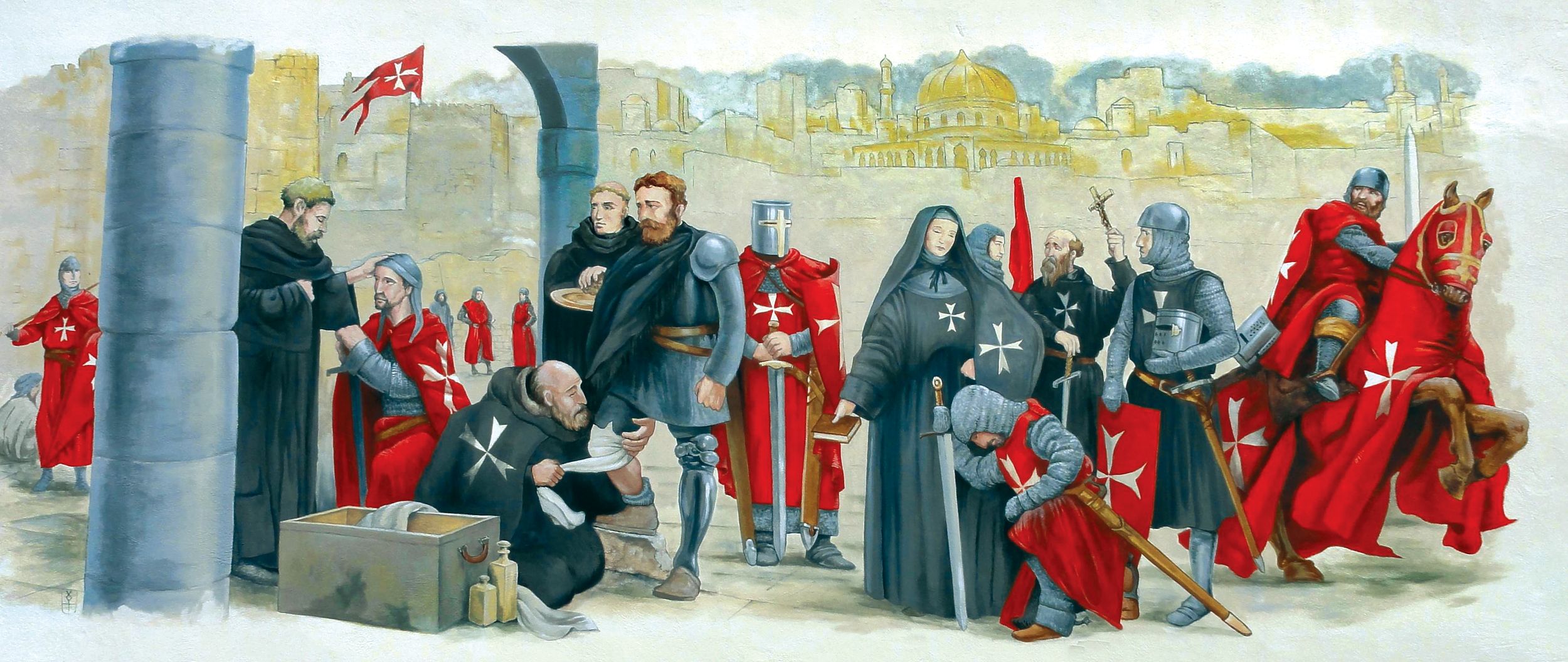
The origins of The Order of the Knights of the Hospital of Saint John of Jerusalem lay in feeding the poor and treatment of the sick in the Holy Land. Following the sack of Jerusalem at the culmination of the First Crusade in 1099, a growing military arm began the transition from servants of the poor into soldiers of Christ. The Hospitallers grew in power and influence as their military role expanded. Recognized as a sovereign order by Pope Paschal II in 1113, they held castles in the East, drew support from priories and commanderies throughout Europe, and played a major role in subsequent crusades. As they were there at the beginning, they were there at the end when Acre, the last Christian stronghold in the Levant, fell in 1291.

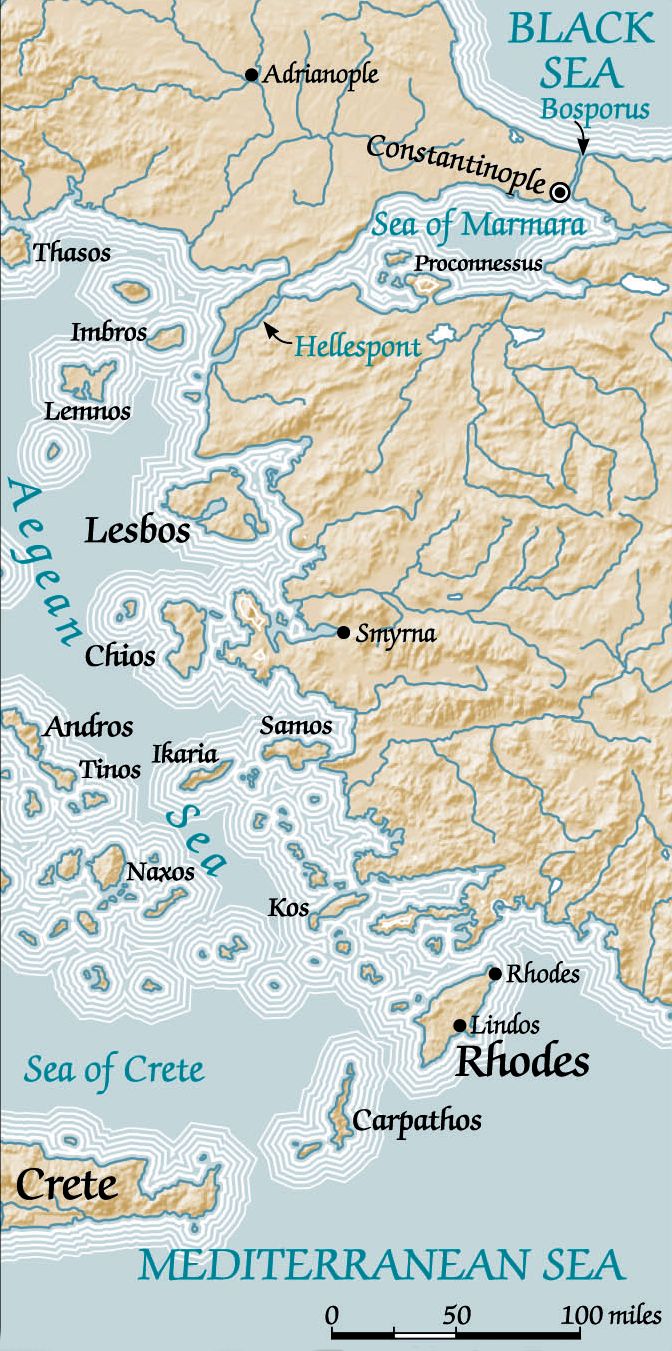
The Knights of St. John withdrew to their possessions on the island of Cyprus and began to adapt to their new situation. They would continue the war against Islam, but on the sea, riding ships rather than horses. They began to build a fighting fleet and to search for independent territory of their own. Their eyes turned to Rhodes. Lying only 10 miles from the coast of Asia Minor and dominating the channel, Rhodes was ideally situated to interdict trade in the eastern Mediterranean. In 1309, the knights took possession of the island and began making a serious nuisance of themselves for the next two centuries.
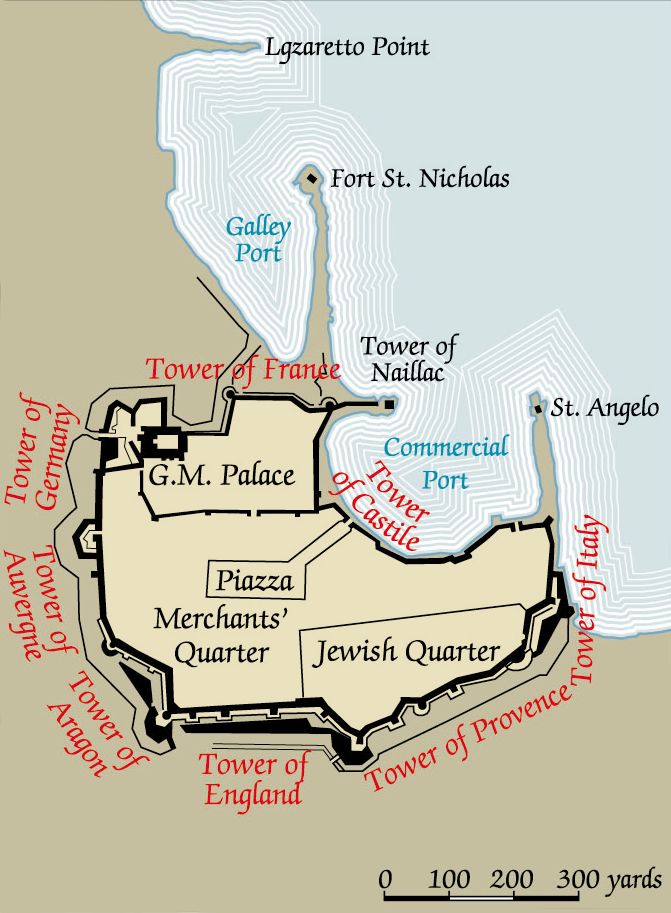
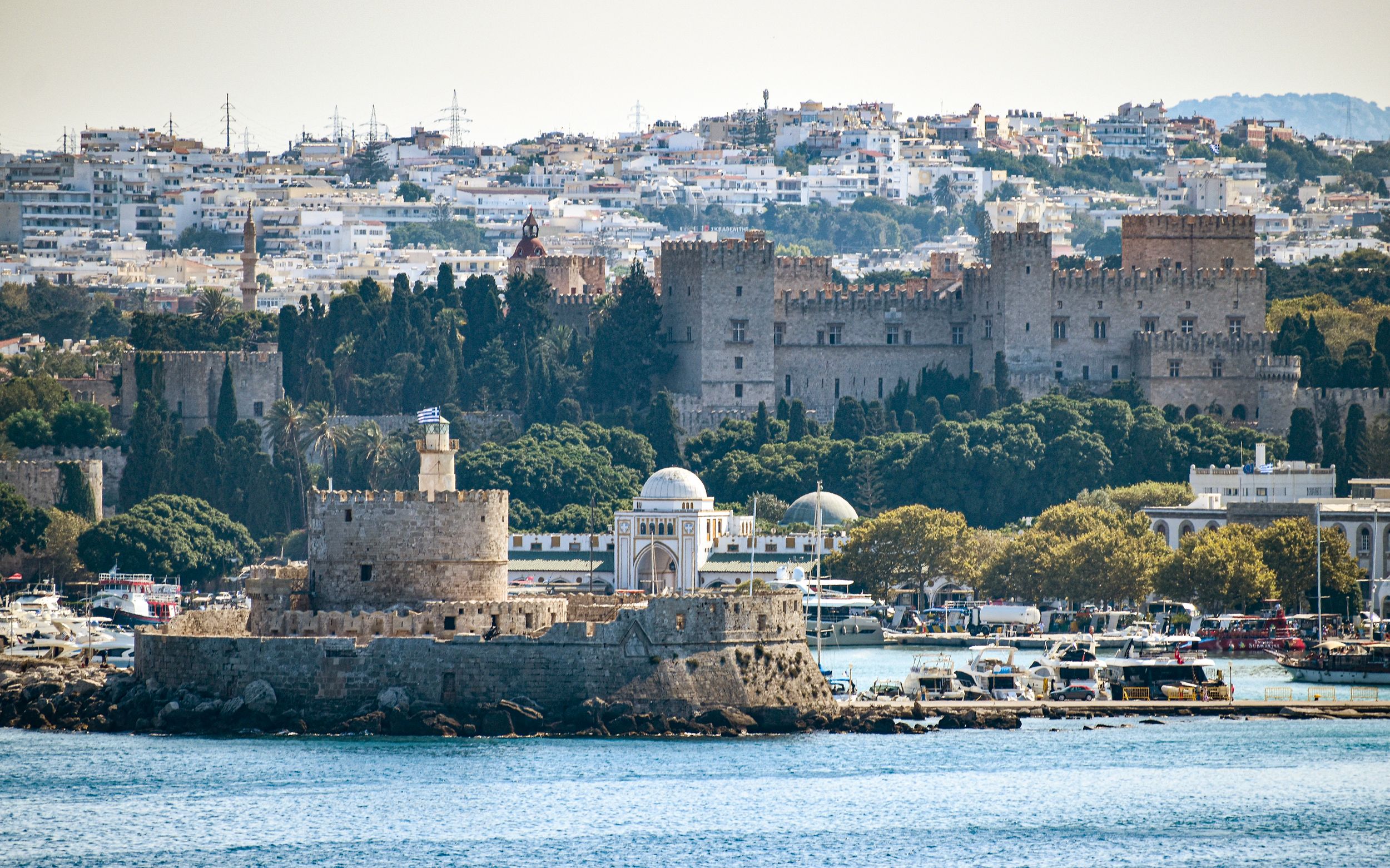
The Ottoman Sultan Mehmet II conquered Constantinople in 1453, sending shockwaves through the Mediterranean and beyond. The Hospitallers believed the Ottoman attack in force they had long anticipated was close at hand and spent the next two decades preparing for it. The Knights had erected or restored 30 fortified strongpoints throughout the island, including the Towers of Naillac and St. Angelo, which anchored the great harbor chain blocking the mouth of the commercial port. It was on the city itself that the sword would fall most heavily, and the Order spent much time and money on improving its defenses. When the Knights took possession of the island, they found a heavily fortified city whose walls circumscribed a rough semicircle around the port that was formidable for its day. But warfare was changing. Gunpowder weapons and siege cannon compelled modifications in defensive structures. Florentine experts were brought in to strengthen and modernize the fortifications.
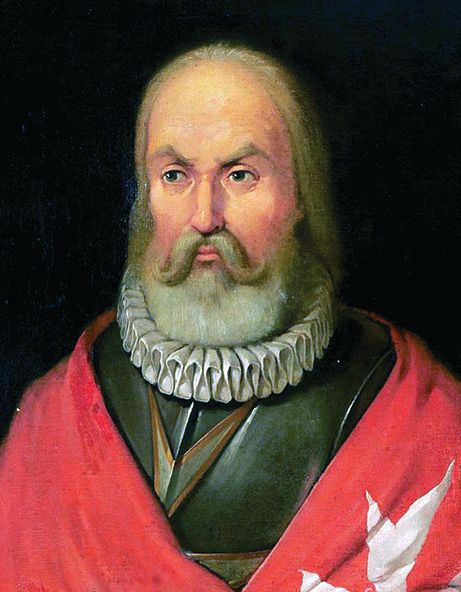
Preparations reached a fevered pitch under Grand Master Pierre d’Aubusson, who was elevated to leadership of the Order in 1476. In addition to strengthening the city, he gathered supplies and munitions, hired mercenaries, and sent a stream of letters to the Knights and priories abroad asking for men and money. Ultimately, he summoned all Hospitallers to Rhodes. He was determined to be ready.
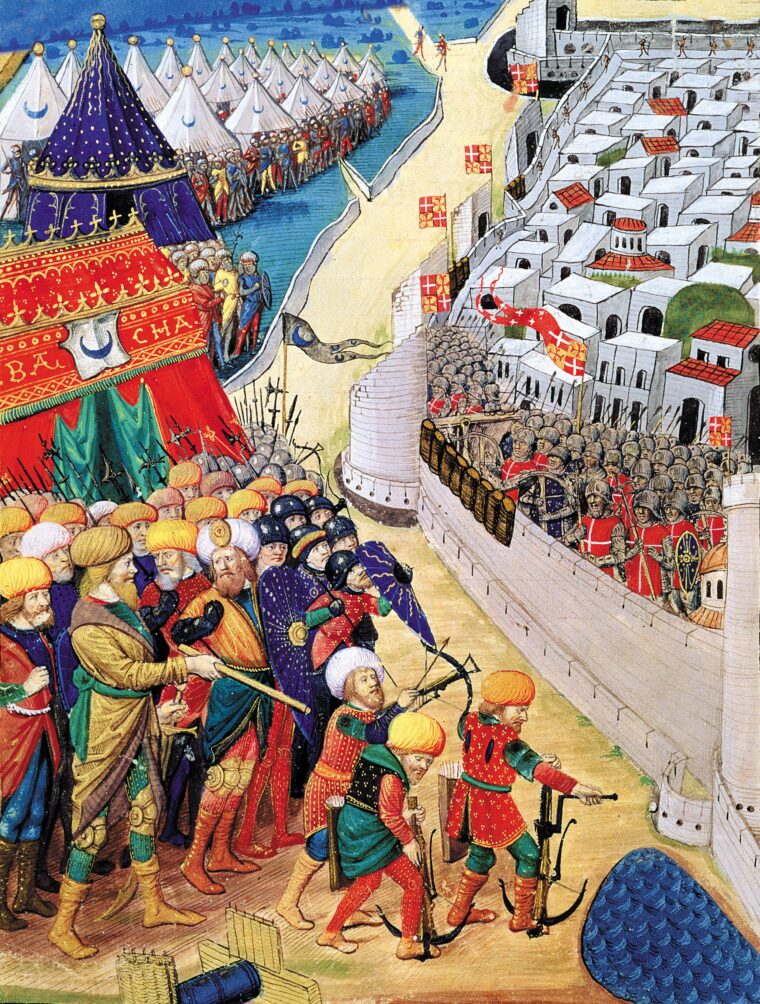
On May 23, 1480, the signal station on Mt. St. Stephen sighted the Turkish armada passing by Akra Milos, the northernmost point of the island. The billowing sails of the massive fleet shadowed the sea like the wings of predatory birds. Flags bearing the white crescent of Islam on blood-red ground snapped in the breeze, proclaiming that the day of reckoning had come. Church bells pealed within the city and the defenders were called to their posts. After loading troops, supplies, and munitions that had been gathered at Marmarice on the mainland, the Turkish transports and landing craft anchored in the Bay of Trianda.
The Turkish force was immense, estimated at some 70,000 men, under the command of Misac Palaeologus Pasha. The garrison of Rhodes was very small by comparison: 600 members of the Order, including servants-at-arms, as many as 2,000 mercenaries and local militia, and the townsfolk themselves, most of whom could contribute to the defense in some way.
Even against such a host, the defenders had reasons for confidence. They had prepared carefully. They were well-provisioned and supplied with ample powder, shot, and other weapons. The Rhodians had withdrawn from the countryside bringing every animal and edible, harvesting even unripe crops, and scorching the fields behind them to leave nothing for the invaders. Fire brigades were ready to douse flames within the city, and shelters had been prepared for the non-combatant civilian population. The Order was sub-divided into Langues (Tongues)—Aragon, Auvergne, Castille, England, France, Italy, Germany, and Provence—according to nationality. Each langue was entrusted with the defense of a section of the city walls dominated by a tower bearing its name. Every available defender stood vigilant at his post, sustained by the burning energy of his faith, within strong walls of stone.
By dawn, the Turks had established a command post on the slope of Mount St. Stephen and a heavy siege battery in the garden of the church of St. Anthony opposite the Tower of St. Nicholas. Completed in 1467, this round tower had 24-foot-thick walls, bristling with guns. It stood at the end of the long mole that divided the military harbor in the west (the Mandraki) from the commercial harbor to the east. In combination with the battery positioned at the Post of France, it made an assault on the northern side of the city impossible.
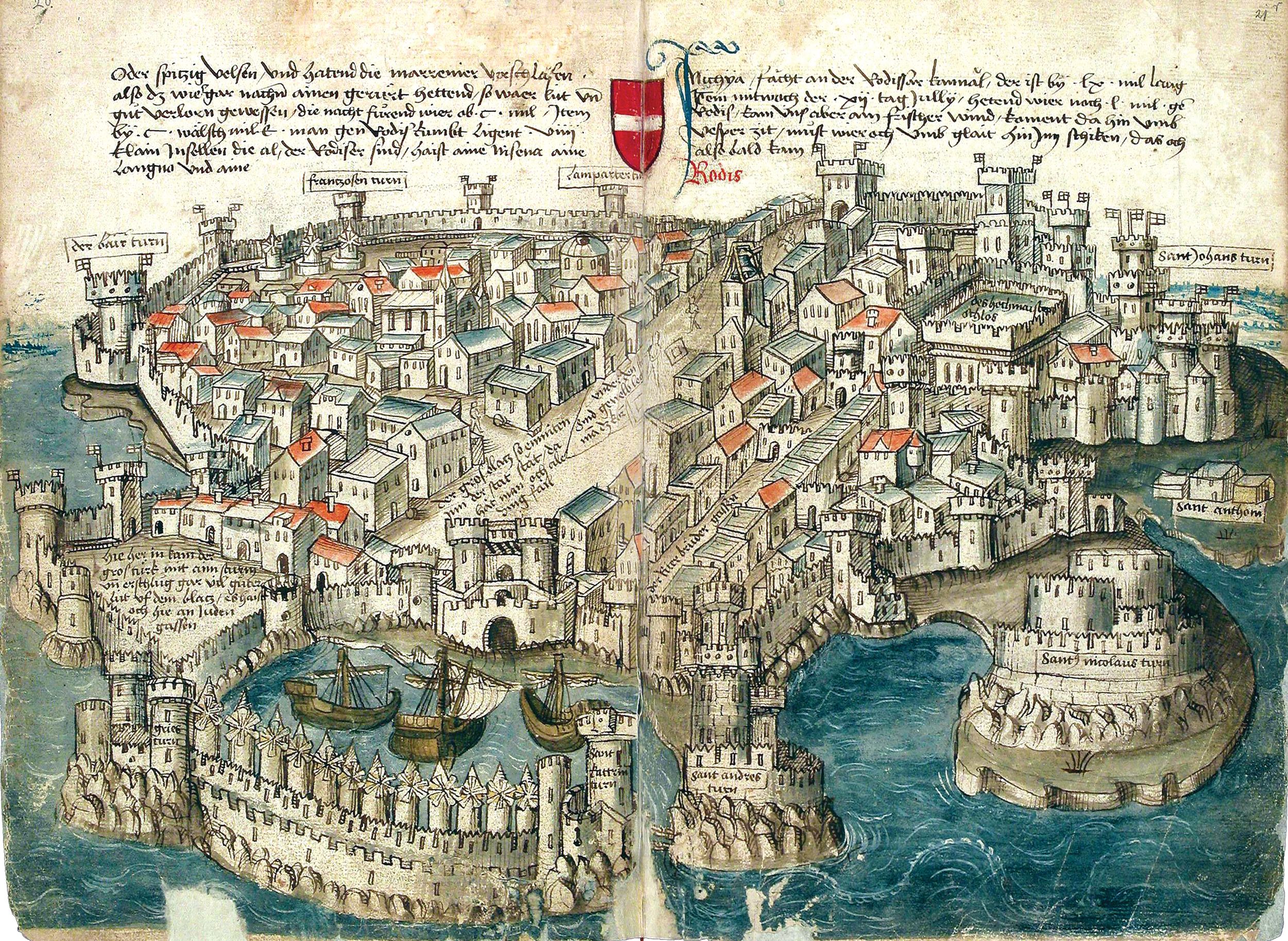
Taking or destroying the tower was key to Turkish success. If it fell and they occupied the mole, both harbors would become vulnerable. The French guns could be outflanked, Turkish ships brought into the port, outside aid prevented from reaching the besieged—and the northern gates of St. Peter and St. Paul would be opened to direct assault. The three seventeen-foot bronze basilisks firing balls seven feet in circumference stationed on the mainland were positioned to batter its walls until they broke.
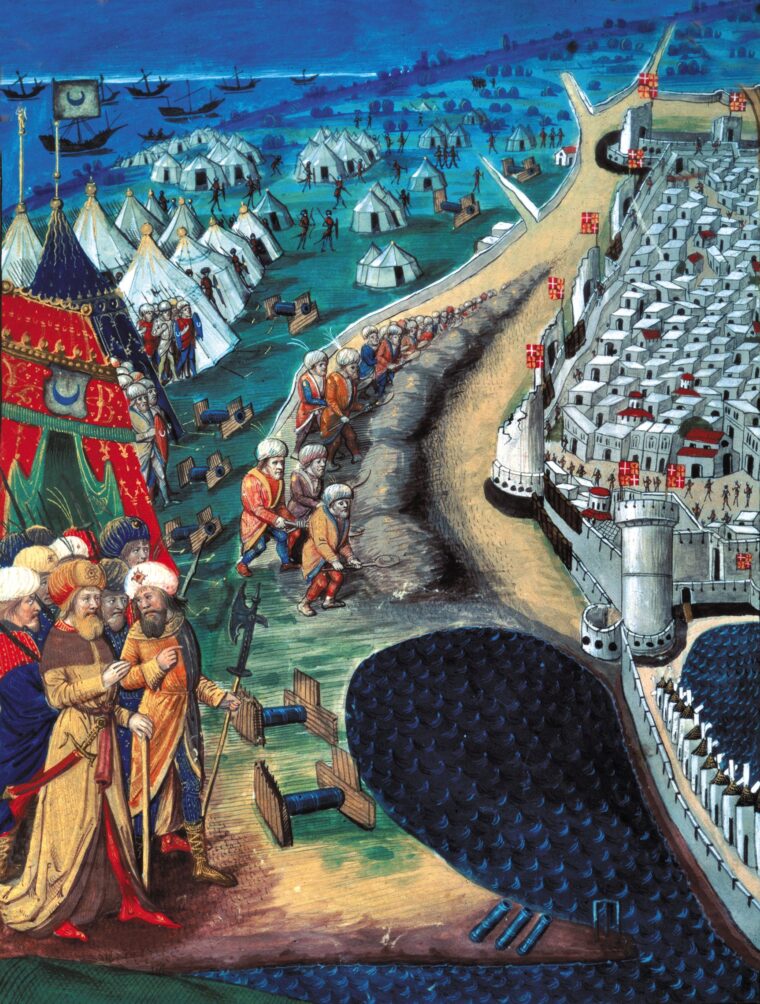
To undermine morale, Misac also positioned cannon around the landward side of the city to pummel the walls and bombards to launch destruction within the city itself.
After a brutal barrage of almost two weeks, the western rampart of St. Nicholas collapsed. But the shattered tower and mole remained vital to the defense of the city. D’Aubusson ordered it be held at all costs. Hundreds of soldiers and townspeople toiled day and night under unremitting fire to excavate and fortify a trench along the summit of the mole and to shape the stone and rubble of the ruined tower into a new fortress. It rose again, stronger than before. Its new walls, though improvised, were twice as thick and braced by the continuous rampart of the fortified mole. An elite company of Knights supported by arquebusiers and archers was assigned to its defense.
 Misac was frustrated by the tenacity of the defenders, but the necessity of taking the position was underlined on June 1 by the successful run of a carrack from Sicily carrying supplies and reinforcements into the commercial harbor. Shortly after, he launched what he hoped would be the finishing stroke. Modified triremes with bow platforms, masts and rigging removed, mounted with light cannon, and filled with troops set out from Trianda. This was no surprise attack. Accompanied by shrilling pipes, crashing cymbals, booming drums, and ululating cries, it was meant to terrify and weaken the defenders. It did not.
A murderous fire from longbows, crossbows, arquebuses, and incendiary grenades filled with Greek fire greeted them as they drew close. One of the ships caught fire and exploded, filling the air with splintered wood. The attackers who leapt into the shallows fell upon stakes set under the water. Those that followed scrabbled over their bodies to reach the palisades, where they fell beneath the terrible swords of the Knights. Those who regained the ships were pursued by bolt and ball to extreme range. Those who remained colored the sea with their blood. It was a direct frontal attack on a fortified position. Half of the attacking force had been destroyed. Two more attacks in the coming days proved equally futile.
Even before the last of these assaults, Misac had shifted his strategy, focusing on the southern perimeter of the city. He hoped these older fortifications would be more susceptible to sustained cannonade than the squat, round fortress of St. Nicholas. The bombardment of the city had wrought great destruction and several towers had fallen. Many interior buildings were severely damaged or destroyed, including the Palace of the Grand Master, and the southern walls were weakening.
Misac concentrated his heavy guns on the southeastern point of the city where the broad defensive ditch became shallow and ended before it met the sea. This section of the wall was defended by the Tower of Italy. Onto it and the curtain wall, the Turkish guns poured a continual blast of fire.
To divide the defenders’ attention, a tall, wooden tower was erected opposite the mole from which archers and arquebusiers fired at any movement. After a heavy five-day barrage, another assault was made on St. Nicholas and the mole on June 18. A large pontoon crowded with troops was towed up to the tower under the cover of darkness. Other craft carried troops to land on the mole. But the defenders were ready. Night turned to day as flares, Greek fire, and gun flashes illuminated a hellish scene. Turks climbing the tower and swarming the palisade on the mole were brought under withering fire. The guns of France ravaged the escorting galleys at point blank range. Gunners and archers on the Tower raked the pontoon. Burning men cast themselves in the water. The dawning day revealed the Tower of St. Nicholas still standing.
After five more weeks of constant barrage and despite every effort to shore them up with stones and soil and repair the breaches, the southern walls were crumbling and ready to break. In some places, they had already fallen. A semi-circular retrenchment was built to seal the breach behind the post of Italy. A thousand cannonballs a day struck the city, and a perpetual thunder rolled over the splintered masonry and broken stones. The trenches of the enemy were creeping ever closer. Exhausted, choked with smoke, smeared with soot and blood, the defenders stood ready to meet the impending great assault.
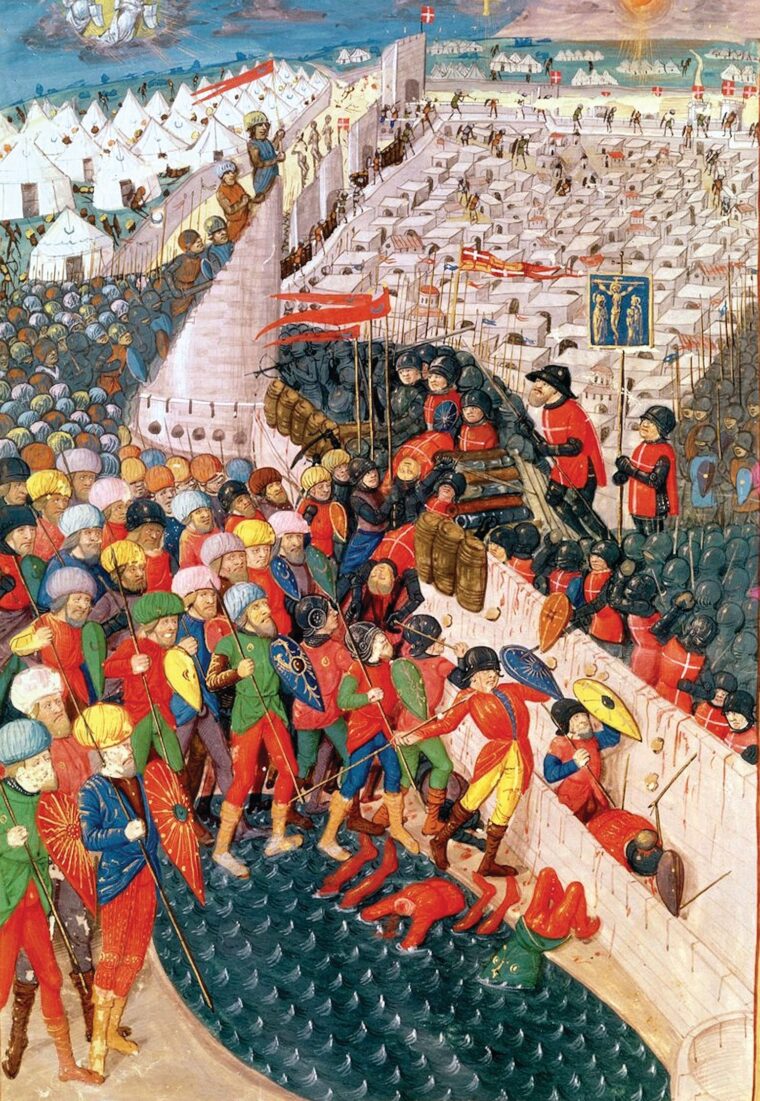
On July 27, fierce preparatory fire sent the defenders under cover. When it ceased, a frenzied wave of attackers rushed toward the ruined walls surrounding the Tower of Italy. First came the Bashi-Bazouks, irregulars recruited from the hinterlands of the Ottoman Empire. To ensure that their enthusiasm did not wane in the teeth of resistance, they were followed by Turks carrying whips and maces. The Bashi-Bazouks were expendable. If nothing else, their bodies would fill in the ditch to create a road for the Janissaries. The Muslim equivalent of the Knights of St. John, these elite troops were disciplined, fearless in the face of the enemy, and aflame with the zeal of their faith.
As the Bashi-Bazouks rushed forward to scale the Tower of Italy made accessible by the slope of rubble, the Janissaries followed in double-time behind them, heedless of the hail of arrows, stones, and bullets lashing into them from the Post of Provence on their flank. During the bitter struggle, the breach became choked with the dead. Then the crescent of Islam rose above the Tower of Italy, as the defenders were driven back. The enemy was on the ramparts; the city lay before them. All seemed lost.
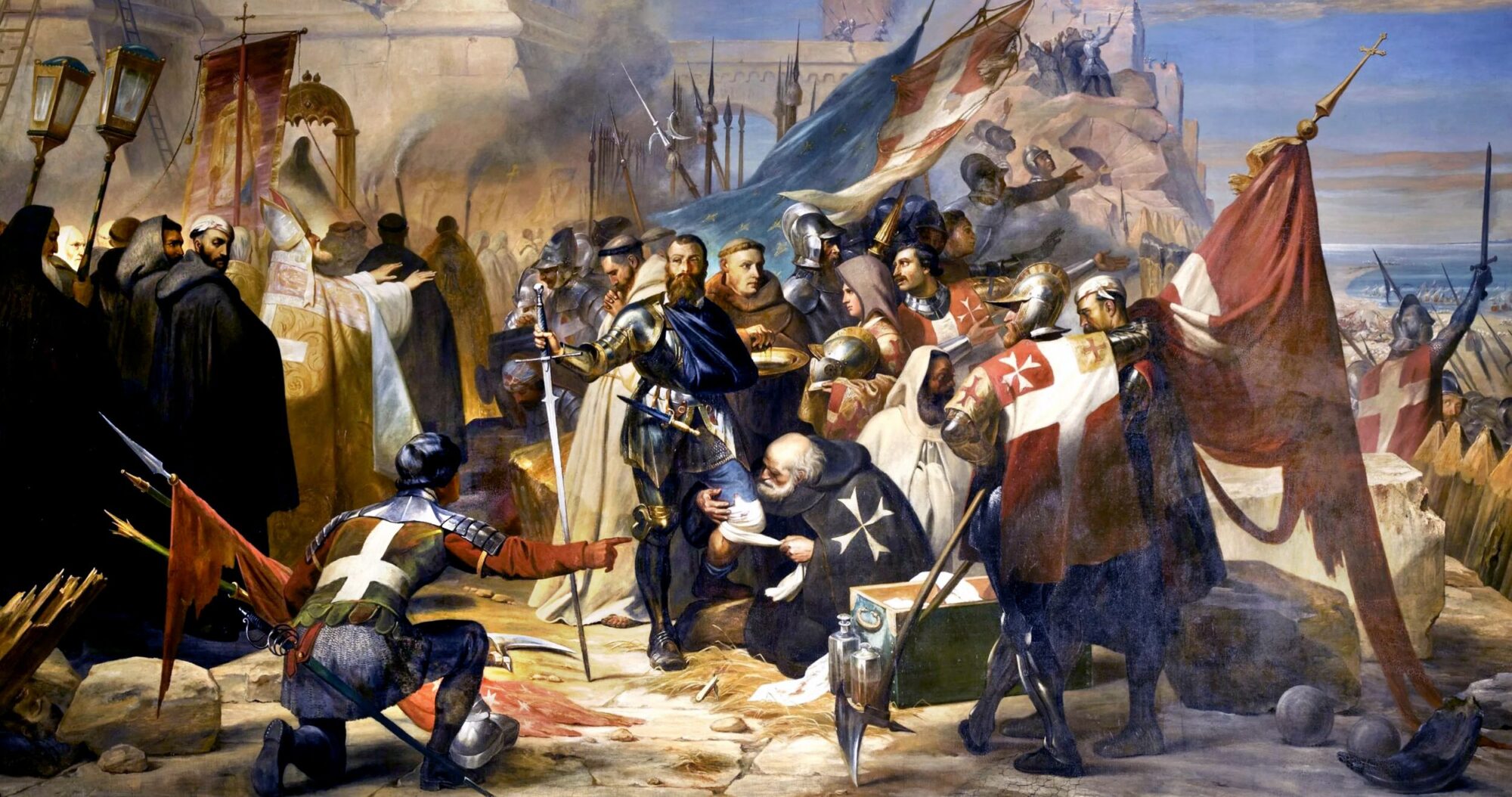
Refusing to surrender, the Knights would not accept defeat. The Grand Master himself led a counter charge. Despite a wound in the thigh, he mounted a ladder to the wall at the base of the Tower followed by a dozen knights and standard-bearers. At close quarters the knights, clad in plate-armor red with blood, wielding their great two-handed swords, were fearsome to behold. Above them the banners of St. John the Baptist, the Cross of the Order, and the Holy Virgin rippled in the breeze as they fought with all the fury of men who see death and choose to meet it with defiance.
As the knights moved forward, slashing their enemies in scything arcs of steel, fear seized the foremost ranks of the Turks, who fell back against the troops pushing up behind them, fouling their advance. Panic spread and soon all the Turks were falling back in confusion before an advancing wave of knights and men-at-arms. Once begun, their retreat could not be stopped as they abandoned the walls and retreated from the city. The defenders threw themselves upon the fleeing foe with all the pent-up rage of the besieged, cutting them down from behind. Many pursued the enemy to their base camp west of the city, returning with Turkish heads on their pikes and a great prize—the Banner of the Grande Turke.
The expedition had been a disaster for Misac Pasha, who had lost perhaps a quarter of his entire army in addition to 15,000 wounded. In the last assault alone 3,500 Turks were slain, including the 300 Janissaries. The fleet lingered at Marmarice another 11 days as Misac was apparently not eager to return home. He would not be the first to lose his head for disappointing the Sultan.
The casualties of the defenders were small in comparison, but severe enough. The Grand Master had been grievously wounded upon the wall when a gigantic Janissary pierced his breastplate with a spear, puncturing a lung. But the Hospitallers had the finest physicians in Europe, and he recovered to continue his leadership of the Order.
The Turks had scoured the countryside of Rhodes with fire and death, destroying every building and farm, slaughtering all living things in their path. The city was a massive pile of rubble, its walls collapsed. Great labor would be required to make it defensible again. The dead were burned on great pyres to prevent plague from adding its ravages to those of battle.
Mehmet intended to return to Rhodes in the following year to finish the destruction of the Knights himself. Had he done so, Rhodes could not again have resisted his might. In the spring of 1481, he died in Asia Minor as he led his army south. The Knights of St. John had been granted a reprieve, but they knew well that it was only temporary—and they began to build again.
For 40 years following that awful siege, the Knights enjoyed unprecedented prosperity and fame. They were the last Christian bulwark in the East to resist the swelling power of the Ottoman Empire. Money and munitions poured into Rhodes to rebuild its fortifications. But the European powers became distracted by their own quarrels. A near unbroken record of success against their foes in the coming decades increased the reputation of the Knights. They had become cloaked in an aura of invincibility and seemed fully capable of looking after themselves. As the Grand Master of the Order petitioned the European courts for aid, he found admiration bred a growing disregard for the precarious position of the Knights—and they were about to face their greatest challenge yet.
The Order had seen dramatic alterations in warfare since its birth, and it had adapted with them. The Knights had already done much to alter Rhodian defenses in accordance with the gunpowder age. But technological advances continued, and the speed of change was increasing. Between 1480 and 1522, improvements in cannon design made artillery lighter, more mobile, faster to reload, and more powerful. The process of corning gunpowder—wetting and pressing it into cakes that could be broken up into hard kernels or “corns” proved much more powerful than the dry mixture. This facilitated the use of solid iron shot, allowed greater range, and delivered more destructive power. Fortifications had to keep pace with these changes or quickly be reduced to rubble.
The Grand Master who had led the Order in 1480, Pierre d’Aubusson, labored tirelessly to raise Rhodes from the ashes. Walls and towers rose up again, mightier than before. Subsequent Grand Masters carried on his work. Vast rebuilding projects transformed the defenses of the city. By 1522, it was as strong as any fortified place on earth.
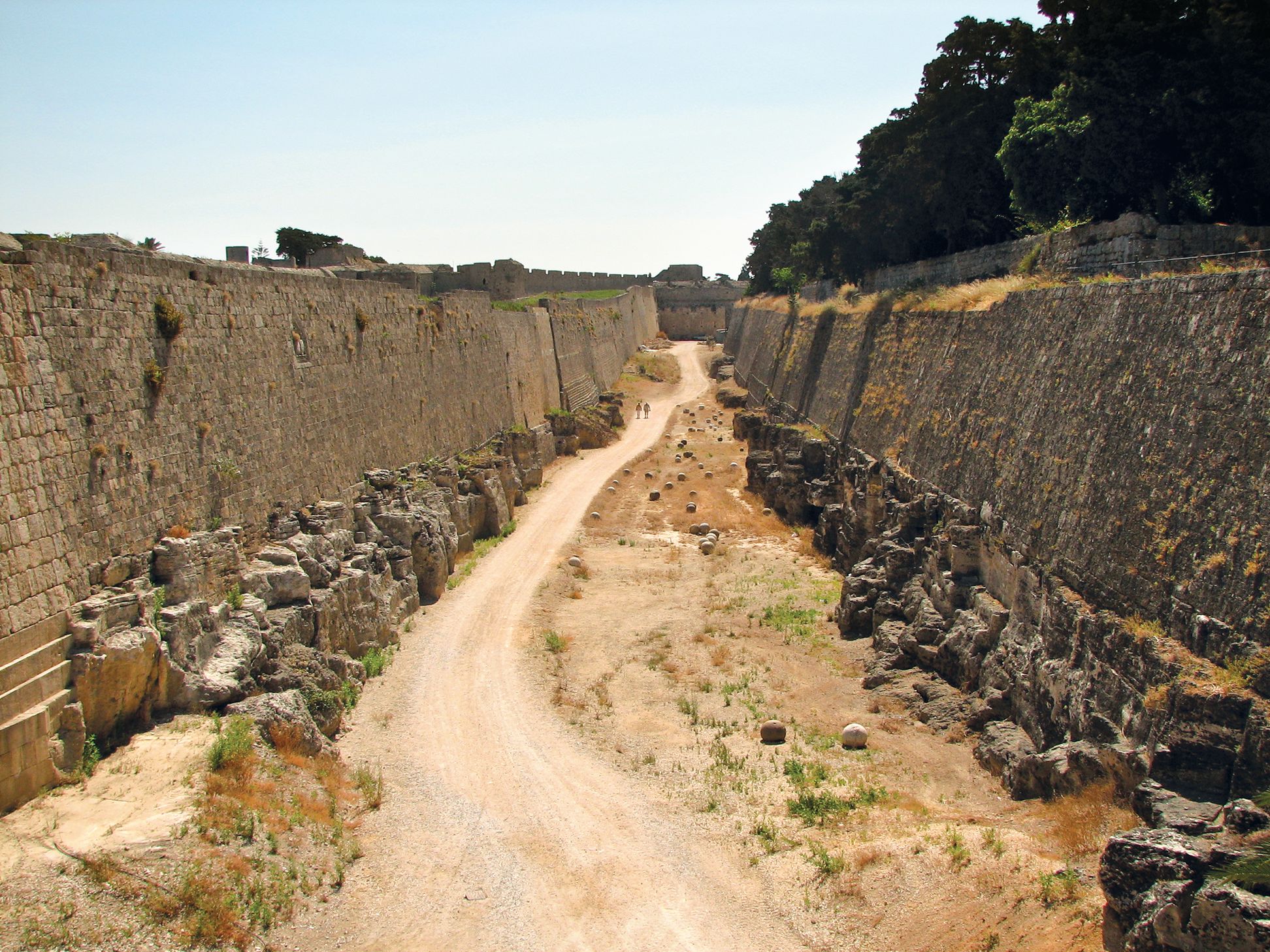
The ditch surrounding the landward side of the city was widened significantly and given steep, faced escarpments around the entire perimeter. The ditch and base of the wall were protected by advanced defensive-works (tenailles) made of earth and stone. The walls themselves were thickened and given wide firing platforms protected by slanted parapets to deflect shot. Angled bastions and externally splayed gunports incorporated into the walls ensured there were no dead zones defensive fire could not reach. The Tower of St. Nicholas guarding the harbors was heavily reinforced. The other existing towers and surrounding walls were strengthened. New batteries were created, and new round artillery towers raised. It was a fortress for a new age of warfare. Deep, strong, bristling with guns, and defended by determined men, it was a fortress that armies would break upon like crashing waves.
Suleiman the Magnificent became Sultan in 1520 upon the death of his father, Sultan Selim I. Selim had increased the Empire by two-and-a-half times. Suleiman was determined to advance even further, and Rhodes was a delectable morsel between Ottoman jaws.
The Knights had not long to wait. In the summer of 1522, Suleiman commanded Grand Master Philippe Villiers de L’Isle Adam to surrender the island. Appended to the command was an offer of retaining Rhodes, provided the Order recognized his sovereignty. L’Isle Adam did not even deign to respond.
Determined that the loss of 1480 would not be repeated, Suleiman assembled a massive army that he would lead in person. On June 16, the army marched south toward Marmarice, the point of embarkation, on the coast of Asia Minor. Two days later, the fleet departed from Gallipoli carrying heavy guns, supplies, and more troops under the command of his Second Vizier, Mustapha Pasha. Troop estimates are difficult to assess, especially when made by foes, but first-hand accounts from Rhodes claim the Ottoman fleet numbered 250 ships and as many as 200,000 troops. Whatever the number, it must have looked to those on the walls like the whole of the Empire had come against them.
Numerically, the contest was vastly unequal. For the defense of Rhodes, the Order could count 500 Knights and servants-at-arms, 1,000 mercenaries, and 500 Rhodian militia. But they were sheltered behind massive walls of stone, well-provisioned for a year, possessed ample stores of powder and shot, and were driven by a determination that had preserved them for centuries.
Coming ashore in Kalitheas Bay south of the city, it took the Turks two weeks to land their men and ferry equipment from the mainland. Experts in siege warfare, they had brought everything necessary to reduce any fortress, no matter how strong. In addition to troops, arms, guns, and ammunition, 60,000 sappers landed on Rhodes. In this new age of siege warfare, picks and shovels were as important as cannon. If defensive walls could not be knocked down from without, perhaps they could be collapsed from below.
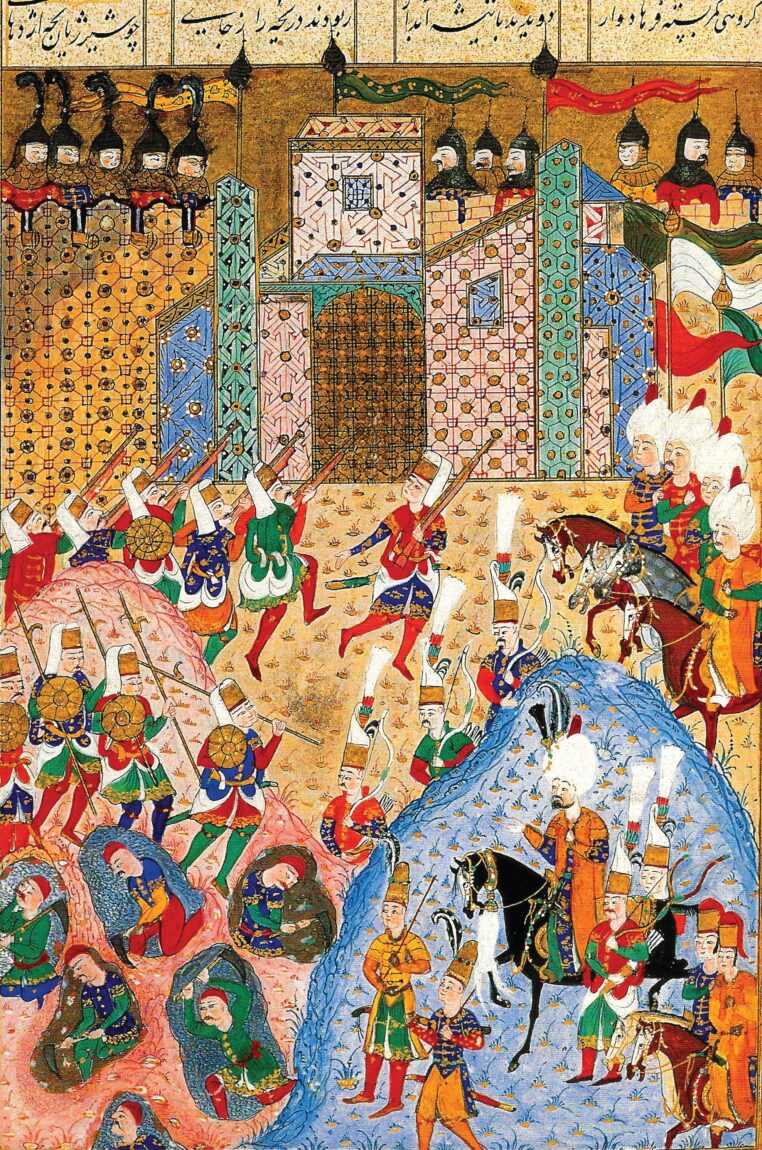
Suleiman himself arrived on the island on June 28, accompanied by a battalion of Janissaries, the elite troops of the Ottoman Empire. In addition to the guns of the enemy, every man would now be equally as conscious of the eyes of the Sultan upon him. Dismissal, disgrace, even death were the probable consequences of his displeasure. The waving banners, shouts of the army, martial music, and gun reports informed the Knights that the ordeal was about to begin.
The Ottoman army formed a crescent stretching for 1.5 miles from the galley port in the north around to the southeast where the city touched the sea in the shadow of the Tower of Italy. The ground in front of the city had to be secured before the fortifications themselves could be seriously assaulted. The sappers began digging trenches parallel to the walls and erecting wooden palisades in front of them in preparation for the siting of the guns. Suleiman was careless of their lives, and they suffered terribly from both shelling and sorties from the city. When at last the guns were positioned behind protective screens, arquebusiers swept the ramparts with suppressive fire while heavy cannon hammered at the walls night and day for a month. Beneath this protective barrage, the trenches began to creep forward like fingers of the Sultan’s grasping hand.
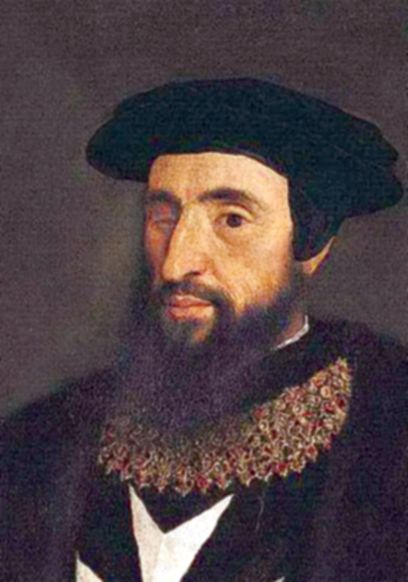
The Grand Master, knowing well the threat of the trenches and tunnels of sappers, had enlisted the aid of Gabrielle Tadino di Martinengo, one of the great military engineers of his day. It is well that he did so. Tadino had positioned the guns that wrought such havoc among the sappers on the open ground below. But it was in dealing with what was beneath the ground that he made his greatest contribution. He assembled listening devices made of parchment stretched on drums attached to little bells that detected movement underground. Tadino also directed countermining operations, digging tunnels of his own and detonating charges to scorch and choke the sappers with flame and smoke. Much of the outer defense would eventually be undermined by enemy tunnels, but Tadino rendered most of them harmless. Every breach repaired and secondary defense created was done with his guidance. He bored spiraled vents in the walls to disperse the force of enemy charges, raked the trenches with effective fire, and even led a sortie beyond the walls. Well did he earn the honor the Grand Master bestowed on him, making Tadino a Knight in the Langue of Italy and investing him with the Grand Cross.
The Ottomans deployed sixty to eighty major artillery pieces, some firing balls seven to nine feet in circumference, in addition to a host of smaller guns. Bombards and basilisks pounded the walls with stone and cast-iron shot, while mortars lobbed projectiles at high trajectory into the city.
Within the ongoing general barrage were targeted attacks to probe for weakness. The Tower of St. Nicholas came under heavy assault in early August but had been so reinforced it was now virtually impregnable. A 10-day bombardment of the post of Germany proved equally ineffective. The batteries were shifted south to reinforce the assault on the posts of Aragon, England, and Provence. The Turks had raised a great earthwork opposite the Tower of Aragon, and by the middle of August the battery situated here had blasted a breach in the curtain wall. Breaches in the walls of England and Provence soon appeared. By the end of August, there were many breaches, the collapsed walls filling in the defensive ditch with fallen masonry, inviting a general attack.
Breaches were repaired as firmly as possible at night to seal the ravages of the day’s bombardment—only to be blasted open again the next day. At Tadino’s direction, traverses were constructed from which cannon and small arms could cover the approach trenches and severely punish an assault force attempting the breaches.
Tadino’s countermines had been very successful but, among so many attempts, complete success was hardly to be expected. On September 4, two Turkish mines were detonated beneath the walls—the first between the Towers of Spain and Auvergne and the second under the bastion of England. The first did little damage, but the second shook the town with its force and opened a gap more than 30 feet wide in the face of the bastion. With a great shout, the Turks scrambled over the rubble of the shattered ramparts, gaining a foothold on the bastion itself. Here they raised their banners, heralds of defeat for so many cities consumed by Ottoman expansion.
The defenders of the English bastion rushed forward to meet them hand-to-hand with swords and pikes in a fierce combat that lasted over two hours. The Grand Master himself came to the spot to aid them in this most dangerous moment of the siege so far. A deadly hail from musket, arquebus, and bow fell on the press of the advancing troops while the struggle raged back and forth across the bloody stones. At last, the attackers withdrew, retreating to their trenches beyond the palisades, leaving the rubble littered with the dead and dying. Even the threats of their commanders could not rally them to continue the assault. The defenders must have been too exhausted even to raise a shout of victory—and they had their own losses to mourn, including several notable knights.
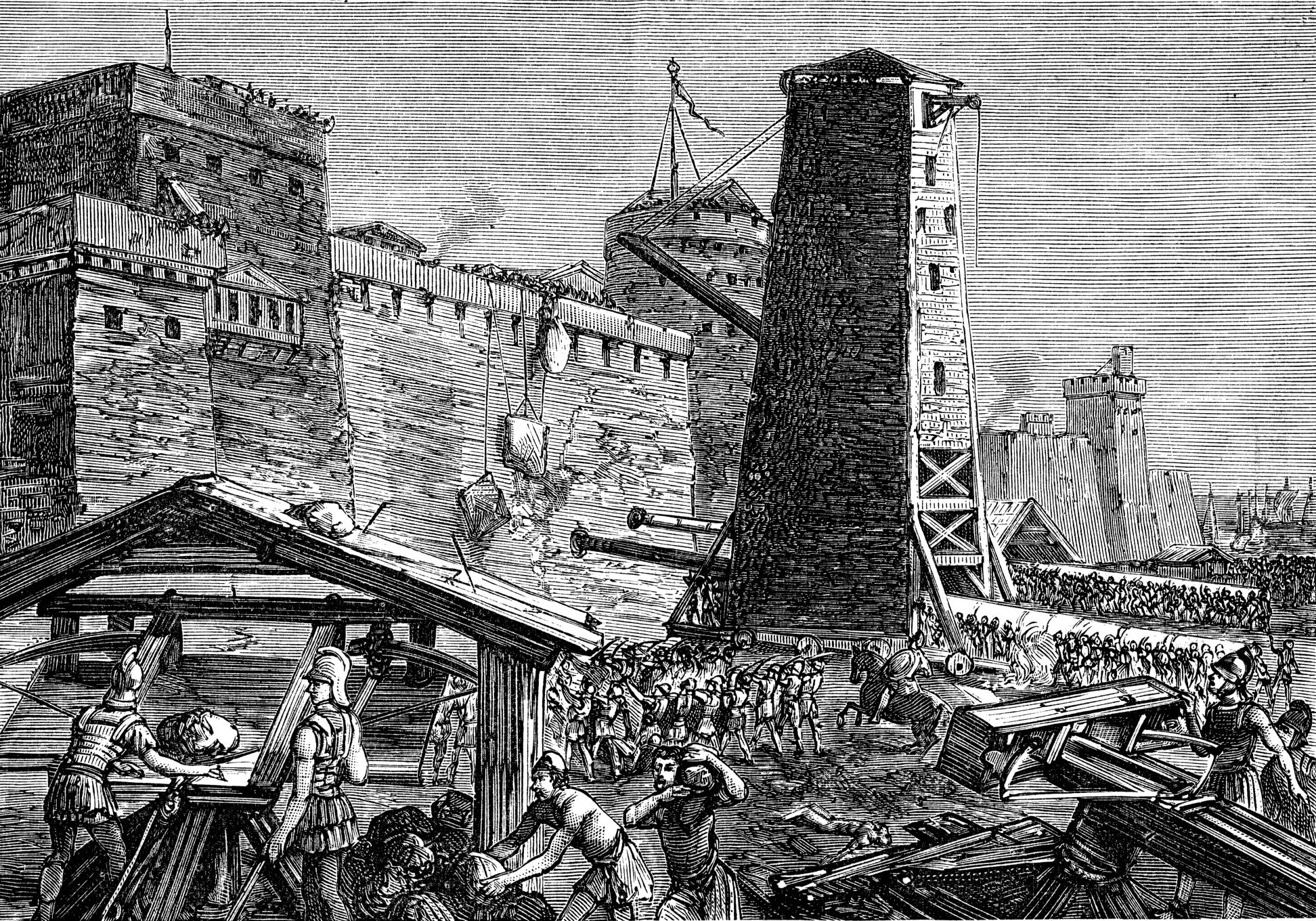
A nightmare wreathed in flame and smoke, the siege went on and on as inexorably, the pressure increased, as if the city were gripped in an enormous vice. In the next few weeks at least seven more such attacks were launched. Thousands of attackers fell, struck down by ball and bolt, pierced with blades, smashed by stones thrown from the wall, burned by Greek fire, or crushed by collapsing tunnels. The defenders suffered grievous losses as well—even more bitter among their smaller numbers. But still the iron-clad knights stood amongst the smoldering ruins, and their banners floated above the battlements like lingering spirits of a former age.
On September 23, the Turkish forces concentrated before the posts of Aragon, England, Provence, and Italy. The next day, after a general bombardment, a massive assault was launched against these positions simultaneously. All along the entire southern side of the city, the Turks rolled forward like a wave, heedless of the deadly volleys that greeted them as they swept through the breaches to crash against the retrenchments behind. The greatest success came at the bastion of Aragon, where the Janissaries quickly placed 30 or 40 of their dreaded banners upon the wall. The city was stirred like an angry hive, and all within leapt to its defense. The Rhodian civilians, men and women, fought, carried powder and shot, hauled cannon, and tended the wounded. The gunners fired, reloaded, and fired again until it seemed the earth itself was burning. The Knights and men-at-arms threw themselves at their foes. L’Isle Adam rushed to wherever the danger was greatest, the banner of the Crucifixion floating above him.
Combat raged for six hours, but finally the assault faltered and withdrew. The Sultan was furious. He condemned to death Mustafa Pasha, who had promised him an easy victory but, relenting, merely dismissed him from command.
The attacks went on—mining, countermining, assaults, cannonades, the repairs of the night destroyed again in the day—draining both sides until, hanging on each other like exhausted boxers who can hardly raise their arms to punch, neither could strike a decisive blow. The Turks came to hold the outer ramparts in many places but were contained by retrenchments and their promise of murderous cross-fire.
On October 11, Tadino, who was studying the defenses through an embrasure, was shot in the face by a Turkish marksman. The ball smashed an eye and exited by the ear. The engineer proved too tough to be felled by the wound, but he was confined to hospital for six weeks. The timing could hardly have been worse. The enemy was redoubling their mining efforts, and the defense was running low on gunpowder.
While several small relief vessels gained the port, it was clear that no major support expedition was going to be launched from Europe. Even if it were intended, the year was waning, and bad weather would soon render it impossible. But if the weather worked against the Knights in one way, it was their best hope in another. It began to rain heavily near the end of October. The trenches flooded and the earth was churned to mud. Damp fogs cloaked the scenes of wreckage. As the temperature plummeted, sickness began to spread. In their exposed camp, the Turks suffered greatly. As bone-weary and short on supplies as they were, the defenders had hope that the besiegers would relent and sail away before the winter waves endangered their fleet.
It is probable that the Turks would have departed but for the presence of the Sultan, for whom failure was not an option. Nor is it likely that his commanders would express much enthusiasm for withdrawal with his eyes directly upon them. The sodden, wintry siege dragged on until the Turks made their last major assault on November 30. They made no forward progress, but neither were the defenders strong enough to push them back.
On December 1, diplomatic efforts to end the siege began. Letters offering the Knights safe passage if they would surrender the city were delivered and hotly debated. L’Isle Adam was adamant there would be no surrender. The Knights would die upon the walls. But the Rhodians thought that it was better to submit than to be utterly destroyed. Hostilities continued while the debate raged. The townsfolk were still pleading, but L’Isle Adam knew that his refusal might cause them to make a separate peace with Suleiman. When Tadino advised that the city was no longer defensible, the Grand Master relented.
A treaty was signed on December 20 and the remaining 180 knights sailed away with the records of the Order and their holy relics on New Year’s Day, 1523, ending their 200-year reign on the rock of Rhodes.
Justin D. Lyons is Professor of History and Government at Cedarville University in Ohio.

Join The Conversation
Comments
View All Comments