By Kevin Seabrooke
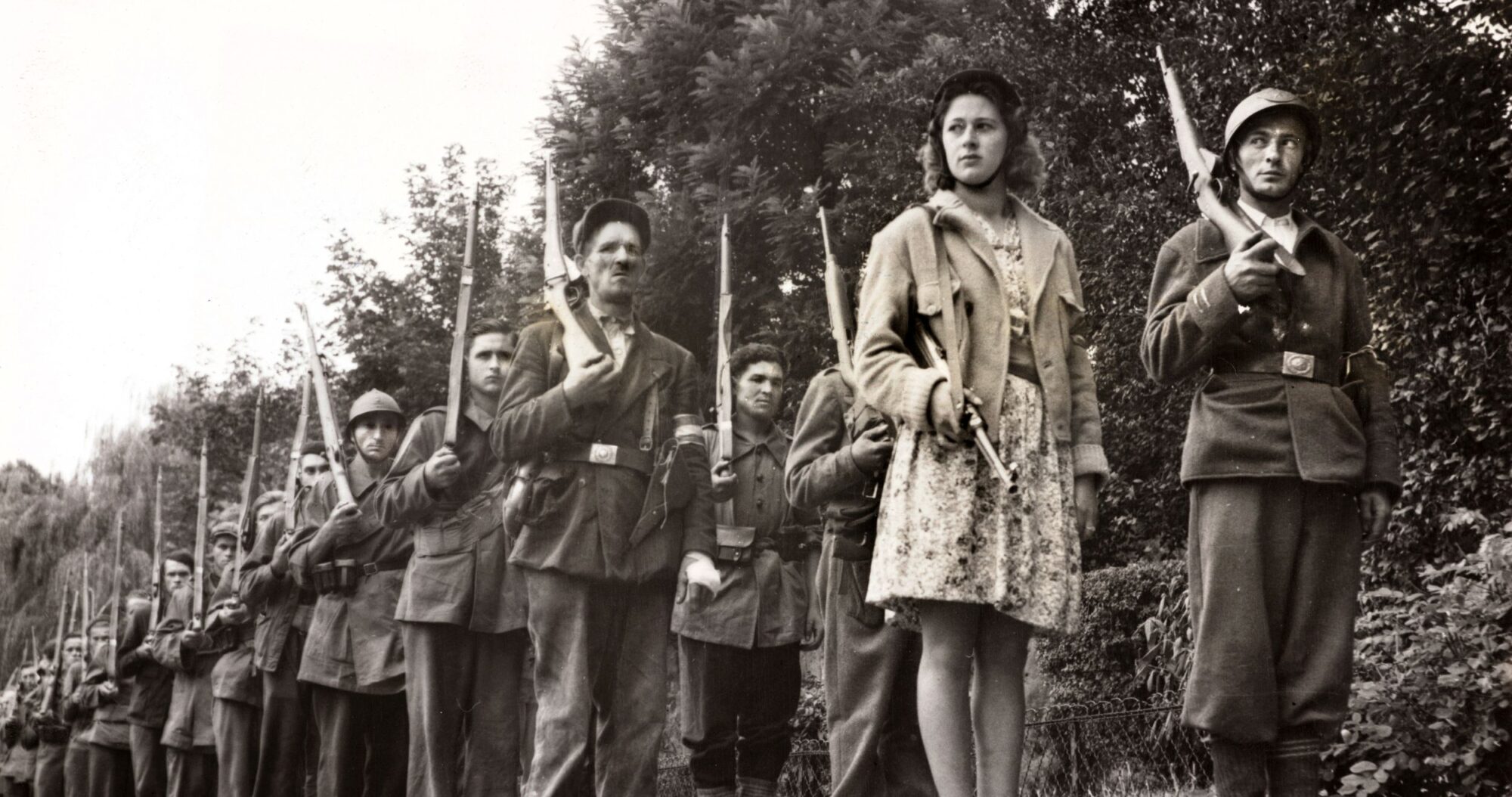
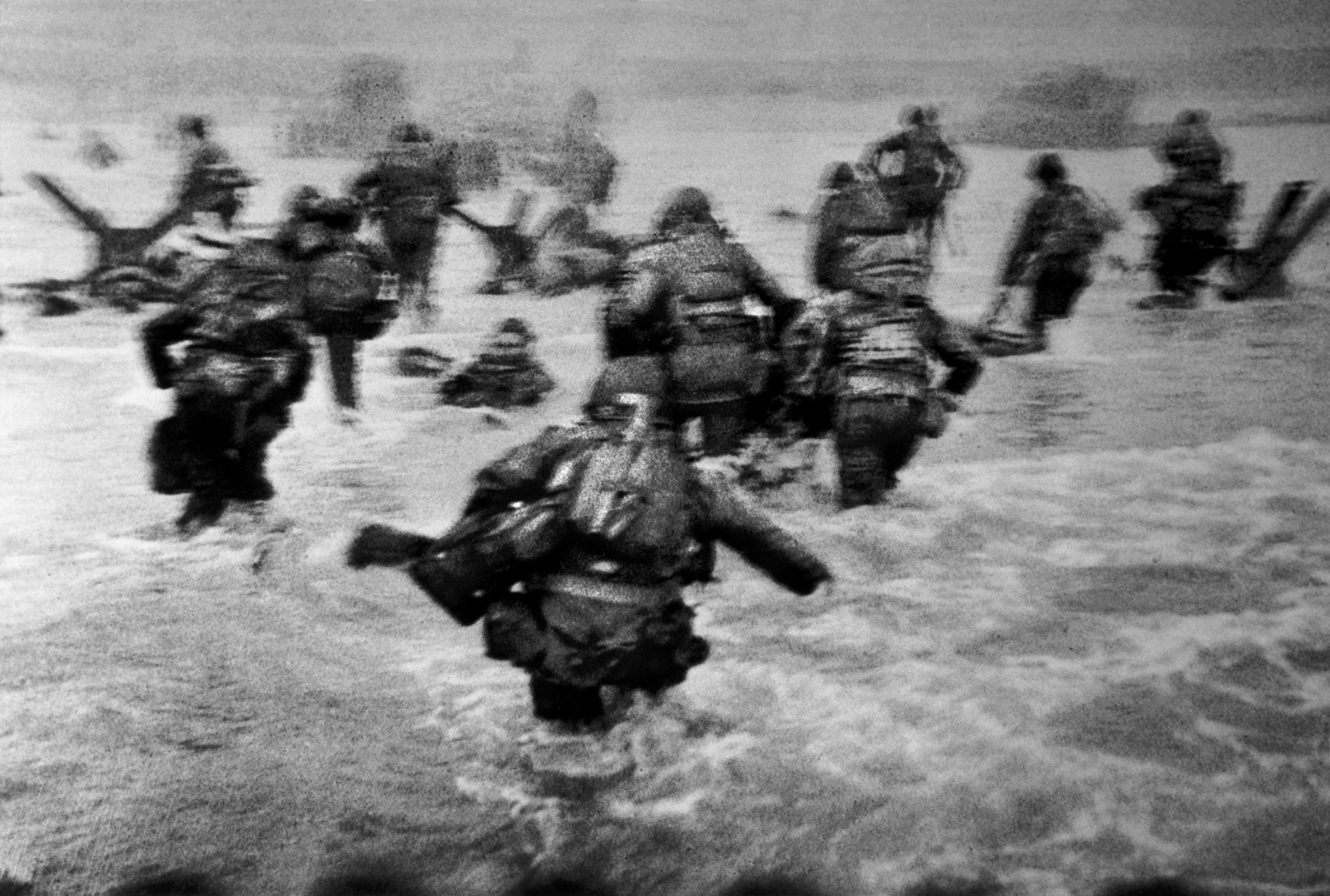
On the eve of Operation Overlord, members of the French Resistance cut dozens of major long-distance and underground cables the Germans had installed during their occupation of France—forcing them to use radios vulnerable to interception by Allied intelligence—just as they faced the largest amphibious assault in history.
Vital sabotage activities like this—Plan Violet, cutting communications; Plan Vert, blowing up railway lines and locomotives; Plan Tortue, ambushing German road convoys and blocking transit routes—were supplied and coordinated by the British Special Operations Executive (SOE), who had agents embedded with numerous Resistance groups.
One of the largest of these was a rural Maquis group of Resistance fighters under the command of “Colonel Gaspard” (Emile Coulaudon), who was rumored to have as many as 7,000 men in his stronghold on Mont Mouchet in the Auvergne region of south-central France. And Gaspard, much to his initial distaste, was very much dependent on his SOE Chef du parachutage, literally the “head of parachuting” and the only person authorized to contact London for the delivery of weapons, supplies and money. To make matters worse, not only was she not French, she was a woman.
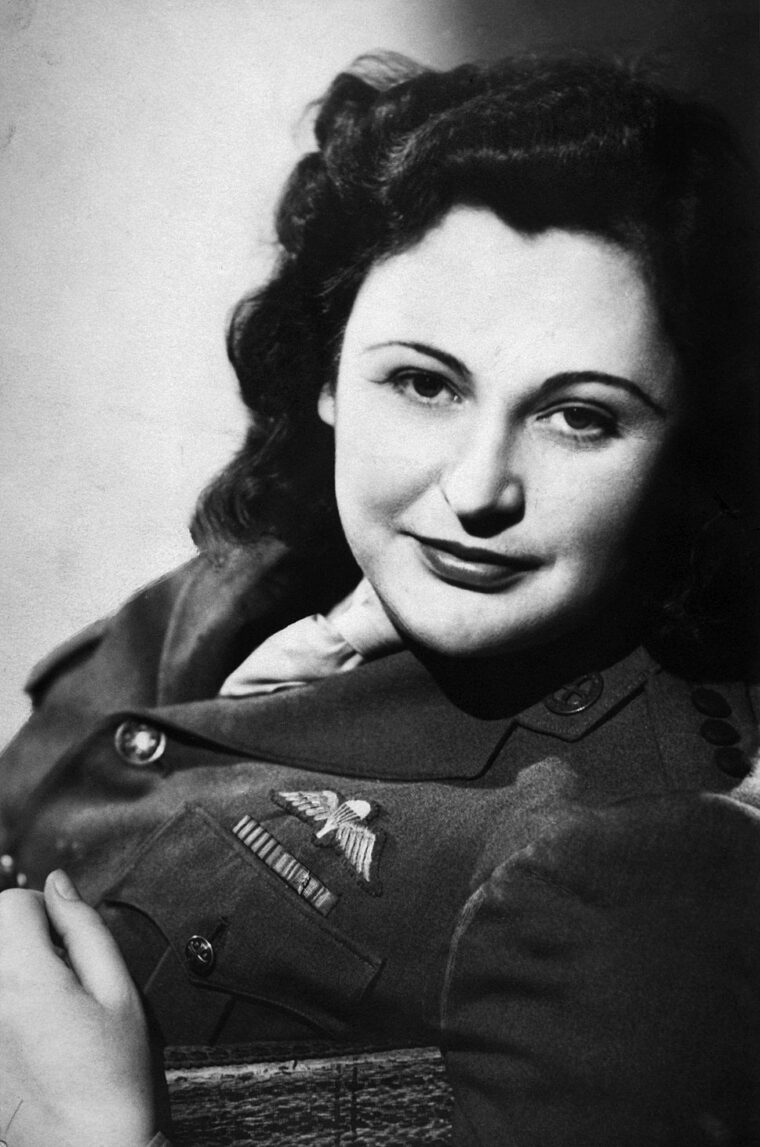
Nancy Fiocca, née Wake—known as Hélène to her Special Operations Executive (SOE) handlers in London and “Madame Andrée” to the Maquis—parachuted back into France on the night of April 29-30, 1944. Spontaneous and fun-loving, Wake could also be as tough as steel. She had to be in order to win over the Maquis leaders, many of whom had grand ambitions of their own. She made it clear that she, and she alone, had the authority to contact London and London’s orders would be followed.
“He may not have liked to admit it but he had met his match with me,” Wake later wrote in her autobiography, The White Mouse. “And I intended to keep it that way.”
She’d had other names on her false papers in the early years of the war as she became more and more involved with the escape network of Captain Ian Garrow, which became the “Pat O’Leary Line”—operated by Belgian army doctor Albert Guérisse assisting in the escape of British prisoners and downed Allied pilots by getting them over the Pyrenees into neutral Spain.
To the Gestapo she was known as die weiße Maus, “The White Mouse,” due to the frequency she escaped or avoided their traps. Eventually the frustrated Geheime Staatspolizei would offer a bounty of 5 million francs for the most sought-after Allied agent in occupied France. This massive manhunt would force her to use the network she’d been working with to escape to Spain, then on to Britain in 1943.
Nancy Grace Augusta Wake, the great granddaughter of an Indigenous Maori woman who had married a European, was born in Wellington, New Zealand, on August 30, 1912. When she was two years old, the Wakes moved to Sydney, Australia, but her father soon left the family and returned to New Zealand, leaving Ella Wake to raise six children alone.
Nancy, the youngest, attended the North Sydney Household Arts School until she dropped out and ran away in 1928. The 16-year-old found work as a nurse until 1931, when she inherited £200 from an aunt in New Zealand. The money allowed her to fulfill her dream of traveling, first to New York, then to London where she took a journalism course at Queen’s College. After completing the course, in which she learned how to type and take shorthand, she applied for a job as a European correspondent for Hearst newspapers. Her money was running out and she didn’t want to go back to Sydney.
Charming, intelligent and inventive, Wake talked her way into the job, boasting of skills and experiences she didn’t have—she had not been to Cairo four times and did not speak or write Arabic, though she faked a trial by writing shorthand from right to left. At 22, she became a journalist in Paris.
There was something magical about living in Paris in those days,” Nancy wrote in White Mouse. “Parisians would tell me how wonderful the city had been before and after the Great War—‘la Belle Epoque,’ as they called it—but to me it was the most glorious place in the world and I adored working and living there.”
When Alexandre Stavisky’s fraudulent bond scheme collapsed in late 1933, exposing widespread corruption among Radical Socialist politicians, the resulting scandal consumed French public life just as Adolf Hitler began accelerating Nazi rearmament. Instead of monitoring intelligence from Berlin or defending the Versailles Treaty, French leaders were entirely absorbed by political cover-ups, trials, and partisan infighting.
This paralysis peaked during the violent February 6, 1934 riots, which killed 15 people and toppled Édouard Daladier’s government. Preoccupied with regime survival and cabinet instability, Paris turned inward—granting Nazi Germany a vital, unhindered window to advance its illegal rearmament without facing French diplomatic or military resistance.
Rather than uniting against the threat from Nazi Germany, the Stavisky Affair had divided French citizens and when the war came, the general public was extremely cautious about becoming involved with any anti-Nazi efforts. Wake noted that, “a chance remark to an acquaintance who might be a collaborator would land you in a lot of trouble.”
With Hitler as Reich Chancellor, 1934 saw more than 60,000—mostly academics and intellectuals, many of them Jewish—flee Germany, but no one wanted to hear their stories of the “New Germany.” Leaders and politicians, Wake observed, “all behaved like ostriches whenever the subject of Hitler was broached.”
Many of those fleeing ended up in Paris, seeking visas to England, America or Canada. More than a few of these ended up at cafe tables with Wake and her friends. A former Socialist member of parliament told them first-hand stories of life under the Nazis, before they put him on a boat to South America.
Some time in 1935, Wake went with a group to Vienna to witness for themselves what was going on and she was “horrified and revolted by the public scenes.” She formed her opinion on the Nazis on the spot and swore, “that if I ever had the chance I would do anything, however big or small, stupid or dangerous, to try and make things more difficult for their rotten party.”
After what she had seen in Vienna, Wake and some other journalists went to Berlin. Again, she was horrified by what she saw. The Brownshirts were everywhere, writing “Jew” in red paint on shop windows and doors while throwing their contents out in the streets to feed bonfires. She remembered a “great fat Stormtrooper strutting around cracking a whip on the side of his long leather boots and alternately screaming and whipping at the Jewish shopkeepers.”
After returning to Paris, Wake said she could not stop thinking of the chaos in Germany, but felt helpless, wondering “what could an inexperienced girl like myself do or hope to achieve” when nobody else seemed to be able to make the outside world understand. She and her friends soon learned, followed by the rest of the world, the chilling new word “Gestapo,” but it was far too late.
Wake met wealthy French industrialist Henri Edmond Fiocca in 1937. They were married on November 30, 1939, and living in Marseille when Germany invaded. In March 1940, Fiocca was called up to the French Army, serving on the Maginot Line until the army collapsed.
Wanting to do something for the war effort, Wake had asked her husband to buy her a truck, which she converted into an ambulance and drove to the north of France in May 1940 with a small voluntary convoy. Streams of refugees from Belgium making their way south were strafed by German planes, “old men, old women, children, or anything that moved.” The bodies of the children were the worst, she recalled. They carried as many as they could to Nimes, then headed back to Marseilles.
Signed on June 22, 1940, the Franco-German Armistice established the line of demarcation between the Occupied Zone from the so-called Free Zone, governed from Vichy. This would remain in force until November 11, 1942, when the Germans occupied all of France.
A doctor she knew provided Wake with an identity card stating she was born in Nice, making her a real Frenchwoman. After the Armistice, she met Commander Busch (code name Xavier), who gave her an envelope to take along with her to Cannes one weekend. It would be picked up at the hotel, she was told. She began to do this regularly, sometimes carrying papers, sometimes a radio transmitter in a suitcase. Through Xavier she learned there were people organizing resistance groups.
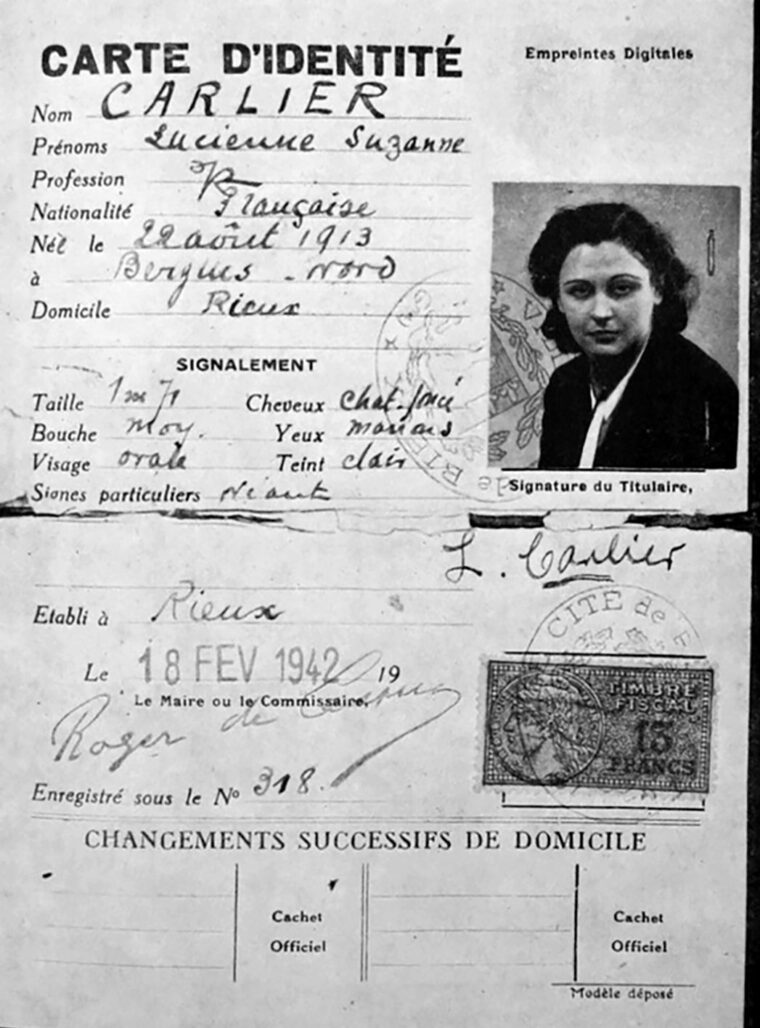
With no more need for ambulances, Wake wanted to do more to actively fight Nazi occupation. Soon, she and, by default, Fiocca, were involved in two subversive enterprises—supplying Allied prisoners with a radio, cigarettes and food while also smuggling false papers for a French Resistance group. Wake, who loved a drink and any social gathering, declared that despite her “high spirits and gaiety [she] would always be discreet and keep a secret.” This trait would serve her well over the coming years as she found that, when she needed things like false papers, food and clothing, they would be made available to her on the understanding that she’d never reveal their origin.
In December 1940, the Fioccas hosted a clandestine Christmas dinner attended by 15 Allied evaders and fugitives. One of them was a British pilot named Lewis Hodges, whom she would remain friends with for decades. Forty years after she helped him get to Spain, Air Chief Marshal Sir Lewis Hodges would introduce Wake to the Queen at a garden party at Buckingham Palace. And in 2004, he would attend the ceremony in London when Wake was made a Companion of the Order of Australia.
With her escape network in Marseille compromised by a collaborator, Wake tried several times to get out of France. On one attempt in early 1943, she was picked up with a trainload of people and was arrested in Toulouse, but was released four days later. The head of the O’Leary Line, Albert Guérisse, convinced the local Vichy police chief that Wake was his mistress and her evasive answers had been an effort to conceal her infidelity to her husband.
It wasn’t only the Gestapo and the bounty on her head, that Wake was running from. There was also the Milice (militia), an auxiliary force of the German Army armed and authorized to ferret out members of the Resistance and execute them. Made up mostly of French ex-soldiers sworn to fight democracy, the Jews and de Gaulle’s supporters, Wake described them as “arrogant, savagely cruel, treacherous and sadistic” and were hated far more than the Germans.
When Wake finally made it to Spain in May 1943, Fiocca was meant to follow soon after, but the Gestapo figured out his relationship to her and he was arrested and tortured to make him reveal her whereabouts or details of her escape line. He refused and was executed in October 1943, a fact Wake would not learn until after the liberation of France.
Restless in London, Wake wanted to continue to do something meaningful for the war effort and it was twice suggested that she work at the canteen, a typical women’s role, but she dismissed the idea the first time as “not really her cup of tea.”
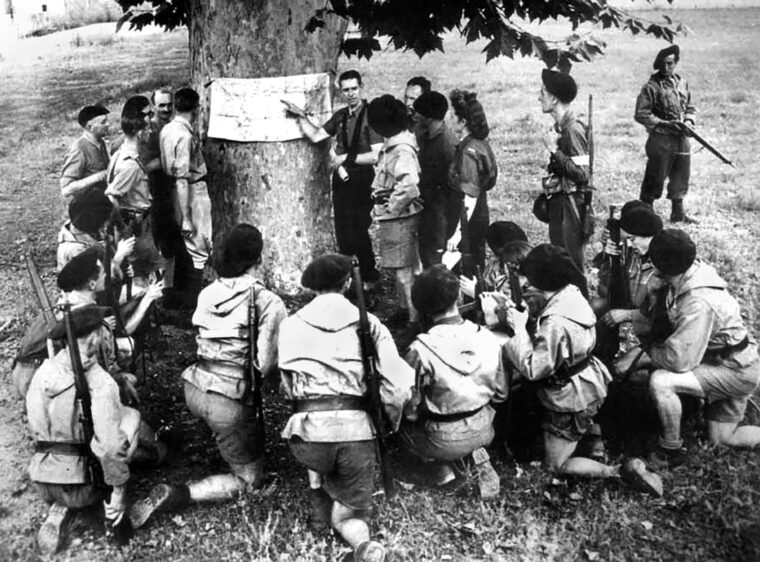
After she was unsuccessful in joining General de Gaulle’s Free French forces because they would not allow women in combat positions, it was again suggested she volunteer at a canteen. This time, she did take a four-hour shift at the Combined Operations Headquarters in Whitehall because her friend Richard Broad had put a word in for her. She had met Broad, then a lieutenant in the Seaforth Highlanders, in Marseilles when she helped him and his men to escape from the Occupied Zone.
She knew it was a mistake immediately. “I think I was the only commoner in my section,” she would later write. “It was definitely not the place for someone with my background, my down-to-earth views and forthright manner.” Wake held her tongue to avoid embarrassing Broad. She was glad to have a reason to leave—she was accepted into the SOE training program.
British military intelligence officers that target-recruited her due to her extensive first-hand experience in the French underground. She was formally vetted and commanded under Colonel Maurice Buckmaster, the head of the SOE’s French (F) Section, and spent three months training with men in demolition, small arms, parachuting, and a host of other skills necessary for covert work.
SOE training officers noted in Wake’s evaluation report that she was “a very good and fast shot… She put the men to shame by her cheerful spirit and strength of character.”
One of the factors that turned much of the French public against the Vichy government was La Relève (the relief) launched in June 1942. It promised that one of the more than a million French POWs would be released for every three civilians who volunteered to work in German factories. After no more than 80,000 stepped forward, La Reléve was replaced by the mandatory Service du travail obligatoire (STO) in February 1943, forcing hundreds of thousands of men and women to work in Germany.
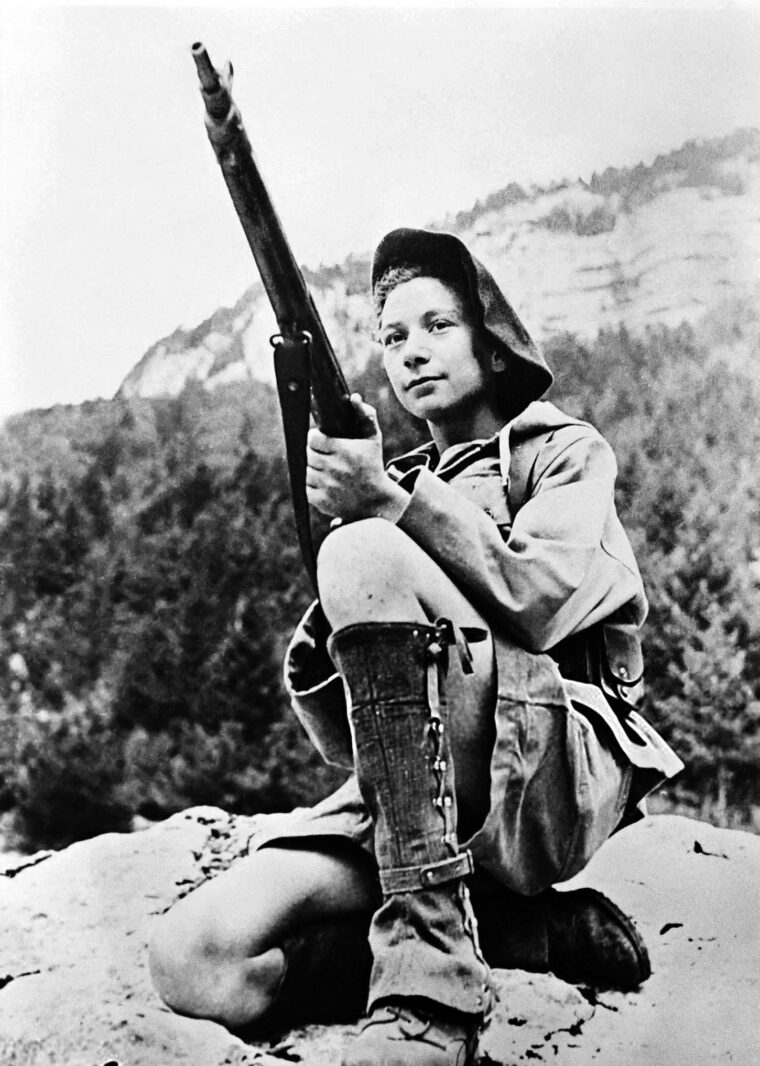
Thousands who took to the hills to avoid being conscripted found themselves participating in small acts of sabotage and, eventually, joining the Maquis—rural clandestine units of the French Resistance. These units eventually took on a more formal organization and came under the umbrella of the “secret army” called the F.F.I. (Forces Françaises de l’Intérieur).
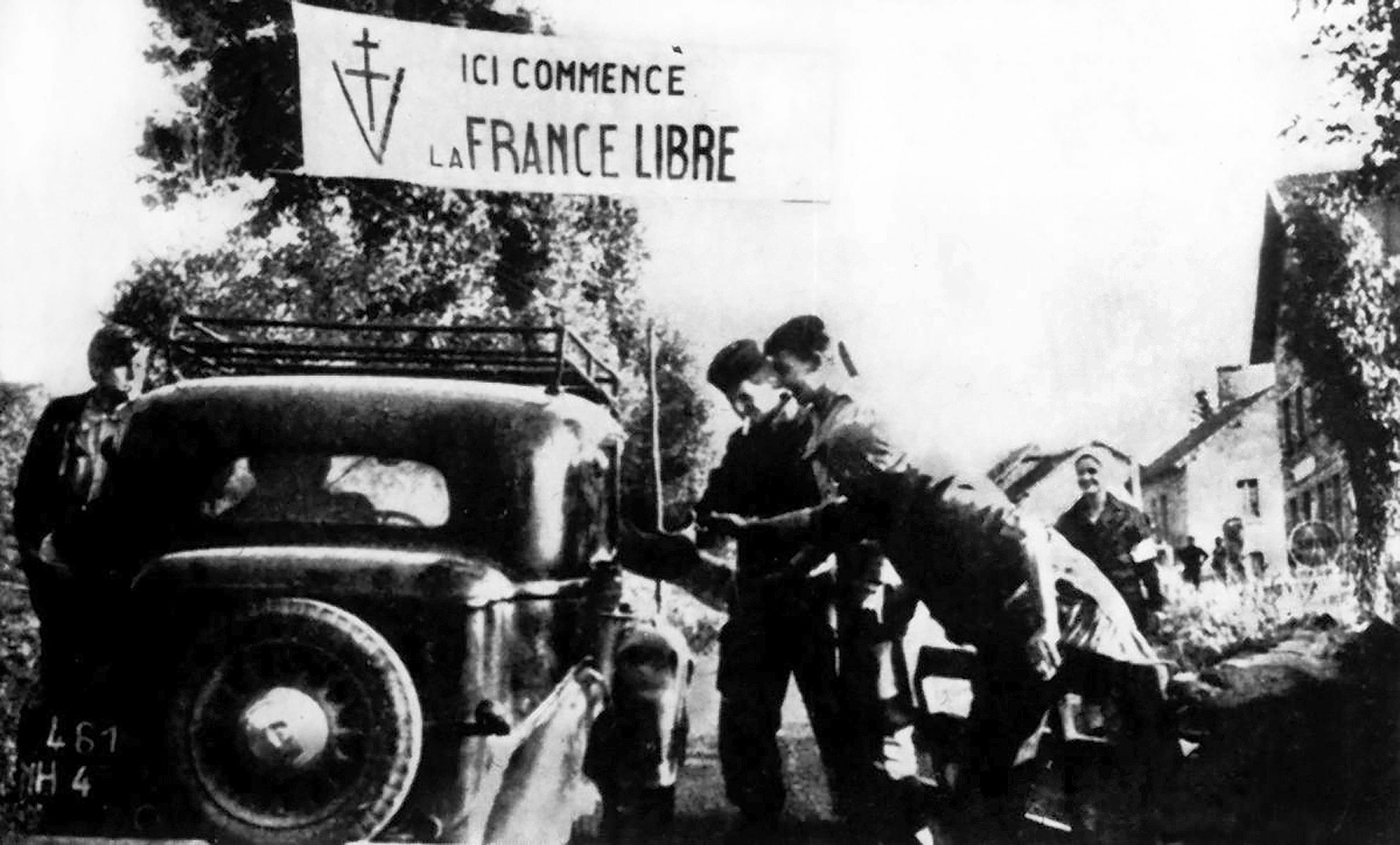
On May 20, 1944, anticipating the Allied invasion, Gaspard issued a call for general mobilization across the Auvergne region. Over 3,000 to 4,000 maquisards flooded into the Margeride mountains at Mont Mouchet. They organized into military companies, set up roadblocks, received Allied supply drops, and even erected a sign at the base of the mountain reading: “Here Begins Free France!” Their primary goal was to choke off the transit routes connecting German forces in southern France to the Normandy front.
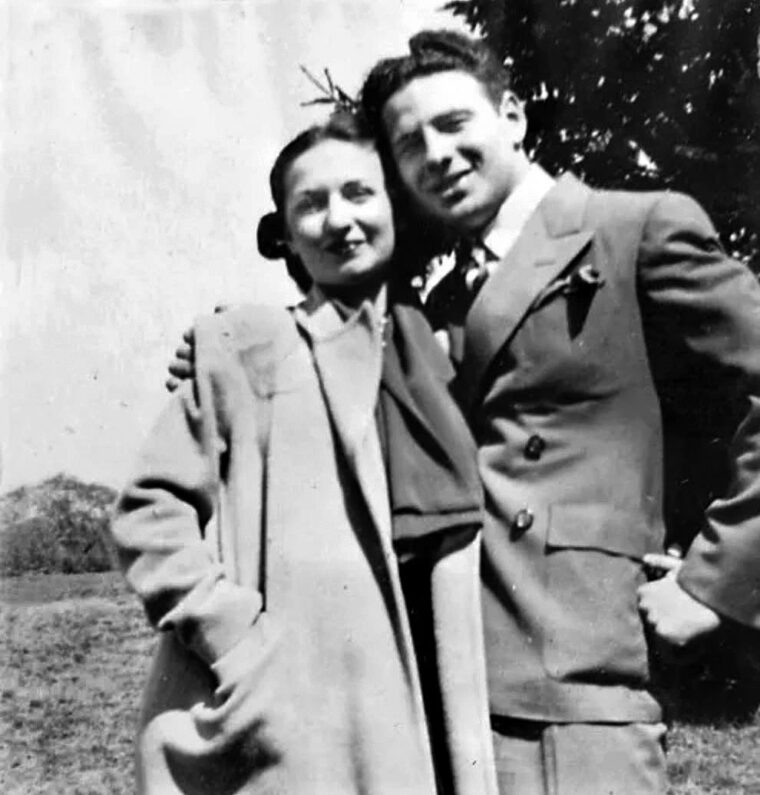
German High Command could not tolerate a fully armed, thousands-strong rebel army operating openly in the heart of France. Because Gaspard’s men posed an immediate threat to vital north-south corridors (like the 2nd SS Panzer Division Das Reich moving north), the German Army deployed Brigade Jesser—a combined arms force of nearly 3,000 troops equipped with armor, artillery, and air support—to completely liquidate the Mont Mouchet stronghold.
The main attack began on June 10, 1944, with fierce fighting over several days before maquisards made a successful tactical withdrawal to Saint-Santin to prevent total annihilation. In the course of the battles, the FFI had losses of 238 killed and 180 wounded. The Wehrmacht also, in revenge for previous losses, burned and pillaged several of the surrounding villages, and executed about 100 civilians.
Maquis leader Captain Henri Tardivat, who worked alongside Wake to organize supply drops and partisan attacks in the Auvergne region, would recall her as “the most feminine woman I’ve ever known, at least until the fighting starts. Then, she is like five men.”
Wake, who had always abhorred violence, was changed by the war. Still, she would not condone torture or brutality, no matter how much she hated the Germans. One time when she found out a nearby group of Maquisards were holding three women hostages as prostitutes, she demanded they hand them over—or she would see they got no more weapons or ammunition. Two of the women were French and they were immediately set free.
But the third was a German spy. Wake knew that with no way to handle prisoners, she could not be allowed to live. The men refused to form a firing squad to shoot a woman until Wake stepped up and said she’d do it herself. After witnessing so many atrocities by the Germans, she wrote, “The enemy had made me tough. I had no pity for them nor would I expect any in return.” The spy spat in Wake’s face and shouted, “Heil Hitler” before she was killed.
Once, during a raid on a French factory producing war materiel for Germany, Wake snapped the neck of one of the gate guards. She had meant to silence him before he could raise the alarm, but her SOE training took over. She didn’t like violence or killing, but never shied away from it when it was necessary.
Just before lunch in late July 1944, Wake led a group of armed men into the Gestapo headquarters in the old town hall in Montluçon and started shooting. Wake made her way to the office of the local chief and tossed in two grenades. She would later write that, “I hate wars and violence, but if they come then I don’t see why we women should just wave a proud goodbye and then knit them balaclavas.”
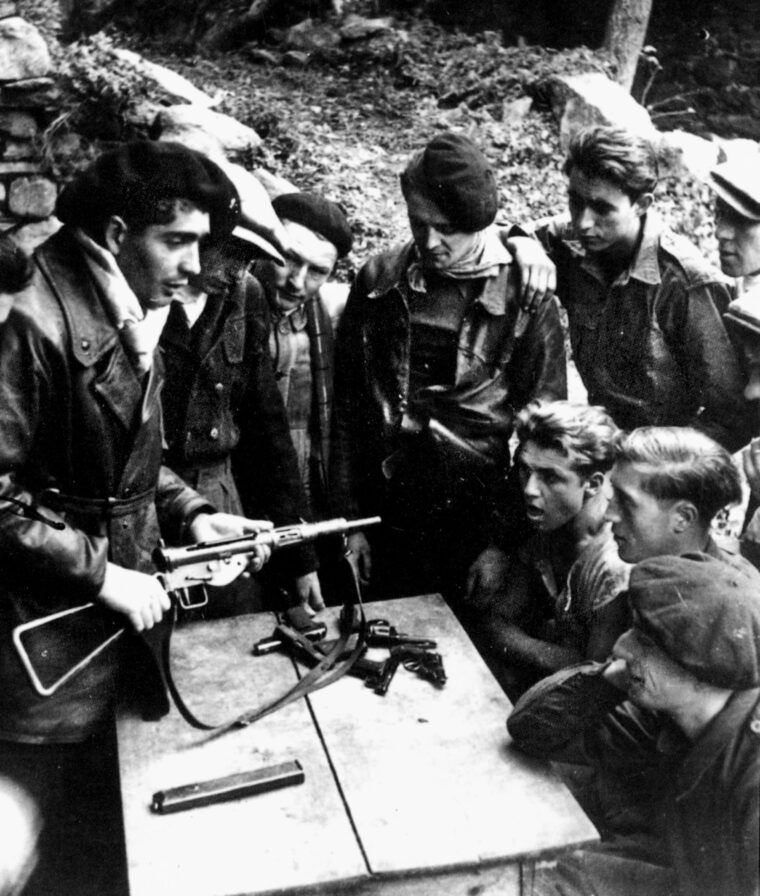
The proudest achievement of Nancy Wake’s wartime career was what she simply called “the ride”—a grueling 72-hour, 300-mile round-trip journey on a single-speed bicycle through Nazi-occupied France in June 1944.
Following the Battle of Mont Mouchet, her unit’s wireless operator had to destroy his radio and codebooks to avoid capture. Rebuilding their base at Saint-Santin, the Resistance was left completely isolated—unable to contact London, coordinate scattered fighters, or request crucial night-time air drops of weapons and ammunition.
With the nearest functional radio over 150 miles away in Châteauroux, Wake volunteered for the mission. She realized an attractive woman on a bicycle stood a far better chance of slipping past enemy checkpoints than a man. Traveling without identity papers or a bicycle permit, she relied on her charm and local Maquis contacts who scouted ahead at main road junctions. She slept her first night in a barn and pedaled through Bourges just hours after a Nazi firing squad executed a group of local hostages. After 39 continuous, agonizing hours in the saddle, she finally rolled into Châteauroux.
Teaming up with resistance pilot Bernard Gohan, Wake navigated a dangerous maze of Gestapo traps. When a panicked contact refused to transmit her message, Wake scorchingly berated him: “If I had been Gestapo, I’ve got a witness here of everything you’ve said and you’d all be under arrest now. God preserve me from ever having to work with fools like you again!”
Refusing to accept defeat, Wake pushed on to a hidden camp, slept briefly in a haystack, and borrowed a car to reach an operational transmitter. Her message flashed to London, securing replacement radios and equipment. Her 300-mile odyssey remains one of the greatest feats of individual endurance in special operations history.
Following her heroic service in World War II, Nancy Wake was awarded the George Medal by the United Kingdom in July 1945 for her exceptional courage and leadership, along with the 1939–45 Star, France and Germany Star, Defence Medal, and British War Medal 1939–45. For her active role in the French Resistance, France decorated her with the Médaille de la Résistance and awarded her the Croix de Guerre three times with a star and palms, while the United States presented her with the Medal of Freedom with Palm in 1947. Decades later, France further honored her by appointing her a Knight of the Légion d’honneur in 1970 and upgrading her to Officer in 1988. Her remarkable legacy continued to receive high honors in her later years. In addition to the recognition from Australia in 2004, Wake was awarded a Badge in Gold by New Zealand’s Returned and Services’ Association in 2006.
She died at the age of 98 on August 7, 2011, having declared that, “When I die, I want my ashes scattered over the hills where I fought with brave men.” Her ashes were scattered in the woods surrounding the Chateau de Fragne near Montlucon, which once served as her headquarters during her time with the Maquis in 1944.
Join The Conversation
Comments
View All Comments