By Kevin M. Hymel
Lieutenant General George S. Patton desperately wanted his Third Army to cross Germany’s Rhine River before the British troops under his rival Field Marshal Bernard Law Montgomery.
“We’ve got to get a bridgehead over the Rhine,” Patton told his officers and enlisted men at a staff meeting on March 22, 1945. “Every day we save doing that means saving hundreds of lives.” He stressed that the German army was smashed and in chaos, but if his troops paused the Germans could reorganize in three days. He reminded his staff that they had recently destroyed two entire German armies with few American casualties. And now his entire Third Army was closing on the river. “We are going to cross the Rhine and do it today,” he demanded.
Patton’s army had already raced across France, captured the strategic city of Metz, crossed the Saar River into Germany, relieved the Belgian town of Bastogne during the Battle of the Bulge, and had entered Germany in force. Now Patton looked to cross Germany’s last natural barrier in the west. He knew that the faster he crossed the river, the sooner the war in Europe would be over.
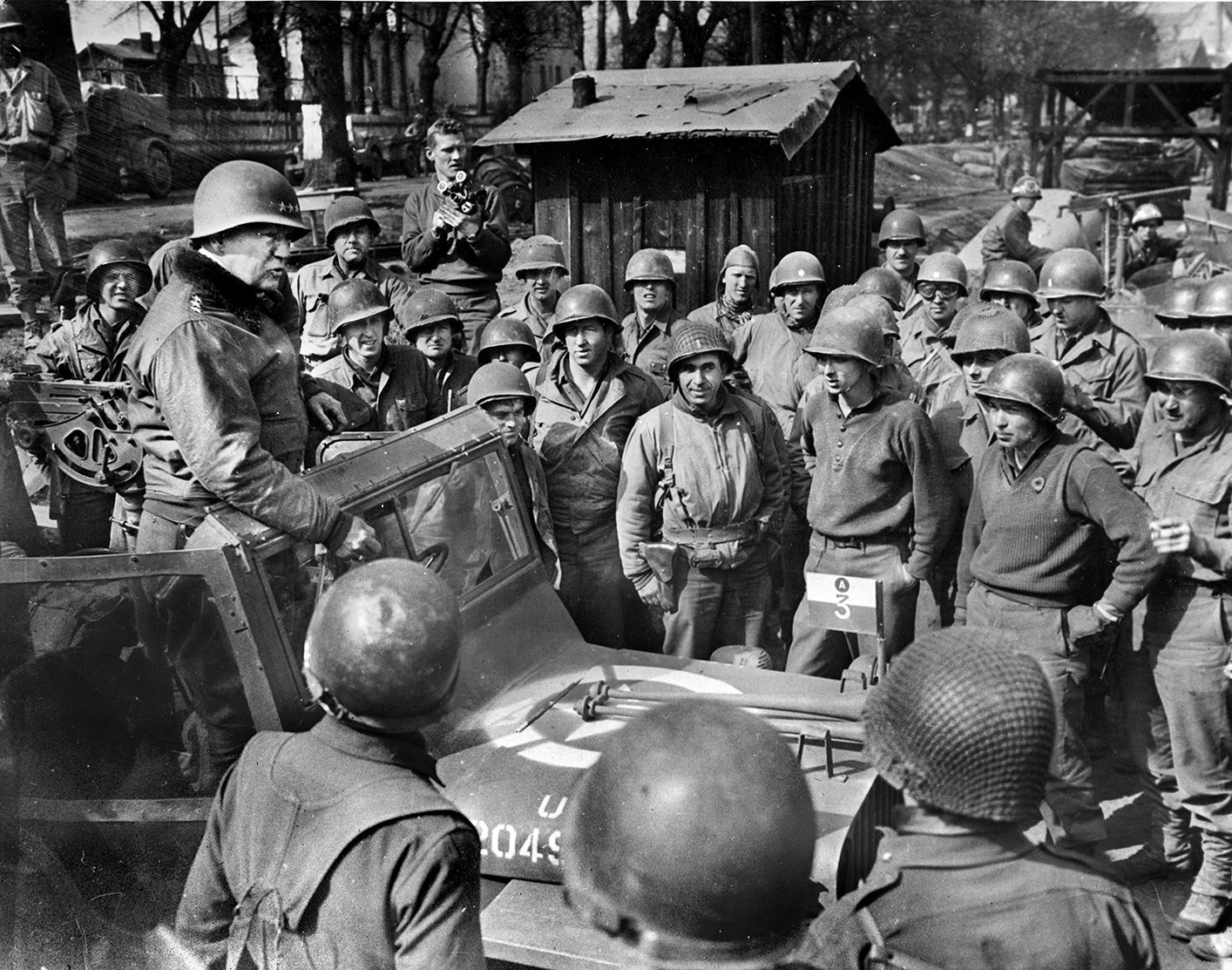
Patton’s Army consisted of three corps from north to south: Major General Troy Middleton’s VIII Corps, Maj. Gen. Manton Eddy’s XII Corps, and Maj. Gen. Walton Walker’s XX Corps. In Walker’s zone, Maj. Gen. William Morris’s 10th Armored fought its way into Landau, 13 miles short of the Rhine; Maj. Gen. Roderick Allen’s 12th Armored completed the capture of Ludwigshafen on the Rhine and closed off another possible German escape route in the town of Speyer; Maj. Gen. Harry Malony’s 94th Infantry Division cleared out pockets of resistance in Ludwigshafen. To the south, Maj. Gen. Holmes Dager’s 11th Armored looked to link up with Lt. Gen. Alexander Patch’s Seventh Army.
In Eddy’s XII Corps zone, Maj. Gen. Herbert Earnest’s 90th and Maj. Gen. LeRoy Irwin’s 5th Infantry Divisions reached the Rhine—Earnest at Mainz and Irwin at both Nierstein and Oppenheim. Patton preferred crossing at Nierstein and Oppenheim since the terrain across the river was flat, unlike the high hills that greeted his other troops reaching the Rhine. That morning, Eddy contacted Irwin and told him that Patton insisted on a Rhine crossing that night, but Irwin protested, saying that he needed more time to plan. The best he could do with an immediate crossing was “to get some sort of bridgehead.” Eddy said that’s exactly what Patton wanted, so Irwin agreed.
As Irwin’s 5th Division soldiers prepared for their night assault over the Rhine, Patton ordered a 24-hour press blackout to keep the crossing secret. For the last two days, he had been pushing convoys filled with bridging equipment to the front, and he made sure Maj. Gen. Otto “Opie” Weyland, Patton’s XIX Tactical Air Commander, would provide sunrise air cover with his fighter. Patton liked his chances. “I feel sure of success as the Germans will not expect an attempt with out [sic] a build up,” he wrote in his diary. He planned for Middleton to cross three days later.
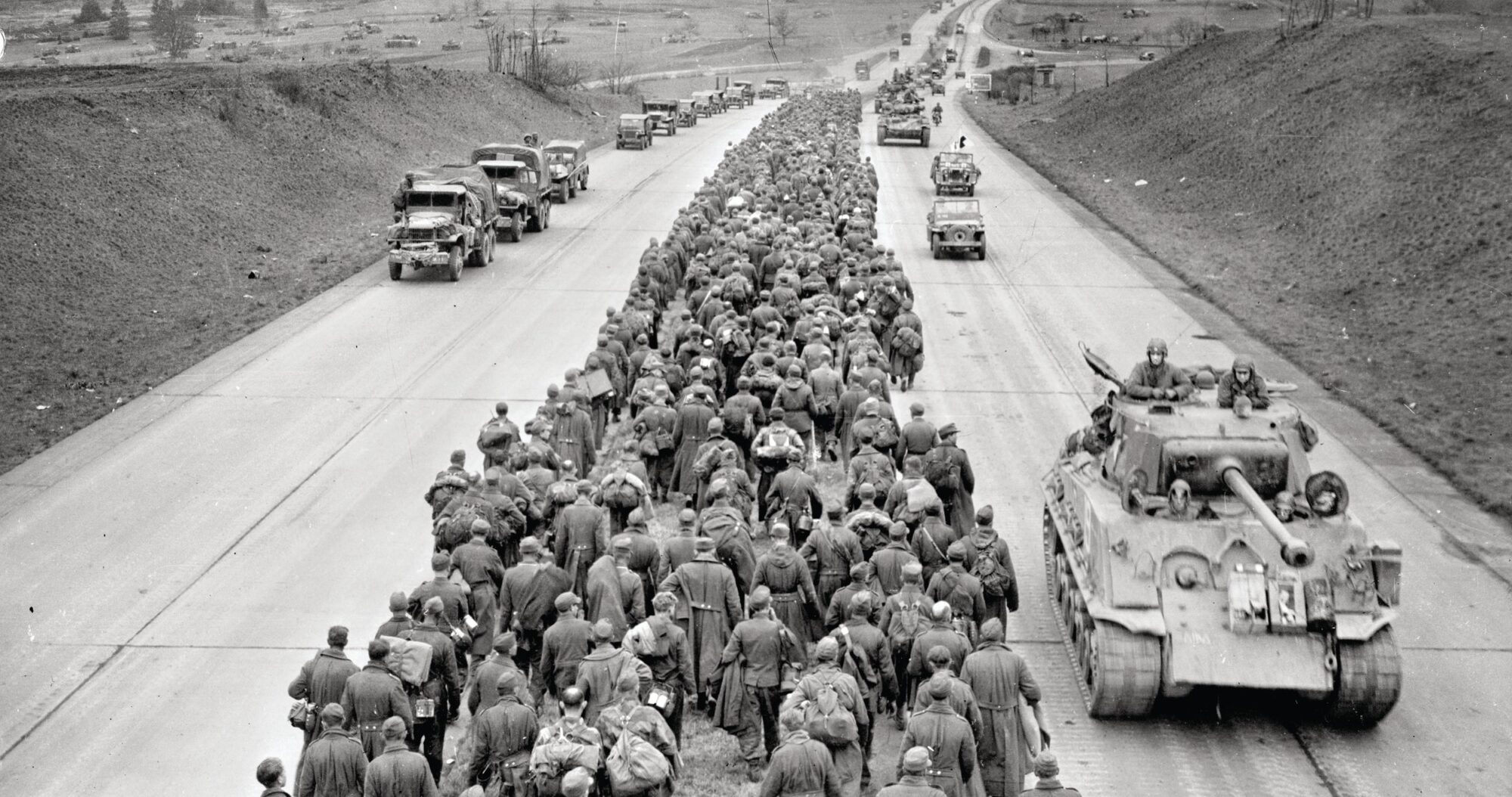
Patton happily reported his army had captured 11,000 prisoners of war, a one-day record for Third Army. When a visitor mentioned that Caesar was one of the great men of history, Patton shot back, “That’s what everybody says,” adding, “I’ll be damned if I can see that he did that much. It took him months to fight his way through France, and he never did subdue the Germans. I ran through the whole of France in three weeks, licking the hell out of three of the greatest German armies in the field, kicked the teeth out of them in the Ardennes, just finished mopping up a whole army group, and before I get through, those Germans that aren’t dead will be licked for good. Hell,” he concluded, “Caesar wasn’t so much. In my army he wouldn’t be a one-star general.”
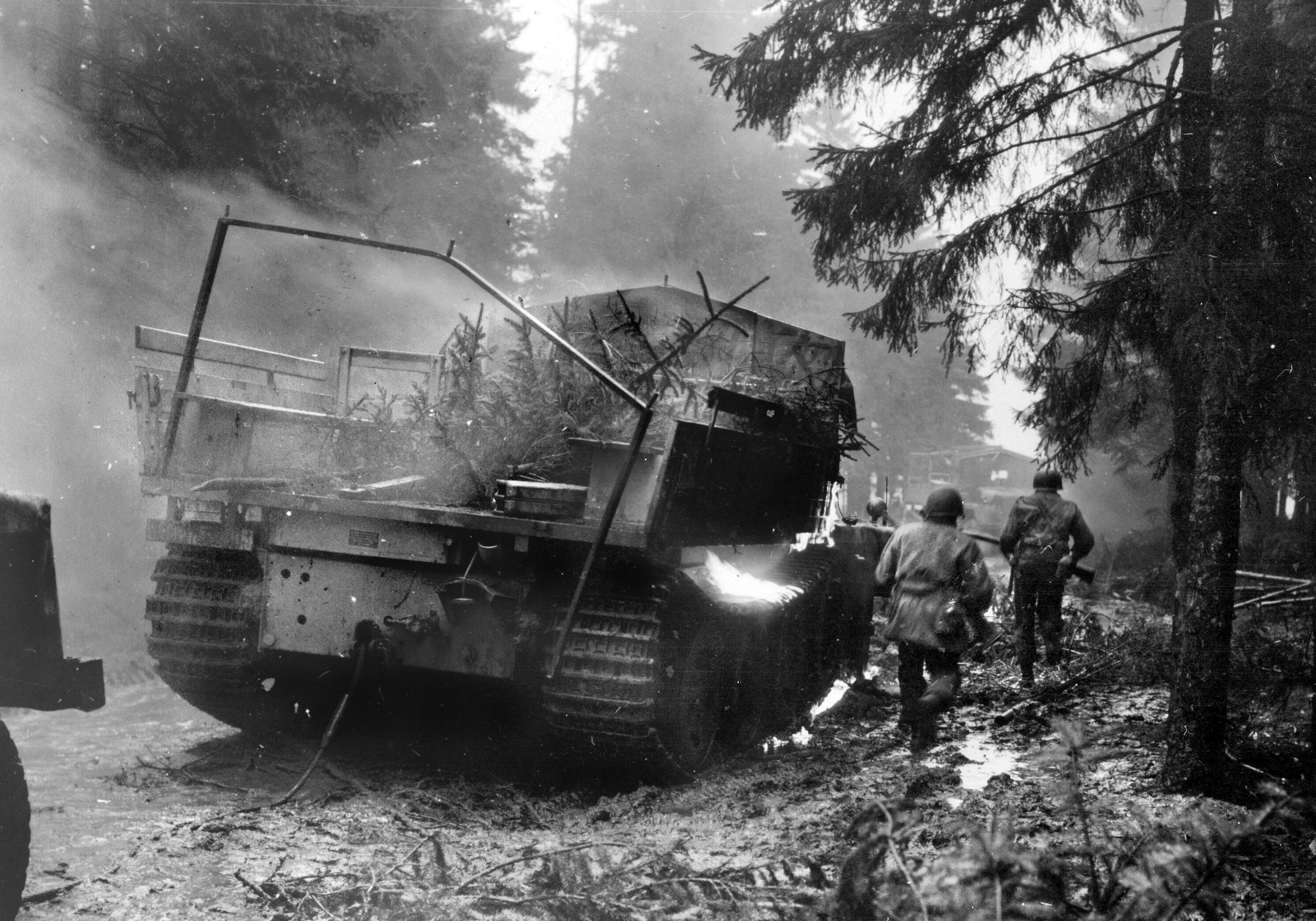
Patton returned to his headquarters that night, where he learned that Dager’s 11th Armored had finally linked up with Patch’s Seventh Army, completely surrounding the Germans. He also received a telegram from Lt. Gen. Leonard Gerow, the commander of the Fifteenth Army, saying, “Congratulations on surrounding three armies, one of them American,” since Patton had outflanked Patch at several locations, preserving the best crossing locations for himself. He had once again proved his genius as a battlefield commander and the abilities of Third Army.
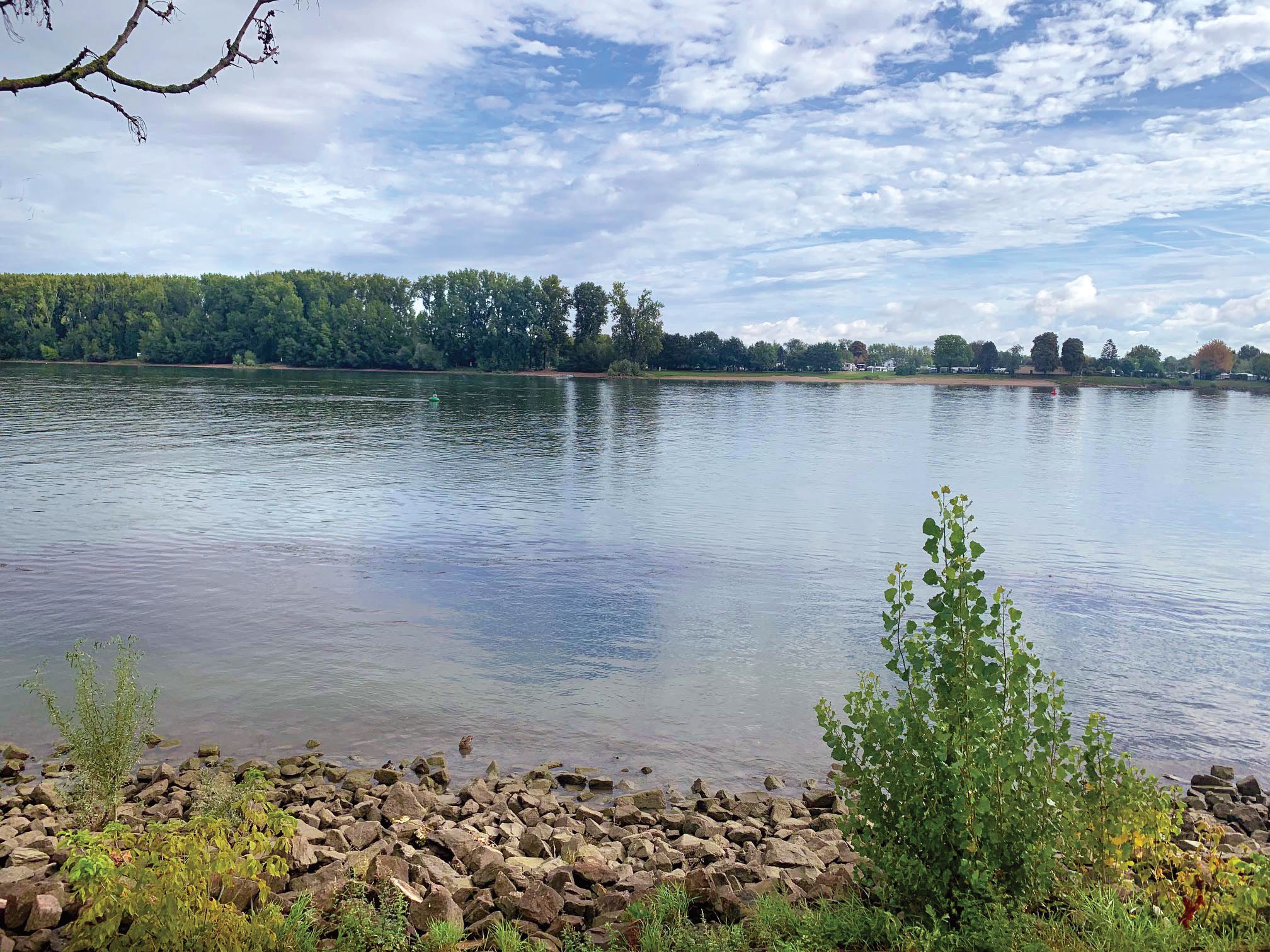
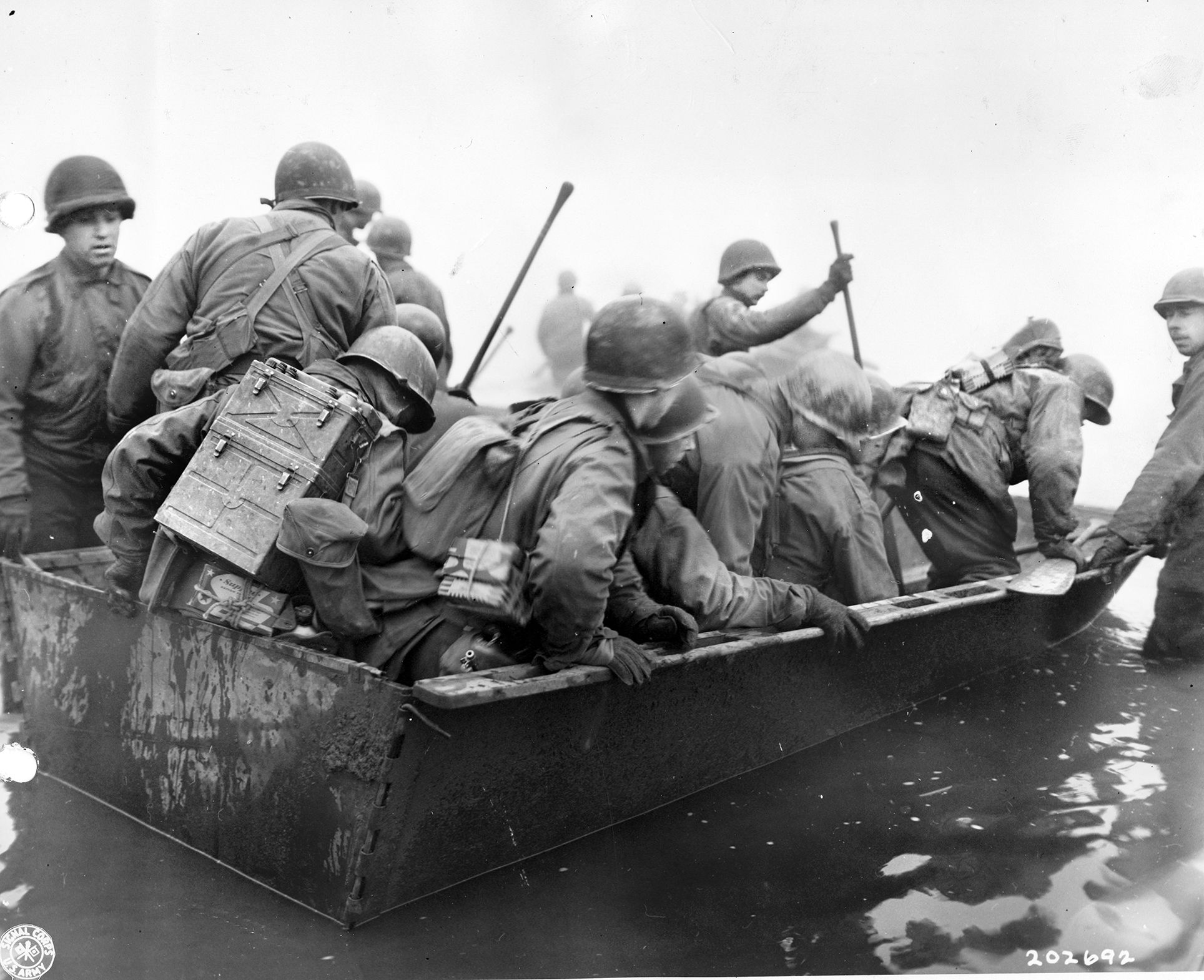
As Patton basked in the praise from his peers, U.S. Army trucks stacked with wooden 10-man assault boats arrived in the vineyard towns of Nierstein and Oppenheim. There were enough for a single battalion to cross at each town. Irwin’s soldiers unloaded the boats and slid them through the streets to assembly areas. Around 10 p.m., the men eased the boats into the water, climbed in, and began paddling. If the men were worried about what they would find on the east bank, they were justified. The swift-flowing river was the widest Third Army had yet crossed, about 1,000 feet at Oppenheim; the Seine River had been 500 feet, and the Moselle River just 200 feet.
As the men worked their way across, no friendly artillery pounded the far shore, no tanks fired over their heads to keep the enemy down, and no aircraft flew overhead to ensure safe passage. At any second, the far shore could light up with enemy tracer fire, or the horizon could glow with the discharge of artillery. Patton had gambled on surprise over firepower. Irwin’s infantrymen were about to find out if their Army commander had bet wisely.
The vanguard of assault boats touched ground on the east bank of the Rhine. In one of the boats sat Maj. Al Stiller from Patton’s staff, who insisted on being part of the action. The soldiers launching from Nierstein reached the Rhine’s far bank first and jumped out of their boats, cautiously advancing with rifles at the ready. They encountered just seven armed Germans, who promptly surrendered. Two engineers who crossed with the infantry were supposed to push the empty boats back into the river, where the current would carry them north, leaving no obstructions for the follow-on assault craft, but instead the engineers simply climbed into one of the empty boats and paddled back to the west bank.
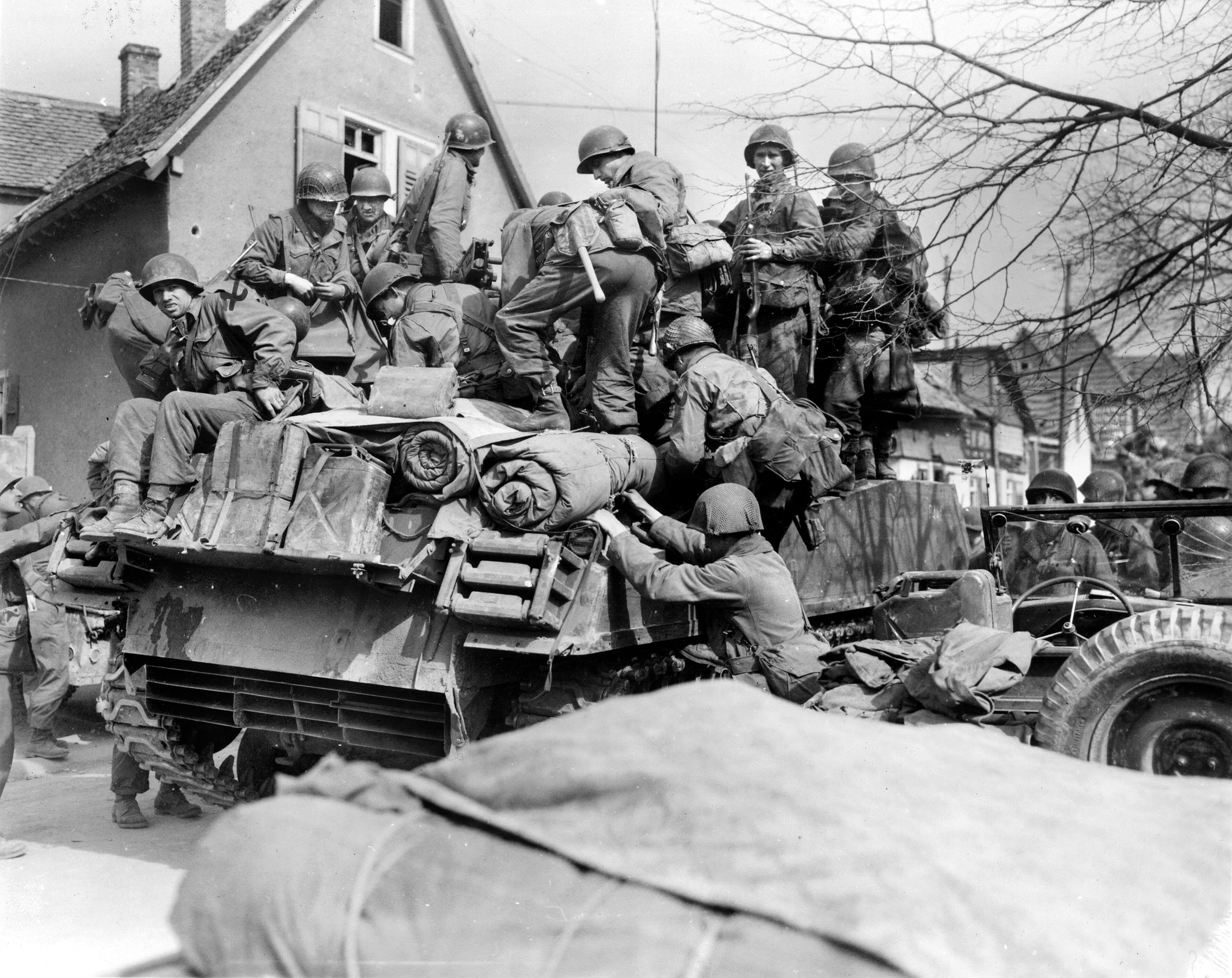
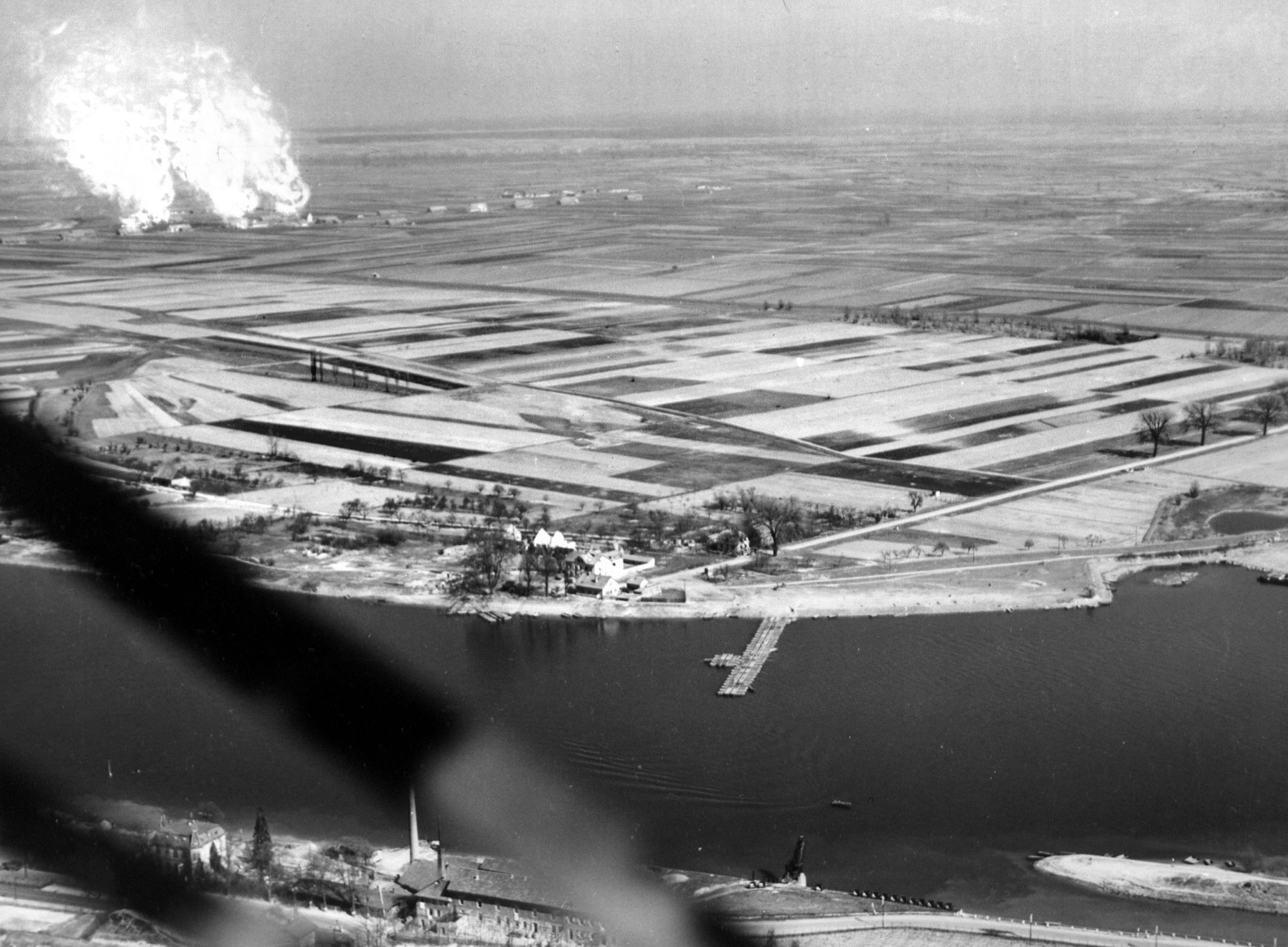
American troops continued to cross the river through the night and by 8 a.m., Eddy had pushed six infantry battalions across the Rhine. Engineers ferried across tanks, tank destroyers, and artillery while others constructed a pontoon bridge for the waiting tanks of Maj. Gen. William Hoge’s 4th Armored. The Germans had intercepted American radio transmissions, alerting them to the crossing, but they had no resources to send to the area.
The Germans retaliated the only way they could, attacking the bridgehead with more than 180 aircraft. Patton’s antiaircraft gunners knocked down at least 19, and Weyland’s pilots downed 21 more. In one encounter, eight American P-51s dove on 50 German JU-88 twin-engine light bombers, shooting down 11. In another, a group of P-51s shot down eight of nine FW-190 fighters.
Only a few of Patton’s staffers knew of the crossing. None of the reports sent to Lieutenant General Omar Bradley, the Twelfth Army Group commander and Patton’s boss, mentioned the assault, and no maps indicated a crossing. But at Patton’s morning staff briefing on March 23, an officer stood in front of the collected staff and announced, “Without the benefit of aerial bombing, ground smoke, artillery preparation, and airborne assistance, the Third Army at 2200 hours, Thursday evening, March 22, crossed the Rhine River.” The statement was practically a tailor-made dig at Montgomery, who had been meticulously planning his crossing of the Rhine with the support of bombers, smoke, artillery, and paratroopers. Patton took immense satisfaction in beating his British rival across the last natural barrier into Germany.
Brimming with pride, Patton congratulated the entire Third Army and Weyland’s XIX Tactical Air Command, listing the square miles taken, the cities captured, and the number of German soldiers now in Third Army prisoner-of-war pens. “This great campaign was only made possible by your disciplined valor, unswerving devotion to duty, coupled with unparalleled audacity and speed of your advance on the ground,” he wrote, concluding, “your assault crossing over the Rhine at 2200 hours last night assures you of even greater glory to come.” He wrote a more personal note to Irwin’s infantrymen, telling them, “I am persuaded that many of you have webbed feet and I know that all of you have a dauntless spirit.”
Patton had to stifle his joy when Patch arrived at his headquarters around 10 a.m. to discuss army boundaries. Patton escorted him into his operations center to settle boundaries and swap armored units. The two army commanders agreed that Patton would give Patch Morris’s 10th and Allen’s 12th Armored, and Patch would return Maj. Gen. Robert Grow’s 6th Armored, which he had been using for the last month. They also agreed on a boundary line between their two armies. While the two generals discussed these moves, Patton’s chief of staff, Brig. Gen. Hobart “Hap” Gay entered the room to inform his boss that Lt. Gen. Jacob Devers, the commander of Sixth Army Group, was on the phone and wanted to know if Patton had crossed the Rhine. Patton declined to speak with Devers and instead called Bradley to tell him the good news.

“Brad!” Patton shouted into the phone, “Don’t tell anyone but I’m across!” Bradley was taken aback. “Well, I’ll be damned—you mean across the Rhine?” he asked. “Sure am,” Patton replied, “I sneaked a division over last night, but there are so few krauts around there they don’t know it yet. So don’t make any announcement—we’ll keep it a secret until we see how it goes.” A pleased Bradley told Patton that he could send 10 divisions across the river since he had allowed the same for Lt. Gen Hodges’s First Army, which had already crossed the river over the Ludendorff Bridge at Remagen.
While Patton and Bradley strategized and Eddy pushed units across the Rhine, Middleton continued preparations for his Rhine crossing, scheduled for midnight the next day. Meanwhile, Walker pulled his units north in accordance with the new boundary with Patch’s Seventh Army. As more and more prisoners poured into Third Army cages, Gay recorded in the log, “It now appears definitely that there will be over 60,000 prisoners taken in this campaign.”
That evening, with Montgomery’s assault across the Rhine imminent, Patton called Bradley again. “Brad,” he shouted into the phone, “for God’s sake! Tell the world we’re across! We knocked down 33 Krauts today when they came after our pontoon bridges. I want the world to know Third Army made it before Monty starts across.” Bradley called Eisenhower, who told him to hold a press conference about the crossing, as well as about Hodges’ progress. Eisenhower had become tired of American newspapers crediting Montgomery for American successes.
Just before midnight, Patton listened intently to the radio to hear Bradley bury the lead. He announced that American forces could cross the Rhine at virtually any point without resorting to either aerial bombardment or the dropping of paratroops. Then he announced that Patton had in fact crossed without bombers, paratroopers, or an artillery preparation, and that the crossing had been a complete surprise to the Germans. Patton relished his victory over the Germans and Montgomery.
By midnight, Irwin’s entire 5th Division had crossed the river, as had a combat team from Earnest’s 90th Division, creating a bridgehead four miles deep and seven miles wide. Eddy, impressed with the deep penetration, ordered Hoge’s 4th Armored to cross the next day to begin exploiting the bridgehead. The enemy formations on the eastern shore were a mixed bag. In some places, SS troops fanatically defended their positions, while in others, youths and old men of the Volkssturm (national militia) surrendered at the mere show of force. Many of those pressed into service simply waited in cellars for a chance to surrender. Before going to bed that night, Patton cheered to his diary, “God be praised. It was a great operation, a fitting climax to the preceding ten days.” Even better from his perspective, he wrote, “The 1st Army will not break out for another two days.”
The enormity of his victory awed Patton. He wrote to his wife Beatrice that he now worried that he was having too much luck. “Not only did we wipe the eye of Devers by coming clear across his front as far as the line Landau-Speyer, but we took about 70,000 PW [prisoners of war] to his six or seven thousand.” Eisenhower would later forward a message from Congressman Sam Rayburn, the speaker of the U.S. House of Representatives, that Congress had unanimously adopted a motion congratulating and thanking Patton and the other army, army group, and air commanders “for the magnificent victories they have won on the western front.”
Messages of congratulations poured in. Lt. Gen. William Simpson wrote, “Myself and Ninth Army congratulate you on your relentless advance which has achieved such remarkable results.” Hodges congratulated Patton and his Third Army “on your most decisive defeat of two German armies and the subsequent crossing of the Rhine.” Lt. Gen. Leonard Gerow played into Patton’s favorite joke when he wrote, “Pinching out several armies including one of our own was a masterpiece.” Hoyt Vandenburg, who commanded the Ninth Air Force, quoted one of his commanders who said, “That is the way to fight a war, keep driving. My pilots will fly their hearts out in a battle like that.” Vandenburg concluded, “This statement exemplifies the feeling of admiration for the Third Army throughout the Ninth Air Force.”
British Major General Freddie de Guingand, Montgomery’s chief of staff, sent Patton a carefully worded appreciation, saying, “All your friends at this headquarters wish to send the heartiest congratulations on your magnificent victory.” He signed it “Charlie Oboe Sugar Nine Five,” code for COSNF, or chief of staff northern force, de Guingand’s title, meaning Montgomery was not one of the well-wishers. Secretary of War Henry Stimson may have put it best when he issued the following statement: “We gave Monty everything he asked for—paratroops, assault boats, and even the Navy and by God! Patton has crossed the Rhine!”
Perhaps the most satisfying congratulations came from Eisenhower. “The purpose of this note is to express to you personally my deep appreciation of the splendid way in which you have conducted Third Army operations from the moment it entered battle last August 1,” the SHAEF commander wrote. “You have made your Army a fighting force that is not excelled in effectiveness by any other of equal size in the world, and I am very proud of the fact that you, as one of the fighting commanders who had been with me from the beginning of the African campaign, have performed so brilliantly throughout.”
Patton received no such congratulations from the Germans, but the highest seats of Nazi power recognized his accomplishment. When Adolf Hitler learned of Patton’s crossing, he told Air Marshal Albert Kesselring the commander in chief in the west, “The worst thing is this second bridgehead here at Oppenheim,” Hitler explained. “Is there still one of our panzer brigades or anything at all operating?” There was not.
At 4 a.m. on March 24, after a furious artillery bombardment followed by bombers dropping their loads on the east bank of the Rhine, landing craft crossed the river and deposited men on the east bank. Montgomery’s monumental river crossing had begun. Later that morning, on the BBC, British Prime Minister Winston Churchill announced that for the first time in history, assault forces had crossed the Rhine. The speech had been recorded days before and could not be amended. Patton relished listening to the prime minister’s praise for his field marshal. “They broad cast [sic] it ignoring or ignorant of the fact that 3[rd] Army had crossed 36 hours earlier,” he wrote Beatrice. “It had never appeared in the papers ha! ha!!” Bradley too smirked at the elaborate crossing, later writing, “Had Montgomery crashed the river on the run as Patton had done, he might have averted the momentous effort required in that heavily publicized crossing.”
As the British crossed the Rhine, Patton told his staff he planned to fly over the Rhine, then circle back and land at Eddy’s headquarters, where he would head to the river by vehicle, bringing his camera. “I’m going to take a picture of myself pissing in the Goddamn river,” he said, grinning. “If Churchill can have himself photographed pissing on dragons’ teeth, then I can do the same, pissing in the Goddamn Rhine.”
Patton headed to Eddy’s XII Corps zone, where things looked promising. Eddy had set up his headquarters in a huge resort hotel in Bad Kreuznach that had briefly served as Kaiser Wilhelm’s headquarters during the First World War. Eddy briefed Patton that most of Earnest’s 90th Division and Hoge’s 4th Armored had crossed the Rhine and were attacking northeast toward Frankfurt. Patton told him to head for Giessen, a third of the way to Kassel, where he would rendezvous with Middleton’s VIII Corps, before driving on Kassel where Patton hoped to link up with Hodges’ First Army, encircling the Germans. Patton told Eddy he expected him to get there first.
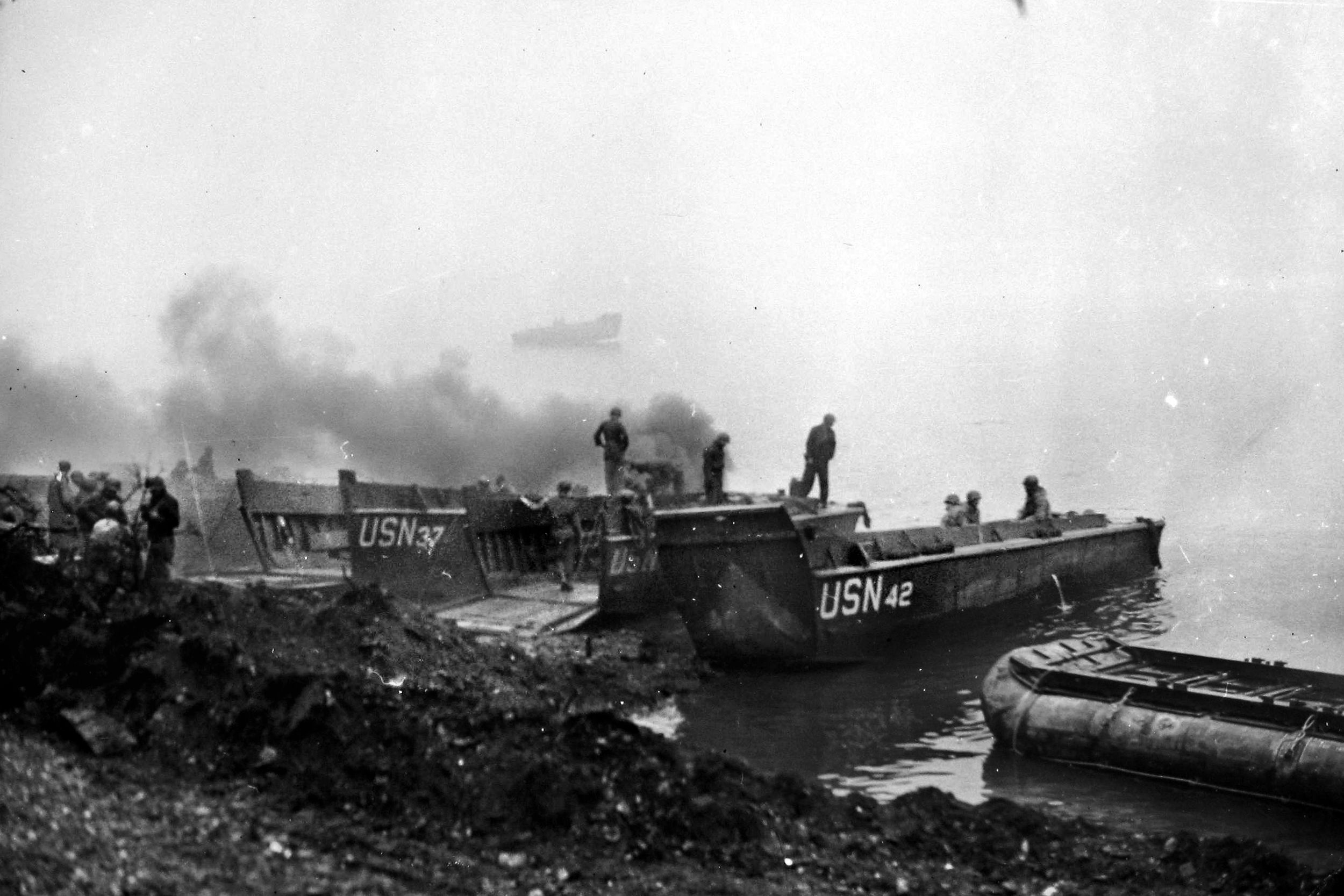
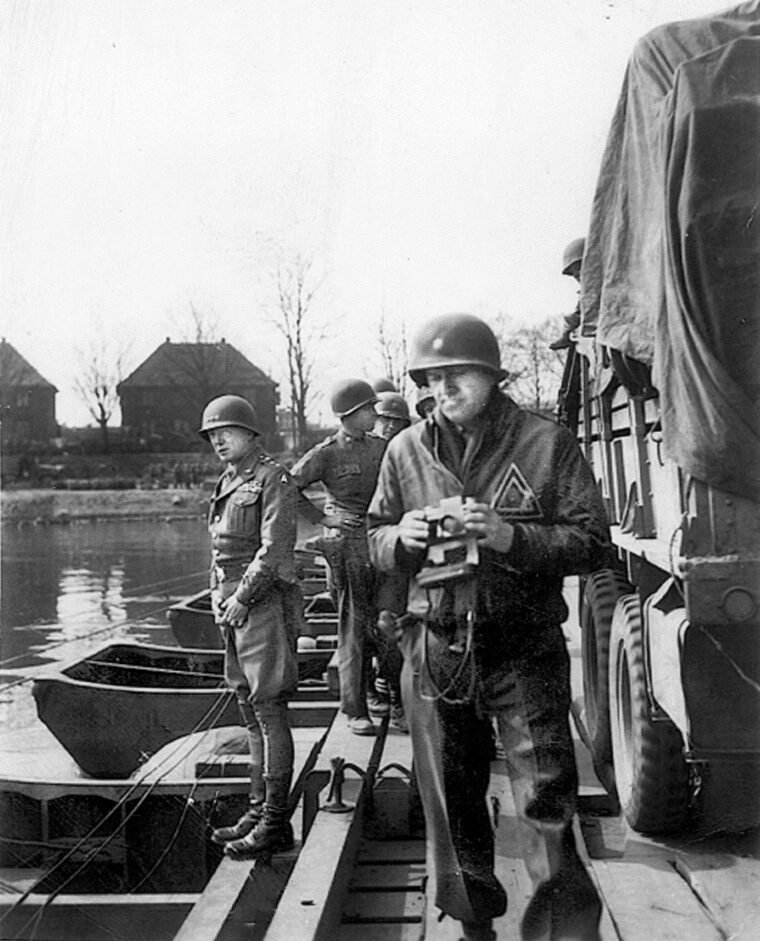
Patton then headed to the river for his triumphant crossing. As his jeep drove down the hill to the embankment, word passed through the ranks. Vehicles pulled aside to let the general pass. Once his jeep pulled over, he spoke to a group of sailors who manned several assault craft, telling them they had delivered 5,000 men in 24 hours, and they had done it with only about 6 Landing Craft Mechanized (LCMs), which carried 60 men each. When he spotted other assault boats preparing to ferry more troops, he told the naval commander, “Get those Goddammed boats started and let’s get across!” The commander snapped back, “Aye, aye, sir,” and ran over to the boats, giving them the order to launch. With that, Patton led a small procession of his staff and Eddy across the bridge.
Halfway across the bridge, he stopped and handed Colonel Charles Codman, his aide-de-camp, his personal camera. Patton mentioned that Lord Haw-Haw, a British fascist named William Joyce who defected to Germany and delivered enemy propaganda over the radio, had said that the Germans would kick the Americans’ asses if they ever tried to cross the Rhine. With that, he turned to a young reporter with a camera and asked, “You ready, boy?” before executing his dastardly act. “I’m not going to hold this much longer.” He unbuttoned his fly and told the group, “I have been looking forward to this for a long time,” and commenced urinating in the river.
As Codman and the reporter snapped his picture, he declared, “I might just send one of these pictures to Hitler.” Patton buttoned up and resumed his walk across the bridge. Eddy warned the reporter to make no prints of the picture and that he would have to surrender all prints to him. When Patton stepped off the last pontoon and reached the east bank, he deliberately stumbled, sank to one knee, and steadied himself by placing both hands in the sand. He stood up and let the sand sift through his fingers. “Thus,” he told his staff, “William the Conqueror.” His curious staff did not know their boss was referencing William’s fall out of his boat in 1066 as he came ashore in southern England and came up with two fistfuls of sand, saying, “I have taken England with both hands.” His mission accomplished, Patton removed his Eisenhower jacket and donned a warmer jacket with a fur-lined collar. Mims then drove him to a monument honoring a 1908 flight of a German zeppelin.
Patton arrived at Eddy’s headquarters for lunch. Major Stiller showed up and said they had taken the Germans completely by surprise, adding that a few German jets attacked the bridge sites but inflicted only a little damage. Over lunch, Patton told Eddy that if he had not crossed the Rhine when he did, Third Army might have been transferred to Sixth Army Group, and if that had happened, he would have refused to command it. He added that Eddy had played a trick on Maj. Gen. Wade Haislip’s XV Corps of Seventh Army, which had been slated to move into the area and cross at the same spot, even though Haislip said it would be impossible to cross there. Eddy pointed out that he had crossed an entire division at the impossible crossing site.
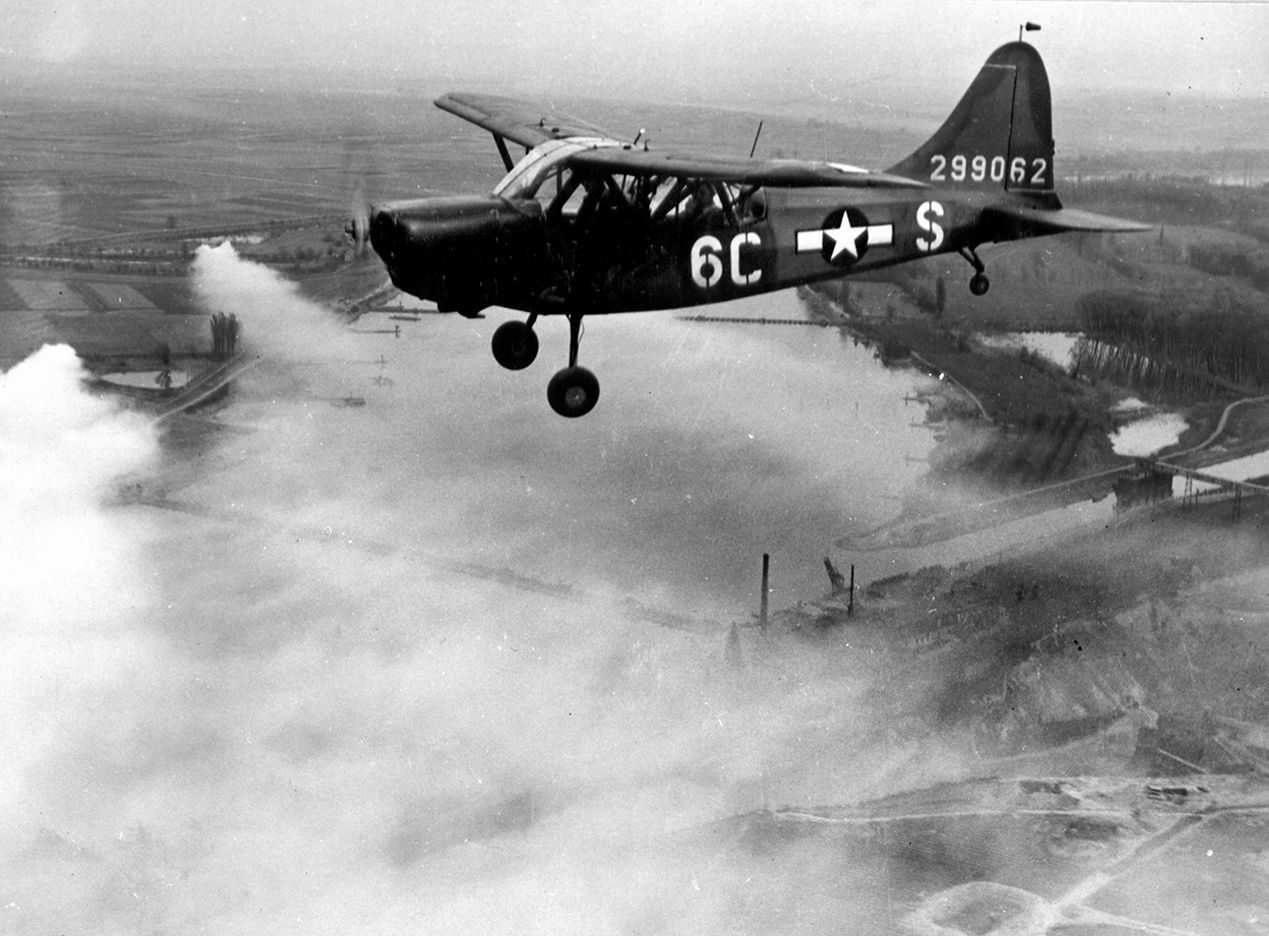
As Patton departed, reporters asked him about urinating in the Rhine. He told them he had had his picture taken while in the act, but he regretted that he had not brought his dog Willie along so he could follow his master’s lead. When the reporters asked him about the Rhine River, he told them, “Hell, it’s not much of a river. It doesn’t compare with our big ones. It reminded me of the Red River in Louisiana [from the 1941 Louisiana Maneuvers].” Patton then climbed into his Cub aircraft and flew to Middleton’s VIII Corps headquarters.
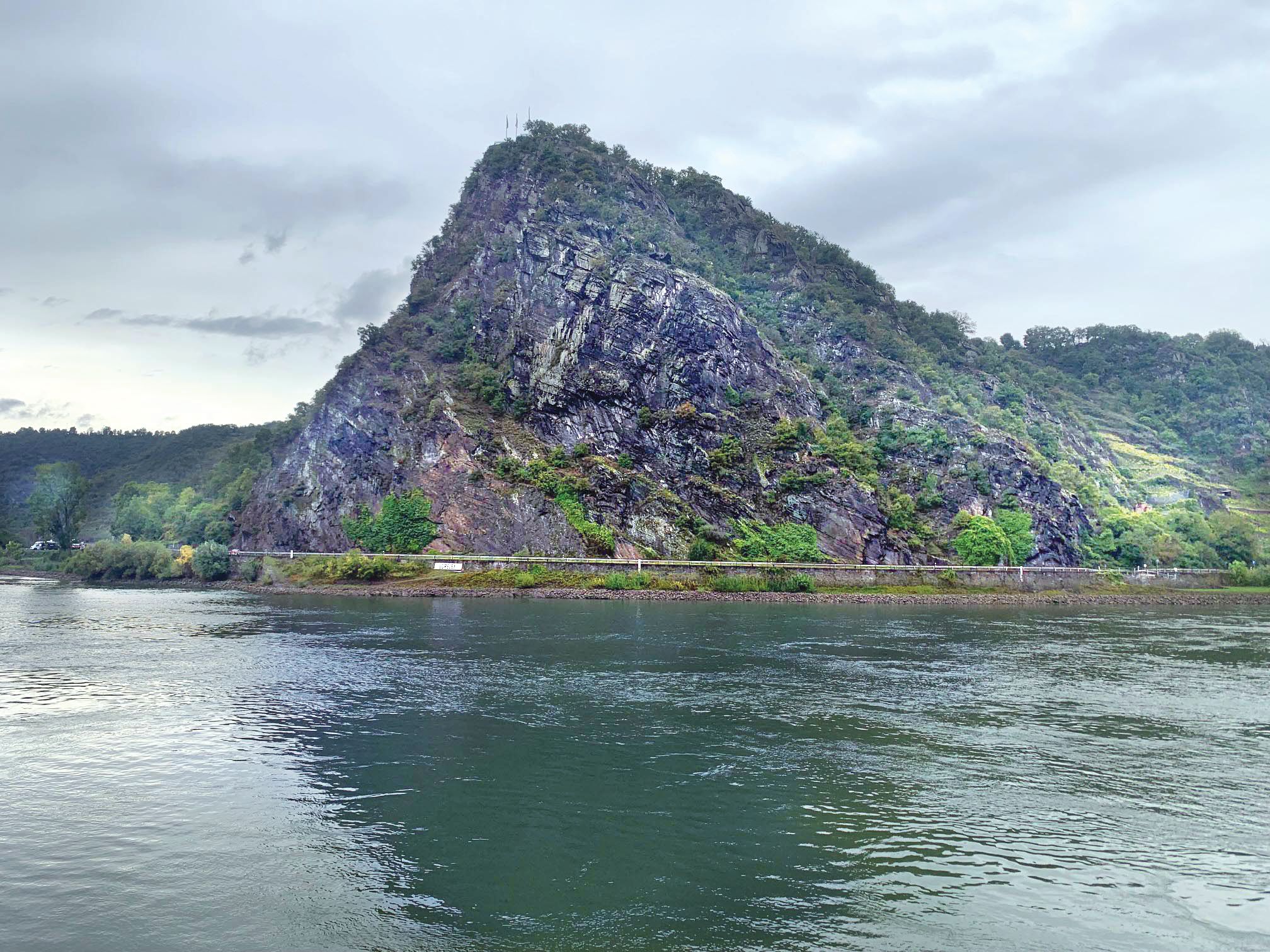
Upon arrival, Patton told Middleton, as he had Eddy, that his goal would be Giessen, and he expected him to get there first, “so as to produce a proper feeling of rivalry.” As for Middleton’s planned Rhine crossing that night, the general explained to Patton that one of his crossings would be at Sankt Goar, near the fabled Lorelei. Patton, completely shocked, asked, “Why, man, haven’t you read your history?” Legend held that a beautiful maiden named Lorelei, distraught over a cheating lover, had thrown herself off the rock and became a ghostly siren who lured Rhine sailors to their doom.
When Middleton said he knew the history, Patton responded, “Then you must know that no one has ever crossed the Rhine in that area.” Middleton assured him that the Germans also knew the Lorelei story, and thus he reasoned that it would be lightly defended. Patton said nothing and left. Middleton planned for Maj. Gen. Frank Culin’s 87th Infantry Division to cross from the towns of Boppard and Rhens, north of the Lorelei, while Maj. Gen. Thomas Finley’s 89th Infantry Division would cross twenty-four hours later near Sankt Goar, closer to the Lorelei, and attempt to encircle the rock. Schmidt’s 76th Infantry Division would cross later, further south. Patton planned to send one of Schmidt’s regiments south to Eddy’s Corps to clear the hills east of Mainz, allowing Irwin’s 5th Division soldiers to attack near where Walker’s XX Corps would be crossing the Rhine.
Later that day, Eisenhower called Patton and congratulated him on his army’s brilliant success. Patton used the opportunity to propose forming an armored corps by pooling together the 4th, 6th, and 11th Armored Divisions and using it as a spearhead into the rest of Germany. Eisenhower, considering Patton his best tank expert, said if it could be supported, he would approve it.
Patton hung up the phone and headed out to host a medal ceremony for his staff, presenting them with Legion of Merit and Bronze Star medals for their hard work over the last eight months. By the time the ceremony ended, Hoge’s 4th Armored, which had started crossing the Rhine that morning, joined Irwin’s 5th, elements of Earnest’s 90th, and 3 antiaircraft artillery and 9 field artillery battalions on the east bank. Hoge’s tankers quickly reorganized and raced 15 miles to Darmstadt. They did not enter the city but circled south of it counter-clockwise to orient themselves to the north, where they could begin the drive to Frankfurt and, eventually, Kassel.
Patton returned to his Rhine River bridge as the sun started to set. Chemical smoke still hung over the crossing site as he sat in his jeep on the west bank. When trucks filled with infantry passed, he would stand up, applaud, and wave at them. When he got back to his headquarters, he and his staff watched Pin Up Girl, starring Betty Grable. After the movie, he went out into the hallway and started to cut up a red German parachute he had found. As he cut off panels, he found himself entwined in the silk canopy. Suddenly, Weyland escorted a woman into his presence.
The woman, Life war correspondent and photographer Margaret Bourke-White, had been covering the war since before the U.S. joined the fight. “What’s this stuff good for?” Patton asked her, looking at the parachute that he had wrapped himself in. “What can my wife and daughter do with it? Do you think it will make a dress?” Bourke-White suggested it might make for a nice sofa pillow. Patton cut off some panels and offered them to her. “Take as much as you want and some of this white parachute cord,” he insisted as he handed her the cord for pillow edging. “Take some more,” he pushed. “Isn’t it pretty stuff? The Germans have pretty good materials after all.”
Bourke-White had come to photograph Patton for her magazine and to witness the final collapse of Nazi Germany. She got more than expected, including a ringside seat to Patton’s petty vanity, his insecurities, his temper, and his intense battlefield awareness. “Things have been going pretty smoothly,” Patton told her. “It makes me jittery when things go too well.” He then quizzed her on what he should wear for the photo shoot. Bourke-White, decked out in wrinkly slacks and a long coat she had been sleeping in for the last week, recommended Patton don his battle jacket and steel helmet. He made her promise not to shoot his legs since his pants didn’t match his jacket.
As Bourke-White set her camera atop its tripod, Patton leaned against the fireplace mantel and turned his head so she could catch his profile. “All those 4th and 6th Armored boys need to get across and have enough space to get into high gear,” he told Weyland, almost forgetting the photographer. Then he looked at his watch. “It will be in eight minutes now,” he added about Culin’s divisions’ river crossing. Suddenly, he barked at Bourke-White, “Put that camera higher up! Don’t show my jowls!” He plopped down in a chair, took off his helmet, and leaned his cheek on his hand. “Now you can’t photograph my jowls.”
A shaken Bourke-White continued to work her camera. “And don’t show the creases in my neck,” he demanded before turning back to Weyland. “Now we’re going to surround one of our own armies again,” he laughed. Bourke-White snapped her first photo. “Stop taking pictures of my teeth!” he complained. “Why are photographers always taking pictures of my teeth?” He glared at her skeptically, making sure she was not capturing his bad side (which she could figuratively see). Looking again at his watch, he told Weyland, “Only three minutes now.”
While Patton spoke, Bourke-White slowly sneaked her tripod lower, inch by inch. Suddenly, he looked back at her and tucked his chin into his chest. “This is the only angle at which the little hair I have will show,” he told her. Then it was back to Weyland. “The new crossing is due to start,” he said, looking at his watch. It was a minute past midnight. “It has started!” The room went silent as the three wondered how the crossing was progressing.
Out in the darkness along the Rhine, Culin’s assault force, embarking from Boppard, started paddling across the river. They made it across in about eight minutes, despite sporadic enemy fire. Engineers quickly paddled the empty boats back to the west bank to pick up reinforcements. The story was different at Rhens, where the Germans surprised the Americans before they could shove off. A hail of mortars, machine-gun volleys, and 20mm antiaircraft fire from the far shore delayed their assault for at least an hour. When they did cross, the Germans opened up again. The strong current pushed some assault boats downstream, while those that did make it across remained there as engineers refused to brave the German fire to paddle the boats back to the west bank. Making matters worse, the Germans floated burning barges downstream, illuminating the other assault boats still struggling across. Organization broke down as soldiers crossed wherever they could find an empty boat.
Patton lit a cigar and puffed as he went into a short speech. “They are crossing at a special place,” he began. “They are going over at Lorelei Rock [they were actually crossing ten miles north of it]. I was always fascinated by the idea of that Rhine maiden sitting there singing to sailors; I always liked the legend. I thought it was a nice idea to have the men cross where Lorelei sat on the rock and sang.” He puffed on his cigar again. “And then there was another reason. I picked a cliff that everybody would think unscalable. No one will expect our men to be able to climb the Lorelei Rock.”
The photo shoot over, Bourke-White moved her equipment to the door, but Patton was having none of it. “You can’t go home yet,” he insisted. “I won’t be able to go to sleep anyway. Things are going well, and I can’t sleep when things are going well.” He picked up her equipment and carried it back into the room, asking for a lesson in photography. Bourke-White relented and showed him how different camera lenses worked. When she began packing up her equipment again, he protested, “Oh, you can’t go, I’m having fun.” He produced a bottle of bourbon and poured drinks for the three of them. “If I ran out of bourbon and cigars,” he told her, “I’d be a healthier man.”
Bourke-White asked Patton what he intended to do after the war. “Go back to my yacht,” he told her, launching into an explanation about his yacht, the When and If. “She’s a lovely boat.” With that, she and Weyland got up again to leave. Now it was Patton who relented. As Weyland escorted Bourke-White out, Patton asked him if he could ride in a P-47 fighter aircraft the next day over the river crossings. Weyland refused. “That’s the one thing we won’t let you do,” he told his superior. With that Bourke-White departed.
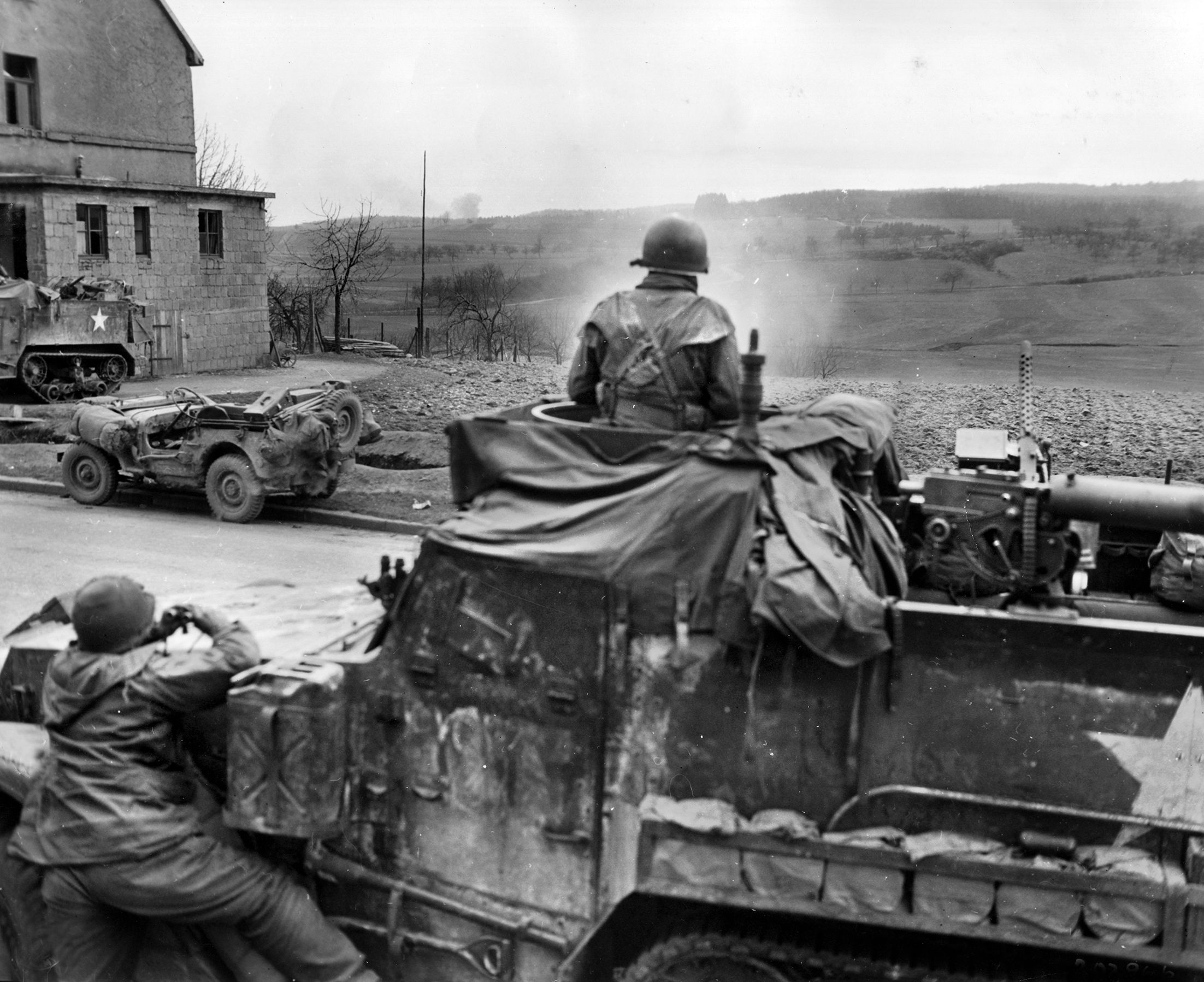
By the next morning, March 25, in Middleton’s VIII Corps zone, Culin’s 87th Division had secured a bridgehead across from Boppard, but German fire and fast currents at Rhens prevented the assaulting soldiers from achieving more than a shallow bridgehead, which would soon be abandoned, and the troops rerouted to Boppard. Meanwhile, in Eddy’s XII Corps zone, Hoge’s 4th Armored, which had bypassed Darmstadt to the south, raced 30 miles north and captured two railway bridges over the Main River east of Frankfurt, one at Hanau and the other at Aschaffenburg. At the same time, Grow’s 6th Armored passed through both Earnest’s 90th and Irwin’s 5th Divisions and headed directly to Frankfurt. Meanwhile, a task force from Earnest’s 90th captured Darmstadt, supported by trailing elements of Hoge’s 4th Armored.
Wanting another Rhine crossing north of Mainz, where the Main flows into the Rhine, Patton contacted Walker, who was still moving units north, and ordered him to cross there “as soon as practicable.” Walker chose Maj. Gen. Horace McBride’s 80th Infantry Division to make the crossing. For as much as Patton wanted additional crossings, the ones he already had were impressive. In Eddy’s zone, two pontoon bridges stretched across the north-flowing Rhine upstream from the blown German bridge. Further upstream, tanks and trucks rumbled across a treadway bridge, and even further, a mine net, which resembled a series of beads on the surface, stretched across the river to snag any mines the Germans tried to float into the bridges. Power launches cut wakes as they passed back and forth, delivering American infantry to the east bank and returning with German prisoners.
The next morning, March 26, in Middleton’s VIII Corps zone, Finley’s 89th Division crossed the Rhine two hours after midnight. Two assaults, one from Sankt Goar (the closest crossing to the Lorelei) and another south at Oberwesel, made it across the river and formed small bridgeheads, but German fire made initial reinforcement difficult. German flares lit up the night and assault boats came under withering fire.
General Motors DUKWs, six-wheeled amphibious vehicles known as “Ducks,” were pressed into service to bring in reinforcements. By noon, Finley’s men had rooted out the German defenders on the east bank, eliminating the harassing fire on the follow-up troops. Ground troops, supported by a squadron of P-51 Mustangs strafing the enemy, made it to Lorelei’s summit, where they raised an American flag and the division banner.
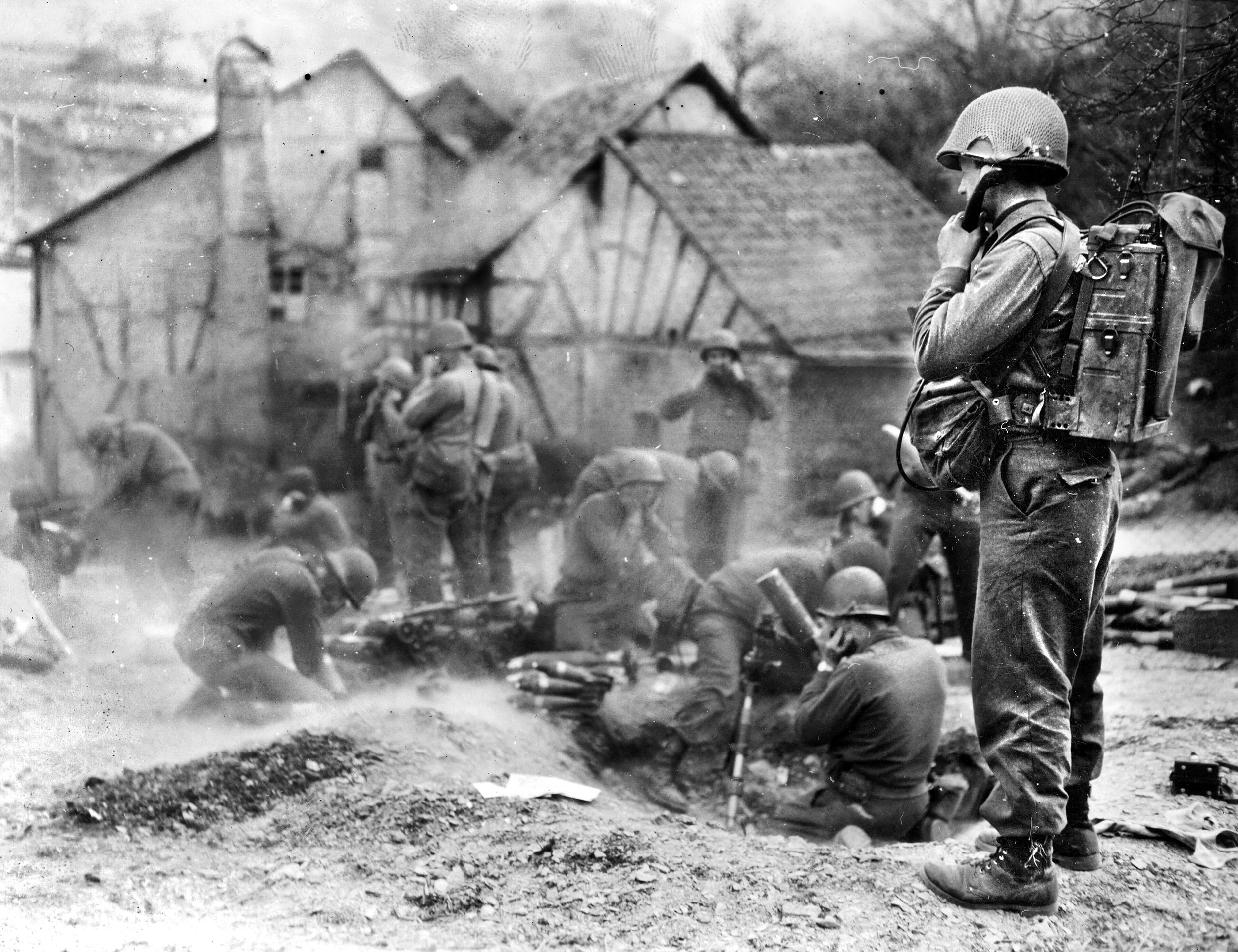
At 1 a.m. on March 28, the infantrymen of McBride’s 80th Division in Walker’s XX Corps zone pushed off in assault boats in Mainz to cross the Rhine and Main Rivers. The troops moving across the Main had crossed the Rhine further south, over the Oppenheim bridge. McBride, like Irwin, chose not to prepare the east bank with an artillery barrage, even though some of his officers, who had been down to the river, warned him that the Germans were waiting and that an artillery barrage would probably scare them off. Deadly German machine gun and artillery fire harassed the men in the assault boats, who suffered between 150 to 300 casualties.
Once across, the infantrymen fought north eleven miles to the town of Auringen, directly east of Wiesbaden, while engineers remained at the river and built a treadway bridge and follow-on troops crossed via three ad hoc ferry lines. By that evening, McBride’s 80th had captured Wiesbaden.
Patton showed up at the bridge with Walker and McBride to witness a rocket-firing tank that contained about 60 tubes mounted above the turret. The tank let loose at the Germans in a town no more than half a mile away, completely leveling it. Patton then approached a group of soldiers from Maj. Gen. Willard Wyman’s 71st Infantry Division. The unit, part of Seventh Army, was scheduled to transfer to Third Army the next day. Patton told them how proud he was of the men under his command. The soldiers stood in amazement that a German sniper did not try to take him out. When he finished, he said, “Now I’ve gotta leave my mark in the river.” Once the bridge was completed, Walker’s corps frontage would only be as wide as the autobahn, as his three divisions cruised at 30 miles per hour along the wide, modern highway.
Only six days after Patton’s initial Rhine River crossing, more than 6,000 vehicles had crossed onto the east bank, using numerous treadway bridges. The Rhine, which had been such a psychological barrier for so many Allied commanders, including Patton, had become a highway. In two months, the war in Europe would be over—the crossing of the Rhine spelled doom for Nazi Germany.
Frequent contributor Kevin M. Hymel is the author of Patton’s War: An American General’s Combat Leadership, Volume 3, from which this article is based. The book completes his Patton trilogy. Hymel is a historian with Arlington National Cemetery. He also leads tours of Gen. Patton’s battlefields for Stephen Ambrose Historical Tours and co-hosts the podcast “World War II Live” with his friend John C. McManus.


Join The Conversation
Comments
View All Comments