By John E. Spindler
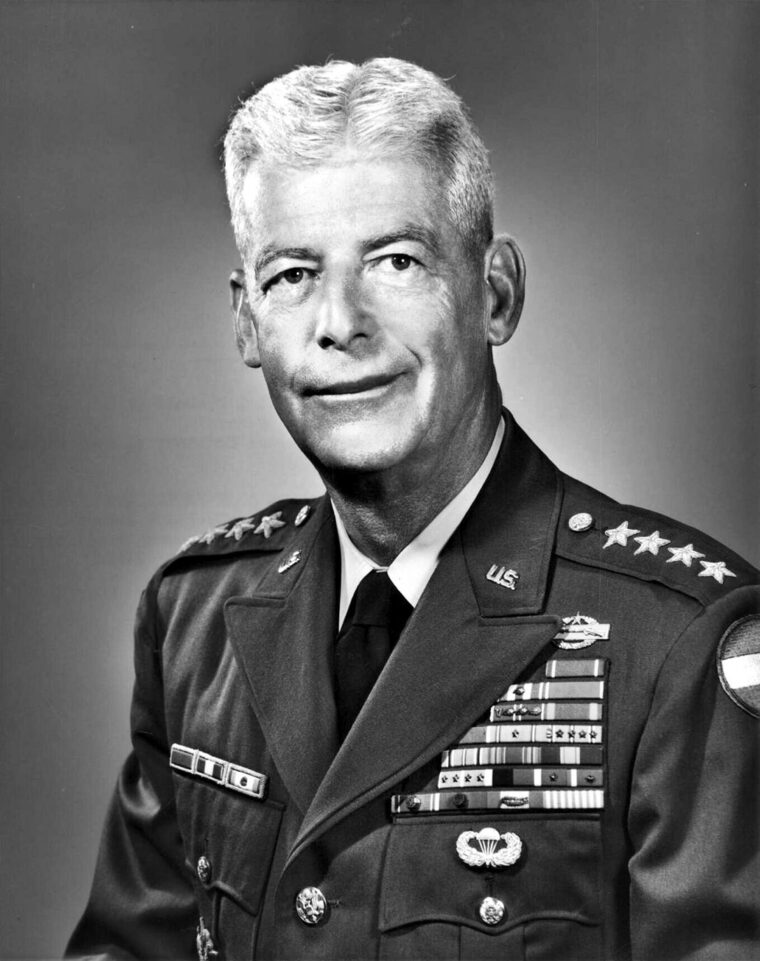
On a cool November day in 2018, the U.S. 2nd Infantry Division dedicated Freeman Hall, its new headquarters building in Camp Humphreys in Pyeongtaek, Republic of Korea. In the ceremony, a pair of soldiers unveiled a plaque honoring General Paul L. Freeman Jr., the headquarters’ namesake, 30 years after his death. A colonel at the time of the conflict, he commanded the 23rd Regimental Combat Team and demonstrated outstanding leadership from initial deployment along the Naktong River to his crucial direction in the February 1951 Battle of Chipyong-ni, sometimes called “the Gettysburg of the Korean War.” While his regiment earned two Presidential Unit Citations, Freeman received the Distinguished Service Cross, a Purple Heart, and the French Croix de Guerre with Palms. Although not returning to the action in Korea upon recovery, he went on to become a four-star general with an illustrious career that ended with his retirement in 1967.
The son of an Army surgeon, Freeman was born in the Philippines on June 29, 1907. Following his father’s career path, he graduated from the U.S. Military Academy in 1929. After a few years stateside he was assigned to Tientsin, China (now called Tianjin). After another tour in America, he was sent to the China, Burma, and India Theater during World War II for two years—greatly increasing his knowledge of China, its culture and the Mandarin language. Transferred to various assignments in America, Brazil and Latin America during the late years of the WWII and the post-war years, he met Gen. Matthew Ridgeway when both served on the Joint Brazil-United States Military Commission. At the end of his stint on this commission in June1950, Freeman received his first unit command. His assignment would be the 23rd Infantry Regiment of the 2nd Infantry Division, stationed at Fort Lewis, Washington. A planner who saw almost no combat time, he had little time to become familiar with his unit.
On June 25, 1950 the armed forces of North Korea invaded their neighbors to the south with the intent to unite the Korean people. America immediately responded by dispatching military forces to the country, including the 2nd Infantry Division. Arriving in August, the division and its three regiments went into the fray. Stationed along the Naktong River near Taegu, it would experience its first action against the North Korean People’s Army (NKPA). In late August and again in the first part of September, the 23rd Infantry Regiment, “Tomahawks” as the unit was nicknamed, and its fellow 9th Infantry Regiment took the brunt of the NPKA’s 2nd Infantry Division attempts to breach the defensive line. Hindered by his divisional commander’s discouragement of strong defensive positions, the colonel adapted to situations as they arose.
Freeman’s command style and philosophy of being seen by his men and giving orders in person whenever possible derived from his experiences of serving under able and competent officers. This philosophy and being devoted to his men resulted in their undivided loyalty. As demonstrated in the heavy fighting along the Naktong, he felt best to stand one’s ground as the regiment would inevitably incur severe losses during a retreat. Forced to endure ammunition shortages, this problem plagued Freeman and the 23rd Regiment until his final battle at Chipyong-ni.
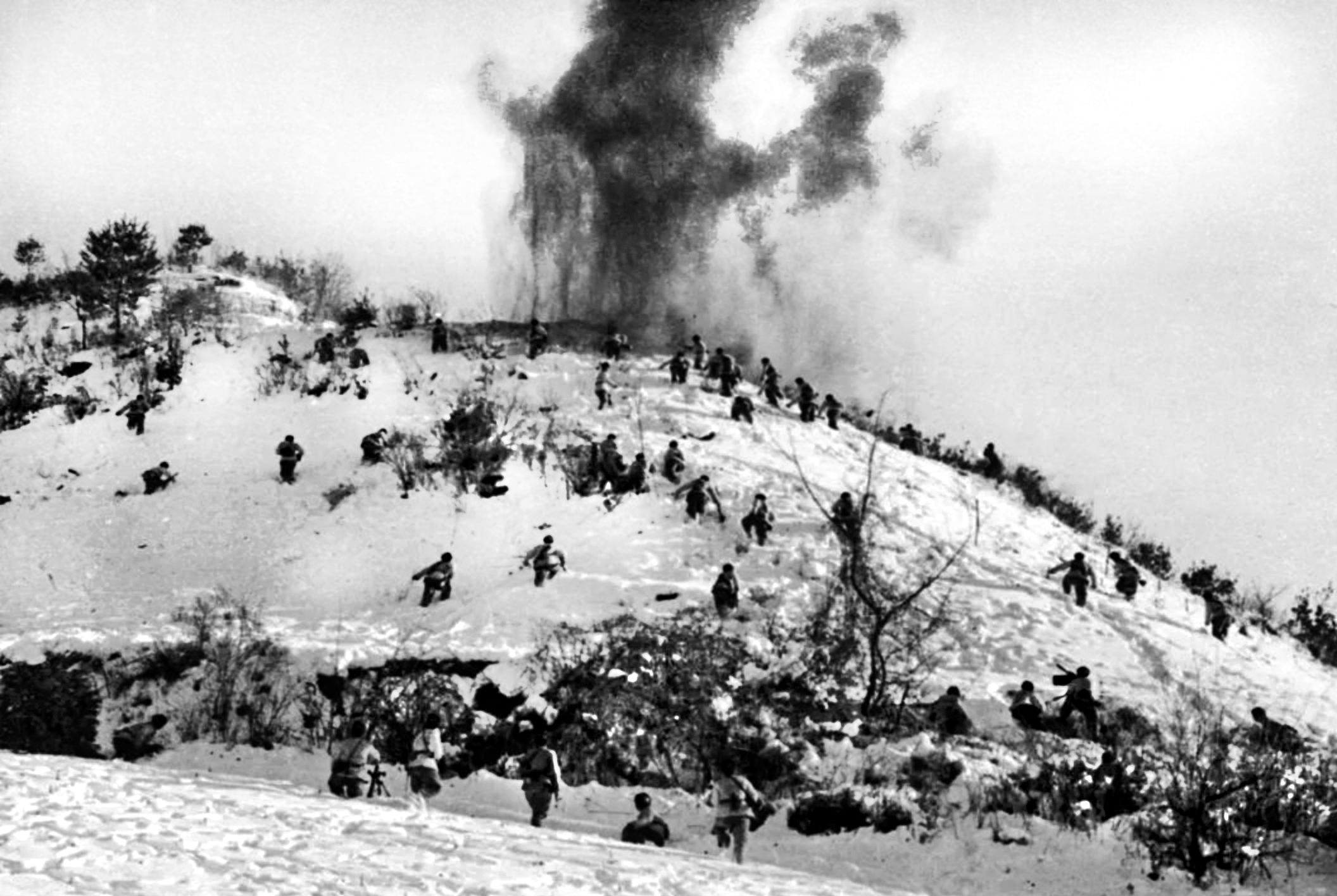
Momentum shifted on September 20 as the United Nations’s forces went on the offensive and the regiment crossed the Naktong River. For the next two months the “Tomahawks” drove north without issue. As United Nations (U.N.) forces closed upon the border with Communist China, Beijing issued warnings that went unheeded. After crossing the Sunchon River, Freeman believed that his men had already encountered Chinese Communist Forces (CCF). Unfortunately for the American soldiers and allied troops that would be directly impacted in the near future, senior American officials leading the United Nations’s forces dismissed such warnings even those backed by provable evidence. Starting in late November, he kept his regiment together along the Ch’ongch’on River for what felt would be the inevitable Chinese response. Fluent in Mandarin, Freeman interrogated recently captured prisoners and learned they were from the 40th Chinese Army. The CCF launched their First Offensive to the total surprise of U.N. divisions and forced them in a pell-mell manner south. Although the other 2nd Infantry Division’s infantry regiments, the 9th and 38th, received maulings, the 23rd remained intact, largely due to Freeman’s leadership.
At Kunu-ri on rearguard duty, the 23rd Regiment defended while American forces crossed the bridge. Seeing the potential of disaster and the endless traffic snarls, the colonel sought an alternate route for his men. He found one at Anju, however that was assigned to the U.S. I Corps. Controversy arose as he sought permission to use this path. After a delay, the reply from the 2nd division’s assistant commanding officer was for Freeman to do whatever necessary to avoid further losses. Deciding to use the Anju route no matter the consequences from above, he had his accompanying artillery fire off their remaining 3,206 rounds before spiking the guns, then led the “Tomahawks” safely to their destination without major casualties.
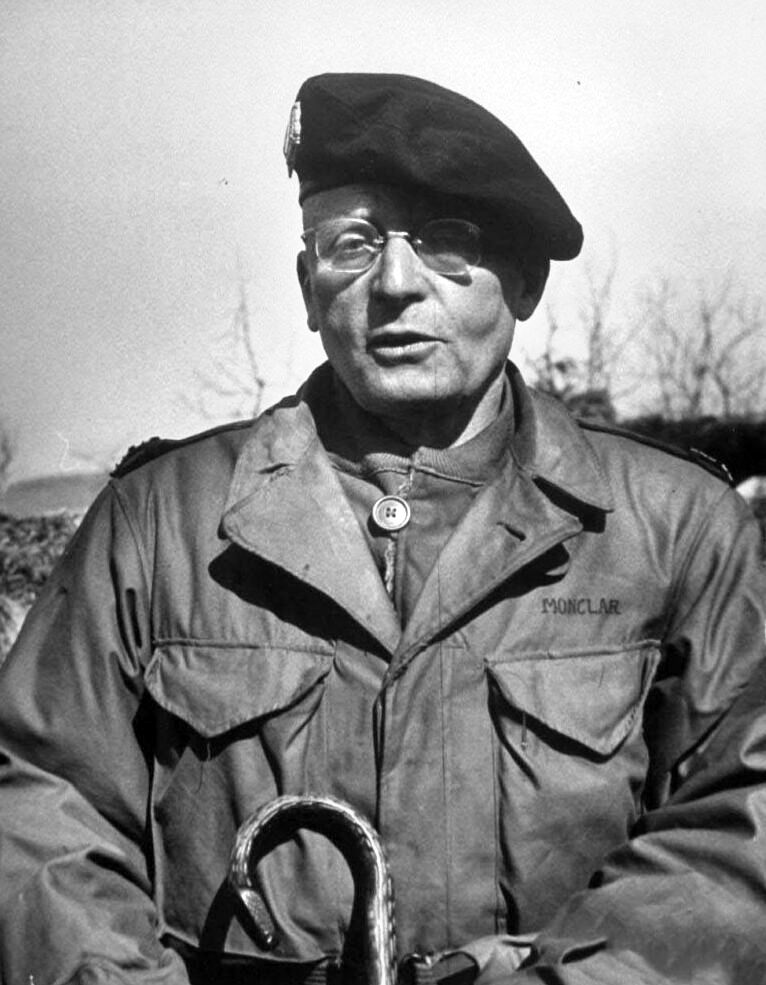
Pulled out of the line to recuperate and refit, on December 11 Colonel Freeman made a decision that would significantly strengthen his unit in numbers and fortitude as well as provide the means for future success—he accepted the French battalion that had been sent to Korea. Having been rejected by the division’s other regiments due to unfounded prejudices, the all-volunteer unit would prove itself invaluable. As important as the men themselves would be the battalion’s commanding officer, Lieutenant-Colonel Ralph Monclar (nom de guerre of Raoul Magrin-Vernerey). At 58, Monclar actually held the rank of lieutenant-general but took a voluntary demotion to lead the French Battalion in Korea. Sharing a similar combat leadership style to Freeman, Monclar stayed visible to his men and visited their positions routinely. The two commanders’ bond of respect and trust would quickly extend between the American and French soldiers.
During this time, Freeman also added field artillery, engineers, and an anti-aircraft battery equipped with M-16 quad-50 caliber and M-19 dual 40mm self-propelled guns to become the 23rd Regimental Combat Team (RCT). Also joining the newly-created RCT would be a company of U.S. Army Rangers. Additional changes took place that were out of his control. After the tragic death of American Lt. Gen. Walton Walker in a traffic accident, General Ridgeway took command of the U.S. Eight Army and essentially overall leadership of U.N. forces in Korea. Ridgeway assigned the 2nd Infantry Division to Maj. Gen. Edward Almond’s U.S. X Corps. Freeman and Almond would not get along well. He knew he was on short leash as Almond often replaced subordinate commanders with officers he favored.
In January 1951, the 2nd Infantry Division participated in Operation Thunderbolt and the 23rd RCT was tasked with occupying and holding the road hub of Wonju. From January 9 to 17 in sub-zero temperatures, the battle for Wonju took place. Freeman’s decision to accept the French proved to be astute where their fighting mentality worked well with Freeman’s leadership style. The 23rd RCT was then ordered to take a location known as the Twin Tunnels. At the onset of this engagement, a reconnaissance unit sent by Freeman was ambushed and took severe casualties. Instead of dwelling on his mistake, he used this error as an expensive learning experience for the future. During this battle, both Freeman and Monclar walked the lines, made themselves visible and talked with the men. The American colonel experienced an uncomfortable moment when he had to reprimand Monclar because the French troops had lit fires. Wanting to maintain the element of surprise, Freeman got Monclar on the line and told him to have the fires put out to keep from attracting the enemy. Without a trace of irony, the Frenchmen asked if that was not desirable, so that they could be killed. A speechless Freeman hung up, but within 30 minutes all fires were out. Between Wonju and Twin Tunnels, he learned the value of employing the self-propelled AA guns in a ground support role as they were the best method of clearing ridges of enemy soldiers. After the success at Twin Tunnels, Freeman received orders to proceed further northwest to another crucial road hub at Chipyong-ni. On the afternoon of February 3, the “Tomahawks” arrived and set up a defensive perimeter.
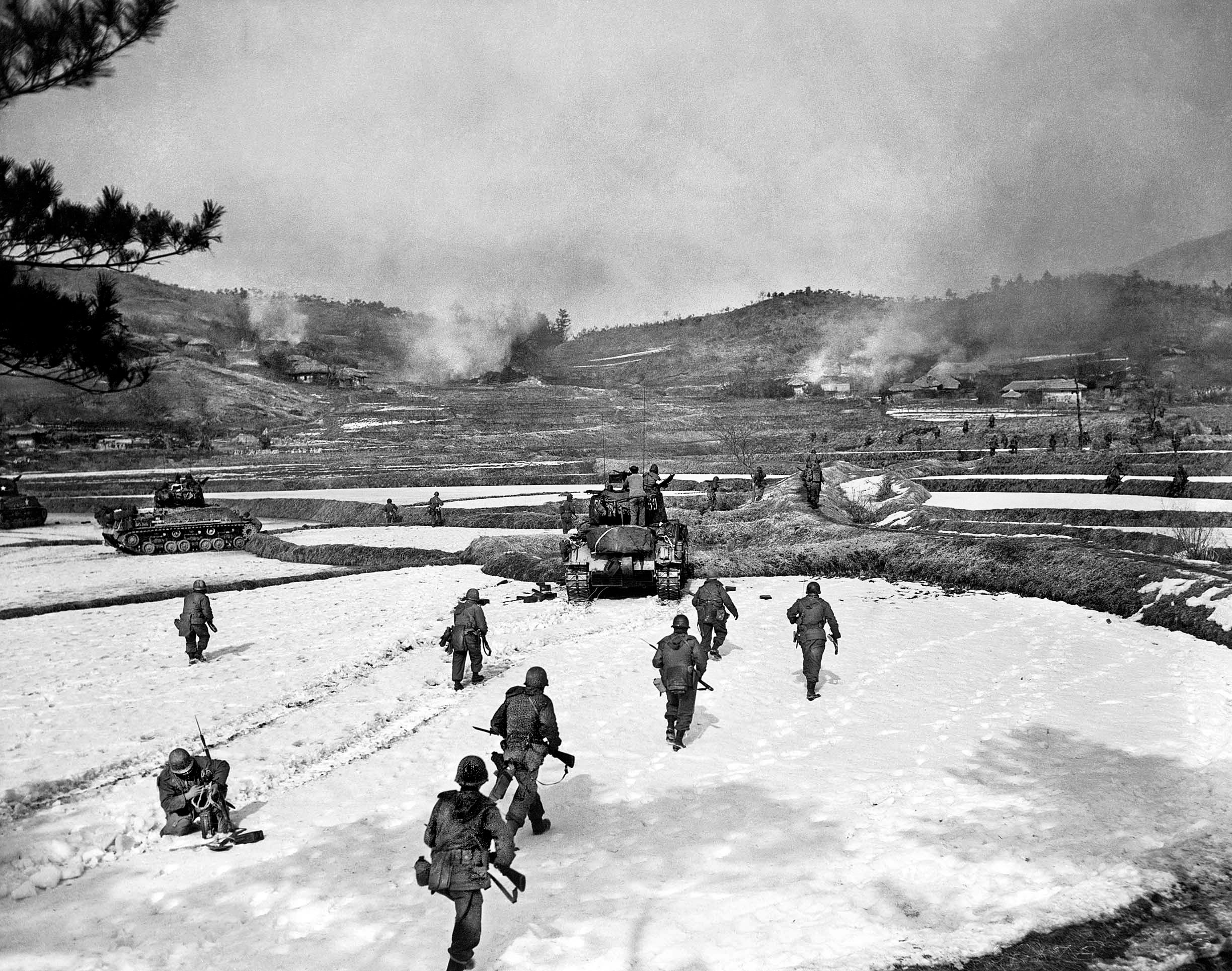
A series of hills surrounded the town and valley, offering an ideal defensive perimeter, but only if enough troops were available to man the four-mile ring. With only a reinforced RCT, Freeman was forced to adopt a much smaller and less ideal defensive perimeter. He would have ten days to position his three battalions and Monclar’s Frenchmen. Having personally experienced the Chinese infiltration and attack tactics, he had infantry, artillery, armor and flak wagons located in best possible positions among the hills and frozen rice paddies. Fougasses (barrels of napalm) were buried and set up to surprise the enemy. Both GIs and French dug trenches in front of their main ones which would be occupied during the day and vacated at night. Once overrun by the enemy, the artillery would rain down on these pre-registered targets. For the first time since arriving in country, Freeman’s regiment had accumulated a surplus of ammunition. He aggressively patrolled the area to learn when the Chinese would arrive. On February 11, the Chinese Fourth Offensive came down upon the U.N. forces. Six hours after it began, Freeman learned about the attack. Final preparations were initiated.
As Chinese forces quickly arrived to the north, west and east of Chipyong-ni, the need to head south became more imperative. Freeman requested a withdrawal southwards before the enemy severed the route. Both General Almond and the 2nd Infantry Division’s commander recommended to Ridgeway to withdraw the 23rd RCT back to Yoju. Knowing its importance, Ridgeway adamantly rejected the recommendation. The “Tomahawks” must remain at Chipyong-ni. A successful defense there would disrupt the enemy’s great offensive. Freeman was promised close-air support and to be supplied by air. He was informed that a relief force would clear a route if extraction of the regiment became necessary. On February 13, Freeman called his battalion commanders together and explained the situation. The Chinese had surrounded them and they were to stand and fight. Freeman had 5,400 Americans and Frenchmen facing off against a significantly larger foe.
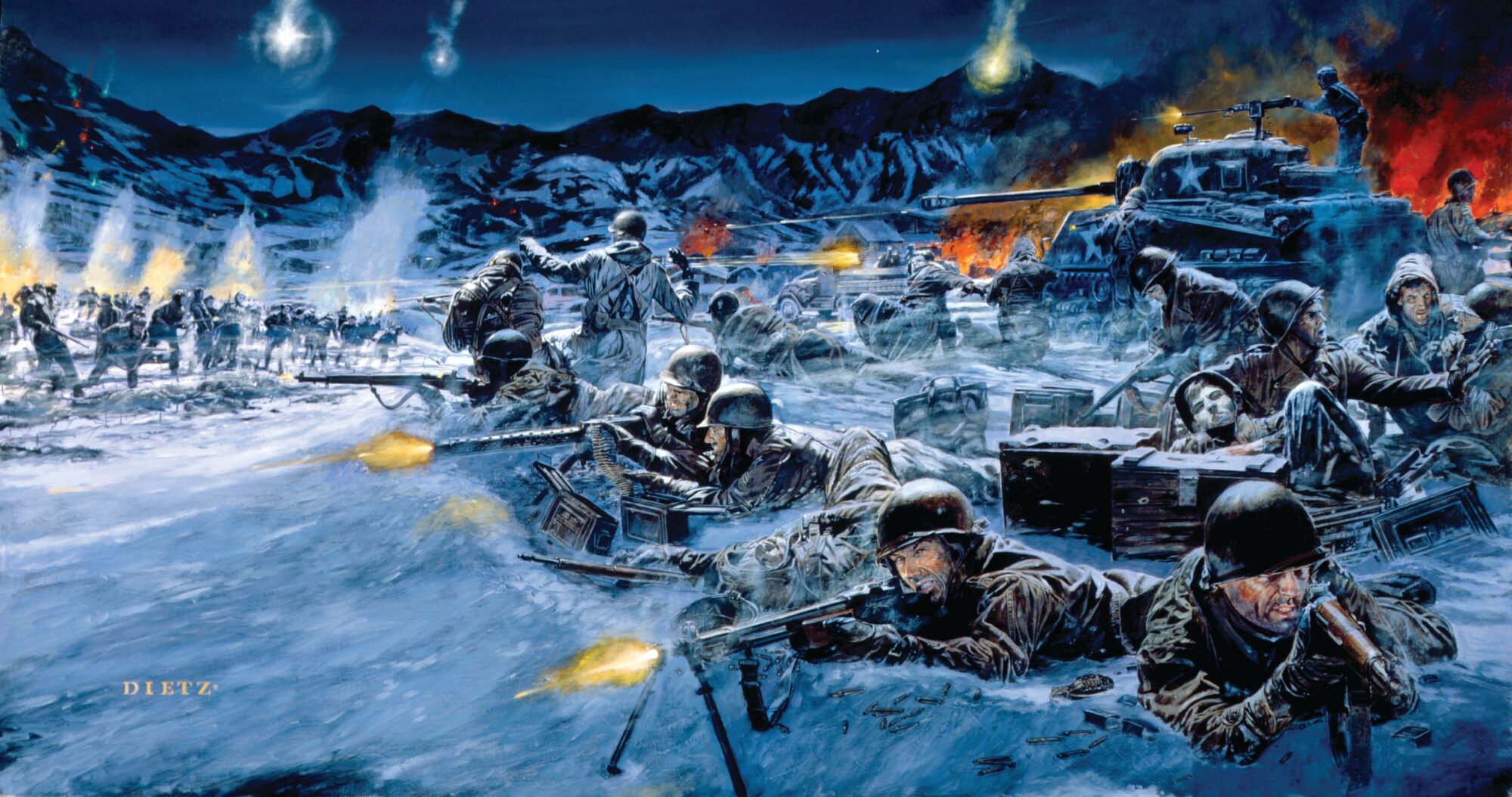
That night at 10:07 p.m., the Chinese launched their first attack against the defenders of Chipyong-ni. Shortly after the suppressing barrage blanketed Chipyong-ni, horns, whistles, and bugles announced the pending infantry assault. Americans and Frenchmen withstood these initial assaults. Freeman remained visible, which kept up morale despite the incoming artillery and mortar fire falling at a rate not felt since along the Naktong. Within a few hours, the rate of ammunition usage by the RCT concerned the colonel enough for him to send the word to not waste ammunition. In the early hours of February 14, CCF forces again tried. Perhaps over the din of battle, Freeman heard an air siren. Confused, as he knew the enemy possessed no air support, he noted the siren emanating from Monclar’s position on the west. Learning later, the French used the hand-crank siren to give the Chinese a taste of their own psychological warfare. Their ensuing bayonet charge not only pushed back the Chinese but secured 15 prisoners.
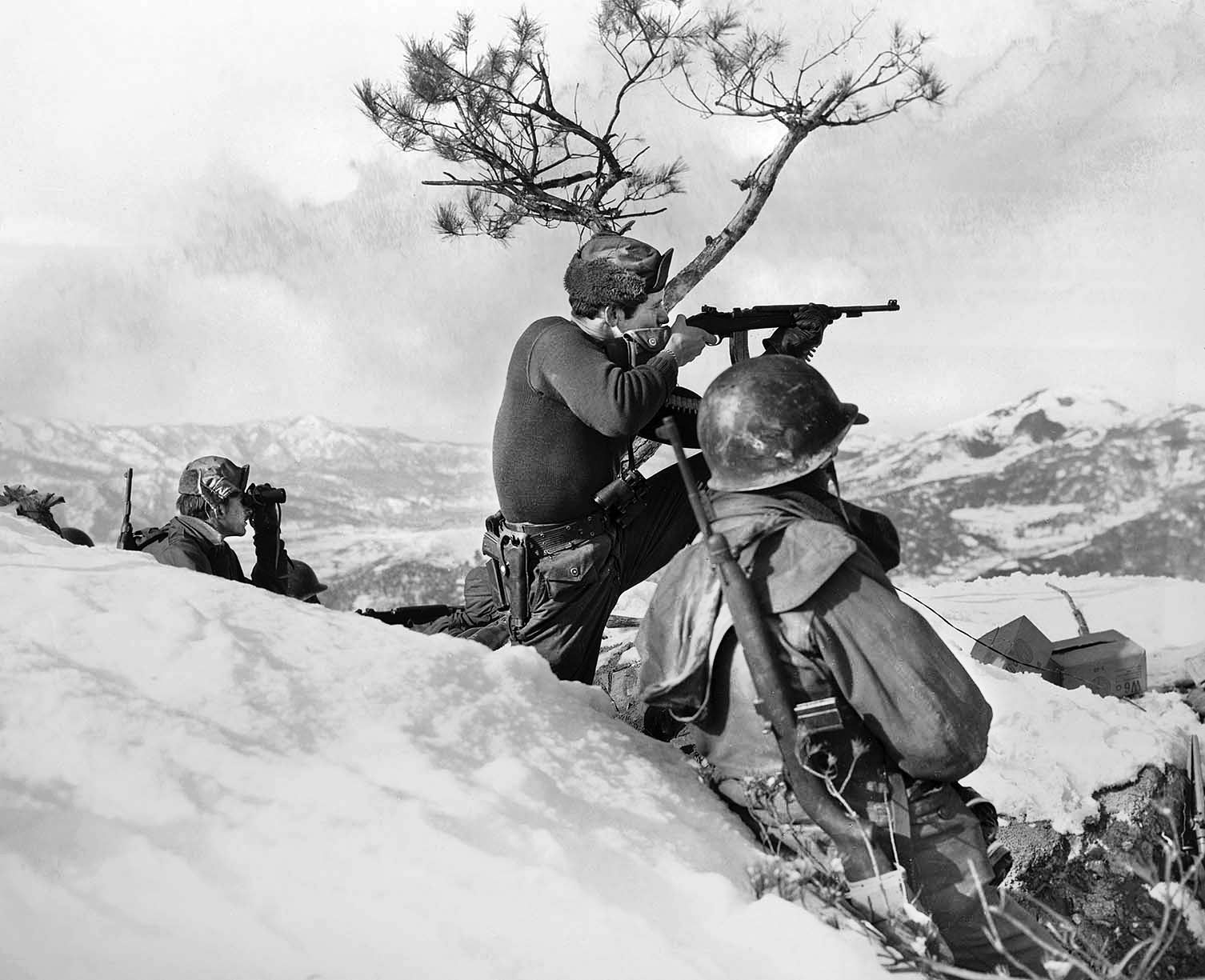
Mid-morning, Freeman personally interrogated them and from an officer learned that elements from five divisions were attacking the 23rd RCT with a strength of 30,000 men. In reality, at least 18,000 men from six different regiments fought at Chipyong-ni. Less than thirty minutes after the interrogation, the colonel went back to his tent to finally get some rest. Having a few last words with a pair of officers, a CCF 120-mm mortar round hit next to his command post. One officer was killed immediately and another knocked down. Freeman did not escape unscathed. According to him, “A fragment of it, I guess, about two or three inches hit the bottle of Old Grandad (the last bottle of whiskey in the camp); glass and whiskey flew all over the place and then it went into my leg and it made a very nasty looking hole.” Although wounded, Freeman continued to direct the battle.
Hearing about Freeman’s wounding up at X Corps headquarters, Almond dispatched his own chief of staff, Lt. Col. John H. Chiles, to take command at Chipyong-ni without consulting the 2nd Infantry Division’s commanding officer. Freeman became enraged upon receiving the order to evacuate on the helicopter bringing in Chiles. Upon its landing later on the 14th, he managed not to be near the evac site. Freeman, whose senior officers expressed outrage at Almond using a minor wounding to remove him and replace with one of “his boys,” told Chiles to stay out his way as a battle was still going on, one he intended to see through. He believed an officer being replaced in the midst of battle was the worst possible disgrace. A discussion with the 2nd Division’s assistant commander resulted in a compromise; Freeman would follow X Corps’ order but depart at time of his choosing. For the rest of the day, he kept visible to his men, instilled confidence, and prepared for the next assault.
The night of February 14/15, the Chinese struck again, targeting the 2nd Battalion on the southern portion of the perimeter. Freeman was forced to improvise to retake lost positions because almost all reserves engaged in battle. One example that was not successful but not a total failure saw some artillerymen being employed as an ad-hoc infantry squad. By morning, the situation stabilized sufficiently with the much-welcomed assistance by close-air support. Learning an armored task force was on its way to the 23rd RCT, Freeman agreed to be flown out that day. Around noon, he made his way near the French Battalion’s positions where he boarded a medical helicopter. Those who accompanied him remarked seeing tears coming from their commander. The helicopter flew him to a M.A.S.H facility at Chungju where General Ridgeway greeted him. Back at Chipyong-ni, Chiles wisely let the regiment’s executive officer continue to command the unit due to his familiarity with the situation and the men fighting the battle. The uninterrupted performance of the 23rd RCT reflected Freeman competence as a leader.
After a U.S. armored task force arrived at Chipyong-ni, the Chinese withdrew by February 16, leaving their dead. While the enemy suffered dearly with an estimated 5,000 dead and wounded, the 23rd RCT lost 51 killed, 250 wounded, and 42 missing. Of this figure, the French Battalion comprised 10 dead and 80 wounded. Freeman’s preparedness and confidence in his unit’s abilities, plus a solid working relationship with Monclar, contributed to the relatively low casualty numbers.
The heroic stand by the 23rd RCT plus another successful defense at Wonju broke the Chinese Fourth Offensive. After having recovered from his wounds, Freeman expected to return to Korea. Instead, he was sent upon a public relations campaign that used his heroic actions to build public support. After graduating from the National War College, he rose through the ranks and performed various roles including taking command of the 2nd Infantry Division in 1955. Freeman received his fourth star on May 1, 1962, and became Commander-in-Chief of the U.S. Army in Europe, a duty he performed until 1965. His final assignment was as Commanding General, U.S. Continental Army Command before retirement in 1967.
Freeman earned many medals and awards in his career, both U.S. and foreign. For his leadership and action in Korea he received the Distinguished Service Cross. For being wounded at Chipyong-ni, he earned the Purple Heart. Other awards included the Silver Star Medal with 2 Bronze Oak Clusters, Korean Service Medal with 4 Bronze Stars, Army Presidential Unit Citation, the French Legion of Honor, and the previously mentioned French Croix de Guerre with Palm.
In World War II, Freeman had served on staffs in the China, Burma, and India Theater, and those years as a planner had helped when he earned his first command, taking over the 23rd Infantry Regiment only weeks before being sent to Korea. He proved to be an adept planner as well as an excellent leader in combat, bonding with his men by being seen and getting to know them.
Freeman died April 17, 1988, in Monterey, California, and was buried at Arlington National Cemetery.
Join The Conversation
Comments
View All Comments