By Bill Warnock
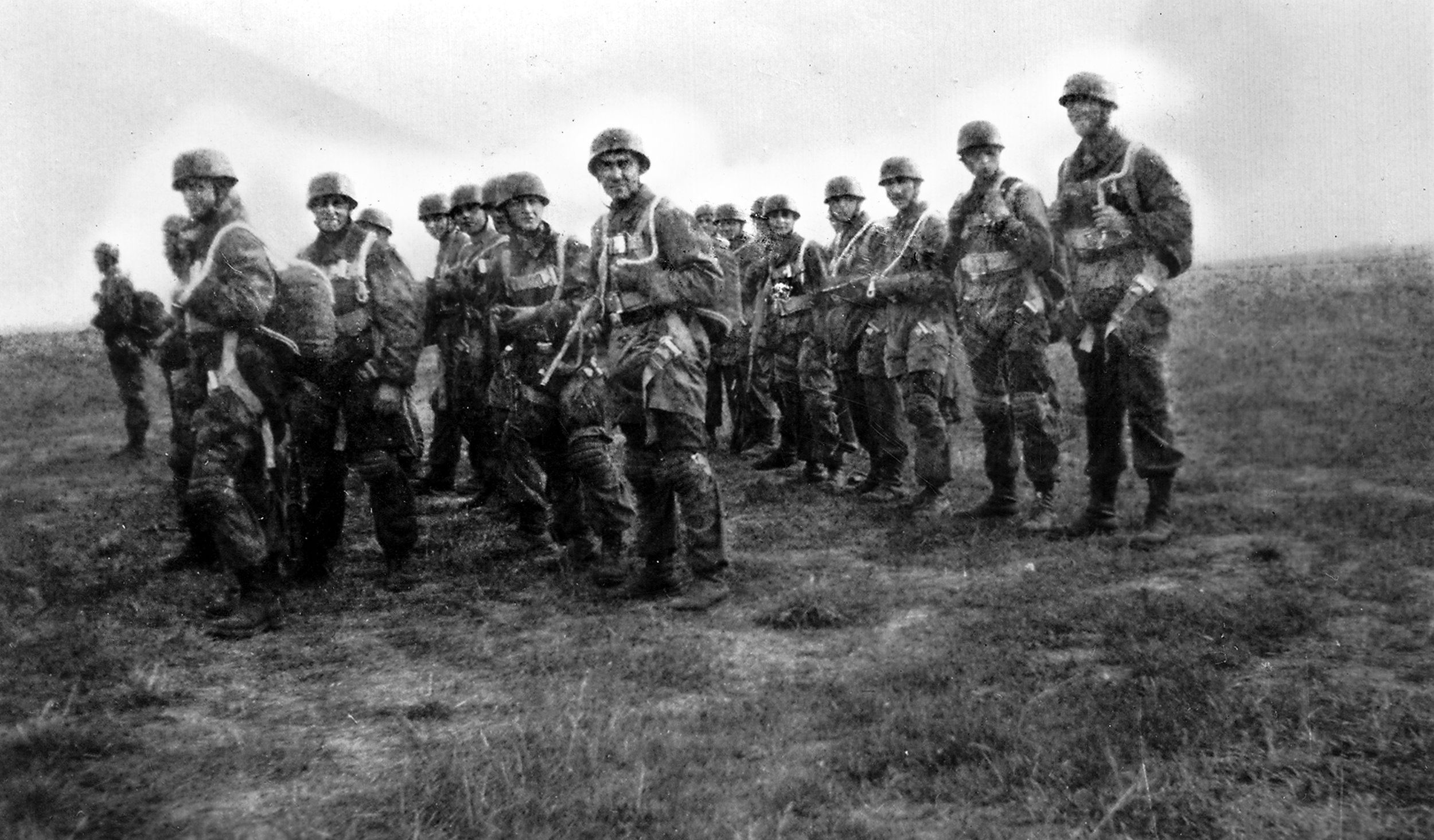
Rudolf Jackl dove headfirst from the aircraft door, stretching his arms toward the ship’s port wing to keep from getting tangled in his parachute’s shroud lines as he was slammed by turbulent air. He was one of 10 trainees leaping into the sky in rapid succession, surrendering themselves to gravity. For a few adrenaline-filled seconds, the world spun around him before he was wrenched upward by the opening of his canopy. It was exhilarating, that moment in the air, suspended from his harness as he descended onto the drop zone at the jump school. Forty-five seconds after diving from the plane, his feet hit the earth, and he rolled to absorb the impact.
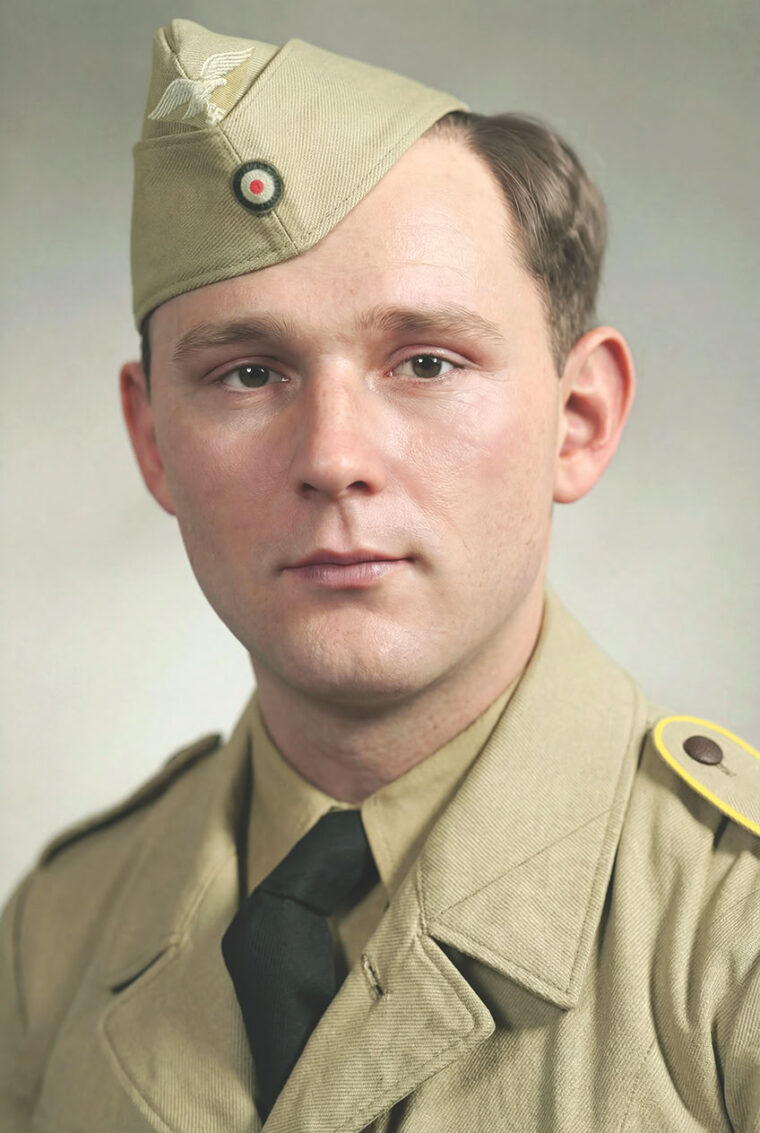
As a skilled machine fitter, Jackl had never imagined becoming a paratrooper when he joined the Luftwaffe at 18 in April 1942. Upon completing basic training, he attended a technical school before deploying to Crete, where he worked in an aircraft repair workshop. Inspired by Reichsmarschall Hermann Göring’s appeal to rear-echelon personnel in September 1943, Jackl volunteered for frontline service.
After delousing and medical examinations, he found himself in the barracks area of the Fallschirmschule (Airborne School) at Wittstock-Dosse, some 55 miles northwest of Berlin, where he would begin a new chapter of his military career as a paratrooper. His parachute training took place in bitterly cold weather during January and February 1944. To graduate, he completed six jumps: four from a Junkers 52; one from the bomb bay of a Heinkel 111; and, finally, one from a Savoia-Marchetti SM 81, an Italian transport aircraft. He was now a Fallschirmjäger (literal translation, “parachute hunter”), earning the coveted Luftwaffe Paratrooper Badge featuring a diving eagle clutching a swastika within a wreath.
At the end of February, Jackl and his fellow graduates took a transport train through the scenic Brenner Pass into Italy. In Bolzano, the train halted for several hours before changing course toward France. The men disembarked east of Paris at Bar-le-Duc and occupied a former French Army barracks. The small city was pulsing with activity, as several Luftwaffe units provided cadre for the newly forming 3rd Fallschirmjäger-Division, commanded by Generalleutnant Richard Schimpf. Among them were officers and non-commissioned officers adorned with combat decorations, some of them veterans of the 1941 invasion of Crete.
Jackl was assigned the role of combat engineer. His training encompassed trench construction, laying minefields, assembling demolition charges, and building water crossings. Jackl served in the engineer platoon of the 3rd Bataillon of Fallschirmjäger-Regiment 8.
Now consisting of 40 men, the platoon relocated to Landernau, Brittany, in April 1944. Hitler considered the Brittany peninsula a potential landing site for Allied airborne troops, particularly the fields and ridges of Monts d’Arrée, which offered favorable drop zones.
The engineer platoon settled in Sizun for specialized training as assault engineers. They operated under the experienced leadership of Oberfeldwebel Fritz Heinemann, an alter Hase (old hare) and recipient of the German Cross in Gold. Their advanced training encompassed tactics for bunker busting, close combat with tanks, and the use of flamethrowers. During mock battles, the engineers repeatedly stormed and destroyed fortified positions. Led by Hauptmann Josef Krammling, the 3rd Bataillon practiced battalion-sized assaults at Brasparts. Between these exercises, the platoon deployed to hunt down partisans in Locmélar and Brasparts.
Jackl received a reprieve from partisan hunting and the training regimen when his turn for leave arrived. He exchanged his 98k carbine for a P-08 Luger, a pistol being the only weapon permitted for personnel on furlough. As he passed through Cologne on his journey home, the city was a sad sight, battered and burned by Allied bombers. The aerial onslaught had also lengthened railroad journeys, forcing Jackl to spend six days in transit to and from Bavaria, reducing the precious time he could spend with his family.
When he returned to Brittany, rumors were spreading among the Fallschirmjägers that Allied forces would soon invade France. As Jackl recalled, “In English, we repeatedly practiced the sentence, ‘I am a German paratrooper.’ Alongside this, security measures were tightened, and we rehearsed various terms in English, which would prove useful when taking prisoners.”
Invasion had indeed been imminent, albeit far from Brittany. On June 6, 1944, Allied armies crossed the English Channel and landed in Normandy.
Acting on urgent orders, the 3rd Fallschirmjäger-Division dispatched a motorized Kampfgruppe (battle group) to Normandy. Led by Major Friedrich Alpers, an attorney and staunch National Socialist, the Kampfgruppe included Jackl’s battalion alongside Alpers’s own, as well as the 1st Bataillon of Fallschirmjäger-Regiment 9, plus the 2nd Kompanie of Pionier-Bataillon 3, and a medical unit.
The division suffered from a shortage of transport vehicles, but Jackl and his comrades were fortunate enough to ride in trucks, traveling by night to evade the watchful eyes of Allied airmen who prowled the skies throughout the day. The vehicle convoy drove into the hills northeast of Saint-Lô, where Jackl arrived during the final hours of June 8.
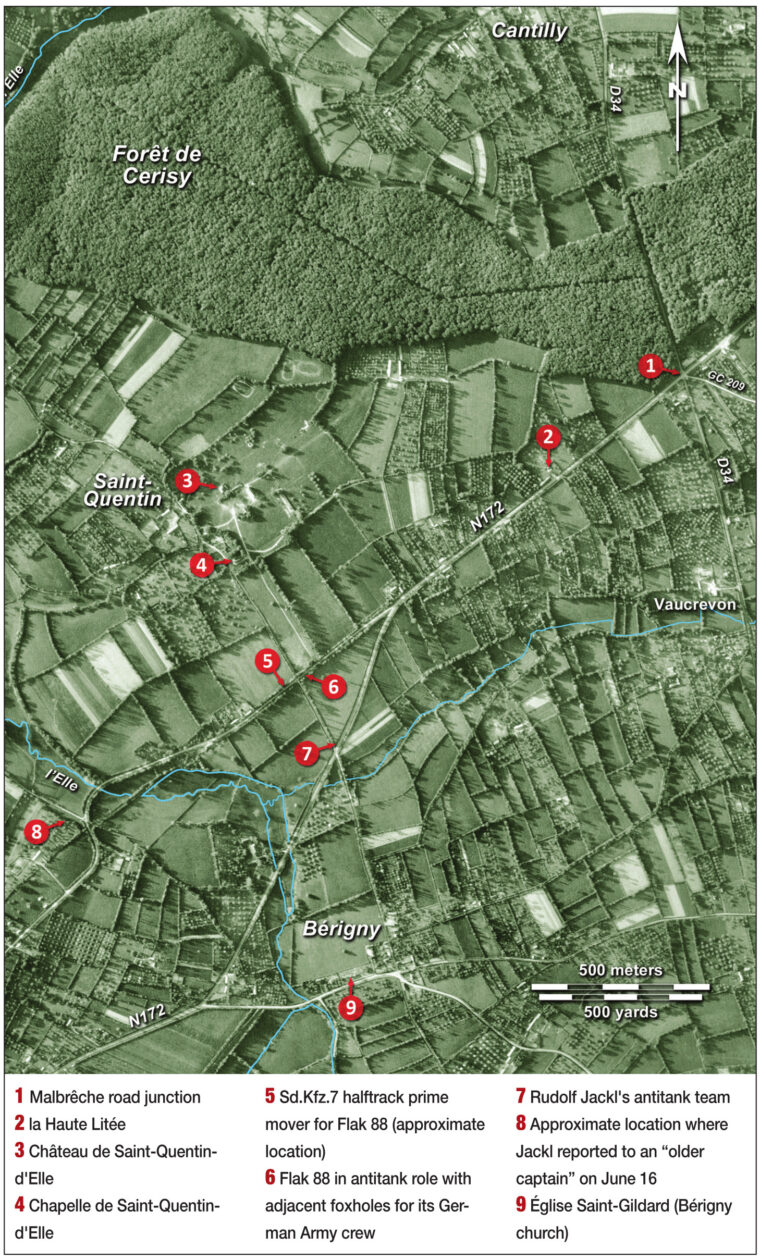
Jackl’s engineer platoon helped establish a blocking position alongside an 88-mm Flak gun deployed in an antitank role. This took place at a triangular road junction north of Bérigny, a position in echelon behind the rest of Kampfgruppe Alpers, approximately 700 meters to the east. Placed in charge of a three-man antitank team, Jackl and his subordinates stood vigilant against the looming threat of an American advance—a breakthrough might mean the fall of Saint Lô.
The ancient hedges and sunken lanes of Normandy became allies for the newly arrived Germans, who leveraged the terrain as force multiplier for their killing power. Established as far back as Roman times, these hedgerows fenced in cattle, marked property lines, and reduced soil erosion caused by winds off the English Channel. Each hedge consisted of an embankment three to five feet wide and up to nine feet tall (sometimes higher) topped with a leafy mass of saplings, brambles, and mature trees. When viewed from above, le bocage, or hedgerow country, looked like an asymmetrical mosaic of pastures and apple orchards.
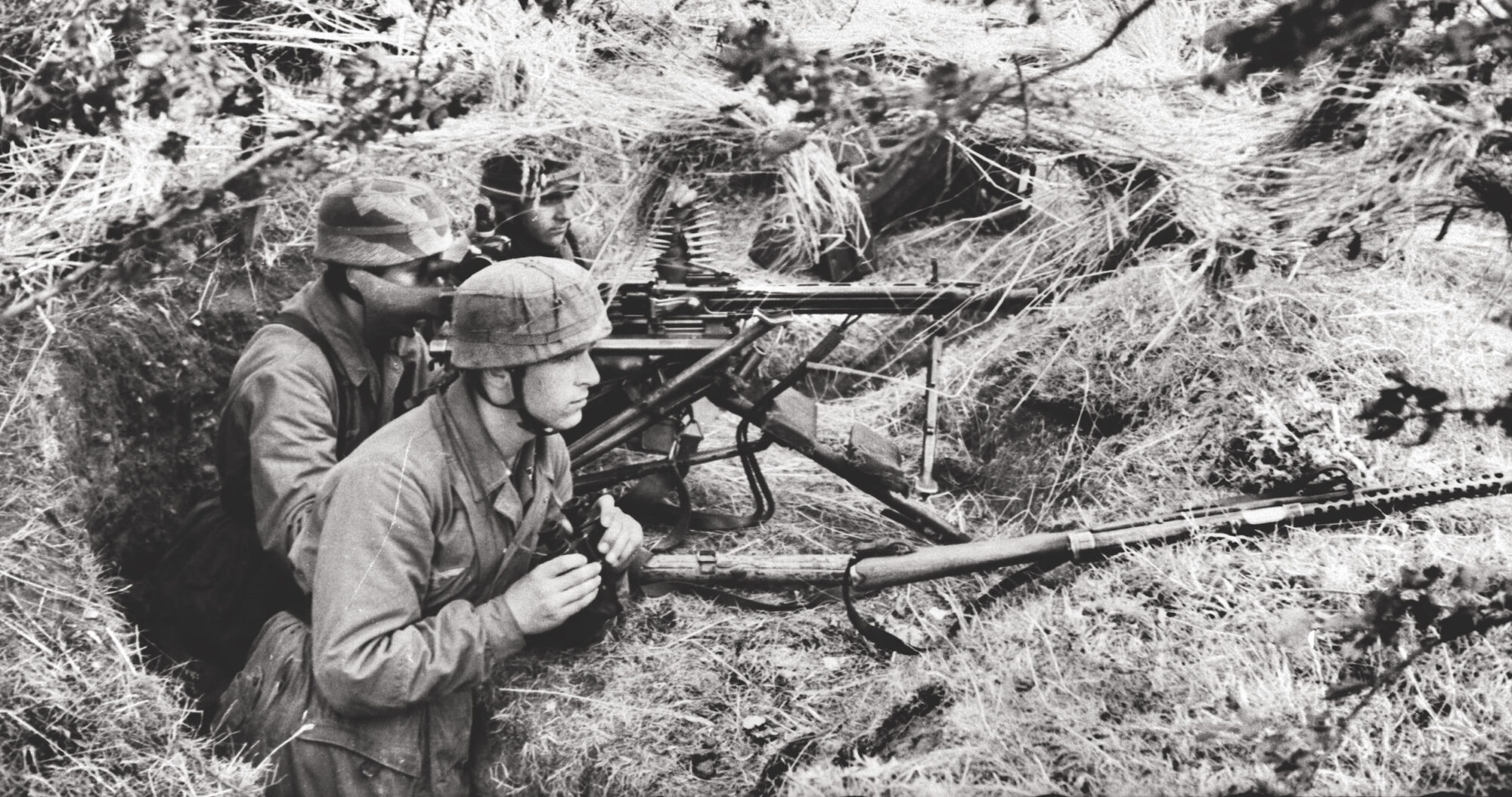
The Fallschirmjägers burrowed into the embankments within this green patchwork, carving out firing positions that allowed them to spray the meadows and orchards with death. Mortar crews situated themselves in sunken lanes nestled between hedgerows. The crew of the 88-mm Flak gun draped camouflaged netting over their weapon to help conceal it under trees along the shoulder of a road. Jackl’s team used netting to hide daisy-chained antitank mines, which could be pulled across an adjacent road. Their arsenal also included 3-kg. and 3.5-kg. magnetic hollow-charge devices for destroying tanks. The Fallschirmjägers had yet to receive a single Panzerfaust, the handheld antitank weapon favored by German troops. These would not arrive until the following month.
After sunrise on June 9, American artillery liaison aircraft circled in the skies searching for targets. Jackl and the other engineers referred to these as Krähen or “crows.” The flying artillery spotters struggled to identify the skillfully camouflaged German positions.

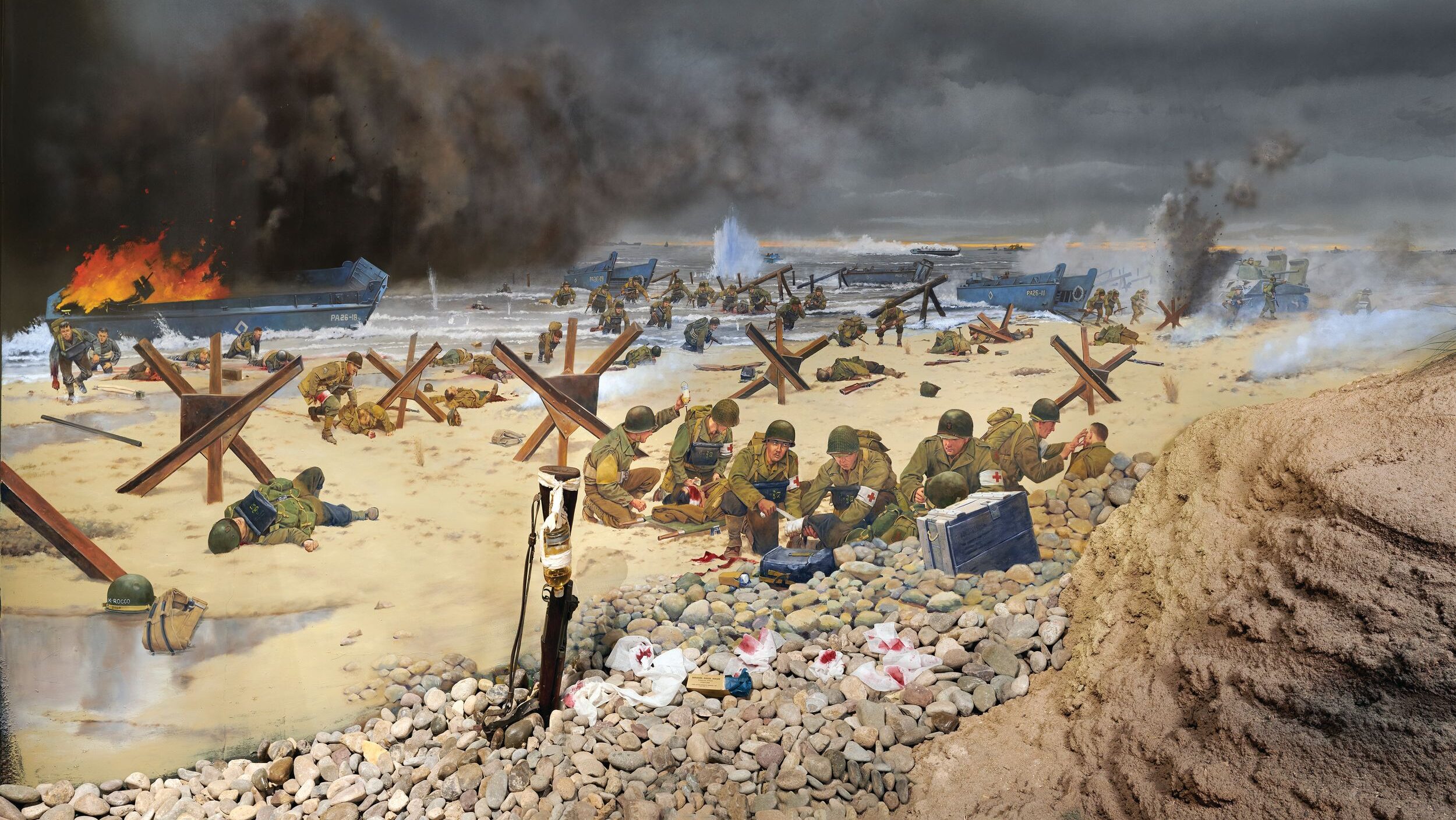
Soldiers from the First Battalion, 38th Infantry Regiment—part of the U.S. 2nd Infantry Division—finally reached the area on June 10. These newcomers had only landed at Omaha Beach the previous day and had since hiked five miles inland, encountering disorganized German resistance from the crumbling 352nd Infanterie-Division. The Americans pressed south through the foreboding Forêt de Cerisy (Cerisy Forest), encountering small-arms fire on the far side at the Malbrêche crossroads. Despite the resistance, the Yanks secured the vital five-way intersection, suffering only two men killed and nine wounded that day. After nightfall, the First Battalion probed in the direction of Kampfgruppe Alpers.
Oberfeldwebel Heinemann, the engineer platoon leader, was greeted by a shocking sight as daylight broke on June 11—the 12-man left side of his platoon had vanished during the night. Had they been nabbed by an American patrol, or fallen prey to the French Resistance? Whatever the truth, Heinemann counted only 25 men remaining.
The Americans of the First Battalion, 38th Regiment launched an attack that morning, bolstered by artillerymen who rolled out a blanket of steel. The infantry advanced through hedgerows, cow pastures, and apple plantations before striking the main line of resistance established by Kampfgruppe Alpers. Meeting dogged resistance, the attack sputtered to a halt near a farmstead called “la Haute Litée,” leaving the battalion with 11 men dead and 36 wounded—two of whom would later succumb to the injuries. The casualty list also included a pair of wounded soldiers captured by the Fallschirmjägers.
The day’s battle also exacted a heavy toll on the German paratroopers, their ranks whittled down by the incessant artillery fire. And yet, Kampfgruppe Alpers clung to its position. Meanwhile, the engineer platoon remained intact, save for the men who had mysteriously disappeared.
Major Alpers and his men braced themselves for another First Battalion attack on June 12, but 2nd Division headquarters directed the battalion to withdraw to a reserve position. Unfortunately for the paratroopers, this change brought no reprieve.
Under cover of night, GIs from the Second Battalion, 23rd Infantry Regiment, silently maneuvered through the shadowy Cerisy Forest, making their way to an assembly area at its edge. The Second Battalion, 9th Infantry Regiment, also moved to the area, taking up positions to the left of the Second Battalion, 23rd.
At precisely 06:00, after a 20-minute artillery barrage, the two battalions sprang into action. In the 23rd sector, fierce German mortar and machine-gun fire halted the Americans at the little community of Saint-Quentin, dominated by an 18th century château with horse stables built for fox hunting. Pinned down and unable to breach this well-fortified position, the attackers dug foxholes to escape the daunting fire. The 9th Infantry soldiers reached their objective and dug defensive positions despite heavy resistance.
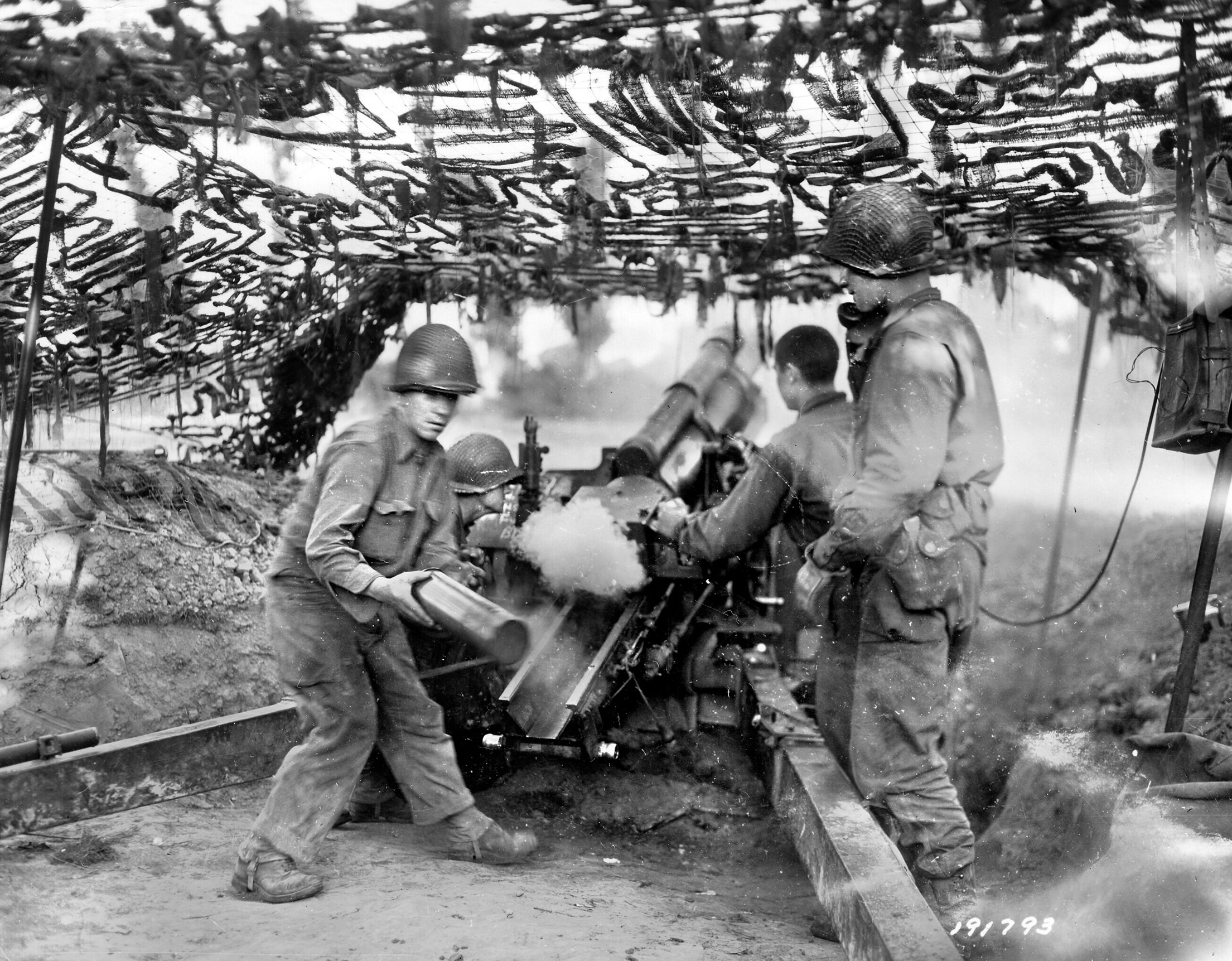
On June 13, at 01:30, Kampfgruppe Alpers launched a nighttime counterattack, backed by Ju 88 twin-engine bombers. The Ju 88s inflicted no casualties, and, by 04:30, the counterattack had fizzled, largely due to American artillery fire.
Neither side gained territory that day or during the next two days. The Luftwaffe made a daytime appearance on June 15, when Focke-Wulf Fw 190s strafed the Second Battalion, 23rd, and shot down one of the hated crows, killing the two-man crew. On the ground, combat around Saint-Quentin amounted to sniping, shelling, and patrolling.
On June 16, the battle shifted in favor of the Americans when soldiers of Company E, 23rd, maneuvered around the left flank of Kampfgruppe Alpers and broke through to Bérigny.
When this drama began, Jackl was under the camouflage net covering the 88-mm Flak gun. The Oberwachtmeister (equivalent to a U.S. Army technical sergeant) in charge of the weapon had lent Jackl a pair of binoculars. He gazed through them toward the Cerisy Forest and later recalled what he observed: “It was unbelievable what tanks, vehicles, and weapons the enemy had there, all poised for action. We had nothing to counter this formidable array.”
Until that moment, Jackl’s antitank team had seen no American armor, as the 2nd Division lacked such support. That changed on June 16, when the 741st Tank Battalion arrived, with its Company A joining the 23rd Infantry.
“Suddenly, we heard the dull woosh of incoming artillery rounds. Instinctively, we spread apart, everyone taking cover to escape the falling shells,” Jackl described what happened later. “The enemy had likely discovered the heavy tractor, which served as the prime mover for the Flak gun, even though the big halftrack was covered by camouflage netting at its parking spot along the road just behind us. I heard the Oberwachtmeister shout an order: ‘Tractor move out!’ When its engine was roaring, I jumped onboard with several others”
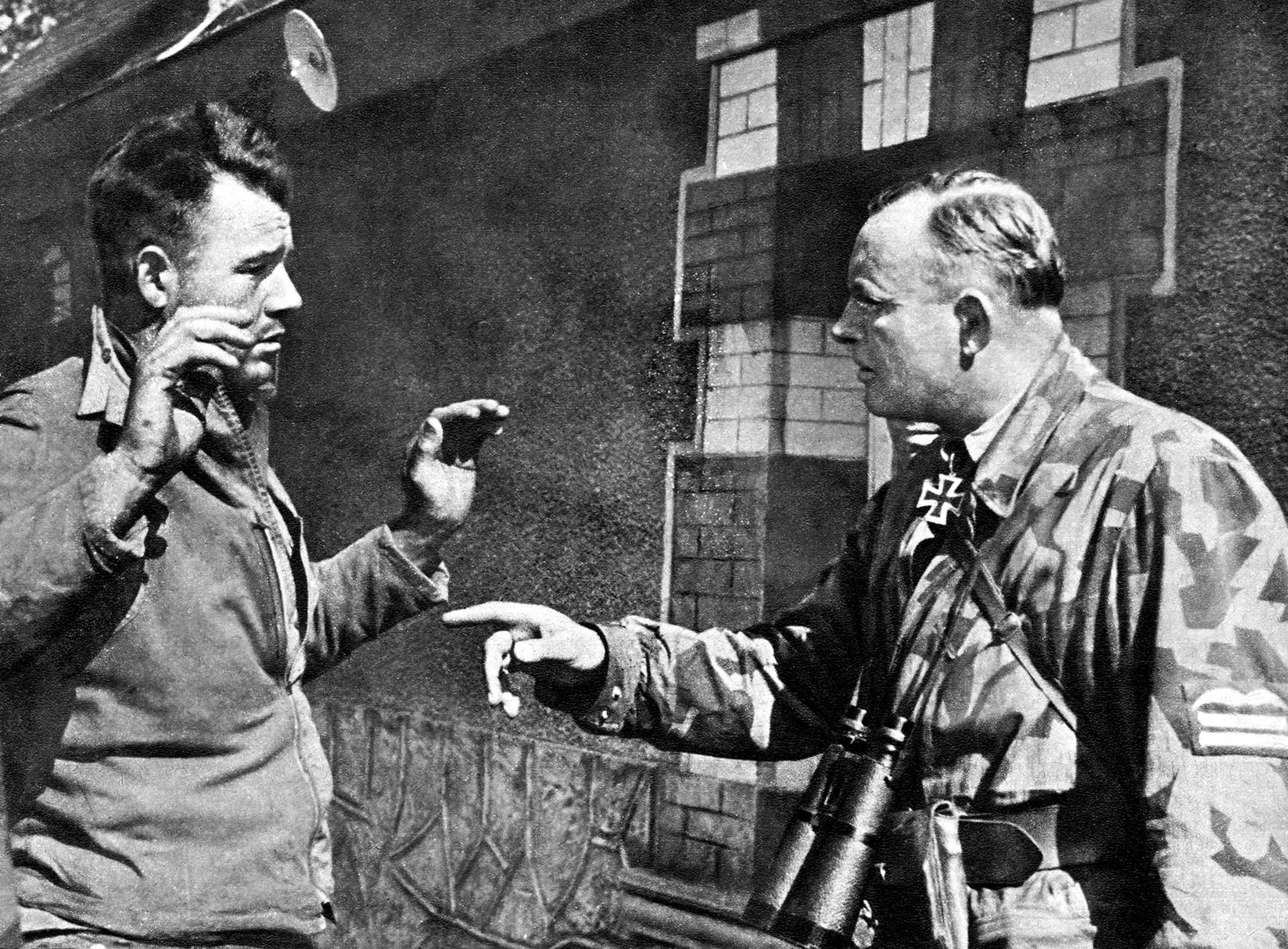
The men climbed onto the moving tractor holding onto headlights or whatever they could as they fled the artillery impact zone. Luckily for Jackl and the tractor, the first few rounds fell short. Near the Elle River, the tractor slowed down and the men jumped off. The Flak crew and tractor then turned around and went to retrieve their 88-mm, not aware that it had been hit by artillery.
“Unbeknownst to us, a third defensive line had been established to our rear,” Jackl recalled. “On the western slope of the Elle River valley, machine gunners prepared a position with an impressive field of fire. Our group of six to eight men reported to the company commander in that area, an older Hauptmann. He wanted a briefing on the events that had unfolded to his front.”
That evening, Jackl and his fellow engineers received instructions to pull back to the command post of Fallschirmjäger-Regiment 8. By this time, most of the 3rd Fallschirmjäger-Division had arrived—many making the journey from Brittany to Normandy on foot, commandeered bicycles, or horse-drawn carts. Their arrival enabled the division to reorganize and extend its frontline positions and to forge defensive lines in echelon.
In the weeks that followed, Heinemann’s engineer platoon primarily focused on laying mines. The platoon took no part in defending against a major American attack launched by the 2nd Division on July 11, 1944. The paratroopers of Fallschirmjäger-Regiment 9 faced the full force of this assault, valiantly defending Hill 192. Despite their bravery, they ultimately succumbed to the overwhelming pressure and lost the summit. The fierce battle for the hilltop left them depleted and unable to hold their sector. Relief came in the form of the 2nd Bataillon of Fallschirmjäger-Regiment 5 and the 3rd Bataillon of Fallschirmjäger-Regiment 8.
Obergefreiter (equivalent to PFC) Jackl and the other engineers now stood together with the 3rd Bataillon in forward positions near Saint-Pierre-de-Semilly. The frontline stretched along the N172 highway. Just across the road, American soldiers of the 38th Infantry Regiment readied themselves for another attack—one final push aimed at shattering the 3rd Fallschirmjäger-Division.
Jackl felt a pain twisting through him like a relentless vine on July 25 and made his way to an aid station located in an old stone farmhouse, where he found a doctor, probably Dr. Winfried Mönke, the battalion surgeon. The young Obergefreiter’s groin was grotesquely swollen, a vivid bluish hue contrasted against the pallor of his skin. The doctor said that his lymph glands were infected and would require surgery, but it would be morning before an ambulance could haul him out. He trudged back to his soggy foxhole where he would bear the anguish a little longer, applying cold compresses to the infected area as instructed.
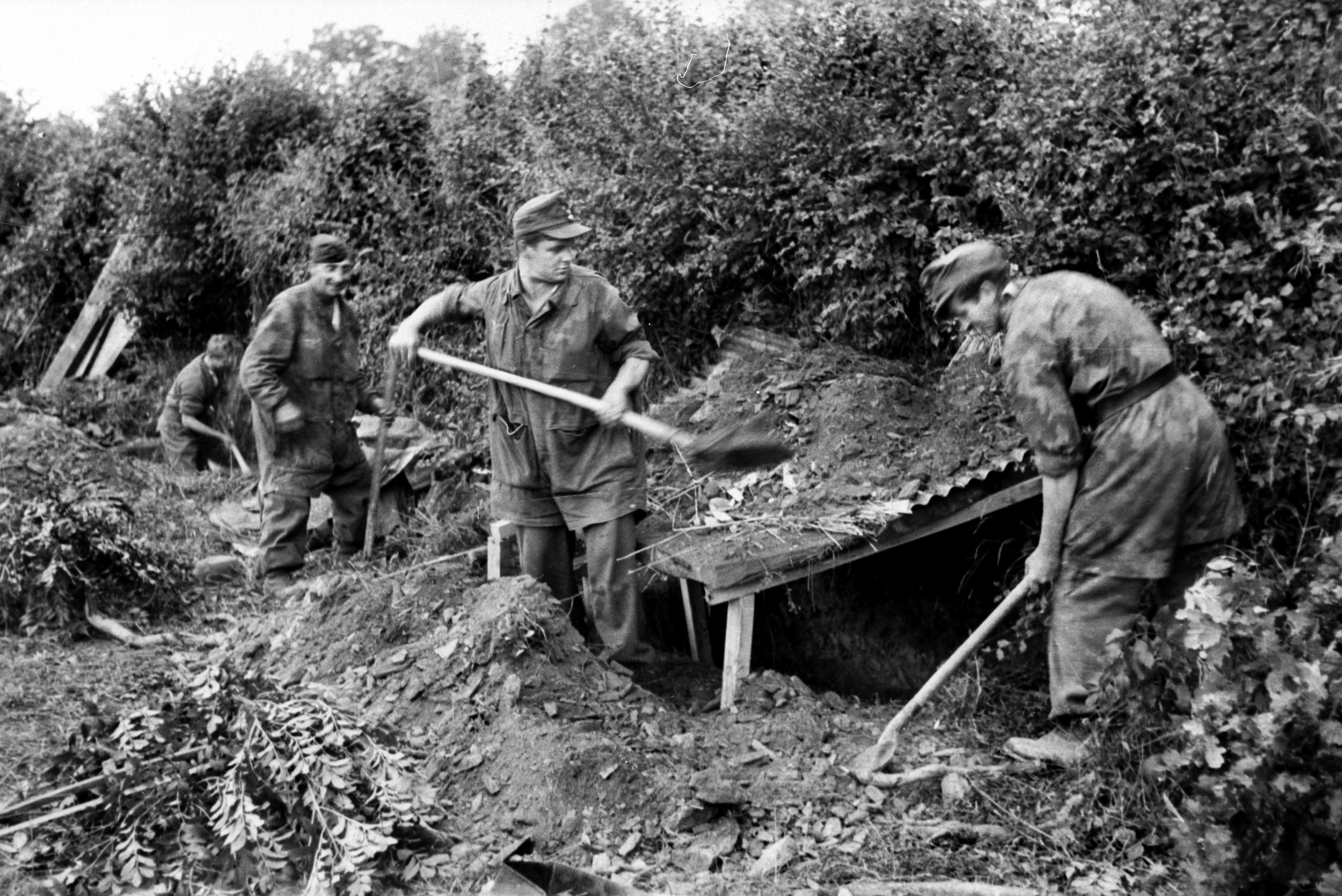
No ambulance arrived the next morning, only American artillery shells and a theater of riotous, skull-pounding detonations. This heralded the beginning of Operation Cobra, a widescale American offensive to break out from Normandy.
“Salvo upon salvo rained down around us into the wet, sodden earth,” Jackl recalled. “Already there were dead as well as wounded who screamed for a medic, but nobody could help.”
The shelling stopped and the sudden silence was filled with the distinctive sound of squeaking tracks and the rumble of tank engines.
“I pushed myself up, peering out of my foxhole through the tattered branches above,” Jackl continued. “I watched them approach—multiple Shermans! They were the older models, characterized by their short barrels. The tanks rattled over the road, which formed the frontline, and penetrated to the south.”
Some of the men from the regimental antitank company tried to engage the Shermans with an Ofenrohr (stove pipe), also known as the Raketenpanzerbüchse (rocket tank rifle), inspired by American bazookas captured in North Africa in 1943, but were quickly gunned down.
“Along with the tanks, American infantrymen advanced across the open ground in a widespread formation,” Jackl said. “In response, our heavy machine guns opened fire. As the guns rattled away, bullets buzzed and hissed overhead with tracer rounds highlighting their paths. The entire heavy machine-gun platoon delivered relentless fire with devastating effect. Dozens of Americans fell, while many others dashed for cover. The tanks—with the infantry now missing—stopped and turned away.”
The battle receded from Jackl’s front, shifting to his right. Once again, armor from the 741st Tank Battalion faced stout opposition. As the German defenders scrambled to meet the attack, Jackl saw a lone Fallschirmjäger sprinting toward him.
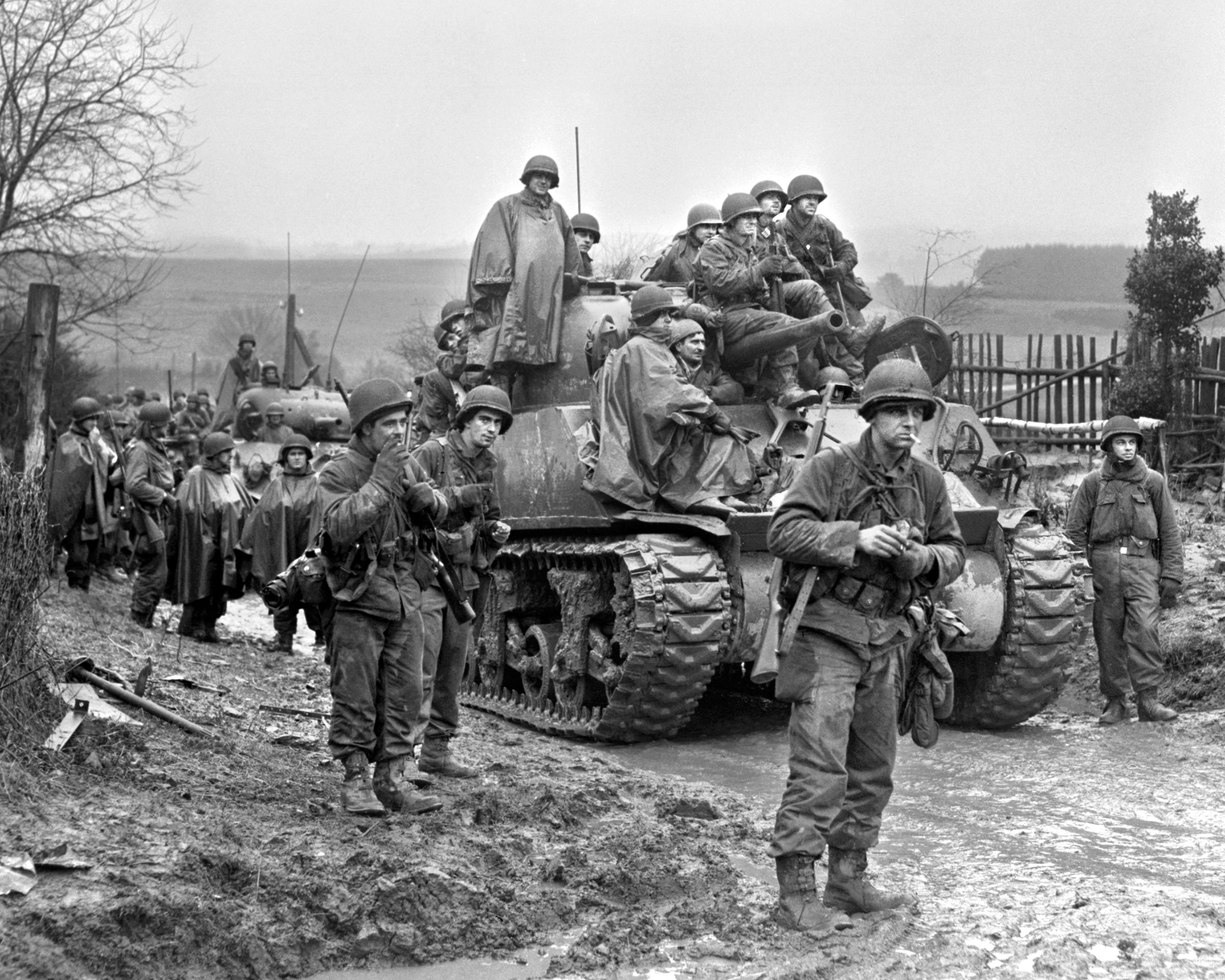
“An unfamiliar comrade charged toward me, gripping a Panzerfaust. Despite lacking any prior training, he expressed a frantic desire to ‘crack a Sherman.’ I hurriedly explained the weapon’s function, checked the ignition and propellant charge, and demonstrated a favorable firing position. However, in our haste, we left ourselves too exposed. Just as the Panzerfaust fired, an enemy shell struck nearby, sending steel fragments hurtling through the air. The Sherman crew had acted more quickly. I emerged unscathed, but my comrade lay mortally wounded. I leaned him against a hedgerow embankment, feeling the weight of helplessness as there was nothing more I could do for him.”
Ignoring the pain from his groin, Jackl lay aside his carbine and moved toward the tanks that had broken through on the right with another Panzerfaust.
“The wing tank was my target,” he later explained. “Caution was imperative; I knew that if I were detected, it would be the end—those tanks would make short work of tank hunters. I needed to close the distance to within forty meters and aim at something high, something like the tank’s turret.”
Jackly quickly “bent the sheet-metal strip upward, felt the click of the red button releasing as the weapon became armed,” then jumped out from cover and fired. The rocket sailed over the tank’s turret and exploded on a bank of earth.
“The cries of wounded Americans drove the Sherman around,” Jackl said. “In a fan-shaped pattern, the tank launched several HE [high explosive] shells in my direction. Completely pooped out, I reached a foxhole, my groin aching terribly as I gasped for air and forced myself to be quiet.”
Straggling Fallschirmjägers drifted in from the area where the Americans had broken through as Oberfeldwebel Heinemann gathered his men in the shelter of a stream valley in a steady drizzle.
“It was midday, and I quelled a great hunger with a heel of bread and a gulp from my canteen,” Jackl said. “The last of our ammunition was divvied out and the remaining Panzerfäuste distributed. Once again, I found myself receiving one.”
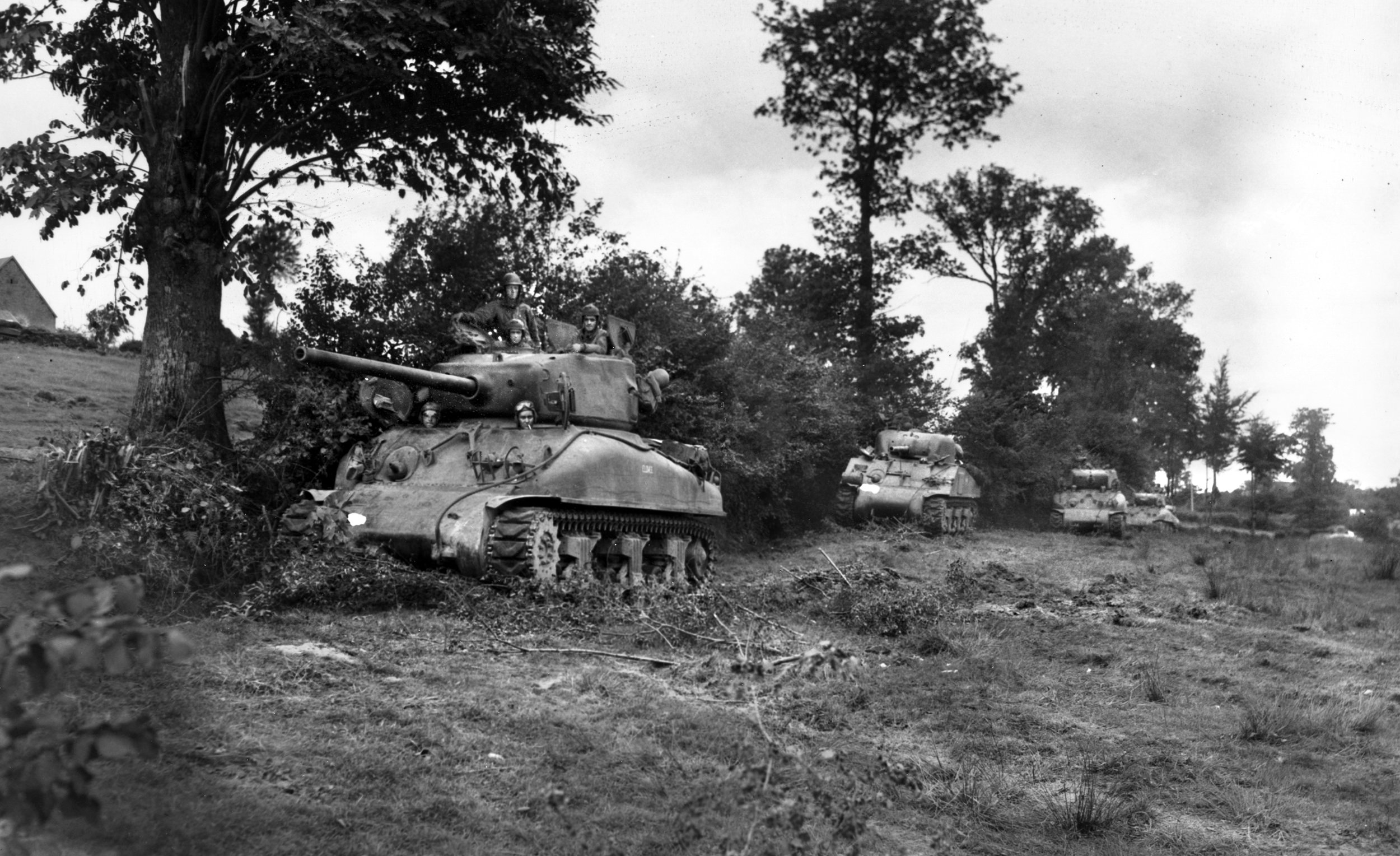
Jackl and his comrades positioned themselves in the dark confines of a sunken road, tension thick as they braced for the resumption of violence. Before them lay a cow pasture about 150-meters square. Just beyond this open area, tanks of the 741st sat poised for action.
“Amidst dense undergrowth, we peered out from the sunken lane toward the Shermans, which stood turret-to-turret behind the earthen embankment of a hedgerow, arranged as if on parade,” Jackl said. “The lack of antitank guns weighed on our minds—could we stand our ground without them?”
It was still drizzling in the early evening as the American infantry began to push forward, their heavy machine-gun fire nearly cutting down the hedges on the embankment. The Shermans added HE projectiles with tracer rounds.
“In an instant, we were engulfed in a storm of dirt, branches, and flying foliage,” Jackl said. “The machine-gun fire ceased, replaced by the howl of tank engines as the Shermans pushed through the embankment, followed by the infantry. We clung to our position, as our MG 42 gave reassuring bursts of fire.”
The Americans sustained heavy casualties, before the Shermans stopped, rotated their turrets, and took out the MG 42 crew. Leaving the infantry behind, the Shermans drove full throttle toward the German lines.
“We didn’t want to be overrun, only to escape,” Jackl said. “As I dashed past the entrance to the cow pasture, I felt a pang of regret for leaving behind the second Panzerfaust. With great leaps, I vaulted onto the open plain. In my frantic race, I took the safety off my antitank weapon, only to find myself suddenly face-to-face with the flank tank. There was no time to aim; I simply fired from the hip. The warhead shot out, racing toward the Sherman that was charging straight at me”
Jackl missed the speeding tank and dove for cover, making his way back into the stream valley.
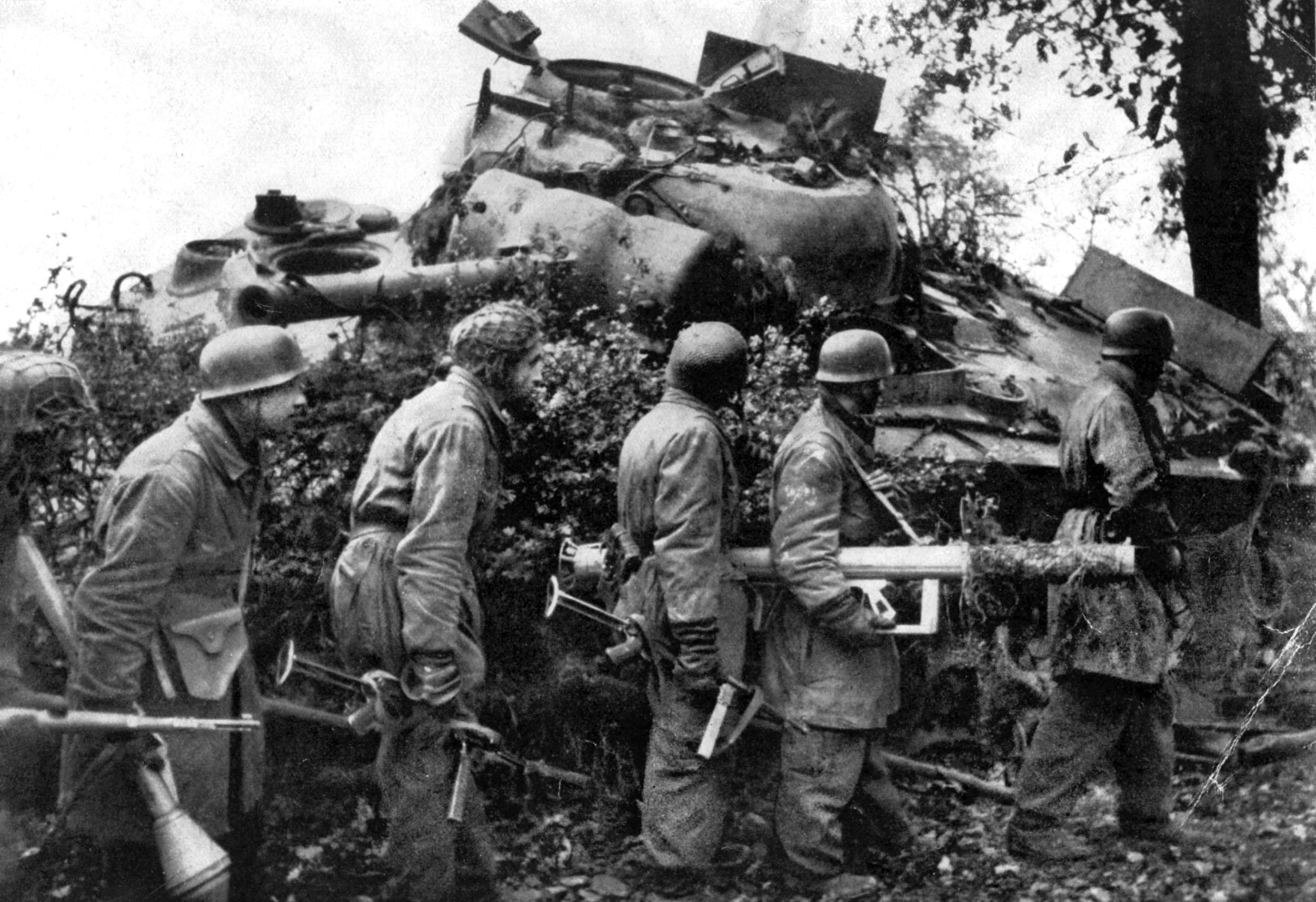
“It was evening, and the steady rain, which we so often cursed, became our ally,” Jackl said. “We huddled in an overgrown portion of a sunken lane at the stream’s edge. We were utterly exhausted, totally drenched, and hungry. The Americans, oblivious to our presence, avoided the marshy stream valley and instead traversed the open plain.”
Jackly recalled that his infected groin “burned like fire” as they listened to the sounds of battle receding. A volunteer scouted the area and found that the Fallschirmjägers were surrounded. By the time they had all trickled back, there were about a dozen of them huddled in the rain, knowing that as dawn approached, they would have to find a way out, as “staying any longer would risk capture or far worse.” Their best chance lay down the stream toward Saint-Pierre-de-Semilly.
In total silence, they waded single file in the knee-deep stream and reached Saint-Pierre-de-Semilly where the dammed stream formed a pond.
“The road leading south crossed over the dam,” Jackl said. “Due to pain, I now walked with the support of my carbine. Oberfeldwebel Heinemann sent out a few men on reconnaissance, and we soon learned that Americans occupied the village. We disappeared in small groups, moving eastward and uphill. We spent the remainder of the night at the last remaining heavy machine-gun position.”
On July 28, during a withdrawal operation, Heinemann set out to reconnoiter a new defensive position. His mission was irrevocably cut short when American forces captured him south of Saint-Pierre-de-Semilly.
Meanwhile, Jackl was evacuated to the rear, where he underwent surgery to treat his inflamed lymph glands. After receiving care at two hospitals in France, he returned to Germany and briefly served with replacement units before being assigned to Fallschirm-Sturmgeschütz-Brigade “Schmitz” on the Italian front, where he remained until the end of the war. Years later, he reconnected with Heinemann, and their friendship endured until Heinemann’s death in 1999. Jackl died on March 10, 2017, at the age of 93.
This article is based on an outtake from the author’s new book, Dare All Dangers, which chronicles the 741st Tank Battalion from D-Day to VE-Day. The author wishes to express his gratitude to the late Fallschirmjäger veterans, Fritz Roppelt (Stabs Zug, FJR 9) and Gerhard Salomon (FJR 9), for their contributions of reference materials. The main source for Jackl’s story was Roppelt’s book, Der Vergangenheit auf der Spur: 3.Fallsch-Jg-Division 1943–1945, published posthumously after Roppelt’s death on May 17, 1993. Go to etohistory.com for more information about Dare All Dangers.
Join The Conversation
Comments
View All Comments