By Kevin M. Hymel
After the United States’ reluctant entry into World War I in the spring of 1917, the U.S. Army needed to convey the grim realities of the war to the public back home. To give Americans a better picture of the war in Europe, Capt. Aymar Embury, himself an artist, suggested to Maj. Gen. William M. Black that the Army bring over a group of professional artists to capture life in the trenches and behind the lines. Black was chief of the Corps of Engineers, which already employed several artists on camouflage projects. He readily agreed and ordered Embury to come up with a list of qualified applicants.
Black forwarded Embury’s suggestions to General John J. Pershing, head of the American Expeditionary Forces. Pershing gave his approval to the project, and eight artists subsequently received captain’s bars in the Engineer Reserve Corps, along with a wide-ranging mission to sketch and paint the world of the frontline doughboy. Included among the newly commissioned captains were Wallace Morgan, Ernest Clifford Peixotto, Harry Everett Townsend, J. André Smith, William J. Aylward, Walter Jack Duncan, Henry Thomas Dunn, and George Matthews Harding. The artists were assigned to the Army’s intelligence division, G-2, and given the use of two automobiles and signed passes from the American and French high commands allowing them full access to the troops. Only one artist, André Smith, had prior military experience; the rest were given one five-minute briefing and turned loose on the battlefield.
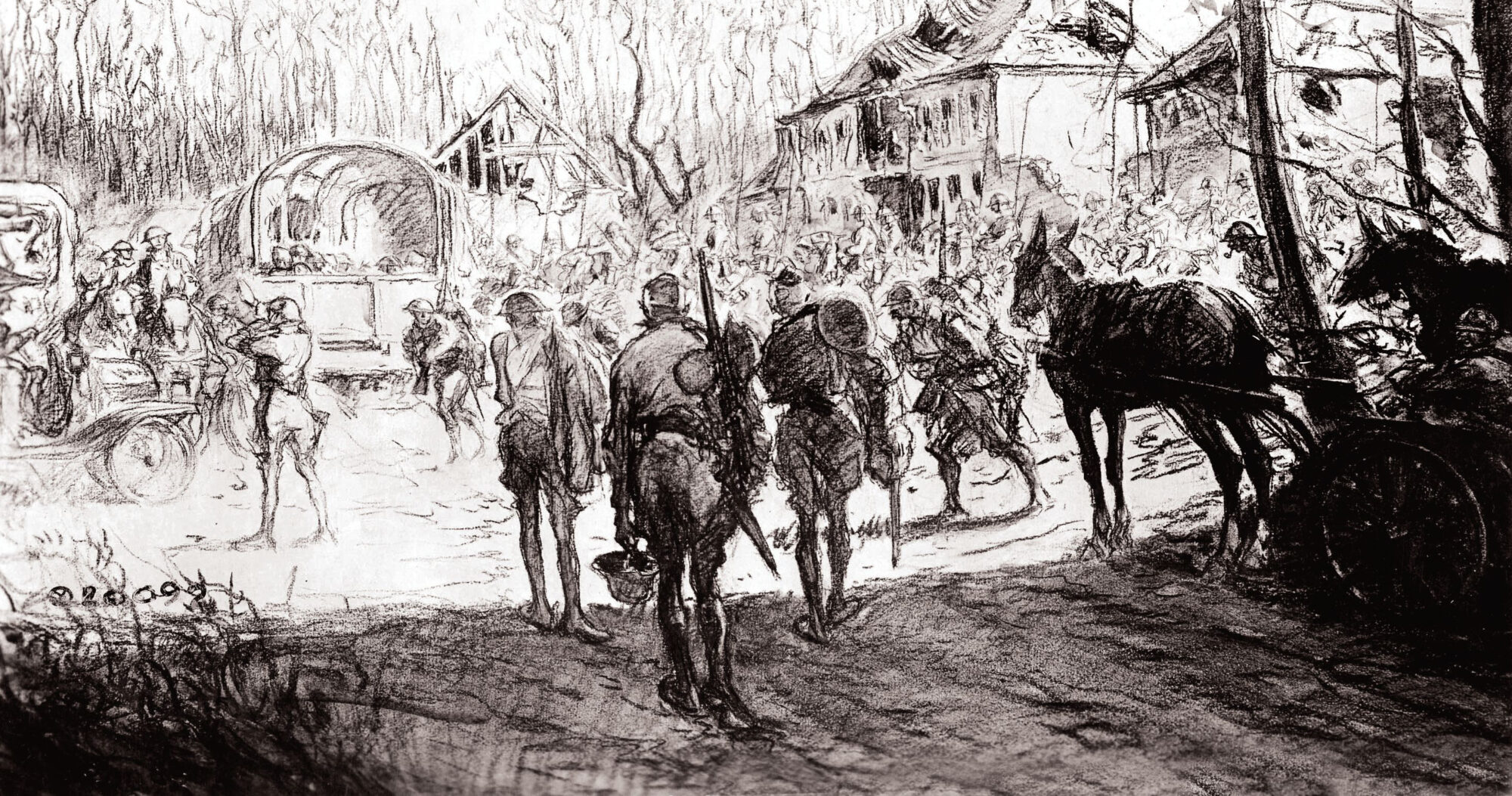
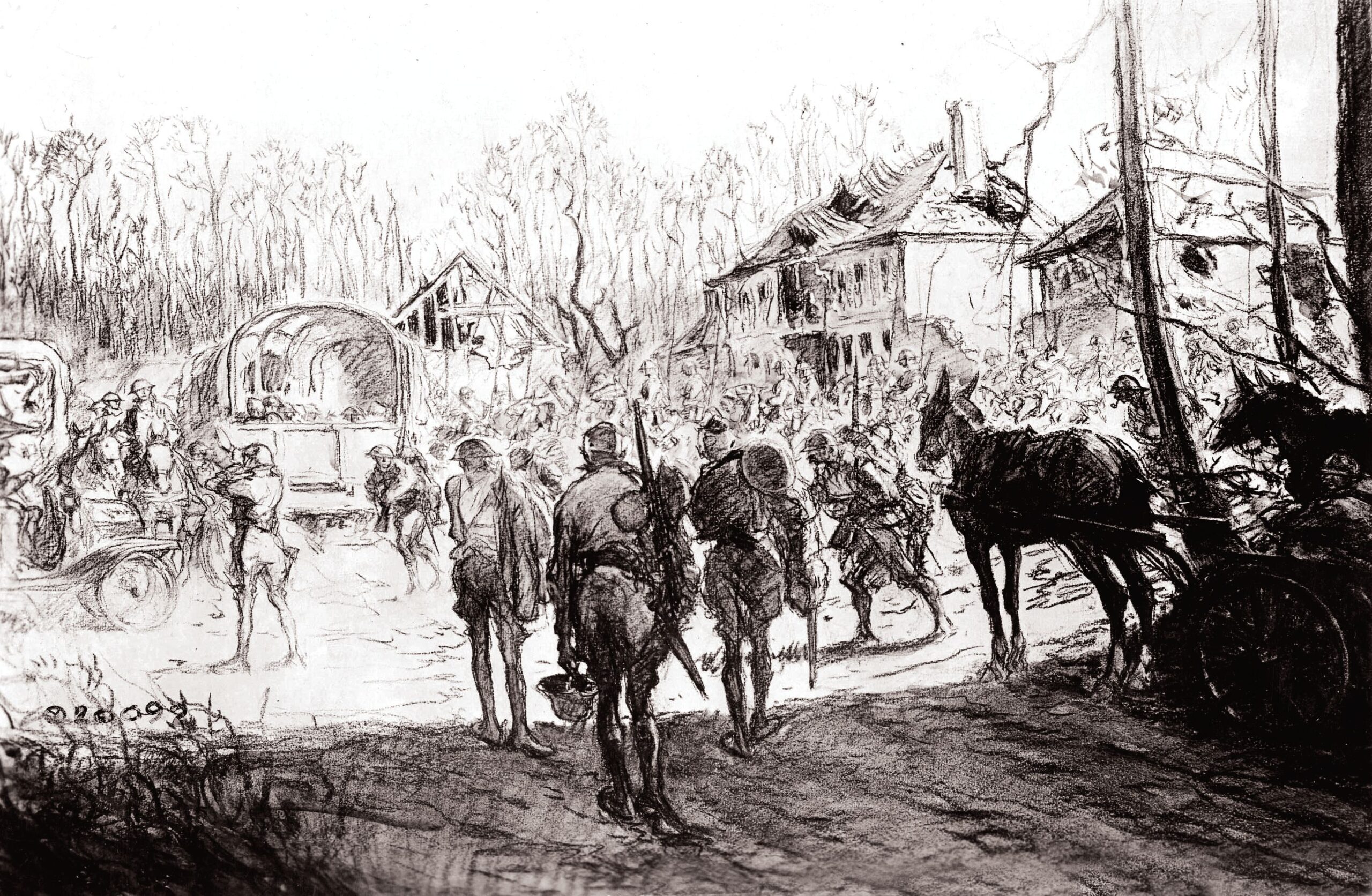
Sketching the battlefields of France was no easy task. The artists worked hard to capture images of worn machines, lean horses, and quiet men going through the drudgery of preparing for battle or removing the wounded afterwards. Between these two acts, they followed closely behind the deafening action as men rose from their trenches amid artillery and air bombardments and charged across the barren, muddy no-man’s-land to wrest a precarious piece of countryside from enemy control.
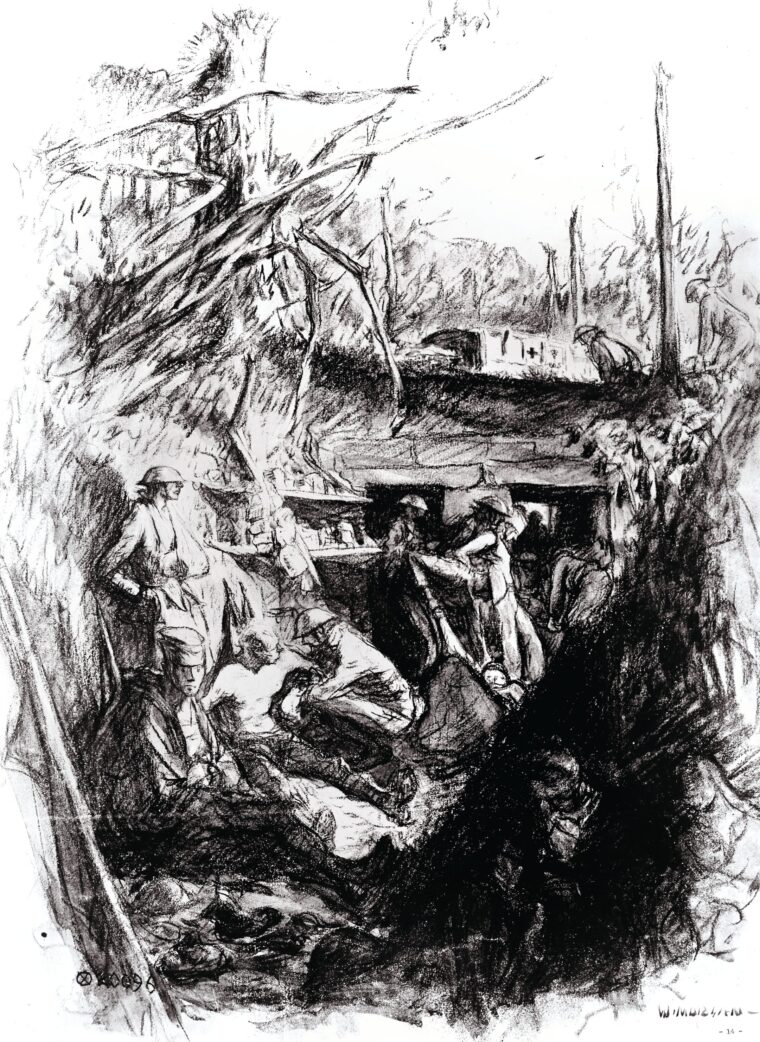
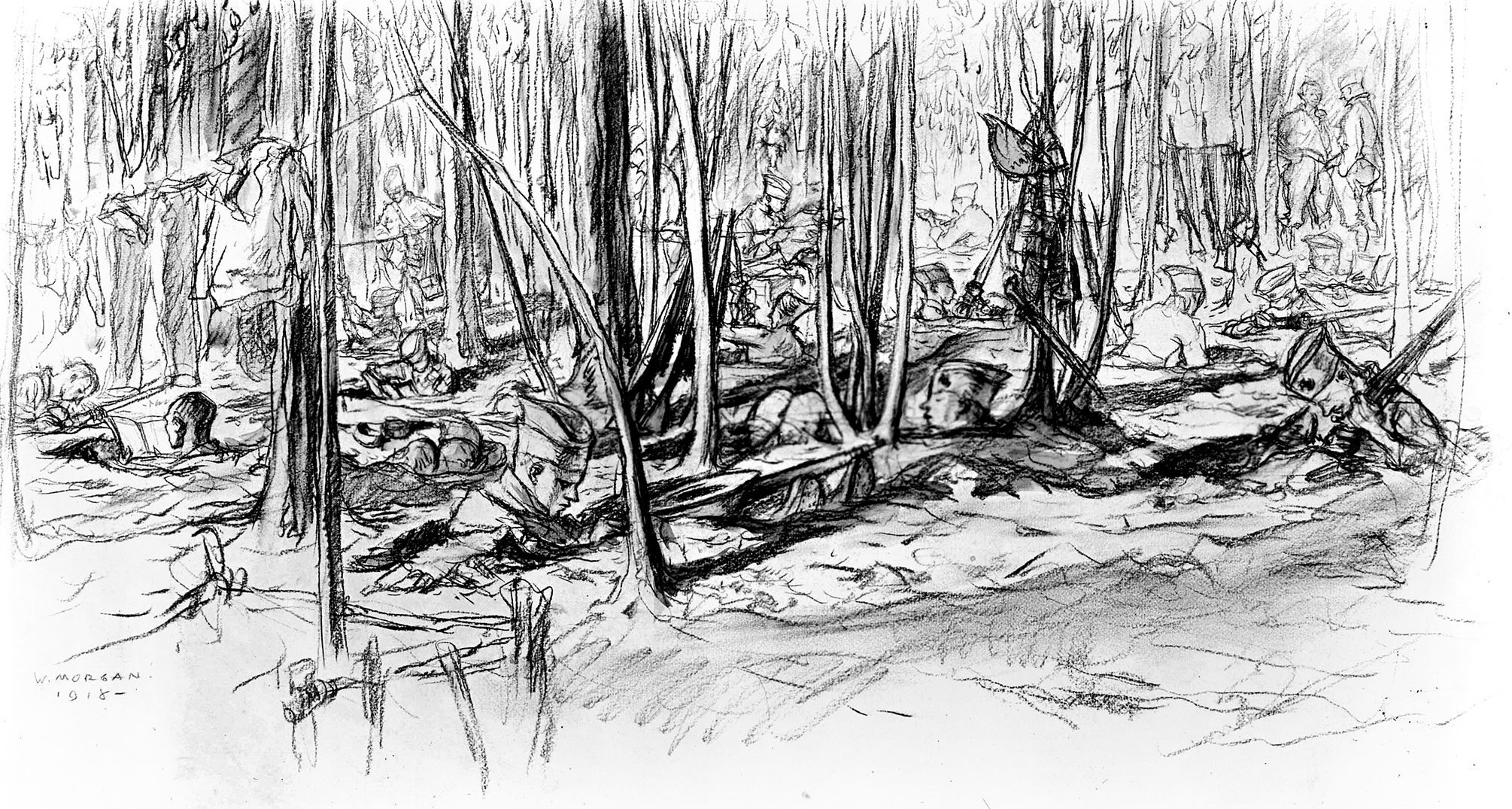
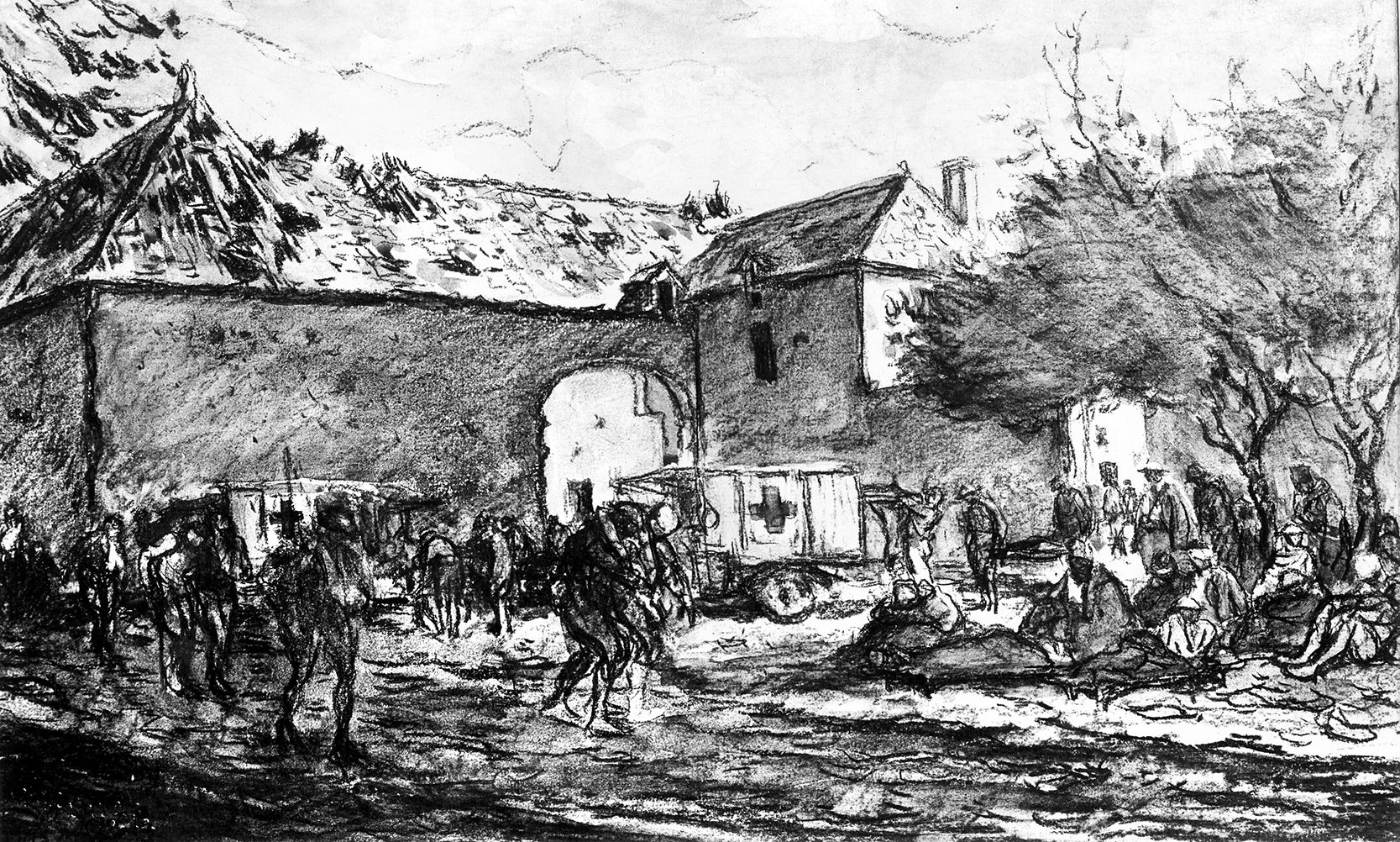
Wallace Morgan, an experienced newspaper sketch artist for the New York Sun and the New York Herald before the war, was particularly noted for his ability to capture action without the need for preliminary sketches. That talent served him well on the Western Front. At Belleau Wood, where the 4th Marine Brigade lost more than a thousand men in a single day, Morgan sketched men in dugouts, which they called graves. He noticed that the men popped in and out of their holes like gophers. On other battlefields, he drew scenes of the scattered debris of war left by the retreating Germans—potato-masher grenades, backpacks, cigarette boxes, and scraps of food. At field hospitals overwhelmed with casualties, Morgan saw doctors and nurses, their aprons draped with blood, working feverishly to save the few lives they could while the less grievously wounded waited stoically for their turn on the operating table.
Army officials back in the United States criticized the artists’ work. They wanted inspiring pieces of heroic soldiers charging forward, not of men slogging through mud with heavy packs on their backs and gaunt expressions on their faces. But the officers in the field saw the benefit of showing the realities of war and appreciated the artists for the accuracy and realism they delivered from the trenches during the war to end all wars. Pershing, the final word on the project, gave his “heartiest approval of these artists’ work.”
In all, the team of artists produced some 500 individual sketches during the war. They are collected at the National Museum of American History in Washington, D.C.
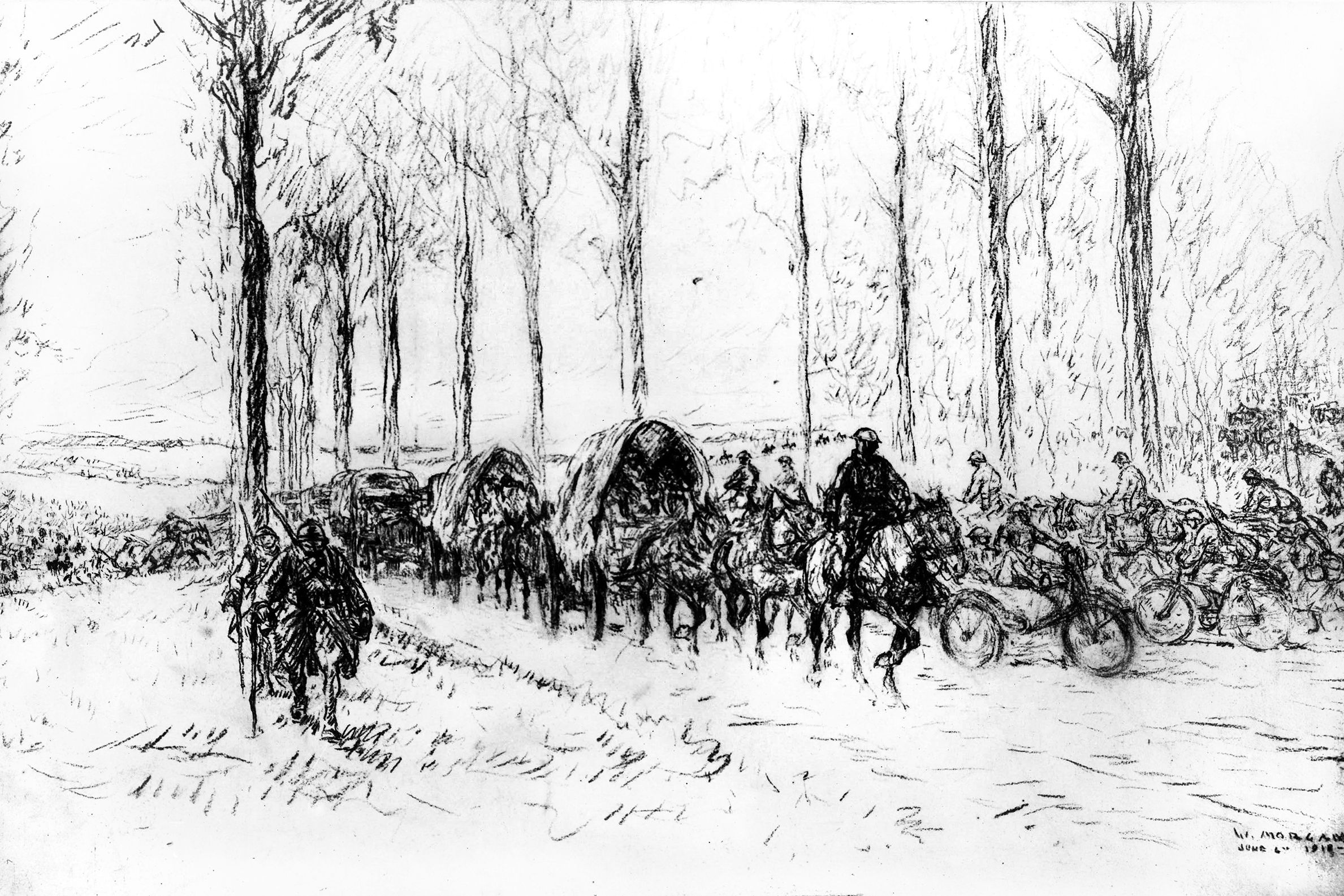
survive the constant threat of long-range German artillery fire that routinely pounded the rear echelons.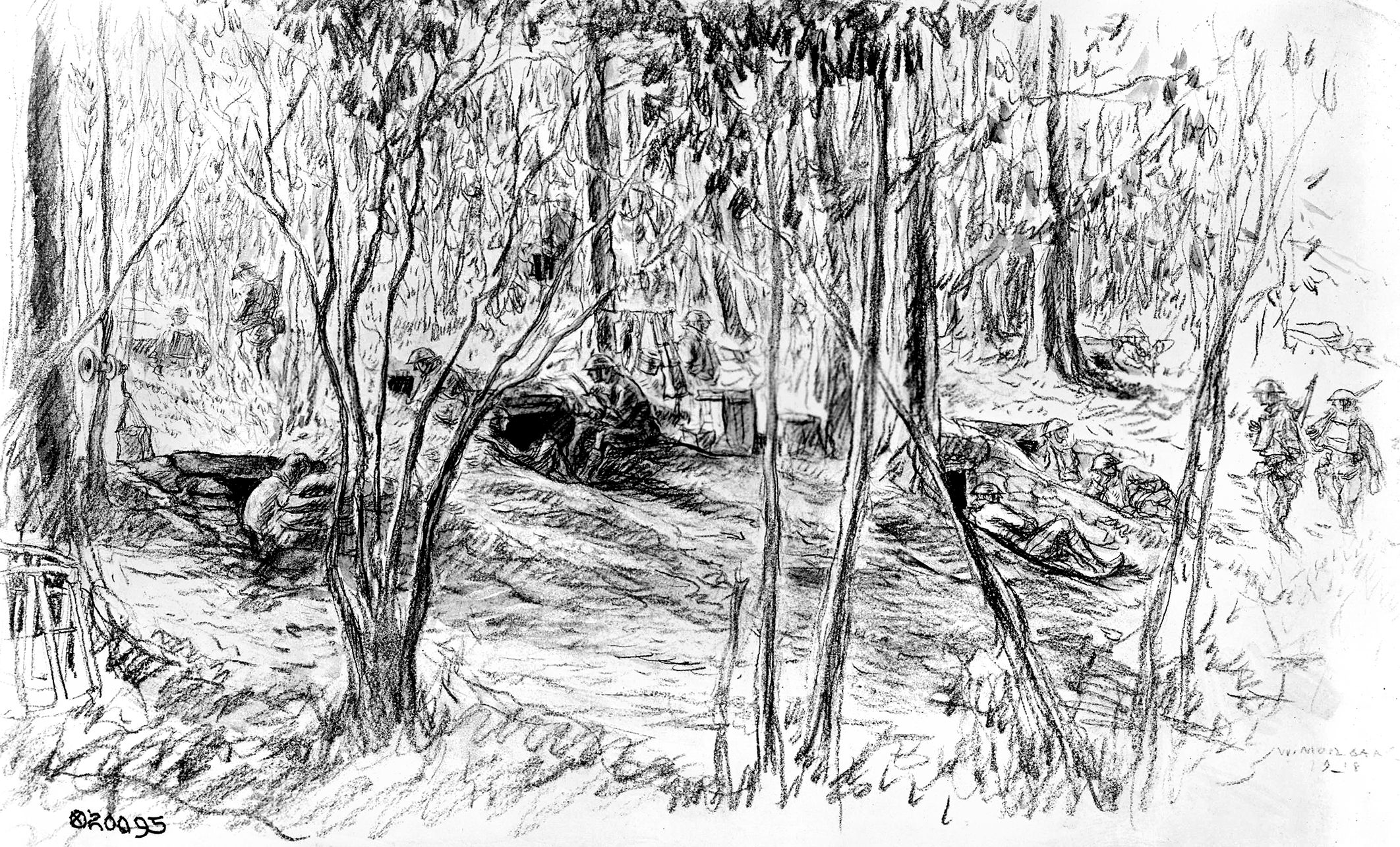
Join The Conversation
Comments
View All Comments