By Giuseppe Rava
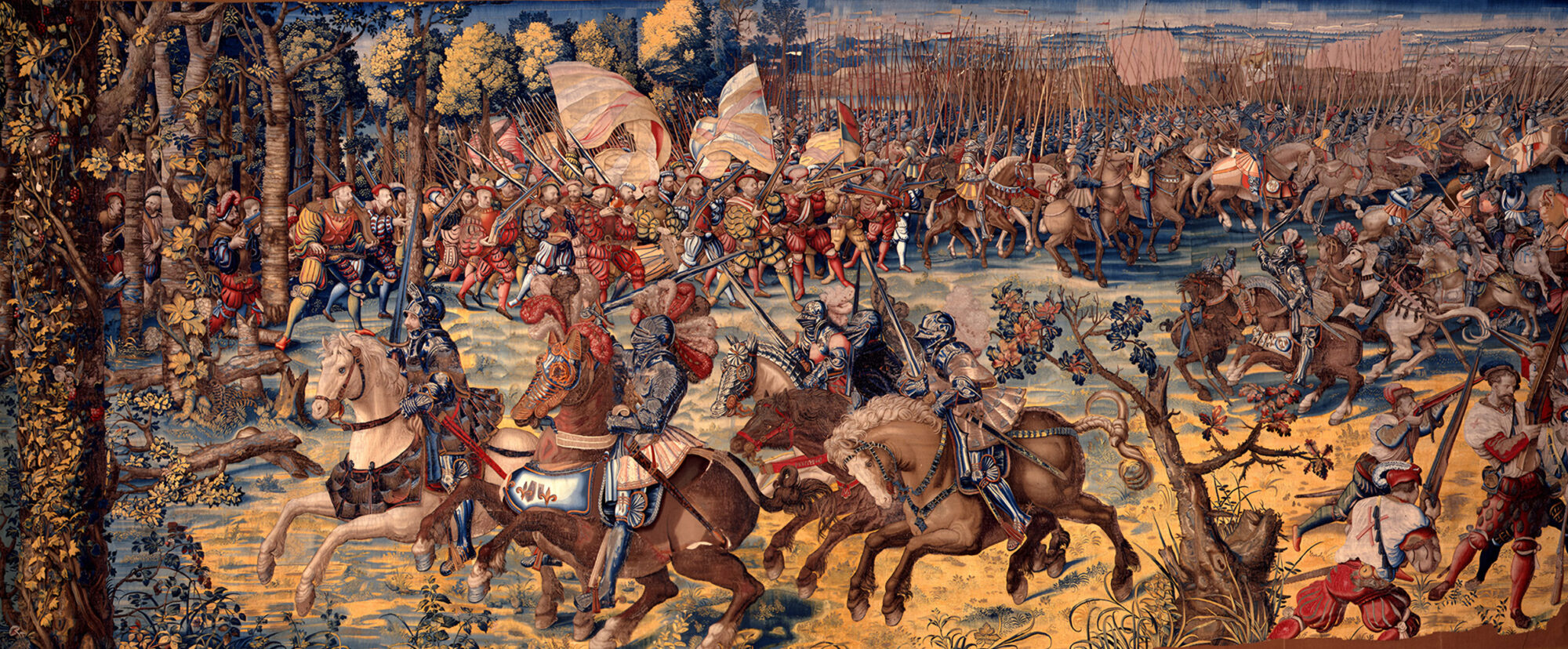
The Landsknecht were German mercenaries originally recruited by Maximilian I, the Holy Roman Emperor from 1486-1519. Influenced by the success of Swiss pikemen, Landsknecht mercenaries were formed into a Landsknecht army, defeating the Hungarians during the Austro-Hungarian War of 1490.
The Holy Roman Emperor’s Landsknecht troops continued to be victorious in battles in the early 16th century, including at the Battle of Pavia in 1525, during the Italian War of 1521-26. The Emperor was unable to pay his troops after defeating the French at Pavia, so many of his troops, including the Landsknecht, marched on Rome and sacked it in 1527.
The fearsome Landsknecht were recruited from every German social class, including nobles, and criminals. Organized into battalions of 500 each, most men were armed with pikes, while others were armed with halberds, matchlocks, long swords, and other weapons, frequently used outside massed pike formations.
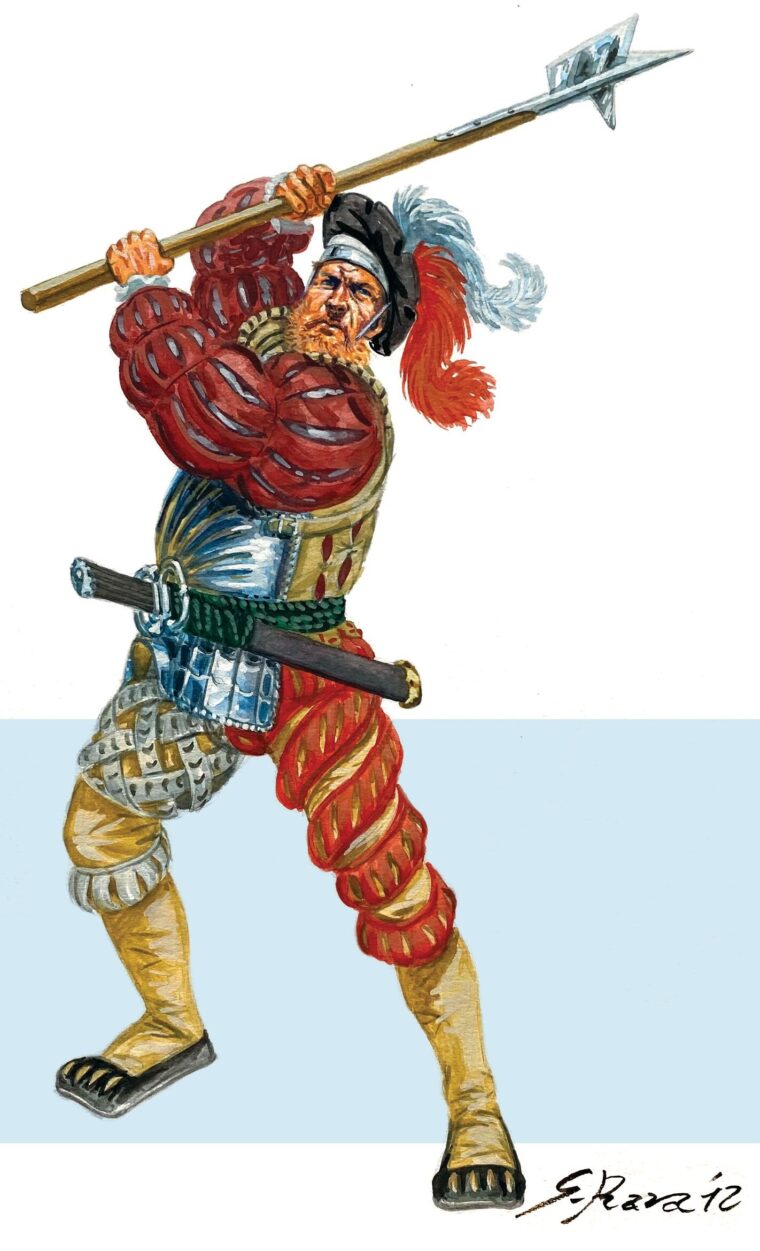
The Landsknecht halberd typically included a hook for pulling mounted troops off their horses. Most Landsknecht carried a short sword called a Katzbalger (cat-gutter). There was no standard uniform, with individual soldiers wearing very colorful, and frequently expensive clothing, as a mark of distinction.
 By the 1550s the Landsknecht reputation for bravery and discipline was overshadowed by the elite Spanish tercios. Their status continued to suffer from increasing questions regarding their discipline, eventually leading to their replacement by a German army less reliant on mercenaries.
Halberd: A heavy polearm with an axe-shaped head, and a hook for pulling mounted troops to the ground.
Hat: A slashed wool hat with bright colored feathers worn over a metal skull cap.
Armor: This halberdier wears a cuirass with steel breastplate and leather back.
Uniform: Landsknecht soldiers had no specific uniform, instead wearing their own, elaborate, and brightly colored clothes. This typically included a heavy wool doublet with slashed and puffed sleeves, wool chausses trousers, including a codpiece (not visible), and slashed leather shoes.
Sword: A short sword called a Katzbalger,“cat-gutter,” for close combat.


Join The Conversation
Comments
View All Comments