Union Army

The Pen & the Sword: A Brief History of War Correspondents

By Roy Morris Jr.

Men have been reporting their wars almost as long as they have fighting them. The first prehistoric cave drawings depicted hunters bringing down wild animals, and spoken accounts of battles, large and small, formed the starting point for the oral tradition of history. Read more

Union Army

Revolutionary War Weapons: The American Long Rifle

By David Alan Johnson

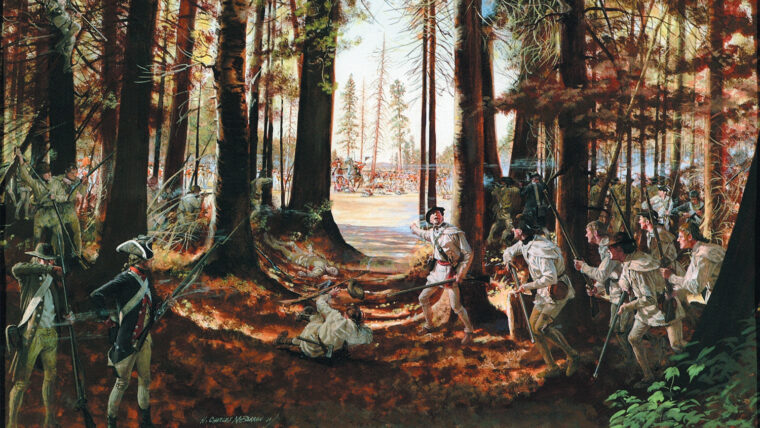
By the mid-1700’s, the American long rifle had acquired an almost supernatural reputation. To the British troops who were unfortunate enough to come up against it in combat during the Revolutionary War, the rifle was more an affliction than a weapon. Read more

Union Army

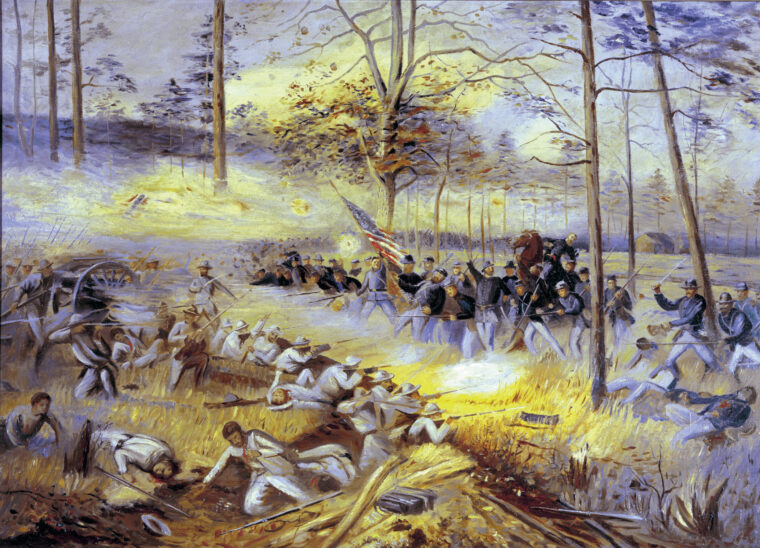
The Crime At Pickett’s Mill

By Roy Morris, Jr.

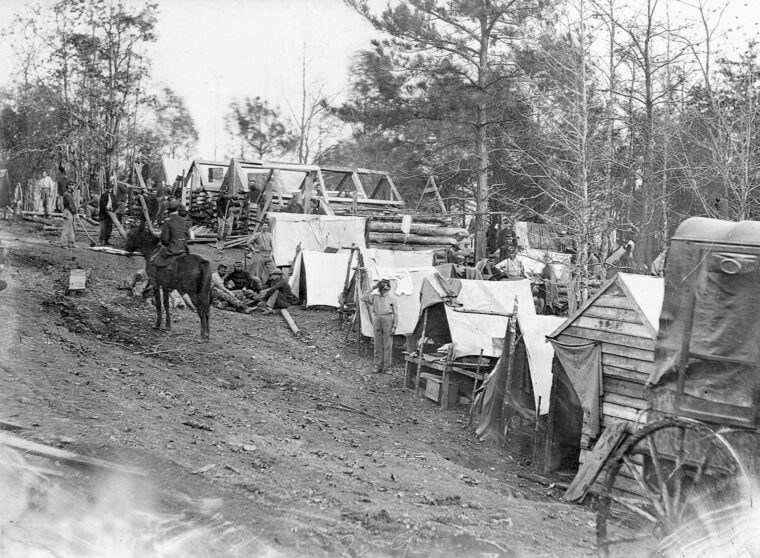
Peering through the thick underbrush west of Little Pumpkin Vine Creek, 30 miles northwest of Atlanta, on the afternoon of May 27, 1864, Ambrose Bierce had a bad feeling. Read more

Union intelligence chief Colonel George Henry Sharpe is pictured with his staff at Brandy Station in June 1863. Left to right are Sharpe, John C. Babcock, an unidentified man, and John McEntee.

Union Army

Civil War Intelligence

By Arnold Blumberg

The Union officer saw it quite clearly across the Rappahannock River: a hand-painted sign held up by a Rebel soldier that read, “Burnside and his pontoons stuck in the mud. Read more

Union Army

Johnston Goes After Ulysses S. Grant at Shiloh

By Earl Echelberry

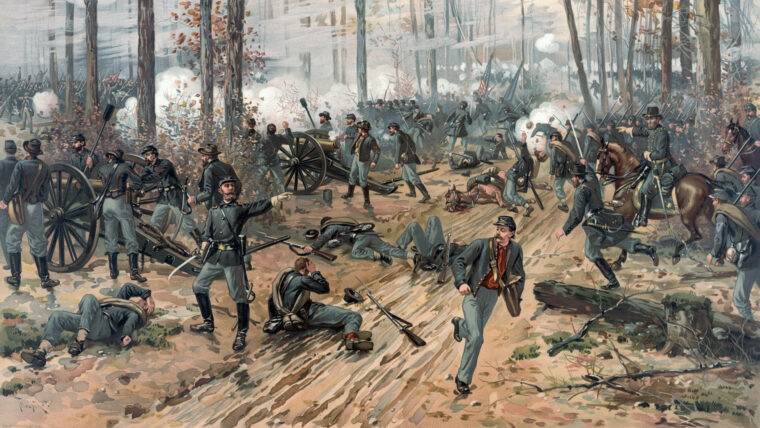
By the end of the winter campaign of 1861-1862, Union Maj. Gen. Ulysses S. Grant had shattered the Confederate defenses in northwest Tennessee with a combined land and water attack on Forts Henry and Donelson, forcing General Albert Sidney Johnston to abandon his bastion at Nashville and retreat southward. Read more

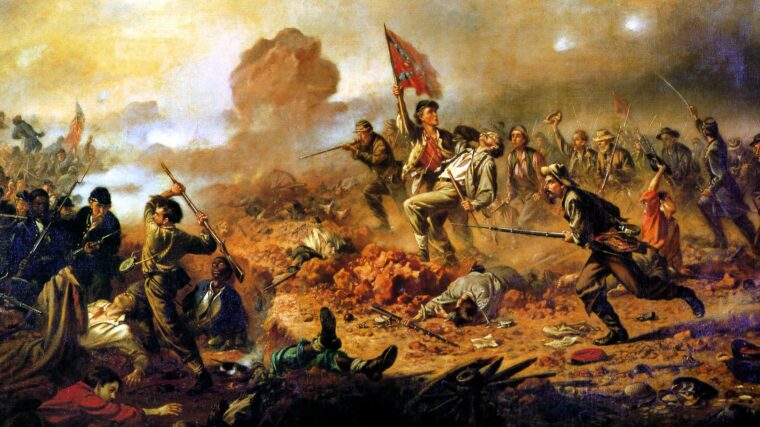
Rallying around their tattered flag, the 12th Virginia Infantry crashes into the Federal vanguard of Brigadier General Edward Ferrero at the edge of the Crater. Painting by John Adams Elder.

Union Army

Bloody Fiasco at the Crater

By Arnold Blumberg

In the summer of 1864, after six weeks of virtually constant combat in the Wilderness area of northern Virginia, the Union and Confederate armies of Ulysses S. Read more

Flourishing his famous red-and-white headquarters flag, Union General Phil Sheridan rides along the front ranks after his dramatic return to the battlefield at Cedar Creek. Painting by Thure de Thulstrup.

Union Army

Glory Enough for One Day: Phil Sheridan’s Victory at Cedar Creek

By Roy Morris Jr.

Phil Sheridan had a bad feeling. The bantam-sized Union general always trusted his instincts, and now, in mid-October 1864, those instincts were telling him that trouble was brewing back at the front, where his Army of the Shenandoah was encamped near Cedar Creek, Virginia, resting and relaxing after a busy few weeks burning civilian farms and slaughtering thousands of head of livestock from Staunton north to Woodstock. Read more

Union Army

Mowed Down by the Fifties

By William E. Welsh

As Confederate General Robert E. Lee and his I Corps commander, Maj. Gen. James Longstreet, rode together on horseback along the dust-choked Quaker Road from Glendale to Malvern Hill on the morning of July 1, 1862,  they stopped to confer with Maj. Read more

Union Army

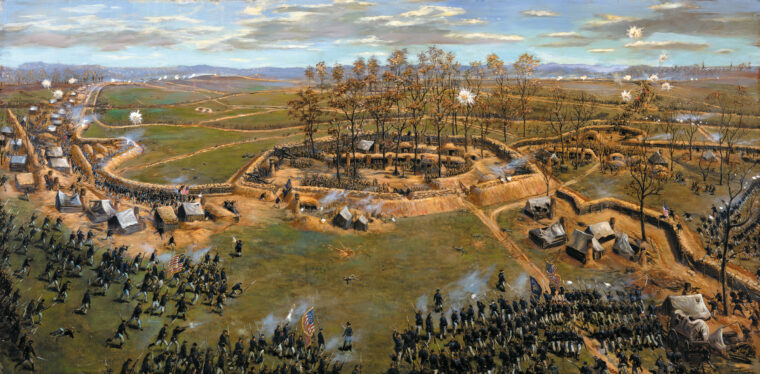
Sealing Vicksburg’s Fate

By Lawrence Weber

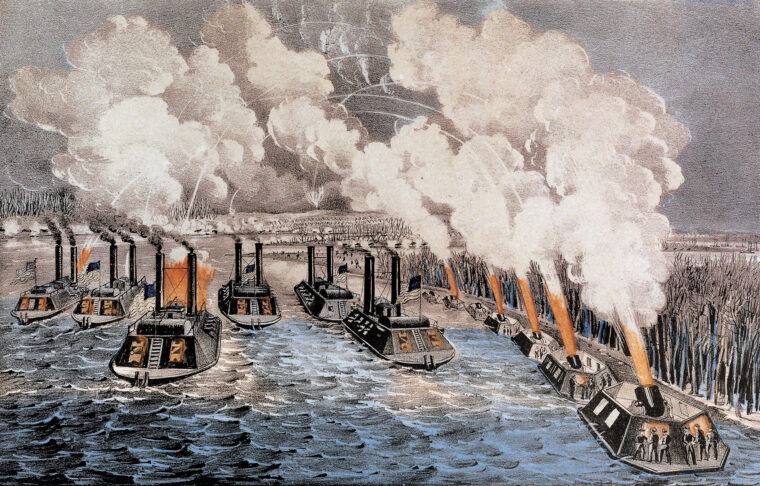
During the Civil War, the strategic importance of Vicksburg, Mississippi, was readily apparent to both the Union and the Confederacy. Read more