Soviet Union
Hero of Verdun: Marshal Henri Philippe Pétain
By Blaine Taylor“I’ve been old in all my ranks,” said Henri Philippe Pétain, created Marshal of France on December 8, 1918, at age 62. Read more
Soviet Union
“I’ve been old in all my ranks,” said Henri Philippe Pétain, created Marshal of France on December 8, 1918, at age 62. Read more
Soviet Union
The image of Red Army soldiers hoisting their hammer and sickle emblazoned banner atop the Reichstag, the seat of the German parliament, is a classic photo of World War II, an image that told the world Nazi Germany was at last finished. Read more
Soviet Union
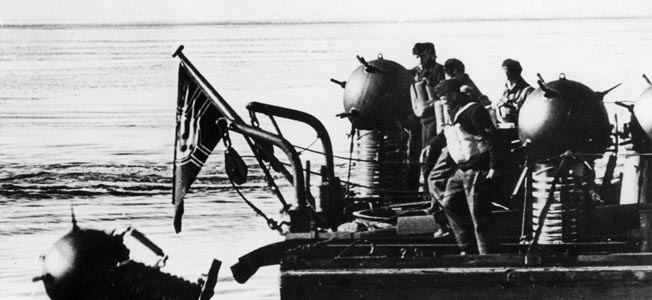
During World War II, naval mines were used extensively in the Baltic Sea. Their low cost provided weaker German and Finnish fleets with an effective force multiplier in negating Soviet numerical and qualitative advantages. Read more
Soviet Union
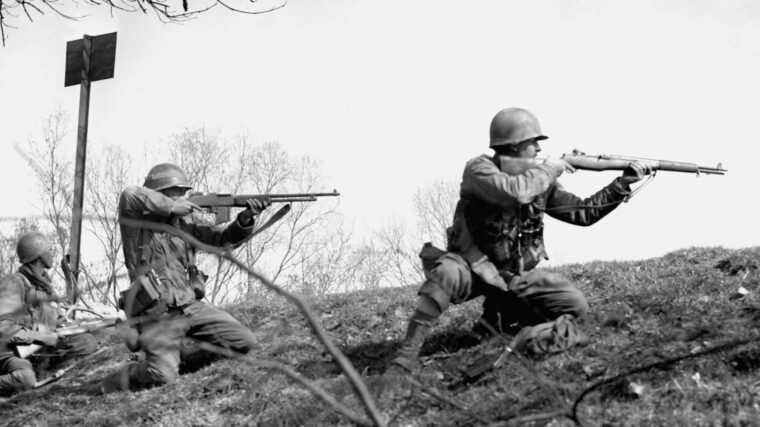
By early 1945, less than a year before General George S. Patton’s mysterious death, Adolf Hitler’s armies were almost exhausted. Read more
Soviet Union
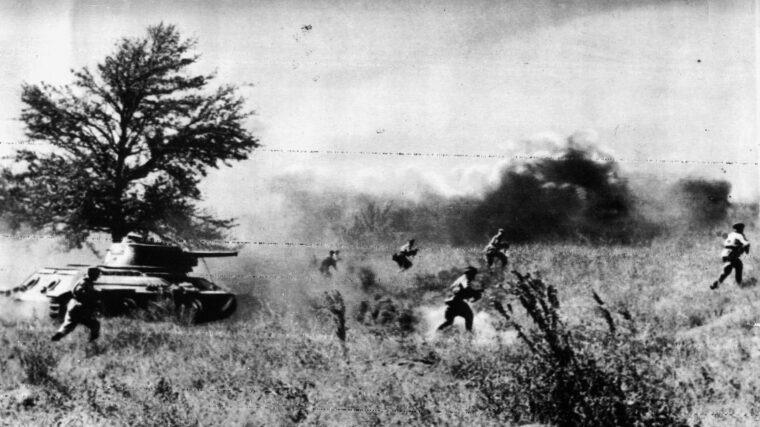
In August 1943, immediately after the Battle of Kursk, the Red Army launched a series of follow up operations, resulting in the liberation of a large swath of Nazi-occupied Soviet territory. Read more
Soviet Union
The official history of Russian and Soviet airborne forces began on August 2, 1930, when 12 parachutists were dropped during maneuvers in the Moscow Military District. Read more
Soviet Union
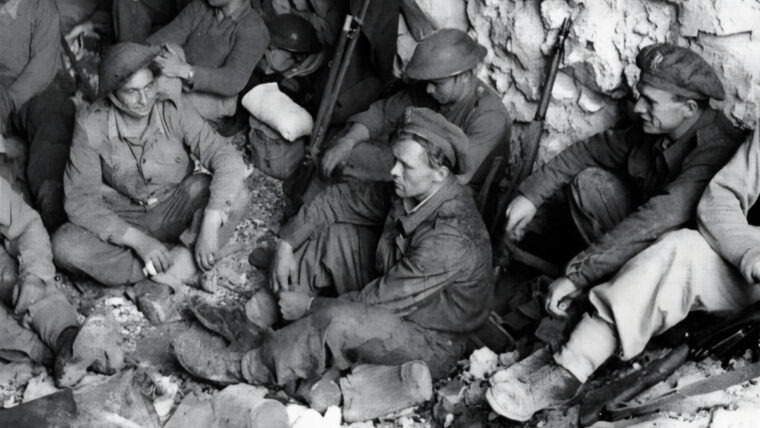
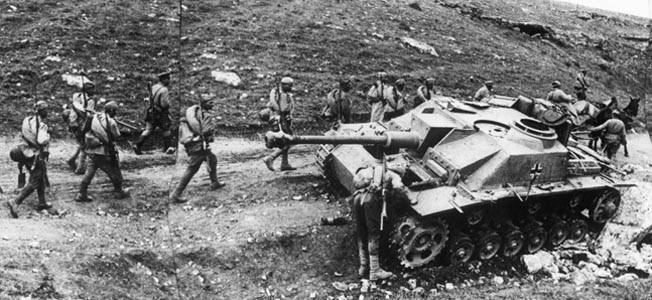
“They had lost their country but kept their honor,” future British Prime Minister Harold Macmillan said of General Wladyslaw Anders and the Polish II Corps, men in the strange position of trying to win the liberation of their homeland by fighting in Italy. Read more
Soviet Union
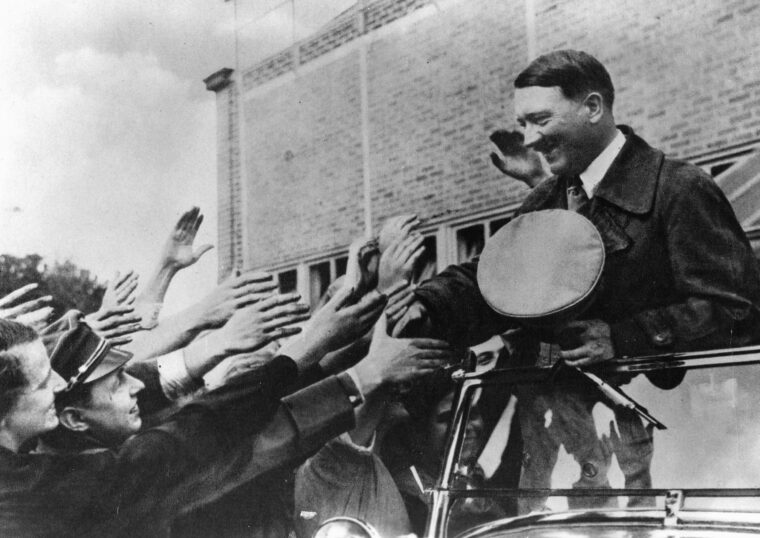
The “Mythology of Munich” and “What Would Winston Do?” These were the feature story and the cover headline, respectively, for the June 23, 2008, issue of Newsweek magazine. Read more
Soviet Union
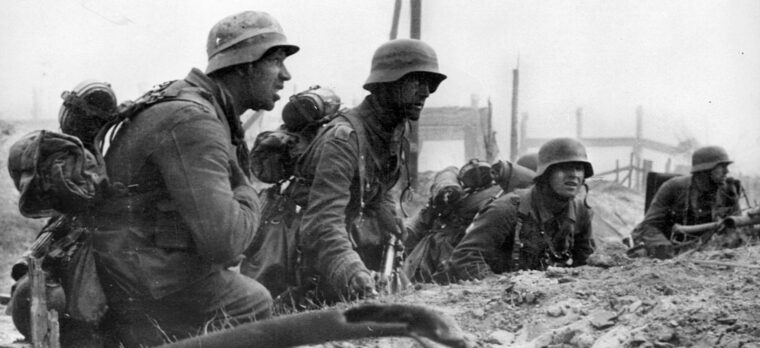
An estimated four million Red Army soldiers were captured by the Germans during the six months after the launching of Operation Barbarossa, the Nazi invasion of the Soviet Union, on June 22, 1941. Read more
Soviet Union
”The subject of Poland is by far the most complex of all the problems to be considered,” the American delegation to the Paris Peace Conference at Versailles was told in 1919, as it was preparing to sort out the incredible mess in European affairs following the end of World War I. Read more
Soviet Union
“I’ve come to you from Moscow. The Central Committee of the Communist Party has ordered your liquidation.” Read more
Soviet Union
In 1917, when America entered the First World War, the United States Army tasked Brigadier General John T. Read more
Soviet Union
During the more than 60 years since the detonation of the first atomic bombs—and the only time nuclear weapons have ever been used operationally—a major debate has erupted over the Hiroshima and Nagasaki bombings. Read more
Soviet Union
Many historians consider the Suez-Sinai campaign in the autumn of 1956 the last hurrah for British and French colonialist efforts in the Middle East. Read more
Soviet Union
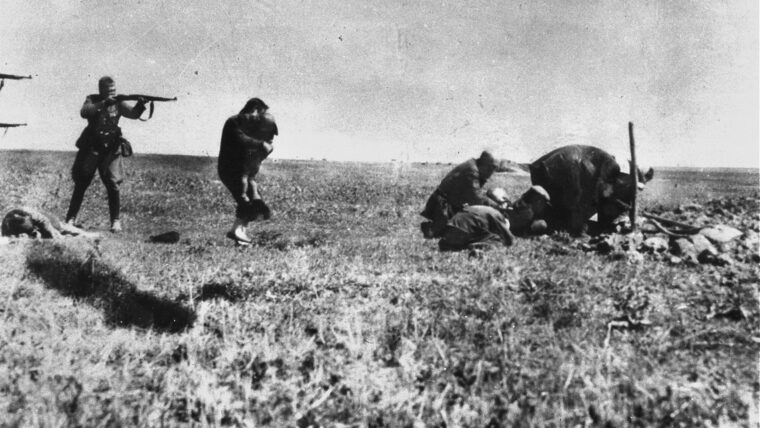
The wide-scale murder of Jews by Nazi Germany’s Einsatzgruppen began in Poland in September 1939, protested only by German Army Generals Johannes Blaskowitz and Georg Kuchler. Read more
Soviet Union
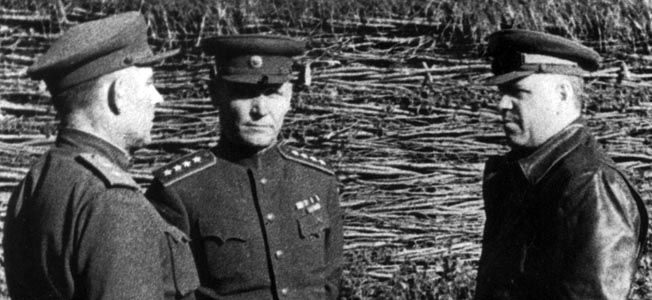
On orders from Soviet Premier Josef Stalin, the offensive that resulted in the capture of the Nazi capital of Berlin in April 1945, developed into a race between the army groups of two Soviet commanders, Marshal Georgy Zhukov and Marshal Ivan Konev. Read more
Soviet Union
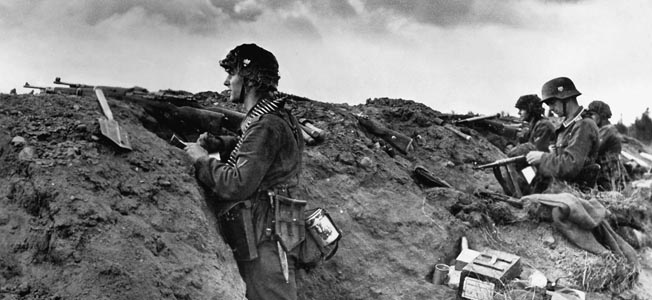
As Adolf Hitler began to formulate his grandiose plans for the conquest of the Soviet Union, he considered the far northern operation area little more than a sideshow. Read more
Soviet Union
On July 4, 1942, the men of newly promoted Field Marshal Erich von Manstein’s Eleventh Army celebrated the capture of the last Soviet bastion in the Crimea. Read more
Soviet Union
On April 21 1945, the Polish 2nd Corps captured the Italian city of Bologna and from the city’s highest tower flew the flag of Poland. Read more
Soviet Union
With the end of World War II, the Korean peninsula was divided at the 38th parallel into Soviet and U.S. Read more